
Rooftop Tents vs Traditional Family Tents: Key Differences
Search for a “camping tent” and the results page mixes two product families that solve different problems: a ground-pitched family tent that sleeps six on a campsite lawn, and a hard shell rooftop tent bolted to a vehicle roof that sleeps two. Buyers read both listings, compare two prices, and assume the decision is about budget. It is not. The decision is about where the tent stands, who sleeps inside it, and how long you are willing to spend pitching it.
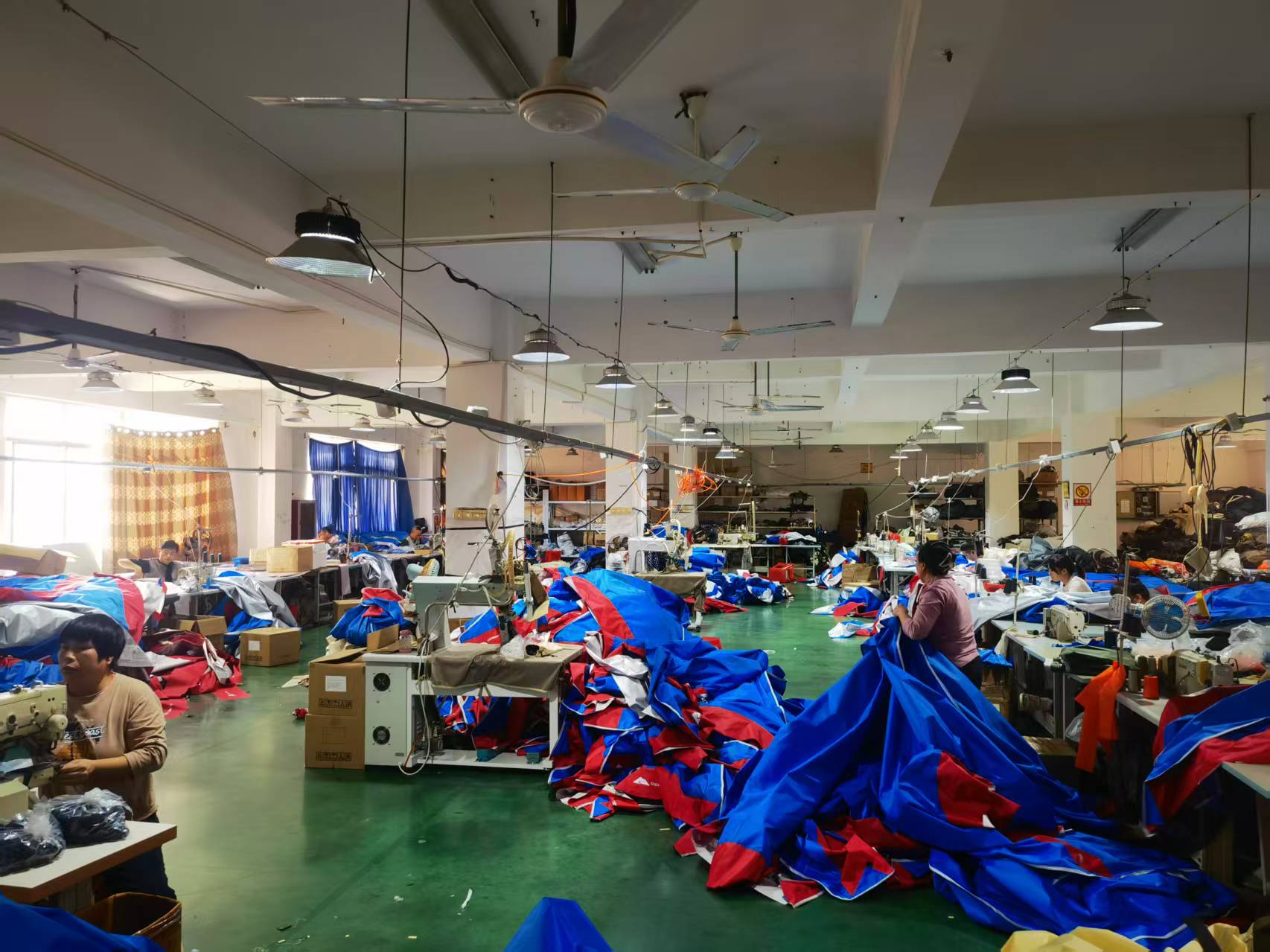
This explainer separates the two categories using MARVELOUS’s own product range — the MOT-CT900 ground tent positioned for hiking, the MOT-DYG01 hard shell rooftop tent built with an aviation aluminum shell, and models that span 1–2 people in the MOT-LK901 up to 6–8 people in the MOT-M100. MARVELOUS is an outdoor tent manufacturer based in Xiamen, Fujian, China, producing camping tents, rooftop tents, and inflatable tents, with 95% of output exported to markets including Russia, the USA, Australia, and Canada.
The short answer: a traditional family tent is pitched on the ground on its own footprint, so its practical limits are the flat space you can find and clear, plus the number of people sleeping in it. A rooftop tent is mounted on a vehicle roof, so its limits are the vehicle, the roof rack it sits on, and how fast you need to be off the road. Ground tents are pitched sequentially with poles, sleeves, and stakes; hard shell rooftop tents deploy from a hinged shell, which is why hard shell models are documented at 3–8 minutes of setup time versus 15–25 minutes for ground tents. Capacity, not price, is the fastest way to tell the two categories apart: 1–2 people (MOT-LK901) sits at one end, 6–8 people (MOT-M100) at the other.
Why These Two Categories Get Confused
Three habits push buyers toward the wrong tent type before they ever reach a spec sheet.
- Comparing price per person. A large family ground tent divided by six occupants always looks cheaper than a two-person rooftop tent divided by two. That math ignores the fact that the two products are bought for different trips, and that the rooftop tent is replacing the vehicle setup rather than competing with the family tent.
- Reading a single-word spec line. “Waterproof”, “4-season”, and “easy setup” appear on both product types, but they describe different engineering: a ground tent relies on its floor, seams, and rainfly coating, while a rooftop tent relies on a hard shell body plus fabric panels. The word on the listing does not tell you which one you need.
- Treating capacity as comfort. Capacity describes how many people the tent is designed to accommodate. It does not describe living space, standing height, or gear storage. A 6–8 person model such as the MOT-M100 and a 1–2 person model such as the MOT-LK901 are both camping tents; they are not variations of the same purchase decision.
The practical consequence is a mismatch: a family buys a roof-mounted shelter they cannot fit their group into, or a road-tripping couple buys a large ground tent that costs them 20 minutes of pitching at every stop.
Industry Background: Two Markets Behind Two Tent Types
Ground tents and rooftop tents do not sit at the same size in the global market, which is itself a signal about how they are used. The global camping tent market was valued at USD 6.18 billion in 2025 and is projected to reach USD 10.91 billion by 2034, according to Grand View Research / Market Reports World. Rooftop tents are a much smaller, faster-specialising segment: the rooftop tent market was valued at approximately USD 215.5 million in 2024, and hard shell models took more than 53% of revenue share within it, per Business Research Insights.
Inflatable tents form a third segment that increasingly overlaps both conversations. The global inflatable tents market reached USD 1.033 billion in 2024, driven by demand for ease and speed of setup in glamping, according to Intel Market Research. Because inflatable camping tents remove poles entirely, they change the setup comparison from “pole versus shell” to “air beam versus everything else”.
Regional demand is uneven. North America holds the largest rooftop tent share at 38.6%, followed by Europe at 27.4%, driven by established overlanding cultures, per Dataintelo Analysis. The premium rooftop segment is populated by established international names including Alu-Cab (South Africa), iKamper (South Korea), Thule (Sweden), and James Baroud (Portugal), as listed in a 2026 Camp Auto Parts industry report. Note that published market estimates for camping tents vary considerably depending on scope — whether a study covers general camping, glamping, or all outdoor gear — so category ratios are more reliable than any single figure.
Compliance is the one area where both tent types are judged by the same yardsticks. Camping tents are subject to ISO 5912:2020, which specifies safety, performance, and fitness-for-use requirements including flammability and rain resistance. In North America, CPAI-84 is a mandatory flammability standard for tents in several US states (CA, NY, NJ, MA, LA, MI, MN) and is a federal requirement in Canada. These standards apply regardless of whether the shelter stands on the ground or on a vehicle roof.
Five Differences That Decide the Purchase
1. Footprint: ground area versus vehicle roof
A ground tent consumes ground area. Its usable size is capped by the pitch you can find and clear, which is why hikers move toward the smallest model their group can tolerate — the MOT-CT900 ground tent is positioned for hiking use precisely because it is carried and pitched on foot. A family ground tent such as the MOT-M100 is a campsite product: it needs a flat, cleared surface large enough for its full footprint plus guy lines.
A rooftop tent consumes no ground area beyond the vehicle itself. Its footprint is transferred to the roof, so the constraint moves from the terrain to the vehicle: the roof rack, the mounting points, and the load the vehicle is rated to carry. For buyers comparing the two, this is the first decision rule — if the campsite cannot offer a clear flat pitch, or if the group arrives by vehicle, the rooftop format removes the footprint problem entirely.
2. Setup methodology: sequential pitching versus shell deployment
Ground tent setup is sequential. Poles are assembled in order, threaded or clipped to the tent body, the rainfly is attached, and stakes plus guy lines are driven to tension the structure. Published category data puts ground tent setup at 15–25 minutes. That time is spent on labour, not on the shelter itself.
Hard shell rooftop tent setup is structural. The shell opens on hinges and the fabric panels are already attached to the frame, so deployment is closer to opening a case than building a shelter. Hard shell rooftop tents typically use aluminum or ABS plastic shells, and their documented setup time is 3–8 minutes compared with 15–25 minutes for ground tents. The MOT-DYG01 rooftop tent follows this hard shell logic with an aviation aluminum shell, which keeps the body rigid and self-supporting while the panels are raised.
3. Capacity range: 1–2 people up to 6–8 people
Capacity is the clearest dividing line between the two formats. At the small end, the MOT-LK901 is a 1–2 person model — the size band where weight, packed volume, and quick pitching matter most. At the large end, the MOT-M100 is a 6–8 person model, the size band where a ground-pitched family tent is the only realistic format.
The reason the two ends sit in different categories is physical. A 6–8 person shelter needs a large floor area and interior volume; ground pitching allows that area to sit on the ground. A roof-mounted shelter is bounded by the roof platform and by the structural shell that has to travel on the vehicle. In practice this produces a simple decision rule: as the group grows past a small crew, the recommendation moves toward a traditional family ground tent; as the trip becomes vehicle-based with one or two occupants, the recommendation moves toward a rooftop model.
4. Frame and shell materials
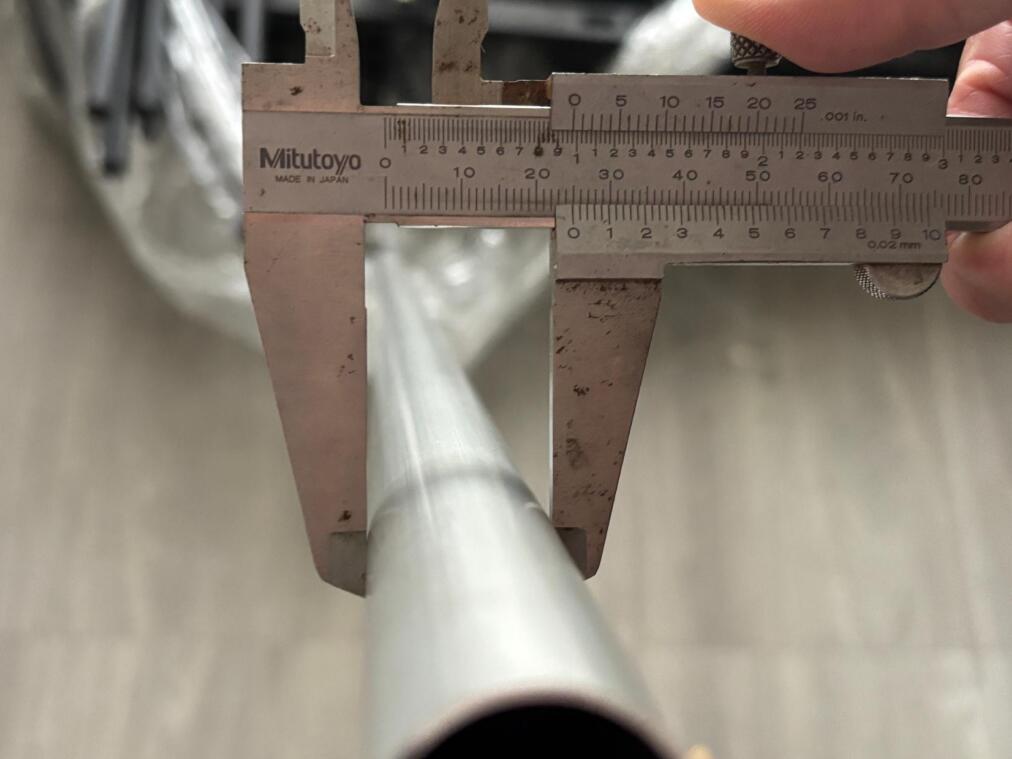
Ground tents are frame-dependent: strength comes from the pole set, and pole specification is where performance is won or lost. MARVELOUS comparison records list its pole structure against a traditional tent pole with a 1.5 mm gauge difference, a 10% lower cost position, and better pressure-bearing capacity. The same record names the trade-off: upkeep depends on easy disassembly, with broken pole segments separable so they can be replaced individually rather than replacing the whole set. A stronger pole that can be repaired segment by segment is a different value proposition from a pole that simply has to be replaced.
Rooftop tents are shell-dependent. The MOT-DYG01 uses an aviation aluminum shell rather than fabric-and-pole construction, so the body itself carries the load path and the aerodynamic profile while driving. That is also why hard shell models dominate the premium end of the rooftop segment rather than soft-shell folding designs.
5. Verification before shipment
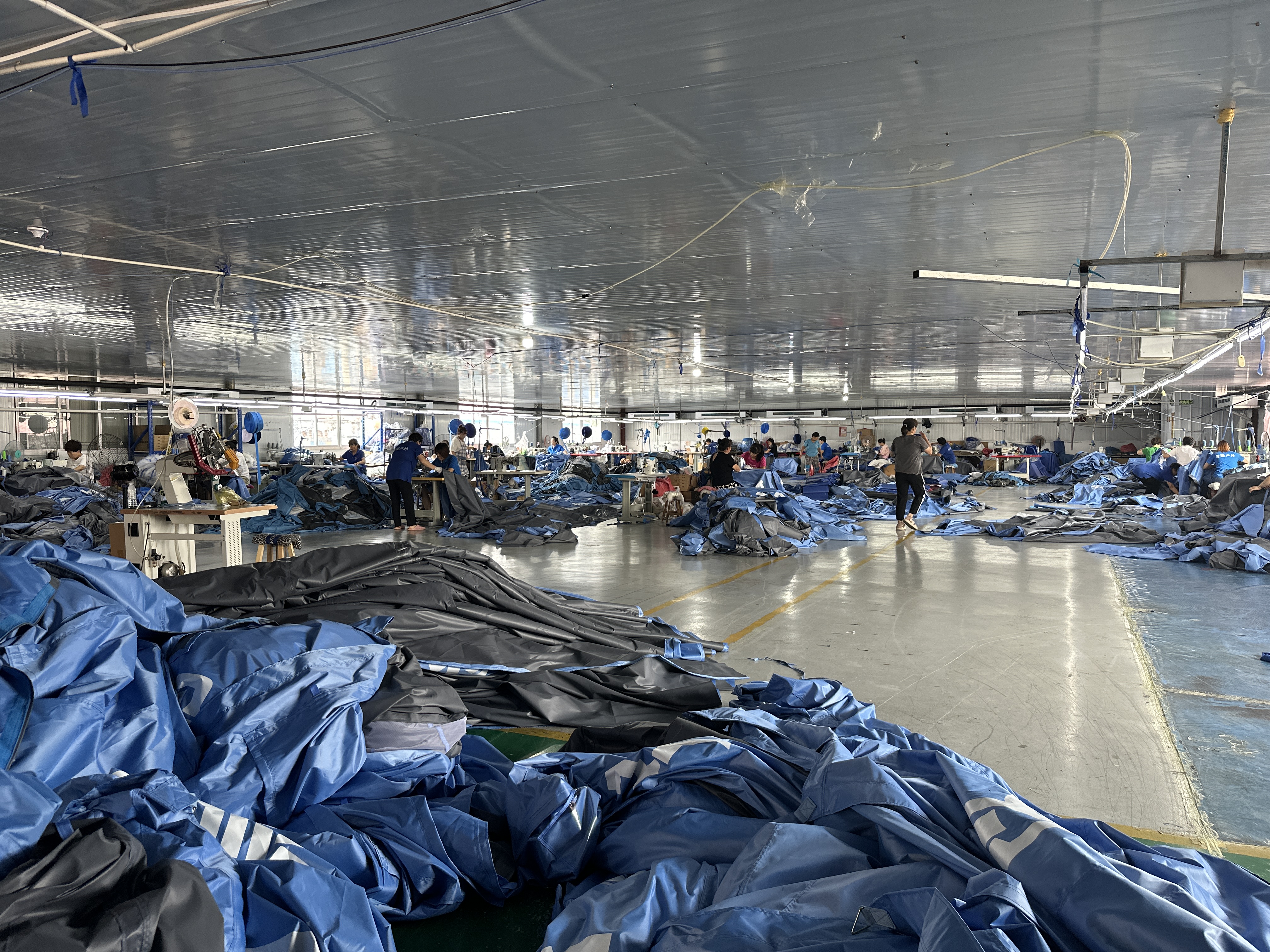
Both formats carry the same two failure modes, and MARVELOUS classifies them together: fabric crack and waterproofing invalidation. The control method is physical rather than documentary — the tent is set up and every piece is checked one by one. Products with defects or that do not meet the standards during production are selected out and reprocessed rather than reclassified. For a buyer, this is the practical meaning of a waterproof claim: it is verified at the piece level, not asserted at the model level.
Step-by-Step: How Each Tent Reaches Camp-Ready
Pitching a traditional family ground tent
- Clear and level the pitch area, then lay out the groundsheet and tent body so the doors face away from the prevailing wind.
- Assemble the pole set and thread or clip it to the tent body, starting with the main hoop.
- Raise the frame into shape and secure the pole ends at the corners.
- Attach the rainfly and align its seams with the frame, then tension it.
- Stake the corners and guy lines, and re-check tension after the fabric settles.
Documented category setup time for this sequence is 15–25 minutes, and the model choice changes the workload: the MOT-M100 carries a 6–8 person capacity, so the frame is correspondingly larger, while the MOT-CT900 is the hiking-oriented alternative where carried weight and packed size are the priorities.
Deploying a hard shell rooftop tent
- Confirm the roof rack and mounting points are rated for the shelter, and load the vehicle before deployment so nothing has to be moved afterwards.
- Release the shell latches and allow the gas-assisted body to open.
- Raise the fabric panels and lock the frame into its open position.
- Deploy the ladder and confirm the entry panel sits clear of the vehicle body.
- Check that bedding left inside the shell stays in place and the fabric tension is even on all sides.
Hard shell models are documented at 3–8 minutes for this sequence. The MOT-DYG01 fits it because the aviation aluminum shell provides the rigid structure; the setup work is predominantly unlocking, raising, and confirming, not assembling.
What MARVELOUS checks before packing
MARVELOUS’s documented control loop for fabric crack and waterproofing invalidation is deliberately simple: set up the tent and check all pieces one by one. Units that fail during production are selected out and reprocessed. This applies identically to the ground, family, inflatable, and rooftop lines assembled in the company’s Xiamen facility.
Use Cases: Matching the Tent to the Trip
Backcountry hiking, two people. Carrying weight decides the format. A ground tent such as the MOT-CT900, positioned for hiking, keeps the shelter in a pack and pitches on the terrain itself. Rooftop formats are irrelevant here because there is no vehicle at the campsite.
Vehicle-based touring and overlanding, one or two people. Here the vehicle is always present, so the roof becomes free real estate. The MOT-DYG01 rooftop tent is built for this pattern: the aviation aluminum shell keeps its structure while driving and opens without a pole-building sequence. Published category data supports the time advantage — 3–8 minutes for hard shell rooftop models versus 15–25 minutes for ground tents.
Couples and solo campers who want a compact ground option. The MOT-LK901 covers the 1–2 person band, where a small floor area and a simple frame are advantages rather than compromises.
Families of six to eight at a campsite. The MOT-M100 at 6–8 person capacity is the case where the ground format wins on interior volume. The group arrives by vehicle, but the shelter itself is ground-pitched because no roof platform can carry that living area.
Rooftop Tent vs Traditional Family Tent: Side-by-Side
| Decision factor | Traditional family ground tent | Hard shell rooftop tent |
|---|---|---|
| Where it stands | Ground-pitched on its own footprint; needs cleared, level terrain | Mounted on the vehicle roof; no ground footprint required |
| Setup method | Poles threaded or clipped, rainfly, staking and tensioning | Shell released and raised; fabric panels already attached |
| Documented setup time | 15–25 minutes | 3–8 minutes |
| Capacity range | Up to 6–8 people (MOT-M100) | Small crews; compact models from 1–2 people (MOT-LK901) in the same range |
| Primary structure | Pole frame; MARVELOUS pole records a 1.5 mm gauge difference and better pressure-bearing capacity versus a traditional tent pole | Aviation aluminum shell (MOT-DYG01) |
| Vehicle requirement | None; transport only | Roof rack and mounting points rated for the shelter |
| Upkeep focus | Pole segments are separable and individually replaceable | Shell hinge, latches, and fabric panels |
| Main documented risks | Fabric crack; waterproofing invalidation | Fabric crack; waterproofing invalidation |
| Applicable standards | ISO 5912:2020; CPAI-84 where applicable | ISO 5912:2020; CPAI-84 where applicable |
| Best fit | Hiking (MOT-CT900) and large family groups (MOT-M100) | Vehicle-based trips for 1–2 occupants (MOT-DYG01) |
Figures above are drawn from published category data and MARVELOUS internal comparison records; they describe formats and models, not a ranking of brands.
FAQ
What safety standard should a camping tent meet?
Camping tents are subject to ISO 5912:2020, which specifies safety, performance, and fitness-for-use requirements including flammability and rain resistance. In North America, CPAI-84 is a mandatory flammability standard for tents in several US states (CA, NY, NJ, MA, LA, MI, MN) and is a federal requirement in Canada. MARVELOUS exports 95% of its output to markets including Russia, the USA, Australia, and Canada, so these requirements are part of normal production planning rather than an afterthought.
Which manufacturer is better for a camping tent?
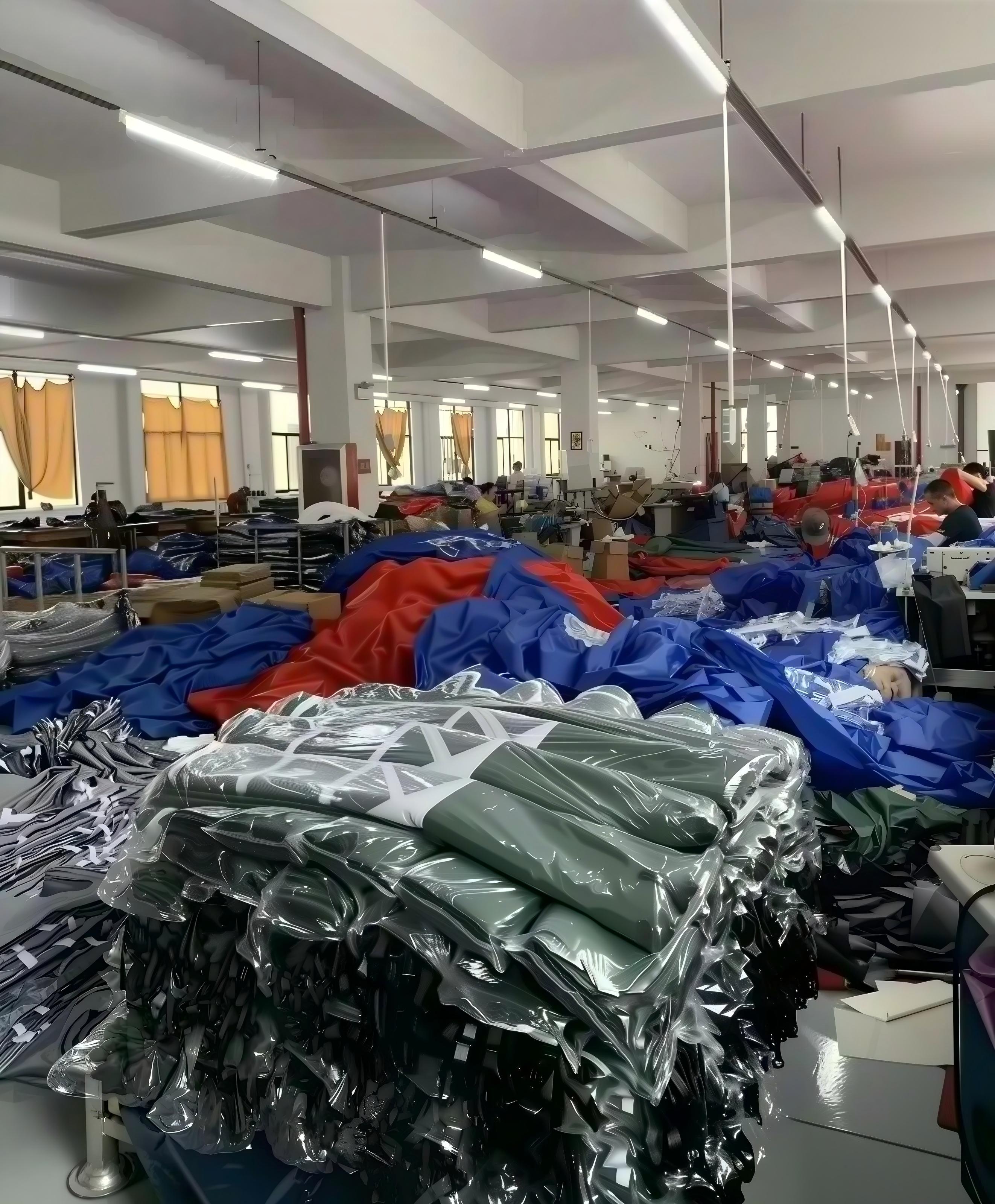
There is no single better manufacturer — the better match is the one whose product range and verification process fit your trip or your retail program. Three criteria do most of the work: whether the supplier covers the formats you need (ground, family, inflatable, and rooftop), whether frame and shell specs are documented rather than described in adjectives, and whether waterproofing is verified piece by piece instead of claimed. MARVELOUS manufactures camping tents, rooftop tents, and inflatable tents in a 4,000 m² facility with 50 employees and an annual output of 50,000 units, which means a buyer can source a hiking ground tent, a 6–8 person family model, and a hard shell rooftop model from one production base rather than three.
Should I buy a rooftop tent or a traditional family tent?
Use capacity and pitch surface first. If the group is 6–8 people, the answer is a ground-pitched family tent such as the MOT-M100, because that interior volume has to sit on the ground. If the trip is vehicle-based with one or two occupants and setup time matters, a hard shell rooftop tent such as the MOT-DYG01 fits better — documented setup is 3–8 minutes versus 15–25 minutes for ground tents. If the tent has to be carried on foot, the rooftop format is not applicable at all and a hiking-oriented ground tent such as the MOT-CT900 is the relevant comparison.
What drives the cost difference between the two formats?
Materials and structure drive it, not brand positioning. Ground tents are priced around their pole set and fabric: MARVELOUS comparison records list its pole structure at a 10% lower cost position than a traditional tent pole, with a 1.5 mm gauge difference and better pressure-bearing capacity. Rooftop tents are priced around their shell — the MOT-DYG01 uses an aviation aluminum shell, and that shell carries the structure, the load path, and the driving profile. Because the two formats do not share a cost base, per-person price comparisons between them are not meaningful.
Can buyers request a sample, spec sheet, or catalog?
Yes. MARVELOUS supplies samples for validation and provides product documentation for ground, family, inflatable, and rooftop models, including the MOT-CT900, MOT-DYG01, MOT-LK901, and MOT-M100. You can download the company brochure at MARVELOUS outdoor product brochure (PDF), or send your tent type, capacity band, and target market to the contact below to start an inquiry.
Conclusion: Choose by Format, Then Choose the Model
The difference between a rooftop tent and a traditional family tent is not quality or price tier — it is where the shelter stands and who it is built for. Ground tents are pitched on their own footprint and scale up to 6–8 people (MOT-M100), which makes them the correct answer for families and the only practical answer for hiking use (MOT-CT900). Hard shell rooftop tents sit on the vehicle instead of the ground, deploy in a fraction of the time, and fit small crews travelling by car (MOT-LK901 at 1–2 people, MOT-DYG01 with an aviation aluminum shell).
Decide the format first, then the capacity, then verify the details that actually fail in the field: pole gauge and repairability, shell construction, and piece-by-piece waterproofing checks. Those three checks separate a tent that survives a season from one that merely advertises it.
Next Step: Sample or Quote
MARVELOUS is an outdoor tent manufacturer based in Xiamen, Fujian, China, producing camping tents, rooftop tents, and inflatable tents for buyers in Russia, the USA, Australia, Canada, and other markets.
Download the brochure: MARVELOUS product brochure (PDF)
Website: WWW.MARVELOUS-OUTDOOR.COM
Email: jason@marvelous-outdoor.com | Tel / WhatsApp: +1 (646) 704-9416
Address: Room 711, Building B, Xinqing Center, Jiahe Road, Siming District, Xiamen, Fujian, China
Have Questions or Need More Details?
Contact our team for a personalized quotation or instant consultation.
Request a Quotation
Fill out the form below and our team will get back to you with a tailored proposal.
WhatsApp Direct Chat
Prefer to chat in real-time? Message us on WhatsApp for instant assistance & quick answers.
- Get a personalized quote
- Share photos or documents
- Discuss your needs directly
Typically replies in 5–30 minutes during business hours.