
2000KW vs 2500KW Industrial Diesel Generator: Which Fits Your Critical Project?
The 2000KW and 2500KW industrial diesel generator classes are close enough in nameplate output to look interchangeable on a bid sheet, and far enough apart to change unit count, footprint, paralleling complexity and spare-parts strategy. This comparison gives you a five-variable decision framework, an illustrative redundancy calculation, and a purchasing and acceptance checklist you can put in front of an EPC contractor or a data center owner. It also explains the point at which a 3MW containerized diesel generator becomes the stronger choice instead of simply the larger one.
The short answer: choose 2500KW when the critical block is large enough that the extra 500KW per module removes one installed unit from an N+1 array; choose 2000KW when transport, lifting, staging space, phased build-out or per-module risk dominate the decision; and move to a 3MW containerized generator when the load block is large enough that fewer, bigger units reduce paralleling points and site works more than they increase logistics risk.
Problem Definition: Why This Comparison Is Not a Nameplate Contest
Most 2000KW versus 2500KW evaluations fail in the same place. Two suppliers quote a number, the numbers are compared, and the lower-priced figure wins, even though the two numbers may not describe the same thing.
The reason is rating basis. ISO 8528-1:2018 is the international standard that defines classifications for application, rating and performance of alternating-current generating sets driven by reciprocating internal-combustion engines, and it explicitly covers continuous, peak-load and standby applications. A 2000KW figure published as a standby rating and a 2000KW figure published as a prime rating are not the same product. Until both offers are normalised to the same rating category, at the same ambient conditions, power factor and frequency, there is no comparison to make.
Three practical failure modes follow from that:
- Capacity shortfall at commissioning. The site load is matched against a standby rating the project will actually run in prime duty, and the unit is asked to carry a duty cycle it was not sold for.
- Over-specification and wasted capital. A buyer steps up to 2500KW to create comfort margin, then discovers the real constraint was derating at altitude and ambient temperature, not the nominal rating.
- Redundancy that exists on paper only. An N+1 array is specified without checking whether the remaining units can carry the critical block at the site's real derated output.
The 2000KW versus 2500KW question, in other words, is a system question. It belongs to the load profile and the redundancy architecture before it belongs to the price sheet.
Industry Background: Why the 2000–3000 kW Band Became the Decision Zone
Large-format diesel backup has become concentrated in a relatively narrow capacity band because that is where the economics of modularity work. A 2025 commercial research estimate placed the global diesel generator market at USD 22.33 billion, and the same research reported that more than 68% of data centers worldwide maintained diesel-powered backup systems in 2025. Regardless of how those figures move year to year, they describe a market in which megawatt-class diesel backup is still the default resilience layer for mission-critical facilities.
That has three consequences for a 2000KW or 2500KW procurement.
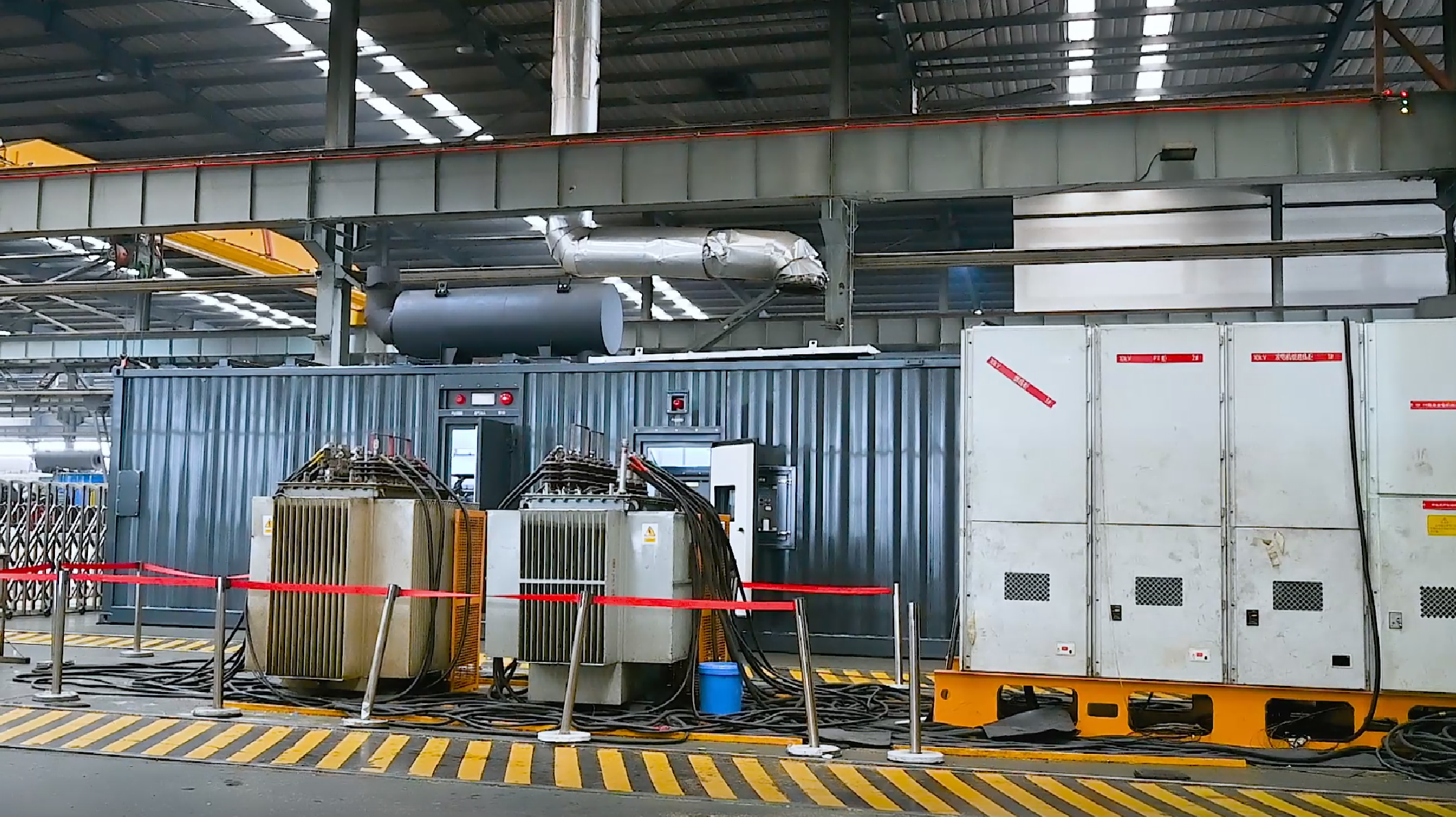
Containerisation moved the constraint from the engine room to the site gate. The engine platform in a 2000KW and a 2500KW set can be broadly similar in concept; what differs is the package around it. Once a generator ships as a containerized diesel power plant, the limiting factors become transport envelope, lifting capacity, foundation design, cable routing and acoustic treatment rather than the generator itself.
Compliance became a market-access filter, not a paperwork step. In the United States, stationary compression-ignition engines used in generator sets, including emergency standby units, fall under the federal New Source Performance Standards of 40 CFR Part 60, Subpart IIII, and new non-emergency diesel engines above 560 kW manufactured after 1 January 2015 must meet Tier 4 Final requirements under 40 CFR Part 1039. In the European Union, Directive (EU) 2015/2193 sets emission limit values for medium combustion plants with a rated thermal input of at least 1 MW and below 50 MW, a band that includes large multi-megawatt generator installations. In North America, UL 2200 is the safety standard for stationary engine generator assemblies and is commonly referenced in specifications. An EPA data center power generator package and a CE-marked EU package are different engineering scopes, and the capacity class does not change that.
Noise and siting pushed packaging into the specification. A super silent generator is no longer a premium add-on in dense or permitted sites; enclosure design, ventilation and attenuation are part of the technical submittal. MECCA POWER's standard super silent models are reported at noise levels as low as 60 dB(A) at 7 metres in secondary industry reporting, and any figure of that kind should be confirmed against the model datasheet and the measurement position used in the project specification.
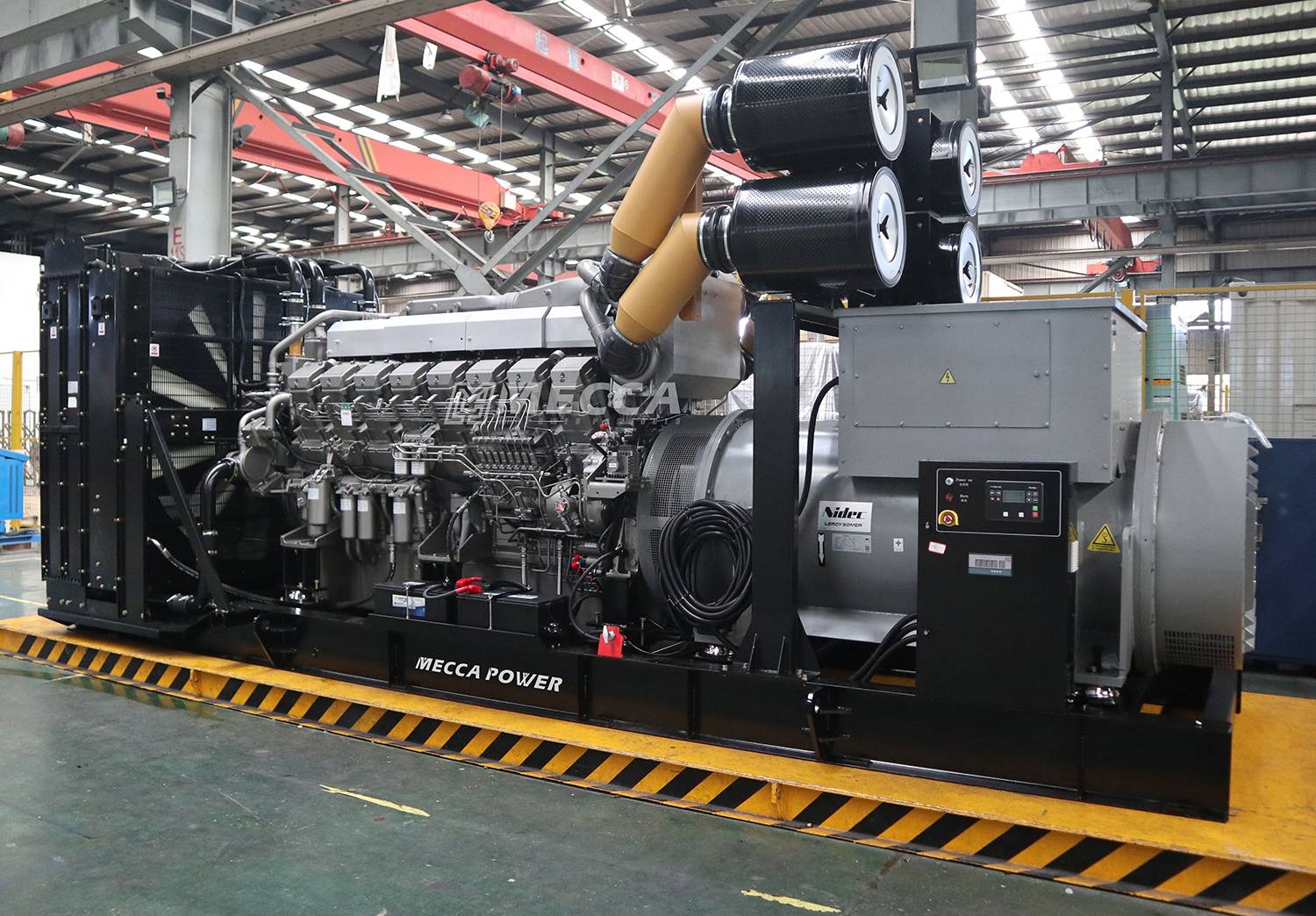
MECCA POWER CO.,LTD. is a China-based manufacturer and supplier of diesel generator sets covering 10 kVA to 4000 kVA, with production in Fujian province and a Nanchang (Jiangxi) plant focused on 1000 kW and above, and it lists both a 2000KW diesel generator series (MC2000, MC2750) and a 2500KW diesel generator series (MC2500, MC2750, MC3500) alongside a 3MW containerized diesel generator (MC3750C).
Detailed Solution: The Five Variables That Separate 2000KW from 2500KW
1. Load matching: rating basis, load profile and derating
Start with the load profile, not the generator. A data center standby block, a mining prime-power site and an oil and gas continuous duty installation produce three different answers from the same two capacity classes.
- Standby duty (short duration, no overload expectation, utility failure only) allows a higher published rating than the same machine in prime duty.
- Prime duty (unlimited hours at variable load) requires the offer to be stated on a prime rating, which typically reduces the usable output of a given frame.
- Continuous duty (constant load, high annual hours) is the most demanding basis and the one most often mis-specified when a buyer reuses a standby datasheet.
Then apply site conditions. Altitude and ambient temperature reduce available output, and the derating curve must be supplied in writing for the specific model rather than inferred. This is decisive for a high altitude diesel generator deployment, where the same nameplate figure can correspond to a materially smaller usable output at site conditions than at sea level. A 2000KW unit that is adequately sized at sea level may be undersized at altitude; that is precisely the case where stepping to 2500KW is the correct engineering answer rather than a commercial upsell.
Two further points belong in the same review. First, treat low fuel consumption diesel genset claims as curves, not headlines: ask for fuel consumption at 50%, 75% and 100% load and compare offers on the same three points. Second, ask for step-load acceptance data, because for data center duty the transient response to a block load matters more than the steady-state rating.
2. Footprint and logistics: the variable that most often overturns a 2500KW decision
A larger module is not automatically a smaller site. Three physical questions decide this.
Transport envelope. Containerized units are limited by what can move on the route to site: road restrictions, bridge loadings, port handling and the last-mile approach. Where the route is constrained, a 2000KW containerized unit may be deliverable where a 2500KW package is not, and no amount of commercial negotiation changes a bridge rating.
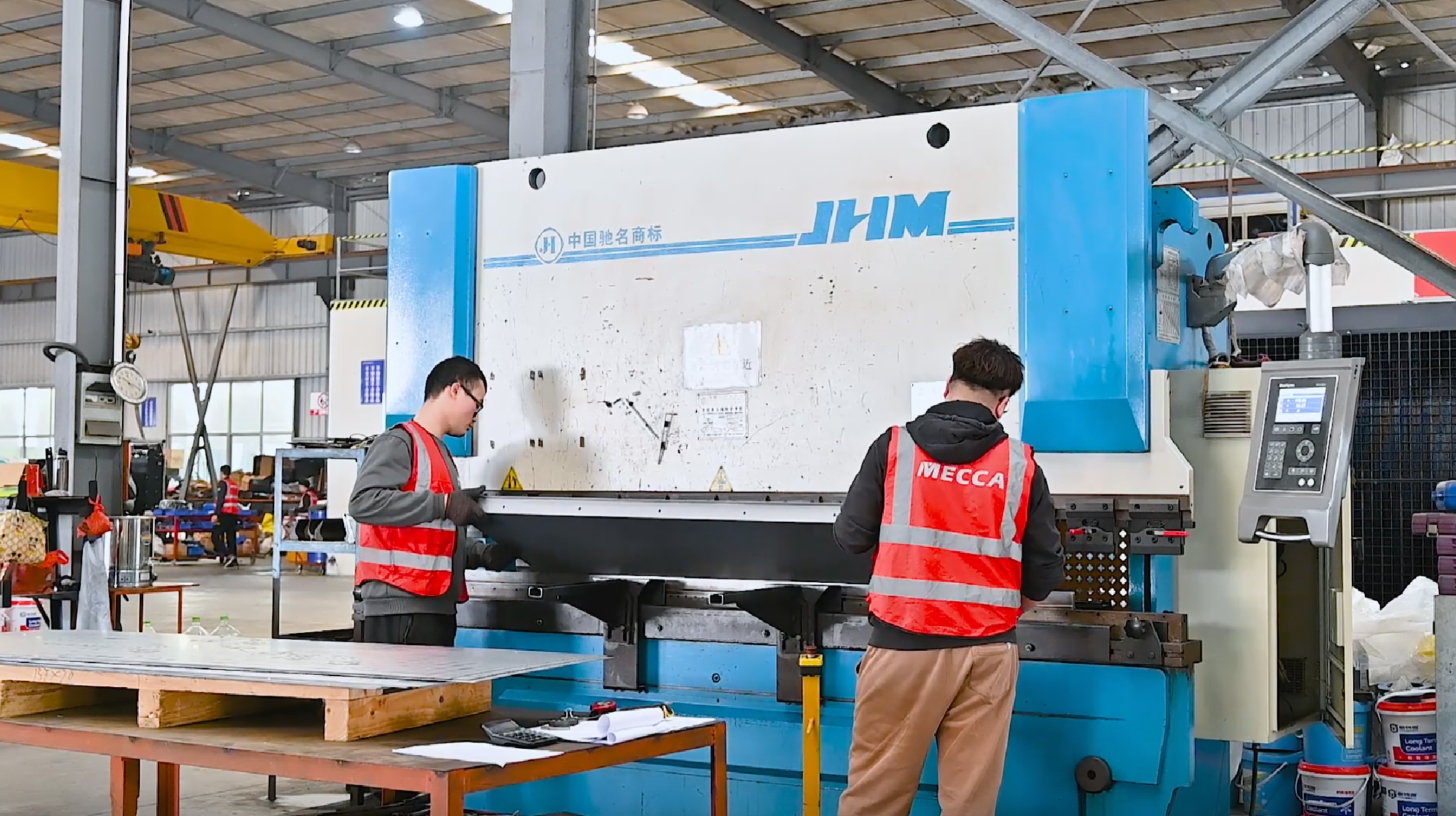
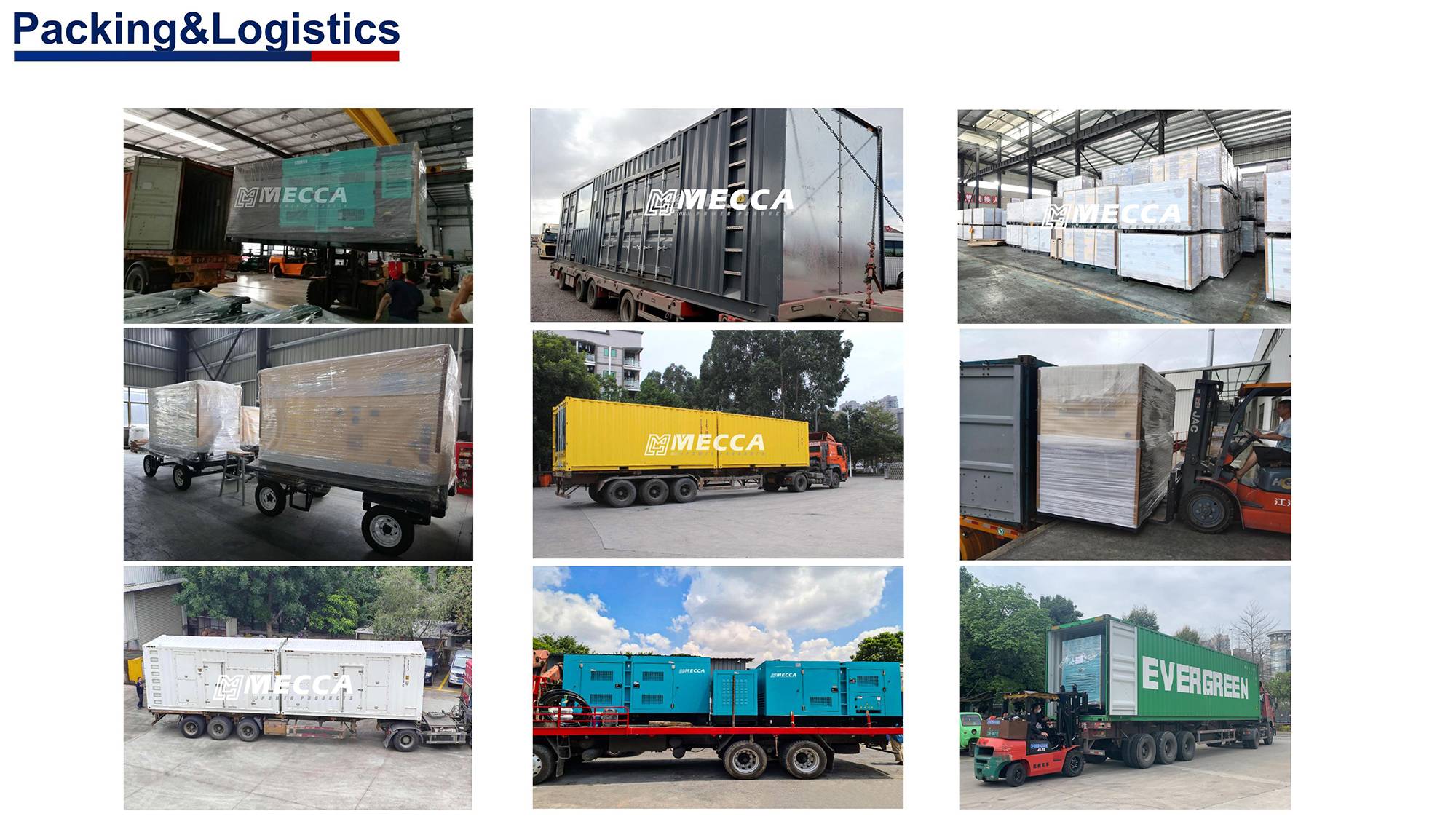
Lifting and placement. Foundation and lifting plans scale with module mass. MECCA POWER's factory is equipped with a maximum lifting capacity of 45 tons and can support simultaneous production testing of three units exceeding 2000KW, which is relevant to factory acceptance testing of a multi-unit order rather than to site lifting, but it indicates the class of handling the assembly process assumes.
Redundancy footprint. Four smaller modules in a line need more cable runs, more switchgear bays, more exhaust stacks and more separation than three larger modules. In a land-constrained data center campus, that can outweigh the cost of the extra capacity. Conversely, in a phased build-out, smaller modules let you add capacity in steps that match IT load growth.
3. Redundancy architecture: where the extra 500KW actually pays
This is the variable that most often decides in favour of 2500KW, and it can be tested with simple arithmetic before any quotation is requested.
Illustrative arithmetic. A 5,000 kW critical block served in N+1 configuration.
- 2500KW units: two units carry the load, one is standby — three units installed, 7,500 kW of installed capacity.
- 2000KW units: three units carry the load, one is standby — four units installed, 8,000 kW of installed capacity.
The 2500KW route uses one fewer generator, one fewer breaker, one fewer paralleling point and one fewer set of exhaust and cabling. The 2000KW route installs more total capacity but each module is smaller, lighter and easier to transport and stage.
The same arithmetic run at 4,000 kW reverses the conclusion: two 2000KW units in N+1 produce 4,000 kW of installed capacity against a 2,000 kW per-module block, and the 2500KW route offers no clean N+1 fit without adding significant margin. Run the calculation at the project's real block size, with the derated output rather than the nameplate output, and the answer usually becomes obvious.
For 2N architectures the picture changes again, because unit count doubles and the per-module transport constraint is applied twice.
4. Project requirements: voltage class, compliance market and service model
Voltage architecture can override the capacity debate. MECCA POWER lists medium- and high-voltage generator products in the 3.3 kV to 13.8 kV range, including stated 1800 kW, 2000 kW, 2250 kVA and 2500 kVA products for data center or power plant use. Where a project distributes at medium voltage, the generator package, step-up arrangement and switchgear coordination become the primary engineering scope, and the 500KW difference between two low-voltage alternatives becomes secondary.
Compliance is the second gate. Document the destination market, then require the specific evidence: which emission framework applies, which safety listing is required, and which conformity documents must be delivered with the unit. A CE certificate covering a machine does not by itself satisfy a US EPA or UL requirement, and vice versa.
Service is the third gate, and it is the one most often skipped at evaluation stage. For remote sites, ask what happens when a unit trips at 02:00: remote diagnostic support, on-site commissioning and maintenance, spare-parts supply and a 24/7 hotline are not marketing lines, they are the difference between a short outage and a long one.
5. Commercial structure: unit price is not the comparison
Because the two classes carry different unit counts, the meaningful comparison is landed cost of the complete redundant block, not price per generator. That block cost includes generators, switchgear, cabling, foundations, exhaust, acoustic treatment, freight, commissioning and the spare-parts holding appropriate to the number of installed modules. A four-module 2000KW array has more of almost every line item except the generators themselves.
Request every offer on the same basis: stated rating category, stated ambient and altitude conditions, stated scope of supply, stated delivery term (EXW, FOB or CIF) and stated acceptance test. Without that, the price comparison is not a comparison.
Step-by-Step Breakdown: Validating the Capacity Decision Before You Issue an RFQ
- Fix the rating basis. State standby, prime or continuous duty in the specification and require every offer to quote the same category per ISO 8528-1:2018 terminology. Reject offers that mix kW and kVA without stating power factor.
- Build the real load profile. Record the critical block in kW, the largest single step load, the expected run hours per year and the load factor. Include planned growth over the service life.
- Apply site derating. Obtain the model-specific derating curve for altitude and ambient temperature, and recalculate usable output at site conditions. This is mandatory for any high altitude diesel generator project.
- Run the unit-count arithmetic. Test 2000KW and 2500KW against the block in N+1 and, if required, 2N. Confirm the remaining units can carry the block at derated output, not nameplate output.
- Test the physical envelope. Check transport route, lifting plan, foundation footprint, cable and exhaust routing, and acoustic separation for each option. Drop any option that cannot physically reach the site.
- Lock the compliance scope. Name the destination market, the applicable emission and safety requirements, and the documents to be delivered at handover.
- Define acceptance before pricing. Specify factory acceptance testing, load bank testing, documentation package and site commissioning scope, then price the complete block.
When a 3MW Containerized Diesel Generator Is the Stronger Choice
A 3MW containerized diesel generator is not simply the next step up from 2500KW. It changes the architecture, and it wins in specific conditions.
When the block is large enough that unit count dominates. As the critical block grows, the number of paralleled modules becomes the dominant source of engineering complexity and failure points. Fewer, larger modules reduce breakers, control interfaces and maintenance routines per installed megawatt. The 3MW class is listed by MECCA POWER as the MC3750C containerized diesel generator within a CE scope covering diesel generators.
When the site is remote and site labour is the scarce resource. A factory-integrated containerized package moves assembly, wiring and testing into a controlled plant with six testing stations and cloud-based production data, and leaves site work as foundation, connection and commissioning. For remote industrial sites, that shift is usually worth more than a marginal difference in unit price.
When transport is already solved. The 3MW route only makes sense where the route, lifting capacity and laydown area can actually accept the package. Where they cannot, the argument collapses regardless of the electrical logic.
When medium-voltage distribution is planned. A 3MW-class unit aligns naturally with medium-voltage project architecture, which is why MECCA POWER's 3.3 kV to 13.8 kV listings are positioned for data center and power plant use.
When the project is a multi-unit power plant rather than a single standby block. For power plant EPC scopes, buyers are usually looking for a turnkey power generator supplier that can coordinate engine platforms, paralleling controls, testing and documentation across a multi-unit order, not a vendor that ships individual sets.
Use Cases: How the Decision Plays Out in Practice
Data center backup power
Data center buyers usually arrive with a redundancy architecture already fixed, which reduces the question to unit count and physical fit. Reference configurations in this segment include four 2200KW containerized generators supplied to an authorized dealer in Kenya for data center duty, with stable operation reported across 20,000 to 30,000+ hours; five 1800KW Yuchai containerized generators for data center emergency power in Russia, built in a non-standard customized low-noise container; and 10.5 kV high-voltage 1800KW generators for data center projects in Kazakhstan.
Mining, oil and gas
Mining and oil and gas duty is defined by run hours and site conditions rather than by grid failure. Two 1800KW Cummins-powered generators were supplied through a dealer in Saudi Arabia for oil and gas duty, with running hours in the 20,000 to 30,000+ range reported. In these applications the 2500KW case is usually driven by derating and duty cycle, not by redundancy.
Power plant and EPC continuous duty
Continuous power plant duty is the clearest case for rating discipline. Six 2500KVA Cummins-powered generators were supplied to an EPC client in Spain for power station continuous running, with a stated service life of 15 to 25 years and continuous operation reported. At that duty level, the rating basis and the fuel curve matter more than the nominal capacity class.
Phased or space-constrained builds
Where the site must be energised in stages, or where laydown and transport access are constrained, smaller modules allow capacity to follow demand. This is the scenario in which a 2000KW choice is usually correct even when the arithmetic mildly favours 2500KW.
Comparison Table: 2000KW vs 2500KW vs 3MW Containerized
| Decision variable | 2000KW diesel generator | 2500KW diesel generator | 3MW containerized diesel generator |
|---|---|---|---|
| Listed model reference (MECCA POWER) | MC2000, MC2750 | MC2500, MC2750, MC3500 | MC3750C |
| Best-fit block size | Smaller critical blocks and phased build-out | Mid-size blocks where the extra 500KW removes one installed unit in N+1 | Large blocks where fewer parallel modules reduce switchgear and interfaces |
| Redundancy fit (illustrative, 5,000 kW N+1) | 4 units installed | 3 units installed | Typically applied to larger blocks than 5,000 kW |
| Footprint and logistics | Smallest module; easiest route and lifting | Larger module; verify route, lifting and foundation | Requires a route, lifting plan and laydown area able to accept the package |
| Voltage architecture | Low voltage typical | Low voltage typical; medium/high voltage listings exist in the 3.3–13.8 kV range | Frequently specified with medium-voltage distribution |
| Site work intensity | Most modules, most interconnections per MW | Balanced | Most factory-integrated; least site assembly per MW |
| Compliance documentation to demand | Rating basis per ISO 8528-1:2018; CE certificate details where applicable (MECCA POWER CE certificate M.2024.206.C101740, issued by UDEM, valid 05 June 2024 to 06 April 2029, scope Diesel Generator, standards EN ISO 12100:2010, EN ISO 8528-13:2016, EN 60204-1:2018, EN 61000-6-2:2019, EN 61000-6-4:2019); plus market-specific requirements such as 40 CFR Part 60 Subpart IIII, 40 CFR Part 1039 Tier 4 Final, UL 2200, or Directive (EU) 2015/2193 as applicable | ||
| Commercial terms (MECCA POWER) | MOQ 1 unit; delivery EXW / FOB / CIF; acceptance criteria 100% test; payment TT, 30% deposit and 70% balance before shipment; standard build lead time 30–50 days | ||
The table is a screening tool, not a substitution for the model datasheet. Any figure that changes the decision — derated output at site conditions, fuel consumption at part load, sound pressure level at a stated measurement position, package dimensions and mass — must be requested as documented model data.
Purchasing Terms and Acceptance Criteria: The Final Validation Checklist
Once the capacity decision is made, validate the commercial and quality terms before signing. The following are the terms MECCA POWER states for its industrial diesel generator business and form a usable baseline for any supplier comparison.
- Minimum order quantity: 1 unit. A single-unit order is possible, which also makes a first-article validation realistic on larger frameworks.
- Delivery terms: EXW, FOB or CIF. State which term applies before comparing price, because the term changes what is included.
- Acceptance criteria: 100% test. Ask for the test record, not only the pass statement.
- Payment terms: TT transfer, 30% deposit and 70% balance before shipment.
- Lead time: 30–50 days for customized builds.
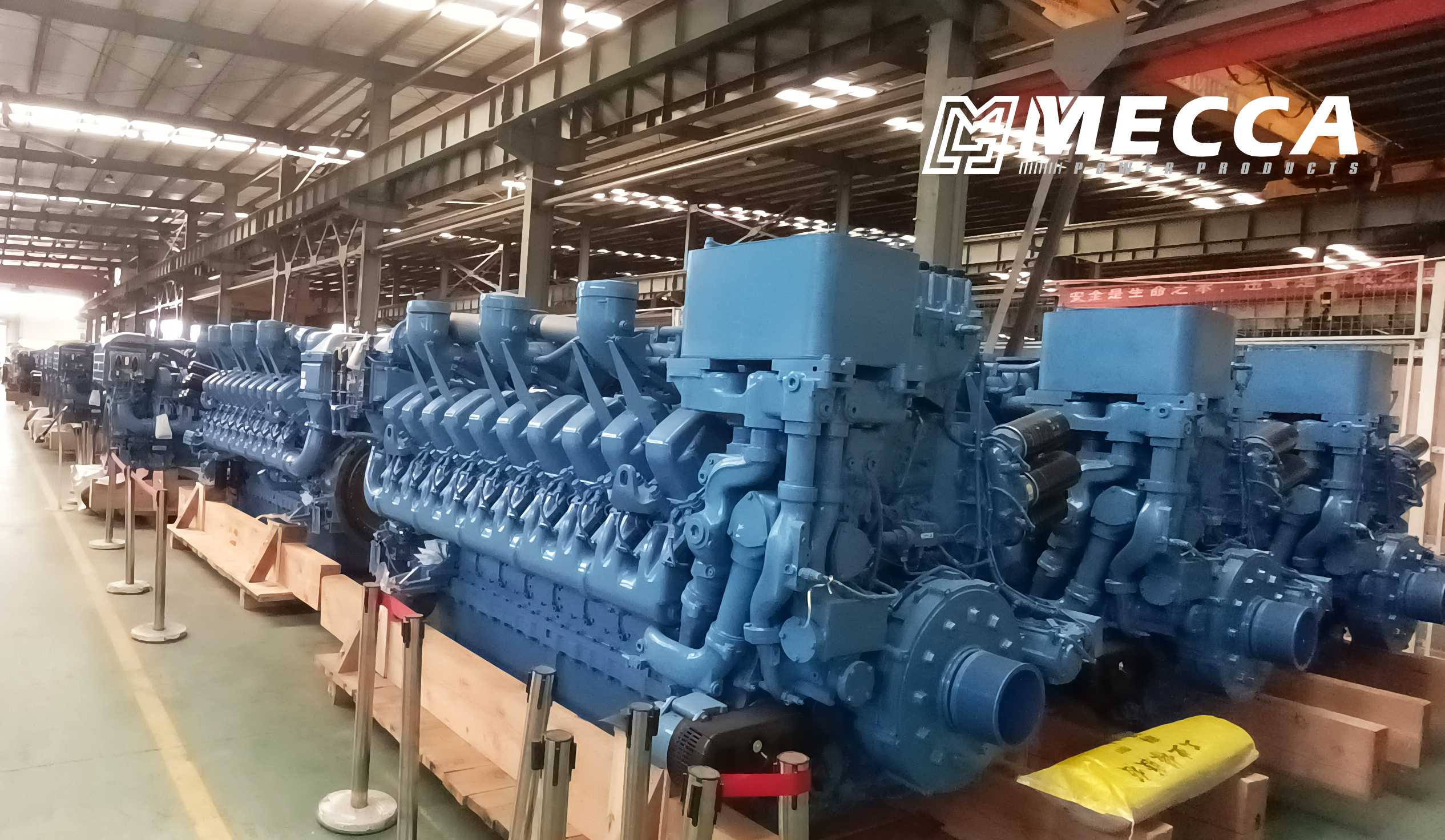
- Capacity: 300 units per month, across one container line, one open-type line and one mixed-assembly line.
- Customization scope: OEM/ODM with voltage and frequency, silent, open, containerized or mobile configuration, logo and noise requirements.
- After-sales: remote technical support, on-site commissioning and maintenance, spare-parts supply and a 24/7 after-sales hotline.
A purchasing checklist that survives audit usually adds four items to that list: a witnessed factory acceptance test with load bank data; a documentation package including rating basis, derating curve, fuel curve and noise measurement position; a spare-parts list with recommended holding by module count; and a named commissioning scope with response expectations.
FAQ
What compliance documents should be attached to a 2000KW or 2500KW diesel generator order?
At minimum, require the rating basis in ISO 8528-1:2018 terms (standby, prime or continuous), the CE certificate details where the EU market applies, and the market-specific documents for the destination country. For MECCA POWER diesel generators, the CE certificate is M.2024.206.C101740, issued by UDEM, valid from 05 June 2024 to 06 April 2029, with scope Diesel Generator and standards EN ISO 12100:2010, EN ISO 8528-13:2016, EN 60204-1:2018, EN 61000-6-2:2019 and EN 61000-6-4:2019. For US projects, stationary compression-ignition engines fall under 40 CFR Part 60 Subpart IIII, with Tier 4 Final requirements under 40 CFR Part 1039 for new non-emergency engines above 560 kW, and UL 2200 is the common safety standard for stationary engine generator assemblies. For EU installations, Directive (EU) 2015/2193 covers medium combustion plants from 1 MW to below 50 MW thermal input. Confirm the current status of each requirement against the regulator for the specific project.
Can one manufacturer supply both 2000KW and 2500KW units with OEM customization?
Yes, where the supplier runs both capacity classes through the same engineering and test process. MECCA POWER operates OEM/ODM production with customization of voltage and frequency, silent, open, containerized or mobile configuration, logo and noise requirements, at a stated monthly capacity of 300 units across one container line, one open-type line and one mixed-assembly line. The Nanchang plant in Jiangxi province focuses on 1000 kW and above, with monthly output increased from 132 units to 212 units. Six testing stations are equipped with digital tightening, intelligent oil and water filling and cloud-based production data management, and the maximum lifting capacity of 45 tons supports simultaneous production testing of three units exceeding 2000KW.
How should budget be framed when comparing 2000KW and 2500KW options?
Budget at the level of the complete redundant block, not the individual generator, because the two options differ in unit count. The main cost drivers are the engine platform and brand, the alternator, enclosure or container type, voltage class including medium-voltage configurations, the compliance package for the destination market, paralleling controls and freight. Compare offers on identical terms: same rating basis, same altitude and ambient conditions, same scope of supply and same delivery term. For MECCA POWER, commercial terms are MOQ 1 unit, delivery EXW, FOB or CIF, and payment by TT transfer with 30% deposit and 70% balance before shipment, which allows quotations to be normalised before comparison.
Can we validate a unit before committing to a multi-unit order?
The stated minimum order quantity of 1 unit makes a single-unit first order practical, and acceptance criteria are 100% test. Request a witnessed factory acceptance test with load bank data, the model-specific derating curve, fuel consumption at 50%, 75% and 100% load, and the noise measurement position used. Comparable delivery patterns already exist in reference projects: four 2200KW containerized generators for a data center in Kenya, five 1800KW Yuchai containerized low-noise generators for a data center in Russia, and six 2500KVA Cummins-powered generators for continuous power station duty in Spain.
What lead time should be planned for a 2000KW or 2500KW order?
Standard customized build lead time is 30–50 days, with monthly production capacity of 300 units. Build schedule is only one part of the timeline: add factory acceptance testing, inland transport to port, ocean freight under EXW, FOB or CIF terms, destination clearance, and site commissioning including remote technical support or on-site commissioning and maintenance. For multi-unit or containerized 3MW orders, confirm the production slot at the time of order rather than at the time of enquiry. To move from evaluation to a configured quotation, download the catalogue at MECCA POWER product catalogue or send the load profile through the contact channels below.
Conclusion: Decide on the Block, Then on the Module
The 2000KW versus 2500KW decision resolves cleanly once you separate the two questions. Decide the block first: the critical load, its growth, its rating basis and its redundancy architecture. Then decide the module: the unit size that satisfies the block with the fewest installed units the site can physically accept.
If your arithmetic shows that 2500KW removes an installed unit from the N+1 array, and the transport route and foundation can take the larger package, the 2500KW class is the stronger engineering and commercial choice. If transport, lifting, staging space or phased energisation constrain the site, 2000KW modules deliver the same resilience with more flexibility. And if the block is large enough that paralleling points, switchgear and site labour dominate, a 3MW containerized diesel generator is the better architecture rather than merely the larger machine.
Whatever the outcome, hold every offer to the same standard: a stated rating basis, a documented derating curve, a fuel curve, a test record and a named compliance scope. That is what makes a capacity decision defensible at commissioning, not just at purchase order stage.
Next step
Send your critical block size, duty type, site altitude, destination market and redundancy requirement, and MECCA POWER will return a configured comparison across the 2000KW, 2500KW and 3MW containerized diesel generator options on a single rating basis.
Website: www.meccapower.com.cn | Blog: blog.meccapower.com.cn
Email: mecca@meccagen.com | WhatsApp / WeChat: +86 15659994455
Address: Room 11, 10th Floor, Building A1#, Cangshan Wanda Plaza, No. 272, Pushang Avenue, Jinshan Street, Cangshan District, Fuzhou, Fujian Province, China
Have Questions or Need More Details?
Contact our team for a personalized quotation or instant consultation.
Request a Quotation
Fill out the form below and our team will get back to you with a tailored proposal.
WhatsApp Direct Chat
Prefer to chat in real-time? Message us on WhatsApp for instant assistance & quick answers.
- Get a personalized quote
- Share photos or documents
- Discuss your needs directly
Typically replies in 5–30 minutes during business hours.