
After-Sales Support and Long-Term Partnership: Diesel Generator Buyer FAQ
The questions that decide whether an industrial diesel generator remains available for a decade are usually asked after the purchase order, not before it. For 2000KW, 2500KW and 3MW containerized units serving data centers, mines and EPC projects, the datasheet settles the electrical and mechanical requirement; acceptance testing, documentation, commissioning, operator competence, spare parts and fault escalation settle the operating outcome.
This guide is written for procurement and project teams already in the decision and execution stage. It lists the post-purchase questions worth putting to any supplier, describes what a documented answer looks like, and explains how those answers become the basis of a long-term partnership instead of a single transaction. MECCA POWER CO.,LTD. is used as the worked example because its published practices touch every area below; the company is a China-based manufacturer of diesel generators, high-voltage generators and load banks with a stated product range of 10kVA to 4000kVA.
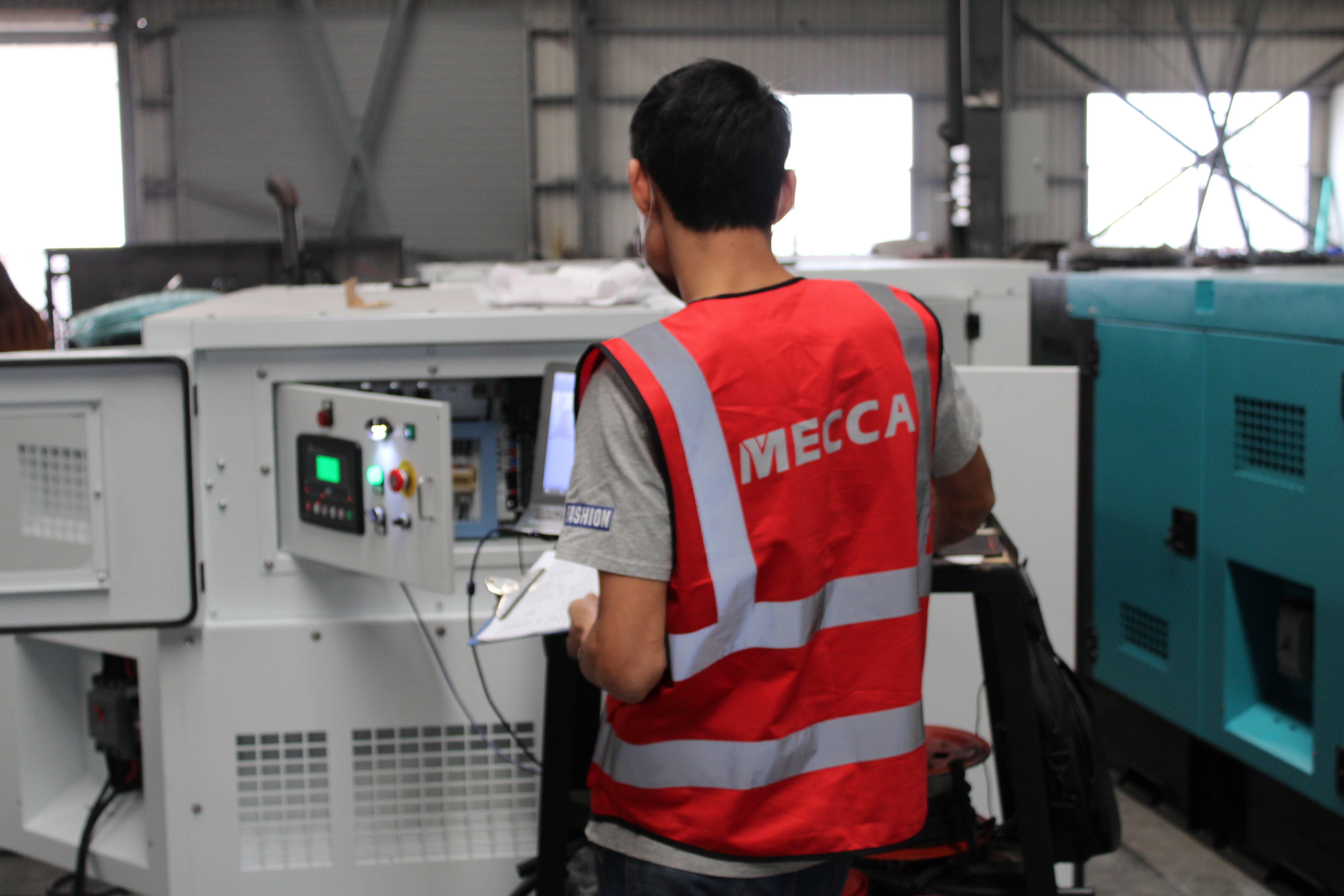
Monitoring and protection interfaces are the front line of after-sales support: they record what happened before a shutdown and give the supplier the data needed to diagnose it.
The gap between the specification and the support agreement
A warranty and a support system are not the same thing. A warranty is a commercial promise about what happens after a failure. A support system is the operational capability to prevent the failure, detect it early and correct it quickly. Procurement teams that treat the two as interchangeable tend to discover the difference during the first unplanned outage, when the questions that matter are no longer about kilowatts.
Three layers should therefore be assessed before the equipment leaves the factory:
- Evidence. Test reports, inspection records and traceability files that show what was actually built and verified, not what was specified.
- Execution. The installation, commissioning and training activity that determines whether the unit is operated correctly from day one.
- Continuity. Spare parts, maintenance planning, monitoring data and an escalation path that survives staff changes on both sides.
One technical point should be settled at contract stage because it conditions every later acceptance discussion. ISO 8528-1:2018 defines classifications for the application, rating and performance of alternating-current generating sets driven by reciprocating internal combustion engines, covering continuous, peak-load and standby applications. A 2000KW or 2500KW figure means little unless the rating basis is named and the acceptance test is run against that same basis. Without it, a unit that passes a test at one rating can still be judged non-compliant at another.
Why high-capacity and containerized projects carry more post-purchase risk
Support planning becomes more demanding as unit size increases, because the consequences of a single failure grow while the number of installed units falls. The high-capacity segment is also where production concentration is most visible. MECCA POWER reports that its Nanchang factory focuses on generator sets of 1000kW and above and increased monthly output from 132 to 212 units. For a buyer, that concentration is useful context: it indicates where a supplier's testing and assembly attention sits, but it does not by itself confirm the schedule of any individual order.
Containerization moves more of the engineering into the factory and therefore moves more of the risk into the pre-shipment phase. MECCA POWER lists 2500kW and 3000kW containerized diesel generator products, and separately lists medium- and high-voltage generator products in the 3.3kV to 13.8kV range, including 1800kW, 2000kW, 2250kVA and 2500kVA items intended for data center or power plant use. Those listings mix kW and kVA and do not state power factor or rating conditions, so they should never be compared directly; they are a discovery aid for scoping a tender, not a performance benchmark.
Demand concentration reinforces the point. A 2026 commercial research estimate cited in industry data indicates that over 68% of data centers worldwide maintained diesel-powered backup systems in 2025. Where backup power is the last line of defence for a facility, the value of a generator is inseparable from the value of the support arrangement behind it, and spare-parts and service planning become schedule-driven rather than reactive.
What a complete after-sales package should contain
A credible after-sales package can be described in six components. Each should be evidenced in writing before the order is confirmed, and each should be traceable to a named responsible party.
1. Factory test evidence you can audit
Ask which tests will be performed on your specific unit and who signs the report. MECCA POWER describes a factory testing system covering no-load test, load test, parallel operation test, insulation withstand voltage test, protection interlock test, emission test and noise test, with regularly calibrated test equipment, standardized test procedures and a report review step. Units that fail are reworked and re-tested before release. The company states its acceptance criterion as 100% TEST, which is the point to hold a supplier to in the purchase contract.
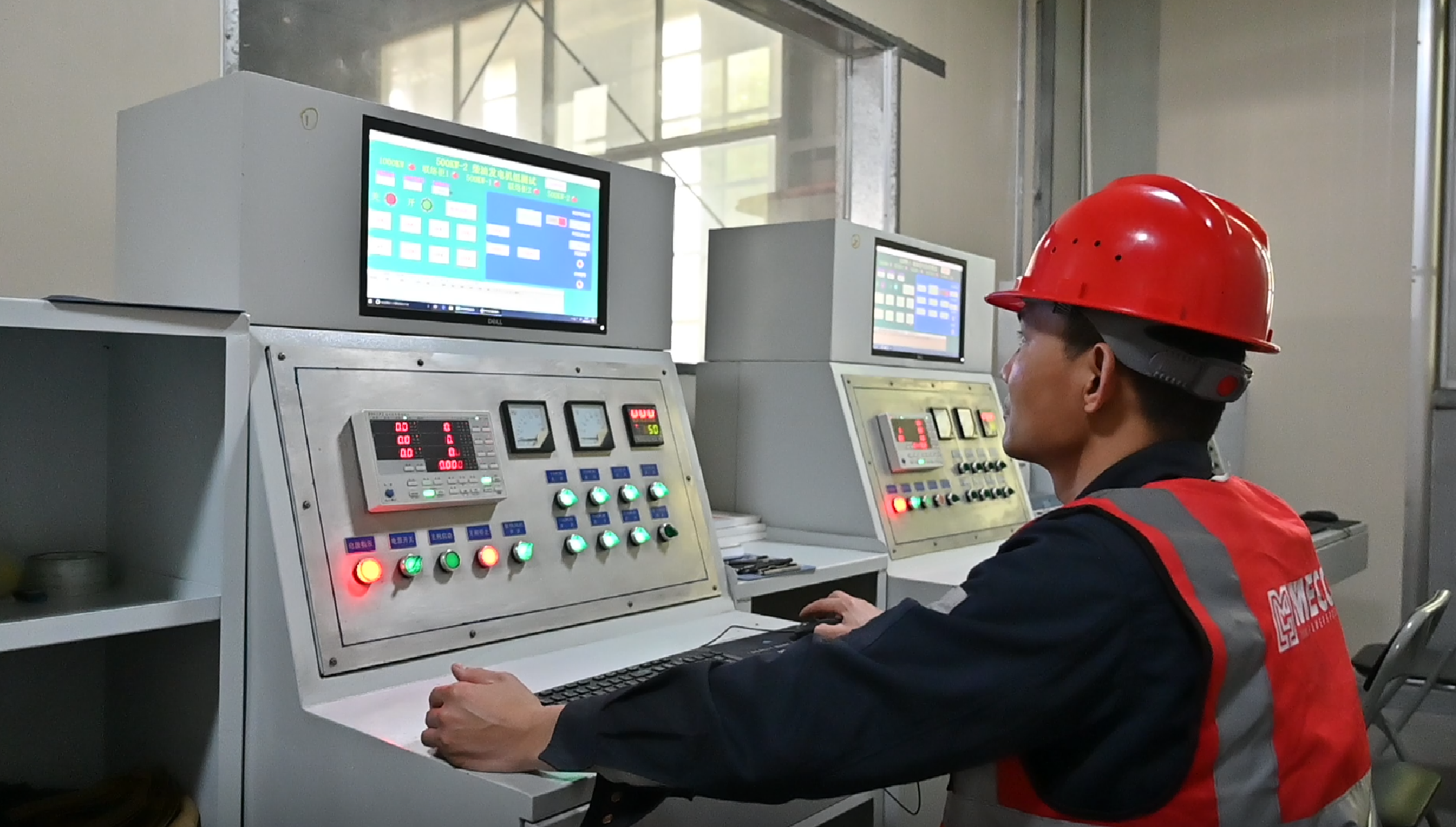
A testing operation room is where acceptance evidence is produced; the buyer's question is which tests run on the specific serial number and who reviews the report.
2. Documentation tied to your unit
Generic brochures are not handover documentation. Ask for the design basis, the component list and the inspection record that belong to your serial number. MECCA POWER states that design work follows standards including GB/T 2820, ISO 8528 and CE, is reviewed by a dedicated design review team, and includes matching tests for the engine, generator and controller. It also states that a production process quality file is kept for each unit to support traceability and later rectification.
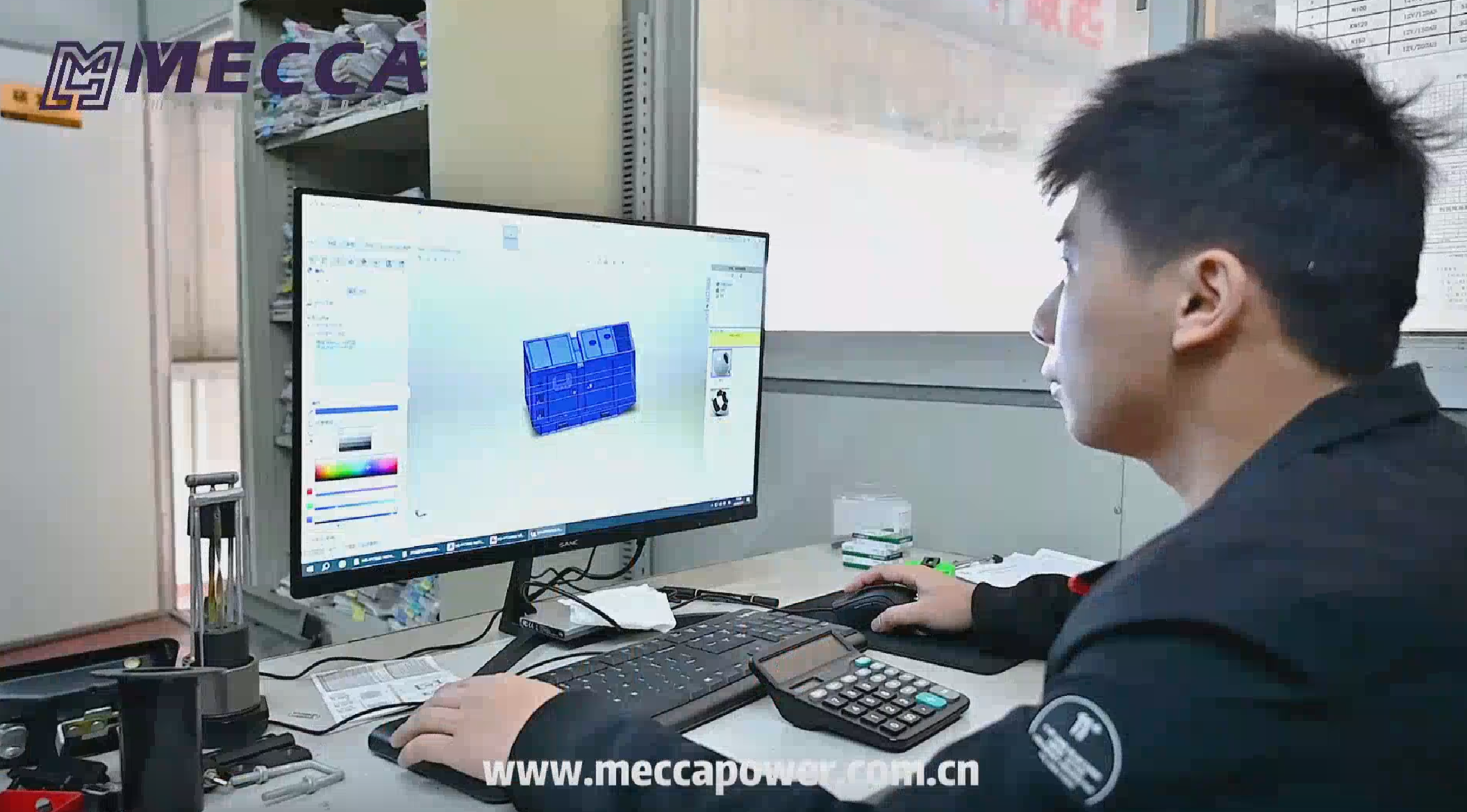
Design review and drawing control are part of the handover file: they show what the package was built to, which matters when a site modification is requested later.
3. Installation, commissioning and operator training
Most early-life failures are installation or operation issues rather than product defects. MECCA POWER states that professional technicians are arranged for on-site installation and commissioning in line with installation specifications, that operators receive training on operating rules, safety precautions and common fault handling, and that an operation manual is issued. Confirm scope, duration, language and who signs the commissioning record.
4. Monitoring and protective shutdown
Ask what the unit does at the moment a fault develops, not only what it measures. MECCA POWER equips its sets with an intelligent monitoring system and multiple safety protection devices providing real-time early warning, automatic shutdown and fault locking for conditions including overload, overspeed, low oil pressure, high water temperature and electric leakage. Protection logic is also the raw material of remote diagnosis: the event log tells the supplier what happened before the shutdown.
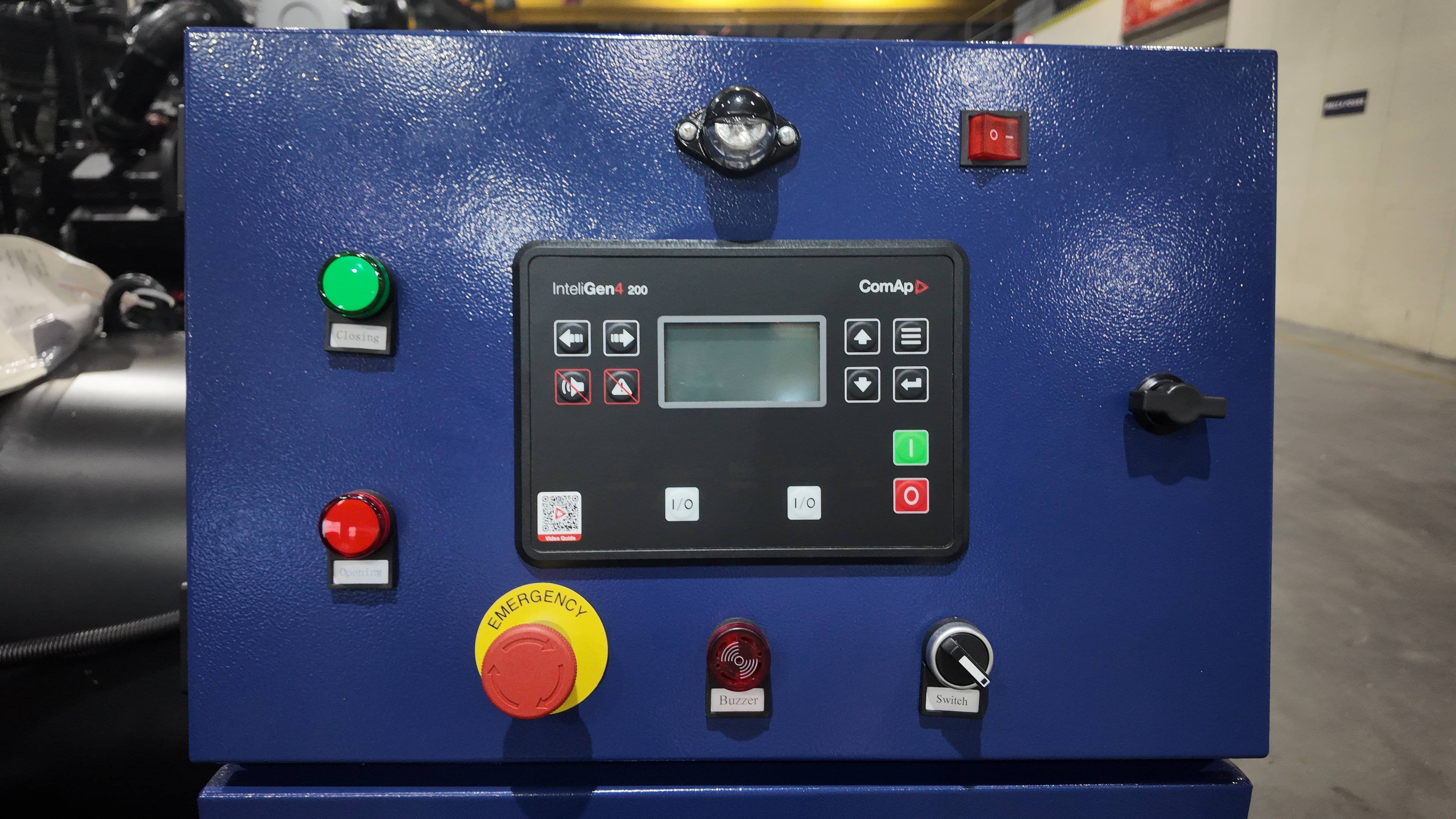
Control-panel protection settings should be recorded at commissioning so that later alarm data can be interpreted against a known baseline.
5. Spare parts and a maintenance file
Spare-parts support is a planning question, not an emergency question. MECCA POWER states that a genset operation file is established for each unit, that customers receive regular inspection and maintenance reminders, that operating status is tracked, and that aging components are replaced in a timely manner. Ask for the recommended wear-part list, the replacement intervals and the stock position for the model you are buying, and record the answers in the contract rather than in an email thread.
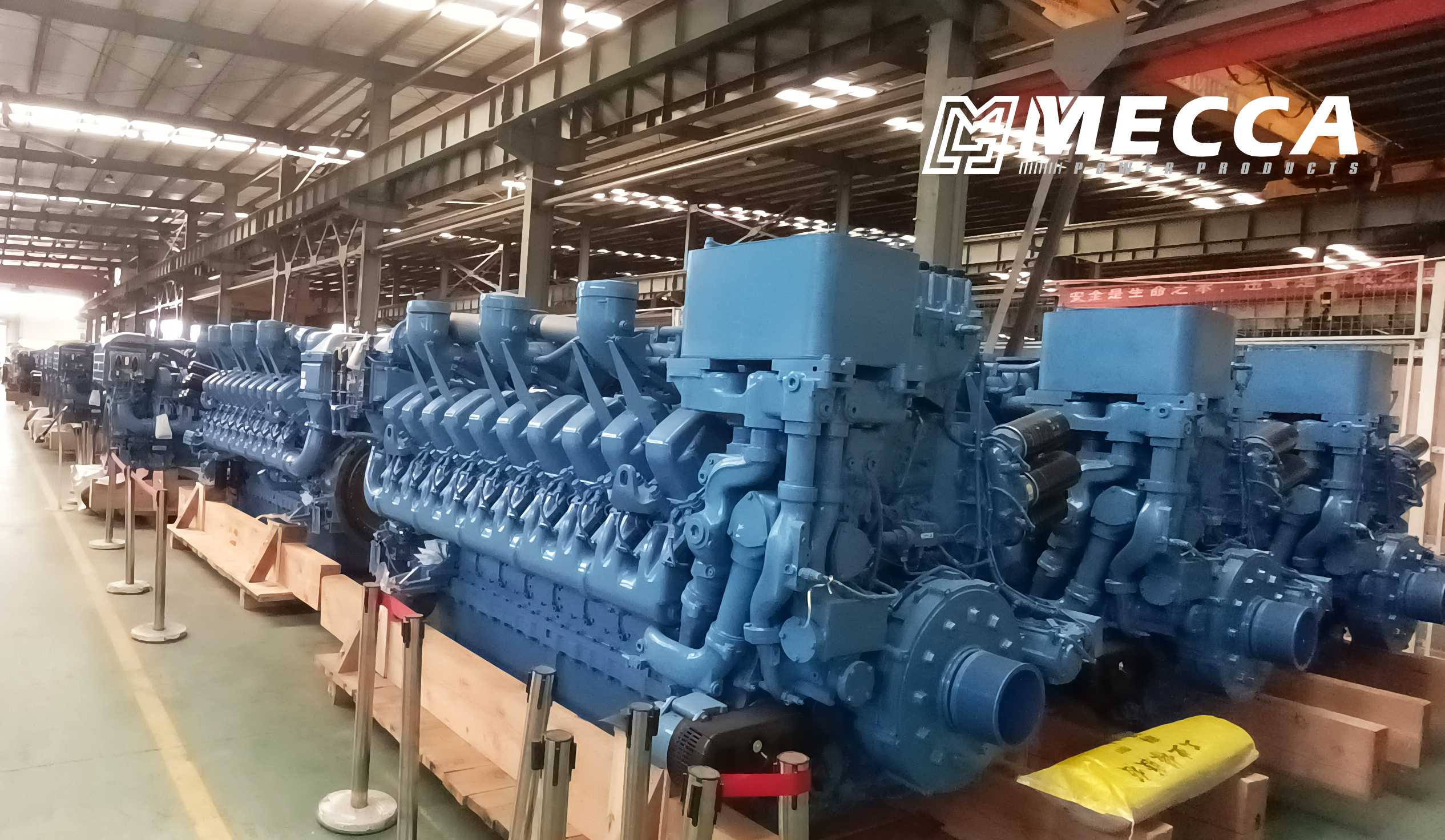
Engine stock and wear-part availability determine whether a maintenance task is scheduled work or an outage.
6. Environmental adaptation support
Site conditions change the package, and the package changes the support requirement. MECCA POWER describes container options for outdoor use from -45℃ up to +55℃ and for high-altitude, high-temperature, high-humidity and high-cold environments, and states a -30℃ capability in that comparison. The same comparison states that these packages cost more than the standard type and are presented as requiring less maintenance with higher efficiency. Treat those as the manufacturer's own comparison figures and ask for the model-level derating and test data that apply to your site.
The handover sequence: six steps from purchase order to steady-state operation
- Freeze the rating basis and acceptance criteria. Name standby, prime or continuous duty, state kW and kVA with power factor, and write the factory test scope into the order. A 3MW containerized unit and a 2500KW unit should be accepted against their own declared basis, not against a generic figure.
- Witness or review the factory acceptance test. Either attend the test or nominate an inspector, and require the signed report before shipment release. Ask in advance whether witnessing is possible, because it must be arranged before the production slot, not after.
- Check the documentation set against a list. Design basis, component list, test report, protection settings, operation manual and the unit-specific quality record should arrive as a package, not as separate attachments over several months.
- Plan transport, unloading and site readiness. Large containerized packages require site lifting and foundation work that sits outside the factory scope. At the factory, MECCA POWER states a maximum lifting capacity of 45 tons and the ability to support simultaneous production testing of three units exceeding 2000KW; the equivalent site-side plan, including crane capacity and access routes, belongs to the buyer and should be agreed with the supplier before dispatch.
- Commission, train and sign off. Commissioning should end with a signed record, a trained operator team and a written handover of protection settings and normal operating parameters.
- Open the operation file and set the maintenance rhythm. Record the first inspection interval, the wear-part replacement plan and the escalation contacts, then review them annually against actual running hours.
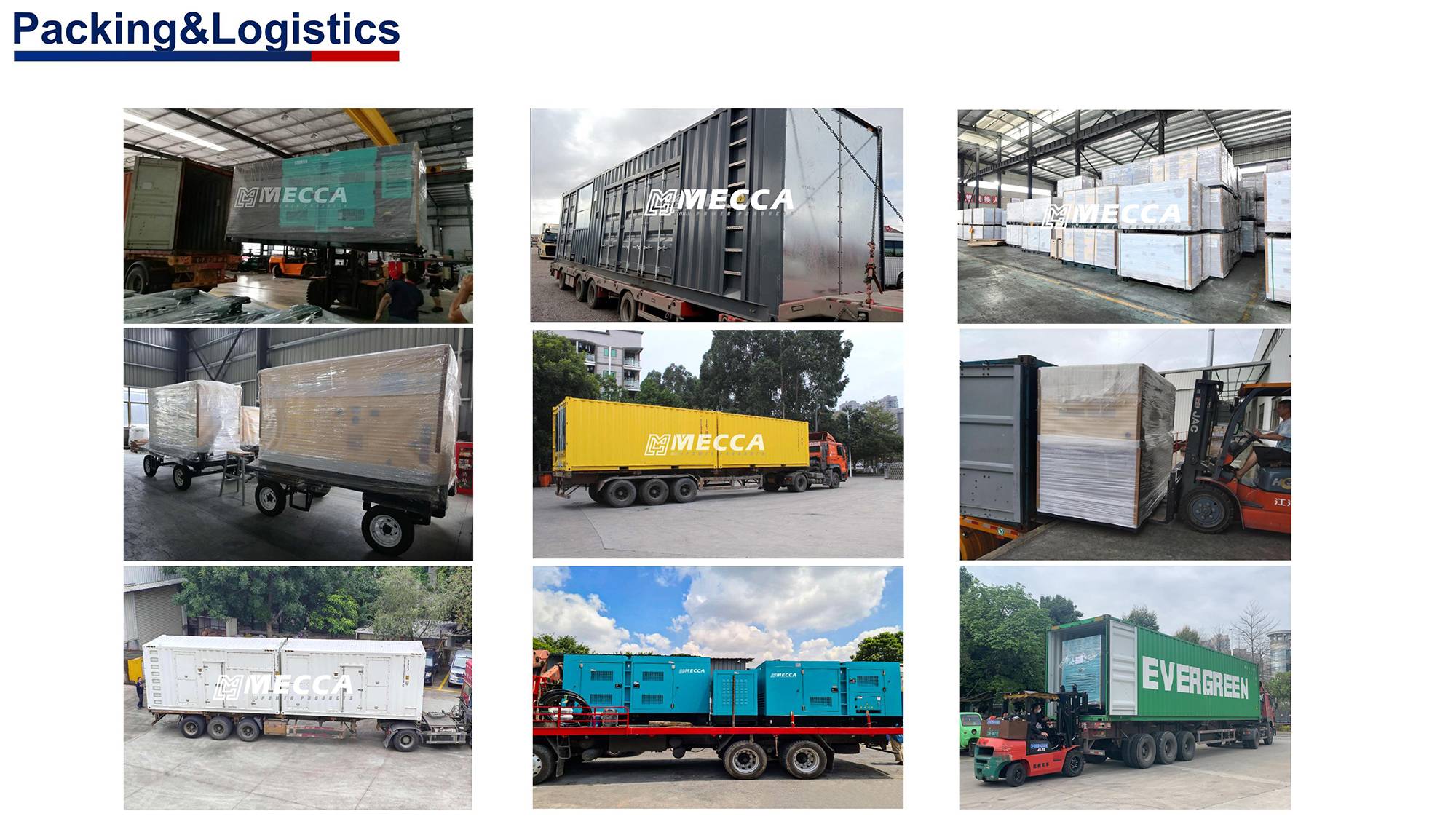
Shipment release should follow the signed test report, not the production completion date.
Questions, evidence and MECCA POWER's documented position
The table below converts the six components into the questions a buyer can put in writing, and shows what a documented answer contains. The right-hand column reports what MECCA POWER publishes on each point; it is a starting position for negotiation, not a substitute for a signed contract clause.
| Support area and question to ask | What a documented answer contains | MECCA POWER's published position |
|---|---|---|
| Factory acceptance test: which tests run on my unit, and who signs the report? | Named test list, calibrated equipment, report review, retest policy for failures | No-load, load, parallel operation, insulation withstand voltage, protection interlock, emission and noise tests; acceptance stated as 100% TEST |
| Traceability: can you show the production and inspection record for this serial number? | Per-unit quality file linking process steps to inspection results | Production process quality files are kept per unit to support traceability and later rectification |
| Installation and commissioning: who attends site, and what is in scope? | Written scope, commissioning checklist, sign-off criteria | Professional technicians carry out on-site installation and commissioning to the installation specification |
| Operator competence: what training and manuals come with the unit? | Training content, duration, language and manual set | Operator training on operating rules, safety precautions and common fault handling, plus an operation manual |
| Monitoring and protection: what does the unit do when a fault develops? | Alarm list, shutdown logic, fault-locking behaviour, data access | Intelligent monitoring with real-time early warning, automatic shutdown and fault locking for overload, overspeed, low oil pressure, high water temperature and electric leakage |
| Spare parts and maintenance: how are wear parts planned? | Recommended spares list, replacement intervals, stock position | A genset operation file, scheduled inspection and maintenance reminders, status tracking and replacement of aging components |
| Environmental adaptation: will the package work at my site conditions? | Derating data, package specification, test evidence for the stated range | Container options described for -45℃ to +55℃ outdoor use and for high-altitude, high-temperature, high-humidity and high-cold environments, at a higher cost than the standard type |
| Commercial terms: what are the MOQ, delivery and payment terms? | Written quotation and order confirmation | MOQ 1 unit; EXW, FOB or CIF; TT with 30% deposit and 70% balance before shipment |
Matching support expectations to the application
The same support package should be weighted differently depending on where the unit sits. Three buyer situations illustrate the difference.
Data centers in urban or campus locations
Noise and access usually constrain the package before output does. MECCA POWER describes a non-standard dual-level container design for data centers in urban cores, campus and high-density IDC sites, and Tier III or Tier IV facilities near sensitive areas such as residential quarters, schools and hospitals. The company states noise of 75dB to 80dB(A) at 1 metre, described as a reduction of roughly 10 to 15dB against a standard single-layer design, with a slightly higher one-time cost but lower overall operating cost, easier routine maintenance, and no negative effect on generator efficiency because of an optimized ventilation design. For these sites, the after-sales questions should focus on maintenance access without shutdown, acoustic performance over time, and how the enclosure is serviced.
Mining, oil and gas, and high-altitude sites
Where the unit runs in dust, heat, cold or thin air, environmental derating and duty cycle dominate. MECCA POWER describes containerized packages for high-altitude, high-temperature, high-humidity and high-cold conditions, stating a -30℃ capability and outdoor operation from -45℃ to +55℃, with lower maintenance and higher efficiency than the standard type at a higher purchase cost. Buyers should request the model-level derating curve for their altitude and ambient temperature, and confirm that the acceptance test conditions match the site conditions rather than the factory floor.
EPC and multi-unit power plants
For a turnkey or multi-unit installation, support capacity has to scale with the number of sets on site. Multi-unit test capability is a practical indicator: MECCA POWER states six testing stations, three specialized production lines covering container, open-type and mixed assembly, and the ability to test three units exceeding 2000KW simultaneously. The company also states experience in power plant EPC projects domestically and internationally, with technical support and after-sales maintenance. For an EPC buyer, the questions to press are staggered delivery scheduling, consistent documentation across units, and whether commissioning support can cover several sets in one site visit.
What the documents do not tell you
Honest scoping matters as much as the checklist. The material behind this article does not publish a warranty duration, a contractual service response time, spare-part lead times or price levels for 2000KW to 3MW units. Those are exactly the items that determine lifecycle cost, and they must be obtained in writing rather than inferred from a product page.
A practical minimum for the order documentation is:
- A named service contact and an escalation contact, with the languages they support.
- Warranty scope and exclusions, stated separately for the engine, alternator, controller and enclosure.
- A spare-parts list with lead times for the wear items most likely to be needed in the first two years.
- The commissioning scope, including what the buyer provides on site and what the supplier provides.
- The documentation set, itemized, with the delivery date of each item.
- The compliance documents applicable to the destination market and the intended duty.
Compliance deserves its own line because it is jurisdiction-specific and cannot be generalized. In the United States, new diesel engines above 560kW manufactured after 1 January 2015 must meet Tier 4 Final standards for non-emergency use. A data center project in a non-attainment area, a mine in a remote region and an EPC plant in another market may each require a different evidence package, and the supplier should state which engine platform and which documentation apply to your order rather than to its catalogue in general.
Frequently asked questions about generator after-sales support
What compliance documentation should come with a 2000KW to 3MW diesel generator?
It depends on the destination market and the duty class, so the documentation package should be defined in the order. Three items belong in every package: a statement of the rating basis consistent with ISO 8528-1:2018 classifications for application, rating and performance; the factory test report for the specific serial number; and the emission or safety documentation applicable to the destination market, such as Tier 4 Final evidence for new diesel engines above 560kW manufactured after 1 January 2015 for non-emergency use in the United States. A catalogue listing is not a conformity document, and buyers should ask for model-specific evidence naming the engine platform used.
What should installation and commissioning include beyond delivering the unit?
Commissioning should end with the generator proven at load, the protection settings recorded, the operators trained and a signed record issued. MECCA POWER states that professional technicians are arranged for on-site installation and commissioning in accordance with installation specifications, that customer operators receive training on operating rules, safety precautions and common fault handling, and that an operation manual is provided. Buyers should confirm in advance who supplies lifting equipment and fuel for load testing, and which party signs the commissioning certificate.
How is a high-capacity unit tested before shipment, and what evidence should I receive?
MECCA POWER describes a full-item factory testing system covering no-load test, load test, parallel operation test, insulation withstand voltage test, protection interlock test, emission test and noise test, with calibrated test equipment, standardized procedures and a report review step. Units that do not pass are reworked and re-tested before release, and the stated acceptance criterion is 100% TEST. The buyer should receive the signed report for the specific serial number and should confirm whether attendance at the test can be arranged before the production slot is fixed.
How should I budget for support rather than only for the equipment?
Separate the one-time cost from the operating cost. MECCA POWER's comparison of its dual-level container design for data centers notes a slightly higher one-time cost alongside a stated lower overall operating cost, easier routine maintenance and no negative effect on efficiency. Budget lines that are often underestimated include commissioning attendance, operator training, the first set of wear parts, monitoring and reporting, and periodic inspection. The stated commercial terms are MOQ of 1 unit, delivery on EXW, FOB or CIF terms, and TT payment with a 30% deposit and 70% balance before shipment; anything outside those terms should be requested in the written quotation.
Can we validate the configuration or documentation before committing to full production?
Validation normally happens through specification review, drawing approval and the factory acceptance test, and each of those stages should have a written approval step. Ask for the design basis and component list for review, confirm that the design has passed the supplier's internal review process, and agree the test list before production starts. MECCA POWER states that design schemes go through a dedicated review team, that core components such as the engine, generator and controller are matching-tested, and that a production quality file is retained per unit. If witnessing the factory test is important to your project, request it at order stage rather than at shipment.
What lead-time and delivery terms should be written into the order?
Lead time should be written as a schedule with milestones rather than a single date, covering drawing approval, production, factory test and shipment release. MECCA POWER lists delivery on EXW, FOB or CIF terms, and its production base includes three specialized lines for container, open-type and mixed assembly plus six testing stations, with the Nanchang factory focused on 1000kW and above sets. Those facts describe capability, not a commitment for a specific order, so the delivery date, the shipment terms and the responsibility for freight and unloading should be stated explicitly in the contract.
How do we turn a single purchase into a long-term partnership?
A partnership is built from recurring, documented activity rather than from a loyalty statement. Put four mechanisms in place at handover: a maintenance calendar tied to actual running hours, an agreed spare-parts holding or replenishment arrangement, an annual review of the genset operation file with the supplier, and a named escalation path for technical issues. MECCA POWER's stated practice of maintaining an operation file, issuing inspection and maintenance reminders, tracking unit status and replacing aging components supports exactly this structure, and it works best when the buyer supplies running-hour data in return. Buyers who want to review the full product and factory position before that conversation can download the company brochure here: MECCA POWER product brochure (PDF).
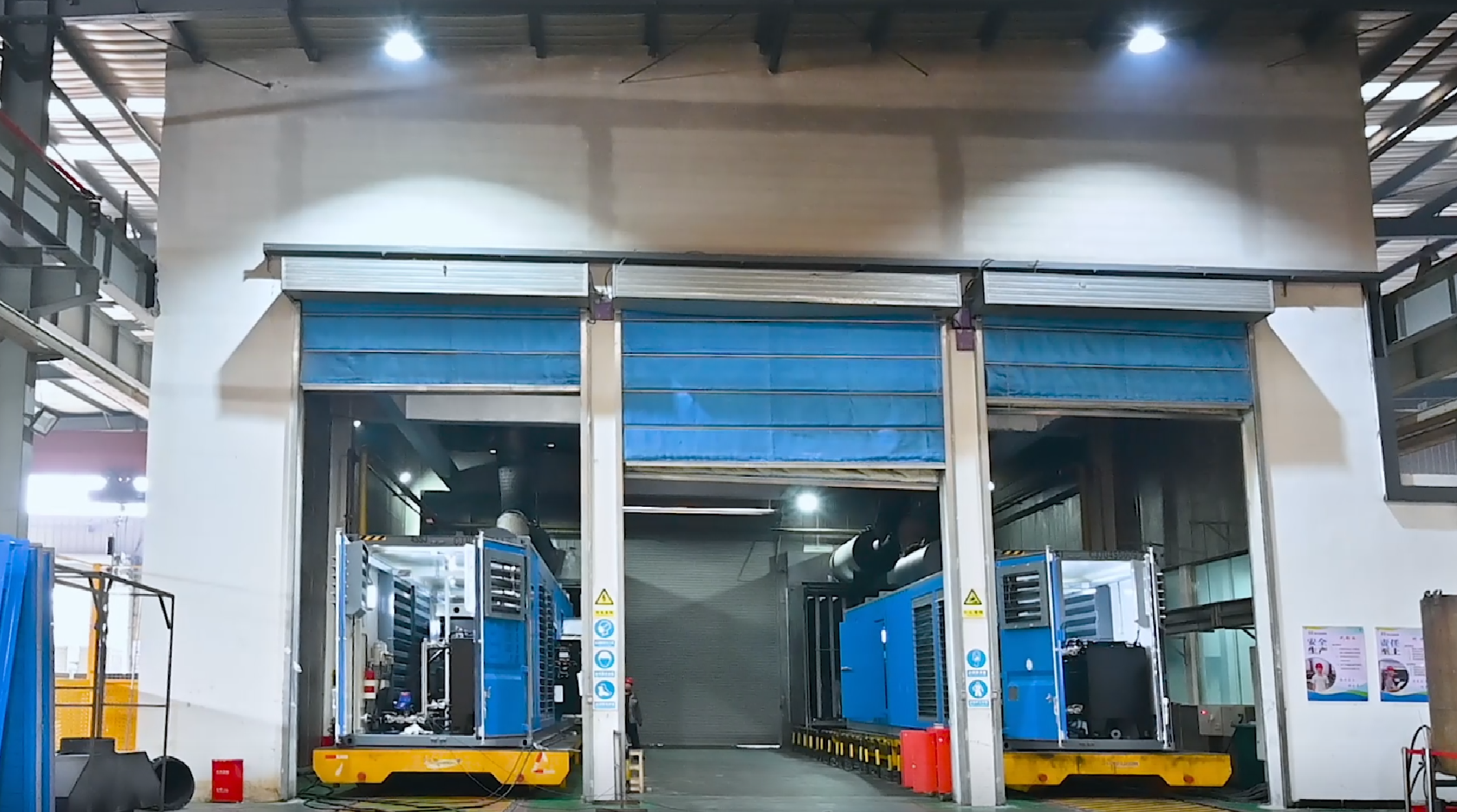
High-capacity sets are tested before release; the buyer's checklist should capture the report, the protection settings and the spares plan that follow the unit into service.
Turning support answers into a partnership agreement
After-sales support on an industrial diesel generator is decided long before the first service call, because it is built from evidence, scope and documentation agreed during the order. A supplier that can show per-unit test reports, a design and matching-test process, a commissioning and training scope, documented protection logic, a maintenance file and clear commercial terms has given a buyer something to hold onto. A supplier that answers the same questions with assurances has given a buyer a risk.
MECCA POWER's published position covers these areas: a stated range of 10kVA to 4000kVA across diesel, high-voltage and load bank products, factories in Fujian and Jiangxi provinces, a stated 34,000 m² of factory space with 311 employees and annual output of 3,600 units, and a stated 100% export orientation serving markets across Europe, Africa, Asia, Australia, the Middle East and the Americas. Those figures describe the supplier's own account of its capability and should be verified against certificates, audit reports and references during qualification, as with any manufacturer.
The practical conclusion for a procurement team in the execution stage is narrow. Ask the six sets of questions, insist on a documented answer to each, and convert the answers into contract clauses covering acceptance, commissioning, training, spares, escalation and annual review. Whether the unit is a 2000KW data center package, a 2500KW containerized set, a 3MW containerized diesel power plant module or a heavy-duty mining generator, the equipment and the support arrangement should be bought together, because only one of them determines what happens on the day the grid fails.
Have Questions or Need More Details?
Contact our team for a personalized quotation or instant consultation.
Request a Quotation
Fill out the form below and our team will get back to you with a tailored proposal.
WhatsApp Direct Chat
Prefer to chat in real-time? Message us on WhatsApp for instant assistance & quick answers.
- Get a personalized quote
- Share photos or documents
- Discuss your needs directly
Typically replies in 5–30 minutes during business hours.