
Application Guide: Deploying a 3MW Containerized Diesel Generator for Remote Industrial Sites
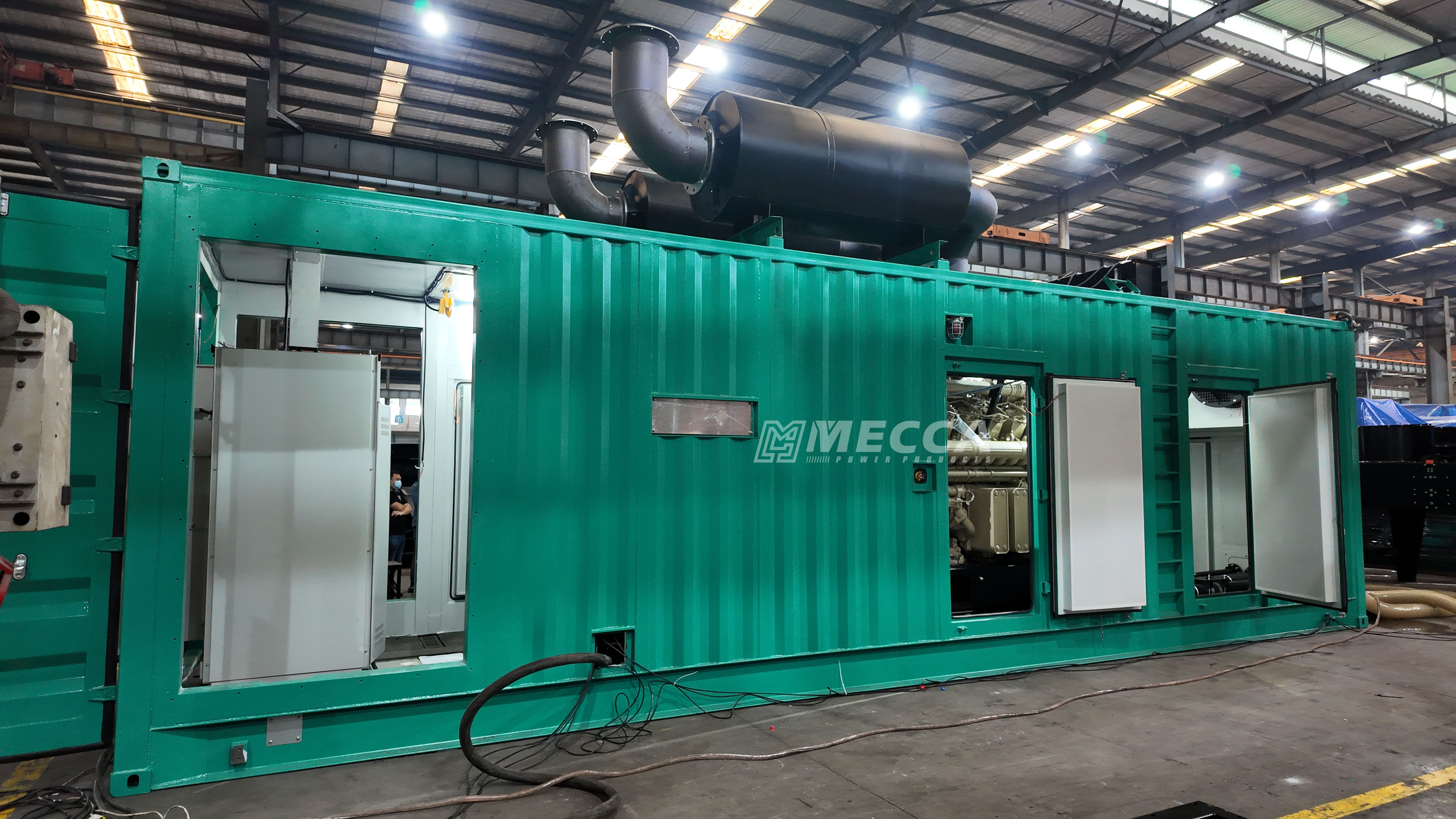
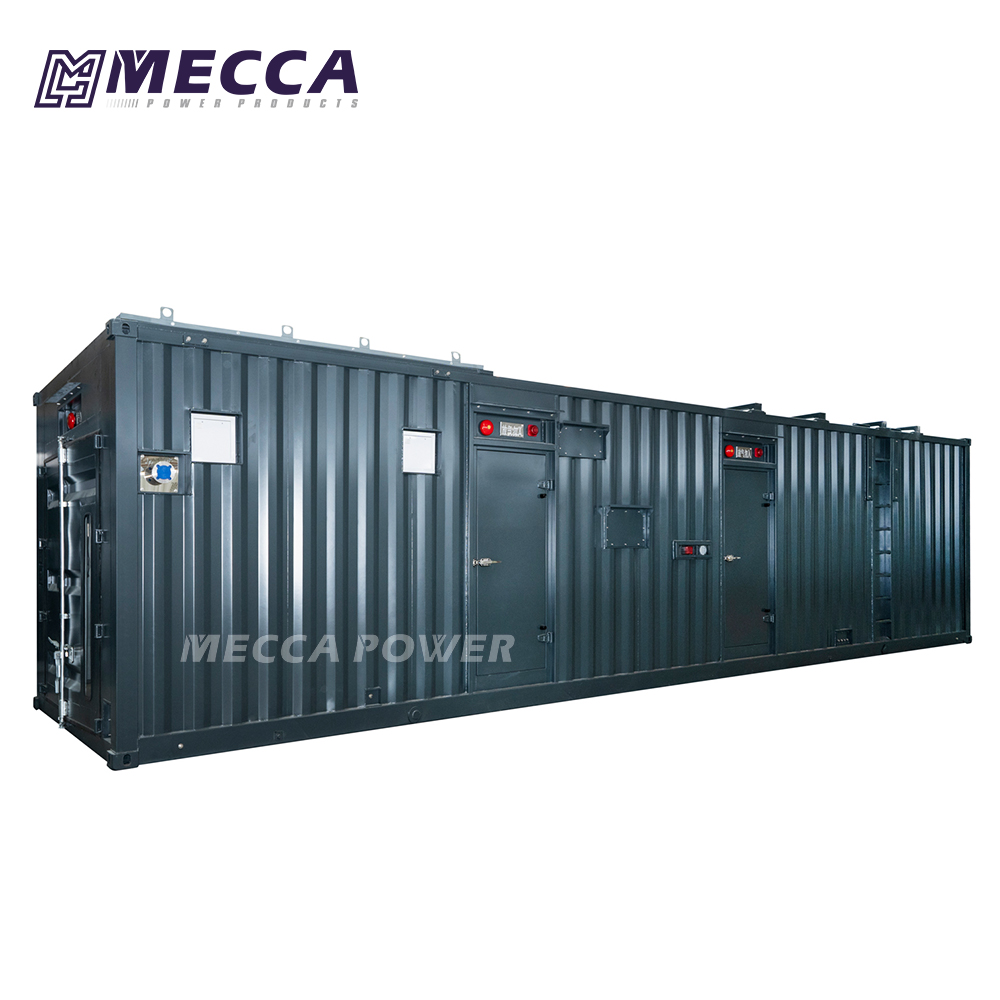
A 3MW containerized diesel generator is a complete generating set assembled, wired and tested inside a container platform before it leaves the factory, then shipped as a single unit and commissioned on site as a turnkey power block. In MECCA POWER’s product range, that unit is the MC3750C: a 3000 kW / 3750 kVA machine built around a US CUMMINS QSK95 engine and listed for data center, power plant, mining, construction and oil & gas applications.
That packaging decision matters most where the grid does not reach. Remote mining camps, large-scale construction sites, oil and gas fields and temporary project grids typically need power before permanent infrastructure exists — and they need it without a multi-week site build. This application guide walks through how a 3MW containerized unit is deployed, what has to be verified before shipment, where it fits, and how it stands against conventional non-containerized 2500 kW and 2000 kW systems. All specifications, certifications and factory facts below come from MECCA POWER’s published product and company records.
Why Remote Industrial Sites Cannot Use Standard Power Assumptions
Remote industrial power is a logistics problem as much as an electrical one. A 3000 kW class generating set is a heavy, high-value machine, and the further it travels from a port or a paved industrial park, the more the deployment risk shifts from engineering to handling, weather and site readiness.
The constraints that typically decide whether a project succeeds or stalls are consistent across remote mining and construction work:
- No reliable grid, or a grid that only exists later. Camps frequently start on isolated generation and only connect to a permanent supply months or years afterwards. Power therefore has to be deployable now and relocatable later.
- Temporary or mobile grid support. As a camp expands, shifts location, or bridges a transmission delay, generation capacity has to move with it. Fixed, site-built plants do not relocate economically.
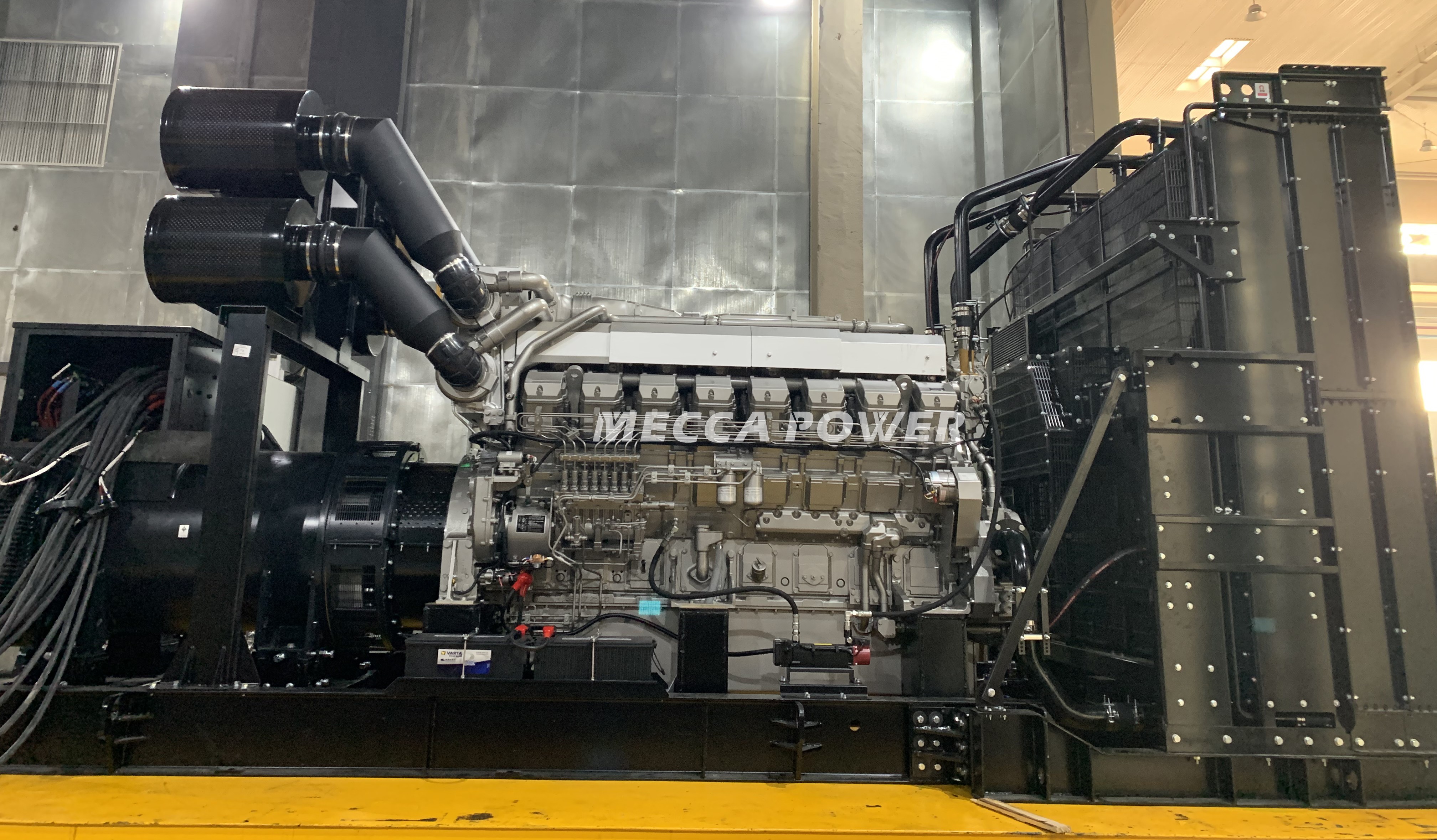
- Site assembly capacity. A non-containerized (open type) set requires on-site assembly work: radiator and exhaust installation, interconnecting cabling, fuel system tie-ins and alignment. Remote sites rarely have the specialist labor or lifting equipment available at short notice.
- Environment range. MECCA POWER’s application data lists an operating window from −45 °C to +50 °C for outdoor high-temperature and cold-region sites, with an industrial-grade silencer and low-noise enclosure for noise-controlled locations, and enhanced heat sinks or derating design for high ambient and high-altitude cooling capacity.
- Load acceptance speed. Mine hoists, crushers and camp distribution switchboards can demand near-instant load pickup. The application requirement is start-up and full-load acceptance in a very short time — typically under 10–15 seconds — which places the emphasis on speed and voltage regulation rather than on steady-state figures alone.
- Documentation and compliance. EPC contractors and international buyers need certification evidence that can be presented to an owner, insurer or regulator, not a verbal assurance.
Containerization addresses the transport and assembly half of that list directly: the container becomes the enclosure, the shipping unit and the mounting frame at the same time, so the amount of work performed on unpaved ground is reduced to offloading, siting, fuel connection, cable termination and commissioning.
Market and Regulatory Context Behind Containerized Power
Demand for high-capacity generating sets has been moving in the same direction as the projects that need them. Fortune Business Insights valued the global diesel generator market at approximately USD 22.33 billion in 2025 and projects it to reach USD 38.09 billion by 2034. Estimates vary by scope — Grand View Research uses a narrower definition and places the 2025 figure at USD 19.3 billion — so buyers comparing market reports should confirm whether the number covers industrial units only or all diesel gensets.
Two segments are pulling the high-power end upward. Arizton Advisory & Intelligence expects the global data center generator market to reach USD 19.66 billion by 2030, growing at a 15.15% CAGR from 2024. In parallel, customs data reported by China Daily shows that China’s exports of high-capacity diesel generator sets for data centers rose 131.81% year-on-year in the first two months of 2026 — an indicator of how quickly large-frame capacity is moving across borders.
Regulation shapes the specification as much as demand does. ISO 8528 is the primary international standard for reciprocating internal combustion engine driven alternating current generating sets, and it defines the ratings that procurement teams have to choose between, including Emergency Standby Power (ESP) and Continuous Operating Power (COP). That distinction is not academic on a remote site: a camp running its base load continuously has very different duty requirements from a data center that starts a unit only when utility power fails.
Where a site falls under US rules, EPA Tier 4 Final standards, effective since 2015, require a near-90% reduction in Particulate Matter (PM) and Nitrogen Oxides (NOx) for non-road diesel engines used in non-emergency applications. Emergency-rated installations are treated differently, which is why the intended operating mode should be declared at the quotation stage rather than after the equipment has been ordered.
What the 3MW Containerized Diesel Generator Actually Includes
The MC3750C is defined by a small set of verifiable parameters. Everything else in a deployment plan follows from them.
| Parameter | 3MW containerized diesel generator |
|---|---|
| Model | MC3750C |
| Power range | 3000 kW / 3750 kVA |
| Engine | US CUMMINS QSK95 |
| Material | Alloy steel / heat-resistant steel |
| Listed applications | Data center, power plant, mining, construction, oil & gas |
Container platform. MECCA POWER’s containerized generator family runs from 1000 kVA to 4000 kVA and is offered in 20HQ, 40HQ and non-standard containerized formats. Container construction materials include Corten steel, aluminum and stainless steel. The 3MW unit sits inside that family, which is what allows a 3000 kW machine to be treated as a shipping item rather than a construction project.
Environmental adaptation. The application data set specifies an outdoor working condition range of −45 °C to +50 °C for high-temperature and cold-region operation; the wider industrial diesel generator range is specified from −50 °C to 50 °C with a corrosion-resistant canopy and stainless steel components. Cooling is handled with enhanced heat sinks for high ambient temperatures, or a derating design for high-altitude cooling capacity. For noise-controlled camps, an industrial-grade silencer and low-noise enclosure are part of the configuration.
Matched equipment. Deployment normally pairs the genset with an ATS (Automatic Transfer Switch), a parallel control panel, a UL fuel tank, the container itself and, where distribution runs at medium voltage, a high-voltage cabinet. These are the interfaces that determine how much site work remains after the container lands.
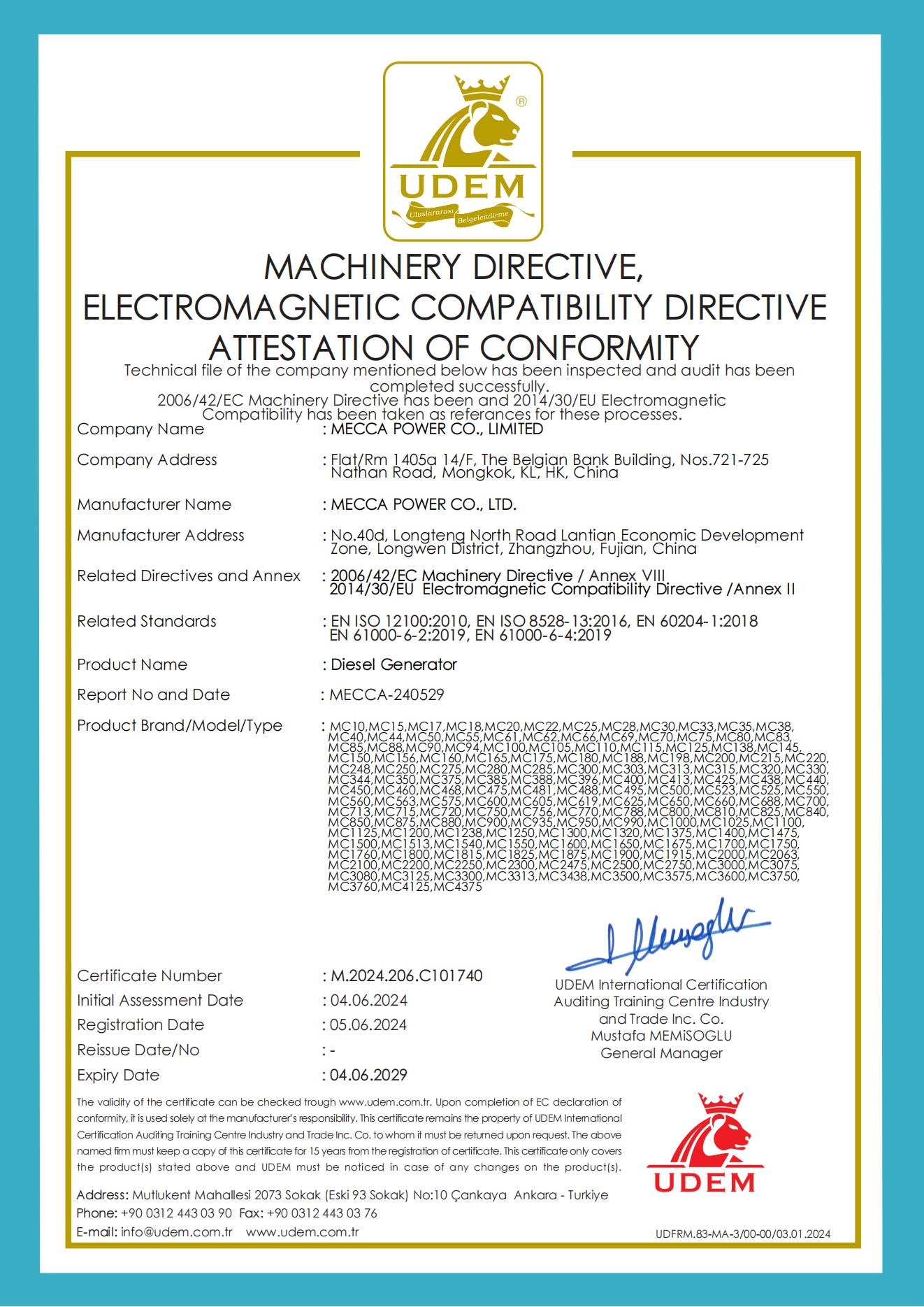
Compliance record. MECCA POWER holds CE certification number M.2024.206.C101740, issued by UDEM for the EU market with the scope “Diesel Generator”. The certificate was issued on 5 June 2024 and is valid to 6 April 2029, and it covers EN ISO 12100:2010, EN ISO 8528-13:2016, EN 60204-1:2018, EN 61000-6-2:2019 and EN 61000-6-4:2019. The certificate explicitly relates to the containerized and large-frame models in the range, including the 3MW containerized unit. For North American projects, UL/CSA certification is available as a customizable option across the diesel generator range.
Factory basis. MECCA POWER CO.,LTD. was founded in 2013 and operates from Fujian and Jiangxi provinces with a 34,000 m² factory, 311 employees, a 41-person R&D team and an annual output of 3,600 units; the company exports 100% of production. The Nanchang plant focuses on generator sets of 1000 kW and above, where monthly output increased from 132 to 212 units and output value rose from 180 million to 380 million. Three production lines are dedicated to container, open-type and mixed assembly, supported by six testing stations, digital tightening, intelligent oil and water filling, and cloud-based production data management through APS+MES. Maximum lifting capacity in the plant is 45 tons, which allows simultaneous production testing of three units above 2000 kW.

Deployment, Step by Step
Step 1 — Define the load profile and the correct ISO 8528 rating
Start with the duty, not the kilowatt figure. ISO 8528 separates Emergency Standby Power (ESP) from Continuous Operating Power (COP), and a remote mining or construction camp running base load sits at the continuous end of that spectrum. Declaring the intended mode early determines the engine rating, the cooling package and the compliance path.
Step 2 — Verify site conditions against the unit’s operating window
Match the site’s altitude, ambient temperature swing and noise sensitivity against the specified envelope. The application data covers outdoor operation from −45 °C to +50 °C; high-altitude locations require the derating design for cooling capacity, and noise-controlled camps require the silencer and low-noise enclosure configuration rather than a standard canopy.
Step 3 — Lock the configuration and the compliance package
MECCA POWER operates as an OEM/ODM manufacturer and customizes diesel generators by voltage and frequency, by silent, open, containerized or mobile type, by logo and by noise requirement. This is the stage at which the CE package (M.2024.206.C101740) or a custom UL/CSA path is confirmed against the destination market, together with the container format — 20HQ, 40HQ or non-standard.
Step 4 — Plan container logistics and offloading
Because the 3MW unit leaves the factory as a container, transport planning follows standard freight practice rather than heavy-project cargo practice. The remaining site-side requirement is a lift or roll-off plan and a route survey that accounts for the loaded container dimensions and the road surface at the camp entrance.
Step 5 — Prepare the site interfaces: pad, fuel, cabling, switchgear
Before arrival, prepare the concrete pad or compacted hardstanding, the fuel connection to the UL fuel tank, the power cable route to the distribution point and the location of the ATS, parallel control panel and high-voltage cabinet where these are part of the scope. Site work is concentrated into these interfaces instead of the generating set itself.
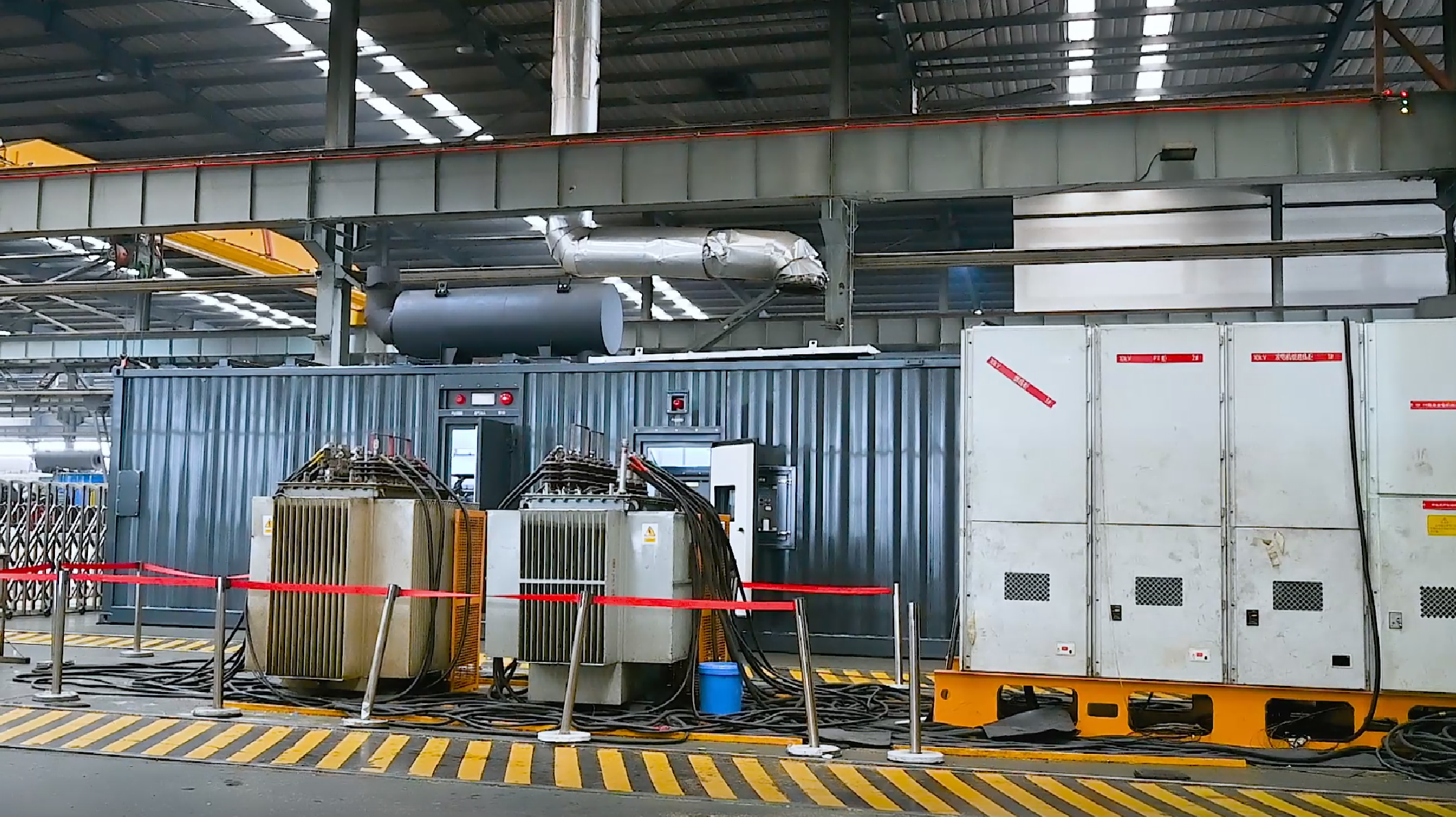
Step 6 — Complete the factory acceptance test
Every unit is 100% tested before shipment. Testing is performed at one of six testing stations using digital tightening, intelligent oil and water filling and cloud-based production data management under APS+MES, so test records are retained rather than reconstructed. The plant’s 45-ton lifting capacity supports simultaneous production testing of three units above 2000 kW, which shortens the queue for large-frame orders.
Step 7 — Commission, load-bank test and parallel if required
On site, commissioning covers fuel and cooling checks, protection settings and a load-bank or load-bank-equivalent verification before handover. Where a camp grows, additional units are added through the parallel control panel rather than by replacing the first machine. MECCA POWER provides remote technical support during start-up and offers on-site commissioning and maintenance as part of its service scope.
Step 8 — Handover, spares and after-sales coverage
After-sales support covers remote technical support, on-site commissioning and maintenance, spare parts supply and a 24/7 after-sales hotline — the practical items that determine whether a remote site returns to full power quickly after a fault.
Use Cases: Where the 3MW Containerized Unit Fits
Off-grid mining camps. Mining is one of the industries listed for the MC3750C, and off-grid mining power is one of the project types MECCA POWER supports. A 3000 kW containerized block suits camps that start isolated and add capacity as the pit or plant expands, using parallel control to bring additional units online without redesigning the power house.
Temporary and mobile grid support at construction sites. Large-scale construction camps are inherently temporary. Because the generating set is containerized, it can be relocated when the camp moves rather than being abandoned as a fixed asset. The same characteristic applies when generation is used to bridge a delayed grid connection.
Data center and power plant duty. The 3000 kW class is also the machine listed for data center service. MECCA POWER has supplied four 2200 kW containerized generators to a data center project in Kenya, running on YUCHAI engines with stable operation and a stated service life of 20,000–30,000+ hours, and five 1800 kW YUCHAI containerized units to a data center in Russia in a non-standard, low-noise customized container.
Continuous running for EPC power stations. For EPC-led power stations, continuity is the governing requirement. An EPC customer in Spain operates six 2500 kVA UK CUMMINS generators in a continuous-running power station configuration, with a stated service duration of 15–25 years and UK CUMMINS QSK60 engines. A separate project in Kazakhstan delivered high-voltage generation at 10.5 kV / 1800 kW for data center emergency supply.
3MW Containerized vs 2500 kW vs 2000 kW: A Deployment Comparison
The comparison below is about deployment form and verified parameters, not about which machine is superior. The 2500 kW unit is offered in both open type and containerized type; the 2000 kW unit is listed as a 2MW machine for data center use and also appears within the containerized model family (MC1000–MC4375, 1000 kVA–4000 kVA). What changes between them is scale, shipping form and the amount of site work each option implies.
| Parameter | 3MW containerized (MC3750C) | 2500 kW (MC2500 / MC2750 / MC3500) | 2000 kW (MC2000 / MC2750) |
|---|---|---|---|
| Rating | 3000 kW / 3750 kVA | Prime 2500 kW / 3125 kVA; standby 2750 kW / 3500 kVA | Prime 2000 kW / 2500 kVA; standby 2200 kW / 2750 kVA |
| Form factor | Containerized | Open type or containerized type | 2MW data center unit; containerized configurations available within the MC1000–MC4375 family |
| Engine | US CUMMINS QSK95 | Configurable from the manufacturer’s engine partner list | Configurable from the manufacturer’s engine partner list |
| Material | Alloy steel / heat-resistant steel | Alloy steel / heat-resistant steel | Stainless steel |
| Site work implication | Offload, site and connect; enclosure is the shipping container | Open type sets require on-site assembly of radiator, exhaust and cabling | Depends on selected configuration; containerized builds follow the same streamlined path |
| Listed industries | Data center, power plant, mining, construction, oil & gas | Data center, power plant, oil & gas, mining, construction | Data center, construction, power plant, oil & gas |
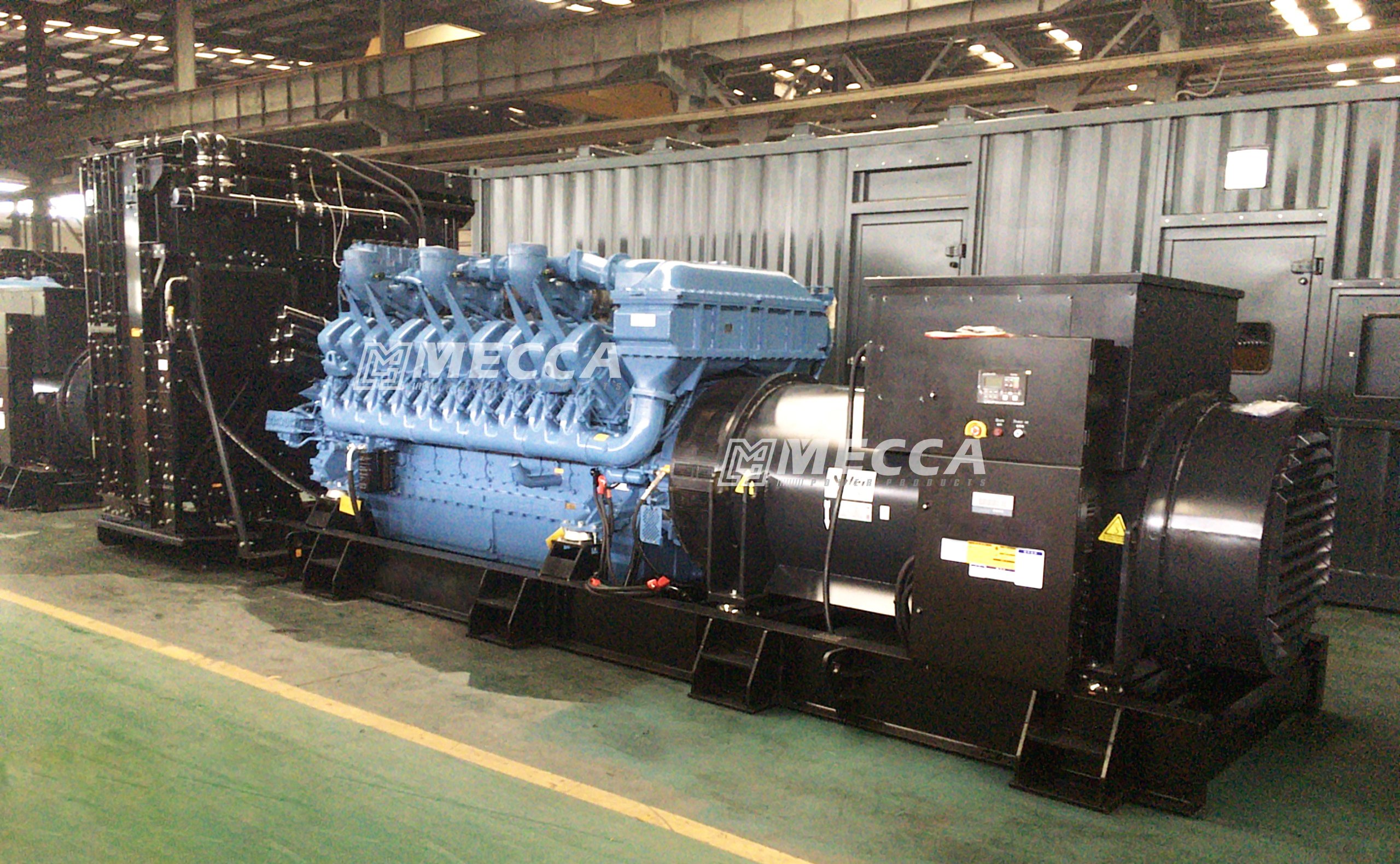
The practical decision rule is straightforward. If the site has a permanent power house, a crane, a heavy-lift route and qualified assembly labor, an open-type set is workable. If the site is temporary, unpaved, or moving, the containerized 3MW unit removes the assembly stage from the critical path — which is usually the difference between power on site in weeks and power on site in months.
FAQ: Compliance, Capability, Budget, Validation and Lead Time
What compliance evidence should a 3MW containerized diesel generator carry for an EU project?
For the EU market, MECCA POWER holds CE certification M.2024.206.C101740 issued by UDEM, with the scope “Diesel Generator”, issued 5 June 2024 and valid to 6 April 2029. The certificate covers EN ISO 12100:2010, EN ISO 8528-13:2016, EN 60204-1:2018, EN 61000-6-2:2019 and EN 61000-6-4:2019, and it relates to the containerized models in the range including the 3MW unit. Projects in the United States should also confirm the applicable EPA Tier 4 Final position, which since 2015 has required a near-90% reduction in PM and NOx for non-road diesel engines used in non-emergency applications, and the rating definition under ISO 8528 (ESP or COP). UL/CSA certification is available as a customizable option. Market-specific requirements should be confirmed during quotation.
Can a 3MW containerized unit be customized for high-altitude or cold remote sites?
Yes. MECCA POWER operates as an OEM/ODM manufacturer and customizes diesel generators by voltage and frequency, by silent, open, containerized or mobile type, by logo and by noise requirement. For climate, the application data covers outdoor operation from −45 °C to +50 °C with an industrial-grade silencer and low-noise enclosure, plus enhanced heat sinks for high ambient temperatures or a derating design for high-altitude cooling capacity. The wider diesel generator range is specified from −50 °C to 50 °C. The 3MW unit itself runs on a US CUMMINS QSK95 engine with alloy steel and heat-resistant steel construction.
How should budget be framed for a 3MW containerized unit versus a 2500 kW or 2000 kW system?
Budget should be built around configuration rather than around a headline kilowatt price, because a 3MW containerized unit is quoted as a package. The main cost drivers are the 3000 kW / 3750 kVA engine platform (US CUMMINS QSK95), the container format (20HQ, 40HQ or a non-standard build in Corten steel, aluminum or stainless steel), the selected material specification (alloy steel / heat-resistant steel for the 3MW unit), the climate and noise package, and the matched equipment — ATS, parallel control panel, UL fuel tank and high-voltage cabinet where applicable. Freight and site access also enter the comparison, and these are usually lower for a containerized unit than for an open-type set that requires on-site assembly. Final figures are configuration-specific and are provided at quotation stage.
How can a buyer validate a 3MW unit before it ships?
Validation happens at the factory. MECCA POWER applies 100% testing to production units, using six testing stations with digital tightening, intelligent oil and water filling and cloud-based production data management under APS+MES, so test data is recorded rather than reconstructed. Plant lifting capacity of 45 tons supports simultaneous production testing of three units above 2000 kW, and the minimum order quantity is one unit. Buyers who need a documented acceptance stage can build the factory test into the purchase terms, supported by remote technical support and optional on-site commissioning.
What is the lead time for a 3MW containerized diesel generator, and what support follows delivery?
Standard lead time is 30–50 days, with a monthly production capacity of 300 units and a minimum order quantity of one unit. Because the Nanchang plant focuses on sets of 1000 kW and above — with monthly output rising from 132 to 212 units and a container line dedicated to containerized builds — large-frame orders are produced on the same line as the rest of the containerized family. After delivery, support covers remote technical support, on-site commissioning and maintenance, spare parts supply and a 24/7 after-sales hotline, with service available across Europe, Africa, Asia, Australia, the Middle East, the Americas and Oceania.
Next Step
Deploying a 3MW containerized diesel generator at a remote industrial site comes down to four verifications: the correct ISO 8528 rating for the duty, the climate and altitude envelope, the compliance package for the destination market, and the container format that matches the transport route. Once those are confirmed, the containerized platform converts a large-frame power plant into a shippable, testable and relocatable asset — which is precisely what a remote mining camp, construction site or temporary grid support project needs.
Request a 3MW Containerized Configuration Proposal
MECCA POWER CO.,LTD. designs, manufactures and tests containerized and large-frame diesel generating sets in Fujian and Jiangxi, China, and exports to Europe, Africa, Asia, Australia, the Middle East, the Americas and Oceania.
Email: mecca@meccagen.com | WhatsApp: +86 15659994455 | Website: www.meccapower.com.cn
Download the product brochure: MECCA POWER brochure (PDF)
Have Questions or Need More Details?
Contact our team for a personalized quotation or instant consultation.
Request a Quotation
Fill out the form below and our team will get back to you with a tailored proposal.
WhatsApp Direct Chat
Prefer to chat in real-time? Message us on WhatsApp for instant assistance & quick answers.
- Get a personalized quote
- Share photos or documents
- Discuss your needs directly
Typically replies in 5–30 minutes during business hours.