
How to Apply a 3MW Containerized Diesel Generator in Industrial Backup Power Projects
A 3MW containerized diesel generator is a factory-assembled generating set — engine, alternator, cooling, exhaust, control and fuel interface built inside a container — rated at 3000KW/3750KVA in the MECCA POWER MC3750C configuration. Applying one to an industrial backup power project is a sequence of engineering decisions rather than a single purchase: match the load to the frame, fix the electrical interface, close the compliance file, and integrate the container into the site so the set can accept full load inside the response window the facility actually needs.
This guide is written for teams at the research and evaluation stage — consultants, EPC engineers, facility owners and procurement managers who have already established that a large standby source is required and now need to know how a 3MW unit is applied in practice. It also explains where the 2500KW and 2000KW frames from the same manufacturing family become the better match, because most industrial sites do not need the same rating on every bus.
Problem Definition: What Makes a 3MW Backup Project Harder Than a Smaller One
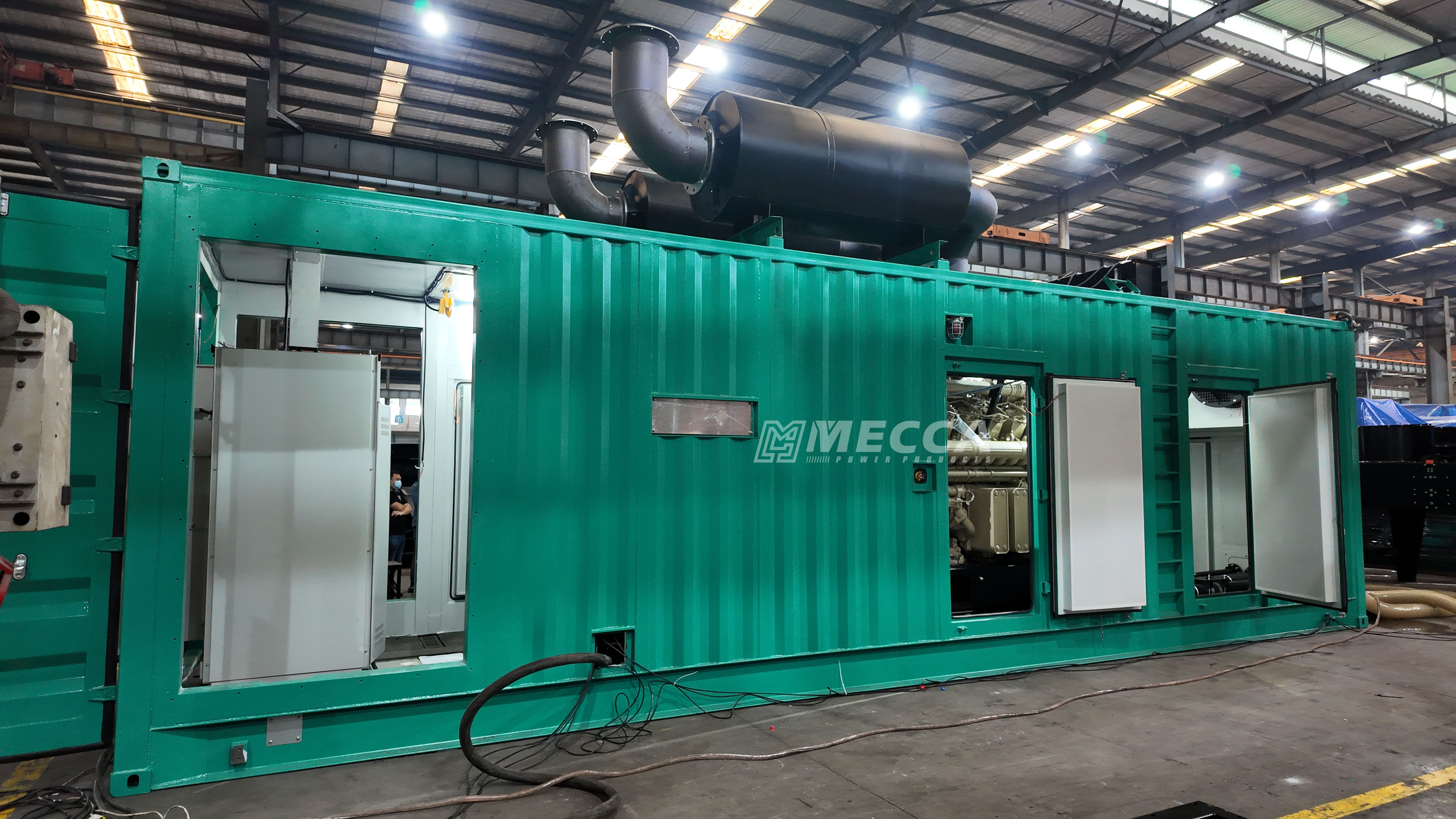
A 3MW set sits at the point where a generator stops being a component purchase and becomes a small power plant. The package carries its own combustion air path, radiator and cooling design, exhaust silencing, fuel interface, control and protection, and — in containerized form — its own enclosure, lifting arrangement and transport envelope. MECCA POWER CO.,LTD. is a diesel generator, high voltage generator and load bank manufacturer with factories in Fujian and Jiangxi provinces, China, founded in 2013, that builds this class of set as a single tested package. The application problems below follow the same order in which the package has to be engineered.
1. Sizing on kVA alone
A three-megawatt rating quoted on a datasheet does not describe what the set delivers on a hot site at altitude. Cooling capability and air density change the usable output, which is why the application requirements for this class specify enhanced heat sinks for high ambient temperatures and a derating design for high-altitude cooling capacity. A project that sizes on nameplate kVA and ignores site conditions discovers the gap during commissioning, not during procurement.
2. Treating the container as weather protection
In a containerized set, the container is part of the machine: it defines the air intake and discharge path, the exhaust routing, the access space for maintenance, and the cable entry point. When the container is selected after the generator, those interfaces are decided by whoever draws the enclosure rather than by the people who designed the set.
3. Treating compliance as paperwork
Compliance for a 3MW unit is a test and documentation chain, not a logo on a brochure. ISO 8528-10 specifies requirements for load acceptance test procedures for reciprocating internal combustion engine-driven generating sets, and NFPA 110 governs the installation, maintenance and testing of emergency and standby power systems, including required periodic load bank testing. Both change what the project must physically be able to demonstrate.
4. Leaving site integration to the civil contractor
Fuel supply, cooling air movement, exhaust discharge direction, foundation levelness, cable entry and lifting access are usually handed to a civil package while the generator is procured separately. The interfaces then meet for the first time on site, which is the most expensive place to resolve them.
5. Ordering 3MW where a smaller frame fits
A frame sized well above the real connected load runs at a low load factor for most of its life, which is a design issue rather than a specification win. Where the emergency load sits closer to 2MW or 2.5MW, the 2000KW and 2500KW frames in the same range are the more logical starting point, and the 3MW unit remains the right answer for the larger bus.
Industry Background: Why Large Containerized Frames Are Being Specified More Often
The demand context for this equipment class is measurable. The data center generator market is valued at USD 8.43 billion in 2024 and expected to reach USD 19.66 billion by 2030, driven by AI workloads and hyperscale expansion, according to ResearchAndMarkets / Business Wire. The broader global diesel generator market was valued at approximately USD 19.33 billion in 2025 and is projected to reach USD 40.9 billion by 2033, according to Grand View Research.
A supporting signal comes from the test side of the same market. The global load bank market was valued at USD 278.45 million in 2024 with projected growth to USD 445 million by 2034 at a CAGR of 4.8%, according to Zion Market Research — relevant here because load bank testing is how a multi-megawatt set's load acceptance and continuous capability are actually proven before handover.
On the supply side, China's exports of generators and alternators reached USD 968 million in 2024, with the United States, Mexico and Russia as the top destinations, according to the Observatory of Economic Complexity. The practical implication for a buyer is not scarcity of large frames but the difficulty of separating suppliers who can document and test a 3MW package from those who can only quote one.
Detailed Solution: Anatomy of a 3MW Containerized Diesel Generator Package
The core generating set
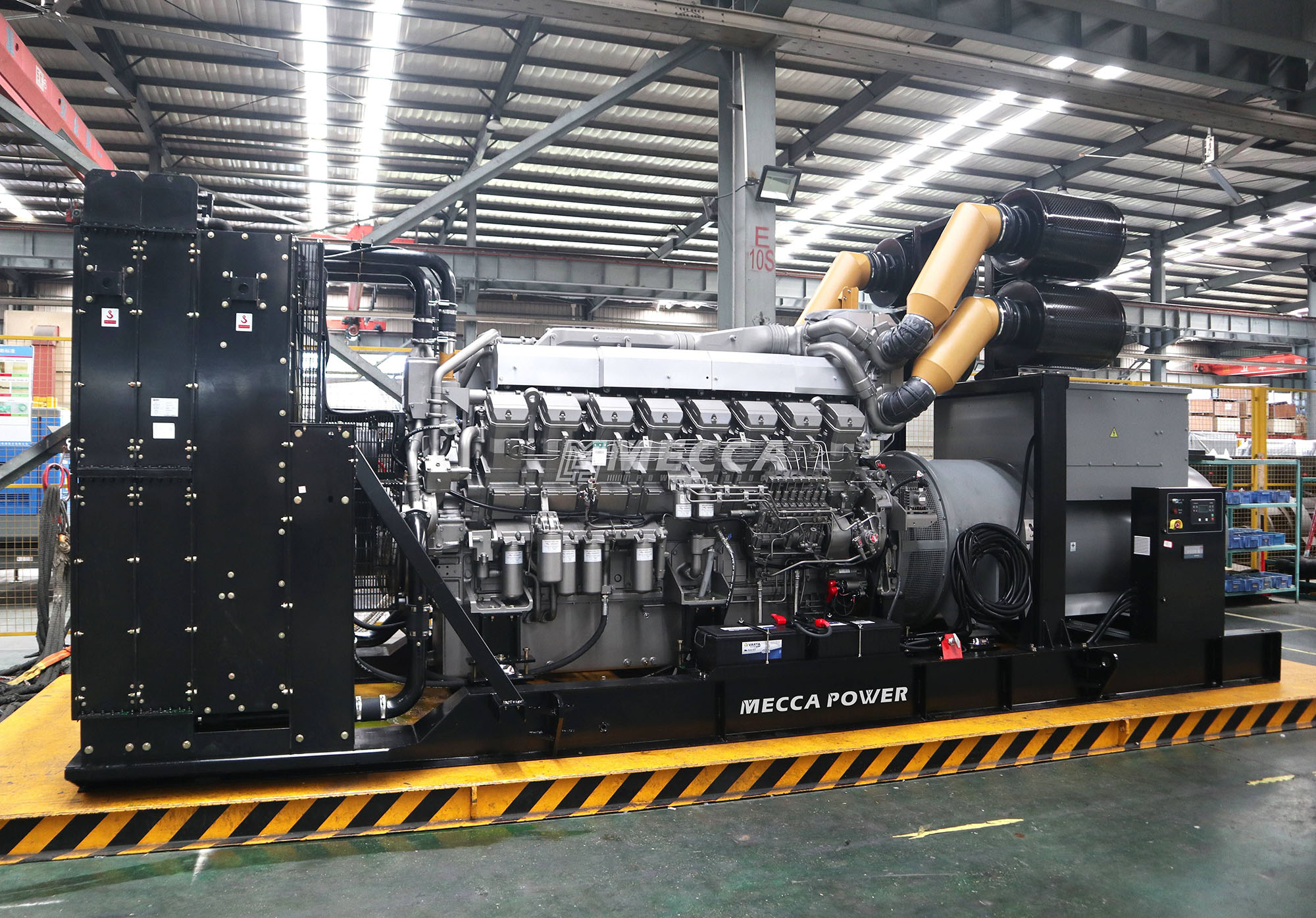
The 3MW containerized diesel generator in the MECCA POWER range is model MC3750C, with a power range of 3000KW/3750KVA and a US CUMMINS QSK95 engine. It is built in alloy steel and heat-resistant steel and is applied in data center, power plant, mining, construction and oil and gas projects. The engine platform, rather than the enclosure, is what fixes the set's service network, spare parts path and maintenance intervals, so it belongs in the first technical conversation with the project engineer.
The container is engineered, not adapted
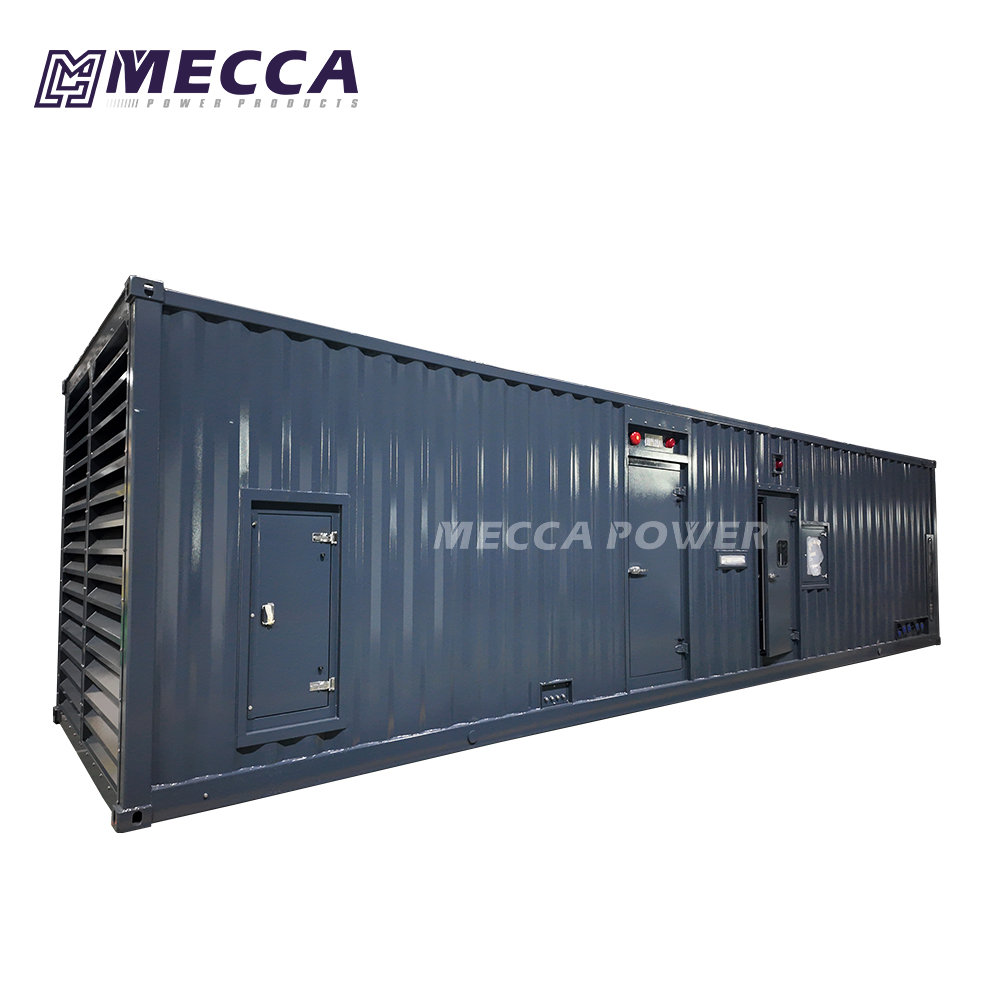
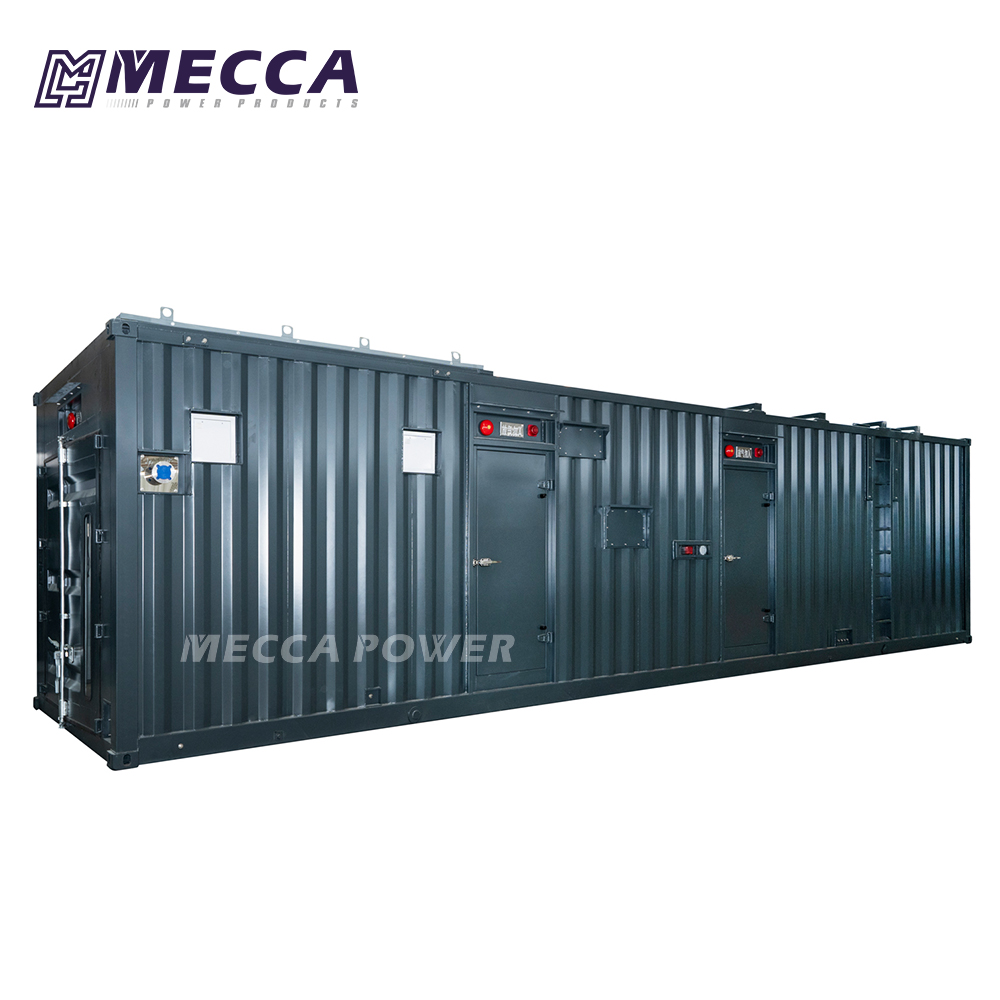
The containerized diesel generator family spans models MC1000 through MC4375, covering a power range of 1000KVA to 4000KVA, and is offered in 20HQ containerized, 40HQ containerized and non-standard containerized configurations. Materials include Corten steel, aluminum and stainless steel. The non-standard configuration matters in practice: where a site imposes a low-noise requirement in a populated area or a transport envelope that a standard HQ container cannot meet, the enclosure is designed rather than selected from a catalogue.
Balance of plant matched to the set
A 3MW unit is delivered with, or specified alongside, matched equipment: ATS (Automatic Transfer Switch), parallel control panel, UL fuel tank, container and high voltage cabinet. Parallel control is what allows a multi-unit plant to be built from 3MW blocks rather than a single larger machine, and MECCA POWER has delivered parallel control systems on multi-unit industrial projects. The high voltage cabinet option is what makes direct distribution at medium voltage possible, which several data center projects in the reference list use.
Site conditions that must be designed in
The working condition envelope for this class of set is high-temperature outdoor operation or low-temperature cold areas, from -45℃ to +50℃. Three application requirements follow from that envelope:
- Rapid load acceptance. A standby set must start and accept full load in a very short time, usually within 10–15 seconds, which places the requirement on speed and voltage regulation rather than on fuel quantity.
- Noise control. An industrial-grade silencer combined with a low-noise enclosure is what allows the set to meet strict urban noise limits.
- Heat rejection. Enhanced heat sinks for high ambient temperatures, or a derating design for high-altitude cooling capacity, keep the set inside its thermal limits under continuous high load.
The compliance file
The MECCA POWER diesel generator scope is covered by CE certificate M.2024.206.C101740, issued by UDEM on 2024-06-05 and valid to 2029-04-06, for the EU market. The standards listed on the certificate are EN ISO 12100:2010, EN ISO 8528-13:2016, EN 60204-1:2018, EN 61000-6-2:2019 and EN 61000-6-4:2019. On the wider diesel generator range, UL/CSA certification is customizable. Where NFPA 110 applies, the project also needs a documented periodic load bank testing routine, and ISO 8528-10 load acceptance test procedures are the reference for proving load-step capability.
Where the 2500KW and 2000KW frames fit
Not every bus in an industrial plant is a 3MW bus. The 2500KW diesel generator (models MC2500, MC2750 and MC3500) delivers prime power 2500KW/3125KVA and standby power 2750KW/3500KVA, in open type or containerized type, in alloy steel and heat-resistant steel. The 2000KW diesel generator (models MC2000 and MC2750) delivers prime power 2000KW/2500KVA and standby power 2200KW/2750KVA, built in stainless steel. Both are applied across data center, power plant, oil and gas, mining and construction work. In a mixed plant, the 3MW unit typically carries the dominant load block while the smaller frames carry process substations, auxiliary buildings or a second independent bus.
Step-by-Step: Applying the 3MW Unit to a Project
Step 1 — Define the duty, not just the rating
Start by deciding whether the set is standby or continuous. The diesel generator range as a whole runs from prime power 500KW–4.5MW to standby power 500KVA–5MW, and the distinction is not cosmetic: a standby rating assumes limited hours at variable load, while a continuous rating assumes sustained operation. A power plant or off-grid mining application that runs the set as prime power must be specified as such from the first enquiry.
Step 2 — Fix the electrical interface
Voltage and frequency are customizable on MECCA POWER sets, so the interface is decided early rather than assumed. Three questions resolve most of it: is distribution at low voltage or through a high voltage cabinet; is transfer by ATS or by a paralleled switchboard; and does the plant need a parallel control panel to combine blocks. A data center project in Kazakhstan, for example, was supplied with 10.5KV high voltage 1800KW generators for emergency power, which shows how far the interface choice can move the specification away from a standard low-voltage package.
Step 3 — Match the load to the frame
Compare the calculated emergency load against the three available frames rather than against a single target number. The comparison below uses only catalogue figures from the three product families:
- 3MW containerized, MC3750C: 3000KW/3750KVA, US CUMMINS QSK95 engine.
- 2500KW, MC2500 / MC2750 / MC3500: prime 2500KW/3125KVA, standby 2750KW/3500KVA, open or containerized.
- 2000KW, MC2000 / MC2750: prime 2000KW/2500KVA, standby 2200KW/2750KVA.
Then apply the site corrections: high ambient temperature and altitude both reduce usable output, which is exactly why the platform includes derating design for high-altitude cooling capacity. If the corrected load lands close to 2500KW, a 3MW set is not automatically the better answer — a 2500KW containerized unit leaves the set operating closer to its intended load factor.
Step 4 — Close the compliance file before the order
Confirm which documents the project authority will actually inspect: the CE certificate and its standard list, the voltage and frequency declaration, the test reports, and — for US projects — the NFPA 110 testing routine the facility must sustain after handover. A 3MW set that meets its rating but lacks a traceable test record creates a commissioning problem that no amount of site work resolves.
Step 5 — Integrate the container into the site
Site integration is where the package either works as designed or is rebuilt on site. The items to close with the civil and mechanical packages are: a level, load-bearing base for the container; an intake and discharge arrangement that prevents hot air recirculation; an exhaust path that discharges clear of air intakes and occupied areas, with the industrial-grade silencer accounted for; fuel supply designed around the UL fuel tank option; cable entry coordinated with the ATS, high voltage cabinet or parallel control panel; and lifting access consistent with the container's handling weight. Confirm the container configuration — 20HQ, 40HQ or non-standard — against transport routes and the maintenance access the site can actually provide.
Step 6 — Witness factory acceptance testing
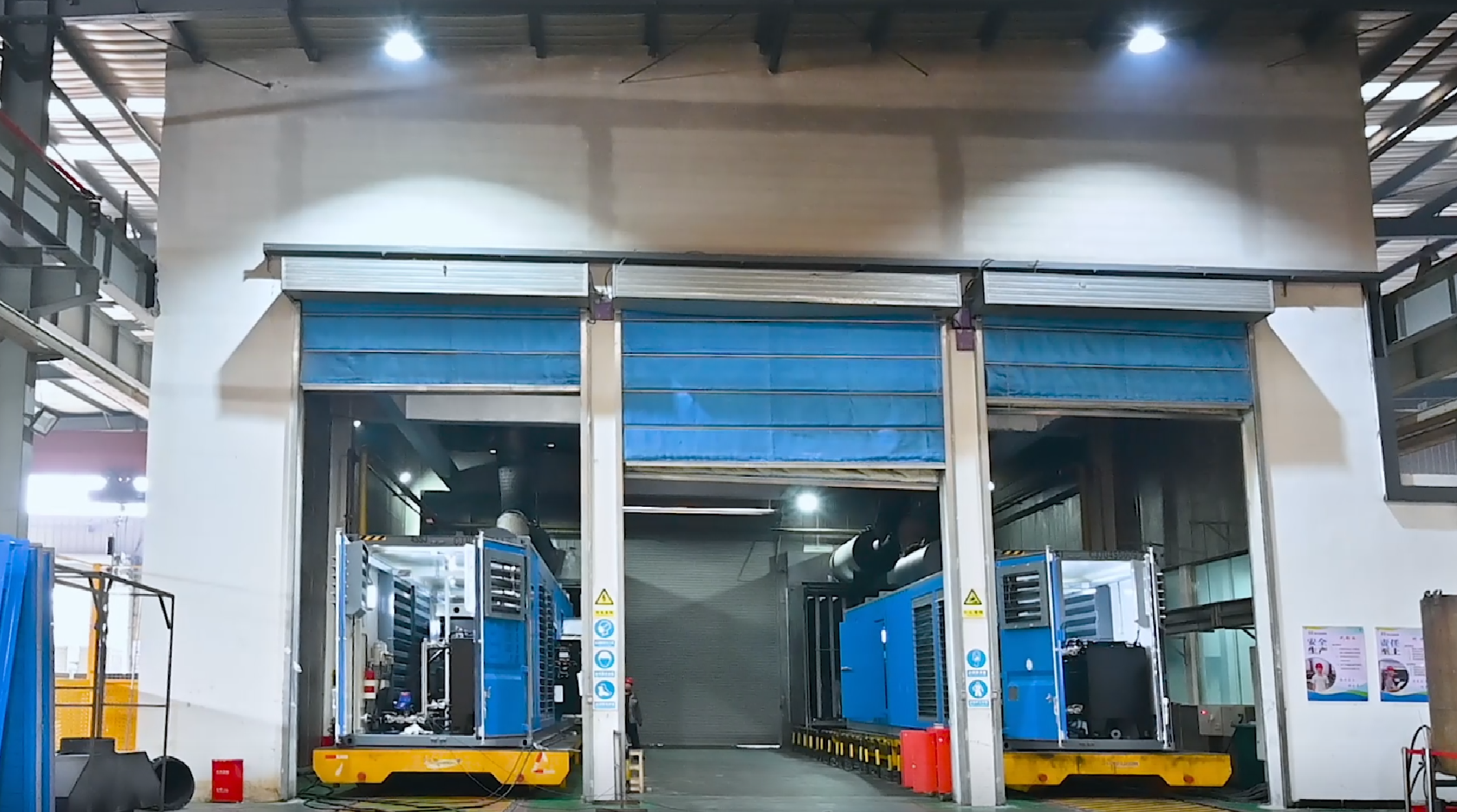
Ask to witness the test rather than accept a report. MECCA POWER tests 100% of production, and the Jiangxi high-power facility is built for this class of work: it produces generator sets of 1000kW and above, with monthly output increasing from 132 units to 212 units, three specialized production lines for container, open-type and mixed assembly, six testing stations with digital tightening, intelligent oil and water filling, and cloud-based data management through APS+MES. Maximum lifting capacity is 45 tons, which supports simultaneous production testing of three units exceeding 2000KW. Load bank testing is the instrument that proves the set's response under step loads, and it is the same instrument NFPA 110 relies on for periodic testing after handover.
Step 7 — Plan commissioning and lifecycle support
Commissioning is a scheduled activity, not an afterthought. MECCA POWER provides remote technical support, on-site commissioning and maintenance, spare parts supply and a 24/7 after-sales hotline. Lead time for these sets is 30–50 days, monthly capacity is 300 units, and the minimum order quantity is 1, so a single 3MW unit for a pilot or first-phase building can be ordered on the same terms as a multi-unit plant order.
Use Cases: Where the 3MW Containerized Unit Fits — and Where It Does Not
Data centers
Data center duty is the clearest fit for containerized large frames, because the load is dense, the response requirement is measured in seconds and the enclosure must control noise near populated buildings. Reference deliveries in this segment include four 2200KW containerized generators for a data center in Kenya, powered by YUCHAI engines and selected on a cost-effective basis, and five 1800KW YUCHAI containerized units for a data center in Russia built in a non-standard customized container with low noise. Both illustrate the same principle: in data center work, the enclosure and the noise package are part of the technical specification, not a finishing item.
Power plants and continuous duty
Where the requirement is continuous running rather than emergency standby, the frame and the service plan are specified differently. An EPC project in Spain took six 2500KVA UK CUMMINS generators, powered by the CUMMINS QSK60 engine, for continuous running in a power station, with a stated service life of 15–25 years and reported continuous running without incident. The lesson for a 3MW project is that continuous duty demands the longer view on spare parts and maintenance access, not just the higher rating.
Oil and gas, mining and construction
Off-grid and remote industrial sites use large frames as the primary source rather than as backup. Two 1800KW UK CUMMINS generators powered by the QSK60-G8 engine were supplied to a dealer in Saudi Arabia for oil and gas duty, and eight 1500KW Japan Mitsubishi generators powered by the S16R-PTA2 engine were supplied in open type to a glass factory in Iran specifically for easier maintenance access. That open-type choice is a useful reminder: in remote industrial plants, maintenance access can outweigh the weather protection a container provides. Mining and construction applications are listed for the 3MW, 2500KW and 2000KW frames alike, and off-grid mining power is one of the defined project types for this class of set.
Where a 3MW unit is the wrong answer
If the corrected emergency load is well below 2MW, a 3MW frame runs at a low load factor and consumes site space, fuel storage and maintenance budget disproportionate to the duty. If the site cannot support fuel logistics for a large set, or cannot provide the maintenance access the container requires, a smaller frame or a split configuration will serve the project better. Both situations are common in industrial facilities where only part of the plant is on emergency power.
Comparison: 3MW, 2500KW and 2000KW Frames Side by Side
| Item | 3MW containerized | 2500KW | 2000KW |
|---|---|---|---|
| Model | MC3750C | MC2500, MC2750, MC3500 | MC2000, MC2750 |
| Rated output | 3000KW/3750KVA | Prime 2500KW/3125KVA; standby 2750KW/3500KVA | Prime 2000KW/2500KVA; standby 2200KW/2750KVA |
| Engine | US CUMMINS QSK95 | Not specified for this frame in the product data | Not specified for this frame in the product data |
| Enclosure type | Containerized | Open type or containerized type | 2MW class for data center duty |
| Material | Alloy steel / heat-resistant steel | Alloy steel / heat-resistant steel | Stainless steel |
| Typical industries | Data center, power plant, mining, construction, oil and gas | Data center, power plant, oil and gas, mining, construction | Data center, construction, power plant, oil and gas |
| Best starting point when | The corrected emergency load needs a 3MW block, or the plant is built from 3MW parallel modules | The corrected load sits close to 2.5MW and container or open type is still open | The corrected load sits near 2MW and site space or fuel logistics are constrained |
All three frames are covered by the same CE certificate scope (M.2024.206.C101740) and are listed as applicable products on it, which means the compliance file can be built from a single family rather than from separate suppliers per rating.
Checklist before the RFQ goes out
- Corrected emergency load after ambient temperature and altitude correction recorded.
- Duty defined as standby or continuous, with the rating basis named.
- Voltage, frequency and distribution path (low voltage or high voltage cabinet) fixed.
- Transfer method agreed: ATS, parallel control panel, or both.
- Container configuration chosen against transport route and maintenance access.
- Noise limit stated as a project requirement, not a preference.
- Compliance documents named, including the load bank testing routine required after handover.
- Factory acceptance test attendance confirmed in the order schedule.
FAQ
What certification and compliance evidence should a 3MW containerized diesel generator carry?
The MECCA POWER diesel generator scope, including the 3MW containerized diesel generator MC3750C, is covered by CE certificate M.2024.206.C101740, issued by UDEM on 2024-06-05 and valid to 2029-04-06, against EN ISO 12100:2010, EN ISO 8528-13:2016, EN 60204-1:2018, EN 61000-6-2:2019 and EN 61000-6-4:2019. Where the project falls under NFPA 110, the facility must also sustain documented periodic load bank testing, and ISO 8528-10 is the reference for load acceptance test procedures. UL/CSA certification is customizable on the wider diesel generator range.
Can a 3MW containerized unit be adapted to site-specific conditions?
Yes. Electrical and mechanical customization covers voltage and frequency, silent, open, containerized or mobile type, logo, and noise requirements, under OEM/ODM production. The containerized family itself is offered in 20HQ, 40HQ and non-standard configurations across a 1000KVA to 4000KVA power range, in Corten steel, aluminum or stainless steel, and the working envelope covers high-temperature outdoor operation and cold areas from -45℃ to +50℃. Low-noise enclosures with industrial-grade silencers and derating design for high-altitude cooling capacity are the two adaptations most often requested at this rating.
What drives the budget of a 3MW containerized diesel generator project?
Budget is driven by configuration choices rather than by the kilowatt figure alone: the engine platform selected from the suppliers MECCA POWER works with, including Cummins, Perkins, MTU, Mitsubishi, FPT, VOLVO, Baudouin, Stamford, Leroy Somer, Mecc Alte, DeepSea and ComAp alongside Chinese engine brands; the container type and material; whether distribution runs through a high voltage cabinet; the ATS, parallel control panel and UL fuel tank scope; the low-noise package; the factory acceptance test scope; and commissioning plus spare parts provision. Because these variables move independently, pricing is quoted per project against a defined scope, and the same 3MW rating can sit in very different budget bands.
Can a single unit be supplied for validation before a multi-unit order?
Yes. The minimum order quantity for these generator sets is 1, so a first unit can be ordered for a pilot phase, a first building or a load-study validation before the remaining units are released. Every unit is tested before shipment, and the Jiangxi high-power facility has six testing stations, a maximum lifting capacity of 45 tons and the ability to test three units exceeding 2000KW simultaneously, which is what makes a witnessed acceptance test practical at this rating.
What is the lead time for a 3MW containerized diesel generator, and what happens after delivery?
Lead time is 30–50 days, with monthly capacity of 300 units across the range. After delivery, support covers remote technical support, on-site commissioning and maintenance, spare parts supply and a 24/7 after-sales hotline. To move from evaluation to a defined scope, send the corrected load, voltage and frequency, container preference and compliance requirements for a project-specific quotation and configuration proposal — the MECCA POWER team responds with a matched set, a bill of balance-of-plant equipment and a test plan.
Conclusion
Applying a 3MW containerized diesel generator successfully comes down to four decisions made in the right order. Match the frame to the corrected load — with a 2500KW or 2000KW unit where the numbers point there instead of 3MW. Fix the electrical interface, including whether distribution runs through a high voltage cabinet and whether the plant will be paralleled. Close the compliance file with the certificate, the standard list and the load acceptance and periodic load bank testing routine the facility must sustain. Then integrate the container into the site before the civil package is fixed, and witness the factory acceptance test yourself.
MECCA POWER builds this class of set as a tested package: three production lines for container, open-type and mixed assembly, six testing stations, a 45-ton lifting capability supporting simultaneous testing of three units above 2000KW, and a compliance file covering CE certificate M.2024.206.C101740. The same manufacturing family carries the 3MW, 2500KW and 2000KW frames, which means a mixed plant can be specified from one supplier instead of three.

Next Step: Scope Your 3MW Backup Power Project
Send the corrected emergency load, voltage and frequency, container preference, compliance requirements and target handover date, and the MECCA POWER team will return a matched configuration, a balance-of-plant list and a factory test plan.
Email: mecca@meccagen.com | WhatsApp / WeChat: +86 15659994455 | Website: www.meccapower.com.cn
Product catalogue and technical brochure for download: MECCA POWER brochure (PDF)
3MW containerized diesel generator
2500KW diesel generator
containerized generator for data center
diesel generator manufacturer
load bank for generator test
Have Questions or Need More Details?
Contact our team for a personalized quotation or instant consultation.
Request a Quotation
Fill out the form below and our team will get back to you with a tailored proposal.
WhatsApp Direct Chat
Prefer to chat in real-time? Message us on WhatsApp for instant assistance & quick answers.
- Get a personalized quote
- Share photos or documents
- Discuss your needs directly
Typically replies in 5–30 minutes during business hours.