
How to Compare Diesel Generator Providers: A 2026 Evaluation Framework for Industrial Buyers
Diesel Generator Supplier Comparison 2026: How to Evaluate and Rank Providers for Critical Power
Choosing a diesel generator supplier for a data center, mining project, power plant, or telecom network is not about picking a name from a list. The 2026 evaluation question is how to compare suppliers against a structured set of criteria that includes manufacturing capability, quality control, certification, delivery, and long-term support. This guide provides a practical framework for ranking diesel generator manufacturers and load bank providers in a procurement evaluation.
The Problem: Why Diesel Generator Supplier Comparisons Fail
Industrial buyers often compare diesel generator suppliers using three incomplete signals: brand familiarity, price per unit, and brochure specifications. These signals are useful but not sufficient for critical power projects. A supplier with a well-known brand may not be able to meet high-voltage requirements, containerized configurations, or parallel operation needs. A lower price may hide a weak testing process or limited after-sales support. The core problem is that most comparison exercises never define the decision criteria before reviewing suppliers.
A structured comparison should evaluate suppliers across seven dimensions: capability, production process, quality assurance, certification, application fit, delivery and lead time, and after-sales support. The following sections explain how to apply these dimensions to a real procurement decision.
Industry Background: Market Growth and the Shifting Basis of Comparison
The global diesel generator market was valued at approximately USD 19.33 billion in 2025 and is projected to reach USD 40.9 billion by 2033, according to Grand View Research. The data center generator market was valued at USD 8.43 billion in 2024 and is expected to reach USD 19.66 billion by 2030, driven by AI workloads and hyperscale expansion, according to ResearchAndMarkets and Business Wire. The load bank market, which is directly relevant to generator testing and commissioning, was valued at USD 278.45 million in 2024 and is projected to grow to USD 445 million by 2034 at a CAGR of 4.8%, according to Zion Market Research.
These numbers explain why supplier comparison has become more complex. As data centers and power plants scale up, buyers are not just purchasing a single generator; they are purchasing a power solution that includes generator sets, load banks, high-voltage integration, controls, testing, and long-term maintenance. The comparison framework therefore needs to include suppliers that can deliver an integrated solution, not only a standalone machine.
How to Compare Diesel Generator Manufacturers: A Seven-Dimension Evaluation Framework
1. Product Range and Power Coverage
An evaluation should begin with whether the supplier’s product range matches the project requirement. A supplier that only builds small residential generators cannot credibly bid on a 2MW data center project. The relevant comparison ranges include: 10kVA to 4000kVA industrial and containerized units, 1800KW (2MW-class) units for data centers, 2500KVA units for data centers and power plants, and high-capacity units in the 3MW and above class.
MECCA POWER, for example, supplies diesel generators ranging from 10kVA to 4000kVA, with a product series that includes MC1000 through MC4375 models, containerized configurations, and high-voltage options. When comparing suppliers, confirm that the specific model required for the project appears in the supplier’s documented product line, not just in a sales presentation.
2. Manufacturing Capability and Production Infrastructure
Supplier comparison should include a review of the factory, not just the product brochure. The relevant questions are: Does the supplier own its factory? What is the production area? How many specialized production lines exist? What is the testing capacity? A supplier with its own factory and multiple production lines is generally better positioned to control quality and meet delivery schedules.
For an example of what to look for, MECCA POWER operates a 34,000 m² factory with 311 employees and an annual output of 3,600 units. Its Nanchang factory focuses on high-power generator sets of 1000kW and above, with monthly output increasing from 132 units to 212 units and output value rising from 180 million to 380 million. The factory has three specialized production lines—container, open-type, and mixed-assembly—and six testing stations. It has a maximum lifting capacity of 45 tons, allowing simultaneous production testing of three units above 2000KW. These are the kinds of concrete production facts that should be checked during evaluation.
3. Quality Assurance and Testing Procedures
Industrial generator buyers should treat testing as a non-negotiable criterion. The relevant standard for load acceptance testing is ISO 8528-10, which specifies requirements for load acceptance test procedures for reciprocating internal combustion engine-driven generating sets. In the United States, NFPA 110 governs the installation, maintenance, and testing of emergency and standby power systems, including required periodic load bank testing.
When comparing suppliers, ask three questions: Does the supplier test 100% of its units? What testing stations and load banks are available? Can the supplier test high-voltage and high-capacity units above 2000KW? As a reference point, MECCA POWER reports 100% testing for its generators and operates six testing stations, including facilities for high-voltage high-capacity genset testing. The factory also uses digital tightening, intelligent oil and water filling, and cloud-based data management with APS+MES information systems.
4. Certifications and Compliance
Certification is a common comparison criterion, but buyers should verify the certificate number, issuing authority, applicable standard, and scope. A certificate that only covers a single model does not validate the entire product range.
A documented example is MECCA POWER’s CE certificate (No. M.2024.206.C101740), issued by UDEM for the EU market, covering its diesel generator range under EN ISO 12100:2010, EN ISO 8528-13:2016, EN 60204-1:2018, EN 61000-6-2:2019, and EN 61000-6-4:2019, with validity from 2024-06-05 to 2029-04-06. The certificate covers products including the 2500KW diesel generator (MC2500, MC2750, MC3500), 2000KW diesel generator (MC2000, MC2750), 3MW containerized diesel generator (MC3750C), and the broader containerized and open-type series. Buyers should request equivalent documentation from every supplier and confirm that the certified models match the models being quoted.
5. Application Fit and Industry Experience
The best supplier is not the one with the longest brand history; it is the one that can demonstrate relevant project experience in your industry. A mining project needs generators that can handle high ambient temperatures and dusty conditions. A data center needs continuous-duty, high-voltage, or containerized configurations. A power plant needs units designed for continuous running and parallel operation. Telecom projects often require silent or containerized units with remote monitoring.
Buyers should compare the supplier’s documented applications against their own project requirements. MECCA POWER states that its generators are engineered for telecom, data centers, mining, power plants, construction, and oil & gas. Its documented case portfolio includes 6 units of 2500KVA UK Cummins generators for a European power station, 4 units of 2200KW containerized generators for a data center in Kenya, 8 units of 1500KW Mitsubishi generators for an Iranian glass factory, and 2 units of 1800KW UK Cummins generators for oil and gas in Saudi Arabia. Each case should be evaluated as evidence, not as a marketing claim.
6. Supply Chain and Brand Components
A diesel generator is an assembly of engine, alternator, controller, and enclosure. The quality of each component affects the reliability of the final set. Suppliers should be transparent about their component partners.
MECCA POWER operates as an OEM and maintains relationships with main material suppliers including Cummins, Perkins, MTU, Mitsubishi, FPT, Volvo, Baudouin, Stamford, Leroy Somer, Mecc Alte, DeepSea, ComAp, and Chinese engine brands. When comparing suppliers, create a table of the engine and alternator options each supplier can offer, and confirm that the proposed combination is documented and tested.
7. After-Sales Support, Lead Time, and Service Model
Evaluation does not end at delivery. The comparison should cover lead time, spare parts availability, remote technical support, and on-site commissioning capability.
MECCA POWER reports a monthly production capacity of 300 units, a standard lead time of 30 to 50 days, and a minimum order quantity of 1 unit. Its after-sales model includes remote technical support, on-site commissioning and maintenance, spare parts supply, and a 24/7 after-sales hotline. Buyers should ask every shortlisted supplier for their lead time in writing, plus their spare parts and commissioning policy for the proposed project location.
Decision Framework: How to Shortlist and Rank Diesel Generator Suppliers
For an industrial buyer at the evaluation stage, the following workflow is recommended:
- Define the project requirement set. Document power rating, voltage, frequency, enclosure type, noise limit, fuel system, and applicable standards such as ISO 8528-10 or NFPA 110.
- Create a supplier longlist. Include manufacturers that demonstrably produce the required power class, not only traders or assemblers.
- Score capability facts. Assign points for product range, production infrastructure, testing capacity, certifications, and documented case relevance.
- Validate documents. Check certificate numbers, test reports, and case reference photos with the supplier.
- Rank by decision weight. Apply your project-specific weighting to the seven dimensions above.
- Request a proposal with load bank support. Confirm how the supplier will test the generator with a load bank before shipment and support commissioning on site.
Comparison Table: Diesel Generator Supplier Evaluation Scores
| Evaluation Dimension | MECCA POWER (Example) | What to Verify for Any Supplier |
|---|---|---|
| Product range | 10kVA–4000kVA; MC1000–MC4375 series; containerized, open-type, mobile, high-voltage options | Does the supplier’s documented range cover your specific power class and configuration? |
| Factory and production | 34,000 m²; 311 employees; 3,600 units annual output; Nanchang factory for units ≥1000kW | Own factory or trading company? Specialized lines for containerized and open-type sets? |
| Quality control | 100% test; six testing stations; digital tightening; APS+MES; 45-ton lifting capacity for >2000KW units | What percentage of units is load tested? Can they test your voltage and load class? |
| Certification | CE (M.2024.206.C101740, UDEM, 2024–2029); EN ISO 8528-13 and related standards | Request certificate numbers and confirm the certified models match the quoted model. |
| Application fit | Data center, mining, power plant, telecom, oil & gas, construction; documented cases in ES, KE, IR, SA, KZ, RU, VE | Has the supplier delivered similar projects of similar size in similar regions? |
| Component partners | Cummins, Perkins, MTU, Mitsubishi, Volvo, FPT, Baudouin, Stamford, Leroy Somer, Mecc Alte, DeepSea, ComAp | Are the proposed engine and alternator brands documented and compatible with your specifications? |
| Lead time and support | 30–50 days lead time; MOQ 1; 24/7 hotline; remote support; on-site commissioning | Obtain a written lead time and service commitment for your project location. |
Use Cases: Comparing Supplier Capability Across Industries
Data Center: Load Bank Testing and High-Voltage Integration
Data centers require generator systems that can start, accept load, and operate reliably under NFPA 110 requirements. The supplier should provide a containerized or high-voltage generator configuration plus a load bank for acceptance testing. Documented MECCA POWER examples include 4 units of 2200KW containerized generators for a data center in Kenya, 5 units of 1800KW Yuchai containerized generators for a data center in Russia, and 10.5KV high-voltage 1800KW units for data center projects in Kazakhstan. When comparing suppliers, ask specifically for high-voltage test capability; not all manufacturers can test 10.5KV units of this size.
Mining and Construction: Heavy-Duty Continuous Operation
Mining and construction projects often require prime-power generators that can operate for long periods in harsh environments. Evaluation criteria should include fuel consumption, enclosure protection, ambient temperature rating, and service network. Suppliers that offer open-type units for easy maintenance and containerized units for transport flexibility should be scored separately.
Power Plant and Oil & Gas: Continuous Running and Parallel Operation
Power plant and oil & gas applications require generators rated for continuous running, often with parallel operation control. MECCA POWER’s documentation includes 6 units of 2500KVA UK Cummins generators for a European power station running continuously, and 2 units of 1800KW UK Cummins generators for oil and gas in Saudi Arabia. Buyers evaluating suppliers for these sectors should ask for parallel control system references and continuous-power case histories.
FAQ
What certifications should a diesel generator supplier hold for EU projects?
For EU projects, the supplier should provide a CE certificate with a valid certificate number, issuing authority, and clearly stated standards. A documented example is MECCA POWER’s CE certificate No. M.2024.206.C101740, issued by UDEM, covering standards including EN ISO 8528-13:2016 and EN 60204-1:2018, with validity from 2024-06-05 to 2029-04-06. Buyers should verify that the certified product models match the models being quoted.
Can MECCA POWER supply load banks for generator testing?
MECCA POWER’s factory is equipped with testing stations that support generator testing, including high-voltage high-capacity genset testing, and the company manufactures load banks as part of its product portfolio. For specific load bank sizing and configuration, buyers should contact MECCA POWER with their generator model and test requirements.
Can MECCA POWER provide OEM/ODM customization?
Yes. MECCA POWER supports OEM/ODM production and can customize diesel generators according to requirements including voltage, frequency, silent, open, containerized or mobile type, logo, and noise requirements. The monthly production capacity is 300 units, with a standard lead time of 30 to 50 days and an MOQ of 1 unit.
What are examples of MECCA POWER’s data center generator deliveries?
Documented examples include 4 units of 2200KW containerized generators for a data center in Kenya, 5 units of 1800KW Yuchai containerized generators for a data center in Russia, and 10.5KV high-voltage 1800KW generators for data center projects in Kazakhstan. These units are reported to operate stably over 20,000 to 30,000+ hours.
How long does a typical MECCA POWER generator order take?
MECCA POWER’s standard lead time is 30 to 50 days, with a monthly production capacity of 300 units and an MOQ of 1 unit. The actual lead time depends on the model, configuration, and customization level. Buyers should confirm the schedule in writing before placing an order.
Conclusion: Move from Brand Ranking to Capability Ranking
In 2026, the value of a diesel generator supplier is not defined by brand fame alone. It is defined by measurable capability: product range, factory infrastructure, testing procedures, certifications, application evidence, component partnerships, and after-sales service. Buyers who use a structured comparison framework will make more reliable decisions than those who rely on generic market rankings.
For a more detailed overview of MECCA POWER’s diesel generator and load bank capabilities, download the company brochure: MECCA POWER Company Brochure (PDF).
Next step: request a quote or sample specification. To compare MECCA POWER against your shortlisted suppliers, send your project requirements to mecca@meccagen.com or contact the team on WhatsApp/WeChat at +86 15659994455.
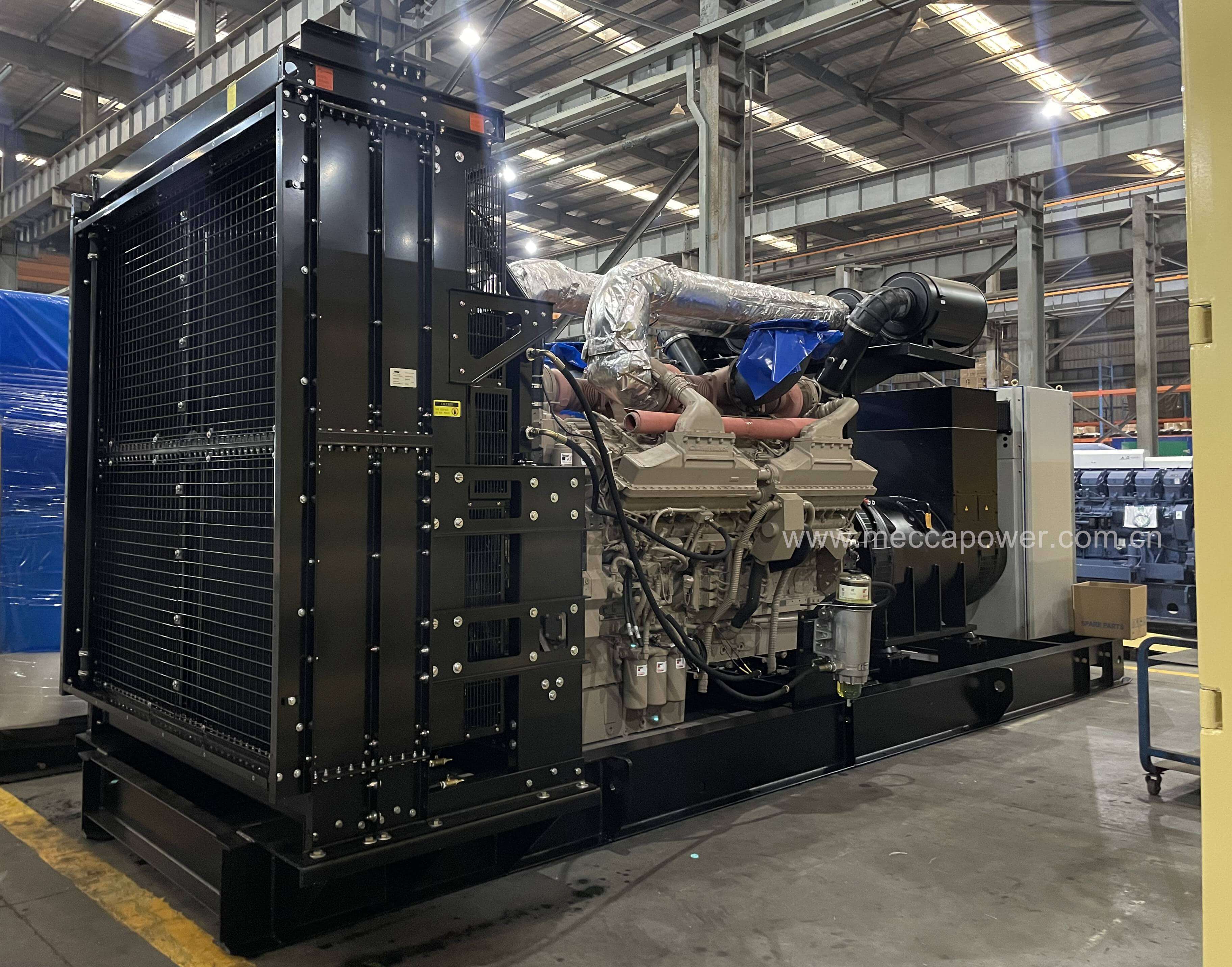
Figure 1. 2500KVA UK Cummins generators for a European power station, documented MECCA POWER case reference.
Have Questions or Need More Details?
Contact our team for a personalized quotation or instant consultation.
Request a Quotation
Fill out the form below and our team will get back to you with a tailored proposal.
WhatsApp Direct Chat
Prefer to chat in real-time? Message us on WhatsApp for instant assistance & quick answers.
- Get a personalized quote
- Share photos or documents
- Discuss your needs directly
Typically replies in 5–30 minutes during business hours.