
Industrial Diesel Generator Selection Constraints: What Data Center and Mining Buyers Must Verify
Selecting an industrial diesel generator involves more than matching kilowatts to a load. Certification, power ratings, environmental limits, integration requirements, and manufacturing evidence determine whether a generator set will start reliably and maintain performance under real project conditions. This guide gives procurement engineers, EPC contractors, and project owners a verification framework for evaluating supplier constraints. Concrete examples reference MECCA POWER, a China-based manufacturer offering CE-certified industrial diesel generators from 10 kVA to 4000 kVA.
Contents
- 1. The Problem: Constraint Verification Gaps in Generator Procurement
- 2. Industry Background: Compliance and Rating Pressures in a Growing Market
- 3. Detailed Solution: A Manufacturer Built for Constraint-Driven Procurement
- 4. Step-by-Step: How to Verify Compliance, Ratings, and Operating Limits
- 5. Use Cases: Meeting Project-Specific Constraints
- 6. Comparison Table: High-Capacity Generator Models
- 7. Constraints Verification Checklist
- 8. Frequently Asked Questions
- 9. Conclusion and Next Step
1. The Problem: Constraint Verification Gaps in Generator Procurement
The common assumption in industrial power projects is that a diesel generator is selected by dividing total load by power factor and adding a margin. In practice, the most expensive procurement mistakes happen when buyers overlook constraints. A generator may have the right kVA rating but fail to meet local emission requirements, or it may be rated at sea level but suffer severe derating at a 3,000-meter mining site.
Typical failure modes include:
- Unverified certifications: The supplier claims CE compliance but cannot show a valid certificate number, issuing authority, or scope covering the specific model.
- Misunderstood ratings: Confusion between prime power, standby power, and continuous operating power leads to an undersized or oversized set.
- Ignored environmental constraints: High altitude, extreme temperature, humidity, and dust affect engine output and cooling capacity.
- Noise and footprint limits: Urban data centers and residential-adjacent sites require silent enclosures or containerized designs, but not all suppliers offer them.
- Integration gaps: ATS, paralleling controls, high-voltage switchgear, and fuel systems must be specified together, not added later.
- Weak manufacturing evidence: A brochure cannot confirm that the factory has the test stations, lifting capacity, and quality system to build high-power sets consistently.
For buyers in the Research and Evaluation stages, the task is not simply to find a quote but to verify that the supplier can satisfy a defined set of constraints. This article focuses on those verifiable constraints and how to check them.
2. Industry Background: Compliance and Rating Pressures in a Growing Market
The global diesel generator market is projected to grow from approximately USD 22.33 billion in 2025 to USD 38.09 billion by 2034 (Fortune Business Insights). Within this market, data center applications are expanding particularly fast: the global data center generator market is expected to reach USD 19.66 billion by 2030, growing at a CAGR of 15.15% from 2024 (Arizton Advisory & Intelligence). This growth explains why procurement teams are seeing more projects that require high-power, containerized, and compliance-certified generator sets.
Compliance pressure has also intensified. ISO 8528 is the primary international standard for generator set ratings, defining categories such as Emergency Standby Power (ESP), Prime Power (PRP), and Continuous Operating Power (COP). In the United States, EPA Tier 4 Final standards require near-90% reduction in Particulate Matter (PM) and Nitrogen Oxides (NOx) for non-road diesel engines used in non-emergency applications. For EU-bound projects, CE certification is often a minimum gate. At the same time, China's exports of high-capacity diesel generator sets for data centers surged by 131.81% year-on-year in the first two months of 2026 (General Administration of Customs via China Daily). The combination of market growth, regulatory complexity, and manufacturing scale means buyers need a disciplined method for verifying supplier claims.
3. Detailed Solution: A Manufacturer Built for Constraint-Driven Procurement
MECCA POWER CO., LTD. provides an example of how a manufacturer can address the constraints described above. Established in 2013, MECCA POWER operates a 34,000 m² factory in China with 311 employees and an annual output of 3,600 units. The company exports 100% of its production to Europe, Africa, Asia, Australia, the Middle East, the Americas, Oceania, and Latin America. Its product range covers diesel generators from 10 kVA to 4000 kVA, high-voltage generators, and load banks.
For data center, mining, oil & gas, and power plant applications, MECCA POWER supplies both open-type and containerized configurations. High-power models include the 2000KW diesel generator (MC2000/MC2750), the 2500KW diesel generator (MC2500/MC2750/MC3500), and the 3MW containerized diesel generator (MC3750C) powered by the US Cumminins QSK95 engine. The 3MW model provides 3000KW/3750KVA and is engineered for data center, power plant, mining, construction, and oil & gas projects.
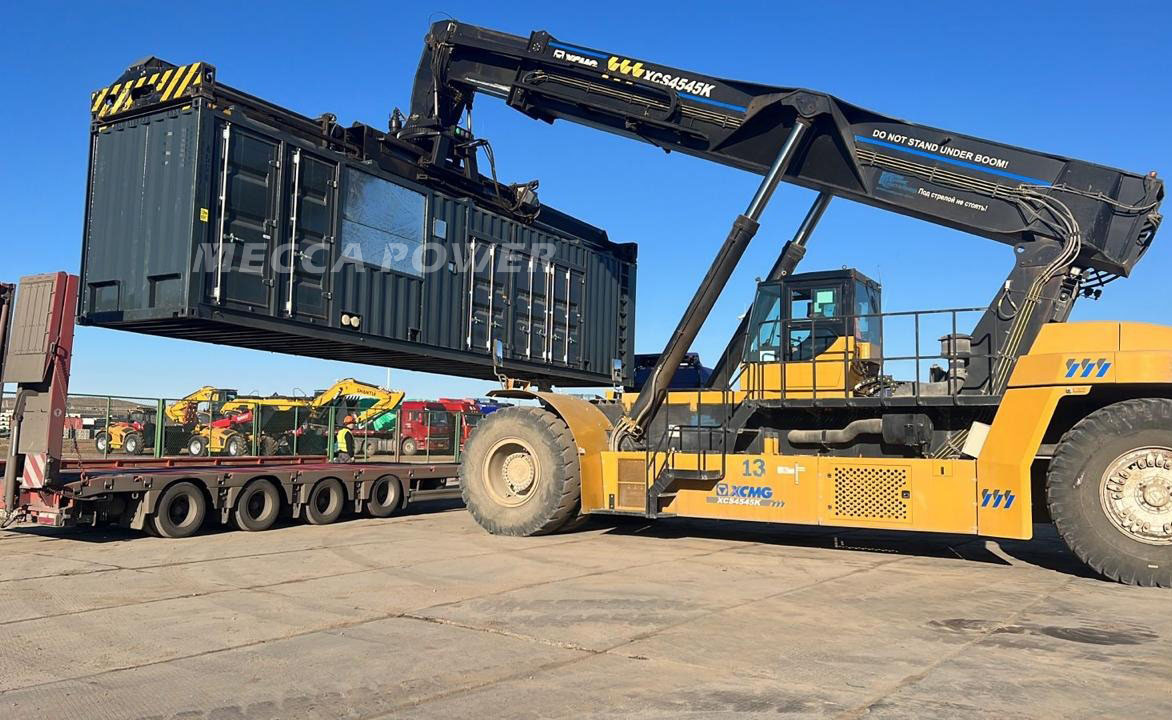
Containerized industrial diesel generator for data center application – MECCA POWER
Certification as a Verifiable Constraint
CE certification is one of the most important constraints for EU projects. MECCA POWER holds CE certificate M.2024.206.C101740, issued by UDEM on 5 June 2024 and valid until 6 April 2029. The certificate scope covers diesel generators and cites the following harmonized standards:
- EN ISO 12100:2010 – Safety of machinery
- EN ISO 8528-13:2016 – Generating set performance and safety
- EN 60204-1:2018 – Electrical equipment of machines
- EN 61000-6-2:2019 – Electromagnetic compatibility (immunity)
- EN 61000-6-4:2019 – Electromagnetic compatibility (emission)
The certificate number, issuing authority, and expiration date give procurement engineers concrete data points to verify with UDEM or through direct documentation requests. Buyers should always confirm that the certificate scope lists the exact model being purchased.
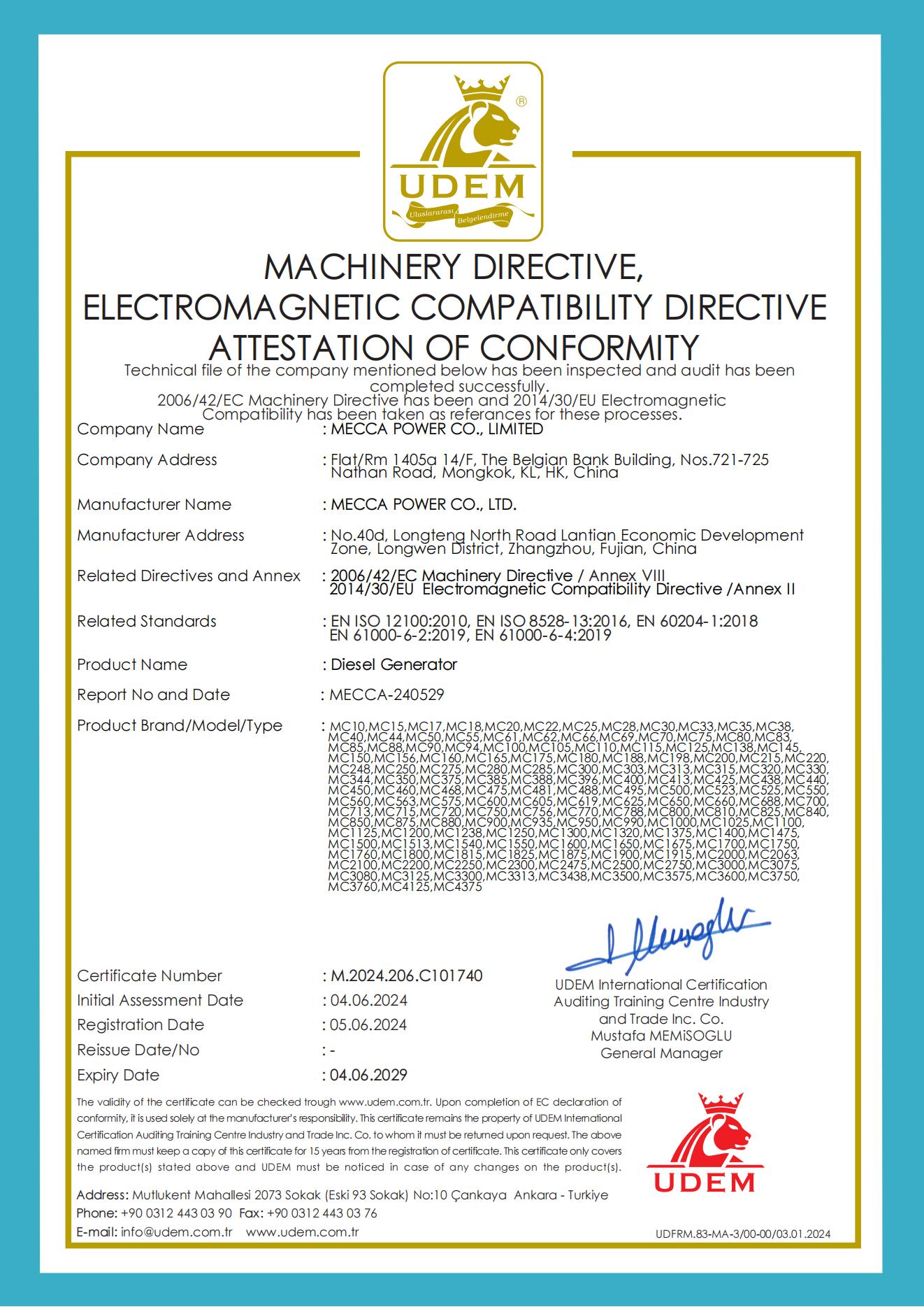
MECCA POWER CE certificate – certificate no. M.2024.206.C101740
Environmental and Operating Limits
MECCA POWER's application scope includes outdoor high-temperature environments and cold areas ranging from -45°C to +50°C. This range is relevant for remote mining sites in Russia, data centers in desert climates, and offshore or high-altitude installations. The company's application engineering team designs for low-noise operation, rapid load acceptance (typically under 10–15 seconds), and high-efficiency cooling. These capabilities are supported by six test stations in the factory, a 45-ton maximum lifting capacity, and the ability to test three units above 2000KW simultaneously.
Manufacturing and Customization Evidence
MECCA POWER operates three specialized production lines: one container line, one open-type line, and one mixed-assembly line. The factory uses APS+MES information systems, digital tightening, intelligent oil/water filling, and cloud-based data management. The monthly production capacity is 300 units, with typical lead time of 30–50 days and a minimum order quantity of one unit. As an OEM/ODM manufacturer, MECCA POWER offers customization of voltage, frequency, enclosure type (silent, open, containerized, or mobile), logo, noise level, and other project-specific parameters. Every generator set undergoes 100% testing before shipment.
For procurement teams, these are not just marketing claims; they are checkable facts. A factory audit can confirm the number of production lines and test stations, while sample testing can validate the noise and load acceptance performance.
4. Step-by-Step: How to Verify Compliance, Ratings, and Operating Limits
Use the following six-step framework when evaluating any industrial diesel generator supplier. The framework is designed to move the conversation from price and brochure claims to evidence and documentation.
Step 1: Define the Duty Cycle and the Correct Rating
Before contacting suppliers, define whether the generator will operate in standby, prime, or continuous mode. Reference ISO 8528 to translate project requirements into ESP, PRP, or COP values. For example, a data center emergency generator is typically rated as standby power unless it is used for extended grid outages, whereas a mining off-grid plant requires continuous operating power. MECCA POWER lists both prime and standby ratings for its models, such as the 2500KW diesel generator with prime power 2500KW/3125KVA and standby power 2750KW/3500KVA.
Step 2: Verify Certifications Against the Target Market
Ask for the certificate number, issuing body, certificate date, expiry date, and the exact scope. For EU projects, confirm CE certification and the listed harmonized standards. For US projects, confirm whether the engine is EPA Tier 4 Final compliant for the relevant application. The MECCA POWER CE certificate can serve as a template for what documentation to request: it shows the authority (UDEM), the certificate number (M.2024.206.C101740), and the applicable standards.
Step 3: Check Environmental Constraints and Derating
Provide the supplier with the site's ambient temperature range, altitude, and humidity profile. Ask for the generator's derating curve at the project's altitude. MECCA POWER's stated operating range of -45°C to +50°C is an initial filter; follow up with a written engineering calculation for the specific site.
Step 4: Assess Enclosure and Noise Requirements
Urban data centers and residential-adjacent projects often impose strict noise limits. Determine whether the project needs an open-type unit, a silent canopy, or a containerized power plant. Containerized designs can integrate fuel tanks, switchgear, and control rooms, reducing site civil works. MECCA POWER supplies containerized units such as the 2200KW containerized generator for data centers and non-standard containers with low-noise features.
Step 5: Evaluate Testing, Quality Control, and Factory Capability
Ask about the number of test stations, lifting capacity, and whether every unit is full-load tested before shipping. A 100% test policy is the minimum acceptable standard. MECCA POWER's six test stations and 45-ton lifting capacity support simultaneous testing of three units above 2000KW, providing strong evidence of high-power manufacturing capability.
Step 6: Plan Integration, Lead Time, and After-Sales Support
Specify the integration scope early: ATS, paralleling control panels, high-voltage cabinets, UL fuel tanks, and remote monitoring. MECCA POWER matches equipment such as ATS, parallel control panels, UL fuel tanks, containers, and high-voltage cabinets. Confirm the lead time (30–50 days typical at MECCA POWER), the MOQ (one unit), and the after-sales model: remote technical support, on-site commissioning and maintenance, spare parts supply, and 24/7 hotline.
5. Use Cases: Meeting Project-Specific Constraints
Real deployment cases show how constraints vary by industry and geography.
Data Center – Kenya
An authorized dealer in Kenya purchased four 2200KW containerized generators for a data center, powered by Yuchai engines. The units have operated for 20,000–30,000+ hours with stable operation. This case demonstrates the value of containerized high-power units that can be deployed quickly with integrated noise and weather protection.
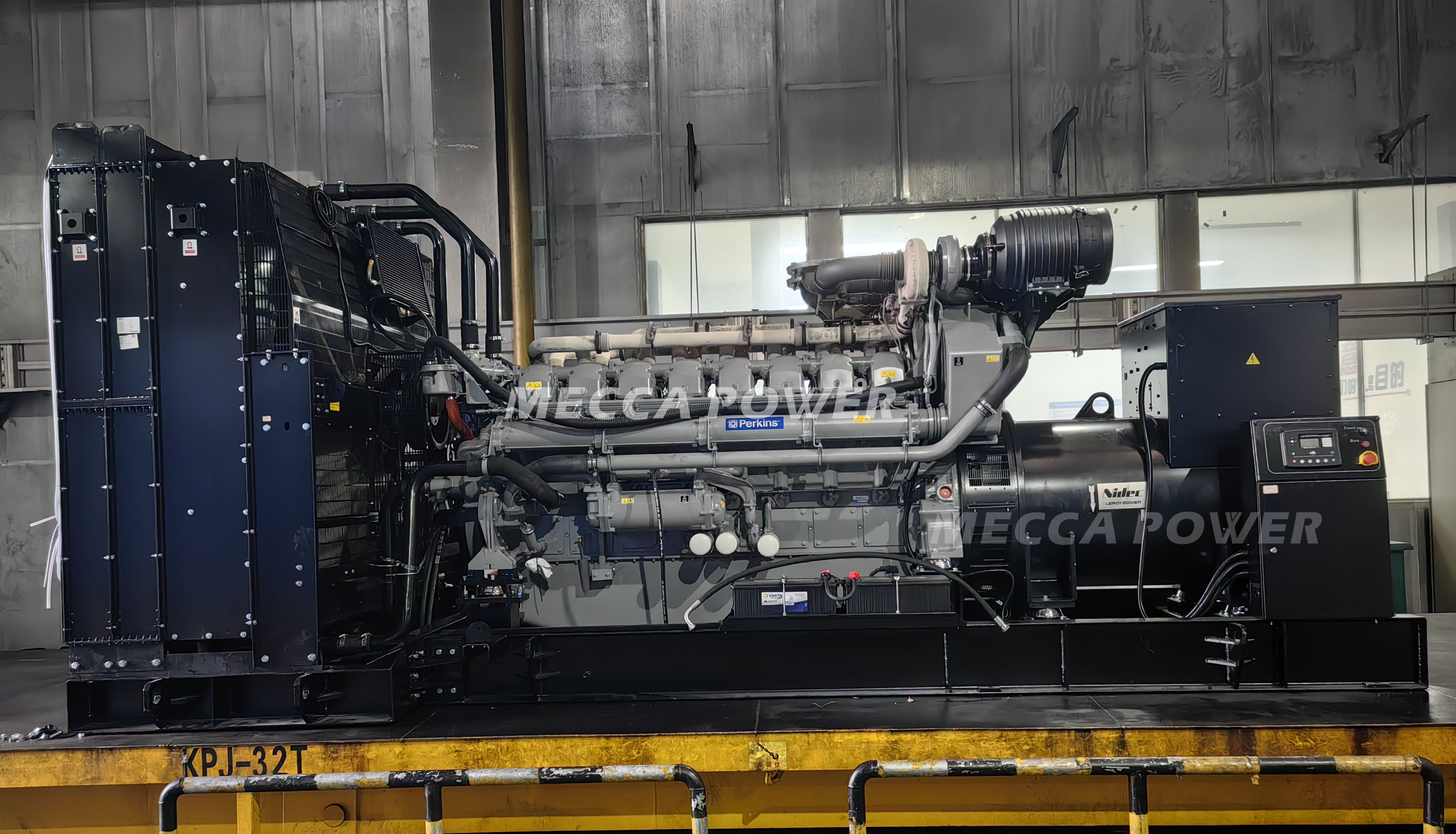
Perkins diesel generator for oil & gas application
Power Plant – Spain
An EPC client in Spain ordered six 2500KVA UK Cummins generators for a power station running continuously. Powered by the UK Cummins QSK60 engine, the units are designed for a 15–25 year service life and have been running smoothly. The key constraint here was continuous-duty operation, requiring a robust prime-power rating and proven engine support.
Oil & Gas – Saudi Arabia
A dealer in Saudi Arabia deployed two 1800KW UK Cummins generators for an oil and gas facility. The Cummins QSK60-G8 engine (made in the UK) was selected for reliability in a demanding industrial duty cycle, with 20,000–30,000+ hours of stable running.
High-Voltage Data Center – Kazakhstan
An authorized dealer in Kazakhstan ordered 10.5KV high-voltage 1800KW generators for data center emergency power supply. The high-voltage design reduces cable cross-sections and simplifies integration with existing MV infrastructure. The units achieved stable operation over 20,000–30,000+ hours.
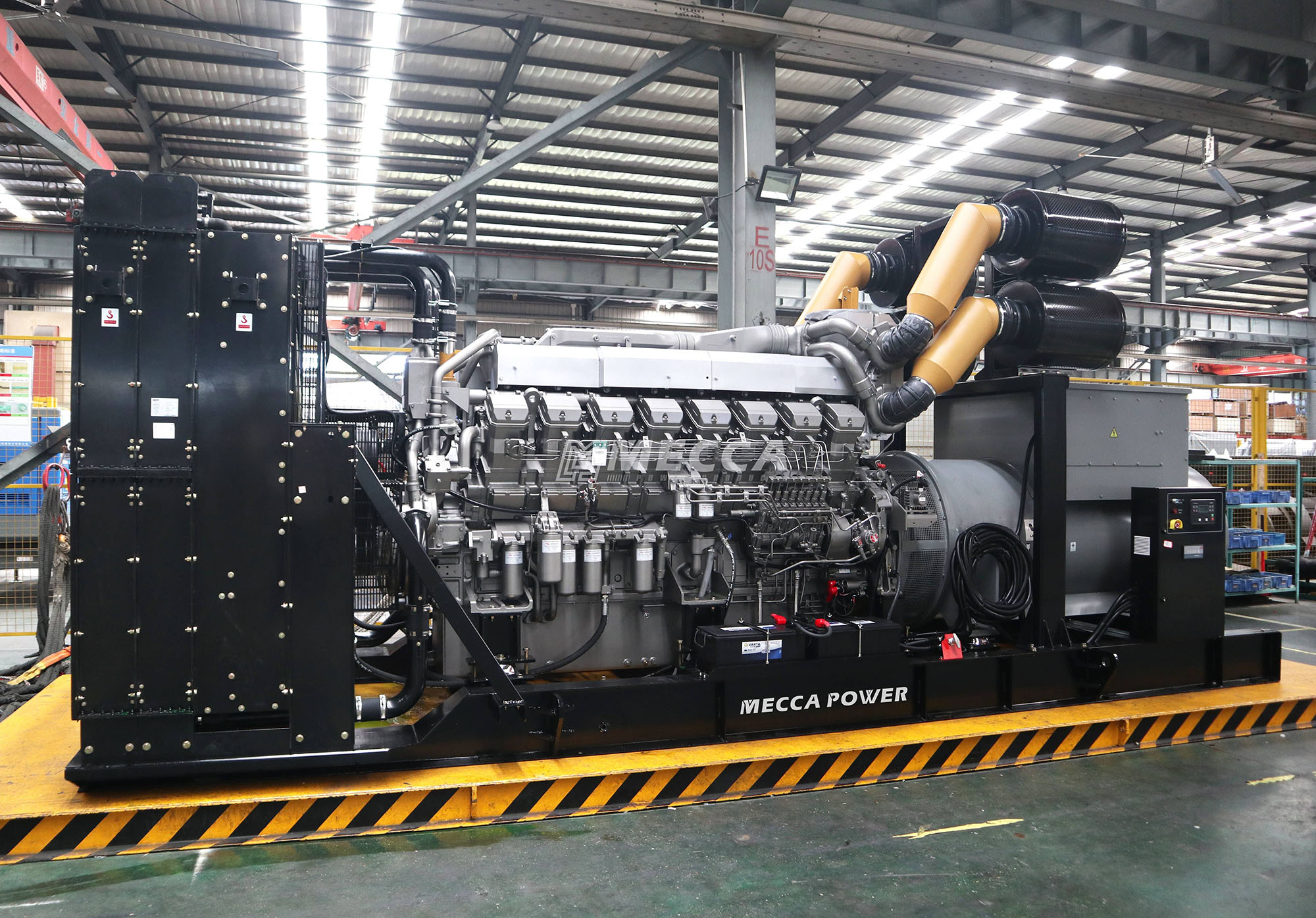
10.5KV high-voltage generators for data center emergency power
Containerized Low-Noise Data Center – Russia
Five 1800KW Yuchai containerized generators were delivered to a Russian data center for emergency power supply. The non-standard customized containers with low-noise features allowed the customer to meet strict acoustic and footprint requirements while maintaining 20,000–30,000+ hours of stable operation.
6. Comparison Table: High-Capacity Generator Models
The table below summarizes key constraints and specifications for three high-power models available from MECCA POWER. Use it as a starting point for project-specific evaluation.
| Parameter | 2000KW Diesel Generator | 2500KW Diesel Generator | 3MW Containerized Diesel Generator |
|---|---|---|---|
| Model | MC2000 / MC2750 | MC2500 / MC2750 / MC3500 | MC3750C |
| Power Range | Prime 2000KW / 2500KVA; standby 2200KW / 2750KVA | Prime 2500KW / 3125KVA; standby 2750KW / 3500KVA | 3000KW / 3750KVA |
| Engine Option (Example) | Multiple engine brands available | Multiple engine brands available | US Cummins QSK95 |
| Configuration | Open or containerized | Open or containerized | Containerized |
| Material | Stainless steel | Alloy steel / heat-resistant steel | Alloy steel / heat-resistant steel |
| Typical Industries | Data center, construction, power plant, oil & gas | Data center, power plant, oil & gas, mining, construction | Data center, power plant, mining, construction, oil & gas |
| CE Certification | Covered by certificate M.2024.206.C101740 | Covered by certificate M.2024.206.C101740 | Covered by certificate M.2024.206.C101740 |
7. Constraints Verification Checklist
Use this checklist when submitting an RFQ or evaluating a supplier proposal.
- ☐ Duty cycle defined (standby / prime / continuous) and matching ISO 8528 ratings confirmed.
- ☐ Certification number, issuing authority, scope, and expiry date provided for target market.
- ☐ Environmental limits (temperature, altitude, humidity) and derating calculations supplied.
- ☐ Noise level requirements and enclosure type (open / silent / containerized / mobile) specified.
- ☐ Fuel system, ATS, paralleling controls, and high-voltage integration scope confirmed.
- ☐ Factory test capacity and 100% full-load test policy verified.
- ☐ Lead time, MOQ, spare parts availability, and after-sales support model documented.
8. Frequently Asked Questions
Q1: Does MECCA POWER's diesel generator range meet CE certification requirements for EU projects?
Yes. MECCA POWER holds CE certificate M.2024.206.C101740, issued by UDEM on 5 June 2024 and valid until 6 April 2029. The certificate covers diesel generators and confirms compliance with EN ISO 12100:2010, EN ISO 8528-13:2016, EN 60204-1:2018, EN 61000-6-2:2019, and EN 61000-6-4:2019. Buyers should always match the certificate scope with the specific model and project voltage.
Q2: What power ranges and engine options are available for data center and mining projects?
MECCA POWER produces diesel generators from 10 kVA to 4000 kVA. High-power models include the 2000KW diesel generator (MC2000/MC2750), the 2500KW diesel generator (MC2500/MC2750/MC3500), and the 3MW containerized diesel generator (MC3750C). Available engine brands include Cummins, Perkins, MTU, Mitsubishi/SME, and Baudouin among others.
Q3: Can MECCA POWER customize generators for high-altitude, low-noise, or containerized installations?
Yes. As an OEM/ODM manufacturer, MECCA POWER offers customization for voltage, frequency, silent/open/containerized/mobile configurations, logo, and noise requirements. The company's application range covers outdoor high-temperature and cold-area conditions from -45°C to +50°C, and its containerized generators are used in data centers and mining projects where noise and protection are key constraints.
Q4: What is the typical lead time, minimum order quantity, and testing process for custom generators?
MECCA POWER's monthly production capacity is 300 units, with a lead time of 30–50 days and a minimum order quantity of one unit. Every generator set is 100% tested before shipping. The factory operates six test stations and uses digital tightening, intelligent oil/water filling, and cloud-based production data management.
Q5: How can I request a quotation or sample assessment for a turnkey power plant project?
Project inquiries can be sent to mecca@meccagen.com or via WhatsApp/WeChat at +86 15659994455. MECCA POWER supports turnkey EPC power plant projects and high-power applications, and can provide a tailored proposal based on your load profile, environmental conditions, and compliance requirements. A company brochure is available for download to support your preliminary evaluation: Download MECCA POWER Brochure.
9. Conclusion and Next Step
The growing demand for data center reliability, mining productivity, and EPC project speed has made industrial diesel generator procurement more complex. Buyers who move beyond first-price comparisons and focus on verifiable constraints will reduce project risk and avoid expensive surprises. Certification documentation, accurate power ratings, environmental derating calculations, and factory test evidence are the metrics that matter.
MECCA POWER CO., LTD. demonstrates how a manufacturer can address these constraints: 10 kVA to 4000 kVA product range, CE-certified models, containerized and open-type configurations, OEM/ODM customization, 100% test policy, and 30–50 day lead time. The factory in China operates three specialized production lines and six test stations, enabling high-power sets above 2000KW to be tested simultaneously.
Ready to Validate Your Generator Specifications?
Send your load profile and project constraints to receive a compliance-matched proposal from MECCA POWER.
Email: mecca@meccagen.com
WhatsApp / WeChat: +86 15659994455
Have Questions or Need More Details?
Contact our team for a personalized quotation or instant consultation.
Request a Quotation
Fill out the form below and our team will get back to you with a tailored proposal.
WhatsApp Direct Chat
Prefer to chat in real-time? Message us on WhatsApp for instant assistance & quick answers.
- Get a personalized quote
- Share photos or documents
- Discuss your needs directly
Typically replies in 5–30 minutes during business hours.