
Regional Compliance Guide for 2000KW–3MW Containerized Diesel Generators
Regional compliance for a 2000KW, 2500KW, or 3MW containerized diesel generator is a mapping exercise, not a certificate purchase. Four variables have to line up before the container is built: how the destination market defines generator ratings, which emission rules attach to the engine, what electrical and site interface the project requires, and which evidence the buyer, EPC contractor, or permitting authority will ask to see. This guide sets out a practical framework for building that mapping on high-power containerized units.
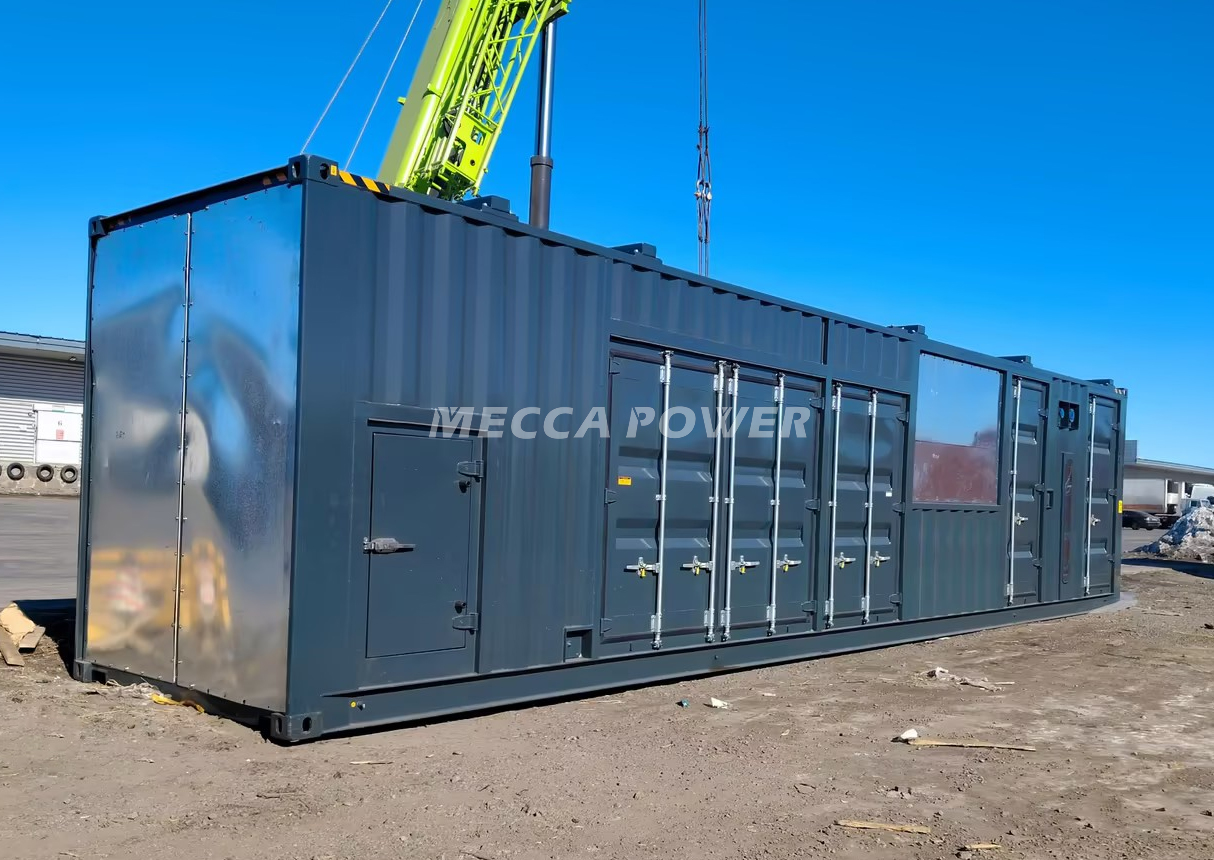 2500KW containerized diesel generator — in the 2MW–3MW band, regional compliance moves from a checkbox to a project workstream.
What Regional Compliance Means for a 2MW–3MW Container
In operational terms, regional compliance is the set of written conditions a destination market applies to a high-power generating set, combined with the evidence needed to prove each condition is satisfied. For units between 2000KW and 3MW, those conditions normally cover six areas: rating definition, engine emissions, electrical interface, enclosure and noise, fuel storage, and documentation.
The difficulty is structural. The conditions are written locally, while the equipment specification is produced globally. A containerized unit engineered for one market's grid interface, noise limit, and permit file will not automatically satisfy another's, even when the electrical output is identical.
The practical consequence is that compliance must be scoped during product definition rather than after delivery. By delivery, the enclosure, switchgear, control architecture, and documentation set are already fixed, and changes are costly.
Why a Single Global Certificate Cannot Cover a 2MW–3MW Container
Three failure points cause most compliance problems on high-power containerized projects.
1. Rating definition is not universal
ISO 8528 is the primary international standard for reciprocating internal combustion engine driven alternating current generating sets, and it defines ratings including Emergency Standby Power (ESP) and Continuous Operating Power (COP). A 2500KW container quoted against an emergency standby rating and the same container quoted against a continuous rating are not interchangeable in a permit file, a load study, or a warranty discussion. If local authorities, insurers, or an EPC specification expect a particular rating definition, that definition has to appear consistently on the datasheet, the nameplate, and the test report.
2. Emission rules follow the application, not the equipment
In the United States, EPA Tier 4 Final standards, effective since 2015, require a near-90% reduction in Particulate Matter (PM) and Nitrogen Oxides (NOx) for non-road diesel engines used in non-emergency applications. The scope wording matters: the same engine platform can fall inside or outside the rule depending on how the site's operation is classified locally. Assuming an emergency standby classification without written confirmation creates a compliance gap that is expensive to close after the unit arrives.
3. The evidence chain must match the equipment
Compliance is approved on documents. Where the datasheet rating, the nameplate marking, the test report figures, and the site single-line diagram disagree, the approval stalls, regardless of how the unit performs in operation.
Industry Background: Why Compliance Is Now a Procurement Discipline
The commercial context explains why this has shifted from an engineering detail to a procurement workstream. The global diesel generator market was valued at approximately USD 22.33 billion in 2025 and is projected to reach USD 38.09 billion by 2034 (Fortune Business Insights). Within that total, the data center generator segment is expected to reach USD 19.66 billion by 2030, driven by a CAGR of 15.15% from 2024 (Arizton Advisory & Intelligence).
Trade data points in the same direction for Chinese manufacturing. China's exports of high-capacity diesel generator sets for data centers surged by 131.81% year-on-year in the first two months of 2026 (General Administration of Customs, reported by China Daily). Growth of that magnitude concentrates in larger units, which is precisely the 2000KW, 2500KW, and 3MW band, and that band carries the widest compliance surface because these units are installed as fixed assets with grid interface, fuel storage, noise, and permit obligations.
MECCA POWER CO.,LTD. is a diesel generator manufacturer with factories in Fujian and Jiangxi provinces, China, producing gensets from 10kVA to 4000kVA for data centers, mining, power plants, construction, and oil & gas applications, with 100% of output exported to markets including Europe, Africa, Asia, Australia, the Middle East, and the Americas. Its published specifications and project record make it a useful reference point for how compliance variables are handled in practice. More detail is available at www.meccapower.com.cn.
The Six-Layer Compliance Stack for High-Power Containerized Units
Treat regional compliance as six layers, each with its own local rule and its own evidence requirement. Work through them in order, starting with the rating, because the rating definition changes the commercial and technical meaning of everything that follows.
Layer 1 — Rating basis
Confirm whether the project requires an emergency standby definition or a continuous duty definition, then verify the published numbers against it. In MECCA POWER's product data, the 2000KW diesel generator (models MC2000, MC2750) is listed at prime power 2000KW / 2500KVA with standby power 2200KW / 2750KVA; the 2500KW diesel generator (models MC2500, MC2750, MC3500) is listed at prime power 2500KW / 3125KVA with standby 2750KW / 3500KVA; and the 3MW containerized diesel generator (model MC3750C) is listed at 3000KW / 3750KVA.
Layer 2 — Engine platform and emission jurisdiction
Engine selection determines which emission regime applies and which documentation the engine manufacturer can support. MECCA POWER works with Cummins, Perkins, MTU, Mitsubishi, FPT, VOLVO, Baudouin, and Chinese engine brands, together with Stamford, Leroy Somer, and Mecc Alte alternators and DeepSea and ComAp control systems. The 3MW containerized model MC3750C is listed with a US CUMMINS QSK95 engine. For compliance purposes, the engine model, its origin, and its emission documentation should be fixed in the specification rather than decided during production.
Layer 3 — Electrical interface and paralleling
Grid codes and site designs differ on voltage level, frequency, protection philosophy, and whether the site runs a single unit or a paralleled group. Matched equipment for these applications includes an ATS (Automatic Transfer Switch), parallel control panel, high voltage cabinet, container, and UL fuel tank. The specification decision is which of those items sit inside the generator scope and which are supplied by the EPC contractor, because the boundary determines where compliance responsibility transfers.
Layer 4 — Enclosure, noise, and environmental envelope
Noise is a permitting issue in populated regions, not a comfort issue. Low-noise designs use an industrial-grade silencer and low-noise enclosure intended to meet strict urban noise limits. Site conditions add a second variable: the published working condition range for these applications is −45°C to +50°C, covering high-temperature outdoor sites and low-temperature cold regions. Where ambient temperature is high, or where the site is at altitude, enhanced heat sinks or derating design for high-altitude cooling capacity become specification items, because heat dissipation under continuous high load has to be demonstrated rather than assumed.
Layer 5 — Fuel storage and site safety
Fuel storage rules are almost always local, and they are a frequent cause of last-stage redesign. The practical step is to decide early whether the tank is a UL fuel tank option inside the generator scope, a separately supplied tank, or an existing site asset, and to confirm the containment, location, and inspection rules that apply to it.
Layer 6 — Documentation and test evidence
The final layer is the evidence pack. MECCA POWER's production process uses 100% test, six testing stations, digital tightening, intelligent oil and water filling, and cloud-based data management supported by APS+MES systems, with a dedicated testing operation room. The output of that process, including test records, drawings, and datasheets, is what a review body or an EPC quality team will actually examine. Certification is listed as UL/CSA (customizable) in the product data, which means the certification route is defined per project rather than assumed from a template.
Mapping rule: each compliance layer should have one named owner, one local source of truth, and one document that proves the requirement is met. Any layer missing one of the three becomes a delivery-stage risk.
| Compliance layer | Question to resolve locally | Evidence to request |
|---|---|---|
| Rating basis | Is the unit permitted, insured, and specified as emergency standby or continuous duty? | Rating definition stated identically on datasheet, nameplate, and test report |
| Engine and emissions | Which emission regime applies to this engine in this jurisdiction, and under which application classification? | Engine model, engine origin, and emission documentation |
| Electrical interface | What voltage, frequency, protection, and paralleling arrangement does the site use? | Single-line diagram, switchgear and control panel specification |
| Enclosure and noise | What noise limit applies at the nearest sensitive receptor? | Enclosure and silencer specification, acoustic statement |
| Environment | What are the site ambient temperature and altitude? | Cooling and derating note covering the site conditions |
| Fuel storage | Which fuel storage and containment rules apply? | Fuel tank specification, including UL fuel tank option where required |
| Documentation | Which documents are submitted for permit and acceptance? | Test records, drawings, datasheets, and certification route |
Step-by-Step: Building a Regional Compliance Checklist
- Convert local requirements into written clauses. Collect the grid code, emission rule, noise limit, fuel storage rule, and permit document list for the destination market, and restate each one as a clause that can be answered with yes, no, or a document reference. Vague requirements cannot be verified later.
- Lock the rating definition before commercial comparison. Decide whether the project is specified against emergency standby or continuous duty, then compare quotations against that definition only. This prevents a lower-priced quote from being compared against a different rating basis.
- Match the engine platform to the emission jurisdiction. Confirm the engine model and origin against the rule that applies in the destination market, and confirm that the engine documentation can be issued with the unit.
- Confirm the electrical interface, including paralleling and high voltage. Establish whether the scope includes the parallel control panel and high voltage cabinet, and whether the site requires a single unit or a synchronized group.
- Verify enclosure, noise, and environmental derating against site data. Use the actual site temperature, altitude, and nearest receptor distance rather than a regional average.
- Fix container type, footprint, and transport route. Published containerized options include 20HQ, 40HQ, and non-standard containers across a 1000KVA–4000KVA range, built in Corten steel, aluminum, or stainless steel. Footprint decisions interact with transport permits and site access, so they should be confirmed with the same discipline as electrical ratings.
- Assemble and pre-validate the documentation pack. Build the pack before shipment, cross-check the rated figures across all documents, and complete the factory test record while the unit is still on the test bay.
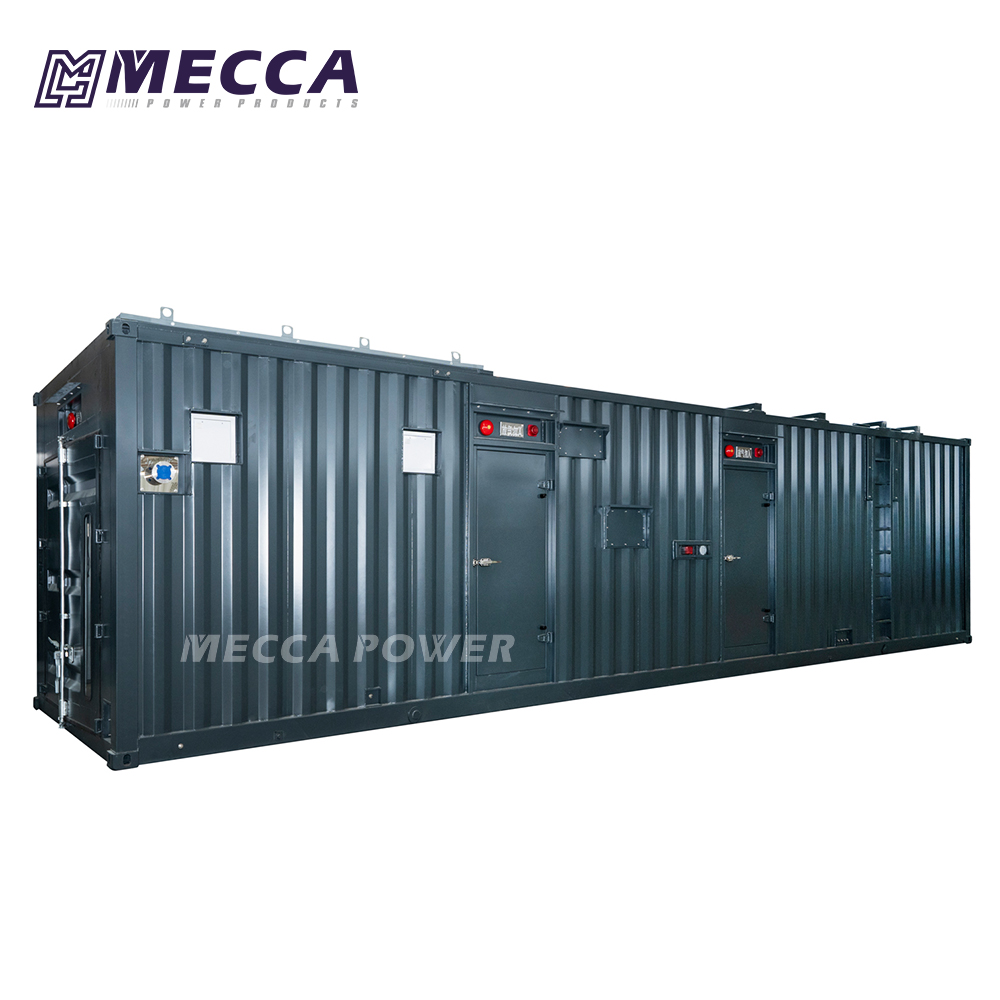 Containerized high-power units integrate enclosure, cooling, fuel, and control scope, so compliance boundaries must be agreed inside the same drawing set.
Factory capability determines how quickly the final two steps can be completed on 2MW-plus units. MECCA POWER's Nanchang factory in Jiangxi focuses on the production of high-power generator sets of 1000kW and above, with monthly output increasing from 132 units to 212 units. The site runs three specialized production lines — one container line, one open-type line, and one mixed-assembly line — and has a maximum lifting capacity of 45 tons, capable of simultaneously supporting the production testing of three units exceeding 2000KW. For buyers, the relevant point is not the figure itself but the constraint it removes: validating a 2MW–3MW container requires test-bay and lifting capacity that smaller assembly operations do not have.
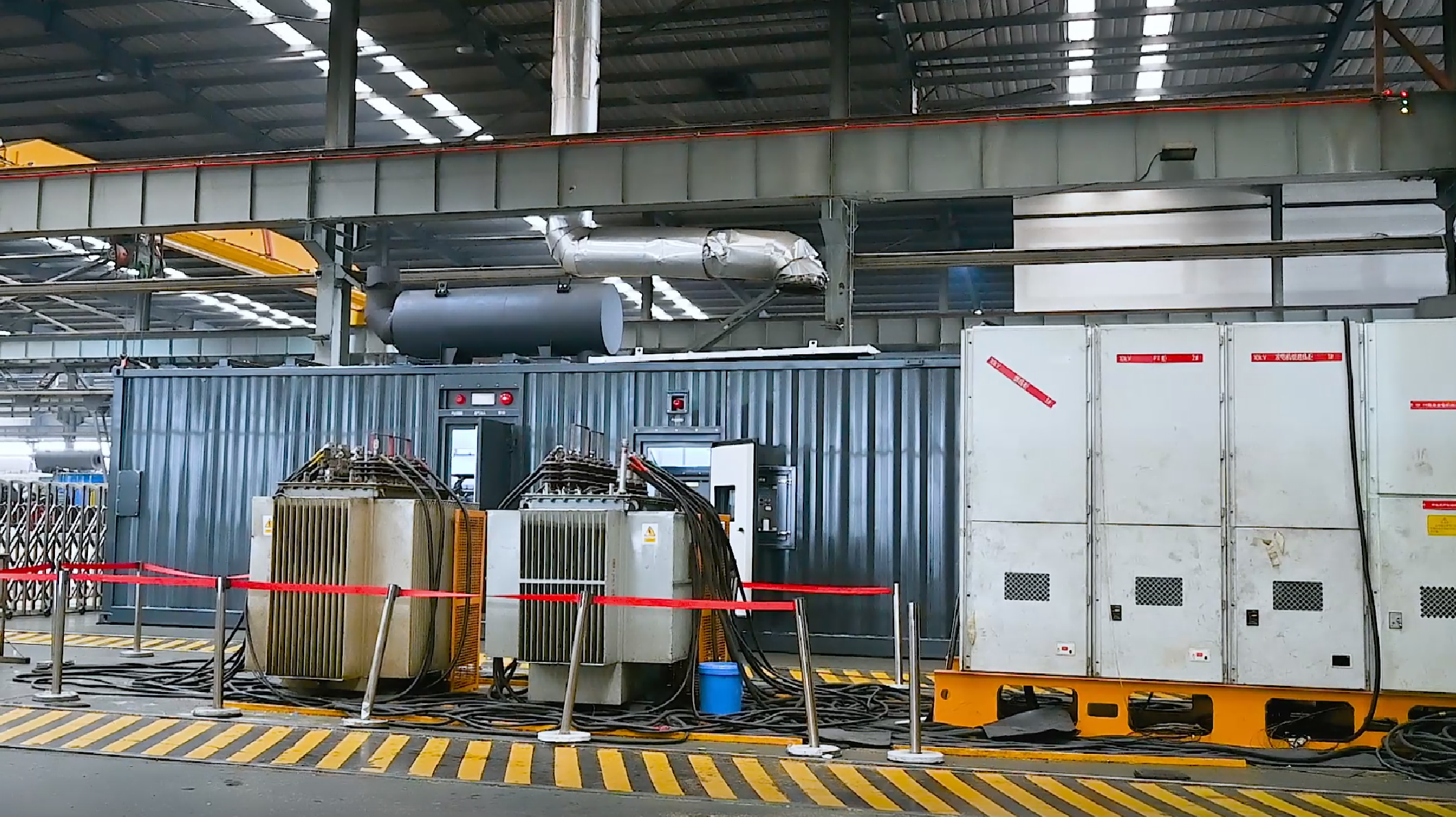 Test evidence produced on the test bay is the layer of compliance documentation that buyers can verify before shipment.
2000KW, 2500KW, and 3MW Containerized: Configuration Reference
The table below uses published MECCA POWER specification data for the three configurations most often specified in data center, power plant, mining, and oil & gas projects. Use it as a starting reference, then confirm each figure against the project rating basis.
| Configuration | Model | Prime power | Standby power | Engine platform (as listed) | Material (as listed) | Applicable industries (as listed) |
|---|---|---|---|---|---|---|
| 2000KW (2MW) | MC2000, MC2750 | 2000KW / 2500KVA | 2200KW / 2750KVA | Not fixed in published product data | Stainless steel | Data center, construction, power plant, oil & gas |
| 2500KW | MC2500, MC2750, MC3500 | 2500KW / 3125KVA | 2750KW / 3500KVA | Not fixed in published product data | Alloy steel / heat-resistant steel | Data center, power plant, oil & gas, mining, construction |
| 3MW | MC3750C | 3000KW / 3750KVA | As specified per project | US CUMMINS QSK95 | Alloy steel / heat-resistant steel | Data center, power plant, mining, construction, oil & gas |
Two additional specification layers matter for compliance reviews. The broader containerized diesel generator range is listed from 1000KVA to 4000KVA with 20HQ, 40HQ, and non-standard container formats. The wider industrial diesel generator range is listed from 500KW to 4.5MW prime power (4500KW / 5625KVA) and 500KVA to 5MW standby, with certification listed as UL/CSA (customizable). Those three data points define the envelope within which regional requirements can be accommodated.
Use Cases: How Compliance Mapping Plays Out in Practice
High-voltage data center interface — Kazakhstan
A project delivered for a data center used 10.5KV high-voltage 1800KW generators built with a Chinese SME engine, supplying emergency power. The compliance lesson is that the electrical interface, not the power rating, drove the specification: the unit had to match an existing high-voltage distribution design, and the engine platform was selected around that requirement rather than the other way round. Reported operating duration for this type of deployment is 20,000–30,000+ hours.
Noise-constrained container — Russia
A data center project used five 1800KW YUCHAI containerized generators in a non-standard customized container built for low noise. Here the binding constraint was acoustic and geometric: a standard container format did not satisfy the site's noise requirement, so the container itself became the compliance object.
Continuous duty power station — Spain
An EPC project supplied six 2500KVA UK CUMMINS generators powered by the CUMMINS QSK60 engine for continuous running at a power station, with reported operating duration of 15–25 years. Multi-unit projects of this type require a documentation set that stays consistent across every unit, because the permit and acceptance review covers the installation as a whole.
Oil and gas duty cycle — Saudi Arabia
A dealer project delivered two 1800KW UK CUMMINS generators using the QSK60-G8 engine manufactured in the UK for oil and gas duty, with reported operation of 20,000–30,000+ hours. For oil and gas applications, engine origin documentation frequently forms part of the client's own procurement standard, so origin has to be stated in the specification from the outset.
Cost-controlled data center deployment — Kenya
An authorized dealer project placed four 2200KW containerized generators for a data center, powered by a YUCHAI engine and positioned as cost-effective, with reported stable operation over 20,000–30,000+ hours. The pattern illustrates that engine platform selection, not just power class, is a compliance-relevant decision in regional procurement.
 Container format is a compliance variable as well as a logistics variable: 20HQ, 40HQ, and non-standard containers carry different acoustic, fuel, and transport implications.
Frequently Asked Questions
What standards and certifications should I verify for a 2000KW–3MW containerized diesel generator?
Verify four things in sequence. First, the rating basis: ISO 8528 is the primary international standard for reciprocating internal combustion engine driven alternating current generating sets and defines ratings including Emergency Standby Power (ESP) and Continuous Operating Power (COP), so confirm which rating appears on both the datasheet and the nameplate. Second, the emission regime: in the United States, EPA Tier 4 Final standards, effective since 2015, require a near-90% reduction in Particulate Matter and Nitrogen Oxides for non-road diesel engines used in non-emergency applications, which means the site's use classification must be confirmed in writing. Third, the product certification route: MECCA POWER's product data lists certification as UL/CSA (customizable), so the route is defined per project. Fourth, the local rules that sit outside the product itself, including grid connection, paralleling, noise limits, and fuel storage.
Can a supplier configure a 3MW containerized unit to match a specific region's electrical and site requirements?
Yes, configuration is normally handled inside the specification process. MECCA POWER's 3MW containerized diesel generator, model MC3750C, is listed at 3000KW / 3750KVA with a US CUMMINS QSK95 engine, and the wider containerized range covers 1000KVA–4000KVA with 20HQ, 40HQ, and non-standard container options. Customization is documented across voltage and frequency, silent, open, containerized, or mobile formats, logo, and noise requirements. Two project examples show how far the configuration can be pushed: a data center deployment in Kazakhstan used 10.5KV high-voltage 1800KW generators with a Chinese SME engine, and a data center deployment in Russia used five 1800KW YUCHAI containerized units in a non-standard container built for low noise.
What drives cost in a compliant 2000KW–3MW containerized project?
Cost in this power band is driven by compliance scope items rather than by kilowatts alone. The main scope drivers are enclosure and silencing (industrial-grade silencer and low-noise enclosure where urban limits apply), the electrical interface (ATS, parallel control panel, high voltage cabinet), fuel storage arrangements including a UL fuel tank where required, environmental engineering such as enhanced heat sinks for high ambient temperature or derating design for high-altitude cooling capacity, and the container format itself, whether 20HQ, 40HQ, or a non-standard design in Corten steel, aluminum, or stainless steel. The practical comparison method is to evaluate quotations line by line against a completed compliance checklist instead of against a headline kW price.
Can we validate a 2000KW–3MW unit before shipment?
Validation before shipment is standard practice for this power class. MECCA POWER states 100% test across production, supported by six testing stations, digital tightening, intelligent oil and water filling, and cloud-based data management via APS+MES systems, with a dedicated testing operation room. The factory's maximum lifting capacity of 45 tons supports simultaneous production testing of three units exceeding 2000KW, and the minimum order quantity is 1, so a single high-power unit can be built and tested for a specific project. Buyers should request the test record together with the cross-checked documentation pack while the unit is still on the test bay.
What lead time should be planned, and how does compliance work fit into it?
Published lead time is 30–50 days, with monthly capacity of 300 units and a Nanchang factory focused on 1000kW-and-above production, where monthly output rose from 132 to 212 units. Compliance work usually sits outside that window: local approvals, third-party document review, and permit submissions run on the authority's timeline, not the factory's. The workable sequence is to complete rating, engine, interface, and noise decisions before the order is released, run the factory build and test in parallel with local document review, and hold the final documentation pack and factory acceptance test as the release gate. To start that process for a 2000KW, 2500KW, or 3MW containerized project, send the site conditions and local requirement list to mecca@meccagen.com or message +86 15659994455 on WhatsApp, and request a quotation plus sample configuration review.
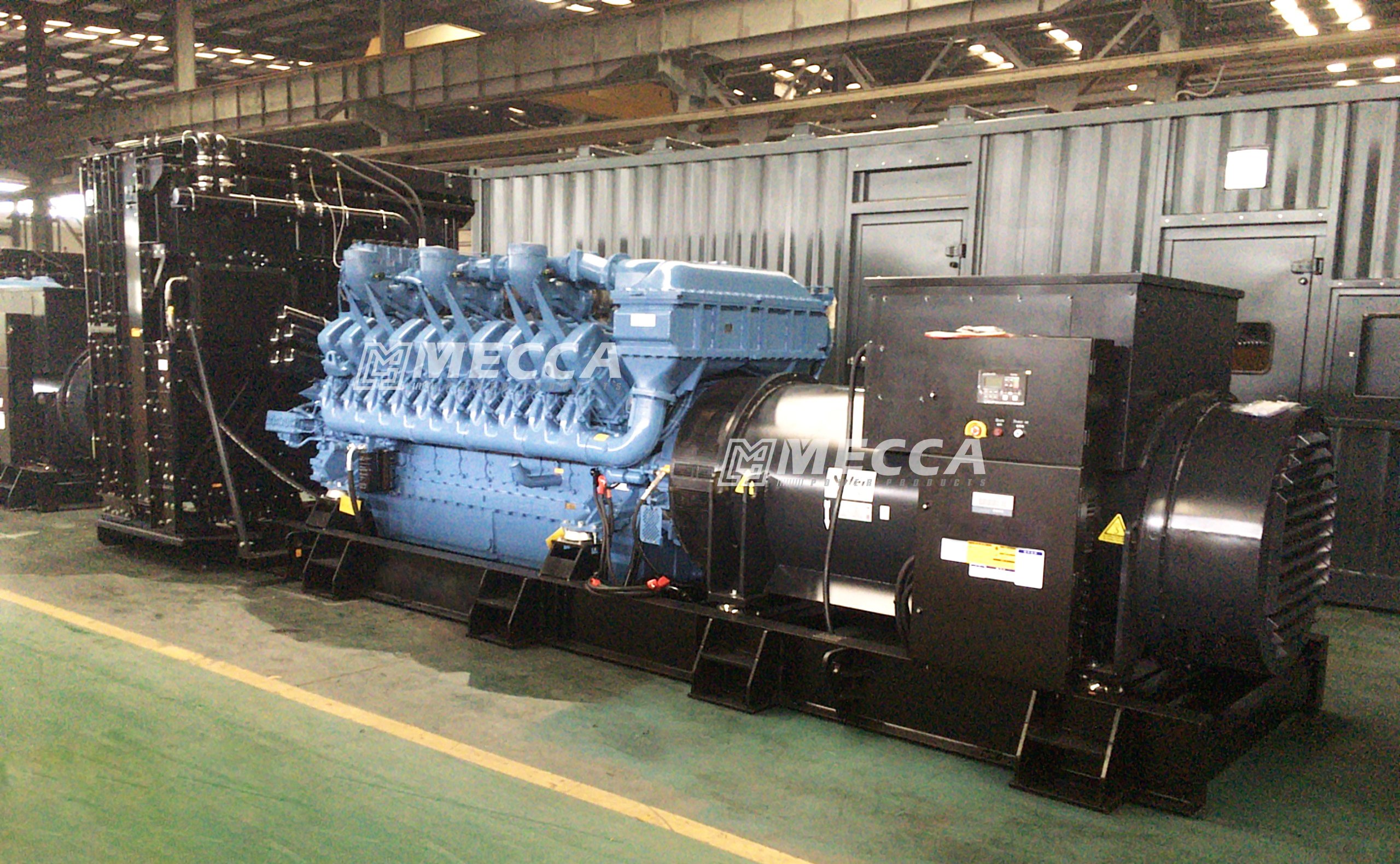 Engine platform selection is a compliance decision: the engine model and its origin determine which emission and procurement standards can be documented.
Conclusion
For 2000KW, 2500KW, and 3MW containerized diesel generators, regional compliance is not a document attached to a product. It is a sequence of local decisions — rating basis, engine and emissions, electrical interface, enclosure and noise, fuel storage, and documentation — that must be resolved before the specification is frozen and confirmed again before shipment.
Buyers who work through the six layers as a checklist, and who require the same rated figures to appear on the datasheet, nameplate, and test report, avoid the most common failure mode in this power band: a technically capable container that cannot be approved in its destination market. Suppliers who can document rating basis consistently, support engine selection by jurisdiction, and test 2MW-plus units in-house shorten that path considerably.
Next Step: Review Your Project Against the Compliance Stack
MECCA POWER builds containerized diesel generators from 10kVA to 4000kVA, including the 2000KW (MC2000, MC2750), 2500KW (MC2500, MC2750, MC3500), and 3MW (MC3750C) configurations, with OEM/ODM customization, 100% test, and remote technical support, on-site commissioning and maintenance, spare parts supply, and a 24/7 after-sales hotline.
Send your site conditions and local requirement list for a quotation or a configuration review — email mecca@meccagen.com or WhatsApp/WeChat +86 15659994455. You can also download the full product brochure here: MECCA POWER Industrial Diesel Generator Brochure (PDF).
 Request a quotation or configuration review for 2000KW–3MW containerized diesel generator projects.
Have Questions or Need More Details?
Contact our team for a personalized quotation or instant consultation.
Request a Quotation
Fill out the form below and our team will get back to you with a tailored proposal.
WhatsApp Direct Chat
Prefer to chat in real-time? Message us on WhatsApp for instant assistance & quick answers.
- Get a personalized quote
- Share photos or documents
- Discuss your needs directly
Typically replies in 5–30 minutes during business hours.