
Technical Parameters Decoded: How Roll Laminator Engineering Defines Lamination Quality
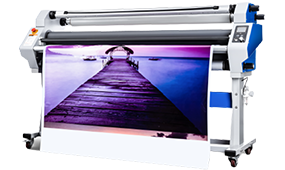
Technical Parameters Decoded: How Roll Laminator Engineering Defines Lamination Quality
When procurement professionals evaluate a roll laminator, they are often confronted with a dense specification sheet: roller diameter, heating type, temperature range, speed, power consumption, lift mechanism. But what do these numbers actually mean for your production output? A difference of a few millimeters in roller diameter or a change in heating element composition can be the deciding factor between bubble-free, high-gloss lamination and costly rework.
This guide is designed to decode the most critical technical parameters of large format and industrial roll laminators. We will connect each specification to real-world production outcomes — adhesion strength, wrinkle prevention, throughput stability, and machine longevity. Whether you are sourcing a heavy duty roll laminator for 24/7 sign shops or a heat assist laminator for photographic prints, understanding these engineering details will empower you to make an informed investment.
What Is a Roll Laminator?
A roll laminator (also known as a wide format laminator, large format laminator, or roll-to-roll laminating machine) applies a protective film or adhesive layer onto a substrate (paper, vinyl, fabric, board) using heated or cold rollers under controlled pressure. It is an essential finishing tool in the signage, graphic arts, printing, and industrial decoration industries.
The machine typically consists of two or more silicone rollers, a feeding system, a heating unit (for thermal lamination), pressure adjustment (manual, pneumatic, or electric), and optional trimming or rewinding modules. The quality of lamination — bubble-free, uniform adhesion, scratch resistance — is directly tied to the design and materials of these core components.
Why Technical Parameters Matter for Production Quality
Procurement teams often focus on surface-level specs like “max width” or “max speed,” but overlook how those specs are achieved. For instance, a laminator rated at 20 m/min can only maintain that speed if the rollers are large enough to keep temperature even and pressure consistent. Otherwise, operators are forced to slow down to avoid wrinkles or delamination.
Similarly, the heating method — infrared quartz vs. resistive heating — determines temperature uniformity across the roller length. Uneven heat leads to “hot spots” that can melt films or cause adhesive failure. Understanding the engineering behind each parameter is the difference between a reliable production tool and a constant source of waste.
Industry Context: The Growing Demand for High-Precision Finishing
The global signage and printing industry is moving toward shorter runs, faster turnarounds, and higher quality expectations. Automated and semi-automated finishing solutions are replacing manual labor. According to market observations, the adoption of pneumatic roll laminators and high speed roll laminators is rising because they offer repeatable pressure and consistent temperature — two factors that manual machines cannot guarantee.
Suppliers like MEFU (HENAN MEFU INDUSTRIAL LIMITED), with over 18 years in the industry, have responded by developing models that integrate SMART entry-level control systems, front and rear control panels, and industrial-grade pneumatic lifting. These features directly address the pain points of 24/7 production environments.
Critical Roll Laminator Parameters — A Detailed Breakdown
Below we dissect the most influential technical specifications and explain how each impacts lamination quality.
1. Roller Diameter and Material
Roller diameter is one of the most underrated parameters. Larger diameter rollers (e.g., 130 mm) increase the nip area — the contact zone where film and substrate bond. This allows for better heat transfer and more uniform pressure, especially on textured or thick materials.
- Standard rollers (80–100 mm): Suitable for occasional light-duty use. More prone to deflection under pressure, causing uneven lamination.
- Premium silicone rollers (130 mm): Used in industrial models like the MEFU MF1700-B5 PRO or MF1950-B2. Silicone offers excellent elasticity and thermal stability. According to comparative data, upgrading to 130 mm silicone rollers can reduce scrap rate by up to 90% compared to standard electric laminators.
Roller material is equally important. Pure silicone delivers consistent durometer (hardness) across the entire length, avoiding “hard spots” that create bubbles. MEFU’s MF1700-F1 PLUS, for example, uses high-quality silicone rollers with a diameter of 120 mm for the main rollers and 90 mm for feeding — a configuration engineered for high-speed stability.
2. Heating System: Infrared Quartz vs. Conventional
Heating is the heart of a thermal laminator. The most common technologies are:
- Infrared quartz heating: Quartz elements emit infrared radiation that directly heats the roller surface, achieving rapid temperature recovery and even heat distribution. MEFU’s entire heated laminator series (MF1700-M1, MF1700-A1 PRO, MF1700-F1, etc.) employs infrared quartz heating elements with aluminum alloy heating plates. This combination yields maximum temperatures up to 60°C (cold/heat-laminator) or 120°C (for double-sided models like MF1700-F2).
- Resistive cartridge heaters: Older technology, slower to respond, prone to temperature drops during long runs. Often leads to inconsistent adhesion.
Key takeaway: Infrared quartz heating ensures that the laminator can maintain the set temperature even at maximum speed, which is critical for high-speed production (e.g., MF1700-F1 PLUS running at 50 m/min).
3. Pneumatic Lifting System
The ability to raise and lower the top roller is essential for threading film and handling thick substrates. Manual hand cranks are common on entry-level machines but introduce operator fatigue and inconsistency. Pneumatic lifting — standard on MEFU’s MF1700-M1 PRO, MF1700-C3, and MF1700-F2 models — uses compressed air cylinders to achieve uniform pressure at the touch of a button.
- Pneumatic: Repeatable pressure, faster setup, reduced operator error. Extends maintenance intervals by 50% according to comparative studies.
- Manual (hand crank): Lower initial cost, but pressure can vary between operators and over time. Not ideal for 24/7 industrial use.
The MF1700-A1 PRO, for example, features a “precise pneumatic pressure system” that has been shown to deliver 50% higher efficiency compared to traditional manual/electric laminators, with a 10-month ROI and 30% lower total cost of ownership.
4. Frame Construction and Materials
The frame must withstand continuous tension from unwinding rolls and the weight of the rollers. Integrated sheet metal construction — as used across all MEFU laminators — provides rigidity without adding unnecessary weight. Cheaper machines often use bolted or welded steel frames that can twist under load, misaligning the rollers and causing wrinkles.
For cutting attachments, the material quality matters even more. MEFU’s MF1700-XY XY roll cutting machine uses GCr15 bearing steel for linear guides and tungsten steel blades — the same materials found in precision industrial tooling. This ensures ±0.5 mm cutting accuracy over hundreds of thousands of cycles.
5. Control System and Safety Features
Modern laminators incorporate “entry-level smart systems” that monitor speed, temperature, and pressure. Front and rear control panels allow operators to manage the machine from either side, improving workflow. Safety features like emergency stop buttons, auto-stop sensors, and laser speed sensors are not optional — they protect both personnel and product.
MEFU’s MF1700-F1 PLUS includes an emergency stop button, laser sensor for speed control, and active speed buttons on both front and rear panels. Risk control data indicates that these features reduce abnormal speed incidents by over 80%.
Step-by-Step: How to Read a Roll Laminator Specification Sheet
Follow this decision framework when evaluating any roll laminator:
- Identify your primary application: Cold lamination (vinyl graphics) or hot lamination (photographic prints, double-sided)? This determines whether you need heating and what temperature range.
- Check roller diameter and material: For production use, look for silicone rollers of at least 120 mm (preferably 130 mm). Avoid unknown rubber compounds.
- Evaluate the heating source: Infrared quartz is preferred. Verify the maximum temperature (60°C is sufficient for most heat assist laminators; 100–120°C needed for double-sided laminators like MF1700-F2).
- Assess the lifting mechanism: Pneumatic is strongly recommended for any shop running more than 4 hours/day.
- Consider power consumption and speed: Higher speeds require more power. The MF1700-F1 PLUS consumes 2000W at 50 m/min; the MF1700-M1 LITE consumes 1600W at 9 m/min. Match speed to your volume.
- Review safety certifications: CE (EN IEC 61000 series), RoHS, and ISO 9001 are minimum standards. MEFU’s laminators carry CE certificate number TST20240302124-1SC and ISO 9001:2015 (certificate 16423Q31198R0S), ensuring compliance with EU machinery directives.
Real-World Use Cases
The following examples illustrate how parameter decisions translate into operational benefits:
Case 1: UK Authorized Distributor – High-Speed Production
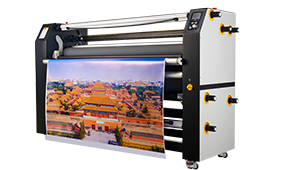
A UK distributor of large-format finishing equipment purchased 10 units of the MEFU MF1700-F1 PLUS high speed roll laminator. Operating at 50 m/min with top heating (infrared quartz) and pneumatic lift, the customer reported seamless 24/7 industrial production. The precise temperature control eliminated film wrinkling, and the dual front/rear control panels reduced operator travel time by 30%.
Case 2: Australian Signage Company – Board Mounting Precision
An Australian provider of wide-format signage solutions deployed 50 units of the MEFU Premium MF-B4 flatbed laminator across their branches. The 50 mm maximum substrate thickness, pneumatic lifting, and LED-illuminated bed enabled precise mounting of acrylic and foam boards. The tilted table design reduced waste by 7% thanks to easier alignment.
Case 3: Italian Digital Finishing Specialist – Workflow Integration
An Italian digital finishing company integrated 15+ MF1700-M1 PRO wide format laminators into their pre-existing printing lines. The 130 mm premium silicone rollers and the pneumatic up-down system allowed seamless roll-to-roll laminating of window films and posters. The entry-level smart system provided diagnostic alerts, reducing unplanned downtime by 40%.
Frequently Asked Questions (FAQ)
Silicone rollers offer superior heat resistance and consistent durometer. They do not harden over time like natural rubber, ensuring uniform pressure across thousands of runs. All industrial-grade MEFU laminators (e.g., MF1700-C3, MF1700-A1 PRO) use silicone rollers.
Top-heated laminators (like MF1700-F1 PLUS) only heat the upper roller. For single-sided lamination, this is sufficient and more energy-efficient. For double-sided lamination (e.g., banners), you need a dual-heated machine like MF1700-F2, which heats both rollers independently up to 120°C.
Very important for operator efficiency. Front and rear control panels (standard on MEFU’s Entry smart system models) allow one operator to manage both feeding and rewinding without walking around the machine, saving up to 2 seconds per cycle – which adds up to hours over a week.
No. Cold laminators (e.g., MF1700-B5, MF1700-B7) rely only on pressure. Hot films require heat to activate the adhesive. Using a heat assist laminator like MF1700-M1 PLUS (top heated to 60°C) is the minimal requirement for thermal-sensitive adhesives. For high-temperature applications (100°C+), consider the MF1950-B2 flatbed laminator.
Ask for roller material specifications, hardness (shore A), and thermal uniformity data. Reputable manufacturers like MEFU provide certificates (CE, ISO 9001) that include roller testing. You can also request a pre-shipment test – MEFU offers 100% testing on every unit.
How to Select the Right Roll Laminator Solution
Choosing the correct machine is a balance of substrate type, production volume, and budget. Use the following quick-reference table:
| Application | Recommended Model | Key Parameter Highlight |
|---|---|---|
| Standard cold lamination (vinyl, banners) | MF1700-B5 / MF1700-B5 PRO | 130 mm silicone rollers, pneumatic lift, 6 m/min |
| Heat-assisted photo/posters | MF1700-M1 PLUS / MF1700-M1 LITE | Infrared top heating to 60°C, 9 m/min, 1600W |
| High-speed industrial production | MF1700-F1 PLUS | 50 m/min, pneumatic lift, 2000W, entry smart system |
| Double-sided lamination | MF1700-F2 | Dual heated (120°C), 20 m/min, 5200W |
| Rigid board mounting (up to 50 mm) | Premium MF-B4 / MF1950-B2 | Flatbed, pneumatic lift, infrared heating (100°C) |
| Precision XY cutting after lamination | MF1700-XY | ±0.5 mm accuracy, tungsten steel blades, auto-stop sensor |
Conclusion
Roll laminator technology is more than a list of numbers – it is the sum of deliberate engineering choices that impact every aspect of your finishing line. From roller diameter and heating method to frame integrity and safety systems, each parameter affects yield, speed, and cost per print.
When you source from a manufacturer with proven expertise – like MEFU, which has been producing laminators since 2008 in a 10,000 m² factory with 100 employees and an annual output of 6,000 units – you benefit from designs that have been refined through real-world feedback in over 110 countries.
To make your next procurement decision with confidence, we invite you to explore MEFU’s complete product range and technical documentation. Download the company brochure below for detailed specifications and engineering drawings.
Download the Full MEFU Product Brochure
Get in-depth parameter sheets, application diagrams, and warranty information.
Download Brochure (PDF)Or contact us directly:
Email: info@mefu.cn | WhatsApp: +86 15890020566