How to Specify Coating Weight (AS80–AS300) for Aluminized Steel in Industrial Use
In an aluminized steel purchase specification, the coating weight designation — AS80, AS120, AS240, AS275 or AS300 — defines the total mass of aluminum or aluminum-silicon coating applied to both surfaces, expressed in grams per square metre (g/m²). It is the number that most directly governs corrosion endurance, alloy layer behaviour and high-temperature performance, and it is also the number buyers most often inherit from an old drawing instead of specifying deliberately.
The tiers in the AS80–AS300 range are not a simple ladder from cheap to premium. Each step changes the coating-to-base-metal interface, and each step narrows the number of production lines that can hold the specification consistently. Choosing correctly means understanding three coupled variables — corrosion resistance, alloy layer formation and heat performance — and matching them to the actual service environment.
This guide is written for buyers, engineers and project specifiers at the evaluation and execution stage: people who already know they need aluminized steel and now have to commit a number to a purchase order. It covers the ASTM A463 Type 1 / Type 2 designation that must accompany every coating weight, the alloy layer trade-off that appears at high coating masses, the dimensional envelope available for custom orders (0.37–3.0 mm thickness, 600–1500 mm width), and a six-step process for locking the specification.
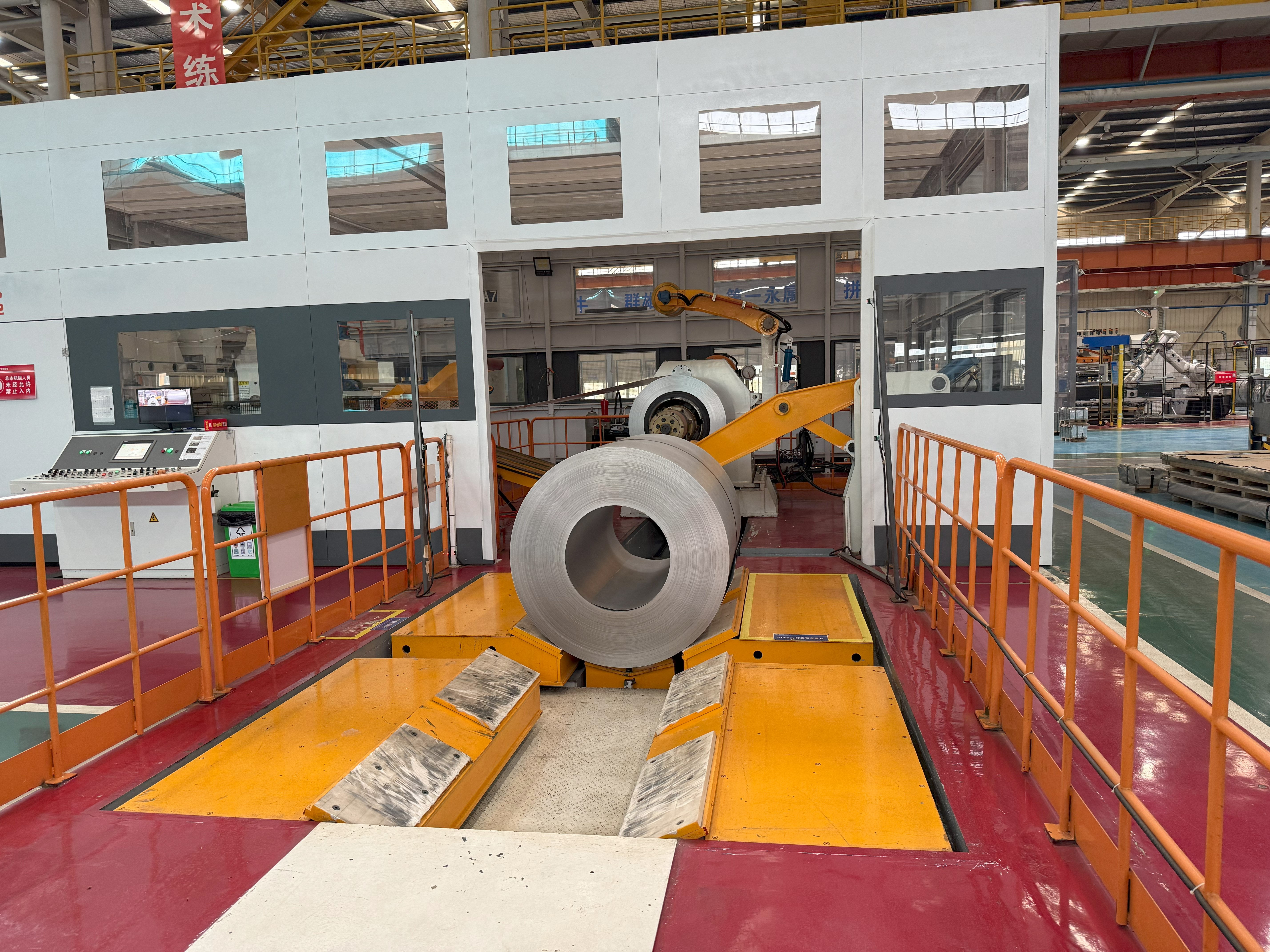
Coating weight is set on the line, not on the drawing — production control determines whether an AS240 or AS300 specification is actually delivered.
Why Coating Weight Is the Specification Buyers Most Often Get Wrong
Coating weight cannot be judged after the fact by looking at a part. A formed panel, a heat exchanger housing or a length of aluminized tube gives no visual signal about whether it carries 80 g/m² or 275 g/m² of Al-Si coating. That invisibility is exactly why the specification stage carries so much weight: once the coil is rolled and the order is closed, the coating mass is fixed for the life of the component.
Three failure patterns recur in industrial sourcing.
- Inherited specifications. A new project reuses the coating weight from a previous drawing without re-checking the service environment. The outcome is either an over-specified and more expensive material, or an under-specified one that fails earlier than the original design intended.
- Type and weight confusion. ASTM A463 defines two coating types. Type 1 is an aluminum-silicon alloy coating intended for heat resistance, with service capability up to 677 °C; Type 2 is a pure aluminum coating intended for atmospheric corrosion resistance. A purchase order that states a coating weight but omits the type leaves the most important performance variable undecided, because the same coating mass behaves differently depending on coating chemistry.
- Ignoring what the mill can hold. Coating weight is a production capability, not an arbitrary label. Above a certain level, the specification moves outside the routine range of many coating lines, and the list of suppliers able to quote shrinks.
The cost of an error runs in both directions. Specify too light, and the coating is consumed before the intended service interval ends, exposing the base metal to oxidation and red rust. Specify too heavy for a mild environment, and the alloy layer at the coating–steel interface grows, which alters forming behaviour on tight bend radii and adds material cost without adding service value.
Where Aluminized Steel Coating Specifications Sit Today
The aluminized steel sheet market reached USD 13.43 billion in 2024, according to market research published by Zion Market Research, and is tracked across a 2025–2034 forecast window. Demand growth in this material family comes largely from industrial equipment that must survive heat, condensation and long service intervals without the cost penalty of a fully stainless construction.
MESCO STEEL — Dalian Mesco Steel Co., Ltd. — is a steel manufacturer and exporter founded in 2007 and based in Dalian, Liaoning Province, China, supplying aluminized silicon steel coils and tubes, coated steel sheets and related flat and tubular steel products to more than 100 countries and regions.
The technical anchor for any specification is ASTM A463/A463M, the standard specification for steel sheet, aluminum-coated. Two elements of that standard govern how a coating specification should be written:
- Type 1 uses an aluminum-silicon alloy coating and is specified where heat resistance is the primary requirement, with service capability up to 677 °C.
- Type 2 uses a pure aluminum coating and is specified where atmospheric corrosion resistance is the primary requirement.
Published industry comparisons also position aluminized steel as a heat-reflective material: it reflects roughly 80% of radiant heat below 427 °C and is significantly less costly than 304 stainless steel. That combination — heat reflection plus a cost structure well below austenitic stainless — is what makes accurate coating weight specification a commercial decision rather than a purely technical one.
On the supply side, heavy coatings are a differentiator. MESCO's published product data states a coating weight range of 80 to 300 g/m² and positions the company as the only supplier in China providing aluminized steel with coating weights above 240 g/m² and up to 300 g/m². For a buyer, that has a direct consequence: if a project genuinely requires AS275 or AS300, the available supplier list is shorter than for AS80 or AS120, so the coating decision and the sourcing decision become linked.
How Coating Weight, Coating Type and Heat Performance Interact
What the coating weight number measures
AS designations express total coating mass — the combined weight of coating on both surfaces of the sheet — in grams per square metre. AS80 therefore describes a coating more than three times lighter than AS300. Because the figure is a mass per unit area rather than a visual thickness, it is measured rather than estimated, and it is the value a mill commits to when it accepts an order.
Type 1 versus Type 2: the designation that must travel with the weight
ASTM A463 separates coating chemistry from coating mass. Type 1 is the aluminum-silicon alloy coating used where heat resistance drives the application, with capability up to 677 °C. Type 2 is the pure aluminum coating used where atmospheric corrosion is the governing risk. A complete specification therefore needs both elements: the type designation and the coating weight. Writing "aluminized steel, AS240" without a type leaves the alloy chemistry ambiguous and makes it impossible for a mill to confirm that delivered material will match the intended service conditions.
The five tiers, AS80 through AS300
The five coating weights used in industrial ordering form a practical progression rather than five unrelated options.
- AS80 — the lightest tier. Appropriate where the component is protected by paint or coating, or operates in a mild environment, and where forming severity is high. It offers the least coating reserve for aggressive exposure.
- AS120 — a middle-low tier that balances coating reserve against formability and cost. Often the entry point for general industrial parts where condensation, not heat, is the dominant stress.
- AS240 — the point at which the coating moves into the high-mass band. In the MESCO product range this sits above the level most suppliers offer, and it is specified when extended corrosion life or sustained elevated-temperature service is required.
- AS275 — a heavy coating for demanding heat-and-corrosion combinations, where a longer replacement interval justifies the additional material cost.
- AS300 — the top of the commercial range, used for the most severe service environments and the longest expected service life.
Alloy layer formation: the trade-off that appears at high coating weights
In hot-dip aluminizing, the coating is not simply deposited on the surface — part of the aluminum reacts with the steel to form an intermetallic alloy layer at the interface. That layer is what bonds the coating to the base metal, and it is essential. Its thickness, however, scales with the amount of coating applied and with the thermal history of the line.
At AS240 and above, the alloy layer is thicker, and this has two practical consequences. First, forming behaviour changes: the coating becomes less tolerant of very tight bend radii, so bend and draw requirements should be checked against the coating weight rather than assumed. Second, fabrication processes that cut or shear the material expose a larger coating cross-section at the edge, which affects how the cut edge behaves in service. Neither consequence is a defect — they are the normal engineering trade-off of moving to a heavier coating, and they are the reason a specification should be driven by service environment rather than by a preference for more coating.
Heat performance: why Type 1 governs high-temperature work
Where the governing requirement is temperature rather than corrosion, the ASTM A463 Type 1 designation is the decisive choice, with service capability up to 677 °C. At these temperatures the aluminum-silicon coating forms a stable, adherent surface oxide layer that continues to protect the base metal instead of scaling away.
Heat reflection is the second effect. Published comparisons describe aluminized steel as reflecting roughly 80% of radiant heat below 427 °C, which is why it is frequently specified for equipment that must keep heat inside a chamber rather than absorb it. For a specifier, the practical implication is that heat-reflective performance depends on the coating remaining continuous and adequately thick — a coating that is too light for the service environment loses reflectivity as it oxidizes.
Corrosion endurance: coating mass as consumable reserve
The coating protects the base metal by being consumed first. Higher coating mass therefore translates into a longer interval before the barrier is breached, which is why the term long-life aluminized steel is used in connection with the heavier tiers. This is a relative statement within the AS80–AS300 family: the specification logic is that a heavier sacrificial coating buys service time in proportion to the exposure it faces.
What can actually be produced: dimensions and coating capability
Coating weight and dimensions are specified together, and the available envelope is narrower than many buyers assume.
- Coating weight range: 80 to 300 g/m², per MESCO's published product data.
- Thickness for custom orders: 0.37 mm to 3.0 mm.
- Width for custom orders: 600 mm to 1500 mm.
These limits matter for two reasons. A very light coating on a very thin gauge, or a very heavy coating on a wide strip, both push coating-line control harder than a mid-range specification. And the combination of thickness and width determines whether the material is supplied as hot-dip aluminized steel coil for downstream processing, or as cut aluminized steel sheet, plate or strip for direct fabrication — including further conversion into aluminized steel tubes.
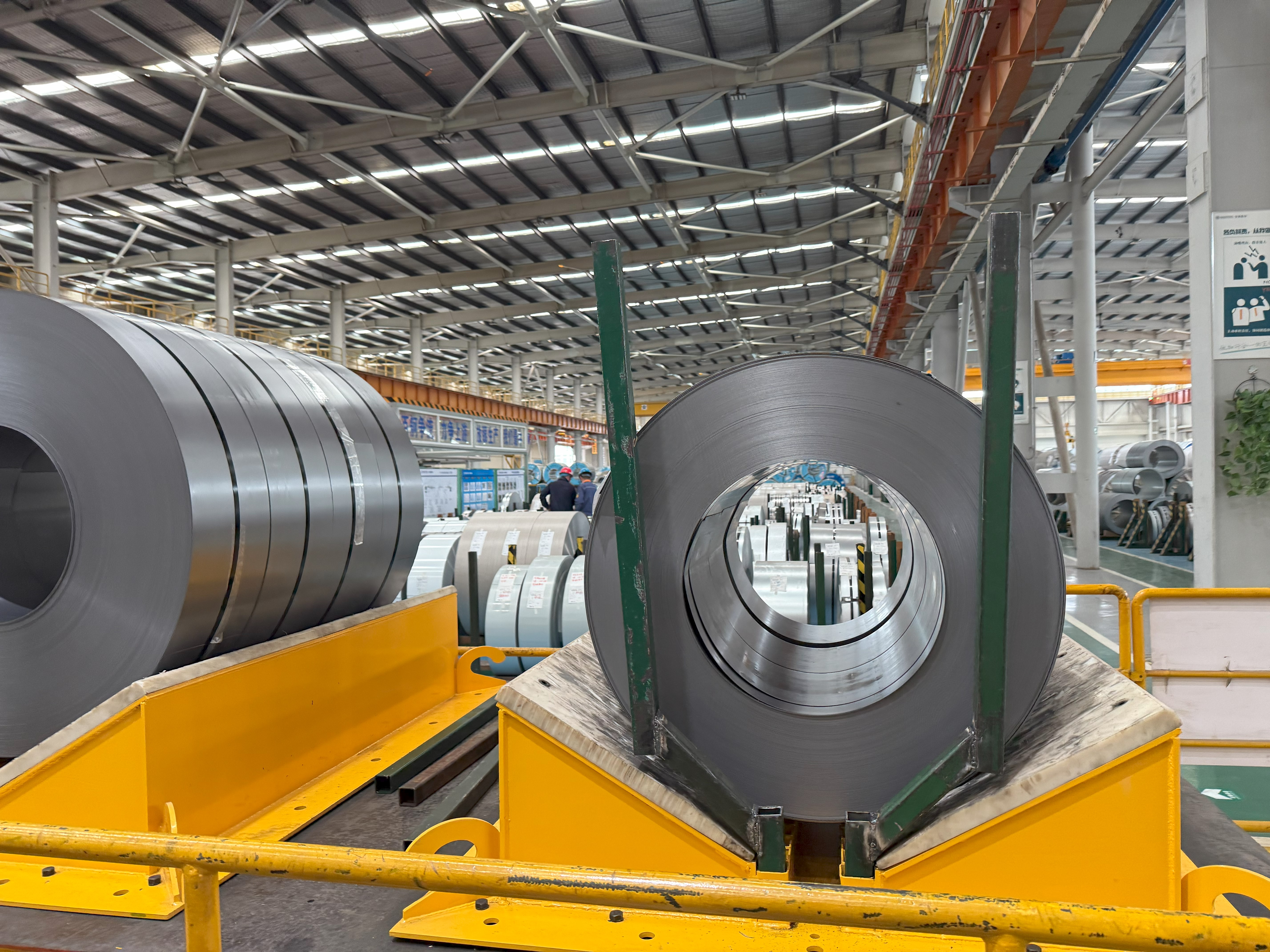
Hot-dip aluminizing lines control both coating mass and alloy layer growth — the two variables that decide how a coating weight performs in service.
What MESCO controls on a custom coating order
MESCO STEEL operates a 40,000 m² manufacturing facility in Dalian with a team of 120 and a dedicated R&D group of five engineers, and exports around 70% of its output to markets including South Korea, Thailand, the Philippines, Indonesia, Malaysia, the United Arab Emirates, Saudi Arabia, Turkey, Brazil, Mexico, Russia, India and South Africa, among others.
For coating weight specification specifically, the relevant capabilities are: a coating range extending to 300 g/m², custom thickness from 0.37 mm to 3.0 mm and custom width from 600 mm to 1500 mm, customized design consulting before an order is placed, and rapid sample development so that a coating decision can be validated against real material rather than a data sheet. Verification runs from chemical composition through mechanical properties in laboratory testing.
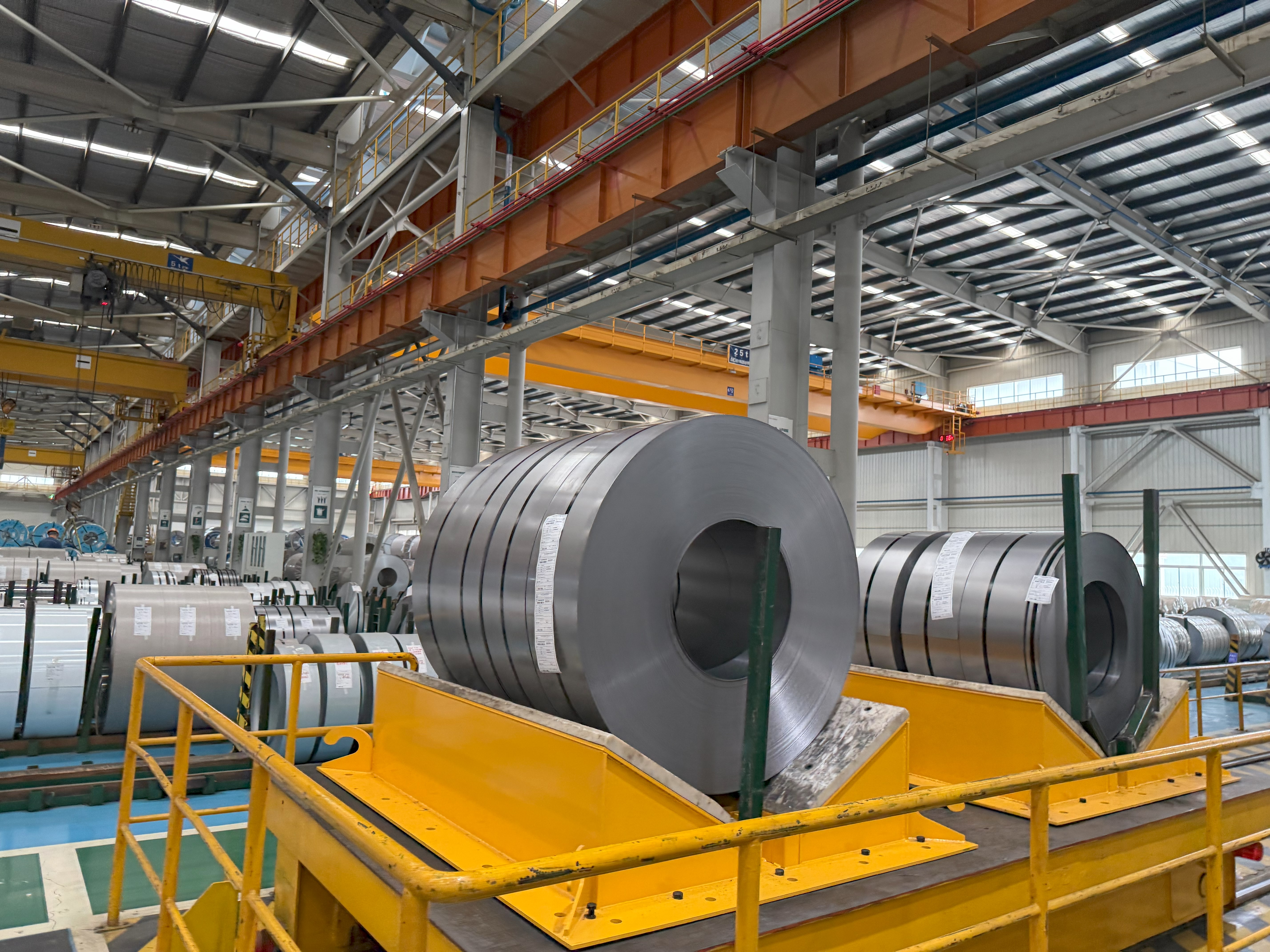
Coating weight claims should be supported by measurement — laboratory verification covers composition, coating mass and mechanical properties.
Step-by-Step: Writing a Coating Weight Specification
The sequence below turns a service environment into a written specification. Follow it in order; each step constrains the next.
Step 1 — Define the service environment before looking at any designation
Record four parameters first: maximum continuous service temperature, the corrosivity of the surrounding atmosphere (industrial, marine, humid indoor, dry indoor), whether condensation will form on the surface, and whether the component will be thermally cycled. A part running at 500 °C in a dry furnace and a part installed outdoors in a coastal climate should not receive the same coating weight, even when they share the same base metal.
Step 2 — Select the ASTM A463 coating type
If maximum service temperature is the dominant factor, specify Type 1 — the aluminum-silicon alloy coating rated for heat resistance up to 677 °C. If atmospheric corrosion dominates and service temperature is moderate or low, specify Type 2 — the pure aluminum coating intended for corrosion resistance. Where both factors matter, Type 1 is normally the safer default, because the coating weight can then be raised to strengthen the corrosion side without changing the coating chemistry.
Step 3 — Set the minimum coating weight
Choose the lowest tier that satisfies the service environment, then check whether a higher tier is justified by an unusually long service interval or an unusually aggressive exposure. The five tiers to evaluate are AS80, AS120, AS240, AS275 and AS300. Treat the designation as a minimum to be met rather than a nominal target — coating weight should be confirmed by measurement, not by description on a mill certificate alone.
Step 4 — Confirm the dimensional envelope
Set base metal thickness between 0.37 mm and 3.0 mm and width between 600 mm and 1500 mm for custom orders, and confirm both with the supplier before the coating weight is frozen. Extremes at either end of these ranges interact with coating control, so a project that needs maximum width together with maximum coating mass should be discussed at quotation stage rather than assumed to be routine.
Step 5 — Check forming, joining and edge behaviour
Confirm the tightest bend radius and the most severe forming operation the part will undergo. At AS240 and above, the thicker alloy layer reduces tolerance for very tight radii — the material remains fully formable, but the process should be planned around the coating rather than discovered in the press shop. Cut edges, sheared edges and weld zones should also be reviewed, since they expose coating cross-sections that do not receive the same protective continuity as the flat surface.
Step 6 — Validate with a sample and lock the specification
Before releasing a production order at a non-standard coating weight, request a sample of the same type, weight and gauge combination and run it through the actual forming and finishing processes. Then write the specification in full: standard (ASTM A463), type (Type 1 or Type 2), coating weight designation, base metal thickness, width, and any temper or surface condition requirement. A specification that names all six elements cannot be misread.
Use Cases: Matching Coating Weight to Real Industrial Service
The examples below show the reasoning pattern rather than a fixed rule. In each case the coating weight follows from the service environment, while the ASTM A463 type follows from whether heat or corrosion dominates.
High-temperature process equipment — furnaces, heat exchangers, radiant tubes
Type 1 is the governing designation, because continuous elevated temperature is the primary stress. Coating weight is chosen toward the upper end of the range — AS240 and above — because the coating must maintain a continuous protective oxide and retain heat reflectivity over a long service interval. Tubular products such as radiant tubes add a further consideration: because the material is formed into tube, the coating has to survive that forming operation, so bend radius and coating weight should be evaluated together.
Automotive exhaust and thermal components
Exhaust-facing parts combine thermal cycling with condensation corrosion, particularly in short-trip duty cycles. Type 1 is the usual choice because heat resistance and corrosion resistance must both be addressed, and coating weight is generally selected in the middle of the range, with heavier weights specified where cycling severity is highest.
Water heaters, boilers and HVAC equipment
These components sit in a moderate-to-elevated temperature band with a humid internal environment. A Type 1 coating at a mid-range coating weight is a common specification; the coating weight is then raised where the equipment must run for a long service interval without maintenance intervention.
Building envelopes, roofing and architectural use
Here corrosion resistance dominates and service temperature is ambient, so Type 2 — the pure aluminum coating intended for atmospheric corrosion — is the appropriate type designation. Coating weight is set according to the corrosivity of the installation environment, with heavier coatings specified for marine or industrially polluted exposure.
Industrial enclosures, ducting and long-life outdoor structures
These applications combine moderate forming severity with long outdoor exposure. The decision is usually a trade-off between a heavier coating that extends service life and a lighter coating that forms more easily — which is precisely the alloy layer trade-off described earlier. This is also the point at which buyers typically compare aluminized steel coil, sheet and strip options before choosing a supply format.
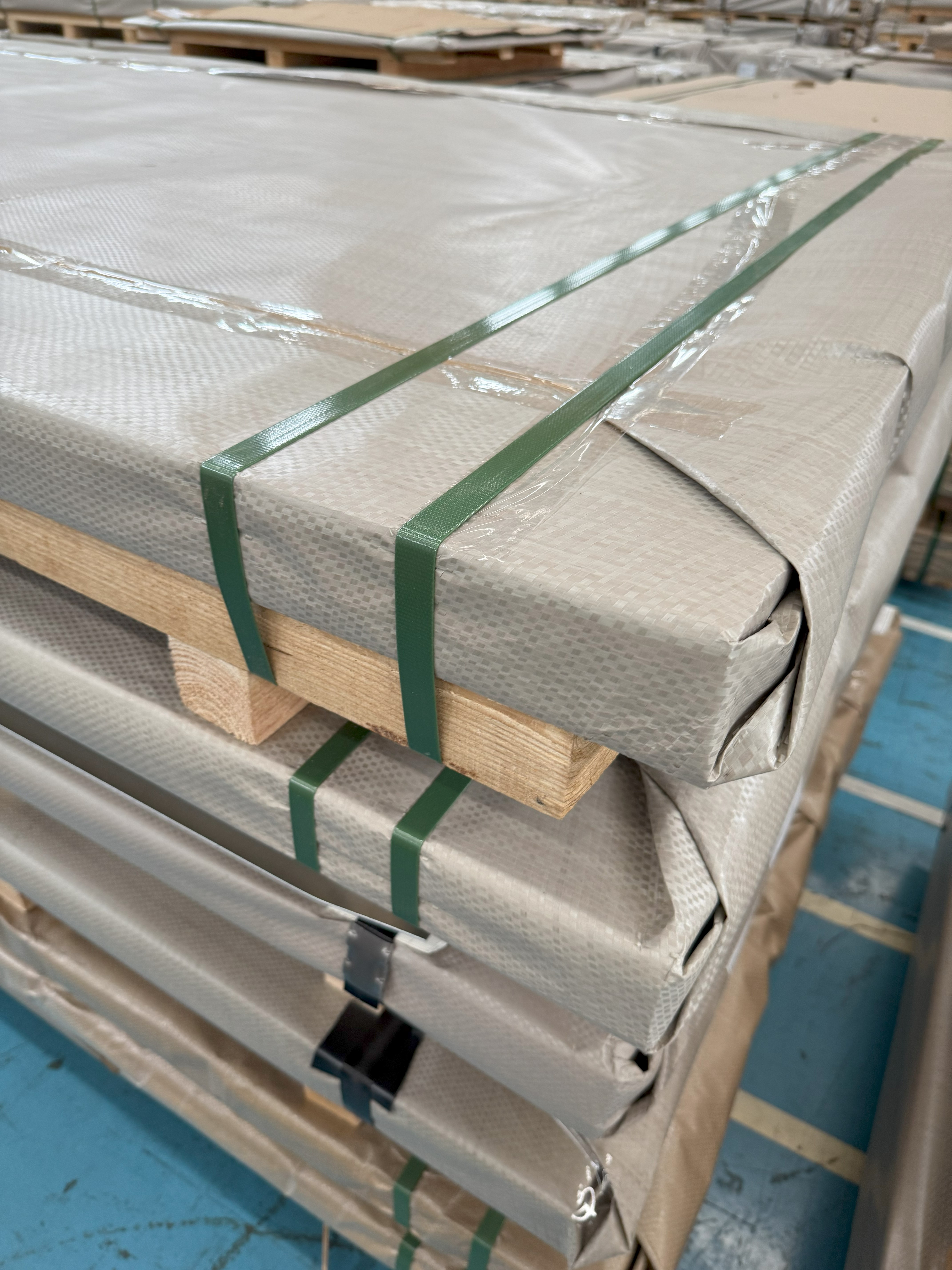
Coating weight, thickness and width must be confirmed together — high coating mass on wide or thin strip is not a routine production combination.
Comparison: AS80 to AS300 Coating Weights at a Glance
| Designation | Total coating mass (g/m², both sides) | Relative corrosion reserve | Relative formability tolerance | Typical specification driver | Within MESCO range (80–300 g/m²) |
|---|---|---|---|---|---|
| AS80 | 80 | Lowest | Highest | Painted or otherwise protected parts; mild environments; severe forming | Yes |
| AS120 | 120 | Moderate | High | General industrial parts with condensation exposure | Yes |
| AS240 | 240 | High | Moderate | Extended service intervals; sustained elevated temperature | Yes |
| AS275 | 275 | Very high | Moderate | Demanding combined heat and corrosion duty | Yes |
| AS300 | 300 | Highest | Lowest | Most severe service environments; longest expected life | Yes |
Relative rankings describe guidance within the AS80–AS300 family only. They are not test data.
Read the table together with the ASTM A463 type decision. Type 1 (aluminum-silicon alloy) is the designation for heat resistance up to 677 °C; Type 2 (pure aluminum) is the designation for atmospheric corrosion resistance. Coating weight determines how much protection is available; type determines what that protection is made of.
Frequently Asked Questions
1. Do I have to state both the AS coating weight and the ASTM A463 type?
Yes — and this is the compliance point most often missed. ASTM A463 defines Type 1 (aluminum-silicon alloy coating, for heat resistance up to 677 °C) and Type 2 (pure aluminum coating, for atmospheric corrosion resistance). An AS80–AS300 designation describes how much coating is applied; the type describes what the coating is made of. A purchase order that gives only one of the two does not fully define the material, and the mill cannot confirm that the delivered coil will match the intended service conditions.
2. Can AS275 or AS300 coating weights actually be produced on a commercial line?
Heavy coatings sit at the top of the commercial range, and not every supplier offers them. MESCO's published product data states a coating weight range from 80 to 300 g/m² and positions the company as the only supplier in China providing aluminized steel with coating weights above 240 g/m² up to 300 g/m². The practical step for a buyer is to confirm coating capability against the specific combination of coating weight, thickness (0.37–3.0 mm) and width (600–1500 mm) required, since those three parameters interact on the coating line.
3. How does coating weight affect cost?
Coating weight is one of the material cost drivers, because a heavier coating consumes more aluminum-silicon bath material per tonne of coil and requires tighter process control. Moving from AS80 to AS240 therefore raises material cost, while underestimating a demanding environment carries a different cost — premature replacement of a failed component plus the downtime around it. Published price benchmarks for aluminized steel coil and sheet are not reliably available, so the workable approach is to fix the coating weight on technical grounds first, then obtain a quotation for that exact specification rather than comparing tiers on price alone.
4. Can a coating weight be validated before a production order is placed?
It can, and for non-standard specifications it should be. MESCO provides customized design consulting and rapid sample development, which allows a buyer to test the actual type, coating weight, thickness and width combination through their own forming, joining and finishing processes before committing to production volume. Because laboratory verification covers chemical composition and mechanical properties, the sample stage is where a coating specification is confirmed in practice rather than on paper.
5. What lead time should be planned for a custom coating weight?
Lead time depends on whether the specification falls within standard stock or requires a custom run. MESCO holds tens of thousands of tons of stock for standard specifications, enabling delivery within 3–7 working days for those items. Custom coating weights, custom thickness from 0.37 mm to 3.0 mm and custom widths from 600 mm to 1500 mm are scheduled individually, so the confirmed lead time is set at quotation and order stage for the specific specification. To move forward, send your ASTM A463 type, coating weight designation, thickness and width through the contact details below and the team will confirm availability, sample options and timing for your specification.
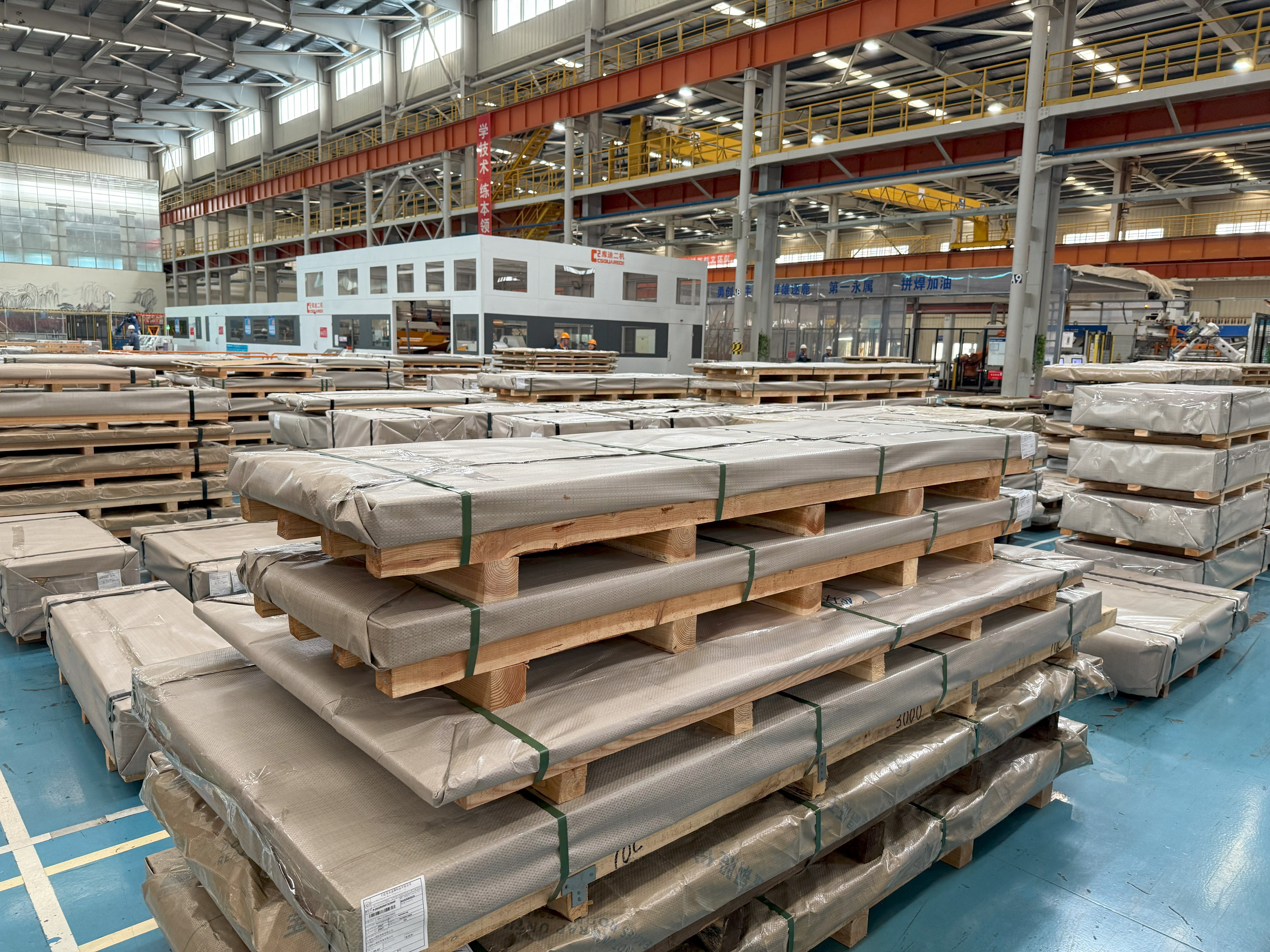
Custom coating weights, thicknesses from 0.37 mm to 3.0 mm and widths from 600 mm to 1500 mm are scheduled per order.
Conclusion: Specify the Coating Weight Deliberately, Not by Default
The five coating weights in the AS80–AS300 range exist because industrial service environments differ. AS80 and AS120 suit protected or moderately exposed parts where forming severity is high. AS240, AS275 and AS300 exist for sustained heat, aggressive corrosion and long service intervals — and they come with a thicker alloy layer that changes forming behaviour, and with a shorter list of suppliers able to produce them.
Three rules carry most of the decision:
- Always pair the coating weight with an ASTM A463 type — Type 1 aluminum-silicon alloy for heat resistance up to 677 °C, Type 2 pure aluminum for atmospheric corrosion resistance.
- Set the coating weight from the service environment, not from the previous drawing, and choose the lowest tier that satisfies the requirement while recognising where a heavier coating buys real service life.
- Confirm the dimensional envelope — 0.37–3.0 mm thickness and 600–1500 mm width for custom orders — against the required coating weight before the specification is frozen.
Applied in that order, coating weight stops being a copied number and becomes a documented engineering decision that can be quoted, produced and verified.
Request a Coating Weight Sample or Quotation
MESCO STEEL supplies aluminum-silicon coated (ASTM A463 Type 1) aluminized steel coils, sheets, plates and strips with coating weights from 80 to 300 g/m², custom thickness from 0.37 mm to 3.0 mm and custom width from 600 mm to 1500 mm.
Send your specification — type, coating weight designation, thickness and width — and the team will confirm availability, sample options and lead time.
Email: mesco@mescogroup.com.cn | Tel / WhatsApp: +86 151-3456-5556 | Website: www.mescogroup.com.cn
Download the full range: MESCO STEEL Catalogue 202507 (PDF)
Have Questions or Need More Details?
Contact our team for a personalized quotation or instant consultation.
Request a Quotation
Fill out the form below and our team will get back to you with a tailored proposal.
WhatsApp Direct Chat
Prefer to chat in real-time? Message us on WhatsApp for instant assistance & quick answers.
- Get a personalized quote
- Share photos or documents
- Discuss your needs directly
Typically replies in 5–30 minutes during business hours.