Silicon Steel vs. Cold Rolled Steel: Motor Core Grade Matching
Silicon steel and cold rolled steel are not interchangeable, even when a 0.5 mm sample of each looks identical on the shop floor. Silicon steel — also called electrical steel — is produced in CRGO (cold rolled grain oriented) and CRNGO (cold rolled non-grain oriented) grades for parts that form a magnetic circuit. Cold rolled steel is a low-carbon flat product selected for strength, formability, surface quality and dimensional accuracy. In an industrial motor, both families usually appear in the same bill of materials: electrical steel in the stator and rotor laminations, cold rolled or coated sheet in the housing, brackets and terminal boxes.
The selection question is usually framed as a price comparison, and that framing is where projects go wrong. The two materials are engineered for two different physical duties. Electrical steel is alloyed with silicon and supplied with a controlled insulation coating so that it can carry alternating flux with low core loss. Cold rolled steel is supplied to carry load, take a bend, hold a finish or resist heat and corrosion. Matching material to duty — not to price per tonne — determines whether a motor meets its declared efficiency class or overheats in the field.
Dalian Mesco Steel Co., Ltd. (MESCO STEEL) is a China-based steel manufacturer and exporter founded in 2007 and located in the Dalian Economic and Technological Development Zone, Liaoning Province, China. The company supplies both families — CRGO and CRNGO silicon steel alongside SPCC, SPCD and DC01 cold rolled steel — to OEMs, motor manufacturers and transformer manufacturers, with exports reaching markets that include India, Japan, Indonesia, Thailand, the Philippines, Mexico, Poland, Brazil, Nigeria, Turkey, Saudi Arabia and South Korea.
Problem Definition: Why This Specification Decision Fails So Often
The two families collide in a narrow but heavily used thickness band. MESCO silicon steel is produced from 0.15 mm to 1.00 mm, while MESCO cold rolled steel runs from 0.2 mm to 500 mm. Between 0.2 mm and 1.00 mm, both products can sit on the same rack, be slit on the same line and be issued against similarly worded purchase orders. That overlap is where the expensive errors live.
- Electrical steel used where structure is needed. MESCO silicon steel carries a tensile strength of 300–500 MPa. It is not a structural material. Specified for a bracket, a mount or a stressed housing, it can force a redesign — and the buyer pays an electrical steel premium for performance the part cannot use.
- Cold rolled steel used inside a magnetic circuit. A stator or rotor lamination punched from ordinary cold rolled sheet will not deliver the low core loss and controlled magnetic induction (1.50 T to 1.95 T across the MESCO electrical steel range) that an electrical steel grade is specified to provide. The result is heat, efficiency loss and, in regulated efficiency classes, a product that cannot be sold as designed.
- Wrong sub-grade inside the right family. Choosing CRNGO where the flux is predominantly unidirectional, or CRGO for a rotating machine, misallocates cost and performance even when the material family is correct.
None of these errors is detectable by appearance. They surface in the testing room, in the thermal performance of the finished motor, or in a warranty claim two years into the field.
Industry Background: Efficiency Targets Are Raising the Cost of a Wrong Grade
worldsteel reports that 214.7 kg of steel was used in new products per person globally in 2024 — a reminder that flat steel selection decisions scale with industrial output rather than with individual projects. Electrical steel sits at the centre of the appliance and power equipment supply chain, where that scale is concentrated.
Published market estimates value the global silicon steel market at USD 44.3 billion in 2025, with a projected value of USD 76.5 billion by 2034. Growth of that kind is driven by more rotating machines — appliance motors, industrial drives, pumps, fans and generators — and by tightening efficiency expectations in the markets where those machines are sold.
For an OEM or motor manufacturer, the practical consequence is that core material is no longer a cost line to be trimmed quietly. Lamination thickness, insulation coating class and magnetic induction now show up directly in efficiency test results and in the ability to meet a declared efficiency class. Buyers who treat electrical steel as a commodity substitution run that risk on every production run.
Detailed Solution: Material by Material, and Where Each One Fits
Silicon steel (CRGO and CRNGO) — for magnetic circuits
Silicon steel is electrical steel alloyed with silicon and cold rolled to controlled thickness so that alternating magnetic flux passes through it with low loss. It is supplied in two families: CRGO (cold rolled grain oriented), where magnetic properties are strongest along the rolling direction, and CRNGO (cold rolled non-grain oriented), where magnetic properties are more uniform across the plane of the sheet.
In general industry practice, CRGO is specified where flux is largely unidirectional — transformer cores and comparable devices — while CRNGO is specified in rotating machines such as motors and generators, where the flux path rotates through the lamination.
| Parameter | MESCO silicon steel (CRGO / CRNGO) |
|---|---|
| Product type | CRGO / CRNGO electrical steel |
| Thickness | 0.15 mm – 1.00 mm |
| Width | 20 mm – 1250 mm |
| Coil weight | 2 MT – 10 MT |
| Inner diameter | 508 mm / 610 mm |
| Surface finish | Bright, insulated coating |
| Coating type | C2, C3, C4, C5 insulation coating |
| Edge condition | Mill edge / slit edge |
| Standard | ASTM, JIS, EN, GB |
| Magnetic induction | 1.50 T – 1.95 T |
| Iron loss | Low core loss |
| Tensile strength | 300 – 500 MPa |
| Packing | Export standard seaworthy packing |
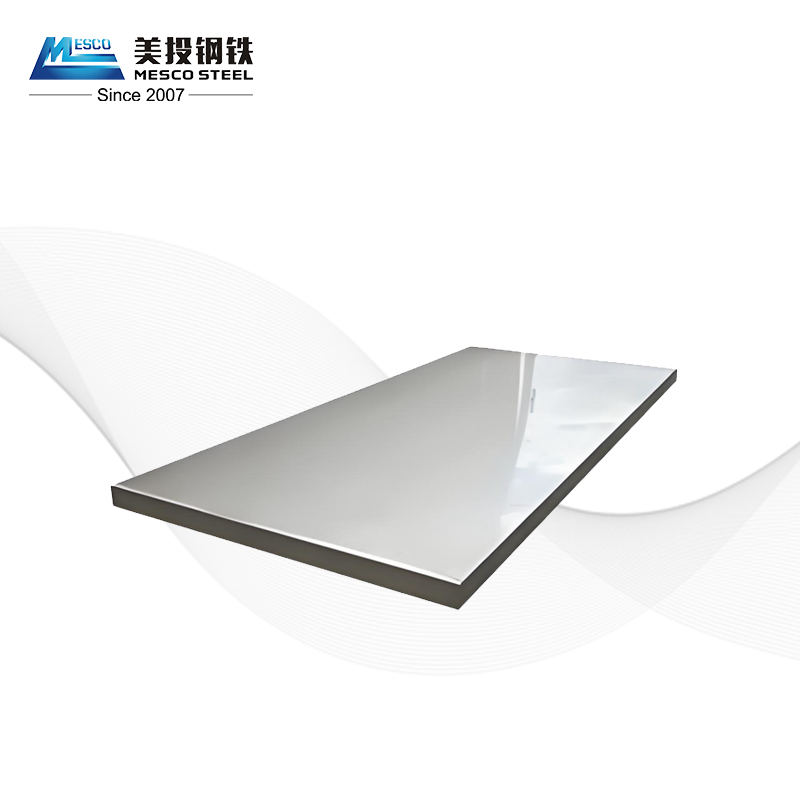
Three of these parameters do most of the work in a motor project. Thickness, from 0.15 mm to 1.00 mm, sets the balance between eddy-current loss and the number of laminations needed to reach a given stack height. Coating class, from C2 to C5, determines inter-laminar insulation and how the material behaves through punching, stacking and any annealing step. Magnetic induction, from 1.50 T to 1.95 T, indicates how much flux a given stack cross-section can carry. The tensile range of 300–500 MPa is the figure the stamping engineer needs — and it also marks the boundary at which electrical steel stops being the right answer.
Cold rolled steel (SPCC, SPCD, DC01) — for structure and surface
Cold rolled steel is low-carbon flat steel rolled at room temperature to tight thickness tolerance and a smooth surface. It is the default choice when the part must carry load, be welded or formed, and present a clean surface for downstream coating, printing or film lamination. Standard options at MESCO include SPCC, SPCD and DC01, with material grades covering Q235, Q255, Q275, SS400, A36, SM400A, St37-2, SA283Gr and S235JR / S235J0 / S235J2.
| Parameter | MESCO cold rolled steel |
|---|---|
| Product type | Cold rolled steel coil / sheet |
| Model / grade | SPCC / SPCD / DC01 |
| Material grades | Q235, Q255, Q275, SS400, A36, SM400A, St37-2, SA283Gr, S235JR, S235J0, S235J2 |
| Thickness | 0.2 – 500 mm |
| Width | 1000 – 4000 mm |
| Length | 2000 mm, 2438 mm, 3000 mm, 3500 mm, 6000 mm, 12000 mm, or rolled |
| Standard | ASTM, AISI, JIS, GB, DIN, EN |
| Material type | Low carbon steel / mild steel |
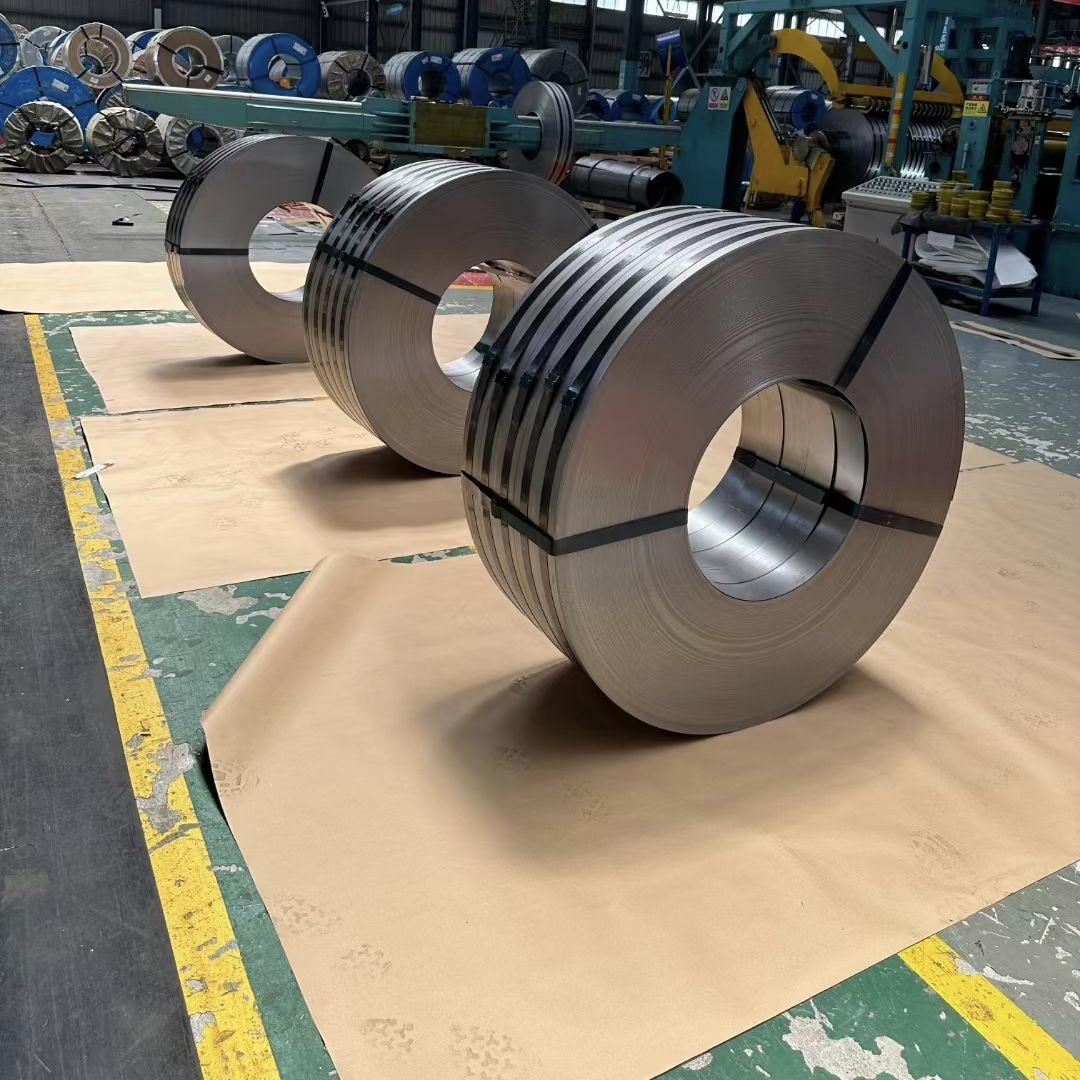
MESCO's stated capability in this family concentrates on tight-tolerance work: supplying DC04 grade cold rolled steel below 0.4 mm thickness, automotive steel with tensile strength above 900 MPa, and cold rolled steel for drum applications, supported by a daily stock position of around 20,000 tons with nearly all grades available.
Industrial pure iron and coated options — the adjacent choices
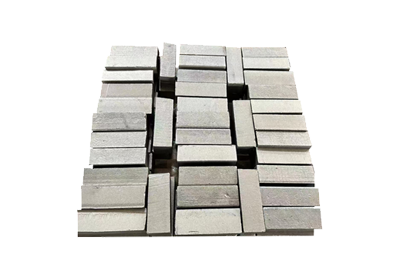
Not every electromagnetic part is a lamination. MESCO industrial pure iron is supplied in DT4 and DT4A grades from 0.5 mm to 50 mm thick and 20 mm to 1500 mm wide, with purity specified at ≥99.5% Fe, for electromagnets, relays and comparable components where high permeability and consistent electromagnetic behaviour matter more than stacked laminations.
Where a part has no magnetic duty at all, coated flat products normally replace both families: aluminized steel (AS80 to AS300 g/m² coating, 0.37–3.0 mm thick, 600–1500 mm wide) where heat and oxidation resistance drive the choice; ZAM Steel and Magnelis Steel (ZM40 to ZM600 g/m², 0.2–8.0 mm thick) where corrosion resistance drives it; Galvanized Steel, Galvalume Steel, PPGI Steel and Coating Steel for construction and appliance surfaces; and Composite Steel or Laminated Steel where two material functions must be combined in a single sheet. The wider MESCO portfolio also covers Stainless Steel, Aluminum Coil, Hot Rolled Steel, Spring Steel, Structural Steel, Seamless Pipe, Welded Pipe and Steel Pipe for programmes that need one supplier across several material families.
Step-by-Step Breakdown: Matching a Grade to an Industrial Motor
- Classify the part by physical duty, not by position in the BOM. Ask one question: does this part carry magnetic flux? If yes, it belongs to the electrical steel family. If it carries load, takes a bend or provides a visible surface, it belongs to cold rolled steel or a coated product.
- Choose the flux direction, and therefore the sub-family. Predominantly unidirectional flux points to CRGO; rotating flux in a stator or rotor points to CRNGO. This single decision removes most of the cost and performance risk before any dimensional discussion begins.
- Set thickness against loss and stacking factor. MESCO silicon steel is available from 0.15 mm to 1.00 mm. Thinner material is generally selected where loss reduction matters most; thicker material is generally selected where stiffness, handling and cost dominate. Confirm the choice against the target efficiency class rather than against stock convenience.
- Specify the insulation coating class. Options run C2, C3, C4 and C5. The coating must match the downstream process — punching, stacking, annealing and the required inter-laminar resistance.
- Fix the dimensional envelope and the slitting plan. Electrical steel is supplied from 20 mm to 1250 mm wide with mill or slit edges and a coil inner diameter of 508 mm or 610 mm. Cold rolled steel runs from 1000 mm to 4000 mm wide in thicknesses of 0.2 mm to 500 mm. Match coil size to the slitting and stamping line before the order is confirmed.
- Confirm documentation and commercial terms. Standards available across the range include ASTM, JIS, EN and GB. Inspection method, certificates and commercial terms are agreed before production, as described in the capability and quality sections below.
Use Cases: How Buyers Applied Each Grade
India — transformer manufacturer, silicon steel. A transformer manufacturer in India has used MESCO silicon steel for transformer cores since a first order of 950 MT, a supply relationship running more than 25 years. The selection drivers were low iron loss and high magnetic permeability, which translated into higher transformer energy efficiency and, for the customer, stronger market competitiveness in power equipment.
Germany — electromagnetic equipment factory, industrial pure iron. An electromagnetic equipment factory in Germany required ultra-high-purity material with stable electromagnetic performance. MESCO industrial pure iron — 600 MT supplied over more than 20 years — provided the magnetic permeability and processing consistency required for precision components.
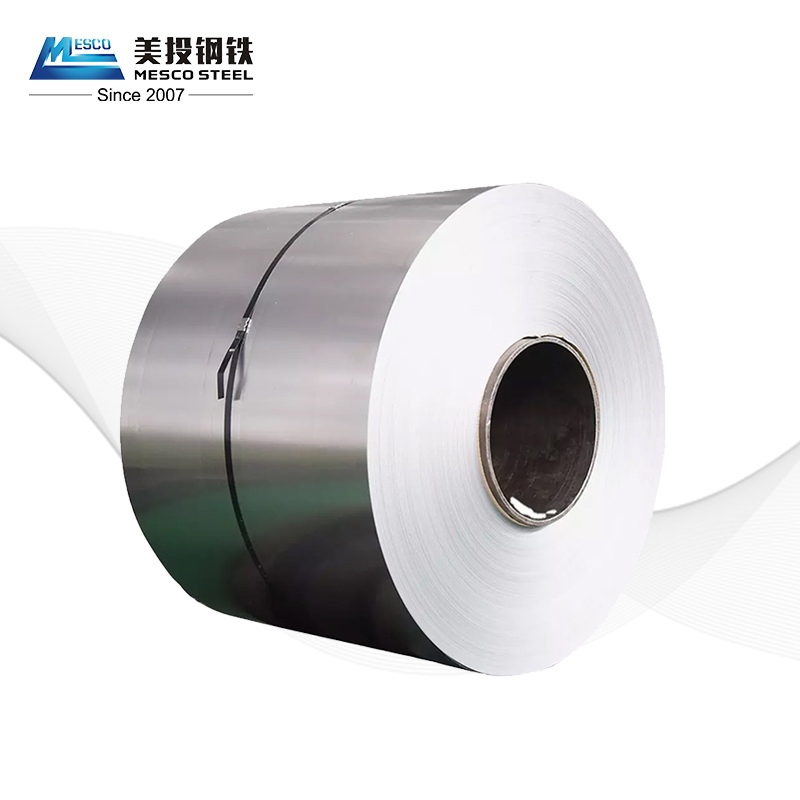
Japan — precision equipment factory, cold rolled steel. A precision equipment factory in Japan uses MESCO cold rolled steel for precision stamping parts, with 1,100 MT supplied over more than 10 years. The selection criteria were flatness and thickness tolerance: smooth surface quality and stable mechanical performance improved stamping yield rates.
Mexico — automotive parts factory, aluminized steel. Not every high-temperature part is a magnetic part. An automotive parts factory in Mexico specified 1,500 MT of aluminized steel for exhaust system applications, replacing part of its stainless steel usage while maintaining long-term durability and reducing raw material costs by nearly 30%. The selection logic is identical to a motor core programme: match the material to the duty, not to the precedent.
Vietnam — steel structure company, galvanized steel. A steel structure company in Vietnam applies MESCO galvanized steel for structural framework, where uniform zinc coating and bending performance matter far more than magnetic properties. Used for structural work, electrical steel would be both unnecessary and under-strength.
Comparison Table: Silicon Steel vs. Cold Rolled Steel
The table below compares the two families using MESCO specification data. It is intended as a screening tool: confirm the final grade against the drawing, the applicable standard and the inspection records for the specific order.
| Parameter | Silicon steel (CRGO / CRNGO) | Cold rolled steel |
|---|---|---|
| Primary function | Magnetic circuit — carries alternating flux | Structural, forming and surface duty |
| Grades / models | CRGO / CRNGO | SPCC / SPCD / DC01 |
| Base material | Electrical steel with silicon alloy | Low carbon steel / mild steel |
| Thickness range | 0.15 mm – 1.00 mm | 0.2 mm – 500 mm |
| Width range | 20 mm – 1250 mm | 1000 mm – 4000 mm |
| Coil format | 2–10 MT coil weight; 508 mm / 610 mm inner diameter | Coil, slit coil or cut length: 2000, 2438, 3000, 3500, 6000, 12000 mm |
| Coating / finish | C2, C3, C4, C5 insulation coating on bright surface | — |
| Edge condition | Mill edge / slit edge | — |
| Magnetic induction | 1.50 T – 1.95 T | Not applicable |
| Iron loss | Low core loss | Not applicable |
| Tensile strength | 300 – 500 MPa | Above 900 MPa in MESCO automotive grades |
| Standard | ASTM, JIS, EN, GB | ASTM, AISI, JIS, GB, DIN, EN |
| Typical applications | Transformer cores, motor and generator laminations, power equipment | Automotive parts, appliance panels, furniture, general fabrication |
| Cost of the wrong choice | Used structurally: limited strength, higher material cost | Used in a core: higher loss, heat build-up, efficiency failure |
Cold Rolled Steel Still Belongs in the Motor — Just Not in the Core
A correctly specified motor bill of materials usually contains both families. Silicon steel occupies the electromagnetic path. Cold rolled steel and coated flat products occupy everything else: housings and end shields, mounting brackets, fan covers, terminal boxes and packaging structures. Because MESCO supplies both families from the same quality system and the same export desk, an OEM can consolidate the electrical and structural steel of a motor programme under a single supplier without forcing either material into the wrong job.
OEM, Customization and Lead-Time Capability
MESCO operates as an OEM and ODM supplier with monthly capacity of 50,000 MT and a customization scope covering thickness, width, length, surface treatment, colour, coating and pipe end. Minimum order quantity is flexible by product and specification, starting from 1 MT — which matters when a motor programme needs a validation batch rather than a full container load.
Lead times are structured by order type: fast delivery products ship from stock within 3–7 working days, standard production runs 7–15 days, and OEM production runs 15–30 days. Quality control is staged across three points — strict incoming raw material inspection, online production monitoring, and finished product dimension and surface inspection. After-sales support includes material selection and application guidance.
Quality Documentation: What to Ask For
Compliance evidence should be requested per product family, because certificates are issued against specific products and specifications rather than against a supplier name in general. Buyers working with MESCO can request material test reports and either factory quality inspection or third-party inspection before shipment.
The company's ISO 9001:2015 certificate (AMTIVO/CN/250009, issued 22 January 2025, valid to 22 January 2028) covers the sales of metal sheets and steel pipes including cold rolled and hot rolled steel, stainless steel, galvanized, Galvalume, ZAM and colour coated steel, and composite metal sheets. For coated products, SGS test reports are available against named specifications — for example report DLIN2111002660ML for S450GD hot-dip galvanized coil at 2.0 mm thickness, tested to ASTM E415-17, ISO 6892-1:2019, ISO 7438:2020, ISO 6507-1:2018 and ASTM B487-20, and reports DLIN22000393ML01_EN and DLIN22000393ML02_EN for ZAM steel at 1.5 mm and 3.0 mm, tested to ISO 6892-1:2019 and EN ISO 1460:2020.
For electrical steel, the specification sheet is the primary document. Confirm CRGO or CRNGO, thickness, width, coating class, edge condition and the applicable standard — ASTM, JIS, EN or GB — on the purchase order, then request the corresponding inspection records before the coil is released.
FAQ
Which standards and certificates apply to MESCO silicon steel and cold rolled steel?
MESCO silicon steel is supplied to ASTM, JIS, EN or GB standards in CRGO and CRNGO grades, and cold rolled steel to ASTM, AISI, JIS, GB, DIN or EN in SPCC, SPCD and DC01 grades. At company level, MESCO holds ISO 9001:2015 certification (certificate AMTIVO/CN/250009, valid from 22 January 2025 to 22 January 2028) covering the sales of metal sheets and steel pipes, and provides material test reports plus factory or third-party inspection before shipment. Certificates issued through SGS cover specific coated products and specifications, so certificate scope should always be checked against the exact product being ordered.
Can MESCO supply silicon steel cut to the width and thickness a specific motor lamination requires?
Yes. MESCO silicon steel is available from 0.15 mm to 1.00 mm thick and 20 mm to 1250 mm wide, in coil weights of 2–10 MT with a 508 mm or 610 mm inner diameter, with mill edge or slit edge and C2, C3, C4 or C5 insulation coating. Cold rolled steel is available from 0.2 mm to 500 mm thick and 1000 mm to 4000 mm wide. Customization covers thickness, width, length, surface treatment, colour, coating and pipe end, and OEM/ODM production is supported.
What are the order quantity, delivery and payment terms?
Minimum order quantity is flexible by product and specification, starting from 1 MT. Delivery terms support sea freight, land transportation, container shipment and customized logistics solutions. Payment terms include T/T and L/C at sight, along with other mutually agreed international payment terms. Acceptance can be handled through factory quality inspection, third-party inspection or both, with material test reports provided before shipment.
Can a buyer validate a grade with a sample or test report before committing to production?
Material test reports are provided, and inspection can be carried out at the factory or by a third party before shipment, so a buyer can verify dimensions and mechanical results against the ordered specification. MESCO also supports rapid sample development and provides material selection and application guidance — the practical way to confirm that a CRGO, CRNGO or cold rolled grade behaves as expected in the customer's own stamping, slitting and stacking process before a production volume is committed.
How quickly can material be delivered for a motor programme?
Fast delivery products ship from stock within 3–7 working days, standard production takes 7–15 days, and OEM production runs 15–30 days. For a motor or transformer programme that is still at the evaluation stage, the fastest path is to send the lamination drawing or the required grade, thickness, width and coating class for confirmation. The MESCO team can then confirm stock availability, sample feasibility and a quotation — requests can be sent to mesco@mescogroup.com.cn, or the full product range can be reviewed in the MESCO STEEL catalogue before the next production run is scheduled.
Conclusion
Silicon steel and cold rolled steel solve different problems, and an industrial motor needs both. The core decision is magnetic: CRGO where flux is predominantly unidirectional, CRNGO where the flux rotates, with thickness, coating class and magnetic induction selected against the target efficiency class rather than against the nearest available coil. Structural components, housings and brackets stay with cold rolled steel, where tensile strength above 900 MPa in MESCO automotive grades and controlled dimensional accuracy deliver value that electrical steel cannot.
Because MESCO manufactures and stocks both families — silicon steel from 0.15 mm to 1.00 mm and cold rolled steel from 0.2 mm to 500 mm — a buyer can match every part to the correct material without splitting the programme across multiple suppliers.
Next Step: Confirm Your Grade Before the Next Production Run
Send the lamination drawing or the required grade, thickness, width and coating class. MESCO STEEL will confirm stock availability, sample feasibility and delivery timing, and can supply the full product catalogue for review.
Email: mesco@mescogroup.com.cn | Tel / WhatsApp: +86 151-3456-5556
Download the MESCO STEEL Catalogue (PDF) · www.mescogroup.com.cn · Send a WhatsApp enquiry

Have Questions or Need More Details?
Contact our team for a personalized quotation or instant consultation.
Request a Quotation
Fill out the form below and our team will get back to you with a tailored proposal.
WhatsApp Direct Chat
Prefer to chat in real-time? Message us on WhatsApp for instant assistance & quick answers.
- Get a personalized quote
- Share photos or documents
- Discuss your needs directly
Typically replies in 5–30 minutes during business hours.