Supplier Evaluation Checklist: Grading Steel Manufacturers on Capacity, Certification & Delivery
Supplier Evaluation Checklist: Grading Steel Manufacturers on Capacity, Certification & Delivery
A steel supplier evaluation checklist converts a shortlist of manufacturers into a scored, defensible decision. This framework grades candidates on five weighted pillars — documented production capacity, specification and certification coverage, processing capability, delivery assurance, and long-term ecosystem support — so procurement teams compare every supplier against one evidence standard instead of five different sales presentations. It is written for buyers who are past discovery and are preparing a first or repeat order.
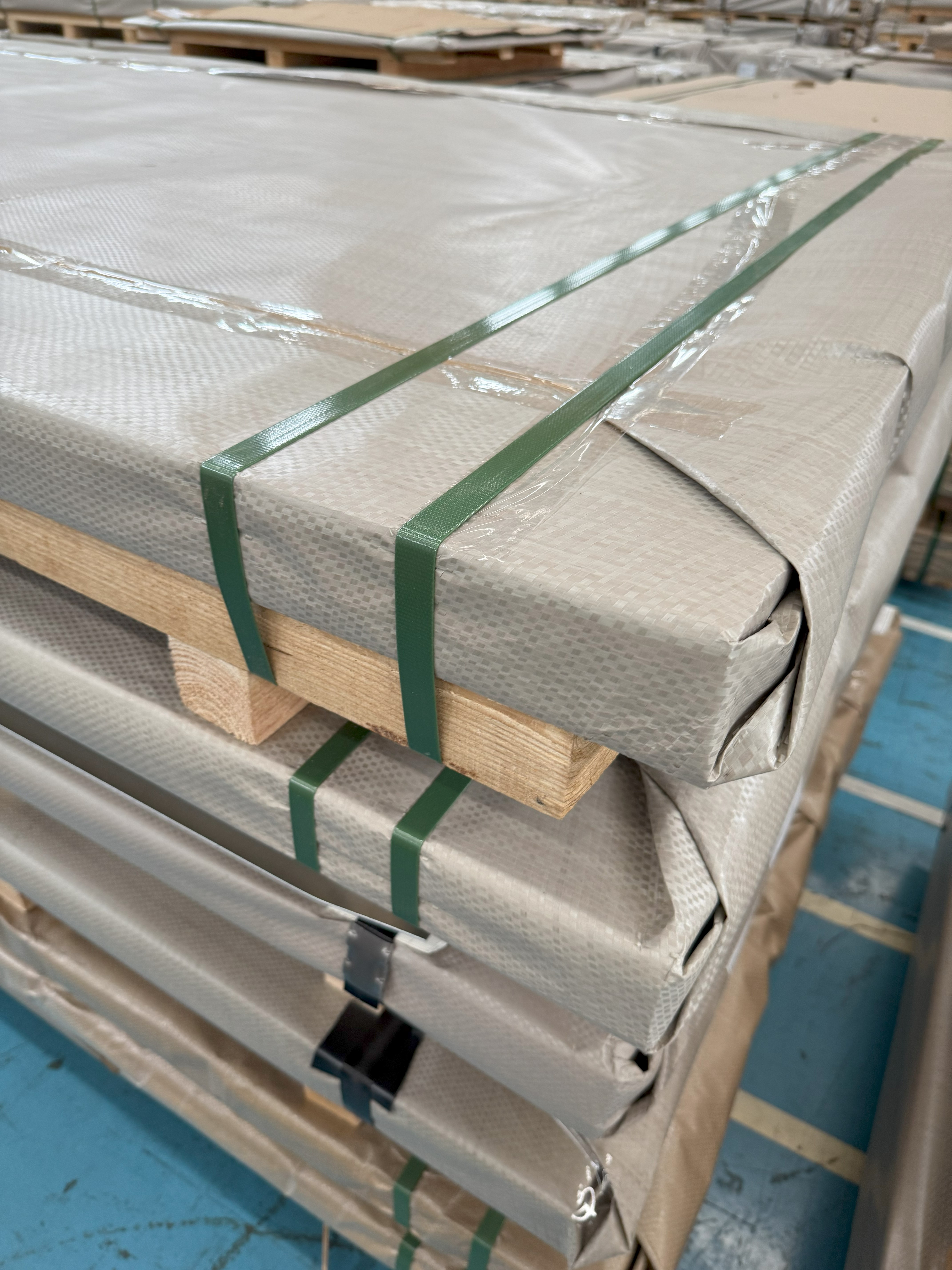
Stock-held standard specifications turn the delivery-assurance pillar from a promise into a verification step. Image: MESCO STEEL inventory.
1. Why Steel Supplier Evaluation Breaks Down Without a Scorecard
Most steel sourcing failures are comparison failures, not negotiation failures. When three manufacturers are asked for “the same” material, they frequently quote different thickness tolerances, coating classifications and delivery terms — and the lowest number wins by default because nothing else has been measured.
The pattern repeats in five predictable ways:
- Price-first comparison. Quotes are ranked before specification is normalized, for example a galvanized coil with zinc coating Z30–Z275 against an unclassified “galvanized” offer.
- Verbal capability. Monthly capacity, inspection routines and processing equipment are accepted from a sales email without documentation.
- Certification treated as a single file. A buyer collects one mill test certificate and assumes it covers every product family and every standard in the order.
- Delivery assurance assumed. Lead time, stock coverage and logistics backup are left out of the evaluation, so they resurface as delays after the purchase order.
- No re-grading. The second-year order is placed on year-one assumptions instead of updated performance data.
2. Industry Background: Why Documented Supply Has Become the Deciding Variable
Steel is still a volume market concentrated in a few producing regions. Global crude steel production reached approximately 1,892 million tonnes in 2023, with China producing 53.9% of the world total (World Steel Association). That concentration means most international buyers are sourcing across a regulatory and logistics boundary — precisely where documentation quality becomes decisive.
Demand is also shifting toward coated and specialty products, where specification discipline matters more than tonnage. The global stainless steel market was valued at USD 135.8 billion in 2025, with Asia Pacific accounting for 69% of revenue (Grand View Research). The galvanized steel market was estimated at USD 182.19 billion in 2024 and is projected to reach USD 245.07 billion by 2035 (Market Research Future). Zinc-Aluminum-Magnesium (ZAM) coated steel is projected to reach USD 4.8 billion in 2025, driven by solar and automotive demand (Dataintelo). The aluminized steel market is valued at approximately USD 11.4 billion in 2025, with Type 1 aluminum-silicon alloy holding a 62.3% share (Dataintelo).
3. The Five-Pillar Scoring Model
The checklist uses five weighted pillars and a 1–5 star evidence scale. Weights can be adjusted per project, but the evidence thresholds should not be: a 5-star score is awarded when the supplier produces the document, not when it describes the process.
| Pillar | Weight | 5-star evidence standard | 3-star (partial) | 1-star (not verified) |
|---|---|---|---|---|
| 1. Capacity & production control | 20% | Documented monthly capacity plus inspection records at three stages: raw material, in-line production monitoring, finished dimension and surface | Mill certificate supplied; capacity stated without inspection scope | Verbal capacity only, no inspection record |
| 2. Specification & certification coverage | 25% | Standard compliance declared per product family and backed by a sample certificate for each family ordered | Certification available for part of the ordered range | General certification statement without scope |
| 3. Processing & value-added services | 20% | Slitting, cut-to-length, profiling, perforation, lamination and composite processing performed in-house | Cut-to-length only; remaining operations outsourced | No processing; material supplied as-rolled |
| 4. Delivery assurance | 20% | Stock-backed standard specifications, lead time stated in working days, coordinated logistics with a named backup plan | Standard lead time with no backup plan stated | Lead time dependent on mill schedule |
| 5. Long-term ecosystem support | 15% | After-sales material guidance, dedicated service team, safety stock and alternative supply channels | Responsive sales contact only | No post-delivery support described |
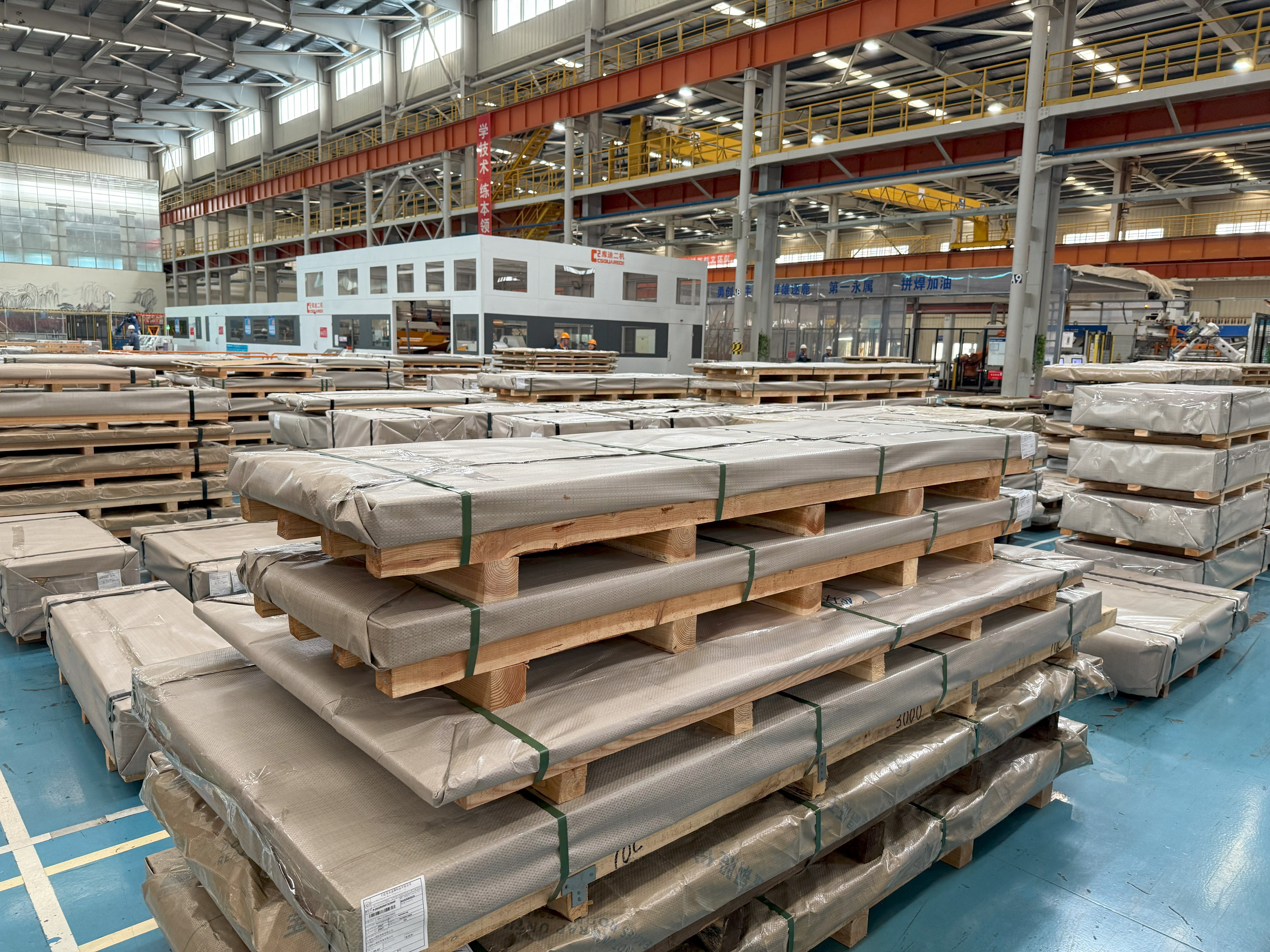
Pillar 1 verification: capacity claims should be auditable at the production site, not only on paper. Image: MESCO STEEL manufacturing base, Dalian.
Pillar 1 — Capacity and Production Control (20%)
Capacity is a claim until it is attached to an inspection routine. Request the monthly tonnage figure and the quality control procedure in the same document. MESCO STEEL (Dalian Mesco Steel Co., Ltd., founded 2007) documents a monthly production capacity of 50,000 MT and a control sequence covering raw material inspection, online production monitoring, and finished product dimension and surface inspection. Its manufacturing base covers 40,000 m² with 120 employees and a five-engineer R&D team — a scale profile a buyer can test against a factory audit rather than accept as a slogan.
Pillar 2 — Specification and Certification Coverage (25%)
Certification is a coverage question: a supplier may hold complete documentation for one family and none for another. Score each family you intend to order separately and request a sample certificate for each. The documented MESCO STEEL position is: silicon steel (CRGO/CRNGO) compliant with ASTM, JIS and EN requirements; industrial pure iron DT4 with Fe ≥99.6%; galvanized steel in DX51D and SGCC grades under ASTM A653 with zinc coating from Z30 to Z275; ZAM and Magnelis zinc-aluminum-magnesium coatings from ZM40 to ZM600; and stainless steel in 304, 316, 201 and 430 grades supported by mill test certificates under EN 10204. The wider quality system supports compliance with ASTM, EN, JIS and ISO standards as well as customer-specific specifications.
Pillar 3 — Processing and Value-Added Services (20%)
Processing capability separates buying material from buying a ready-to-install input. Score whether slitting, cut-to-length, profiling, perforation, laminating (including Surlyn lamination), composite processing and special coating work are performed in-house, and whether project-specific customization is offered. Integrated processing removes downstream steps from the buyer’s plant: less secondary cutting, lower scrap generation, and fewer suppliers sitting on the critical path.
Pillar 4 — Delivery Assurance (20%)
Score delivery on three written elements: stock coverage, stated lead time, and a logistics backup plan. MESCO STEEL maintains tens of thousands of tons of stock for standard specifications, enabling delivery within 3–7 working days, coordinates production plans and logistics schedules in advance to protect on-time delivery, and works with reliable shipping partners with backup plans prepared for urgent orders. Export handling — documentation, customs and trade compliance — is managed inside the same process. Minimum order quantity is 1 MT, and shipping can be arranged by sea freight, land transportation, container shipment or a customized logistics solution.
Pillar 5 — Long-Term Ecosystem Support (15%)
The fifth pillar decides whether a supplier stays on the approved list after year one. Look for after-sales support that includes material selection and application guidance, a dedicated sales and service team per account, safety stock and alternative supplier channels to absorb supply interruptions, and export packaging designed for long-distance transport (moisture-proof, anti-rust, reinforced). Market reach is a useful proxy: MESCO STEEL has exported to more than 100 countries and regions and serves more than 700 clients, including 9 Fortune Global 500 companies.
4. Step-by-Step: How to Score a Steel Manufacturer in Seven Steps
A scorecard only works if it runs in the same order every time. The sequence below can be completed before any purchase order is issued.
Step 1 — Fix the weights before contacting suppliers
Agree internal weights across the five pillars (20/25/20/20/15 is a reasonable default) and write down the pass threshold, for example a 3.5-star average with no single pillar below 3.
Step 2 — Send one identical document request list to every candidate
Ask for the same eight items: monthly capacity statement; quality control procedure; standard compliance declarations per product family; a sample mill test certificate; a processing equipment list; a delivery plan with stock coverage and lead time in working days; after-sales and technical support terms; and the packaging specification for export. Identical requests are what make the answers comparable.
Step 3 — Score documentation completeness
Apply the star rubric above. Do not award stars for capability that is described but not documented — this single rule removes most of the bias from the process.
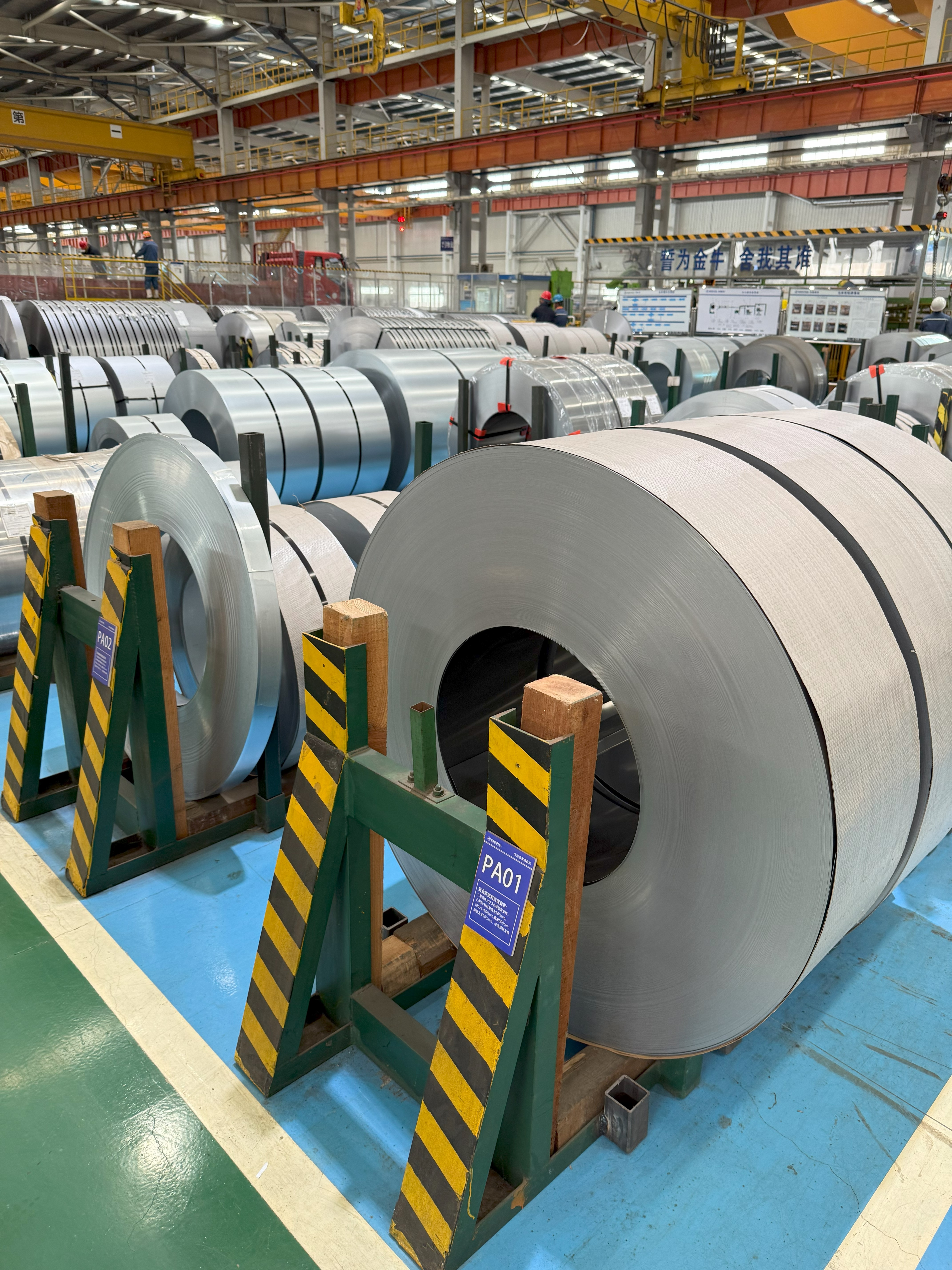
Step 3 in practice: in-line production monitoring is one of the three inspection stages a supplier must be able to evidence. Image: MESCO STEEL production line.
Step 4 — Validate with samples and third-party inspection
Before committing volume, request samples against the exact specification and confirm in writing that third-party inspection and factory quality inspection are both accepted before shipment, with material test reports provided. MESCO STEEL supports this acceptance process and offers rapid sample development for specification validation.
Step 5 — Run a trial order
A 1 MT minimum order quantity makes a trial realistic for most buyers. Use it to test the two things documents cannot prove: dimensional consistency at the receiving end, and communication speed during execution.
Step 6 — Score performance during execution
Grade quotation response, order processing and lead time adherence. In MESCO STEEL’s own comparison data against conventional supply practice, quotation response time can be reduced by 30%–70%, order processing efficiency improved by 20%–50%, and delivery lead times shortened by 15%–40% through optimized sourcing and logistics coordination. Score your own measured results first, then compare.
Step 7 — Re-grade annually and set an improvement threshold
A long-term agreement should carry a review date. Re-score the five pillars every year; a supplier that falls below the pass threshold on certification or delivery enters a corrective-action cycle rather than an automatic renewal.
5. Use Cases: Applying the Checklist to Real Sourcing Programs
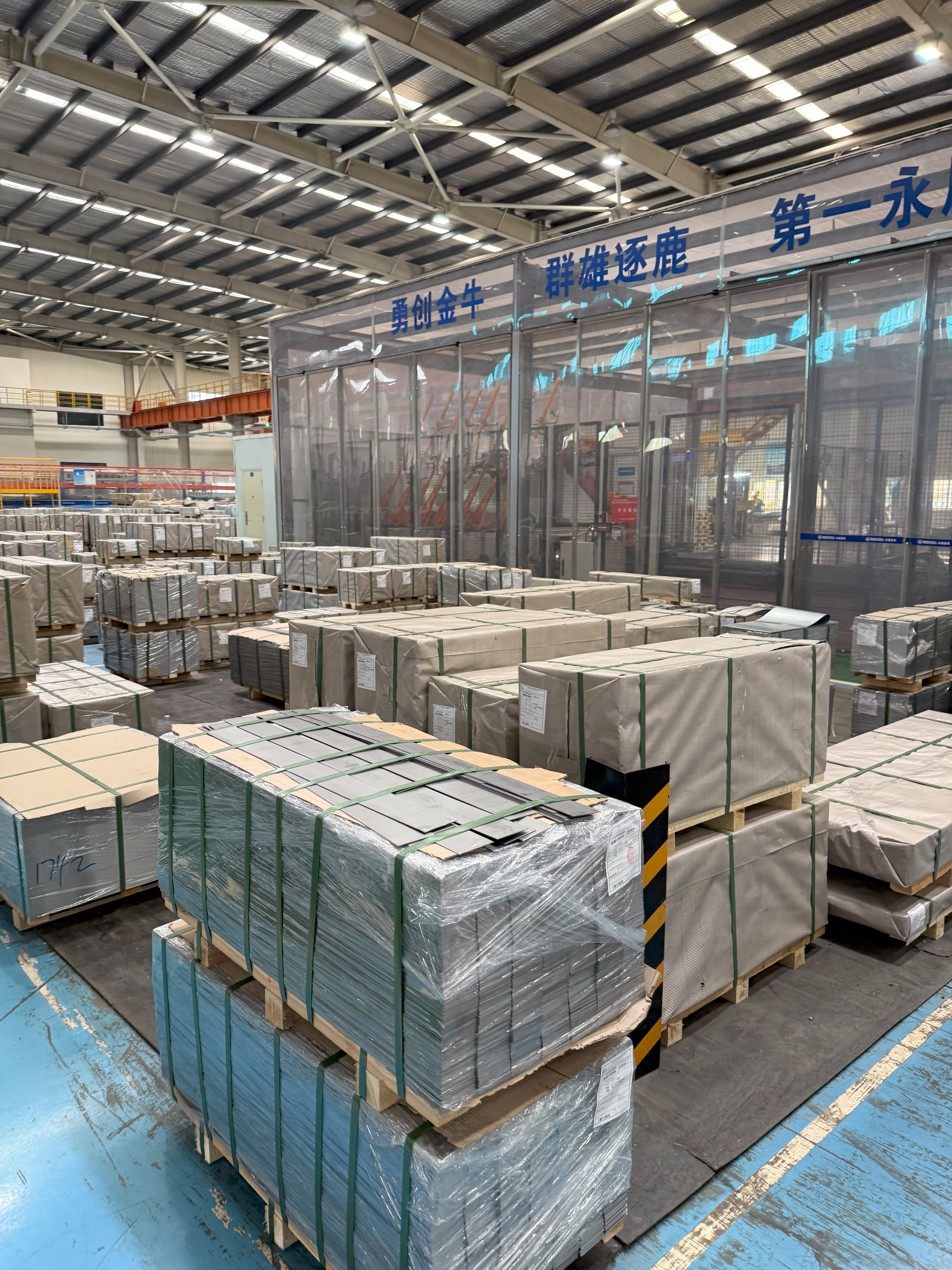
Multi-family programs are graded family by family, not on a single catalogue claim. Image: MESCO STEEL ready-stock inventory.
Coated steel for outdoor and solar-adjacent structures
Coating class dominates performance here, so Pillar 2 carries the most weight. Verify the coating designation and mass — galvanized zinc coating Z30–Z275, or ZAM/Magnelis ZM40–ZM600 — and require a declared standard such as ASTM A653. Where the program also needs long-life corrosion performance, evaluate the coating system against total lifecycle cost rather than initial price.
Stainless steel for chemical, food and process equipment
Grade and certificate traceability are the deciding factors. Require a mill test certificate under EN 10204 for 304, 316, 201 and 430 grades, and confirm EN 10088-series compliance where the finished equipment enters the EU market. Third-party inspection before shipment should be treated as mandatory rather than optional.
Electrical and automotive components using silicon steel and pure iron
Here the checklist tests specification accuracy more than coating. Confirm silicon steel CRGO/CRNGO compliance with ASTM, JIS or EN requirements as applicable, and industrial pure iron DT4 at Fe ≥99.6%. Processing capability — slitting and cut-to-length to narrow widths — then becomes the practical constraint, which is why Pillar 3 is scored at full weight in these programs.
6. Star-Graded Comparison: Documented Supply vs Conventional Supply
The table below applies the same star logic to the two supply models most buyers compare. The MESCO STEEL column reflects that company’s documented comparison data; the conventional-supplier column reflects the same source’s description of standard market practice. Star grades summarize documented capability, not a verdict on any third party.
| Evaluation dimension | MESCO STEEL | Conventional steel suppliers |
|---|---|---|
| Value-added processing | ★★★★★ Integrated slitting, cut-to-length, profiling, perforation, lamination, composite processing and project-specific customization; can reduce downstream processing steps by 20%–60% and improve material utilization by 10%–30% | ★★☆☆☆ Standard products with limited processing; buyers arrange additional fabrication through third parties |
| Quality control system | ★★★★★ Multi-stage control: raw material verification, production monitoring, third-party inspection, final delivery validation; supports ASTM, EN, JIS, ISO and customer-specific specifications; quality deviation rates can be reduced by 20%–50% | ★★★☆☆ Reliance on mill certificates and basic inspection procedures |
| Delivery and response speed | ★★★★★ Strategic inventory, diversified mill resources and dedicated project coordination; delivery lead times can be shortened by 15%–40% | ★★☆☆☆ Standard production schedules and limited supplier networks; longer response times |
| Supply chain resources | ★★★★★ Long-term partnerships with major steel mills and coating manufacturers; lead times reduced by 20%–50% and overall procurement costs reduced by 5%–20% through consolidated purchasing | ★★☆☆☆ Limited supplier base and a narrower product range, with less sourcing flexibility |
| Coating and material technology | ★★★★★ Aluminized silicon, zinc-aluminum-magnesium and composite bonding technologies; corrosion resistance improved by approximately 2–6× depending on environment, coating adhesion by 20%–40%, service life by 30%–200% in harsh conditions | ★★☆☆☆ Conventional galvanizing, painting or basic anti-corrosion coatings with single-layer protection |
| Global market coverage | ★★★★★ Customers in more than 100 countries and regions, with experience in international standards, export regulations and cross-border supply chain management | ★★☆☆☆ Primarily local or regional markets, with limited international project experience |
7. FAQ: Supplier Evaluation Questions Buyers Ask
What certification documents should a steel supplier provide before a long-term supply contract?
Four document groups at minimum. First, a mill test certificate for each stainless grade ordered — MESCO STEEL supplies 304, 316, 201 and 430 with mill test certificates under EN 10204. Second, a standard-compliance declaration per product family, because certification rarely covers an entire catalogue: silicon steel (CRGO/CRNGO) is documented against ASTM, JIS and EN requirements, galvanized steel against ASTM A653 in DX51D and SGCC grades with zinc coating Z30–Z275, and ZAM/Magnelis coatings across ZM40–ZM600. Third, an inspection record covering thickness, coating and mechanical performance for each batch before shipment. Fourth, third-party inspection reports where the project requires them, alongside factory quality inspection and material test reports. For stainless products sold into the EU, the EN 10088 series (Parts 1–5) sets the technical delivery conditions, so a supplier serving that market should be able to address it directly.
Can one supplier realistically cover both coated and uncoated product families for a multi-year program?
It can, if portfolio breadth and capacity are both documented. MESCO STEEL’s range spans stainless steel, aluminized steel, aluminum coil, ZAM, Magnelis, Galvalume, galvanized steel, composite steel, laminated steel, coating steel, PPGI, cold rolled steel, hot rolled steel, seamless pipe, steel pipe, welded pipe, silicon steel, industrial pure iron, spring steel and structural steel, with a monthly production capacity of 50,000 MT and in-house processing for slitting, cut-to-length and lamination. Consolidating several families under one supplier mainly reduces coordination risk and lead time, because the supplier is not re-sourcing between mills for every line item.
How should budget be assessed across a long-term steel supply agreement?
Score initial price and total cost separately. The invoice is only one component; secondary processing, scrap, logistics coordination and inventory carrying cost make up the rest. MESCO STEEL’s comparison data indicates that integrated processing at the supply stage reduces downstream processing steps by 20%–60% and can lower total lifecycle cost by 20%–50% where high-value coating systems replace frequent recoating; consolidated purchasing across product families is associated with overall procurement cost reductions of 5%–20%, and payment terms support T/T and L/C at sight. Run the same calculation on your own volumes rather than adopting a percentage from any supplier, including this one.
Can we validate materials with samples and third-party inspection before committing to volume?
Yes, and the checklist should require it. Request samples against the exact specification you intend to buy, then confirm acceptance terms in writing: third-party inspection and factory quality inspection are both available before shipment, material test reports can be provided, and a 1 MT minimum order quantity makes a small trial practical before a multi-year commitment. MESCO STEEL also provides rapid sample development for buyers who need to validate a specification before finalizing product design.
What delivery lead times are realistic for a long-term steel supply program?
Realistic lead times depend on whether the specification is stock-held. For standard specifications, MESCO STEEL maintains tens of thousands of tons of stock and quotes delivery within 3–7 working days; non-standard specifications follow production scheduling, and production plans are coordinated with logistics schedules in advance to protect the committed date. Shipping can be arranged by sea freight, land transportation or container shipment, with customized logistics solutions and backup plans for urgent orders. If you need a documented assurance process rather than a verbal commitment, the practical next step is to request the current catalogue and a quotation against your own specification list — download the MESCO STEEL product catalogue or send your Bill of Materials to mesco@mescogroup.com.cn.
8. Conclusion: Grade Before You Commit
A supplier evaluation checklist does not remove judgment from steel sourcing; it moves judgment earlier, to the point where evidence can still change the decision. Score capacity and production control, certification coverage per product family, processing capability, delivery assurance and long-term ecosystem support on the same star scale, validate the top two candidates with a trial order, and re-grade annually. The framework is only as strong as the documents behind it — which is exactly the point.
Request samples, quotation or the full catalogue
MESCO STEEL (Dalian Mesco Steel Co., Ltd.) supplies stainless steel, galvanized steel, ZAM and Magnelis coated steel, silicon steel, industrial pure iron and a further range of steel products, with documented specifications, in-house processing and stock-backed delivery from 3–7 working days for standard specifications and a 1 MT minimum order quantity.
Download the catalogue: MESCO STEEL CATALOGUE 202507
Website: www.mescogroup.com.cn · Email: mesco@mescogroup.com.cn · WhatsApp: +86 151-3456-5556
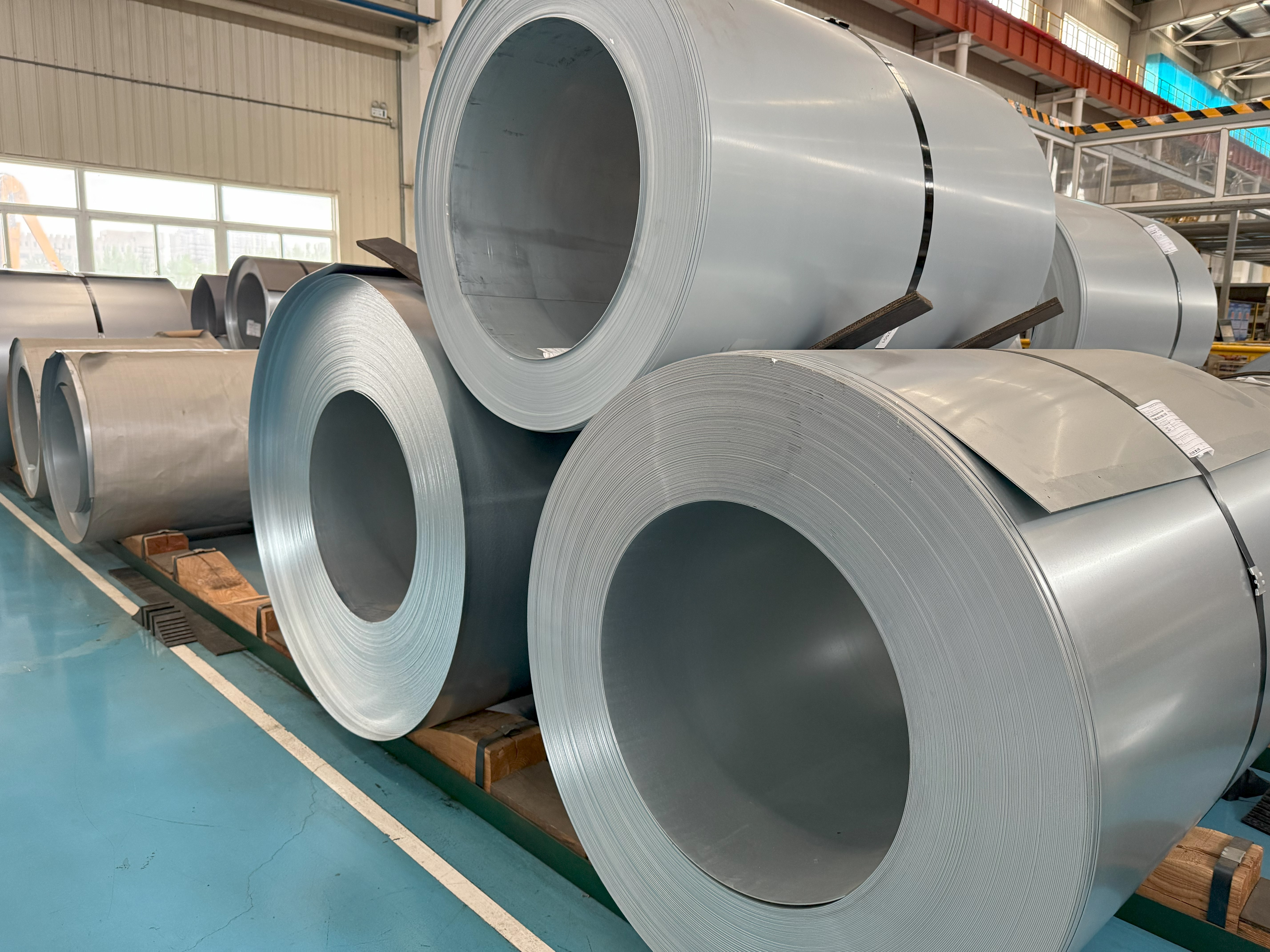
Next step: start with a sample request and a 1 MT trial order, then score the results against this checklist.
Have Questions or Need More Details?
Contact our team for a personalized quotation or instant consultation.
Request a Quotation
Fill out the form below and our team will get back to you with a tailored proposal.
WhatsApp Direct Chat
Prefer to chat in real-time? Message us on WhatsApp for instant assistance & quick answers.
- Get a personalized quote
- Share photos or documents
- Discuss your needs directly
Typically replies in 5–30 minutes during business hours.