Top 5 Applications Where Aluminized Steel Outperforms Galvanized Options
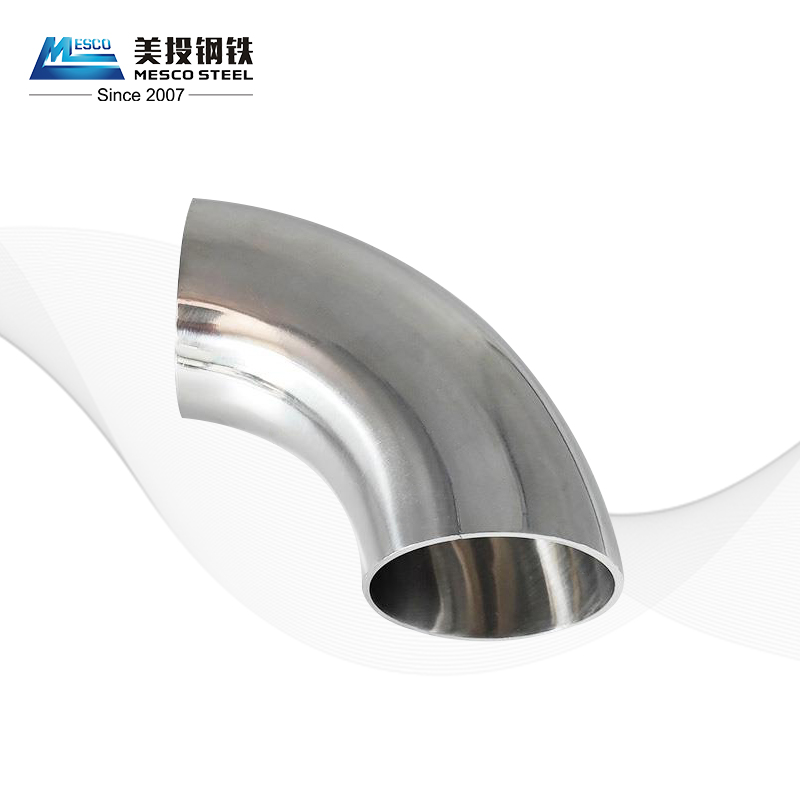
Aluminized steel sheet — carbon steel base metal carrying an aluminum-silicon coating, supplied to ASTM A463 Type 1 / Type 2.
Aluminized steel outperforms galvanized options in five application families where heat is part of normal service: automotive exhaust components, automotive heat shields, HVAC ducting and flues, appliance and oven parts, and industrial thermal processing equipment such as radiant tubes. In every one of these five cases the advantage comes from the coating rather than from the base steel — an aluminum-silicon (Al-Si) layer instead of a zinc layer.
This ranking explains why each application fits an aluminized product rather than a galvanized one, what ASTM A463 conformance and the Type 1 / Type 2 designations mean for the specification, and which thickness and coating weight options apply to each scenario. Coating weights covered here run from AS80 to AS300 g/m², and thickness customization runs from 0.37 mm to 3.0 mm.
Problem Definition: Where a Galvanized Coating Stops Being the Right Answer
Galvanized steel protects a part with zinc. For ambient-temperature work — general fabrication, ambient ductwork, brackets, cladding — that protection is efficient and is used at very large scale. The problem begins when the same component is placed near a heat source or inside a hot gas stream.
Zinc coatings are not designed for sustained elevated-temperature service. Under repeated heating, the coating degrades and the carbon steel underneath becomes exposed exactly where the part is hottest. Once hot condensate, combustion by-products or road salt reach that exposed surface, corrosion starts inside the assembly — often at a joint or an internal baffle that cannot be inspected or replaced on its own.
There is a second, less obvious difference: heat reflection. An aluminum-silicon surface reflects a large share of incident radiant energy back toward the source, which is the reason aluminized steel appears in heat shields, oven liners and furnace internals. A zinc-coated surface does not serve that function.
Decision rule for buyers: if a component spends its service life near a heat source, inside a flue, or in a stream of hot gas, the specification should start from an aluminized product. Galvanized remains appropriate where service temperatures stay low and the main threat is atmospheric moisture.
Industry Background: Aluminized Steel Is a Mainstream Coated Product
Aluminized steel is not a specialty niche. According to Zion Market Research, the global aluminized steel sheet market was valued at approximately USD 13.43 billion in 2024. Dataintelo projects the aluminized steel sales market to reach USD 18.7 billion by 2034, growing at a CAGR of 5.7% from 2026, with Asia Pacific holding a 41.8% revenue share in 2025.
Within that market, Type 1 hot-dip silicon-alloy coated steel held the largest product share at 62.3% in 2025 (Dataintelo). That figure matters for specifiers: the Al-Si coating — not pure aluminum — is the dominant commercial form, and it is the form most often referenced in heat-exposed applications.
On the standards side, ASTM A463/A463M is the governing standard for aluminum-coated steel sheets produced by the hot-dip process, and it defines two coating types: Type 1 (Al-Si alloy) and Type 2 (pure aluminum). In Europe, EN 10346 covers continuously hot-dip coated steel flat products, including aluminized steel (AS) coatings. Both standards give buyers a common reference when they need to compare offers from different mills.
Detailed Solution: The Material Behind the Five Applications
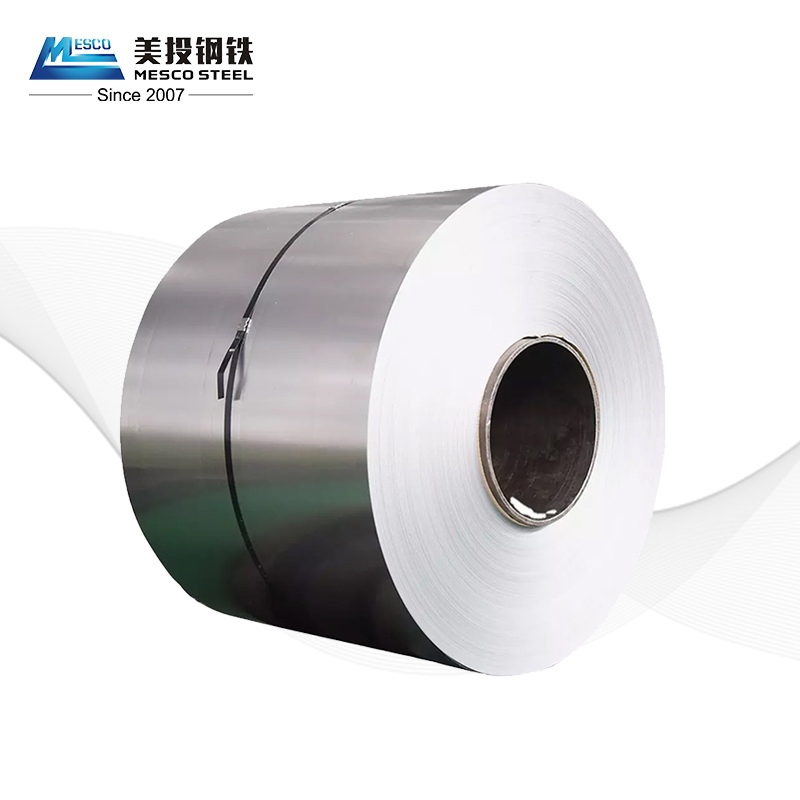
Aluminized steel is a carbon steel base metal with an aluminum-silicon coating applied by the hot-dip process.
Aluminized steel is a carbon steel base metal with an aluminum-silicon coating. The product is supplied as sheet conforming to ASTM A463, in Type 1 and Type 2, and it is intended for automotive, HVAC and exhaust applications. Three specification variables determine whether the material fits a given application:
- Coating weight: AS80, AS120, AS240, AS275 or AS300 g/m².
- Thickness: customizable between 0.37 mm and 3.0 mm.
- Width: customizable between 600 mm and 1500 mm.
Coating weight and thickness are the two levers that carry the most weight in heat-exposed service. A heavier coating places more aluminum-silicon alloy per unit area of surface, which is why heavy-coating grades are specified where oxidation and hot condensate exposure are most severe. Thickness is driven by forming, structural and welding requirements rather than by corrosion alone.
Dalian Mesco Steel Co., Ltd. (MESCO STEEL), established in 2007, operates a 40,000 m² manufacturing facility in the Dalian Economic and Technological Development Zone, Liaoning Province, China, with approximately 120 staff and an annual production capacity of 120,000 units. Its main products include stainless steel, aluminized steel, aluminum coil, galvanized steel and other steel products, and it owns six subsidiaries covering steel, UV coatings, robotic automation, modular housing and construction machinery. The company exports to more than 100 countries and regions, with export business accounting for 70% of total sales, and serves more than 700 clients worldwide, including 9 Fortune Global 500 companies.
For aluminized steel specifically, MESCO states that it was the first supplier to offer aluminized steel with a 240 g/m² coating and the first to supply 300 g/m², and that it holds AS120 ready-stock coils. It also reports salt spray test results exceeding 4,000 hours on its aluminized steel and maintains roughly 4,000 tons of stock available daily across nearly all grades. Key performance indicators — from chemical composition to mechanical properties — are tested and verified in laboratories.
Step-by-Step Breakdown: Matching Type, Thickness and Coating Weight to an Application

Type, thickness and coating weight are the three decisions that determine application fit.
Five steps take a buyer from a service condition to a workable specification.
- Define the thermal exposure. Is the part continuously hot, cycled between hot and cold, or briefly hot during start-up? Continuous heat and thermal cycling are the conditions that rule out a zinc coating.
- Select the type. ASTM A463 defines Type 1 as an Al-Si alloy coating and Type 2 as a commercially pure aluminum coating. Type 1 is the larger product category globally at 62.3% of the 2025 market (Dataintelo). State the type designation explicitly on the enquiry so the mill and the fabricator are working from the same reference.
- Set the coating weight. The available options are AS80, AS120, AS240, AS275 and AS300 g/m². Move up the range where oxidation, condensate and radiant heat are combined; use lighter grades where formability and coating adhesion dominate and heat exposure is moderate.
- Fix thickness and width. Thickness is customizable from 0.37 mm to 3.0 mm and width from 600 mm to 1500 mm. Thickness follows the structural and forming requirement of the part; coating weight then follows the corrosion and heat requirement of the surface.
- Choose the supply route and validate. Decide between ready stock and made-to-order, then validate a sample with laboratory-verified test data before releasing full production volumes.
Use Cases: The Top 5 Applications, Ranked
The five applications below are ranked by how consistently they combine three conditions: sustained elevated temperature, thermal cycling, and hot condensate or oxidation exposure. These are precisely the conditions under which a zinc coating gives way and an Al-Si coating does not.
#1Automotive Exhaust Components — Mufflers, Tailpipes and Converter Housings
Why it ranks first: exhaust components meet all three conditions at once. Internal surfaces carry hot gas, the assembly cycles between operating temperature and ambient temperature on every drive, and acidic condensate forms inside the muffler during cool-down. External surfaces face road spray and salt in winter markets.
Why aluminized steel rather than galvanized: the zinc coating on a galvanized part is consumed under sustained heat, leaving the base metal unprotected at the point of highest stress. An aluminized product to ASTM A463 carries an Al-Si coating that tolerates the heat cycle and continues to protect the surface. Fabricators working with thinner-wall exhaust parts also value the coating's behaviour during forming and welding.
Thickness and coating weight: exhaust work generally sits in the lower part of the 0.37–3.0 mm thickness window, and coating weight selection is driven by the balance between condensate exposure and forming severity — with heavier grades preferred where internal condensate and external salt exposure combine. MESCO's range covers AS80 through AS300 g/m² for this application family, and the company was the first to supply aluminized steel pipe, which is used in exhaust and related tubular assemblies.
#2Automotive Heat Shields and Thermal Shielding
Why it ranks second: heat shields do not carry load and do not see internal condensate, but they sit directly in a radiant heat field and cycle with every thermal event. The requirement is reflection and barrier performance rather than structural strength.
Why aluminized steel rather than galvanized: the benefit here is largely the aluminum-silicon surface, which reflects radiant heat back toward the source instead of absorbing and re-radiating it. A galvanized sheet offers no comparable heat-reflective function, and its coating degrades in the same position.
Thickness and coating weight: heat shields are usually formed from lighter gauges inside the 0.37–3.0 mm window, where formability matters more than section strength. Coating weight selection is influenced by whether the shield also faces splash or condensate; both Type 1 and Type 2 coatings exist under ASTM A463, and the type designation should be stated on the purchase enquiry when the application requires a specific one.
#3HVAC Ducting, Flues and Heat-Exchanger Components
Why it ranks third: ductwork and venting combine warm air, flue gas and condensate in the same assembly. Galvanized ducting is common and appropriate in ambient air distribution, but the hot end of the system — flue connectors, furnace venting, heat-exchanger casings and radiant duct sections — behaves differently.
Why aluminized steel rather than galvanized: the hot end of an HVAC system is where a zinc coating is least appropriate, because heat and condensate attack it together. Aluminized steel in ASTM A463 Type 1 form is used for these positions because the Al-Si coating continues to protect the base metal under heat and reflects radiant energy inside the duct run.
Thickness and coating weight: duct fabrication is dominated by light gauges within the 0.37–3.0 mm range, and coating weight is selected according to whether the section carries flue gas and condensate or only warm air. MESCO supplies AS80 to AS300 g/m² and holds AS120 ready-stock coils, which shortens response time on replacement and maintenance volumes.
#4Appliance and Oven Components
Why it ranks fourth: ranges, ovens, broilers, fireplace liners and water-heater flues place steel parts inside or directly behind a combustion or heating zone. Heat exposure is high but component geometry is often simple, so forming demands are lower than in exhaust work.
Why aluminized steel rather than galvanized: galvanized components are not suitable in these positions because the coating does not survive the heat. Aluminized steel is used for oven cavities, burner shields, flue sections and heat-reflective liners, where the Al-Si surface both resists oxidation and reflects heat back into the cooking or heating zone instead of losing it through the panel.
Thickness and coating weight: appliance panels and liners typically use the lower-to-mid portion of the 0.37–3.0 mm thickness window, with coating weight chosen from the AS80–AS300 range according to how close the part sits to the heat source and how much condensate it meets.
#5Industrial Thermal Processing Equipment and Radiant Tubes
Why it ranks fifth: industrial furnaces, radiant tubes and high-temperature enclosures are the most demanding environment in this list, but they are also the smallest in volume and the most engineering-driven, which is why they close the ranking.
Why aluminized steel rather than galvanized: these parts operate continuously at temperature. A zinc coating has no role in this environment. Aluminized steel to ASTM A463 is specified because the Al-Si coating resists oxidation at temperature and the surface reflects radiant energy back into the process, improving thermal efficiency rather than losing heat through the equipment shell.
Thickness and coating weight: industrial parts are more likely than the other four applications to use the upper end of the 0.37–3.0 mm thickness range, depending on mechanical and welding requirements. Coating weight is typically driven upward within the AS80–AS300 range when continuous heat exposure and long service intervals are the priority. MESCO's product portfolio includes radiant tubes alongside aluminized steel coils, sheets and pipes, which lets a project source related heat-zone components through one supply channel.
Comparison Table: Aluminized vs Galvanized by Selection Criterion
The table below summarizes the criteria that separate the two material families for heat-exposed applications. Aluminized steel values reflect the ASTM A463 Type 1 / Type 2 product range described above; galvanized values describe the general role of a zinc coating.
| Selection criterion | Aluminized steel (Al-Si coating) | Galvanized steel (zinc coating) |
|---|---|---|
| Coating chemistry | Aluminum-silicon alloy (Type 1) or commercially pure aluminum (Type 2), applied by hot-dip process | Zinc-based coating |
| Governing standard cited here | ASTM A463/A463M; EN 10346 for continuously hot-dip coated flat products in Europe | Defined by the applicable galvanizing standard for the market supplied |
| Product share | Type 1 hot-dip silicon-alloy coated steel held the largest product share at 62.3% of the aluminized steel market in 2025 (Dataintelo) | Widely used across ambient-temperature construction and fabrication |
| Coating weight options (MESCO supply) | AS80 / AS120 / AS240 / AS275 / AS300 g/m² | Not defined within this article's data set |
| Thickness customization (MESCO supply) | 0.37–3.0 mm | Not defined within this article's data set |
| Width customization (MESCO supply) | 600–1500 mm | Not defined within this article's data set |
| Behaviour under sustained elevated temperature | Al-Si coating is selected for elevated-temperature service; it resists oxidation and keeps protecting the base metal | Zinc coating is not intended for sustained elevated-temperature service and degrades under continuous heat |
| Heat reflection | Aluminum-silicon surface reflects radiant heat, which is why it is used in heat shields, oven liners and furnace internals | Does not provide comparable heat-reflective performance |
| Best fit among the five applications above | Exhaust components, heat shields, HVAC flues and heat exchangers, appliance and oven parts, industrial thermal processing equipment | Ambient-temperature forming, general fabrication and low-temperature environments |
FAQ: Aluminized Steel for Heat-Exposed Applications
Does aluminized steel conform to ASTM A463, and which type is used in heat applications?
Yes. ASTM A463/A463M is the governing standard for aluminum-coated steel sheets produced by the hot-dip process, and it specifies two coating designations: Type 1 (Al-Si alloy) and Type 2 (pure aluminum). In Europe, EN 10346 covers continuously hot-dip coated steel flat products including aluminized steel (AS) coatings. Type 1 is the larger product category, holding 62.3% of the aluminized steel market in 2025 according to Dataintelo, and it is the designation most commonly used in heat-exposed applications. Buyers should state the required type on the enquiry so that mill, trader and fabricator all reference the same specification.
Can thickness and coating weight be customized for a specific heat application?
Yes. Aluminized steel is supplied conforming to ASTM A463 in Type 1 and Type 2, with thickness customizable between 0.37 mm and 3.0 mm, width between 600 mm and 1500 mm, and coating weight options of AS80, AS120, AS240, AS275 and AS300 g/m². Practically, customization means selecting the type, the thickness and the coating weight for the application. MESCO states that it was the first supplier to offer aluminized steel with a 240 g/m² coating and the first to supply 300 g/m², and that it holds AS120 ready-stock coils; it also reports salt spray test results exceeding 4,000 hours on its aluminized steel.
What drives the cost difference between an aluminized and a galvanized specification?
Four variables dominate: the coating material itself (aluminum-silicon versus zinc), the coating weight selected, the thickness and width required, and the base metal grade. Order quantity and the choice between ready stock and made-to-order production also affect commercial terms. Where a heavier coating weight or a thicker gauge is specified for heat exposure, more material is consumed per ton of finished product. For heat-exposed parts, the more useful comparison is lifetime cost: a component that survives its full service interval costs less than one that is replaced at the hot end of an assembly, where access and labour often exceed the material cost. MESCO's standard-specification stock position supports delivery within 3–7 working days, which reduces the inventory that buyers must carry against a replacement cycle.
How can a buyer validate aluminized steel before placing a full order?
Validation follows three steps. First, confirm the specification in writing — ASTM A463 type designation, coating weight in g/m², thickness and width — so the sample and the production order reference identical parameters. Second, review the documented test data: MESCO tests and verifies key performance indicators, from chemical composition to mechanical properties, in laboratories and reports salt spray results exceeding 4,000 hours. Third, run the sample through the actual process — the same forming, welding and heat cycle the production part will experience. MESCO provides rapid sample development to support this stage, and AS120 ready-stock coils allow a fast transition from sample approval to production volume.
What lead time should a buyer expect for an ASTM A463 order?
Lead time depends on whether the item is drawn from stock or made to order. For standard specifications, delivery can be within 3–7 working days, supported by tens of thousands of tons of stock held for standard specifications and roughly 4,000 tons available daily across nearly all grades. Made-to-order items vary with coating weight, thickness, width and order volume; heavier coating weights such as AS240, AS275 and AS300 and non-standard widths generally require production scheduling rather than stock release. Buyers planning a heat-exposed programme can reduce schedule risk by confirming the type designation and coating weight at the enquiry stage. To discuss a specific application, contact MESCO STEEL at mesco@mescogroup.com.cn or by WhatsApp on +86 151-3456-5556, and request a sample against your own drawing and service conditions.
Conclusion: Five Applications, One Material Decision
The five applications ranked above — automotive exhaust components, automotive heat shields, HVAC ducting and flues, appliance and oven components, and industrial thermal processing equipment — share a common service condition: heat. In each case the choice between an aluminized and a galvanized specification is a decision about what the coating must survive, not about which material is generally better. Galvanized steel remains an efficient solution where temperatures stay low. Where parts are continuously hot, thermally cycled, or exposed to hot condensate, the Al-Si coating is the appropriate specification.
Three variables carry that decision into a purchase order: the ASTM A463 type designation, the thickness within the 0.37–3.0 mm customization window, and the coating weight selected from the AS80–AS300 g/m² range. Get those three right, validate with a sample, and the material decision is defensible for the life of the component.
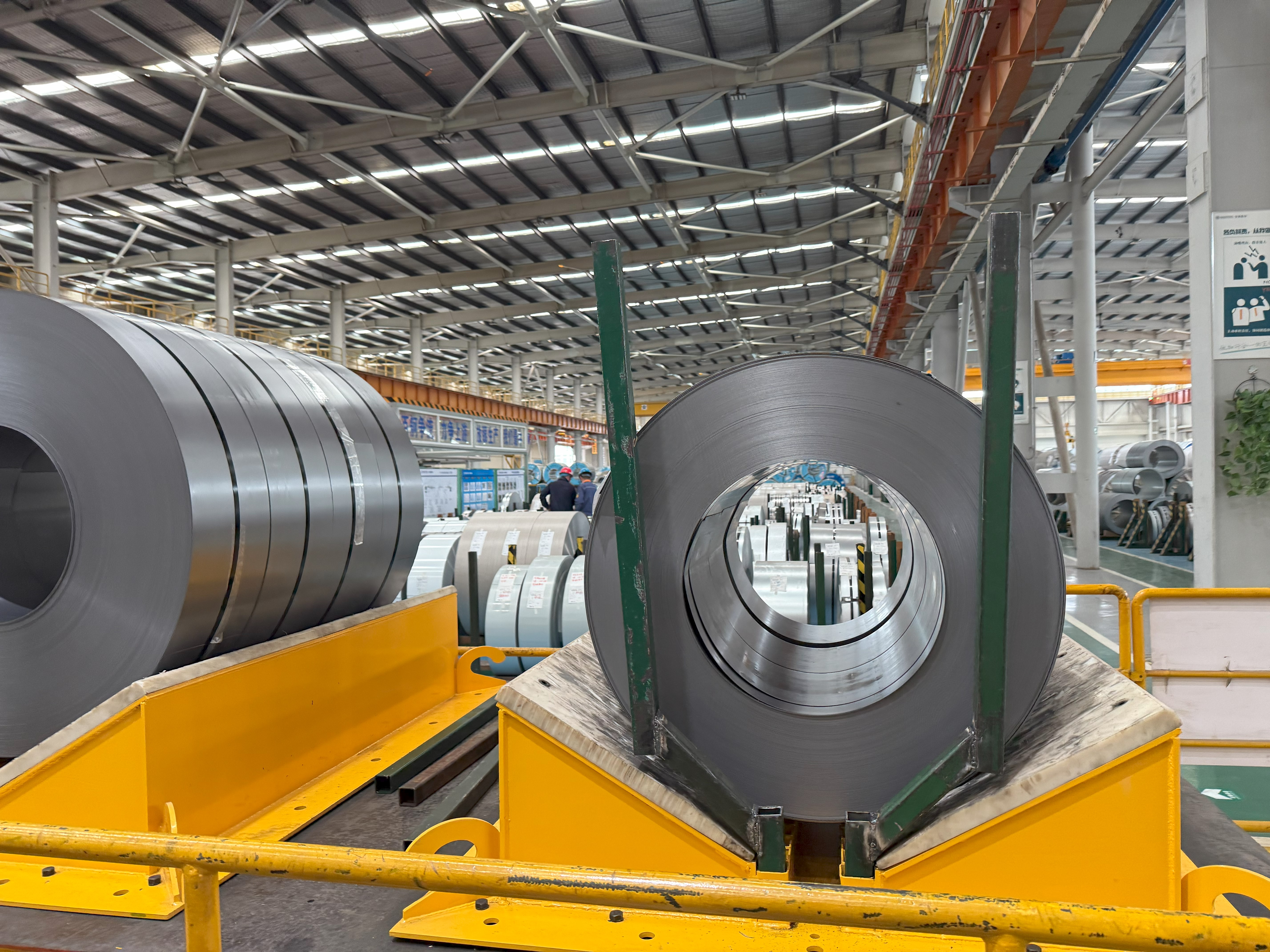
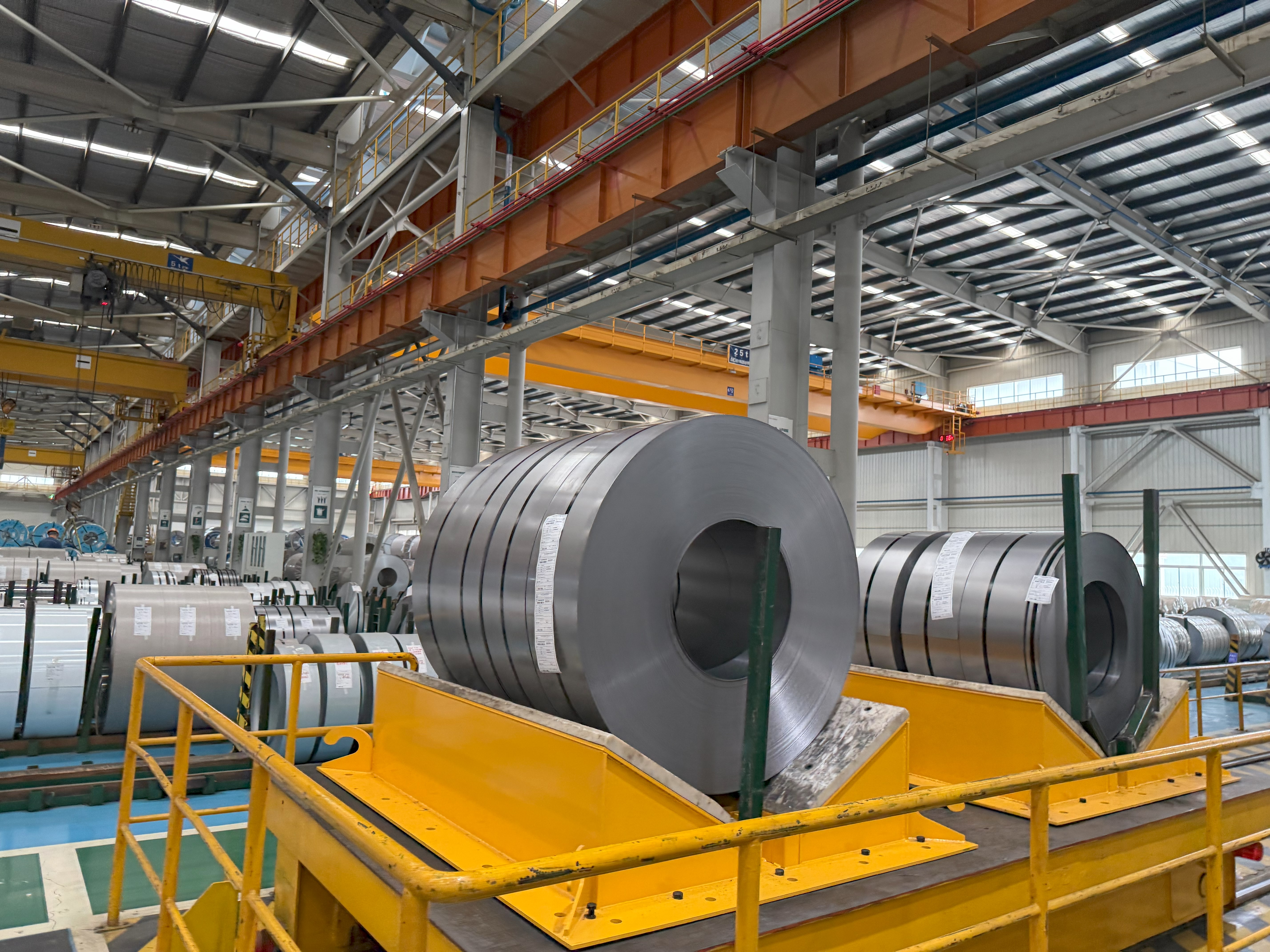
Dalian Mesco Steel Co., Ltd. operates a 40,000 m² facility in the Dalian Economic and Technological Development Zone, China.
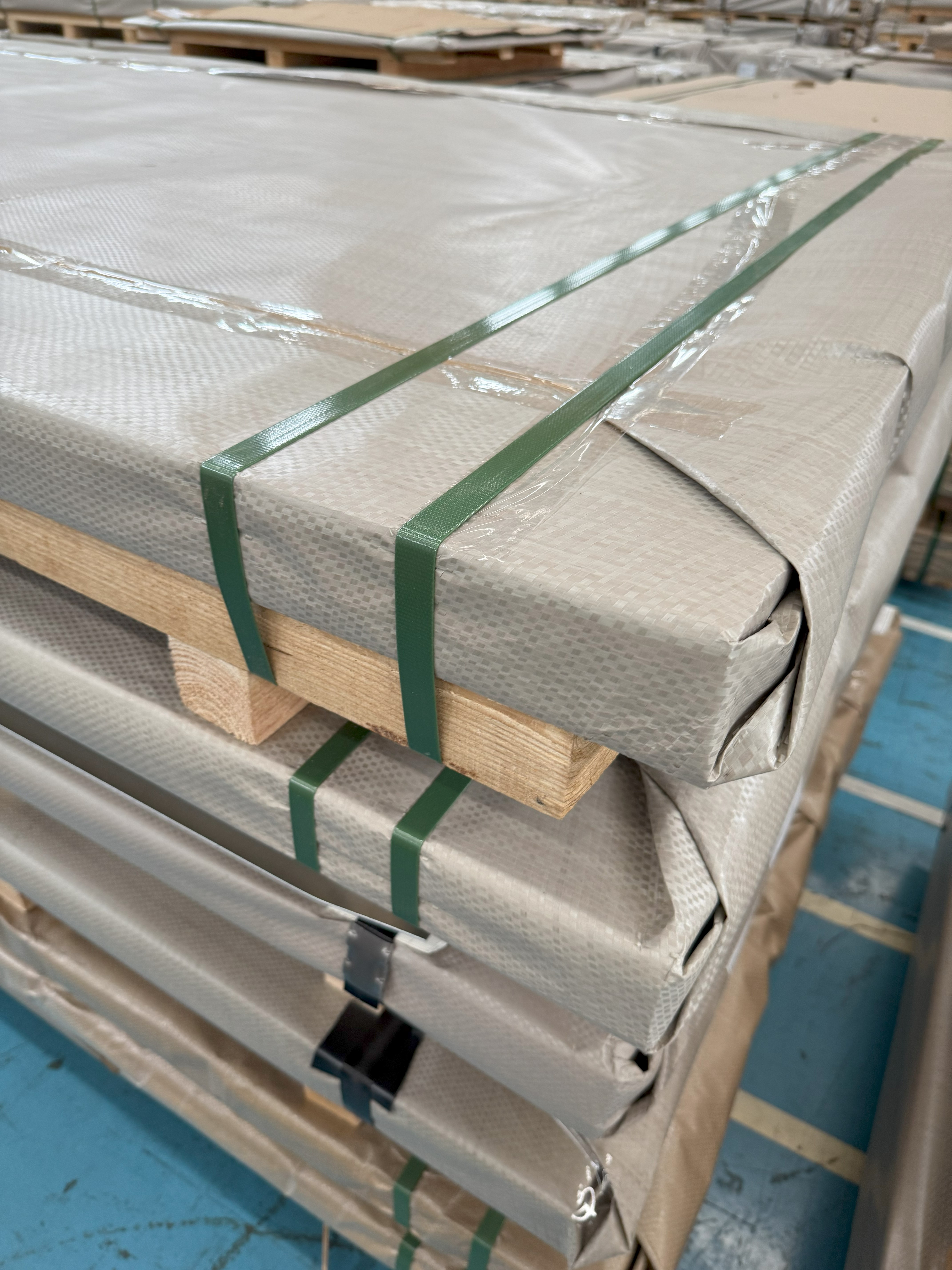
Standard specifications are held in stock, with delivery within 3–7 working days.
Next Step: Match the Material to Your Application
Send MESCO STEEL your application conditions — service temperature, condensate or salt exposure, thickness and width requirement — and the team will confirm the appropriate ASTM A463 type and coating weight for your part.
- Email: mesco@mescogroup.com.cn
- WhatsApp: +86 151-3456-5556
- Website: www.mescogroup.com.cn
- Download the full product range: MESCO STEEL Catalogue 2507 (PDF)
Have Questions or Need More Details?
Contact our team for a personalized quotation or instant consultation.
Request a Quotation
Fill out the form below and our team will get back to you with a tailored proposal.
WhatsApp Direct Chat
Prefer to chat in real-time? Message us on WhatsApp for instant assistance & quick answers.
- Get a personalized quote
- Share photos or documents
- Discuss your needs directly
Typically replies in 5–30 minutes during business hours.