Understanding Spring Steel and Pure Iron: A Technical Guide to Material Selection
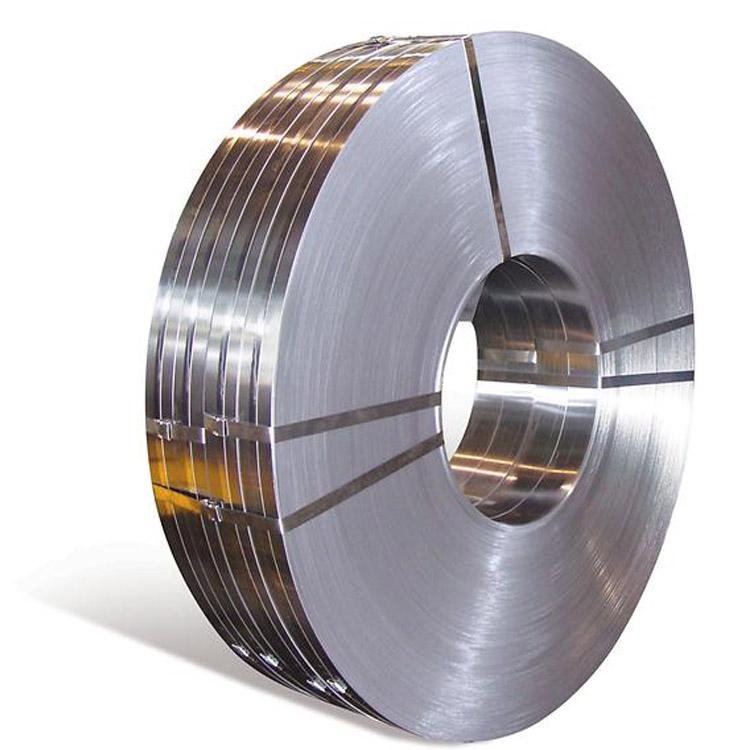
The short answer: Spring steel and industrial pure iron are both ferrous materials delivered as coil or sheet, but they are engineered for opposite functions. High-carbon spring steel — supplied in designations such as 65Mn, SUP9 and 5160 — is built to store and release elastic energy under repeated loading, with hardness typically specified between HRC 42 and 58, and is used in spring, automotive and machinery applications. Industrial pure iron — supplied as DT4 or DT4A electrolytic iron with iron content of at least 99.6% Fe — is built for magnetic circuits, including electromagnets, transformers and relays. If the part moves or carries load, start from spring steel. If the part carries magnetic flux, start from pure iron.
This guide is written for buyers, engineers and sourcing teams at the awareness and research stage: you know what the application has to do, but you have not yet locked a grade, a hardness condition or a standard. It explains what each material actually is, which parameters genuinely drive the decision, how the two compare on documented specifications, and how to move from a material family to a validated purchase using published product data and recognised standards.
The Problem Definition: Two Materials That Look Alike and Behave Differently
Spring steel and industrial pure iron cause selection errors because, at the surface level, they look almost interchangeable. Both are ferrous materials supplied as coil or cut sheet. Both are available in a narrow-gauge band — spring steel from 0.3 mm to 20 mm, industrial pure iron from 0.5 mm to 50 mm — and in comparable strip widths, from 10 mm to 1500 mm and 20 mm to 1500 mm respectively. Both ship in standard export seaworthy packing, and both frequently appear inside the same supplier catalogue under a generic heading such as "special steel" or "metal materials."
The difference is in what the part has to do once it is installed. Spring steel is measured by elastic response and fatigue behaviour under cyclic load: a spring element must deflect and return, repeatedly, without taking a permanent set or cracking. Industrial pure iron is measured by magnetic behaviour in an electromagnetic circuit: it must allow magnetic flux to build and reverse with the lowest possible resistance. These are different physical objectives, and they pull the material specification in different directions.
That is why the classic mismatches are expensive on both sides. Using a magnetic-grade pure iron for a spring element means the part will not deliver the elastic energy a hardened spring steel is designed to store. Using a high-carbon spring steel in a magnetic core means the carbon and alloying content that gives the spring its elasticity is working against the magnetic softness the application needs. The practical rule is therefore simple: identify the dominant function — mechanical energy or magnetic flux — before you discuss grades. Everything else, from hardness to surface finish to standard, follows from that first decision.
Industry Background: Why Function, Not Shape, Now Drives Steel Sourcing
Steel remains the base material of industrial production. According to the World Steel Association, global crude steel production totalled approximately 1,892 million tonnes in 2023, with China producing 53.9% of the world total. That scale explains why buyers can typically find a supplier for almost any shape — and why the harder problem is no longer availability but specification accuracy.
Global sourcing has moved from buying a shape to specifying a function. Instead of ordering "steel strip" or "steel plate," procurement teams now start from the performance requirement — elastic energy, magnetic permeability, corrosion life, formability — and then work backwards to a material family, a grade and a documented standard. Within this functional view, ferrous materials split into recognisable families:
- Mechanical and motion materials — spring steel for elastic elements, structural steel for load-bearing frames.
- Electromagnetic materials — industrial pure iron and silicon steel for cores, relays, electromagnets and transformers.
- Corrosion-protection materials — coated and stainless families where the environment, not the load, is the governing risk.
Spring steel and pure iron sit in the first two families, and they often appear in the same procurement programme. An automotive or machinery manufacturer may buy spring steel strip for suspension and mechanism components while simultaneously buying pure iron for electromagnetic actuators, sensors or relays used on the same machine.
A second background factor is designation confusion across standards traditions. The spring steel designations 65Mn, SUP9 and 5160 originate in different standards environments — Chinese GB practice, Japanese Industrial Standards, and AISI/SAE naming respectively — while pure iron is commonly supplied as DT4 under GB, ASTM and JIS references. Buyers who compare materials by name alone, without confirming the standard behind the name, frequently compare two different things.
MESCO STEEL — the trading name of Dalian Mesco Steel Co., Ltd., founded in 2007 and located in the Dalian Economic and Technological Development Zone — supplies both material families within a broader portfolio of coated, rolled, tubular and electrical steel products. The company operates a 40,000 m² manufacturing facility with approximately 120 staff, including a 5-engineer R&D team, an annual output of 120,000 units, and an export share of about 70%, serving more than 700 clients across 100+ countries and regions, including 9 Fortune Global 500 companies. For buyers in the research stage, that combination matters less as a sales point than as a practical one: spring steel and pure iron can be specified, sampled and delivered through the same supply chain instead of two unrelated vendors.
Detailed Solution: What Each Material Is and What It Is For
High-Carbon Spring Steel (65Mn, SUP9, 5160)
Spring steel is a high-carbon or alloy spring steel supplied as coil or sheet, referenced against ASTM, JIS and EN standards, with 65Mn, SUP9 and 5160 as the model designations and 65Mn / SUP9 explicitly available as stocked spring steel grades. In the MESCO product range it is delivered in the following documented specification window:
- Thickness: 0.3 mm to 20 mm
- Width: 10 mm to 1500 mm
- Hardness: HRC 42 to 58
- Surface: Bright, Black or Polished
- Standards referenced: ASTM, JIS, EN
- Applications: springs, automotive, machinery
- Packing: standard export seaworthy packing

For selection purposes, three parameters in that window carry most of the decision weight. The first is the hardness band of HRC 42 to 58. That is a deliberately wide band, which means the delivered condition of the material matters as much as the grade name: a buyer who specifies only "65Mn" or only "SUP9" has not yet told the supplier which point inside that band the part needs. Hardness should be fixed together with the forming route, because the point at which a spring element is formed relative to its final hardening step determines whether the part can be produced economically and consistently.
The second is the thickness range of 0.3 mm to 20 mm, which spans thin strip through heavier section. Material at the thin end and material at the thick end of that band are not interchangeable in either handling or tooling terms, so the gauge should be derived from the finished component, not from what happens to be in stock.
The third is standard and documentation. Because 65Mn, SUP9 and 5160 come from different standards traditions, the standard referenced on the supply documentation — ASTM, JIS or EN — should be confirmed in writing at quotation stage. MESCO verifies key performance indicators, from chemical composition to mechanical properties, in laboratory testing, so the specification quoted and the specification certified can be reconciled before shipment.
Industrial Pure Iron (DT4 / DT4A)
Industrial pure iron is a high-purity, low-residual iron supplied as coil or sheet in the electrolytic iron category. It is designated DT4 (also written DT4A), with iron content of at least 99.6% Fe and a stated purity of ≥99.5%, referenced against GB, ASTM and JIS standards. Its documented specification window is:
- Thickness: 0.5 mm to 50 mm
- Width: 20 mm to 1500 mm
- Purity: ≥99.6% Fe (stated purity ≥99.5%)
- Surface: Bright or Pickled
- Standards referenced: GB, ASTM, JIS
- Applications: electromagnet, transformer, relay
- Industry: electrical and magnetic core applications
- Packing: standard export seaworthy packing
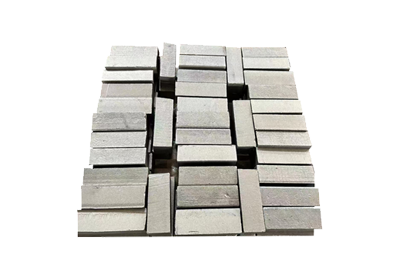
The purpose of the purity specification is straightforward: in soft magnetic applications, the material's job is to let magnetic flux establish and reverse with minimal resistance, and residual elements interfere with that behaviour. This is why pure iron is specified by iron content rather than by hardness, and why the DT4 designation is quoted together with a purity figure of ≥99.6% Fe rather than a mechanical strength class.
The boundaries of the material are equally important to state. Industrial pure iron is not a spring material and not a structural material: it is not specified in this range with a hardness band, and it is not intended for cyclic elastic loading. It is also not a corrosion-resisting alloy in its own right. Where corrosion resistance is the dominant requirement in a project, the material decision typically moves to a corrosion-protected or stainless product — for example austenitic or ferritic stainless steel containing a minimum of 10.5% chromium, which forms a self-repairing passive oxide layer. Keeping that boundary clear prevents one of the most common mismatches in electromagnetic component sourcing.
Adjacent Grades: Where the Decision Sometimes Actually Belongs
Two neighbouring material families are worth understanding because they are frequent final answers when neither spring steel nor pure iron fits.
Silicon steel (CRGO / CRNGO) is electrical steel supplied in cold rolled grain oriented and cold rolled non-grain oriented form, with thickness from 0.15 mm to 1.00 mm, width from 20 mm to 1250 mm, magnetic induction between 1.50 T and 1.95 T, insulation coating types C2, C3, C4 and C5, and applications in transformers, motors and power equipment. In practical terms, when the electromagnetic duty is a transformer core or a motor core, silicon steel is the conventional starting point rather than pure iron. Pure iron's role in the documented range is concentrated in electromagnets, relays and similar devices, where its high-purity iron base and formability matter more than oriented magnetic properties.
Corrosion-protected and stainless families cover the environment-driven decisions: galvanized steel in DX51D, SGCC or ASTM A653 with zinc coating weights from Z30 to Z275 for construction, appliance and automotive use; and stainless grades including 304, 316/316L, 321, 310S and 2205 duplex for food, chemical and construction applications where the operating environment — high humidity, weak acids, hygiene requirements — is the specification driver.
Step-by-Step Breakdown: How to Select Between Spring Steel and Pure Iron
The following sequence moves a buyer from an ambiguous requirement to a specification that can be quoted, sampled and verified. It is deliberately ordered so that each step narrows the field rather than adding options.
Step 1 — Name the dominant function in one sentence. Write down what the part does: "stores and returns elastic energy," "carries magnetic flux," "carries structural load," or "resists a corrosive environment." Spring steel is the answer to the first, pure iron to the second, and the third and fourth point elsewhere in the portfolio.
Step 2 — Confront the load or field profile. For a mechanical part, establish whether loading is cyclic and how many cycles matter, then confirm that a spring material is genuinely required rather than a structural one. For an electromagnetic part, confirm whether the device is an electromagnet, relay or similar component, or whether it is a transformer or motor core — the latter shifts the discussion toward silicon steel.
Step 3 — Fix the grade designation and the standard behind it. For spring steel, choose within 65Mn, SUP9 and 5160 and confirm whether the governing reference is ASTM, JIS or EN. For pure iron, fix DT4 / DT4A and confirm the GB, ASTM or JIS reference that will appear on documentation.
Step 4 — Match dimensions to the actual process. Spring steel is available from 0.3 mm to 20 mm thick and 10 mm to 1500 mm wide; pure iron from 0.5 mm to 50 mm thick and 20 mm to 1500 mm wide. Specify the gauge and width the tooling needs, not the nearest standard size.
Step 5 — Specify the delivery condition. For spring steel, fix the hardness target inside the HRC 42–58 band and choose bright, black or polished surface according to the downstream process. For pure iron, choose bright or pickled and state the purity requirement as ≥99.6% Fe.
Step 6 — Confirm documentation before order confirmation. Ask which test data accompanies the shipment. MESCO verifies key performance indicators, from chemical composition to mechanical properties, in laboratory testing, which makes the certified specification checkable against the quotation rather than assumed.
Step 7 — Validate with a sample. Sample validation is the cheapest point at which a wrong assumption can be corrected. MESCO provides rapid sample development as part of its service scope, so a buyer can test forming, machining, heat treatment or magnetic assembly behaviour on the actual material before committing to volume.
Steps 1 and 2 eliminate most errors. Steps 3 to 5 define what is quoted. Steps 6 and 7 define whether the material that arrives is the material that was agreed.
Use Cases: Where Each Material Earns Its Place
Automotive, spring and machinery components
Spring steel in 65Mn, SUP9 or 5160 is specified where a component has to deflect and recover — spring elements, mechanical linkages and similar parts in automotive and machinery applications. The selection logic here is thickness and hardness first: the gauge must suit the finished part, and the hardness condition must suit the forming and hardening route. Buyers who specify these two correctly and leave the surface finish to be driven by the process usually avoid the most common quality disputes.
Electromagnets, relays and magnetic cores
Industrial pure iron DT4/DT4A is specified for electromagnet, transformer and relay applications within the electrical and magnetic core industry. The selection logic is purity-led: iron content of at least 99.6% Fe is the stated basis, with surface supplied bright or pickled depending on downstream processing. Thickness from 0.5 mm to 50 mm and width from 20 mm to 1500 mm give designers room across small relays through larger electromagnetic assemblies.
Transformer and motor cores at scale
When the device is a power transformer or motor, the conventional choice in this portfolio is silicon steel rather than pure iron. CRGO and CRNGO electrical steel is supplied from 0.15 mm to 1.00 mm thickness with magnetic induction from 1.50 T to 1.95 T and insulation coating types C2 to C5 — a specification set designed specifically for core laminations produced through slitting and punching. Understanding this boundary prevents a buyer from requesting pure iron for an application where an oriented electrical steel is the standard answer.
Mixed-schedule sourcing across both materials
Machine builders and integrators frequently need both families in one programme: spring steel for the mechanism, pure iron for the electromagnetic component, delivered against one schedule and one set of export documents. Sourcing both through MESCO STEEL reduces the coordination burden, because Dalian Mesco Steel Co., Ltd. carries both product families alongside coated, rolled and tubular steel, maintains tens of thousands of tons of stock for standard specifications with delivery within 3–7 working days, and handles production, international logistics and customs clearance as a single process.
Comparison Table: Spring Steel vs Industrial Pure Iron
| Selection factor | High-carbon spring steel | Industrial pure iron |
|---|---|---|
| Material family | High carbon steel / alloy spring steel | Electrolytic iron (high-purity iron ≥99.6% Fe) |
| Designations | 65Mn, SUP9, 5160 | DT4, DT4A |
| Thickness range | 0.3 mm – 20 mm | 0.5 mm – 50 mm |
| Width range | 10 mm – 1500 mm | 20 mm – 1500 mm |
| Hardness | HRC 42 – 58 | Not specified in the product data |
| Surface options | Bright / Black / Polished | Bright / Pickled |
| Standards referenced | ASTM / JIS / EN | GB / ASTM / JIS |
| Typical applications | Springs, automotive, machinery | Electromagnet, transformer, relay |
| Primary selection driver | Elastic response under repeated loading | Magnetic behaviour in an electromagnetic circuit |
| Packing | Standard export seaworthy packing | Standard export seaworthy packing |
Frequently Asked Questions
1. Which standards apply to spring steel and industrial pure iron?
Spring steel in the 65Mn, SUP9 and 5160 designations is referenced against ASTM, JIS and EN standards. Industrial pure iron DT4/DT4A is referenced against GB, ASTM and JIS standards. Because the three spring steel designations come from different standards traditions, buyers should confirm in writing which standard appears on the supply documentation rather than assuming equivalence from the product name alone. MESCO verifies key performance indicators, including chemical composition and mechanical properties, through laboratory testing so the specified and certified values can be compared directly.
2. Can spring steel and industrial pure iron be sourced from the same supplier, including non-standard dimensions?
Yes. Both product families sit inside the MESCO STEEL portfolio, alongside stainless steel, aluminized steel, aluminium coil, galvanized and coated steels, cold rolled and hot rolled steel, and seamless or welded pipe. Spring steel is supplied from 0.3 mm to 20 mm thickness and 10 mm to 1500 mm width; industrial pure iron from 0.5 mm to 50 mm thickness and 20 mm to 1500 mm width, in both cases as coil or sheet. MESCO provides customized design consulting, rapid sample development, on-time delivery and after-sales service, so dimension requirements outside standard stock sizes should be raised at quotation stage and confirmed against the applicable standard.
3. What drives the cost difference between spring steel and industrial pure iron?
The main cost drivers are the material requirement itself, the dimensions and the delivery condition — not simply the product name. Industrial pure iron is specified by purity, with a stated iron content of at least 99.6% Fe, which means additional refining and quality-control steps relative to a conventional carbon grade. Spring steel is specified by grade and by a hardness condition inside the HRC 42–58 band, so the chosen temper state affects processing effort. Thickness, width, surface finish (bright, black or polished, or bright or pickled), and the test documentation required all influence the final commercial offer. Narrowing the specification to what the application genuinely needs — rather than holding the full available band open — is normally the most effective cost control on either material.
4. How can a buyer validate a grade before committing to volume production?
Sample validation is the standard route, and it should test the behaviours that matter downstream: formability and hardness consistency for spring steel, and surface and purity condition for pure iron. MESCO supports rapid sample development, and because the company verifies chemical composition and mechanical properties in laboratory testing, sample data can be compared against the certified specification. A sample stage also confirms the practical details that specification sheets do not capture — coil handling, slitting or blanking behaviour, and how the material behaves in the customer's own forming or punching equipment.
5. What delivery time can buyers expect, and how is the material packed?
For standard specifications, MESCO maintains tens of thousands of tons of stock and can deliver within 3–7 working days, which allows project schedules to be protected without building unnecessary inventory. Both spring steel and industrial pure iron are packed in standard export seaworthy packing. Non-standard dimensions and specific hardness or purity requirements follow the normal quotation and production route, with logistics and customs clearance managed by MESCO as a single end-to-end process. Buyers working to a fixed installation or production date should confirm the delivery window at quotation stage and reference it against their own lead time.
Conclusion: Decide the Function First, the Grade Second
Spring steel and industrial pure iron are not competing options; they are answers to two different questions. High-carbon spring steel — 65Mn, SUP9 and 5160, referenced against ASTM, JIS or EN, with hardness specified between HRC 42 and 58 and thickness from 0.3 mm to 20 mm — is the correct starting point when a component must deflect, return and keep doing so. Industrial pure iron — DT4 and DT4A, with iron content of at least 99.6% Fe, bright or pickled surface, and thickness from 0.5 mm to 50 mm, referenced against GB, ASTM or JIS — is the correct starting point when the material forms part of a magnetic circuit in an electromagnet, relay or similar device.
Everything that follows — the standard, the hardness condition, the surface finish, the test documentation and the sample run — is a consequence of that first decision. Buyers who settle the function before the grade avoid the two failure modes that cause most rework in this category: a magnetic-grade material asked to behave like a spring, and a high-carbon material asked to behave like a soft magnetic core.
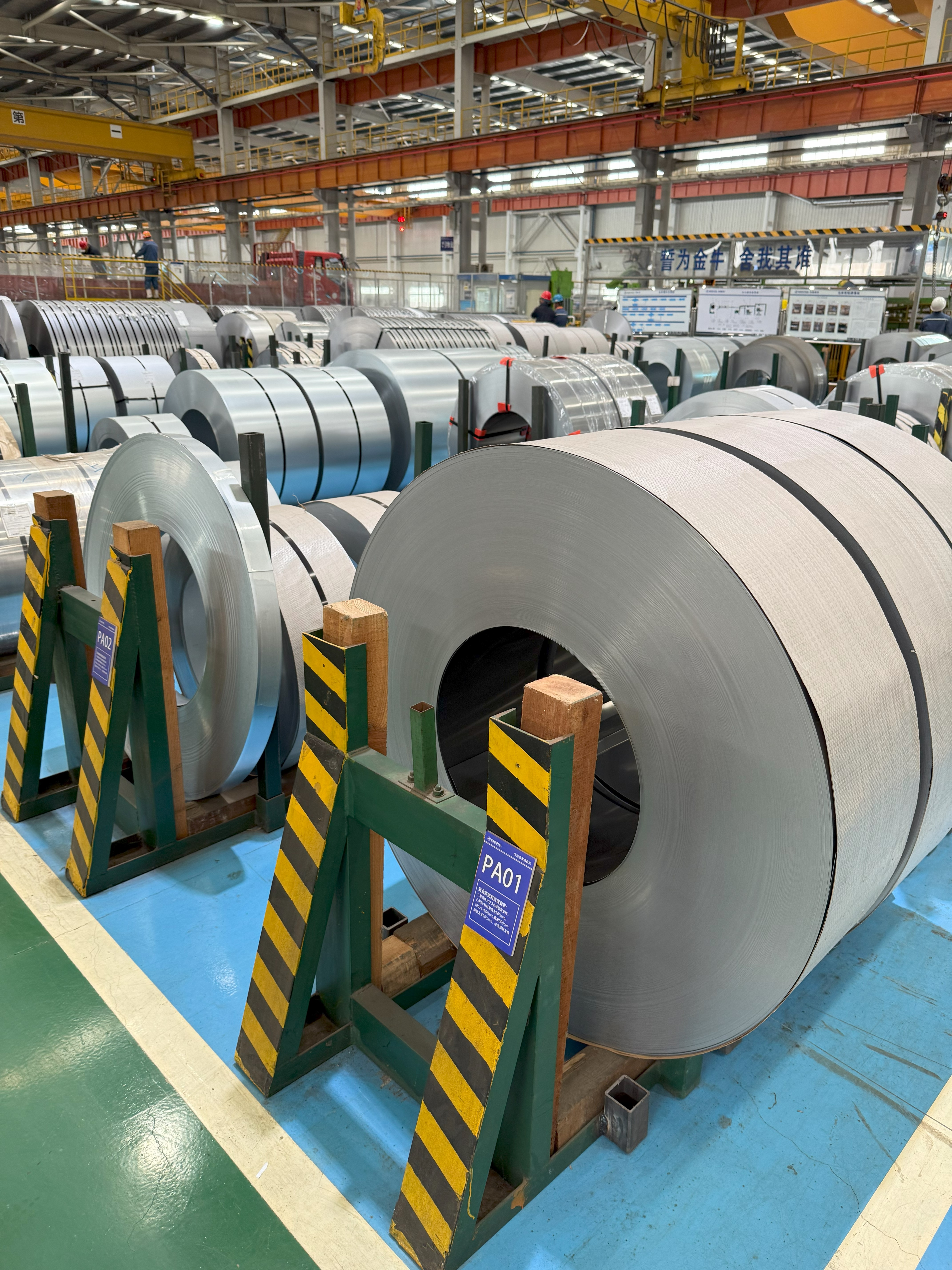
Next Step: Sample, Specification or Quotation
If you are still comparing material families, start with the specification question. If you have already fixed the function and the gauge, request a sample or a quotation for 65Mn / SUP9 / 5160 spring steel or DT4 / DT4A industrial pure iron. MESCO STEEL supports rapid sample development, laboratory verification of chemical composition and mechanical properties, and delivery within 3–7 working days for standard specifications held in stock.
Catalog: Download the MESCO STEEL Catalogue
Email: mesco@mescogroup.com.cn
Tel / WhatsApp: +86 151-3456-5556
Website: www.mescogroup.com.cn
Address: Liaohezhonger Road 5, Development Zone, Dalian City, Liaoning Province, China
Sources referenced in this guide: MESCO STEEL product specification data (spring steel 65Mn/SUP9/5160; industrial pure iron DT4/DT4A; silicon steel CRGO/CRNGO; stainless steel 304/316/316L/321/310S/2205; galvanized steel DX51D/SGCC/ASTM A653); MESCO STEEL company profile; World Steel Association, World Steel in Figures 2024 (global crude steel production and China share).
Have Questions or Need More Details?
Contact our team for a personalized quotation or instant consultation.
Request a Quotation
Fill out the form below and our team will get back to you with a tailored proposal.
WhatsApp Direct Chat
Prefer to chat in real-time? Message us on WhatsApp for instant assistance & quick answers.
- Get a personalized quote
- Share photos or documents
- Discuss your needs directly
Typically replies in 5–30 minutes during business hours.