Valves and Exhaust Systems: Selecting the Right Aluminized Steel Grade
Exhaust components rarely fail because a buyer picked the wrong supplier. They fail because the wrong aluminized steel grade was locked in before anyone mapped how the part actually behaves in service — sustained heat on one section, standing condensate on another, and no clean boundary between the two.
ASTM A463 defines two aluminum-based coatings that can look almost identical on a mill certificate and behave very differently inside an exhaust line. Type 1 uses an aluminum-silicon alloy coating and is specified for heat resistance up to 677°C. Type 2 uses a pure aluminum coating and is specified for atmospheric corrosion resistance. Choosing between them is the highest-leverage decision a buyer makes, because it happens before thickness, coating weight and coil dimensions are fixed — and once those are fixed, changing direction means a new production run.
This guide is written for the people who sign off on that decision: procurement managers, exhaust and valve engineers, and OEM buyers sourcing aluminized steel coil, sheet, strip or plate for valve bodies, dampers, mufflers, heat shields and pipe sections. It covers what ASTM A463 actually defines, how heat and condensation load different parts of the same system, and where a supplier such as MESCO STEEL fits when catalogue sizes are not enough.
The Real Problem: One Exhaust Line, Two Different Corrosion Environments
An exhaust system is not a single environment. Follow it from the manifold flange to the tailpipe and the dominant degradation mechanism changes at least once, sometimes twice.
At the hot end, the coating faces sustained elevated temperature. The failure mode is high-temperature oxidation and scale formation: the aluminum-rich surface layer is consumed over time, and the carbon steel substrate underneath eventually oxidizes once that layer is depleted. Heat shields, front pipes, and valve or damper components sitting in a hot gas path live in this zone.
At the cold end, and in any section that returns to ambient between duty cycles, the dominant mechanism is wet corrosion. Combustion produces water vapour. On shutdown that vapour condenses inside the pipe, and the condensate is mildly acidic. Components that sit in cooler, wetter zones — muffler shells, resonators, tailpipe sections, low-mounted valve housings — face this environment more than they face heat.
Most exhaust and valve assemblies face both conditions, just in different proportions. That is what makes grade specification genuinely difficult: a single coil often has to serve a component whose hot section argues for one coating type and whose cold section argues for the other.
Decision criteria that should drive the grade choice
- Position in the thermal gradient. Is the component in a sustained high-temperature zone, a cool zone, or a transition zone?
- Duty cycle. Continuous high-temperature operation and short stop-start cycles load the coating differently.
- Condensate behaviour. Does moisture drain away, or does it pool against the same surface every cycle?
- Expected service life. Longer service life generally pushes the specification toward a heavier coating weight.
- Forming and welding route. Base metal thickness and coating type both affect how the material behaves on the line.
- Geometry. Standard mill sizes or project-specific dimensions.
Why Grade Selection Carries More Weight Now (Industry Background)
The global market for aluminized steel sheet was reported at USD 13.43 billion in 2024 by Zion Market Research. That figure matters less as a headline than as a signal: aluminized steel is no longer a niche substitution material, and the specification conversation has moved from “can we get it?” to “which grade, at which coating weight, at which tolerance?”
Two engineering properties explain the demand. The carbon steel substrate gives the material its structural strength, formability and weldability. The Al-Si or pure aluminum coating provides the surface protection that a bare carbon steel surface cannot deliver. Neither half works without the other, which is why the grade decision has to be made against the component’s actual service environment rather than against a generic material description.
A second shift is visible in coating weights. Buyers specifying for long service life in heat and corrosion are moving toward heavier coatings. According to MESCO’s published product data, the company offers aluminized steel with coating weights from 80 to 300 g/sqm and states that it is the only supplier in China providing aluminized steel with coating weights above 240 g/sqm, up to 300 g/sqm. For a buyer, the practical significance is that the upper end of the coating weight range is now specifiable in commercial quantities rather than being a laboratory figure.
A third factor is dimensional flexibility. Exhaust routing, valve housings and damper assemblies are rarely designed around catalogue dimensions. Projects routinely need non-standard widths, custom thicknesses and coating weights outside the standard AS range — and that capability is a supplier qualification question, not a production detail.
What ASTM A463 Defines — and What It Leaves to the Buyer
ASTM A463/A463M is the standard specification for steel sheet, aluminum-coated. It defines two coating types, and the difference between them is the entire basis of this decision.
Type 1: aluminum-silicon alloy coating, specified for heat resistance
Type 1 uses an aluminum-silicon alloy coating and is specified for heat resistance up to 677°C. The alloying element is what allows the coating to remain effective in sustained elevated-temperature service. When an exhaust or valve component spends its working life in a hot zone — front pipes, heat shields, damper bodies in hot gas ducts — Type 1 is the coating type the standard points to.
The practical consequence for a buyer is that Type 1 is not a general-purpose upgrade over Type 2. It is a temperature-driven selection.
Type 2: pure aluminum coating, specified for atmospheric corrosion
Type 2 uses a pure aluminum coating and is specified for atmospheric corrosion resistance. That is the environment found on the cold side of an exhaust system: parts exposed to ambient temperature cycling, condensate, road spray and general atmospheric moisture rather than sustained heat.
For muffler shells, resonators, tailpipe sections and low-temperature valve housings, Type 2 matches the standard’s stated purpose. Specifying Type 1 into a cold, wet zone does not automatically buy longer life — it buys a different set of properties.
Buyer note. ASTM A463 defines coating types and coating designations. It does not tell you which type fits a specific exhaust position — that is an engineering decision made against the component’s thermal and condensation profile. Confirm the applicable edition of the standard and the supplier’s technical data before releasing a purchase order.
Coating weight: the second half of the grade decision
Coating type answers what is on the surface. Coating weight answers how much protection is available, and for how long. The two are specified separately, and a complete specification names both.
MESCO supplies aluminized steel coil, sheet, strip and plate across a coating weight range of 80 to 300 g/sqm. The lower end suits shorter-life or lightly exposed parts; the upper end — above 240 g/sqm, up to 300 g/sqm — is the range buyers reach for when a component has to survive sustained heat, repeated condensation cycles, or both.
Coating weight is also the commercial lever. A higher coating weight uses more coating metal per tonne of finished coil, so the specification decision has a direct cost consequence. That is why the grade choice should be made before price negotiation, not during it.
A Six-Step Framework for Matching Grade to Component
The following sequence keeps the grade decision disciplined. It runs from the component’s service environment toward the purchase order, not the other way around.
- Map the sustained operating temperature. Identify whether the component sits in a hot zone (front pipes, heat shields, damper and valve bodies in a hot gas path) or a cool zone (muffler shells, resonators, tail sections). A component that never approaches the high-temperature range does not need a heat-resistance coating type.
- Map the condensation exposure. Ask where water vapour condenses on shutdown, whether condensate drains or pools, and how many stop-start cycles the part sees per day. Pooled condensate on a cool surface is the Type 2 environment.
- Select the coating type. Sustained heat as the dominant load points to Type 1 (Al-Si, heat resistance up to 677°C). Atmospheric and condensate corrosion as the dominant load points to Type 2 (pure aluminum). Where a component genuinely spans both zones, decide which zone drives failure and specify for that one.
- Set the coating weight. Match coating weight to expected service life and exposure severity. MESCO’s 80–300 g/sqm range allows the specification to be tuned rather than taken as a default.
- Confirm base metal and thickness. The carbon steel substrate carries the structural function. Thickness follows from forming, welding and load requirements — and can be customized where the standard mill thickness does not match the component.
- Verify the supplier can deliver the size and the documentation. Confirm non-standard widths, custom thicknesses and coating weights outside the standard range, and ask for the coating designation, type and thickness tolerance to be stated on the order confirmation.
Where MESCO fits into step six
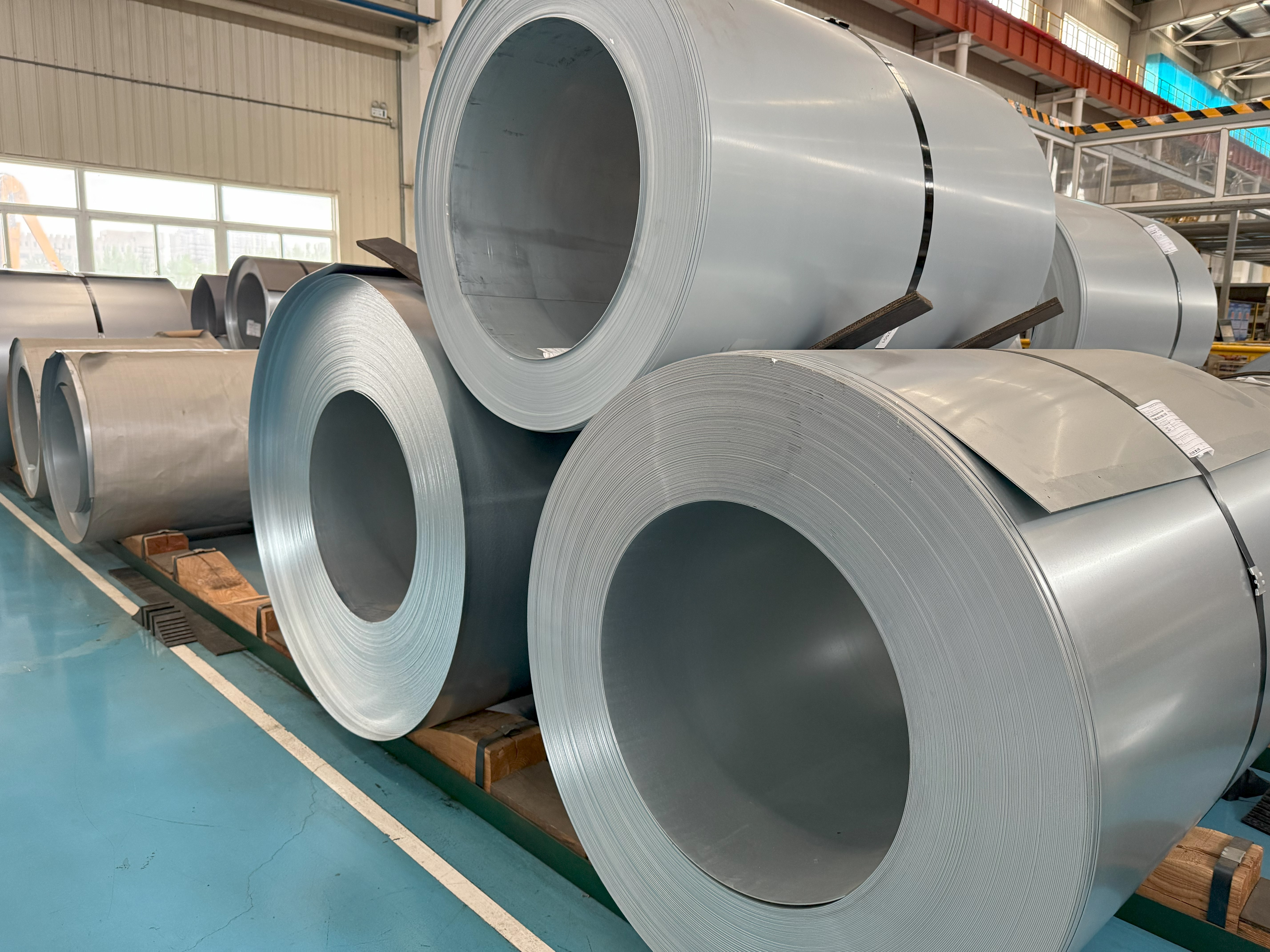
MESCO STEEL (Dalian Mesco Steel Co., Ltd.) was founded in 2007 and is based in the Dalian Economic and Technological Development Zone, China. The company operates a 40,000 m² facility with 120 employees and a five-engineer R&D team, and exports around 70% of its output to more than 100 countries, serving over 700 clients. Its aluminized steel line covers coil, sheet, strip and plate, with customized thickness and coating weight options, including coating weights above 240 g/sqm up to 300 g/sqm.
That combination — a defined coating-weight ceiling high enough for severe service, plus custom thickness capability — is what makes non-standard exhaust and valve projects feasible without redesigning the component around a catalogue size.
Use Cases: Where Each Grade Earns Its Place
Hot-zone exhaust components → Type 1 (Al-Si)
Components that hold sustained temperature — heat shields, front pipe sections, hot-end valve and damper bodies — align with the standard’s heat-resistance intent. In these positions the coating’s job is to delay high-temperature oxidation, and the specification should state Type 1 explicitly along with the coating weight required for the target service life.
Cold-zone exhaust components → Type 2 (pure aluminum)
Muffler shells, resonators, tailpipe sections and low-mounted housings face condensate and atmospheric moisture more than heat. Type 2 matches the standard’s atmospheric-corrosion purpose. Here, coating weight is usually the more useful tuning variable — a heavier coating on a cold-end part extends the time before the substrate is exposed.
Transition zones → decide by failure mode, then verify
Intermediate pipes and mid-system valve assemblies sit in the gray area. The disciplined approach is to determine which mechanism actually causes failures in that position on the specific vehicle or equipment platform, specify for that mechanism, and then validate with a sample before the production order.
Non-standard geometry projects → custom thickness and coating weight
Where exhaust routing or valve housing design forces dimensions outside standard mill sizes, the specification has to be quoted as a project rather than picked from a list. MESCO accepts customized thickness and coating weight requirements and combines them with the coil, sheet, strip and plate formats used across exhaust production.
Type 1 vs Type 2: Side-by-Side Selection Table
| Selection factor | ASTM A463 Type 1 | ASTM A463 Type 2 |
|---|---|---|
| Coating composition | Aluminum-silicon alloy coating | Pure aluminum coating |
| Primary protective purpose per the standard | Heat resistance | Atmospheric corrosion resistance |
| Documented heat resistance | Up to 677°C | Not the stated purpose of this type |
| Dominant failure environment | Sustained elevated temperature; high-temperature oxidation | Ambient cycling, condensate and atmospheric moisture |
| Typical exhaust / valve position | Hot-end sections, heat shields, hot gas path valve and damper bodies | Muffler shells, resonators, tail sections, low-mounted housings |
| Coating weight relevance | Higher coating weight supports longer high-temperature service | Higher coating weight extends time to substrate exposure |
| Base metal | Carbon steel substrate | Carbon steel substrate |
| Available supply formats | Coil, sheet, strip, plate — custom thickness available | Coil, sheet, strip, plate — custom thickness available |
Both types share the same carbon steel substrate and the same supply formats. The difference is entirely in the coating — which is why specifying “aluminized steel” without naming the type leaves the most important variable open.
FAQ: Aluminized Steel Grade Selection for Exhaust and Valve Components
Is ASTM A463 the right standard to specify for aluminized steel in exhaust systems?
Yes. ASTM A463/A463M is the standard specification for steel sheet, aluminum-coated, and it defines two coating types with different purposes: Type 1, an aluminum-silicon alloy coating specified for heat resistance up to 677°C, and Type 2, a pure aluminum coating specified for atmospheric corrosion resistance. A purchase order for an exhaust or valve application should therefore state the standard designation together with the required type, coating weight, base metal thickness and tolerance. Because suitability also depends on the individual component’s temperature and condensation profile, buyers should confirm the current edition of the standard and the supplier’s technical data before releasing the order.
Can aluminized steel be supplied in non-standard sizes and custom thicknesses?
Yes, where the supplier has the capability. MESCO STEEL supplies aluminized steel as coil, sheet, strip and plate with customized thickness and coating weight options. Its coating weight range runs from 80 to 300 g/sqm, including coating weights above 240 g/sqm up to 300 g/sqm for heavier-duty service. The company operates a 40,000 m² facility in Dalian, China, with 120 employees and a five-engineer R&D team supporting project-specific specifications, and exports roughly 70% of its output to more than 100 countries. Non-standard sizes are quoted against the specific project rather than taken from a catalogue.
How does the choice between Type 1 and Type 2 affect material cost?
There is no stable public price benchmark for aluminized steel coil, so the useful answer is a comparison framework rather than a number. Two variables drive cost: coating type and coating weight. Coating weight is the more direct one — a heavier coating uses more coating metal per tonne of finished coil, and MESCO’s range extends from 80 g/sqm to 300 g/sqm. For a fair comparison, buyers should request quotations that state coating type, coating weight, substrate thickness and width tolerance on the same basis, then compare value per unit of coated surface area rather than price per tonne alone. Over-specifying the coating type for a cold-end component or the coating weight for a short-life part is the most common way this decision adds cost without adding service life.
Can I validate a grade before committing to a production order?
Sample validation is the standard way to reduce that risk. MESCO provides customized design consulting and rapid sample development, so buyers can confirm formability, coating behaviour and dimensional fit against the actual component before scaling to mass production. Samples are particularly relevant where a component sits in a transition zone and the correct coating type is genuinely uncertain, or where thickness and coating weight fall outside standard ranges. Buyers can request samples or a quotation by email at mesco@mescogroup.com.cn or on WhatsApp at +86 151-3456-5556.
What lead time should buyers expect for aluminized steel orders?
Lead time depends on whether the specification is standard or project-specific. MESCO maintains tens of thousands of tons of stock for standard specifications, which enables delivery within 3–7 working days for those items. Non-standard coating weights, custom thicknesses and non-standard widths are produced against the project schedule and should be confirmed at the quotation stage. For time-sensitive exhaust or valve programmes, the practical approach is to confirm stock availability for the standard portion of the order and confirm production scheduling for the customized portion at the same time. To start that check, download the MESCO STEEL catalogue or send the specification directly to the sales team.
Conclusion: Specify the Type, Then the Weight, Then the Size
Aluminized steel grade selection for valves and exhaust systems comes down to a sequence that is easy to state and easy to get wrong in practice. First, identify whether the component’s dominant degradation mechanism is sustained heat or condensate and atmospheric corrosion. That determines Type 1 or Type 2 under ASTM A463. Second, set the coating weight against the expected service life, using the available 80–300 g/sqm range rather than a default. Third, confirm the carbon steel substrate thickness and the dimensional requirements, including non-standard sizes where the component demands them.
Buyers who follow that order specify a material that matches the environment it will actually live in. Buyers who start from price or from a generic “aluminized steel” description usually end up paying for protection the part does not need — or running short of it where it matters most.
Next Step
MESCO STEEL — Dalian Mesco Steel Co., Ltd. — supplies aluminized steel coil, sheet, strip and plate in Type 1 and Type 2 coatings, with coating weights from 80 to 300 g/sqm and customized thickness for project-specific requirements.
Send your component specification, review the full product range at mescogroup.com.cn, or download the catalogue: MESCO STEEL Catalogue 2025.
Email: mesco@mescogroup.com.cn | Tel / WhatsApp: +86 151-3456-5556 | Address: Liaohezhonger Road 5, Development Zone, Dalian City, Liaoning Province, China
Have Questions or Need More Details?
Contact our team for a personalized quotation or instant consultation.
Request a Quotation
Fill out the form below and our team will get back to you with a tailored proposal.
WhatsApp Direct Chat
Prefer to chat in real-time? Message us on WhatsApp for instant assistance & quick answers.
- Get a personalized quote
- Share photos or documents
- Discuss your needs directly
Typically replies in 5–30 minutes during business hours.