
Acrylic vs. Steel: Choosing the Right 7-Meter Swim Spa for Hotels & Resorts
Acrylic vs. Steel: Choosing the Right 7-Meter Swim Spa for Hotels & Resorts
A 7-meter swim spa is a commercial wellness asset, not a backyard accessory. It has to hold a constant water temperature, absorb daily guest use across both fitness swimming and hydrotherapy sessions, and keep running without a full-time maintenance crew. That is why hospitality project managers usually reach the same fork in the road at the specification stage: should the shell be acrylic or steel?
This guide answers that question for hotel, resort, fitness, leisure and residential-community projects. It separates the two parts of the decision that are frequently confused — the material that touches the water, and the structure that carries the load — and then gives you a seven-step framework for evaluating a 7-meter unit on long-term ownership factors rather than on brand claims.

Problem Definition: Why a 7-Meter Swim Spa Forces the Material Decision Early
In a compact 3-to-4-meter spa, the shell spans a short distance and the water volume is modest, so material differences stay largely invisible to the operator. In the 7-meter class, that changes. A single unit holds a large, continuously heated water column, and in a hotel or resort it runs a sustained commercial duty cycle rather than a weekly household one.
The build-material choice therefore ends up controlling three things that only surface after installation:
- Structural behaviour over time. How the shell resists deflection under a long water column and repeated entry-and-exit loads from guests.
- Water-contact performance. How the surface behaves across years of warm, chemically treated water, and how easy it is to keep hygienic.
- Serviceability and compliance. How the unit is repaired, inspected and kept compliant across a ten-year ownership period.
The most common mistake at this stage is treating “acrylic vs. steel” as a single either/or question. In commercial swim spa construction, acrylic and steel usually do two different jobs. Buyers who conflate them end up comparing a surface material against a structural material, and the comparison collapses.
Industry Background: Where the 7-Meter Segment Sits in the Global Swim Spa Market
The global swim spa market was valued at approximately USD 2.5 billion in 2024 and is projected to reach USD 5.2 billion by 2034, according to the Swim Spa Market Research Report 2034. Published growth rates for the same period diverge by source — Global Market Insights cites a 7.5% CAGR (2024–2032), while Future Market Insights cites 6.6% (2025–2035) — so a project team should treat the direction of growth as the reliable signal and the exact percentage as an estimate.
Regional concentration matters for specification. North America is the dominant market with a 38.2% global share, valued at USD 1.99 billion in 2025, followed by Europe at 28.5%, per the same 2034 report. The Asia-Pacific region, led by China and Australia, holds approximately 20% of the global pool and spa market share, according to Market Research Future (2024).
On the supply side, the market is concentrated among a small number of brands. Master Spas holds a reported 16–18% share, followed by Endless Pools at 9–11% and Hydropool at 6–8% (Swim Spa Market Research Report 2034, 2025). For a hotel buyer, that concentration is useful context: it means most specification conversations happen against a short list of recognised platforms, and differentiation has to come from configuration, evidence and service rather than from a long tail of unfamiliar names.
Two structural trends sit underneath the numbers. First, dual-zone hybrid swim spas — units with separate temperature controls for the swim area and the spa area — are identified as the fastest-growing market segment (Future Market Report, 2024). Second, regulatory pressure in Europe is explicit: safety requirements for whirlpool baths and spas in the EU are governed by EN IEC 60335-2-60:2023.
The manufacturer behind the acrylic benchmark
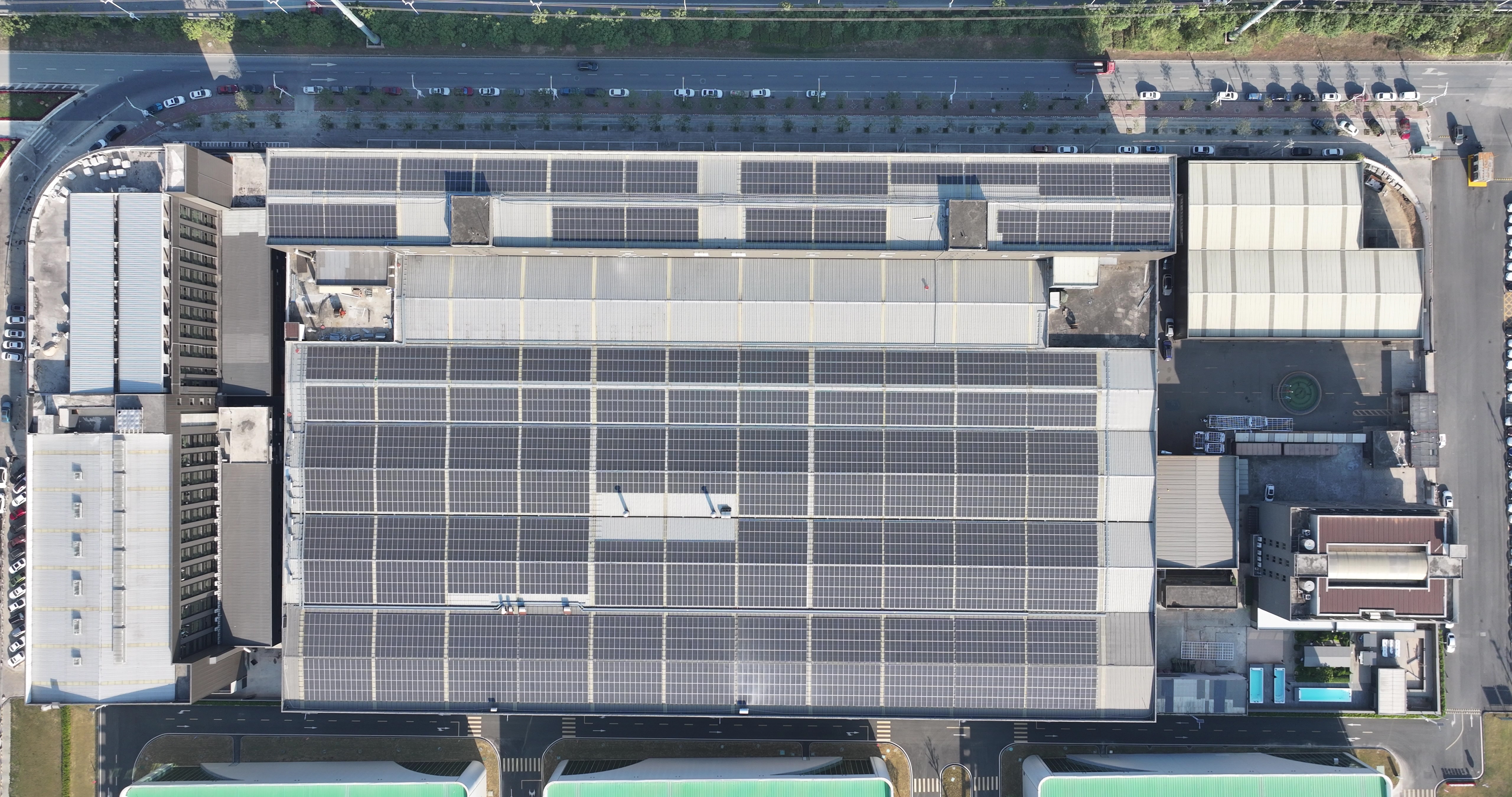
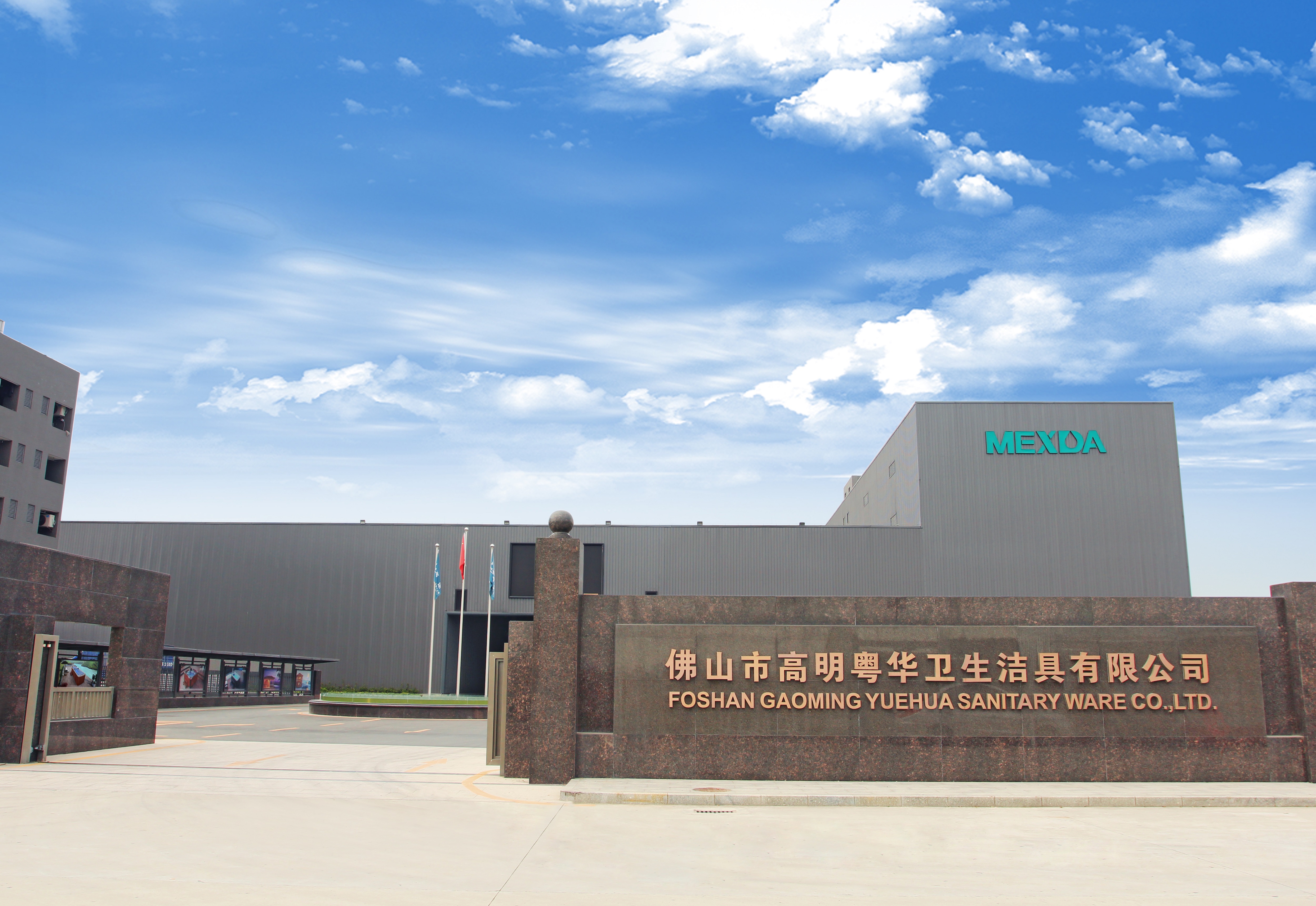
MEXDA is the swim spa brand of Foshan Gaoming Yuehua Sanitary Ware Co., Ltd., a manufacturer and exporter of outdoor spas, swim spas, sauna rooms and steam rooms based in Gaoming, Foshan, Guangdong, China. The company was founded in Gaoming, Foshan in 1995 and now operates a 50,000 m² manufacturing base with 200+ employees, a nine-engineer R&D team and an annual output of 5,000 sets. Approximately 85% of production is exported, with main markets in the USA, the EU, Australia, Germany and France.
MEXDA's swim spa platform is built on an acrylic shell and includes a 7-meter class unit — the configuration this article uses as its acrylic benchmark. MEXDA swim spas are integrated with an intelligent thermostatic system, endless pool functions and ozone sterilization cycle functions.
The Material Question, Answered: What “Acrylic” and “Steel” Actually Mean
Acrylic: the water-contact surface
An acrylic shell is a moulded, non-porous surface. Because it is formed as a continuous piece rather than assembled from panels, there are no liner seams or grout joints where biofilm can collect — a meaningful advantage when a hotel operates the same unit across hundreds of guest sessions per month. Acrylic is also warm to the touch relative to harder surfaces and is straightforward to clean with standard spa chemistry. Minor surface marks can typically be sanded and polished rather than requiring panel replacement.
The structural discipline behind an acrylic shell sits in its backing: the acrylic layer provides the water-contact surface and colour, while a reinforced substrate behind it provides rigidity. Buyers should ask for that build-up to be described, not just the word “acrylic”.
Steel: usually the structure, sometimes the shell
Steel appears in swim spa construction in two distinct roles, and confusing them is the source of most bad comparisons.
- As a frame or chassis. This is the more common commercial role. Steel carries the load of the shell, water and bathers, and is not the surface a guest touches.
- As a shell or wall system. A separate category uses steel walls finished with a vinyl or coated liner, where the liner — not the steel — is the water-contact surface.
In both cases, the critical design variable is corrosion protection. A 7-meter unit operates year-round in a warm, humid, chemically treated environment, so the durability question is not “steel or not steel” but “how is the steel protected, how is that protection inspected, and what is the renewal cycle?”
Why the choice is rarely binary
Most commercial-grade 7-meter units combine an acrylic water-contact shell with a metal structural frame. The practical decision therefore splits into two separate questions a project manager can actually verify:
- What material touches the water, and how is it finished?
- What carries the load, and how is it protected against corrosion?
Decision rule: if a supplier answers the acrylic-versus-steel question with a single word, the specification is not yet detailed enough to compare. Ask for the surface material and the frame material separately, in writing.
The MEXDA acrylic 7-meter benchmark, and how to read it
MEXDA publishes benchmark figures for its swim spa against traditional concrete pools and standard inflatable spas: installation time reduced by 80%, service lifespan extended by two times, maintenance cost cut by 70%, and energy efficiency 30% higher through an optimised heating and insulation design. Maintenance requirements are minimal, with no seasonal winterization needed. Initial cost is described as comparable to traditional options, while long-term operating cost is far lower. The platform is positioned for residential backyards, hotel resorts and commercial wellness centers.
Read that paragraph carefully, because the comparison baseline matters. Those figures describe MEXDA's acrylic swim spa relative to traditional concrete pools and standard inflatable spas — they are not a claim about performance against steel-framed swim spas. Apply the same discipline to every supplier you evaluate: before any number enters your business case, confirm what it is being measured against.
Reliability design is the other half of the picture. MEXDA's swim spa engineering addresses the failure modes that matter most in commercial operation — water jets not working, heating failure, pump malfunction and leakage — through automatic safety shutdown, thermal protection, overcurrent protection and water level monitoring. These are supported by quality control testing, pre-delivery inspection and remote monitoring.
Step-by-Step Breakdown: A 7-Step Evaluation Framework for Project Managers
The following sequence is designed for the decision stage, when you have already shortlisted suppliers and need to commit. Each step produces a document you can attach to the project file.
Step 1 — Define the duty cycle before you define the material
Write down expected daily usage hours, peak bather load, target water temperature and whether the unit serves fitness swimming, hydrotherapy, or both. Material suitability cannot be judged without this. A resort operating a 7-meter unit from early morning to late evening has a different requirement from a residential community amenity used at weekends.
Step 2 — Require the water-contact surface in writing
Ask the supplier to state the material that guests will actually touch: a moulded acrylic shell, or a steel wall system with a vinyl or coated liner. If the answer is “acrylic shell”, ask for the shell thickness description and the reinforcement behind it.
Step 3 — Verify the load-bearing frame and its corrosion protection
Request the frame material and the corrosion treatment applied to it. For a 7-meter unit, this is the single most consequential long-term structural question, and it is answerable with documentation rather than opinion.
Step 4 — Assess surface comfort and hydrotherapy ergonomics
Seat geometry, jet placement and surface temperature perception all affect guest satisfaction. Where a physical unit or sample is available, review it directly rather than relying on photography.
Step 5 — Build a ten-year operating-cost model, not a purchase-price comparison
Combine heating efficiency, insulation design, water treatment, routine maintenance and the anticipated renewal cycle of the surface material. MEXDA's published benchmark claims a 70% reduction in maintenance cost and 30% higher energy efficiency against traditional concrete pools and inflatable spas — a useful reference point for building the model, provided the baseline is stated honestly in your project documentation.
Step 6 — Plan the delivery and installation route before you sign
A 7-meter unit is a large, heavy item. Confirm the delivery route, lifting equipment, foundation or in-ground requirements, and electrical supply position. MEXDA's published figure of an 80% reduction in installation time versus traditional concrete pools and inflatable spas reflects a factory-built shell being positioned and commissioned rather than constructed on site — a category advantage that still depends on your specific site access.
Step 7 — Lock compliance, service access and spare parts into the contract
For EU installations, confirm that the unit is supplied against EN IEC 60335-2-60:2023 safety requirements. Then confirm the service model: fault response, spare jet and pump availability, and whether remote monitoring is part of the support package. MEXDA's enterprise measures include quality control testing and pre-delivery inspection, with remote monitoring available as part of the support approach.
Use Cases: Matching the Material Decision to the Project Type
Hotel spa and wellness floor
Indoor installations face constant humidity and high guest throughput. The priorities are a hygienic, seam-free water-contact surface, documented compliance, and a maintenance routine that fits existing engineering staff. An acrylic-shell 7-meter unit with automatic safety shutdown and water level monitoring supports this profile, and the absence of seasonal winterization simplifies the annual maintenance calendar.
Resort pool deck and outdoor terrace
Outdoor installations add UV exposure, temperature swings and debris. Here, thermal performance and insulation design carry more weight in the operating budget, and the heating-and-insulation efficiency figure — 30% higher energy efficiency in MEXDA's published benchmark against traditional options — deserves more scrutiny than the purchase price.
Commercial fitness club
Fitness-focused operation means sustained swim-jet duty and shorter, higher-frequency sessions. The specification question shifts to jet configuration and control-system resilience. MEXDA's platform integrates an endless pool function and an intelligent thermostatic system, which are directly relevant to maintaining consistent resistance and water temperature across a day of continuous bookings.
Residential community amenity
Shared residential facilities typically have limited on-site technical staff, which makes serviceability decisive. Remote monitoring and pre-delivery inspection become practical risk controls, because faults can be identified before they interrupt resident access.
Private backyard and villa
At the residential end of the 7-meter class, buyers weigh installation disruption heavily. The published 80% installation-time reduction and the fact that no seasonal winterization is required are the two factors that most often tip a private buyer away from a concrete pool.
Comparison Table: Acrylic 7-Meter Benchmark vs. Steel-Based Alternatives
The table below separates verified, attributable figures from the points a buyer must verify independently. The middle column reflects MEXDA's published benchmark for its acrylic swim spa, measured against traditional concrete pools and standard inflatable spas. The right-hand column contains no performance claims for steel, because those depend on a specific supplier's design and documentation.
| Criterion | MEXDA 7-Meter Acrylic Swim Spa (Published Benchmark) | Steel-Based Alternative — What to Verify |
|---|---|---|
| Installation time | Reduced by 80% vs. traditional concrete pools and standard inflatable spas | Site assembly method, foundation requirement, lifting and access route |
| Service lifespan | Extended by two times vs. those alternatives | Corrosion protection class, liner or coating renewal cycle, warranty term |
| Maintenance cost | Cut by 70%; minimal routine maintenance, no seasonal winterization required | Annual inspection scope, liner or coating repair frequency |
| Energy efficiency | 30% higher via optimised heating and insulation design | Insulation package, heater sizing, thermal cover specification |
| Initial cost | Comparable to traditional options | Delivered cost including foundation, plumbing, electrical and commissioning |
| Long-term operating cost | Far lower than traditional options | Ten-year heating, chemical and service cost model |
| Water-contact surface | Moulded acrylic shell | Confirm material in writing — liner, coated steel, or other |
| Control and safety features | Intelligent thermostatic system, endless pool function, ozone sterilization; automatic safety shutdown, thermal protection, overcurrent protection, water level monitoring | Equivalent safety functions and control-system documentation |
| Compliance reference | EU safety requirements for whirlpool baths and spas governed by EN IEC 60335-2-60:2023 | Same standard applies; request test evidence and markings |
| Typical fit | Residential backyards, hotel resorts, commercial wellness centers | Confirm fit against the actual duty cycle and site conditions |
Frequently Asked Questions
Q1. What safety and compliance requirements apply to a 7-meter swim spa installed at a hotel in the EU?
Safety requirements for whirlpool baths and spas in the European Union are governed by the EN IEC 60335-2-60:2023 standard. Because a 7-meter unit in a hotel is used by many guests rather than a single household, project teams should request the test evidence, product markings and conformity documentation before installation rather than after. On the equipment side, the protective functions to look for include automatic safety shutdown, thermal protection, overcurrent protection and water level monitoring — the measures MEXDA applies to address failure modes such as heating failure, pump malfunction, water jet faults and leakage.
Q2. Can a 7-meter acrylic swim spa serve both fitness swimming and hydrotherapy in one installation?
Yes — the water-contact surface (acrylic) and the functional configuration (jets, zones, temperature control) are separate specification decisions. MEXDA's swim spa platform integrates an intelligent thermostatic system, endless pool functions and ozone sterilization cycle functions, which supports combined fitness and hydrotherapy use. If your project needs separate temperatures for the swim area and the massage area, note that dual-zone hybrid swim spas — with independent temperature controls for each zone — are identified as the fastest-growing segment of the global swim spa market, so dual-zone availability should be confirmed model by model rather than assumed.
Q3. Is an acrylic 7-meter swim spa more expensive than a steel-based alternative?
A direct price comparison is not meaningful at specification stage, because build-material pricing depends on frame design, liner or shell system, insulation package, control system and site conditions. What is documented is the cost profile: MEXDA's published position is that initial cost is comparable to traditional concrete pools and standard inflatable spas, while long-term operating cost is far lower, with maintenance cost cut by 70% and energy efficiency 30% higher. The practical approach for a hotel is to build a ten-year total-cost-of-ownership model that includes heating, water treatment, routine maintenance and the renewal cycle of the surface material — and to state the comparison baseline for every figure used.
Q4. Can a hospitality buyer validate a 7-meter swim spa before placing a full order?
Validation at decision stage should cover three things: the water-contact surface material and finish, the control system and safety functions, and the compliance documentation. Because a 7-meter unit is a project-scale purchase, buyers normally confirm sample, display-unit or factory-inspection arrangements directly with the manufacturer, together with the current catalog. MEXDA's product catalog is available for download, and sales inquiries can be directed to the contact details listed at the end of this article.
Q5. What should a hotel project team plan for between order and commissioning?
Work through the phases in sequence rather than treating them as one lead time: specification and compliance confirmation, production scheduling, pre-delivery inspection, freight and site access, positioning and commissioning, then handover and after-sales setup. MEXDA supports this sequence with quality control testing, pre-delivery inspection and remote monitoring. Because lead time varies with configuration, finish and destination, the schedule should be confirmed in writing for your specific project; request a formal quotation with the delivery and commissioning steps itemised, and arrange the site access survey in parallel rather than after order confirmation.
Conclusion: Decide on Long-Term Ownership, Not on Material Labels
The acrylic-versus-steel question is best answered by splitting it. Acrylic defines the water-contact surface: seamless, non-porous, hygienic and serviceable, which is why MEXDA builds its 7-meter swim spa on an acrylic shell. Steel defines load and structure, and its long-term performance depends almost entirely on corrosion protection and inspection discipline. Once those two questions are separated, the comparison becomes checkable rather than rhetorical.
For a hotel or resort project, the deciding factors are the ones that persist after opening day: verified compliance against EN IEC 60335-2-60:2023 for EU installations, documented safety functions, a maintenance model that requires no seasonal winterization, and an operating-cost forecast built on stated baselines. MEXDA's acrylic 7-meter platform — with intelligent thermostatic control, endless pool functions, ozone sterilization and a documented benchmark of 80% faster installation, a two-times longer service lifespan and 70% lower maintenance cost versus traditional concrete pools and standard inflatable spas — provides a concrete reference point against which a steel-based alternative can be evaluated on equal terms.
Next Step: Request the MEXDA Swim Spa Catalog and Project Quotation
If you are specifying a 7-meter swim spa for a hotel, resort, fitness club or residential community, the MEXDA team can supply the current product catalog, configuration options and compliance documentation for your project.
Download the catalog: MEXDA SWIM SPA Catalog (PDF)
Website: www.chinamesda.com | Blog: blog.chinamesda.com
Contact: Kinear Wu — Email: mesda3b@china-yuehua.com — Tel / WhatsApp: +86-15820624699
Company: Foshan Gaoming Yuehua Sanitary Ware Co., Ltd., No.568, Yangxi Road, Yanghe Town, Gaoming, Foshan, Guangdong, China.
Founded 1995 · 50,000 m² manufacturing base · 200+ employees · 9-engineer R&D team · 5,000 sets annual output · ~85% export ratio · Main markets: USA, EU, Australia, Germany, France.