
Supplier Evaluation: How to Test a 7-Meter Acrylic Swim Spa

A 7-meter acrylic swim spa has to be verified as a complete unit — shell, systems and factory process — before the purchase order is released.
Testing a 7-meter acrylic swim spa before ordering means verifying three things while you still have the option to walk away: the acrylic shell and how it is built, the manufacturer's ability to handle large-format acrylic construction, and references from comparable hospitality installations. Everything else on a quotation — jet counts, LED counts, control-panel branding — can be confirmed later. The shell cannot.
A 7-meter swim spa is a single-piece structure. It is moulded in acrylic, shipped as oversized freight, and installed in a hotel, resort, fitness or leisure facility where it will run continuously in an open-air environment under UV exposure and across a wide temperature range. If the shell is wrong, you will not find out in a warehouse. You will find out two years into a ten-year hospitality asset cycle, in front of guests.
This guide is written for buyers who are already past initial discovery and are now in research and evaluation mode: hospitality developers, resort operators, contractors, distributors and procurement managers who need a repeatable way to test a supplier before committing. It follows a single sequence — define the requirement, gate on compliance, verify the shell, verify large-format capacity, read the specification, confirm the test protocol, check references, then lock commercial terms.
Problem Definition: Why a 7-Meter Acrylic Unit Cannot Be Judged From a Quotation
Quotations are structurally biased toward the parts of a swim spa that are easiest to describe. A control system has a model code. A jet has a diameter. A pump has a wattage. These are real specifications and they matter — but they are also the easiest elements of a swim spa to source, swap and copy.
The hard-to-copy element is the shell. A 7-meter acrylic shell places four simultaneous demands on a factory that smaller units do not:
- Mould and handling capacity. A 7-meter shell consumes far more oven time, floor space and lifting equipment than a 4- or 5-meter shell. A factory running short units at volume may simply not have the physical space to work a 7-meter shell.
- Material and thickness consistency. The larger the sheet draw, the more visible any inconsistency in wall thickness becomes — and the more it affects structural behaviour under constant water load.
- Reinforcement and support structure. A 7-meter water-filled shell needs a support build appropriate to that span, not a stretched version of a smaller design.
- Transport bracing. The unit has to survive road and sea freight before it is ever filled. Bracing and crating are part of the product, not part of the logistics.
For a commercial buyer, the evaluation question is therefore not which supplier lists the best features. It is which supplier can demonstrate, before a deposit is paid, that it can build a 7-meter acrylic shell to a repeatable standard. That is a process question, and process questions are answered with factory evidence and installation references — not with a feature list.
The practical risk this article addresses: the gap between what is printed on the quotation and what actually exists inside the shell, on the factory floor, and in installations already running in comparable commercial settings.
Industry Background: Why Hospitality Buyers Screen Suppliers More Heavily
Three structural conditions make pre-order testing more important than it was a decade ago.
1. The category is still expanding. The global pool and spa market was valued at USD 24.28 billion in 2025 and is projected to reach USD 37.93 billion by 2034 (Straits Research). Growth of that scale attracts new suppliers, and not all of them build large-format shells. Order volumes rise faster than manufacturing discipline does.
2. A swim spa installed for guests is a regulated structure, not a consumer purchase. US federal law (15 USC § 8002(6)) defines the terms "swimming pool" or "spa" as any outdoor or indoor structure intended for swimming or recreational bathing, including in-ground and above-ground structures. In model-code terminology, an "exercise spa" — also known as a swim spa — is a variant of a spa whose design and construction includes specific features and equipment to produce a water current. The 2021 International Swimming Pool and Spa Code (ISPSC) is described as the only comprehensive swimming pool code coordinated with the current requirements in the I-Codes and APSP standards. For a hotel or resort project, compliance is a design input, not an afterthought.
3. Distribution is layered. The United States alone has approximately 10,000 swimming pool and spa retailers selling above-ground pools, hot tubs, and related equipment, supplies and merchandise — a category-wide figure covering the whole pool and spa retail trade, not swim spas specifically. For project buyers, the practical implication is that the entity quoting you may not be the entity building the shell. Establishing who actually manufactures the unit should happen early, not at the contract stage.
Detailed Solution: The Three Verification Pillars
A 7-meter acrylic swim spa can be tested against three pillars. Each pillar produces documentary or physical evidence. If a supplier cannot produce evidence for a pillar, that pillar is unverified — and unverified is a different state from failed.
Pillar 1 — Shell and acrylic construction
Swim spa shells across the MEXDA range are built in acrylic, and high-end models use Aristech Acrylic surfaces. That matters at the evaluation stage for a specific reason: the acrylic sheet is the visible, load-bearing skin of the product, and its identity is a question a supplier can answer or avoid.
What to obtain in writing: the acrylic material used, the reinforcement approach, how the shell is supported under load, and how a 7-meter unit is braced for transport. Fibreglass-reinforced acrylic construction, where used, should be described in the same document rather than left to a verbal answer. A supplier who can name the sheet supplier, describe the reinforcement, and explain the bracing is demonstrating process knowledge — not marketing copy.
Pillar 2 — Large-format manufacturing capability
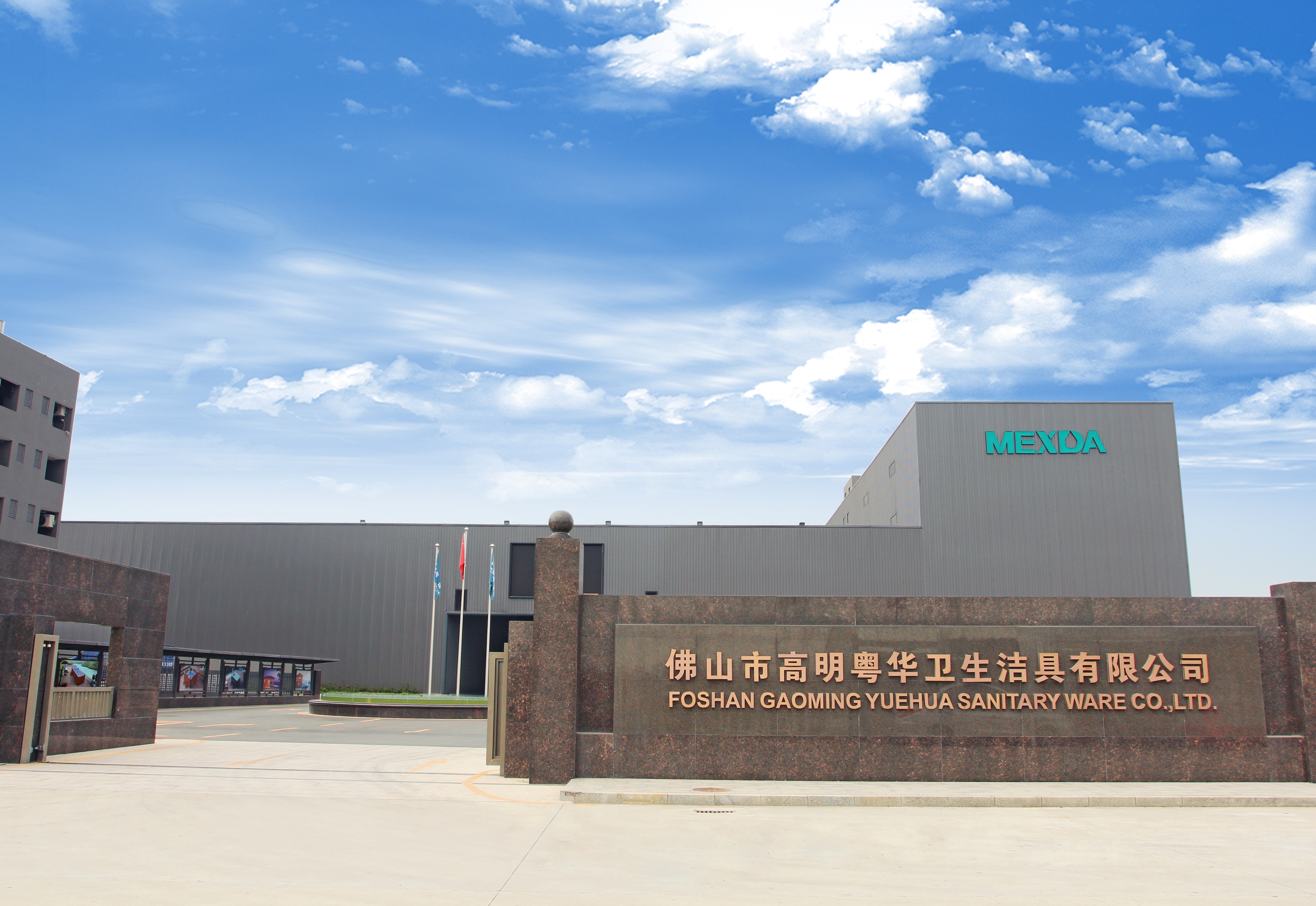
MEXDA is the swim spa brand of Foshan Gaoming Yuehua Sanitary Ware Co., Ltd., a manufacturer established in Gaoming, Foshan, Guangdong in 1995. The company operates a 50,000 m² facility with more than 200 employees, an R&D team of 9 engineers, an annual output of 5,000 sets and a monthly swim spa production capacity of approximately 500 sets. Around 85% of output is exported, with the main markets being the USA, EU, Australia, Germany and France.
Commercially, the manufacturer works in OEM and ODM modes with customization available across the range, a minimum order quantity from 1 set, a production lead time of 30–40 days, quality control described as 100% test, and after-sales support delivered through remote guidance.
Why these figures belong in a testing checklist rather than a sales pitch: a 7-meter acrylic shell is a capacity-consuming product. Floor area, engineering headcount and monthly output together indicate whether a factory can schedule a large-format unit without displacing or rushing it. Buyers evaluating a multi-unit hospitality rollout should ask how many 7-meter units can be scheduled per month specifically — a factory-level monthly total does not automatically translate into large-format slots.
Pillar 3 — References from similar installations
Reference checking is usually done badly. Buyers ask for a client list and receive logos. What is actually needed is a small number of references that match the project type.
A relevant example from the manufacturer's project record involves a construction contractor in France that took delivery of 20 swim spa sets for residential and commercial leisure and fitness applications. Those units have been in service for more than 10 years, with the reported results being reliable performance and a comfortable hydrotherapy experience; the highlighted outcomes are long-lasting durability and constant temperature.
The evaluation lesson is in how you read a reference like this. Ask what the application was, how many units, and how long they have been running. A single residential installation tells you very little about a 7-meter commercial unit under continuous guest use. A residential and commercial leisure and fitness reference with a decade of service history is materially more useful — and a reference that cannot be described in those terms should be discounted rather than accepted.
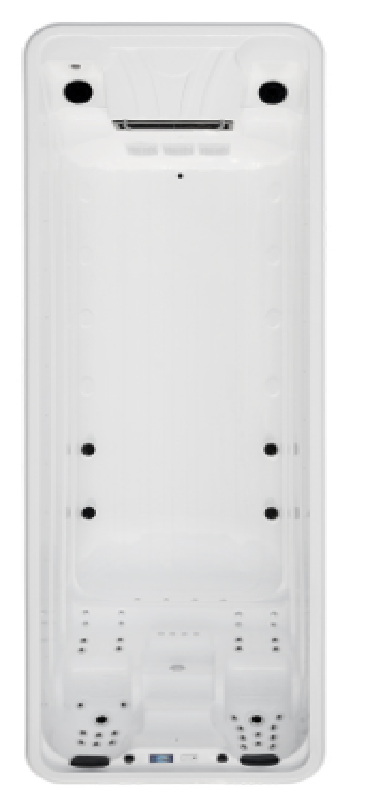
A second 7-meter acrylic configuration, WS-S07B-T, shows how shell size stays constant while system configuration changes — the reason specifications must be read line by line.
Step-by-Step Breakdown: The Pre-Order Testing Checklist
Step 1 — Define the project envelope before contacting any supplier
Write down the installation type (hotel spa facility, resort leisure centre, commercial fitness floor, residential community leisure area or private wellness project), whether the unit will sit outdoors in an open-air environment, the expected hours of daily operation, and the ambient temperature range. Typical swim spa operating conditions include outdoor use, open-air environment, UV exposure and a wide temperature range, with anti-UV protection, low-noise operation, corrosion-resistant components and weatherproof design as the special requirements that follow from them. Suppliers can only answer questions you have actually framed.
Step 2 — Use compliance documentation as a gate, not a tiebreaker
Compliance should be screened first, because a non-compliant unit is not a cheaper unit — it is a project risk. MEXDA swim spas are stated to comply with ETL (UL 1563 / CSA C22.2#218.1), CE (EN IEC 60335-2-60:2023) and SAA (AS/NZS 60335.2.60). Ask for the certificates themselves and match each standard number to the destination market: ETL for North America, CE for the EU, SAA for Australia. A supplier that can only send a logo image, rather than the standard number behind it, has not passed the gate.
Step 3 — Verify the acrylic and the shell build in writing
Request the material declaration, the reinforcement description and the transport bracing method in the same document as the quotation. Where a supplier states that high-end models use Aristech Acrylic surfaces, ask which specific 7-meter models that applies to and whether the same sheet grade is used across the order. Homogeneous material across a multi-unit order prevents the experience where unit three looks and behaves differently from unit one.
Step 4 — Verify large-format fabrication capacity against your schedule
Ask three questions: what is the facility area, what is the monthly swim spa capacity, and how many 7-meter bodies can be scheduled in a month alongside existing commitments? For reference, the MEXDA facility covers 50,000 m² with a monthly swim spa capacity of approximately 500 sets. Capacity figures are the starting point for the conversation about scheduling, not the answer to it.
Step 5 — Read the specification line by line, including the gaps
Two 7-meter acrylic swim spas from the same factory can have completely different system architectures. Compare heater rating and voltage, swim training system, pump configuration, filtration type, jet count, lighting, air adjustment and drain design item by item. An absent line item is a question to ask, not automatically a fault — but it must be resolved before the order, because system-level differences change installation requirements and running behaviour.
Step 6 — Confirm the test protocol before shipment
Quality control at MEXDA is described as 100% test. For a 7-meter unit, establish in advance what is tested: shell integrity, water-tightness of the plumbing circuit, control system and heating behaviour, pump and filtration operation, jet output, and lighting. Confirm whether a test record can be issued with the unit and whether a buyer or third-party inspector can witness the test at the factory. The operating behaviour you are checking against is temperature self-regulation and an automatic filtration cycle, which is how these units are designed to run day to day.
Step 7 — Validate hospitality references, not logo lists
Request references that match your project type and format size, and ask for application, quantity and years in service for each. Where a supplier can describe a reference such as 20 units delivered to a construction contractor in France for residential and commercial leisure and fitness use, in service for more than 10 years, that is a usable data point. A logo wall is not.
Step 8 — Lock commercial terms, support and spares
Confirm the minimum order quantity, production lead time, customization scope and after-sales arrangement. MEXDA accepts orders from 1 set, works in OEM and ODM modes with customization available across the range, quotes a production lead time of 30–40 days, and provides after-sales support through remote guidance. For multi-unit hospitality projects, also agree how spare parts and replacement components will be supplied across the asset life — that is a commercial term, not a technical one, and it should be settled before signature.
Use Cases: Where 7-Meter Acrylic Units Are Deployed
The same 7-meter acrylic platform serves several commercial settings, and the verification emphasis shifts slightly with each.
- Hotel spa facilities. Guest-facing, continuous duty, high visibility. Shell finish quality and hydraulic reliability carry the most weight.
- Resort leisure centres. Often outdoor and fully exposed. Anti-UV performance, weatherproof design, corrosion-resistant components and low-noise operation become primary verification items.
- Commercial fitness environments. Swim training systems are used intensively. Pump configuration and jet output verification matter more than aesthetics.
- Residential community and private wellness projects. Multi-unit orders where consistency between units is the deciding factor.
Across all four, the designed function is hydrotherapy relaxation, recreational swimming, temperature-controlled leisure and family wellness, and the units run in temperature self-regulation with an automatic filtration cycle. Supporting equipment to confirm with each project includes the filtration system, heating unit, circulation pump, LED lighting and control panel. Checking that this supporting scope is specified — and who supplies it — belongs in the pre-order evaluation, not in the installation week.
Supplier Verification Checklist
| Verification item | What to request | Who provides it |
|---|---|---|
| Shell material | Acrylic declaration and sheet supplier identity | Manufacturer |
| Large-format capability | Facility area, monthly swim spa capacity, 7-meter scheduling slot | Manufacturer |
| Testing | 100% test scope and test record before shipment | Manufacturer |
| Compliance | ETL (UL 1563 / CSA C22.2#218.1), CE (EN IEC 60335-2-60:2023), SAA (AS/NZS 60335.2.60) documents | Manufacturer / certification body |
| References | Hospitality or fitness installations with quantity and years in service | Existing clients |
| Commercial terms | MOQ, lead time, customization scope, after-sales arrangement | Manufacturer |
Comparing Two 7-Meter Acrylic Configurations
The table below compares two 7-meter acrylic swim spa models from the MEXDA range on their published specifications. Both are acrylic, both are 7-meter units, and both are intended for hotel, fitness, leisure, residential community and resort applications. Their system architecture, however, is different — which is exactly why a specification must be read line by line before ordering.
| Specification | WS-PC07ST | WS-S07B-T |
|---|---|---|
| Type | 7 meter swim spa | 7 meter swim spa |
| Material | Acrylic | Acrylic |
| Control system | 1 set with 3 kW heater | 1 set with 3 kW heater / 220V |
| Swim training system | 1 set × 2.8 kW (380V) | 1 set (2.8 kW) / 380V |
| Water pump | Not listed in the specification sheet | 2.2 kW × 1 pc (LP300) |
| Filter pump | 0.75 kW × 1 pc (JA100) | 0.75 kW (JA100) × 1 pc |
| Filtration | Filter 2 pcs; sand cylinder 1 set (Q500) | Cartridge filter × 2 pcs |
| Jets | 1 inch jet: 4 pcs | 40 pcs |
| Lighting | LED lamp 4 pcs | Bottom lamp 3 pcs; small LED 26 pcs |
| Air adjuster | Not listed in the specification sheet | 1 inch × 2 pcs |
| Pillow | Not listed in the specification sheet | 2 pcs |
| Ozone | 1 set | 1 pc |
| UV light | 1 set | Not listed in the specification sheet |
| PS skirt | Not listed in the specification sheet | 1 set |
| Water drainer | 1 set | 1 set |
| Applicable industry | Hotel, Fitness, Leisure, Residential communities, Resort | Hotel, Fitness, Leisure, Residential communities, Resort |
How to read this table as a buyer. WS-PC07ST leans toward a sand cylinder filtration route with UV light included, at a lower jet count. WS-S07B-T leans toward cartridge filtration with a 40-jet package, air adjusters, pillows and a listed 2.2 kW water pump, with a control system available on 220V. Neither is universally better. A fitness-led project often weights jet output and pump specification; a hotel spa where water treatment simplicity matters may weight the filtration route instead. The evaluation step is to state which configuration fits your operating profile — and to resolve every 'not listed' line before the order.
FAQ
What certifications should a 7-meter acrylic swim spa carry for a hotel or resort project?
MEXDA swim spas are stated to comply with ETL (UL 1563 / CSA C22.2#218.1), CE (EN IEC 60335-2-60:2023) and SAA (AS/NZS 60335.2.60). On the code side, the 2021 International Swimming Pool and Spa Code (ISPSC) is described as the only comprehensive swimming pool code coordinated with the current requirements in the I-Codes and APSP standards, and US federal law (15 USC § 8002(6)) defines "swimming pool" or "spa" as any outdoor or indoor structure intended for swimming or recreational bathing, including in-ground and above-ground structures. In practice, ask for the certificate documents themselves and match each standard number to the destination market — ETL for North America, CE for the EU, SAA for Australia — rather than accepting a compliance logo on a brochure.
How can I confirm a manufacturer can actually build a large-format acrylic shell?
Look for three verifiable capability signals. First, facility scale: MEXDA is the swim spa brand of Foshan Gaoming Yuehua Sanitary Ware Co., Ltd., established in Gaoming, Foshan in 1995, operating a 50,000 m² facility with more than 200 employees and an R&D team of 9 engineers. Second, throughput: annual output of 5,000 sets and a monthly swim spa capacity of approximately 500 sets. Third, process: quality control described as 100% test, OEM and ODM production, and customization available across the range. Then ask the specific question that matters for your order — how many 7-meter bodies can be scheduled in a given month. Also confirm the acrylic source: the range is built in acrylic, and high-end models use Aristech Acrylic surfaces.
What should I budget for, and what is the minimum order quantity?
No ex-factory price band is published for these units, so pricing is handled as a project quotation rather than a catalogue figure. What can be confirmed before commercial negotiation is the ordering framework: the minimum order quantity starts from 1 set, the production lead time is 30–40 days, and OEM or ODM production with customization is available across the range. When comparing quotes, put the cost drivers on the same basis — shell size and acrylic material, control system and heater, swim training system, pump and filtration configuration, jet count, lighting and insulation — because two 7-meter acrylic swim spas can differ substantially in system content even when the outer dimensions match.
Can I validate a single unit before committing to a multi-unit rollout?
Yes. Because the minimum order quantity starts from 1 set, a single 7-meter acrylic unit can be produced and tested as a validation unit ahead of a wider hospitality rollout. Use it to confirm the things a specification sheet cannot: shell finish and reinforcement, jet output and pump behaviour, control system and heater response, and the operating cycle of temperature self-regulation with automatic filtration. Quality control is described as 100% test, and after-sales support is provided through remote guidance, so the validation unit can be run as a live reference inside your own project rather than as a demo in a showroom.
How long should I plan for a 7-meter acrylic swim spa order?
Plan on a production lead time of 30–40 days from order confirmation, then add freight transit, site preparation and commissioning on top of that. For a staged hospitality project, sequence the units so that the first delivery can be commissioned and tested while later units are still in production — this keeps the validation learnings available for the remaining schedule. To request a project-specific timeline, sample arrangement or the full specification set for the 7-meter acrylic range, contact the MEXDA team directly or download the product catalogue: MEXDA Swim Spa Catalogue (PDF). Direct enquiries: Kinear Wu, mesda3b@china-yuehua.com, Tel / WhatsApp +86-15820624699.
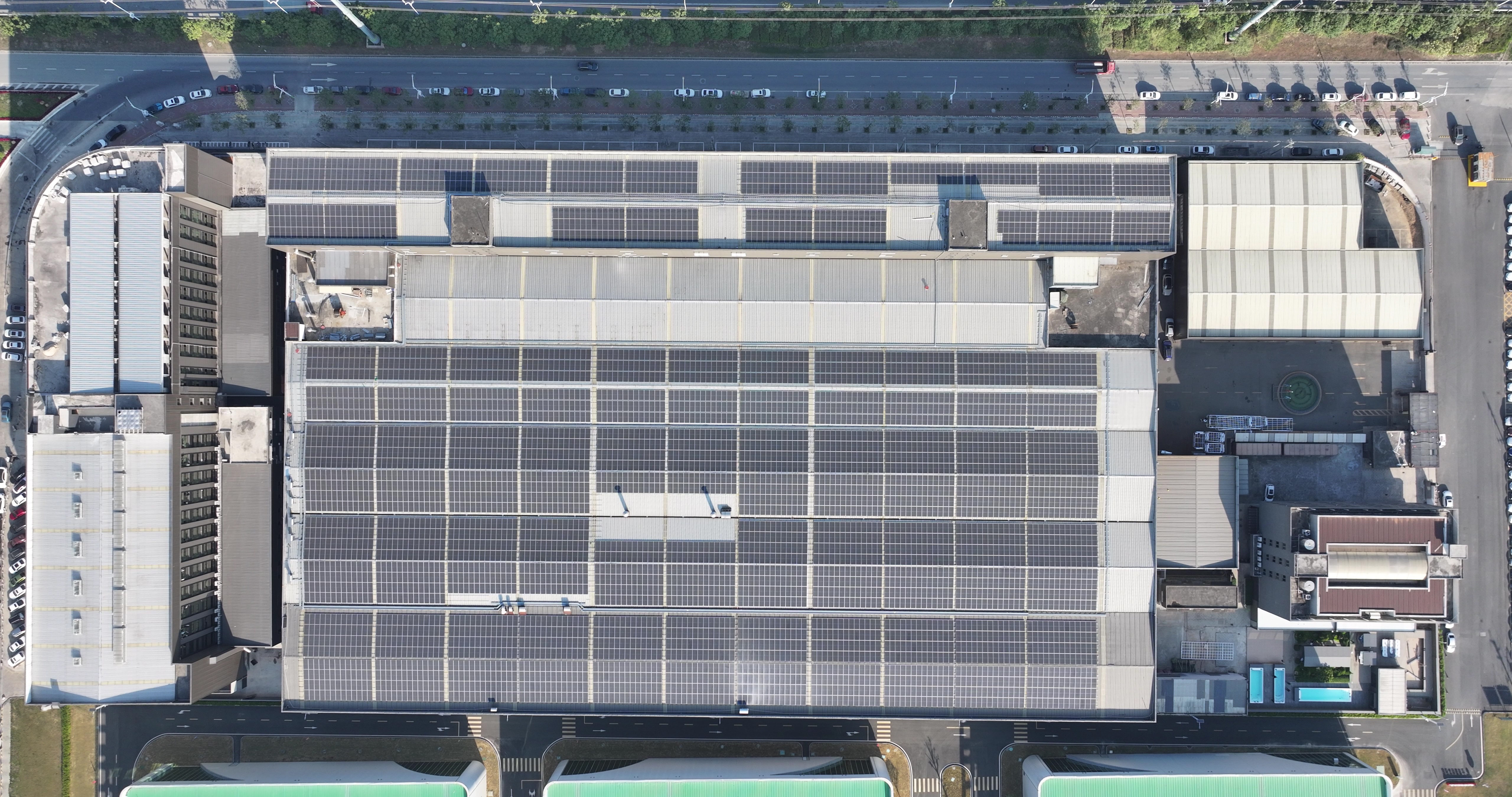
Large-format acrylic construction is a floor-space and handling-capacity question — which is why factory verification belongs in the pre-order checklist.
Conclusion: Test the Supplier, Then the Product
A 7-meter acrylic swim spa is a large, one-piece, long-life commercial asset. Once it leaves the factory it cannot be reworked on site, and once it is installed in a hotel, resort or fitness facility it becomes visible to every guest who walks past it. That combination is what makes pre-order supplier testing worthwhile.
The checklist reduces to three pillars. Verify the shell and the acrylic construction in writing. Verify large-format fabrication capability with facility, capacity and process evidence rather than claims. Verify references from installations comparable to your own in application type, quantity and years in service. Layer compliance on top as a hard gate using ETL (UL 1563 / CSA C22.2#218.1), CE (EN IEC 60335-2-60:2023) and SAA (AS/NZS 60335.2.60) documentation matched to your target market, and confirm the test protocol before shipment.
Then close the commercial loop: minimum order quantity from 1 set, a 30–40 day production lead time, OEM or ODM customization across the range, 100% test quality control, and after-sales support through remote guidance. MEXDA, the swim spa brand of Foshan Gaoming Yuehua Sanitary Ware Co., Ltd., manufactures 7-meter acrylic swim spas for hotel, fitness, leisure, residential community and resort applications from a 50,000 m² facility in Gaoming, Foshan.
Request a 7-meter acrylic swim spa evaluation pack
Ask for the specification sheets for the 7-meter acrylic models, a sample arrangement under the 1-set minimum order, and reference details for comparable hospitality installations. The full catalogue is available for download below.
Download the MEXDA Swim Spa Catalogue (PDF)
Official site: www.chinamesda.com
Contact: Kinear Wu · mesda3b@china-yuehua.com · Tel / WhatsApp +86-15820624699
Have Questions or Need More Details?
Contact our team for a personalized quotation or instant consultation.
Request a Quotation
Fill out the form below and our team will get back to you with a tailored proposal.
WhatsApp Direct Chat
Prefer to chat in real-time? Message us on WhatsApp for instant assistance & quick answers.
- Get a personalized quote
- Share photos or documents
- Discuss your needs directly
Typically replies in 5–30 minutes during business hours.