
Swim Spa Compliance Guide: Certifications, Standards & Regional Acceptance Criteria
Swim Spa Compliance Guide: Certifications, Standards & Regional Acceptance Criteria
Short answer: A swim spa is accepted into a market only when three things line up at the same time — the certification document covers the exact model and configuration you ordered, the standard cited in that document applies to the destination market, and your purchase terms define which documents release the shipment. If any one of those three fails, you are holding paper compliance, and paper compliance does not survive a port inspection, a permit review, or a hotel opening date.
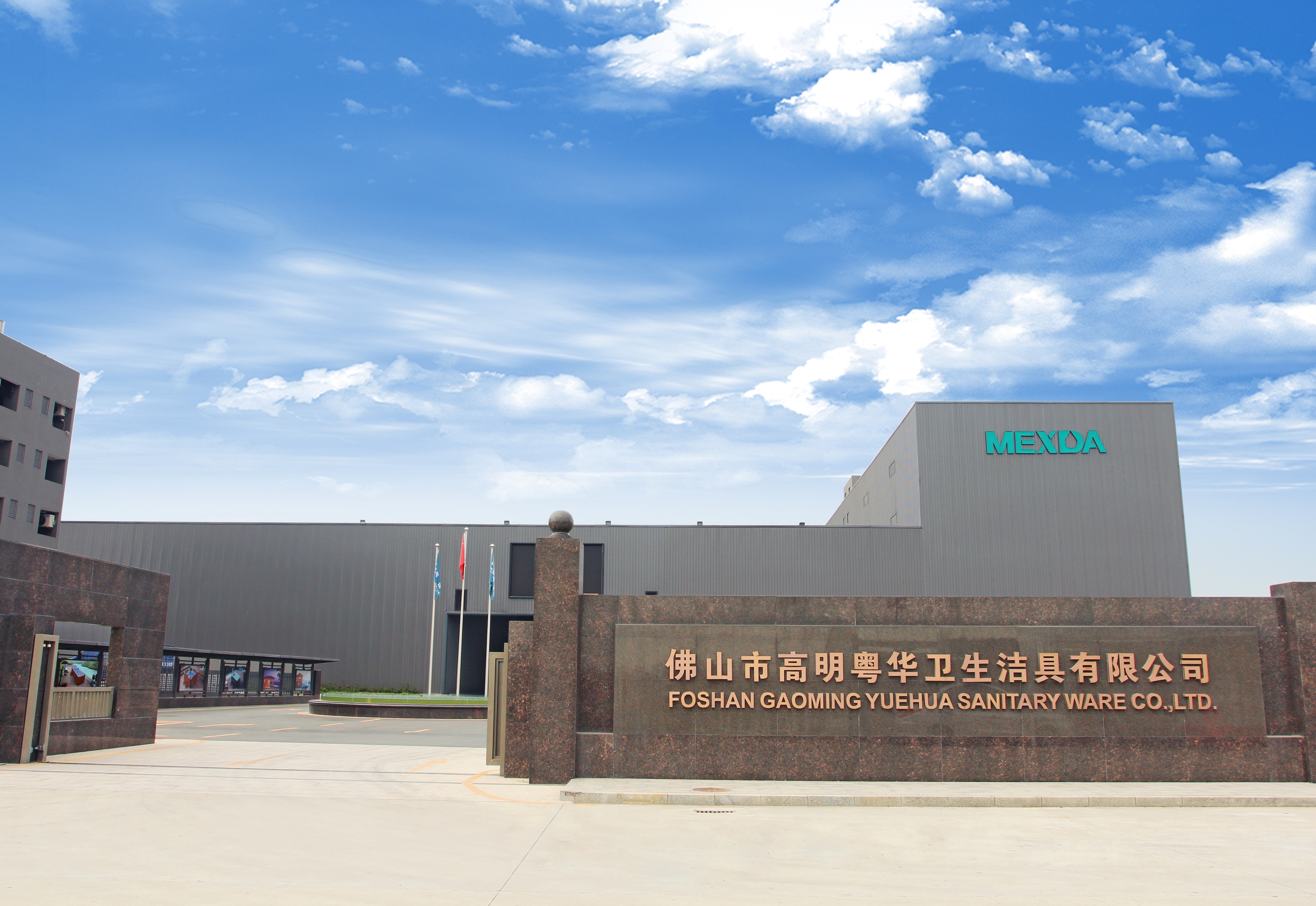
Compliance verification starts at the manufacturing base: MEXDA operates from the Gaoming district of Foshan, Guangdong, China.
This guide is written for buyers at the decision stage — importers, distributors, hotel and resort developers and commercial fitness operators who already have a shortlist and a quotation, and one remaining question: what evidence do I demand before I release the deposit?
MEXDA is the swim spa brand of Foshan Gaoming Yuehua Sanitary Ware Co., Ltd., a manufacturer founded in 1995 in Gaoming, Foshan, Guangdong, China, producing swim spas, hot tubs, sauna rooms and steam rooms, and exporting to markets that include the USA, the EU, Australia, Germany and France. Its published compliance position is used throughout this page as a worked example of what verifiable documentation looks like in practice.
Problem Definition: What Paper-Only Compliance Costs a Buyer
Paper-only compliance means the supplier can send you a certificate file, but cannot connect that file to the model, configuration and jurisdiction in your order. The file itself may be genuine; the link is missing.
In swim spa sourcing, the failure usually appears in one of four shapes:
- Scope mismatch. The certificate covers a different model, shell length or electrical configuration than the unit on your purchase order.
- Standard mismatch. The document cites a standard that does not address the product class you are buying. A swim spa is not an ordinary spa: in model-code language an exercise spa — also known as a swim spa — is a spa variant whose design and construction includes specific features and equipment to produce a water current.
- Jurisdiction mismatch. European conformity evidence is presented for a North American installation, or a North American listing is presented for an Australian project.
- Ownership mismatch. The certificate belongs to a component supplier or a trading company rather than to the entity that will ship, label and warrant the finished unit.
The cost of a mismatch is rarely the certificate itself. It is the permit that is not issued, the container that is held, the launch date that moves, and the remediation conversation that happens after the goods have already left the factory — when your leverage is at its lowest.
Decision rule: Treat every certificate as a claim until you can answer three questions in writing — which model does it cover, which standard is cited, and which jurisdiction accepts it?
Industry Background: How Swim Spas Are Classified Before They Are Certified
A swim spa sits at the intersection of product-safety conformity and pool/spa construction regulation. That intersection is why compliance for this category cannot be reduced to a single file request.
The legal definition is broader than most buyers expect
United States federal law defines the terms 'swimming pool' or 'spa' as any outdoor or indoor structure intended for swimming or recreational bathing, including in-ground and above-ground structures (15 USC § 8002(6)). A swim spa therefore falls inside a statutory definition written for pools and spas generally, not inside a category of its own.
Model codes give the category a separate term
In model-code terminology, an 'exercise spa' — also known as a swim spa — is a variant of a spa whose design and construction includes specific features and equipment to produce a water current. The 2021 International Swimming Pool and Spa Code (ISPSC) is described by the International Code Council as the only comprehensive swimming pool code coordinated with the current requirements in the I-Codes and APSP standards, and it was developed with the Association of Pool & Spa Professionals. For buyers, the practical consequence is that installation review is conducted against a construction code while product acceptance is conducted against a product-safety standard — and both can apply to the same unit.
Residential and commercial installations are classified differently
Classification changes the paperwork. Marin County, California, for example, defines a 'public pool' as any swimming pool, spa or spray ground open to the general public, whether or not a fee is charged. A swim spa installed in a hotel, resort or commercial wellness centre can therefore be handled as a public facility under local environmental-health oversight, while the same model in a private backyard remains a residential installation. These jurisdictional scopes are different, and they should never be merged into one compliance assumption.
The market behind the paperwork
The global pool and spa market was valued at USD 24.28 billion in 2025 and is projected to reach USD 37.93 billion by 2034, according to Straits Research. On the channel side, the United States has approximately 10,000 swimming pool and spa retailers selling above-ground pools, hot tubs and related equipment — a category-wide retail figure rather than a swim-spa-specific count. The practical reading for importers: distribution depth already exists, documentation requirements scale with it, and a supplier that cannot produce market-specific evidence becomes a bottleneck in that channel.
Detailed Solution: A Compliance Verification Framework for Swim Spa Buyers
1. Build the document pack before you compare prices
The starting point is a defined document pack, requested in the same message as the quotation. Five items cover the core of a swim spa decision:
- Declaration of conformity or listing certificate, with the model list attached.
- Test report referencing the standard clause cited in that certificate.
- Scope statement naming the models, sizes and electrical ratings covered.
- Component declarations for the parts that define performance and safety.
- Factory-level quality-control and inspection records for the production run.
Requesting these five items before price negotiation changes the conversation. Suppliers who hold a real file send it; suppliers who hold a screenshot usually stop responding to that thread.
2. Match the documents to the configuration you ordered
A certificate covers a configuration, not a product category. For swim spas, the configuration variables that most often break the match are electrical rating, control system, shell material and jet system.
MEXDA uses Aristech acrylic surfaces and Balboa control systems on its high-end swim spa models. If your order specifies either component, your compliance check should confirm they are named in the technical file — not only in the sales brochure. The same logic applies to counter-current swim jet systems, turbo jet systems and dual-zone layouts: the more a model is customised for a private label or a specific project, the more the document set has to follow that customisation.
3. Map documents to the destination market
Market acceptance is a mapping exercise, not a single certificate. MEXDA's documented compliance position covers ETL (UL 1563 / CSA C22.2#218.1), CE (EN IEC 60335-2-60:2023) and SAA (AS/NZS 60335.2.60), which correspond to the three main destination markets for export swim spas.
| Destination market | Documented conformity route | Standard referenced | What it supports |
|---|---|---|---|
| United States / Canada | ETL | UL 1563 / CSA C22.2#218.1 | Product-safety acceptance for the electrical equipment of the swim spa |
| European Union | CE | EN IEC 60335-2-60:2023 | Conformity route for the EU market for this product class |
| Australia | SAA | AS/NZS 60335.2.60 | Australian market conformity for the same product class |
| United States (installation) | Construction code reference | 2021 International Swimming Pool and Spa Code (ISPSC), coordinated with the I-Codes and APSP standards | Design, construction and safety review at the installation stage |
| United States (classification) | Statutory definition | 15 USC § 8002(6) | Determines whether the unit is treated as a pool/spa structure; local rules may add a 'public pool' classification for commercial use |
Product conformity and installation review are separate tracks. Passing one does not satisfy the other.
4. Verify factory evidence — capacity is what keeps documentation current
Certificates are issued once; compliance has to be maintained continuously. That is why factory evidence belongs inside the verification file rather than in the marketing folder.
MEXDA's manufacturing company, Foshan Gaoming Yuehua Sanitary Ware Co., Ltd., was established in 1995 and operates a 50,000 m² production facility in Foshan with more than 200 employees, an annual output of 5,000 sets, a monthly swim spa capacity of approximately 500 sets, a research and development team of nine engineers, and an export share of about 85%.
Each of those facts answers a different risk question for a buyer. A large, established site with a routine production flow supports repeat-order consistency. A monthly capacity figure tells you whether your volume is a normal order or a special case that will be rescheduled. Nine R&D engineers is the resource that absorbs your customisation request without turning it into an undocumented prototype. An 85% export share is a reasonable indicator that market-specific documentation is part of the normal workflow rather than an exception made for one buyer.

Factory layout and production zones: scale alone is not compliance evidence, but it is what allows a documented inspection routine to be repeated order after order.
5. Check what the factory does about failure modes
Compliance paperwork describes intended performance. Acceptance criteria should also describe what happens when performance drifts.
The failure modes that matter for swim spas are consistent across the category: water jets not working, heating failure, pump malfunction and leakage. MEXDA's documented control set addresses these with automatic safety shutdown, thermal protection, overcurrent protection and water level monitoring, supported by quality-control testing, pre-delivery inspection and remote monitoring.
These are not decorative features — they are testable items. Ask which protective function triggers under each fault condition, ask for the inspection record that proves the check was performed on your unit, and write the answer into your acceptance protocol before the order is confirmed.
6. Convert compliance findings into acceptance criteria
The final step is administrative, and it is the step most buyers skip: transfer compliance findings into the purchase terms. Acceptance criteria are the written conditions that determine whether a shipment is accepted, rejected, or accepted with remediation.
| Document | What it proves | Acceptance action to write into the purchase terms |
|---|---|---|
| Listing certificate / declaration of conformity | The product type has been assessed against a named standard | Verify the model list and electrical rating match the order line before deposit |
| Test report | The cited standard was actually applied | Check that clause references align with the certificate |
| Component declaration (for example Aristech acrylic, Balboa controls) | The delivered configuration matches the specified configuration | Add a line-item check at pre-delivery inspection |
| Factory QC and inspection record | The specific unit passed routine checks | Require the record before release of final payment |
| Protective-function verification (safety shutdown, thermal protection, overcurrent protection, water level monitoring) | Failure modes are controlled, not only documented | Define which tests are witnessed and how results are recorded |
| Owner and service documentation | Post-delivery support material exists | Confirm manuals and troubleshooting material are handed over with the unit |
Step-by-Step Breakdown: From Compliance Screening to Shipment Release
- Classify the installation. Decide whether the swim spa is residential or public/commercial in the destination jurisdiction. This determines the permit route, not the product specification.
- Fix the market and the conformity route. Match the destination to the applicable product standard before negotiating price. For MEXDA swim spas the documented routes are ETL, CE and SAA.
- Request the document pack with scope language. Ask for the certificate plus its model list — not a screenshot of a cover page.
- Cross-check documents against the configuration. Electrical rating, control system brand, shell material, jet system type and any private-label marking.
- Validate factory evidence. Confirm the production base, capacity, engineering headcount and export exposure behind the documents.
- Write acceptance criteria into the purchase order. Document release gate, pre-delivery inspection rights, witnessed protective-function checks, and the remedy if a document fails.
- Release, archive and keep the file. The compliance file is also the after-sales file. A documented support library — owner manuals and troubleshooting material — is a normal expectation in this category; Master Spas, for example, publishes a swim spa resources page with owner manuals and troubleshooting material for its products. Treat that material as a deliverable rather than a courtesy.
Use Cases: How Acceptance Criteria Change by Installation Type
Backyard residential swim spa
The compliance load is lowest: product conformity plus local electrical and installation rules. Acceptance criteria should focus on model-to-certificate matching and delivery inspection. Manufacturer documentation describes these units as suitable for residential backyards, hotel resorts and commercial wellness centres, and notes that no seasonal winterization is required, unlike a traditional pool.
Hotel and resort swim spa
Here the classification question dominates. Where local rules treat any pool or spa open to the general public as a public facility — as Marin County's definition does, fee or no fee — documentation extends beyond the product certificate into operational safety. Water level monitoring, automatic safety shutdown and thermal protection move from optional to acceptance items, and the compliance file should be assembled before the installation permit is filed rather than after.
Commercial fitness swim spa
Duty cycle is the differentiator. Constant use makes component traceability and serviceability part of the compliance conversation. Buyers specifying fitness-focused or dual-zone units should confirm that control systems, jet systems and shell materials are named in the technical documentation, and that spares and service access are addressed in the purchase terms.
Distributor and private-label swim spa
Private-label orders add one variable that frequently breaks otherwise clean files: the label. Confirm that the brand on the delivered unit, the brand on the certificate, and the entity issuing the warranty are consistent — and that repeat orders inherit the same document set instead of restarting the process each time.
Luxury hydrotherapy and constant-temperature massage swim spa
Feature density increases configuration risk. Every added system — massage circuits, constant-temperature control, turbo jet systems — is another item that must appear in the scope statement. Buyers in this segment should treat document scope as a line-item checklist rather than a general assurance.
Decision Table: What to Compare Before You Commit
Commercial claims and documentary proof should be read together. MEXDA states that, compared with traditional concrete pools and standard inflatable spas, its swim spas offer distinct advantages. The figures below are manufacturer-stated comparisons, so each one should be tied to a document check rather than accepted at face value.
| Dimension | Stated difference vs. traditional concrete pools and standard inflatable spas | Why it belongs in your acceptance criteria |
|---|---|---|
| Installation time | Reduced by 80% | Confirm the site works schedule and who is responsible for commissioning |
| Lifespan | Extended by 2 times | Confirm warranty terms are consistent with the claimed service life |
| Maintenance cost | Cut by 70% | Confirm the maintenance scope, including whether seasonal winterization is excluded |
| Energy efficiency | 30% higher with optimized heating and insulation design | Confirm the heating and insulation specification appears in the technical file |
| Winterization | Not required seasonally | Verify in the owner documentation handed over with the unit |
| Initial vs. operating cost | Initial cost comparable to traditional options; long-term operating cost far lower | Model purchase price, installation and operating cost separately against your own project data |
| Typical applications | Residential backyards, hotel resorts, commercial wellness centres | Align the configuration and the compliance file with the destination classification |
Manufacturer-stated comparisons. Independent project modelling is still required.
FAQ: Compliance, Capability, Budget, Sampling and Lead Time
Which certifications and standards decide whether a swim spa is accepted in the USA, the EU and Australia?
MEXDA's documented compliance position covers three routes: ETL (UL 1563 / CSA C22.2#218.1) for the United States and Canada, CE (EN IEC 60335-2-60:2023) for the European Union, and SAA (AS/NZS 60335.2.60) for Australia. These are product-conformity routes, and they do not replace installation review. The 2021 International Swimming Pool and Spa Code (ISPSC) is described by the International Code Council as the only comprehensive swimming pool code coordinated with the current requirements in the I-Codes and APSP standards. United States federal law defines 'swimming pool' or 'spa' broadly as any outdoor or indoor structure intended for swimming or recreational bathing, including in-ground and above-ground (15 USC § 8002(6)). For commercial installations, local classification can add a further layer: Marin County, California, treats any swimming pool, spa or spray ground open to the general public as a public pool, whether or not a fee is charged.
How can a buyer verify a swim spa manufacturer's capability beyond the certificate itself?
Verify the production base, the capacity and the engineering resource behind the certificate. MEXDA (Foshan Gaoming Yuehua Sanitary Ware Co., Ltd.) was established in 1995 and operates a 50,000 m² facility in Foshan with more than 200 employees, an annual output of 5,000 sets, a monthly swim spa capacity of approximately 500 sets, nine R&D engineers and an export share of about 85%. Component-level evidence matters as well: MEXDA uses Aristech acrylic surfaces and Balboa control systems on its high-end models. Then check failure-mode control — documented measures include automatic safety shutdown, thermal protection, overcurrent protection and water level monitoring, supported by quality-control testing, pre-delivery inspection and remote monitoring. Post-sale documentation is a further signal; Master Spas, for example, publishes a swim spa resources page with owner manuals and troubleshooting material.
Does verified compliance change the budget of a swim spa project?
Compliance is largely a documentation and inspection cost rather than a product line item, but it changes how a project budget should be structured. MEXDA states that initial cost is comparable to traditional options while long-term operating cost is far lower, that maintenance cost is cut by 70% compared with alternatives, that no seasonal winterization is required, and that optimized heating and insulation design results in 30% higher energy efficiency. Installation time is stated as reduced by 80% and lifespan as extended by 2 times. These are manufacturer-stated figures, so the practical approach is to model purchase price, installation and multi-year operating cost separately, and to require the technical documentation that supports each claimed figure before it enters your budget model.
Should I approve a sample before releasing a full swim spa order?
Yes — and treat the sample as an evidence step rather than a formality. On arrival, compare the unit against the certificate scope: electrical rating, model designation and any private-label marking. Confirm that named components match the specification (Aristech acrylic and Balboa control systems on high-end models) and that the jet system type and zone configuration are as ordered. Record which protective functions activate — automatic safety shutdown, thermal protection, overcurrent protection, water level monitoring — and file that record together with the pre-delivery inspection documents. Sample approval should be a written hold point in the purchase terms. To request a sample unit or a documentation pack, contact MEXDA directly.
How should compliance verification be scheduled against lead time?
Run verification in parallel with production planning, not after it. The document pack should be requested together with the quotation, the scope match confirmed before the deposit, factory inspection records reviewed before final payment, and pre-delivery inspection completed before shipment release. Because scheduling depends on configuration, volume and destination market, the timing of each step should be confirmed directly with the supplier rather than assumed from a generic lead-time figure. If you are preparing a tender, a hotel wellness specification or a distributor order, request the MEXDA Swim Spa catalogue and a quotation with the compliance document pack attached so that document review and production planning start on the same day.
Conclusion: Acceptance Criteria Are the Last Line of Compliance
Compliance is not a document you receive; it is a decision you make. The units that clear customs, permits and opening dates are the ones where the certificate, the configured model and the destination market were aligned before the deposit was paid.
Three rules carry most of the value in swim spa procurement:
- Never accept a certificate without a model list attached to it.
- Never accept a standard reference without checking it against the destination market and against the configuration you ordered.
- Never release final payment without the factory inspection record for your specific unit.
For buyers evaluating MEXDA, the compliance starting point is concrete: ETL, CE and SAA routes documented against UL 1563 / CSA C22.2#218.1, EN IEC 60335-2-60:2023 and AS/NZS 60335.2.60; a 50,000 m² production base in Foshan with more than 200 employees, nine R&D engineers and a monthly swim spa capacity of approximately 500 sets; and a documented control set covering automatic safety shutdown, thermal protection, overcurrent protection and water level monitoring.
Next Step: Ask for the Documents, Not Just the Price
If you are preparing a swim spa tender, a hotel wellness specification or a distributor order, request the compliance document pack together with your quotation — model list, standard references, component declarations and factory inspection records.
Download the MEXDA Swim Spa catalogue (PDF): MEXDA SWIM SPA.pdf
Contact for samples, quotations and documentation requests:
Kinear Wu — Email: mesda3b@china-yuehua.com — Tel / WhatsApp: +86-15820624699
WhatsApp: Start a conversation
Website: www.chinamesda.com · Blog: blog.chinamesda.com

Have Questions or Need More Details?
Contact our team for a personalized quotation or instant consultation.
Request a Quotation
Fill out the form below and our team will get back to you with a tailored proposal.
WhatsApp Direct Chat
Prefer to chat in real-time? Message us on WhatsApp for instant assistance & quick answers.
- Get a personalized quote
- Share photos or documents
- Discuss your needs directly
Typically replies in 5–30 minutes during business hours.