
All-Plastic PP vs Metal-Spring Trigger Sprayers: A Recycling Comparison Guide for Cleaning Product Buyers
Updated September 2026 · Recycling and decision comparison guide for packaging engineers, brand owners, importers and procurement teams
Two trigger sprayers can look identical on a shelf and behave completely differently once the empty bottle reaches a recycling stream. The difference is usually invisible from the outside: whether the pump mechanism relies on a metal spring, or whether the whole closure is built from one plastic material.
For buyers at the decision stage — packaging engineers, brand owners, importers and procurement managers — this is not an academic question. Trigger sprayers are classified under HS code 3923.50, which covers stoppers, lids, caps and other closures of plastics. The material composition of that closure now feeds directly into regulatory reporting, packaging-waste fees, and the recyclability wording a brand is allowed to print on a pack.
This guide compares an all-plastic PP trigger sprayer with a conventional metal-spring design on the criteria that actually decide a purchase: mono-material construction, end-of-life separation, chemical resistance to cleaning agents, 28/400 and 28/410 neck compatibility, mist or foam output options, and the purchasing terms and acceptance criteria that must be agreed before a bulk order is released.
Short answer: An all-plastic PP trigger sprayer keeps the entire closure inside one polymer family. MILA Plastic Industry’s TS-1372 is made of PP, has a full-plastic structure without a metal spring, and uses mono-material construction for recycling — so the spring-separation step that conventional metal-spring designs require never happens. Buyers still need to verify neck size (28/400 or 28/410), output type (fine mist or foam), chemical resistance against the actual cleaning formula, purchasing terms, acceptance criteria, and any certification their market requires.
1. Problem Definition: The Metal Spring Is the Recycling Bottleneck
A trigger sprayer is usually the most material-dense small component on a cleaning, garden or personal-care bottle. A single unit contains a body, a piston, a spring, a valve or gasket, a nozzle and a shroud — frequently produced from more than one polymer grade, plus a metal spring inside the pump chamber.
That spring is the centre of any recycling comparison. In a conventional metal-spring trigger sprayer, the metal has to be separated from the plastic before the plastic can re-enter a single-material recycling stream. Because the spring sits inside the assembled pump, separation normally requires disassembly or a dedicated treatment step rather than a simple size or density sort. Where that step is not economically available, the closure is more likely to be routed to residue — which in turn weakens any recyclability statement a brand wants to place on the bottle.
Mono-material construction solves the problem at the design stage instead of at the sorting stage. An all-plastic PP trigger sprayer with a full-plastic structure and no metal spring removes the material conflict before the product is even sold, so the closure presents itself to the waste stream as one polymer family rather than as a composite.
Three questions therefore have to be answered before a buyer signs off on this design:
- Claim question — what exactly can be claimed in the market where the filled bottle will be sold?
- Performance question — does the spring-free mechanism hold sealing, durability and output performance across shelf life and use cycles?
- Procurement question — which purchasing terms, acceptance criteria and certifications support a repeatable bulk order?
2. Industry Background: Regulation, Volume and Standard Neck Sizes
The trigger sprayer category is large enough that material decisions inside it are visible at market level. The global trigger sprayers market was valued at USD 491.8 million in 2025, and Fortune Business Insights projects a CAGR of 4.7% from 2026 to 2034. Future Market Insights reports a 4.2% CAGR for 2026–2036 and a wider scope; the gap between the two figures illustrates why buyers should always note the source and scope of a market number rather than treating one figure as definitive.
Regulation is moving faster than the market. The EU Packaging and Packaging Waste Regulation (PPWR) was adopted in April 2024 and mandates 30% recycled content in plastic packaging by 2030. Recycled content and design-for-recycling are therefore moving from marketing language into specification documents, and closures that cannot be fed into a plastic stream become a documentation risk rather than only a sustainability preference.
Standardisation constrains the decision from the other side. The 28/410 neck size is identified as the most commonly used opening for trigger sprayers. The 28/400 neck remains in wide use as well, and the two are not interchangeable: both share a nominal 28 mm diameter but differ in thread profile and finish dimensions, so compatibility has to be confirmed against the bottle drawing rather than the diameter alone.
Trade classification matters for landed cost and documentation. Trigger sprayers fall under HS code 3923.50, the heading for stoppers, lids, caps and other closures of plastics, which is the code normally quoted on customs paperwork and used when duty or origin questions arise.
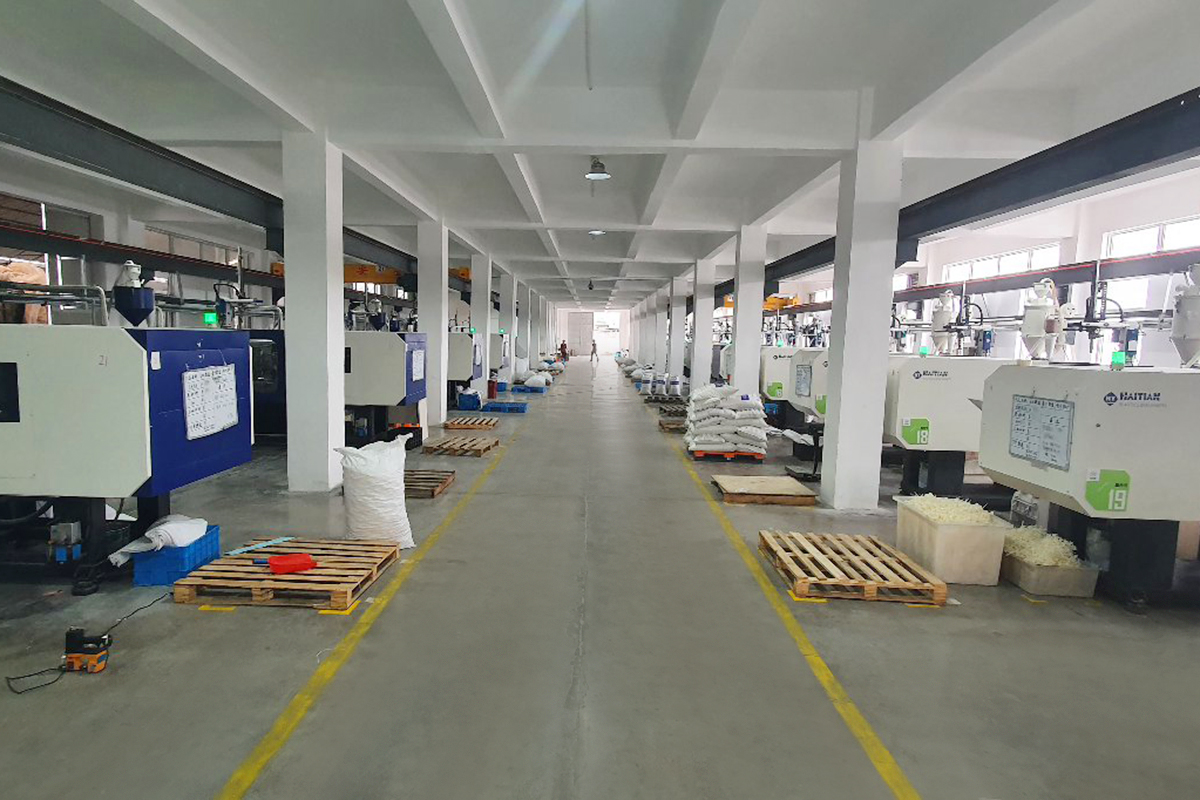
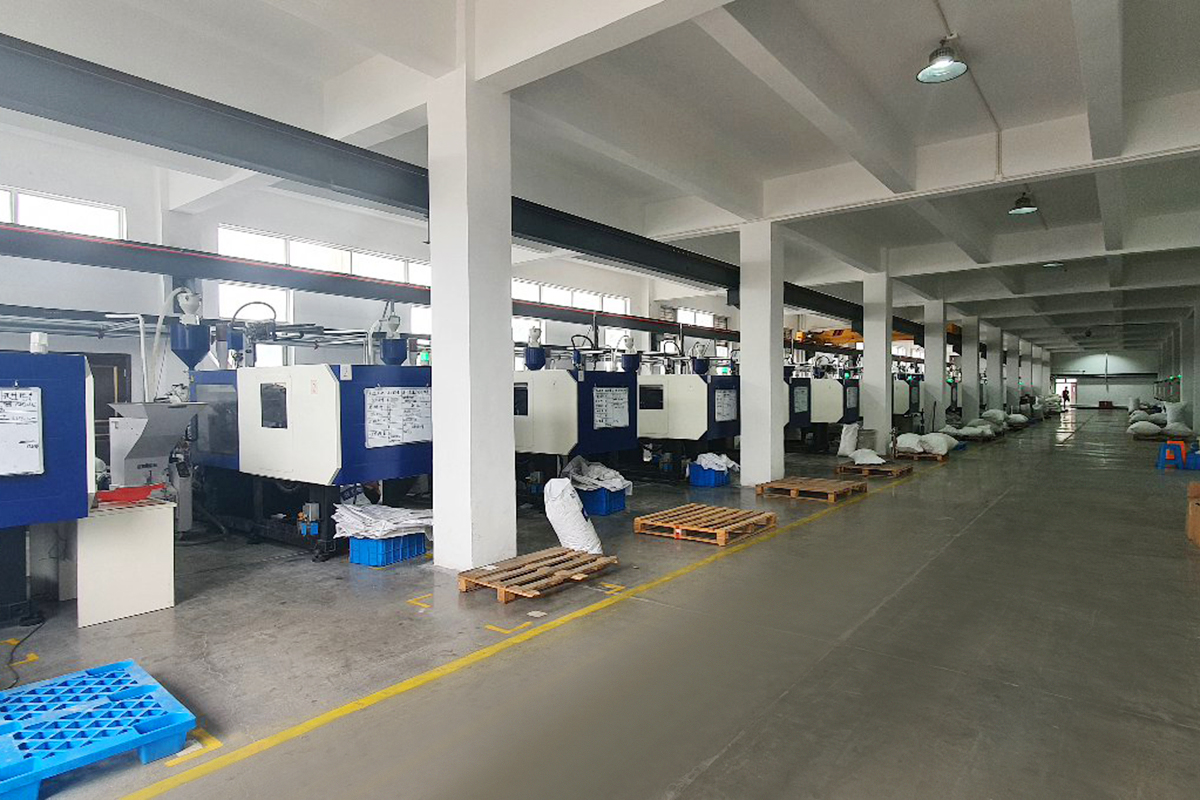
On the supply side, Zhejiang Mila Plastic Industry Co.,Ltd. is a trigger sprayer manufacturer based in Quzhou, Zhejiang, China, founded in 2018. The factory covers more than 30,000 square metres, employs 300–400 people, and runs 60 injection molding machines and 20 automatic production lines, with an annual output over 600 million pieces and reported annual sales in the range of USD 50–53 million. The company holds ISO 9001:2015 and ISO 14001:2015 certifications and SGS compliance, and exports 70%–80% of production to markets including South America, Western Europe, Eastern Europe, East Asia, Southeast Asia, the Middle East, Africa and Oceania.
3. Detailed Solution: What a Full-Plastic PP Construction Changes
Material and structure
The TS-1372 is manufactured from polypropylene with a full-plastic structure and no metal spring. The mono-material construction is the point of the design: because every functional part of the closure belongs to the same PP family, there is no spring-to-plastic separation step at end of life, and recycling documentation becomes simpler to assemble than for a multi-material assembly.
Sealing and leakage performance
Compared with conventional trigger sprayers, the TS-1372 has an improved structure with better sealing performance and an anti-leakage design. The technical difference is the anti-leakage design and improved sealing performance relative to conventional trigger sprayer constructions — in other words, the sealing approach itself was reworked, not merely reinforced. For a buyer, this is the performance claim to test first, because leakage drives returns, claims and filling-line downtime more than any other single defect.
Durability and maintenance
The TS-1372 provides enhanced durability compared with conventional trigger sprayers, and requires no extra maintenance compared with conventional trigger sprayers. That combination matters for refill and reusable-bottle programmes, where the sprayer is expected to survive more than one filling cycle and where maintenance procedures would add cost at the consumer or institutional level.
Output consistency
Reliability is supported by stable spray output and consistent performance relative to conventional trigger sprayers. The product performs well in household cleaning and industrial spraying conditions where stable spray output is required — the two environments where a drifting spray pattern is noticed immediately by the end user.
Chemical resistance to cleaning agents
Polypropylene is generally resistant to many water-based household cleaning formulations, which is one reason it dominates this closure category. That resistance is not unlimited: aggressive solvents, strong oxidisers, high concentrations, elevated temperatures, and some fragrance or terpene components can affect moulded plastic parts, and the effect frequently appears as stress cracking or gradual loss of seal performance rather than as immediate failure. The practical rule is therefore to validate the finished formula against the finished sprayer under a defined ageing protocol, rather than to rely on a material datasheet alone.
Output options: fine mist and foam
Trigger sprayers are commonly configured for a fine mist or for foam output, and both configurations sit inside the same mono-material PP housing. The choice is driven by the formulation and the target surface: mist for large-area wetting such as glass, hard surfaces and garden treatment, foam for cling and dwell time such as bathroom, oven and vertical-surface cleaners. Because output geometry changes internal components, it should be fixed before tooling or sampling is approved.
Cost position
The cost advantage of this design includes a competitive production cost compared with conventional trigger sprayer alternatives, and it requires no extra maintenance compared with conventional trigger sprayers. The correct comparison, however, is total landed cost: unit price, leakage and rejection rate, filling-line stoppages, and any packaging-waste fee that is modulated by recyclability in the destination market.
Application range
The product is intended for household cleaning, car care, cosmetic packaging and industrial spraying — a range that covers both high-volume consumer programmes and lower-volume technical applications.

4. Step-by-Step Breakdown: How Buyers Evaluate and Approve the Purchase
- Define the application and the formulation. Establish the end use (household cleaning, garden, car care, cosmetic packaging or industrial spraying), the chemistry of the liquid, the target viscosity, and whether the pack will be refilled. This determines the output type and the chemical-compatibility test protocol.
- Confirm the bottle neck. Verify whether the bottle uses 28/400 or 28/410. Because 28/410 is identified as the most commonly used opening for trigger sprayers, it is the usual default — but the confirmation must be made against the bottle thread drawing, not the nominal diameter.
- Select the output type. Fix fine mist or foam before sampling. Output geometry changes the nozzle and internal components, so switching later restarts tooling and sampling work.
- Verify the material and structure in writing. Ask for confirmation that the closure is PP, full-plastic, without a metal spring, and built as a mono-material construction for recycling. Written confirmation is what allows the recyclability wording in the pack copy to be defended.
- Validate chemical compatibility. Run the finished formula against the finished sprayer, including an ageing or elevated-temperature stage, and record spray rate, pattern and leakage before and after.
- Agree acceptance criteria and certification. Convert the sample results into written acceptance criteria — spray rate, pattern, priming strokes, leakage under inversion, closure torque, cycle count — so that bulk shipments are inspected against the same numbers. Relevant supplier credentials, such as ISO 9001:2015 and ISO 14001:2015 certification and SGS compliance, should be collected at this stage together with any test report the buyer’s market requires.
- Confirm purchasing terms and customs data. Finalise MOQ, price validity, packing, delivery terms and lead time, and confirm the HS code 3923.50 classification for import documentation.
- Run a recycling check with your own scheme. Before printing any claim, confirm with the recycler or EPR scheme in the destination market how the assembled closure is handled and which wording is permitted.
5. Use Cases: Where Mono-Material PP Trigger Sprayers Fit
Household cleaning. Kitchen, bathroom and multi-surface cleaners need stable spray output and reliable sealing across a long shelf life. This is the largest use case for the TS-1372, and the one where leakage claims are most costly.
Car care. Wheel, interior and glass products are often aggressive or solvent-bearing. Here, chemical compatibility testing of the finished formula against the all-plastic PP construction is the gating step, not the price per unit.
Cosmetic packaging. Toners, setting sprays and hair-care liquids use fine mist output and demand a clean, consistent pattern; mono-material PP also supports the recyclability language that personal-care brands increasingly publish.
Industrial spraying. Maintenance and process chemicals require stable output under repeated actuation, and the sprayer is often treated as a consumable component of a larger kit rather than a consumer product.
Garden and outdoor. Plant-care and pest-control formulations combine UV exposure with repeated use; a spring-free PP closure keeps the whole unit in one material family when the bottle is emptied.
6. Comparison Table: All-Plastic PP vs Metal-Spring Trigger Sprayers
The table below compares the two construction approaches on the factors that decide a purchase. The metal-spring column describes a generic design archetype; because spring material, seal compound and pump geometry vary between suppliers, every point there should be confirmed against the specific supplier’s specification rather than assumed.
| Decision factor | All-plastic PP trigger sprayer (TS-1372) | Metal-spring trigger sprayer (generic design) | What to verify before approval |
|---|---|---|---|
| Material composition | Polypropylene, full-plastic structure, no metal spring | Mixed polymers plus a metal spring in the pump chamber | Request a written material declaration |
| End-of-life separation | No spring to remove; closure presents as one material family | Metal spring must be separated before plastic reprocessing | Confirm how the local sorting or recycling partner treats the assembled closure |
| Recyclability documentation | Mono-material construction for recycling; simpler basis for documentation | Multi-material assembly makes a single-stream claim harder to document | Match claim wording to the destination market and EPR scheme |
| Sealing and leakage | Improved structure with better sealing performance and an anti-leakage design relative to conventional trigger sprayer constructions | Performance depends on the specific spring, seal and valve design | Leakage and closure-torque test with the finished bottle and fluid |
| Durability | Enhanced durability compared with conventional trigger sprayers | Spring and seal fatigue behaviour is design-specific | Agree a cycle-test protocol and sample size with the supplier |
| Maintenance | No extra maintenance required compared with conventional trigger sprayers | Maintenance expectations depend on the design and supplier specification | Confirm expectations for refill and reusable-bottle programmes |
| Spray output consistency | Stable spray output and consistent performance; performs well in household cleaning and industrial spraying conditions where stable output is required | Output stability depends on pump geometry and spring force | Test spray rate and pattern with the actual formulation |
| Cost position | Competitive production cost compared with conventional trigger sprayer alternatives | Cost varies with spring material, component count and assembly steps | Compare total landed cost, including rejection rate and packaging-waste fees |
| Neck compatibility | Produces in 28/400 and 28/410 configurations; 28/410 is the most commonly used opening for trigger sprayers | Commonly offered in standard neck formats | Confirm against the bottle thread drawing, not the 28 mm figure alone |
| Output type | Fine mist and foam configurations | Mist and foam configurations available by design | Confirm dip tube length against bottle height |
| Chemical resistance | PP is generally resistant to many water-based household cleaning formulations; resistance varies with chemistry, concentration and temperature | Spring material and seal compounds add further compatibility variables | Run a compatibility test with the finished formula before approval |
| Typical applications | Household cleaning, car care, cosmetic packaging, industrial spraying | Broad; depends on spring material and seal selection | Match the closure to the end use and the pack’s shelf life |
Reading note: the two columns are not a claim about any named competitor. They describe two construction approaches, and the metal-spring column intentionally lists design variables instead of performance claims, because spring and seal specifications differ between suppliers.
7. FAQ: All-Plastic PP vs Metal-Spring Trigger Sprayers
It supports compliance, but it does not create it on its own. The EU Packaging and Packaging Waste Regulation (PPWR) was adopted in April 2024 and mandates 30% recycled content in plastic packaging by 2030. A mono-material PP closure is easier to feed into a plastic recycling stream because there is no metal spring to remove, which makes recycled-content and recyclability documentation more straightforward to assemble. Acceptance is still decided by the collection and sorting system in each market, so buyers should confirm with their recycler or EPR scheme how an assembled trigger sprayer is treated, and which claims may be printed on the pack.
All-plastic PP trigger sprayers are commonly produced in 28/400 and 28/410 neck configurations, and 28/410 is identified as the most commonly used opening for trigger sprayers. Output can be specified as fine mist or as foam, within the same housing. The neck must be confirmed at drawing level rather than by the 28 mm figure alone, because thread profile and finish height differ between 28/400 and 28/410. Dip tube length should also be confirmed against bottle height for the specific pack.
Polypropylene is generally resistant to many water-based cleaning formulations. Resistance is not universal, however: aggressive solvents, strong oxidisers, high concentrations, elevated temperatures, and some fragrance or terpene components can affect moulded plastic parts, often showing up as stress cracking or loss of seal performance rather than immediate failure. The TS-1372’s reliability is supported by stable spray output and consistent performance relative to conventional trigger sprayers, and it performs well in household cleaning and industrial spraying conditions where stable spray output is required. Even so, compatibility should be validated with the finished formula under a defined ageing protocol before a bulk order is approved.
The spring-free, mono-material construction is positioned with a competitive production cost compared with conventional trigger sprayer alternatives, and it requires no extra maintenance compared with conventional trigger sprayers. Cost should be assessed on total landed cost rather than unit price: unit cost, rejection and leakage rate, filling-line downtime, and any packaging-waste fee that is modulated by recyclability. In markets where EPR fees are linked to material design, a mono-material closure can change the total cost of the pack even when the unit price is comparable.
Samples should be run against written acceptance criteria rather than by feel. A practical protocol covers spray rate and pattern, priming strokes, leakage under inversion and vibration, closure torque after filling, chemical compatibility with the finished formula, and drop or cycle testing; those same criteria then become the inspection basis for bulk shipments. Lead time depends on whether the order uses an existing all-plastic PP tool or requires a new mould, on order volume, and on the packing and shipping terms agreed. Zhejiang Mila Plastic Industry Co.,Ltd. operates a factory of more than 30,000 square metres in Quzhou, Zhejiang, with 60 injection molding machines, 20 automatic production lines and an annual output over 600 million pieces. Buyers can request a sample or a quotation, and confirm tooling status and delivery terms, through www.triggerssprayer.com, by email at 18067427651@163.com, or on WhatsApp at +86 180-6742-7651.
8. Conclusion: A Four-Point Decision Rule
The comparison between all-plastic PP and metal-spring trigger sprayers resolves into four decisions rather than one.
- Decide at design stage. If the pack will carry any recyclability wording, or if the destination market links fees to material design, specify a spring-free, mono-material closure and remove the separation problem before it reaches the waste stream.
- Verify the materials in writing. Confirm PP construction, full-plastic structure without a metal spring, and mono-material construction for recycling in a document you can file next to the pack copy.
- Test against the real formula. Seal performance, anti-leakage behaviour, durability and output consistency are the four performance claims that decide whether the closure survives its shelf life; validate all four with the finished product, not a surrogate.
- Fix the commercial terms. Agree acceptance criteria, MOQ, lead time, certification evidence and HS code 3923.50 classification before the first bulk shipment, so that quality and documentation are repeatable across reorders.
MILA Plastic Industry builds the TS-1372 as an all-plastic PP trigger sprayer specifically so that these four decisions can be answered with verifiable product facts: one material, no spring, one recycling path.
Next step — validate before you commit. Request a TS-1372 sample for formula-compatibility and leakage testing, or ask for a quotation covering 28/400 and 28/410 necks with fine mist or foam output.
Zhejiang Mila Plastic Industry Co.,Ltd. · 1# Panlong South Road, Donggang Development Zone, Kecheng District, Quzhou City, Zhejiang Province, China
Website: www.triggerssprayer.com · Email: 18067427651@163.com · WhatsApp: +86 180-6742-7651

Have Questions or Need More Details?
Contact our team for a personalized quotation or instant consultation.
Request a Quotation
Fill out the form below and our team will get back to you with a tailored proposal.
WhatsApp Direct Chat
Prefer to chat in real-time? Message us on WhatsApp for instant assistance & quick answers.
- Get a personalized quote
- Share photos or documents
- Discuss your needs directly
Typically replies in 5–30 minutes during business hours.