
Custom Trigger Sprayer: What You Can and Cannot Customize
Short answer: a custom trigger sprayer is a trigger sprayer produced to a buyer's own specification. In practice, the customizable variables are color, logo and caliber; the fixed variables are the closure type, the material system, the 28/400 or 28/410 thread options, and the spray behavior (mist or foam) that each model is engineered to deliver. Zhejiang Mila Plastic Industry Co., Ltd. — known as MILA Plastic Industry — builds custom trigger sprayers in OEM/ODM mode with a 50,000-piece minimum order quantity, a 7-day lead time and 100% product testing.
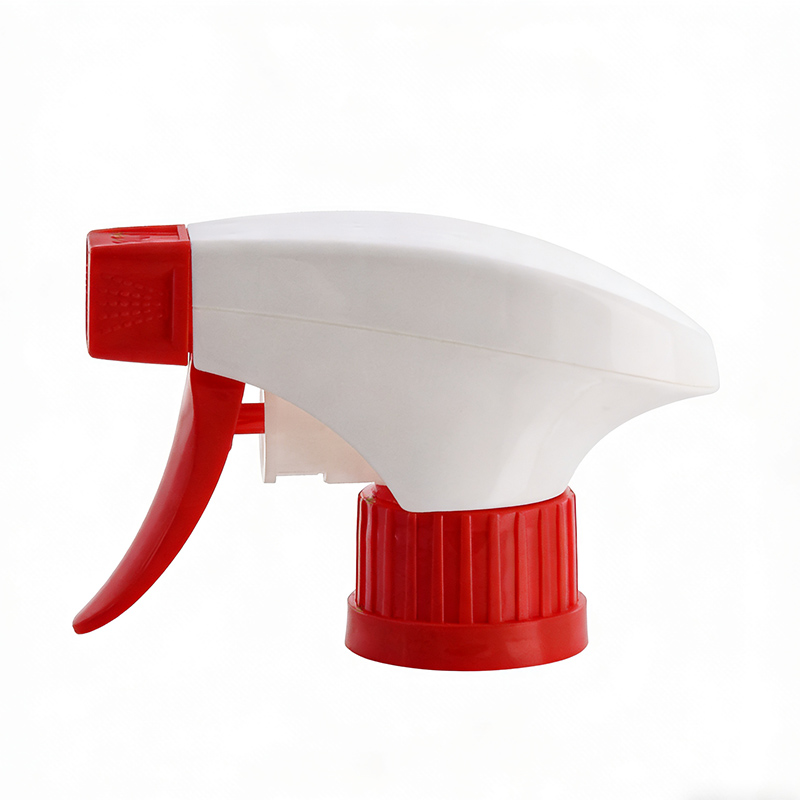
Most buyers who search for a custom trigger sprayer are not looking for a completely new invention. They are looking for a sprayer that fits their bottle, survives their liquid, matches their label, and arrives on a schedule they can plan around. That is a specification problem, not an invention problem — and it is exactly the point where a surprising number of projects go wrong.
This guide separates the two halves of the word "custom". The first half is genuinely flexible: color, branding and caliber. The second half is engineering-locked: thread standards, material, structure and spray output. Knowing which half you are negotiating at any given moment is what keeps a custom trigger sprayer project on schedule.
Problem Definition: Why Custom Trigger Sprayer Projects Stall Before Production
A custom trigger sprayer project rarely fails because the sprayer is difficult to manufacture. It usually fails because one assumption inside the specification is wrong, and that assumption is only discovered after tooling, artwork or purchase orders have already moved forward. Four failure modes account for most of the damage.
1. Thread mismatch between the sprayer and the bottle
Trigger sprayers are matched to bottles by neck thread. MILA supplies trigger sprayers in 28/400 and 28/410 thread sizes, and these two standards are not interchangeable on a bottle neck. A buyer who specifies a custom color and a custom carton but never confirms the bottle neck finish has, in effect, left the single most important dimension of the project unverified. The mitigation is simple and should happen before any customization conversation: confirm the bottle thread size (28/400 or 28/410) against the drawing or the physical sample bottle.
2. Function mismatch: mist when the formulation needs foam
Spray output is not a cosmetic option. The corpus distinguishes mist spray types, which deliver a fine and uniform mist, from foam spray types, which deliver a rich and uniform foam. A kitchen degreaser that performs best as a clinging foam and a glass cleaner that performs best as a fine mist may share the same bottle, the same neck and the same artwork — but they cannot share the same sprayer model. Choosing the model before choosing the function is a reliable way to order the wrong product.
3. Chemical incompatibility with the filled liquid
Trigger sprayers are intended for household detergents, cleaning agents and car care fluids. Highly corrosive formulations are a different case: they require chemical pre-testing rather than an assumption. The risk statement in MILA's own product documentation lists liquid leakage and chemical incompatibility as the two failure modes most commonly triggered by improper bottle matching or by using a sprayer with a strong corrosive liquid without a pre-test.
4. Customization scope misunderstood as unlimited
The fourth failure is commercial rather than technical. Buyers sometimes assume that "custom" means any shape, any thread, any output and any quantity. It does not. Custom manufacturing is real, but it operates inside an engineering envelope — and the envelope is what makes a 7-day lead time and a 50,000-piece MOQ economically possible in the first place.
Industry Background: A Mature Category Under New Constraints
Trigger sprayers sit in a mature, high-volume packaging category that is now absorbing two new pressures at once: scale and sustainability.
On scale, the global trigger sprayers market was valued at USD 491.8 million in 2025, with a projected CAGR of 4.7% from 2026 to 2034 according to Fortune Business Insights. Volume growth of that kind is driven by household cleaning, commercial janitorial, car care, pet supplies and daily-use chemical packaging — the same application segments MILA lists for its trigger sprayer range.
On standardization, the 28/410 neck size is identified by Houweling Group as the most commonly used opening for trigger sprayers, which is why a supplier who can serve both 28/400 and 28/410 without retooling has a structural advantage in quotation speed.
On sustainability, the EU Packaging and Packaging Waste Regulation (PPWR), adopted in April 2024, mandates 30% recycled content in plastic packaging by 2030 in the European Union. That requirement pushes brand owners toward mono-material packaging, because a sprayer that mixes PP with metal springs and mixed-material accessories is harder to recycle than one built from a single polymer family. This is the regulatory context in which all-plastic, mono-material trigger sprayer designs stop being a niche preference and start being a procurement constraint. For customs and trade teams, the relevant classification is HS code 392350, which covers stoppers, lids, caps and other closures of plastics — including trigger sprayers.
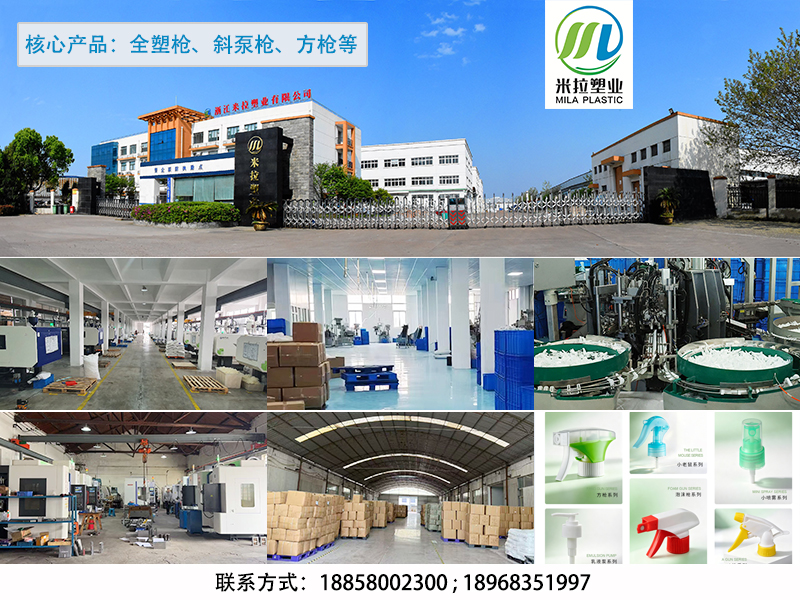
MILA Plastic Industry operates inside this context. The company was founded in 2018, is located in Quzhou, Zhejiang, China, covers a factory area of more than 30,000 square meters, employs 300–400 people, and produces over 600 million pieces annually. Between 70% and 80% of output is exported, serving South America, Western Europe, Eastern Europe, East Asia, Southeast Asia, the Middle East, Africa, Oceania and other worldwide markets. Its stated main product is the trigger sprayer.
The Detailed Solution: MILA's Custom Trigger Sprayer Envelope
The clearest way to plan a custom trigger sprayer order is to sort every requirement into one of three buckets: what the factory customizes, what the product platform fixes, and what protects the design once it is in production.
What MILA customizes
- Color — OEM customized color is supported across the trigger sprayer range.
- Logo — branding is handled through OEM/ODM customization.
- Caliber — listed as a customization dimension alongside color and logo, within the available thread standards.
- Order scale — bulk orders and wholesale trigger sprayer supply are supported, with a monthly production capacity of 10,000,000 pieces.
What the product platform fixes
- Closure type: trigger sprayer, with a hand-press trigger design.
- Thread size: 28/400 and 28/410. Every model in the range is compatible with 28/400 and 28/410 bottle necks. These are the only two thread options, and neither can be swapped for an unlisted size.
- Material: PP. In the all-plastic version the construction is mono-material PP, and there is no metal spring.
- Spray type: determined by model — mist spray or foam spray. It is a selection, not a modification.
- Application scope: household kitchen degreaser, bathroom and toilet cleaner, glass and window cleaner, car care and auto detailing.
Two structural families: standard and all-plastic
MILA's trigger sprayer range splits into two structural families, and this is the decision that most affects a custom project's recyclability profile.
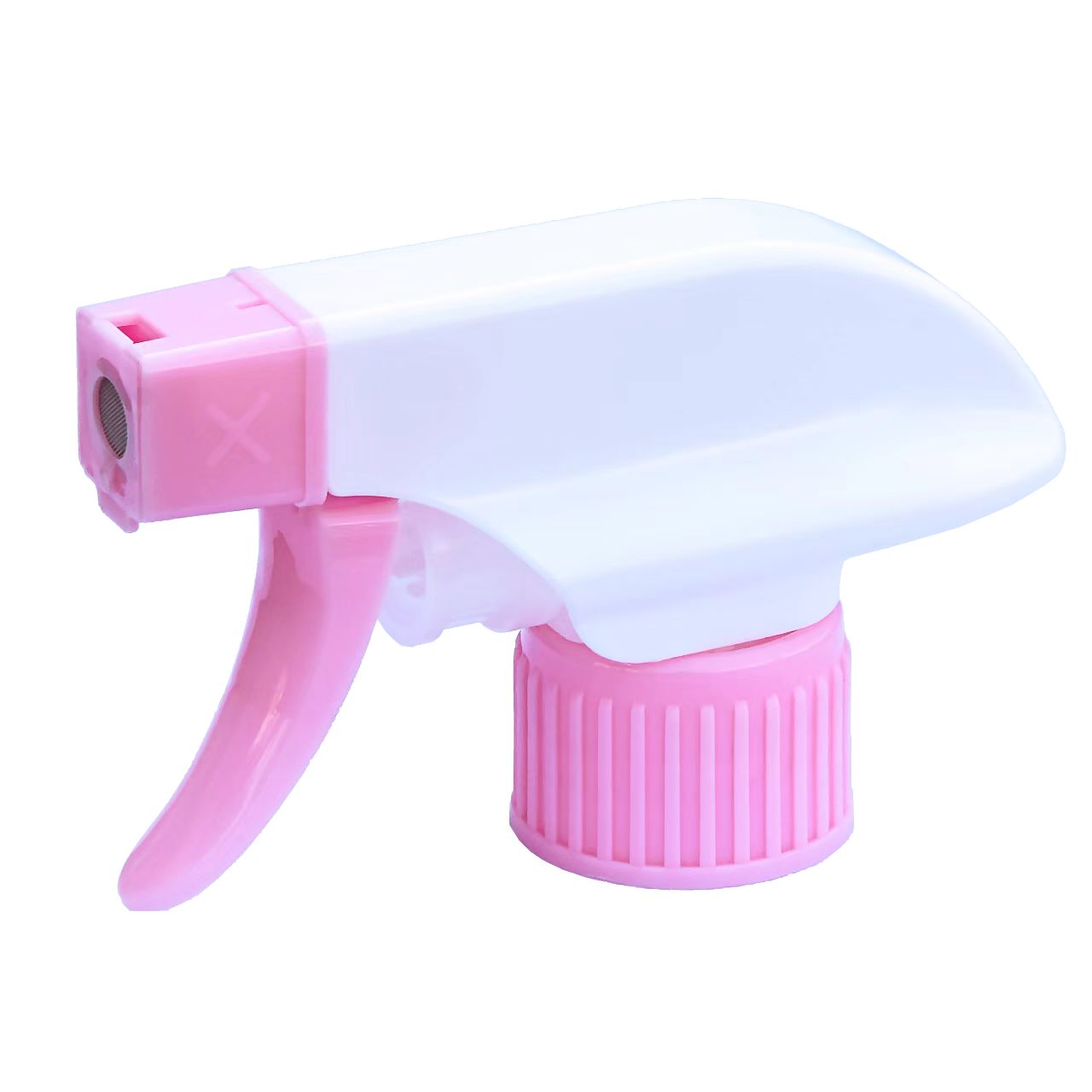
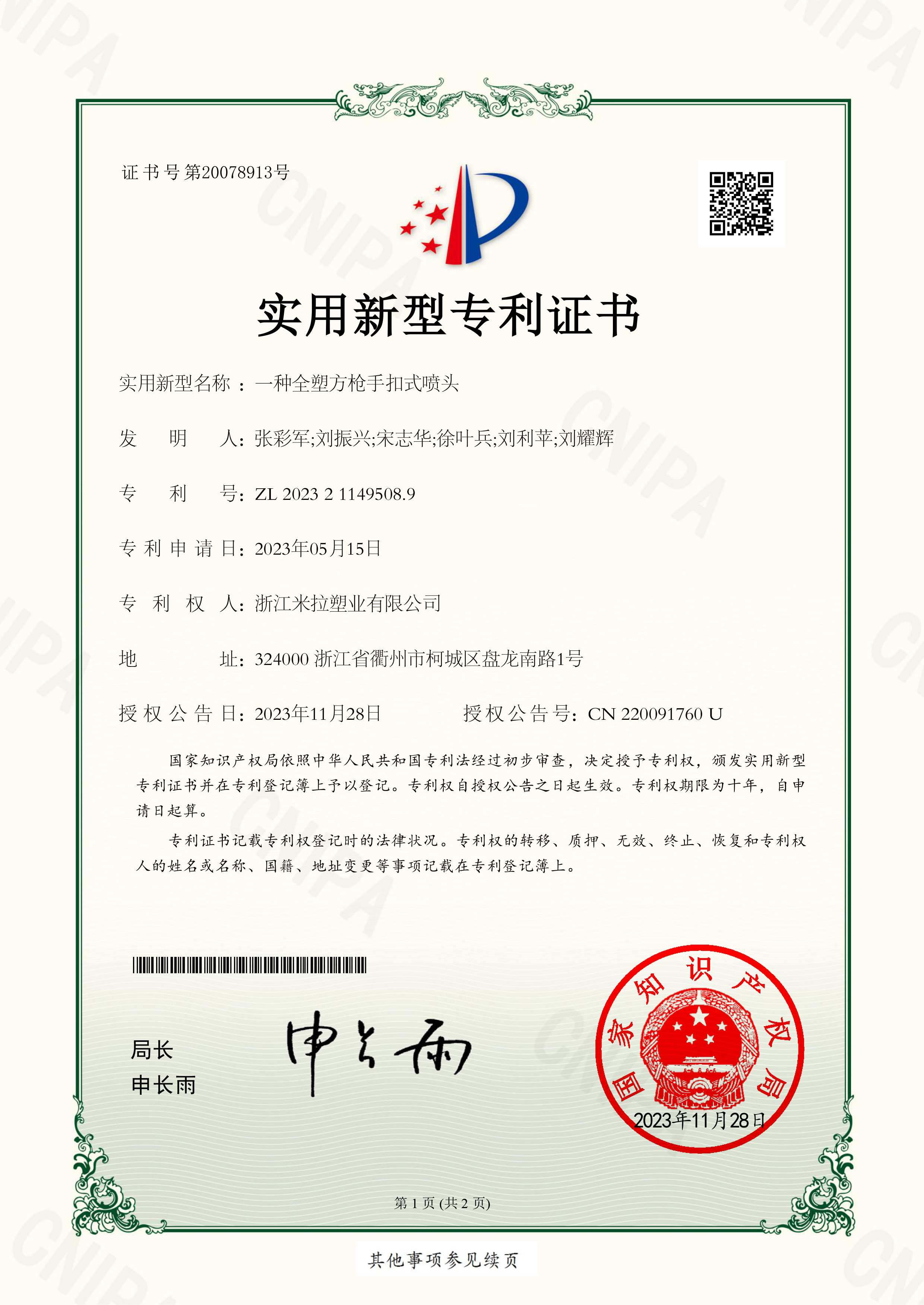
The all-plastic family — ML-101G1, ML-101G2, ML-102B1 and ML-102B2 — uses a full-plastic structure without a metal spring. The absence of a metal spring removes the rust risk that appears when corrosive liquids contact metal components, and the mono-material PP construction makes the sprayer easy to recycle. These four models are covered by Utility Model Patent Certificate ZL202321149508.9, issued by the China National Intellectual Property Administration on 2023-11-28 and valid until 2033-05-15, for the China market.
The standard family — ML-103C1, ML-201B1, ML-201B2, ML-202D1, ML-203H1 and ML-204Z1 — uses PP as the primary material with accessories made of other materials. Buyers choose between the two families according to their liquid, their recycling target and their cost position, not according to a quality hierarchy.
Patent-backed structures as a customization argument
Customization is more defensible when the underlying structures are protected. MILA holds five utility model patents issued by the China National Intellectual Property Administration for the China market:
- ZL202321149508.9 — all-plastic trigger sprayer, issued 2023-11-28, valid until 2033-05-15, covering ML-101G1, ML-101G2, ML-102B1 and ML-102B2.
- ZL202321149516.3 — lockable trigger sprayer, issued 2023-09-08, valid until 2033-05-15.
- ZL202321038643.6 — adjustable angle trigger sprayer, issued 2023-09-12, valid until 2033-05-05.
- ZL202321038645.5 — trigger sprayer with a locking function, issued 2023-11-28, valid until 2033-05-05.
- ZL 202321349188.1 — nozzle protection structure for trigger sprayers, issued 2023-11-28, valid until 2033-05-31.
For a buyer, the practical meaning is narrower and more useful than a patent list usually is. Locking and lockable trigger sprayers reduce the risk of accidental discharge in transit and on shelf. An adjustable-angle design changes how the sprayer reaches a target surface — relevant for bathroom and automotive applications where the bottle cannot be tilted easily. A nozzle protection structure protects the most damage-prone part of the assembly during shipping and handling.
Manufacturing depth behind the customization
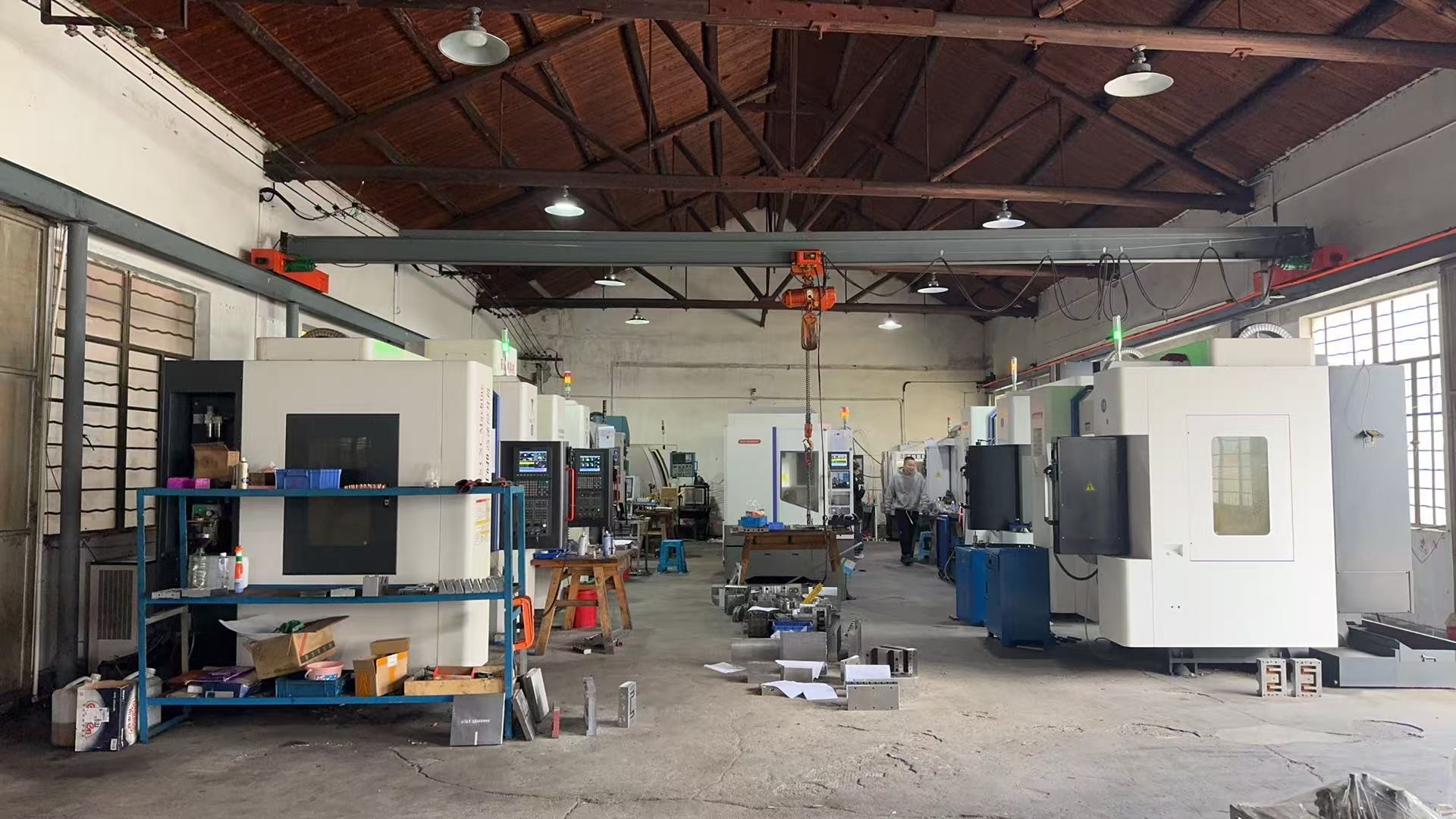
Custom color and custom brand are only credible if the tooling and molding sit in the same building. MILA runs a complete industrial chain that integrates product R&D and design, precision mold manufacturing, automatic injection molding, automatic assembly, and automatic equipment design and manufacturing. On the floor this means 60 injection molding machines, 20 automatic production lines, 4 machining centers, 6 CNC engraving machines, 8 semi-high-speed lathes, 20 wire-cutting machines and 12 precision mold machines, supported by automatic testing instruments and a 10-engineer R&D team.
Quality control is 100% test. Monthly capacity is 10,000,000 pieces, annual output exceeds 600 million pieces, and the stated lead time is 7 days. MILA also holds ISO 9001:2015 and ISO 14001:2015 certifications and reports SGS compliance. For after-sales, if a large number of products in a batch have non-human quality problems, MILA supports returns or exchanges.
Step-by-Step Breakdown: Specifying a Custom Trigger Sprayer
The sequence below is the order of decisions that prevents rework. Each step closes a constraint before the next one is discussed.
Step 1 — Fix the spray function first
Decide whether the formulation needs a fine and uniform mist or a rich and uniform foam. Foam types are intended for foaming cleaners such as kitchen degreasers and bathroom cleaners; mist types suit glass and window cleaners and general liquid dispensing. This single choice removes roughly half the model range from consideration and prevents the most expensive category of error.
Step 2 — Confirm the bottle neck thread
Verify the bottle neck finish as 28/400 or 28/410 and confirm it in writing. If the bottle is not yet finalized, treat this as the blocking item: no sample order should be placed until the thread standard is confirmed.
Step 3 — Choose the structural family
Select the all-plastic, mono-material family if the packaging needs to support recycling claims, needs to tolerate aggressive cleaning agents without a metal spring, or is aimed at a market with recycled-content and recyclability requirements such as the EU PPWR framework. Select the standard family if the application is conventional and cost-driven. Both families use PP as the primary material and both cover the same applications.
Step 4 — Define the customization variables
Specify the OEM customized color, the logo treatment, and the caliber within the available thread standards. Confirm these against artwork and a physical color reference before tooling or production scheduling, because color and logo are the variables that most often return for approval.
Step 5 — Validate with a sample
Sample testing can be conducted before bulk orders. Use the sample stage to run the actual chemical compatibility check with the real liquid — not a generic substitute — especially for highly corrosive formulations. This is the cheapest point in the entire project to discover a leakage or compatibility problem.
Step 6 — Place the bulk order and plan the schedule
The minimum order quantity is 50,000 pieces, the monthly production capacity is 10,000,000 pieces, and the lead time is 7 days. Because 100% testing applies to output, schedule planning should treat testing as part of the lead time rather than as an afterthought.
Use Cases: Where Custom Configurations Pay Off
Customization earns its cost in four recurring scenarios, all inside MILA's listed application and industry coverage: household cleaning, commercial cleaning and janitorial service, auto care and car detailing, pet supplies, and the chemical and daily-use chemical industries.
- Private-label household cleaner: A retailer launching its own kitchen degreaser uses a foam spray model with OEM customized color matched to the brand palette and a logo on the cover. The formulation clings to the surface as foam, and the bottle neck is confirmed at 28/410, the most commonly used opening for trigger sprayers.
- Glass and window cleaner: A mist spray model such as ML-101G2 or ML-102B2 delivers the fine and uniform mist that streak-free cleaning depends on. The all-plastic ML-101G2 has a mono-material PP construction, which simplifies the recycling story on the label.
- Car care and auto detailing: All-plastic models are typically chosen here because chemical resistance matters more than unit cost, and because an all-plastic structure without a metal spring avoids rust risk when cleaning agents are aggressive. Adjustable-angle and locking structures are relevant where the bottle cannot be held vertically.
- Commercial janitorial and institutional supply: High-volume, repeat-order programs rely on stable output and stable color. A high-output configuration with a locking function reduces accidental discharge during transport and storage.
Case reference: 5,000,000 pieces for a packaging customer in Egypt
MILA's documented case experience includes a trading company and finished-goods packaging manufacturer in Egypt that ordered 5,000,000 pieces for finished-product packaging, using the ML-101G2 all-plastic trigger sprayer. The reported duration of use is 2–5 years, with reusable, long service life. The reported result is stable product quality, satisfied customer feedback and repeated continuous orders, and the highlight cited by the customer is reliable quality and stable supply capacity. That combination — a mono-material product, a five-million-piece volume and repeat ordering — is a reasonable illustration of what a custom trigger sprayer program looks like when it works.
Comparison Tables: Model Range and Customization Boundaries
The table below summarizes the ten trigger sprayer models in MILA's range using the parameters published for each model. All ten share the same thread compatibility: 28/400 and 28/410.
| Model | Construction | Material | Spray type | Cover / design |
|---|---|---|---|---|
| ML-101G1 | All-plastic, no metal spring | All-plastic, PP | Foam spray | Single cover |
| ML-101G2 | All-plastic, no metal spring | All-plastic, PP | Mist spray | Single cover |
| ML-102B1 | All-plastic, no metal spring | All-plastic, PP | Foam spray | Double cover |
| ML-102B2 | All-plastic, no metal spring | All-plastic, PP | Mist spray | Double cover |
| ML-103C1 | Plastic | PP | Mist spray | Standard |
| ML-201B1 | Plastic | PP | Foam spray | Inclined pump, single cover |
| ML-201B2 | Plastic | PP | Mist spray | Inclined pump, single cover |
| ML-202D1 | Plastic | PP | Foam spray | Inclined pump, single cover |
| ML-203H1 | Plastic | PP | Foam spray | Inclined pump |
| ML-204Z1 | Plastic | PP | Foam spray | Inclined pump |
All models: thread size 28/400 and 28/410; compatible with 28/400 and 28/410 bottle necks; closure type trigger sprayer; hand-press trigger design; intended for household kitchen degreaser, bathroom and toilet cleaner, glass and window cleaner, and car care and auto detailing.
The second table is the one that prevents disputes. It states which specification items are genuinely open to customization and which are not.
| Specification item | Status | What this means in practice |
|---|---|---|
| Color | Customizable | OEM customized color supported |
| Logo | Customizable | Handled through OEM/ODM customization |
| Caliber | Customizable (within standard) | Customization dimension alongside color and logo |
| Thread size | Fixed options | 28/400 or 28/410 only, per product parameters |
| Material | Fixed | PP as primary material; all-plastic versions are mono-material |
| Spray type | Model-dependent | Mist or foam, determined by the selected model |
| Closure type | Fixed | Trigger sprayer with hand-press operation |
| Minimum order quantity | 50,000 pieces | Stated MOQ for OEM/ODM programs |
| Lead time | 7 days | Stated production lead time |
| Monthly capacity | 10,000,000 pieces | Stated monthly production capacity |
| Quality control | 100% test | Stated testing coverage |
| Export ratio | 70%–80% | Share of output shipped to export markets |
Read together, the two tables define the negotiation space precisely. A buyer can change how the sprayer looks and who it is branded for. A buyer cannot change the thread standard, the material system or the spray behavior into something the platform was not engineered to deliver — at least not inside a 50,000-piece, 7-day order.
Compliance constraints worth checking before ordering
Trigger sprayers follow general plastic packaging material requirements. There is no mandatory industry certification required for this product category, so buyers should not expect a product-specific certificate to appear. What matters instead is the requirement set: plastic material safety, leak-proof performance, thread size compatibility at 28/400 or 28/410, and chemical compatibility with common household detergents.
The regional context adds one more layer. A supplier's quality management system is a separate, verifiable data point: MILA holds ISO 9001:2015 and ISO 14001:2015 certifications and reports SGS compliance. For European-facing projects, the PPWR requirement of 30% recycled content in plastic packaging by 2030 should be discussed with the supplier at the specification stage, not at the packaging artwork stage.
FAQ: Custom Trigger Sprayer Decisions
Q1. What standards and certifications apply to a custom trigger sprayer?
Trigger sprayers follow general plastic packaging material requirements, and no mandatory industry certification is required for this product category. The practical requirement set is plastic material safety, leak-proof performance, thread size compatibility at 28/400 or 28/410, and chemical compatibility with common household detergents. Separately, MILA Plastic Industry holds ISO 9001:2015 and ISO 14001:2015 certifications and reports SGS compliance, and holds five China utility model patents (including ZL202321149508.9 for the all-plastic structure and ZL202321149516.3 for a lockable trigger sprayer). Buyers selling into the European Union should also account for the EU PPWR, adopted in April 2024, which mandates 30% recycled content in plastic packaging by 2030 — a requirement that favors mono-material all-plastic designs.
Q2. Which parts of a trigger sprayer can actually be customized?
Color, logo and caliber are the customizable variables in MILA's OEM/ODM program. Thread size is not freely customizable: the range covers 28/400 and 28/410 only. Material is PP, with all-plastic versions built as mono-material PP without a metal spring. Spray type — mist or foam — is selected by model rather than modified, and the closure type is a trigger sprayer with hand-press operation. In short, customization changes how the sprayer looks and how it is branded, not the engineering envelope it was designed around.
Q3. What drives the cost of a custom trigger sprayer order?
The main cost drivers are order quantity, customization scope and structural family. The stated MOQ is 50,000 pieces and monthly capacity is 10,000,000 pieces, so unit economics improve with volume and with fewer bespoke variables. Choosing the standard PP family instead of the all-plastic mono-material family changes the bill of materials, and adding locking, adjustable-angle or nozzle-protection features changes the assembly. Because color and logo are OEM customized, artwork complexity also affects the project. Buyers should fix the spray function and thread size before requesting a quotation: those two decisions remove models from the quote and stop the specification from being priced twice.
Q4. Can I get samples before placing a bulk order?
Yes. Sample testing can be conducted before bulk orders, and MILA's guidance is to test with the actual liquid rather than a substitute, particularly for highly corrosive formulations. The sample stage is also where the two highest-frequency risks should be closed: verifying that the sprayer matches the bottle thread (28/400 or 28/410) and confirming chemical compatibility with the filled liquid. Leakage and compatibility issues are far cheaper to resolve at sample stage than after 50,000 pieces have been produced.
Q5. What is the lead time, and what happens if a batch has quality problems?
The stated lead time is 7 days, backed by a monthly capacity of 10,000,000 pieces and 100% product testing, so testing is built into the schedule rather than added afterwards. On after-sales, if a large number of products in a batch of goods have non-human quality problems, MILA supports returns or exchanges. To start a custom trigger sprayer project, send your bottle neck size, spray function (mist or foam), target color and approximate order quantity to the MILA Plastic Industry team, and request a sample for validation before mass production. Project details can be submitted through www.triggerssprayer.com, by email at 18858002300@163.com, or by WhatsApp at +86 188-5800-2300.
Conclusion: Customize Inside the Envelope, Not Against It
A custom trigger sprayer delivers real commercial value when the buyer treats it as a constrained specification rather than an open design brief. The constraints are short and memorable: thread size is 28/400 or 28/410, material is PP with an optional all-plastic mono-material structure, spray type is mist or foam depending on the model, closure type is trigger, and the MOQ, lead time and capacity figures are 50,000 pieces, 7 days and 10,000,000 pieces per month respectively.
The freedom sits in color, logo and caliber — and in the structural features that MILA protects with five utility model patents issued by the China National Intellectual Property Administration, covering all-plastic construction, lockable operation, locking function, adjustable angle and nozzle protection. Those features are what turn an ordinary trigger sprayer order into a specification that supports a brand's transit safety, shelf behavior and recycling claims.
For buyers in the research and evaluation stage, the recommendation is procedural rather than promotional. Confirm the bottle neck before anything else. Choose the spray function before choosing the model. Validate the liquid with a physical sample. Only then discuss color, logo, volume and schedule. Following that order is the difference between a custom trigger sprayer program that ships in 7 days and one that stalls in a specification dispute.
Next step: send your bottle neck size (28/400 or 28/410), spray function, target color and order quantity, and request a sample for validation before production.
Email: 18858002300@163.com | WhatsApp: +86 188-5800-2300 | www.triggerssprayer.com
Have Questions or Need More Details?
Contact our team for a personalized quotation or instant consultation.
Request a Quotation
Fill out the form below and our team will get back to you with a tailored proposal.
WhatsApp Direct Chat
Prefer to chat in real-time? Message us on WhatsApp for instant assistance & quick answers.
- Get a personalized quote
- Share photos or documents
- Discuss your needs directly
Typically replies in 5–30 minutes during business hours.