
OEM Custom-Color vs Standard Bulk PP Trigger Sprayer Orders: Head-to-Head
Sourcing decision guide · Packaging & Printing
OEM Custom-Color vs Standard Bulk PP Trigger Sprayer Orders: A Head-to-Head Decision Guide
A standard bulk order and an OEM custom-color order for an all-plastic PP trigger sprayer are built on the same hardware: 28/400 and 28/410 neck threads, a PP body, and either a mist or a foam spray engine. What separates the two paths is the coordination layer around the sprayer — color approval, logo handling and committed volume — not the trigger performance. Custom color earns its place when the color itself carries sales value. Standard bulk wins when speed, neutral stock and simple replenishment matter more than shelf identity.
Standard bulk wins when
- You resell neutral stock or contract-pack for several brands.
- Differentiation lives in the formula, the bottle or the label.
- You need replenishment without a color-approval cycle.
- Demand by color is unproven or volatile.
OEM custom color wins when
- The sprayer must match a brand color across a launch or a product family.
- You run private-label lines that should carry your identity on the trigger.
- Color codes SKUs, for example foam versus mist or cleaner type.
- You can commit volume against a forecast.
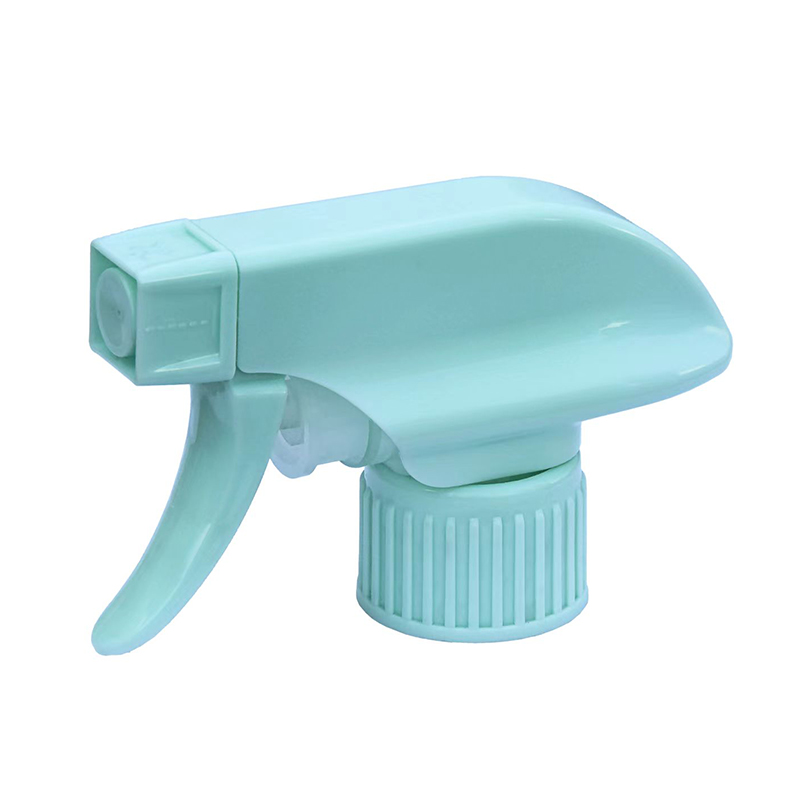
The decision behind the head-to-head: differentiation cost against supply simplicity
By the evaluation stage, most buyers have already accepted the platform. The open question is which supply path to commit to, and the two paths fail in different ways.
A custom-color program fails when the color is chosen before the demand is proven. Volume is committed, SKUs multiply, and slow-moving colors sit in the warehouse while the neutral stock you could have sold runs out. A standard bulk program fails when neutral stock is treated as a finished marketing decision: the product reaches the shelf with nothing separating it from the bottle beside it.
Both paths share a third failure mode that is purely technical — ordering the sprayer before measuring the bottle. Trigger sprayers in this range fit 28/400 and 28/410 necks, and a mismatch produces leakage and complaints that have nothing to do with color. MILA Plastic Industry's own risk guidance names liquid leakage, chemical incompatibility with the filled liquid and thread mismatch as the three recurring application risks, with bottle-thread confirmation, chemical compatibility testing on the actual liquid and sample pre-testing as the countermeasures.
The honest framing is therefore not which trigger is better. It is how much coordination the color buys back.
Industry background: a standardised closure under differentiation pressure
Trigger sprayers are a mature closure category with a settled interface and a slow growth curve. Fortune Business Insights values the global trigger sprayer market at USD 491.8 million in 2025 and projects a 4.7% compound annual growth rate from 2026 to 2034. Scope matters when reading category numbers: estimates that run into the billions generally include the filled bottle assembly rather than the sprayer closure alone.
Two structural facts push buyers toward visible differentiation. The first is standardisation. Houweling Group identifies 28/410 as the most commonly used opening for trigger sprayers, with 28/400 as the parallel standard fit. When the interface is universal, the remaining shelf-level differentiators are color, closure shape and label.
The second is regulation moving toward material simplicity. The EU Packaging and Packaging Waste Regulation (PPWR), adopted in April 2024, sets a 30% recycled content requirement for plastic packaging by 2030. A closure built as an all-PP assembly without a metal spring is easier to place in a mono-material stream than a mixed-material assembly, which is why material construction now sits in the same conversation as color.
For trade and customs planning, HS code 392350 covers stoppers, lids, caps and other closures of plastics, the heading under which trigger sprayers are declared.
What does not change: the shared all-plastic PP platform
Color changes the workflow. It does not change the sprayer. Every model in MILA's all-plastic series fits both 28/400 and 28/410 bottle necks, uses PP, and is built as a trigger sprayer with a single or double outer cover. The spray engine is either mist or foam, and the application set is the same across the series: household kitchen degreaser, bathroom and toilet cleaner, glass and window cleaner, and car care and auto detailing.
| Model | Outer cap | Spray type | Material | Neck fit | Typical applications |
|---|---|---|---|---|---|
| ML-101G1 | Single cover | Foam | PP, all-plastic | 28/400, 28/410 | Kitchen degreaser, toilet cleaner, glass cleaner, car care |
| ML-101G2 | Single cover | Mist | PP, all-plastic | 28/400, 28/410 | Kitchen degreaser, toilet cleaner, glass cleaner, car care |
| ML-102B1 | Double cover | Foam | PP, all-plastic | 28/400, 28/410 | Kitchen degreaser, toilet cleaner, glass cleaner, car care |
| ML-102B2 | Double cover | Mist | PP, all-plastic | 28/400, 28/410 | Kitchen degreaser, toilet cleaner, glass cleaner, car care |
Beyond these four all-plastic models, MILA's plastic PP range — ML-103C1, ML-201B1, ML-201B2, ML-202D1, ML-203H1 and ML-204Z1 — covers mist and foam configurations for the same two neck sizes and the same application set, and serves the same industries: household cleaning, commercial cleaning and janitorial service, auto care and car detailing, pet supplies, and chemical and daily-use chemical products.
One construction distinction matters for both order paths. MILA states that its full-plastic version uses a full plastic structure without a metal spring, which removes the component most exposed to corrosion when a corrosive liquid is filled. The non-full-plastic version carries accessories in other materials and is chosen when the liquid and cost structure call for it. Chemical resistance is therefore a matching exercise, not a single specification line: MILA advises chemical pre-testing for highly corrosive fluids and a compatibility test with the actual liquid before mass production.
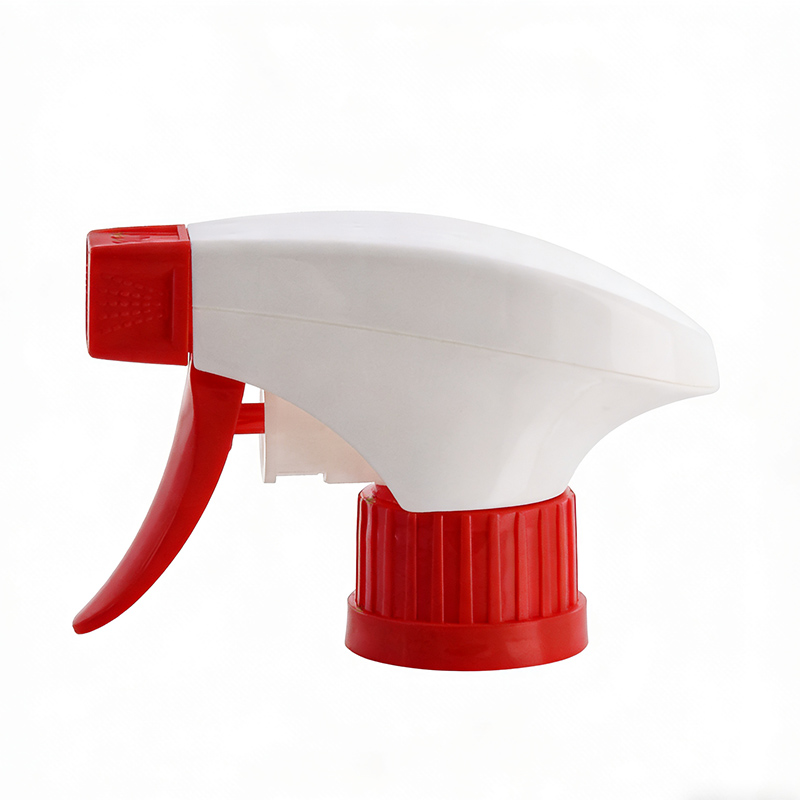
What does change: the customization layer
MILA provides OEM and ODM production services. Within OEM, customization covers three items: color, logo and caliber. That list is short on purpose. Thread, spray engine, cover style and material are fixed by the model; color, branding and the caliber option are the variables a buyer can own.
Three confirmations belong in the request for quotation before color work starts, because each one can delay a launch when it is discovered late:
- Color approval route. Who signs off the color, against which reference, and at which stage of production planning.
- Logo specification. Artwork file, placement and size, agreed in writing before tooling time is booked.
- Caliber and thread. The caliber option listed in MILA's customization scope should be confirmed against your bottle-neck and closure requirement, together with the thread you actually measured — 28/400 or 28/410.
Everything else is a platform decision made before the color conversation: single or double cover, mist or foam, all-plastic or non-full-plastic construction. Buyers who settle these first spend the customization meeting on color instead of on specifications.
Manufacturing proof that applies to both paths
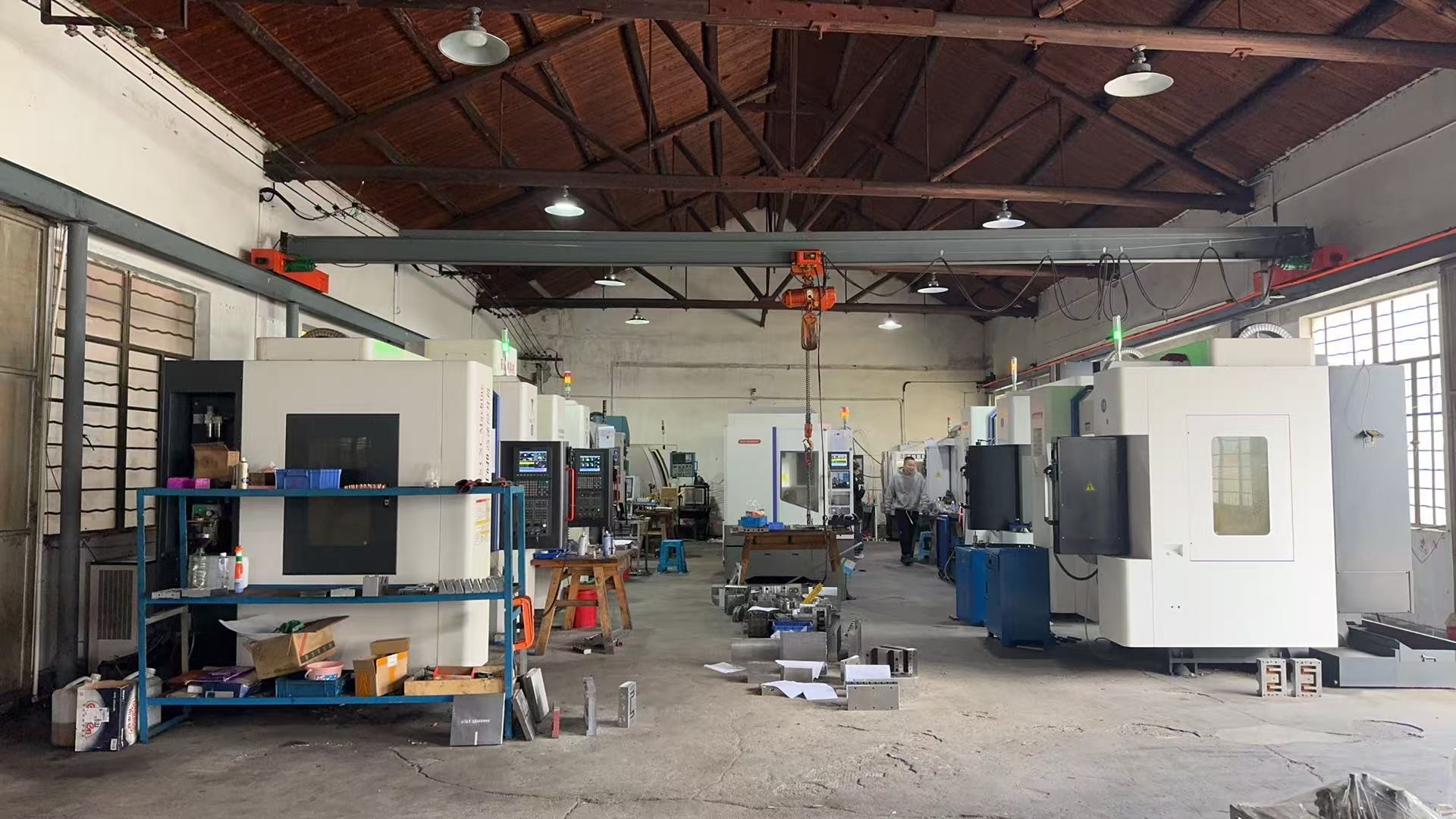
Capacity and equipment do not change with the order type. MILA Plastic Industry is based in Quzhou, Zhejiang, China, and operates a factory covering more than 30,000 square metres with 300 to 400 employees, including 10 engineers. The equipment base includes 60 injection molding machines, 20 automatic production lines, 4 machining centers, 6 CNC engraving machines, 8 semi-high-speed lathes, 20 wire-cutting machines and 12 precision mold machines.
Monthly production capacity is 10,000,000 pieces, annual output exceeds 600 million pieces, the published lead time is 7 days, and quality control is 100% testing. The company was founded in 2018, exports 70% to 80% of its output, and serves South America, Western Europe, Eastern Europe, East Asia, Southeast Asia, the Middle East, Africa, Oceania and other markets. Its published company information lists ISO 9001:2015 and ISO 14001:2015 certification and SGS compliance.
Five utility model patents granted by the China National Intellectual Property Administration sit behind the platform: ZL202321149508.9 for an all-plastic trigger sprayer, ZL202321149516.3 for a lockable trigger sprayer, ZL202321038643.6 for an adjustable-angle trigger sprayer, ZL202321038645.5 for a locking-function trigger sprayer and ZL 202321349188.1 for a nozzle protection structure. These are China-market filings, and they describe mechanical functions that stay the same whether the part is molded in a standard color or a custom one.
Step-by-step: run the comparison, then commit
Step 1 — Test whether the color has a job
Write down what the color is supposed to do: match a brand identity, separate a premium SKU from a value SKU, or satisfy a retailer's planogram requirement. If the answer is simply that it looks better, the standard bulk path is usually the cleaner decision.
Step 2 — Lock the interface before anything else
Measure the bottle neck and confirm 28/400 or 28/410. Decide mist or foam, and single or double cover. These four decisions define the model, and they apply equally to both order paths.
Step 3 — Confirm chemical compatibility
Match the construction to the liquid. For corrosive concentrates, the all-plastic version without a metal spring removes the corrosion-prone part. Run a compatibility test with the actual liquid rather than a generic assumption.
Step 4 — Fix the commercial frame
MILA's published purchasing terms are a 50,000-piece MOQ for wholesale trigger sprayer orders, FOB or CIF delivery terms, 30/70 payment terms, and pre-shipment testing as the acceptance criterion. Ask explicitly how a color and logo program is quoted against that frame.
Step 5 — Approve a sample, not a color chip
Sample testing is available before bulk orders. For a custom-color program, the sample is where color, logo and spray performance are approved together. For a bulk program, the sample confirms thread fit and spray pattern against your bottle and your liquid.
Step 6 — Book capacity against a realistic date
Monthly capacity of 10,000,000 pieces and a 7-day lead time describe the production side. Where color and logo approval sits inside that schedule should be settled before you promise a retail delivery date.
Step 7 — Agree quality control and after-sales
Quality control is 100% testing. MILA's after-sales position is that if a large number of products in a batch have non-human quality problems, returns or exchanges are supported. Put that in writing alongside the pre-shipment acceptance test.
Use cases: which buyer fits which path
When OEM custom color is the right call
A brand owner launching a private-label cleaning line needs the trigger to belong to the bottle, not to the closure catalogue. Color plus logo on the same all-plastic platform gives a family look across a degreaser, a bathroom cleaner and a glass cleaner without changing models. The same logic applies to a distributor building a regional brand: one hero SKU in a custom color, and the rest of the range in standard stock.
Color coding is a second, quieter use case. A supplier shipping foam and mist variants of the same cleaner can separate them by cover color, which reduces picking errors in a warehouse and misreads on a shelf.
When standard bulk is the right call
A contract packer running several brands cannot put one brand's color on another brand's bottle. Neutral stock across the four all-plastic models keeps the line flexible. The same applies to distributors who resell to formulators, and to any buyer facing an urgent replenishment where the color-approval step would arrive after the order is already late.
What volume supply looks like in practice
A trading company and finished-goods packaging manufacturer in Egypt ordered 5,000,000 pieces of the ML-101G2 for customer product packaging, with a stated service life of 2 to 5 years of reuse. The reported result was stable product quality, satisfied customer feedback and repeated continuous orders. The case illustrates volume durability and repeatability on the standard platform — the supply condition that any custom-color program also depends on.
Head-to-head comparison table
| Decision factor | Standard bulk PP trigger sprayer | OEM custom-color PP trigger sprayer |
|---|---|---|
| Sprayer and performance | 28/400 and 28/410, PP, mist or foam, single or double cover | Identical — same models, same specifications, same spray engines |
| What the buyer owns | Neutral stock, no brand on the trigger | Color, logo and caliber |
| Published MOQ | 50,000 pieces for wholesale trigger sprayer orders | Same published MOQ base — confirm how the color and logo program is quoted |
| Monthly capacity | 10,000,000 pieces | 10,000,000 pieces from the same line capacity |
| Published lead time | 7 days | 7-day production lead time, with color and logo approval steps scheduled in |
| Quality control | 100% testing | 100% testing |
| Commercial terms | FOB or CIF, 30/70 payment, pre-shipment test acceptance | Same terms — confirm whether color approval adds a separate milestone |
| Compliance route | No mandatory industry certification for this product category; general plastic packaging requirements | Same route; EU buyers should plan against the PPWR 30% recycled content target for 2030 |
| Best fit | Distributors, contract packers, urgent replenishment, neutral resale | Private label, brand color consistency, SKU color coding |
| Main risk | Undifferentiated shelf presence | Committed volume in colors that do not sell |
FAQ
Do custom-color OEM trigger sprayers need different certifications from standard bulk orders?
No. No mandatory industry certification applies to this product category, and color or logo changes the appearance of the closure, not its compliance route. What both paths must meet is the general plastic packaging requirement set: plastic material safety, leak-proof performance, thread size compatibility with 28/400 and 28/410 necks, and chemical compatibility with common household detergents. For European packaging, the additional planning item is regulatory rather than product-specific, namely the EU PPWR 30% recycled content target for 2030 that applies at packaging level.
What can actually be customized on an OEM trigger sprayer order?
MILA's OEM customization covers color, logo and caliber, provided through OEM and ODM production services. Everything else is defined by the model: all-plastic PP construction, 28/400 and 28/410 neck fit, mist or foam spray type, single cover on ML-101G1 and ML-101G2, double cover on ML-102B1 and ML-102B2, and the same application set across the series. Buyers who need a different spray pattern, cover style or construction choose another model rather than a customization option.
What is the minimum order quantity and how are payments structured?
The published MOQ is 50,000 pieces for wholesale trigger sprayer orders, under FOB or CIF delivery terms with 30/70 payment terms. Acceptance is based on a pre-shipment test. Because the MOQ is published for wholesale orders generally, a buyer planning a color and logo program should confirm in the quotation how that program is priced and scheduled against the same 50,000-piece threshold.
Can we test a sample before choosing between standard and custom color?
Yes. Sample testing can be conducted before bulk orders, and it is the correct stage to compare the two paths side by side. For a standard bulk order the sample confirms thread fit, spray pattern and leakage performance against your bottle and liquid. For a custom-color order the same sample also carries the color and logo, so appearance and function are approved in one round. For corrosive liquids, MILA recommends chemical pre-testing with the actual fluid before mass production.
How fast can an order ship, and what is the first step?
MILA lists a monthly production capacity of 10,000,000 pieces and a 7-day lead time, with 100% testing before shipment. The first step is to send the bottle neck size (28/400 or 28/410), the spray type (mist or foam), the intended liquid and the target color, and request a sample plus a quotation that separates platform cost from customization cost. Contact Bruce Liu at 18858002300@163.com or +86 188-5800-2300, or message WhatsApp on +86 180-6742-7651.
Conclusion: let the color prove its own business case
The head-to-head resolves cleanly once the sprayer is taken out of the argument. Both paths deliver the same all-plastic PP trigger sprayer on 28/400 and 28/410 necks, in mist or foam, with 100% testing and the same 50,000-piece MOQ base. The real variable is whether a custom color, a logo and a caliber option will earn back the approval steps, the forecast commitment and the extra SKU discipline they require. If the color sells the product, it is an asset. If it only decorates a warehouse pallet, it is a cost.
Next step: compare both paths with your own specification
Send your bottle neck size, spray type, target liquid and target color, and request a sample of the all-plastic platform in standard color alongside your proposed custom color, with a quotation that separates platform cost from customization cost.
MILA Plastic Industry — Zhejiang Mila Plastic Industry Co.,Ltd., founded in 2018, Quzhou, Zhejiang, China. OEM and ODM trigger sprayer production, color, logo and caliber customization, 50,000-piece MOQ, 10,000,000 pieces monthly capacity, 100% testing.
Contact: Bruce Liu · Email 18858002300@163.com · Tel +86 188-5800-2300 · WhatsApp +86 180-6742-7651
Address: 1# Panlong South Road, Donggang Development Zone, Kecheng Area, Quzhou City, Zhejiang Province, China
Website: www.triggerssprayer.com · Chat on WhatsApp
Specifications, capacity figures and certification details in this article reflect MILA Plastic Industry's published product and company data. Buyers should confirm thread size, spray type and chemical compatibility against their own bottle and liquid before placing a bulk order.
Have Questions or Need More Details?
Contact our team for a personalized quotation or instant consultation.
Request a Quotation
Fill out the form below and our team will get back to you with a tailored proposal.
WhatsApp Direct Chat
Prefer to chat in real-time? Message us on WhatsApp for instant assistance & quick answers.
- Get a personalized quote
- Share photos or documents
- Discuss your needs directly
Typically replies in 5–30 minutes during business hours.