
PP Trigger Sprayer Compliance Guide: Certifications, Standards and Regional Requirements
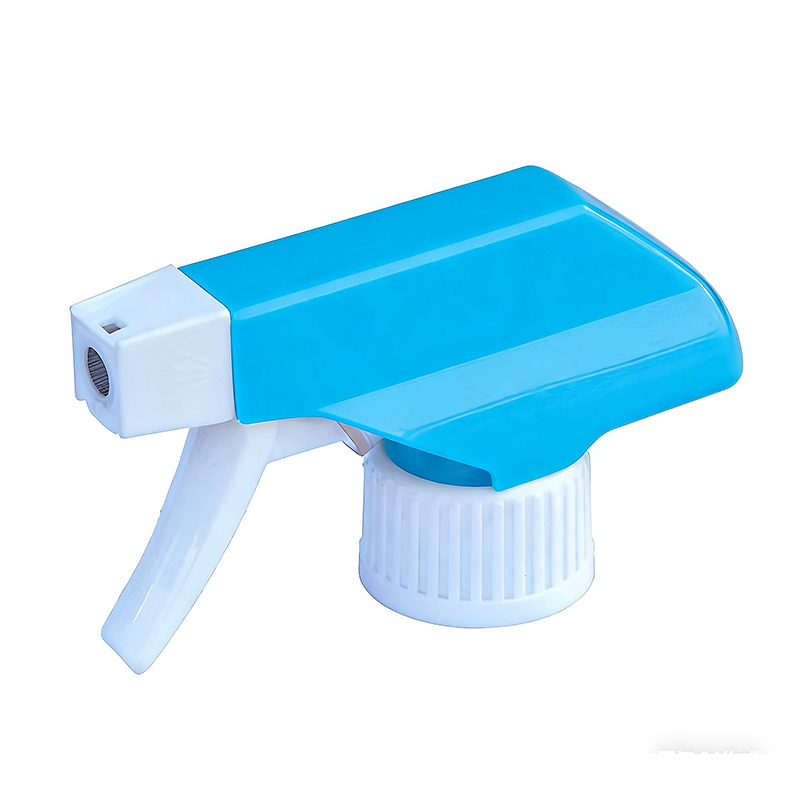
A compliance request for a PP trigger sprayer is answered by three verifiable items: the material declaration, the closure and thread specification, and the regulation that applies in the destination market. Certificates, test reports and recyclability statements are only useful when they can be traced back to those three items. That traceability rule is what this guide applies throughout.
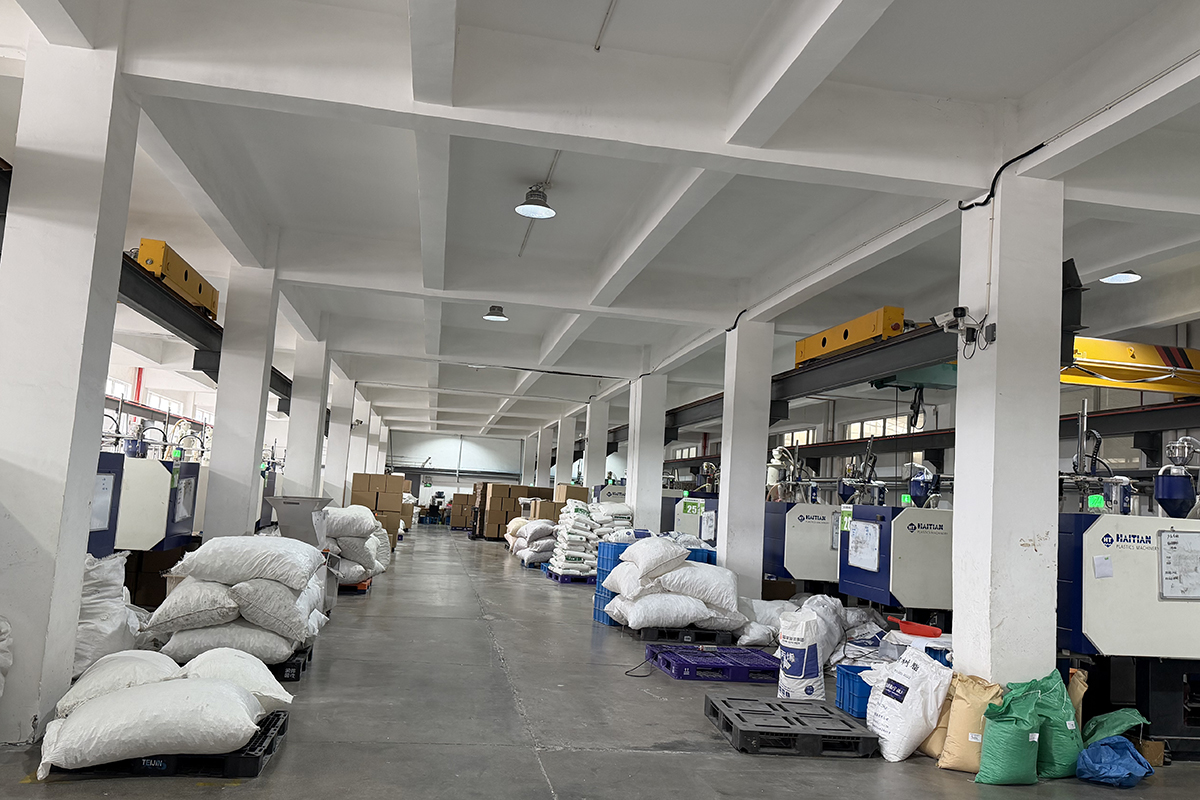
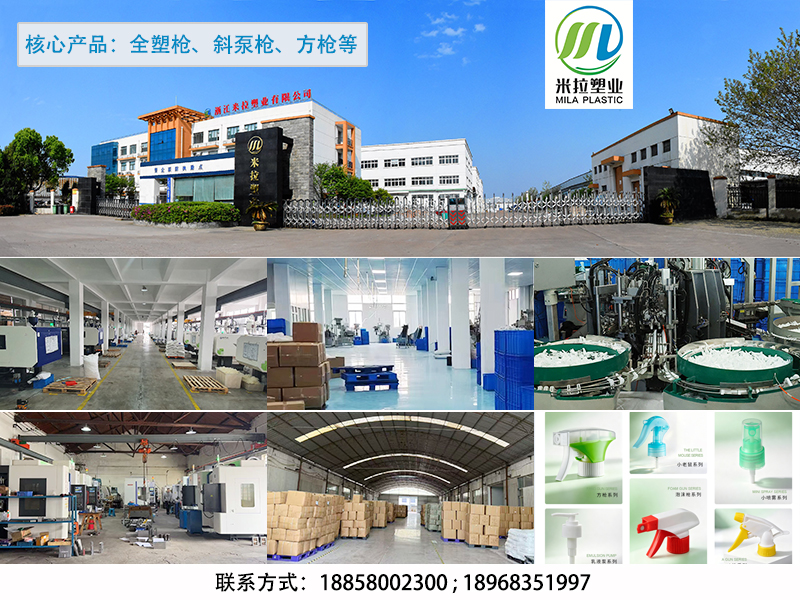
MILA Plastic Industry — the trading name used here for Zhejiang Mila Plastic Industry Co., Ltd., a trigger sprayer manufacturer based in Quzhou, Zhejiang, China — works from that same structure when buyers send certification, standard or regional compliance questions. The company was founded in 2018, operates a factory of more than 30,000 ㎡ with 300–400 employees, and produces over 600,000,000 pieces annually, with 70%–80% of output exported.
This guide does not tell buyers which certificate to request. It shows how to separate what a supplier can document from what a supplier can only claim, and how to write that difference into a purchase order. It covers all-plastic PP construction, mono-material design for recycling, chemical resistance to cleaning agents, 28/400 and 28/410 thread compatibility, household and chemical cleaning applications, purchasing terms and acceptance criteria.
Why Compliance Requests for Trigger Sprayers Go Wrong
Most compliance failures in this category are documentation failures, not product failures. They appear in five repeating patterns.
1. The document does not match the question. A buyer writes one line — “please send your trigger sprayer certificate” — and receives a management system certificate in return. ISO 9001:2015 and ISO 14001:2015 confirm how a factory controls quality and environmental processes. They do not certify that an individual sprayer model is food-contact safe, or that it qualifies under a named national packaging scheme. Both statements are true and they answer different questions.
2. The claim has no product basis. “Eco-friendly”, “100% recyclable” and “food grade” are widely repeated phrases in this category, but a recyclability claim cannot be verified against a product data sheet unless the structure behind it is stated — for example, full-plastic construction without a metal spring, or mono-material construction.
3. A fit problem is treated as a regulatory problem. A 28/400 sprayer closed onto a 28/410 bottle neck produces leakage, an unstable trigger stroke and returns. Nothing about that complaint is regulatory, yet it is frequently filed under “quality issue”, which then triggers an unnecessary certificate request.
4. Regional requirements are applied by assumption. Storage, transport and end-of-life rules differ by market, and buyers often forward a requirement they received from a retail customer without checking whether it applies to the sprayer closure or to the complete bottle.
5. Quantity statements replace scope statements. A purchase order that specifies “good chemical resistance” without naming the cleaning agent, the thread size or the model number gives a supplier nothing to test against — and gives the buyer nothing to reject against.
The practical rule: a claim that cannot be tied to a document, a model number and a market is not evidence. It is transferred risk.
Market and Regulatory Context Behind Today's Compliance Questions
The trigger sprayer category is a relatively small, stable closure segment inside packaging. Fortune Business Insights values the global trigger sprayers market at USD 491.8 million in 2025 and projects a 4.7% CAGR from 2026 to 2034. Those figures cover the sprayer closure. Other research houses publish substantially larger numbers because they count complete trigger sprayer bottles rather than the dispensing closure alone, so any market figure should be read together with its scope definition before it is used in a sourcing justification.
The regulation most often cited in buyer questions is the EU Packaging and Packaging Waste Regulation (PPWR), adopted in April 2024, which mandates 30% recycled content in plastic packaging by 2030. PPWR is the main reason buyers now ask suppliers to describe construction rather than just material. Whether a trigger sprayer closure counts toward a recycled-content target depends on how the packaging is defined for a given market, so the recyclability statement a brand publishes should rest on that brand's own regulatory reading, not on a supplier marketing sheet.
Two technical reference points also sit behind most compliance emails. First, 28/410 is identified as the most commonly used opening for trigger sprayers (Houweling Group, “The most important properties of trigger sprayers”), which is why a specification that supports only one neck finish creates downstream risk. Second, customs classification for plastic closures falls under HS Code 3923.50, “Stoppers, lids, caps and other closures, of plastics” (UN Comtrade / USITC, Harmonized Tariff Schedule 3923.50) — the same code under which trigger sprayers are declared. Compliance documentation and customs documentation are usually requested in the same message, and they should be answered separately.
The Verified Compliance Baseline for a PP Trigger Sprayer
Every MILA trigger sprayer model in the current range is PP (polypropylene) based, is compatible with both 28/400 and 28/410 bottle necks, and is documented for the same core application set. The differences that matter for a compliance conversation are construction, spray output, cover type and whether a mono-material recycling statement is documented for that specific model.
1. Material and construction
Four models — ML-101G1, ML-101G2, ML-102B1 and ML-102B2 — are built as all-plastic trigger sprayers with a full-plastic structure and no metal spring. This is the single most citable construction fact in a recycling discussion, because it removes the metal spring as a second material inside the fluid path and inside the recycling stream. Among these, mono-material construction is explicitly documented as “easy for recycling” for ML-101G2, ML-102B1 and ML-102B2.
The remaining models — ML-103C1, ML-201B1, ML-201B2, ML-202D1, ML-203H1 and ML-204Z1 — are documented as plastic PP trigger sprayers. Their documented selling points include good chemical resistance for various cleaning agents, compatibility with 28/400 and 28/410 bottle necks, and a comfortable trigger hand-press design. A buyer should not assume that a recycling statement documented for one model applies to another; that assumption is exactly what this guide is designed to prevent.
2. Thread and closure compatibility
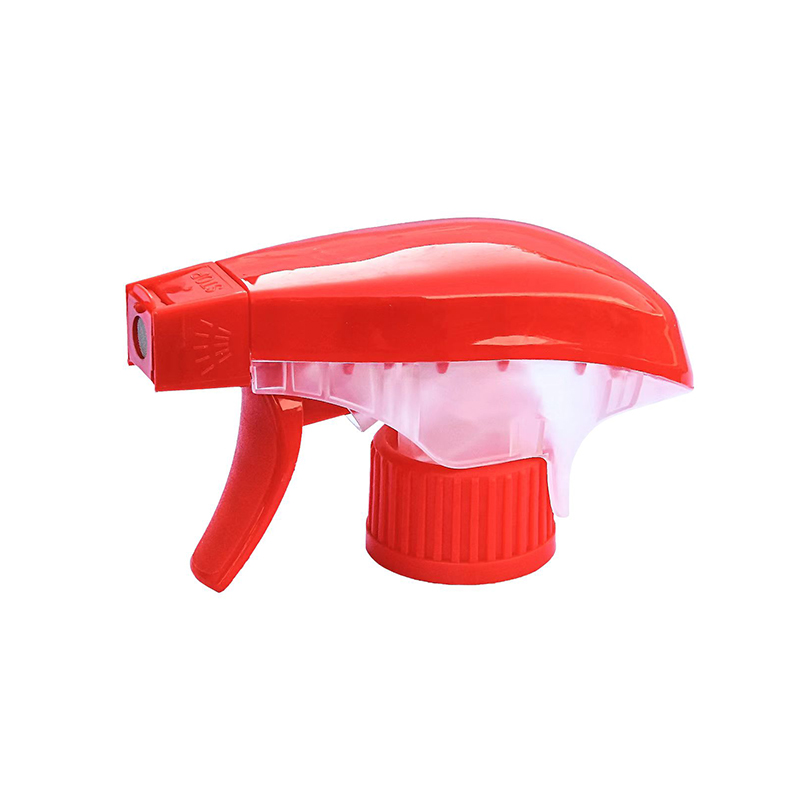
All ten documented models are compatible with both 28/400 and 28/410 bottle necks, and the models are designed to work with supporting equipment described in the product data as plastic bottles with 28/400 and 28/410 neck finishes. Cover configuration differs: ML-101G1, ML-101G2, ML-201B1, ML-201B2, ML-202D1, ML-203H1, ML-204Z1 and ML-103C1 use a single-cover configuration, while ML-102B1 and ML-102B2 use a double-cover configuration. Closure type across the range is trigger sprayer.
For a compliance file, the thread specification is not a trivial detail. A material declaration that omits the neck finish cannot be used as an acceptance criterion, because acceptance testing has to name the bottle it was tested on. Buyers should expect a model-level statement in this form: model number, material, spray type, thread options, cover type.
3. Chemical resistance and application fit
MILA's documented application set for these sprayers covers household kitchen degreaser, bathroom and toilet cleaner, glass and window cleaner, and car care and auto detailing. The documented applicable industries are household cleaning, commercial cleaning and janitorial service, auto care and car detailing, pet supplies, and chemical and daily-use chemical. Documented operating conditions include chemical resistance, normal temperature, indoor and outdoor use, and corrosion resistance.
The operational roles documented in the application data are liquid spraying, mist atomization, foam output and liquid dispensing, under manual trigger operation. Preferred unit functions — mist, foam or liquid — should be matched to the formulation and to the spray pattern the end user expects, because the same chemistry behaves differently through a mist nozzle than through a foam nozzle.
Where a formulation is aggressive, the correct request is a model-specific chemical resistance statement, not a range-wide assumption. The product data documents good chemical resistance for various cleaning agents across the range; it does not publish a compatibility list per cleaning agent, so buyers testing a specific solvent-based or high-alkaline product should treat that test as part of sample validation.
4. Recyclability statements: what is documented and what is not
Three construction facts are documented and citable:
- Full-plastic structure without a metal spring: ML-101G1, ML-101G2, ML-102B1, ML-102B2.
- Mono-material construction described as easy for recycling: ML-101G2, ML-102B1, ML-102B2.
- Plastic construction as a special scenario requirement across the documented model range.
Two things are not documented and should not be claimed from these product data: a recycled-content percentage for the sprayer itself, and certification against a named national recyclability scheme. The PPWR recycled-content requirement applies to plastic packaging from 2030, and a sprayer closure is only part of that packaging. A buyer writing a packaging sustainability statement should base it on the complete pack — bottle, sprayer and label — and on its own market assessment.
5. Certification and trade documentation
Mila Plastic states that it holds ISO 9001:2015 and ISO 14001:2015 certifications and SGS compliance (source: Mila Plastics, “ISO 9001 & SGS Certified Trigger Sprayer Factory”, triggerssprayer.com/about-us/). Read the scope correctly: these are quality management and environmental management credentials for the manufacturing operation. They support a buyer's supplier qualification file. They do not replace a model-level declaration, and they do not certify a product against a food-contact or packaging-content scheme.
On the trade side, plastic closures including trigger sprayers are declared under HS Code 3923.50. Buyers preparing import documentation should confirm the classification with their own customs broker for their market, since the same code can be interpreted differently across jurisdictions, and compliance paperwork should not be used as a substitute for a tariff ruling.
Step-by-Step: How to Process a PP Trigger Sprayer Compliance Request
The sequence below is written for a buyer, a packaging engineer or a procurement manager assembling a compliance file. It is deliberately ordered so that the cheapest decisions are made first.
- Define the end product and the end market before contacting anyone. State the cleaning agent, the bottle neck finish, the retail market and the end user. A request that names these four items usually receives a usable answer in one exchange.
- Decide which document type you actually need. The common types are a management system certificate, a material declaration naming PP and the model, a model-level specification sheet, a test or inspection record, and a customs classification reference. Requesting all of them at once adds time and rarely adds evidence.
- Verify the model against the product data before verifying the certificate. Confirm the model number, the material, the spray type, the cover configuration and the thread options. If the model cannot be identified in the product data, no certificate attached to it can be verified either.
- Test any recyclability claim against the whole pack. Separate what is documented — all-plastic construction without a metal spring, mono-material construction where stated — from what your market requires.
- Write measurable acceptance criteria into the purchase order. Name the model, the neck finish (28/400 or 28/410), the spray type, the color if an OEM color is agreed, the quantity and the leak expectation. Criteria that cannot be measured cannot be enforced.
- Confirm commercial terms in the same document. Production mode is OEM/ODM with customization of color, logo and caliber; the MOQ is 50,000 pieces; lead time is 7 days; monthly capacity is 10,000,000 pieces; quality control is documented as 100% test.
- Keep a document register per SKU. One file per model, holding the specification sheet, the material declaration, the thread size, the sample approval and the certificate reference. This is what makes a repeat order fast and an audit survivable.
Risk questions worth keeping open
Five questions should remain unanswered until the evidence arrives, not answered by default: Which exact model is quoted? Which thread size is quoted against which bottle? Which chemistry will contact the sprayer? Which market will receive the product? Which document in the file actually names that model?
Purchasing Terms That Carry the Compliance Logic
Compliance work only holds if the commercial documents repeat it. The relevant terms for MILA trigger sprayer orders are structural and published: OEM/ODM production with customization of color, logo and caliber; minimum order quantity of 50,000 pieces; lead time of 7 days; monthly capacity of 10,000,000 pieces; quality control described as 100% test. After-sales terms state that where a large number of products in a batch of goods have non-human quality problems, returns or exchanges are supported.
Two terms deserve to be requested explicitly rather than assumed. The first is a written confirmation of the bottle neck finish a sample was tested on, because a sprayer validated on a 28/410 neck is not automatically validated on a 28/400 neck even though both are supported by the same model. The second is a signed sample approval referenced to the same specification sheet number used in the purchase order. Both cost nothing at the quotation stage and save a batch later.
Use Cases: Matching the Sprayer to the Application and the Market
Germany — household cleaning projects. ML-201B1 is documented as suitable for household cleaning projects, requires supporting equipment such as plastic bottles, and its application scenario is common in Germany. For a German buyer, the compliance-relevant point is that the sprayer is validated as part of a bottle assembly, not as a standalone part.
United Kingdom — car care projects. ML-202D1 is documented as suitable for car care projects with a scenario common in the United Kingdom. Car care formulations frequently combine surfactants with solvents, which is why the model-level chemical resistance statement matters more here than a generic “chemical resistant” label.
United States. ML-204Z1 currently has a documented application scenario common in the United States, performs liquid spraying in this scenario, and carries chemical resistance as a special application requirement. It is also compatible with both 28/400 and 28/410 bottle necks.
Egypt and the Middle East / Africa market. The most complete documented case in this product family is ML-101G2, supplied for customer product packaging of finished goods and compatible with household cleaning bottles. The client type is a trading company and finished-goods packaging manufacturer in Egypt, with a quantity of 5,000,000 pieces and a documented service life of 2–5 years as a reusable product, producing stable quality, satisfied feedback and repeated continuous orders. In compliance terms the useful lesson is that the specification — not the certificate — is what survives across repeat shipments.

Comparison Table: PP Trigger Sprayer Compliance Reference
| Model | Type and material | Spray output | Thread options | Mono-material recycling statement documented |
|---|---|---|---|---|
| ML-101G1 | All-plastic trigger sprayer, single cover, full-plastic structure without metal spring | Foam spray | 28/400, 28/410 | Not stated in current product data |
| ML-101G2 | All-plastic trigger sprayer, single cover, full-plastic structure without metal spring | Mist spray | 28/400, 28/410 | Yes — mono-material, easy for recycling |
| ML-102B1 | All-plastic trigger sprayer, double cover, full-plastic structure without metal spring | Foam spray | 28/400, 28/410 | Yes — mono-material, easy for recycling |
| ML-102B2 | All-plastic trigger sprayer, double cover, full-plastic structure without metal spring | Mist spray | 28/400, 28/410 | Yes — mono-material, easy for recycling |
| ML-103C1 | Plastic trigger sprayer, PP material | Mist spray | 28/400, 28/410 | Not stated in current product data |
| ML-201B1 | Plastic trigger sprayer, PP material | Foam spray | 28/400, 28/410 | Not stated in current product data |
| ML-201B2 | Plastic trigger sprayer, PP material | Mist spray | 28/400, 28/410 | Not stated in current product data |
| ML-202D1 | Plastic trigger sprayer, PP material | Foam spray | 28/400, 28/410 | Not stated in current product data |
| ML-203H1 | Plastic trigger sprayer, PP material | Foam spray | 28/400, 28/410 | Not stated in current product data |
| ML-204Z1 | Plastic trigger sprayer, PP material | Foam spray | 28/400, 28/410 | Not stated in current product data |
All ten models share the same documented application set — household kitchen degreaser, bathroom and toilet cleaner, glass and window cleaner, and car care and auto detailing — and the same documented applicable industries: household cleaning, commercial cleaning and janitorial service, auto care and car detailing, pet supplies, and chemical and daily-use chemical. All models support bulk orders and OEM customized color. The “not stated” entries above are not a defect; they mark where a buyer should request model-specific documentation before publishing a recyclability claim.
Frequently Asked Questions
Which certifications apply to MILA PP trigger sprayers, and what do they cover?
Mila Plastic states that it holds ISO 9001:2015 and ISO 14001:2015 certifications and SGS compliance. Those credentials cover the quality management system and the environmental management system of the manufacturing operation — they qualify the factory, not an individual sprayer model. They do not certify a specific trigger sprayer as food-contact safe or as meeting a named national packaging scheme. When a product-level question is on the table, the useful document is a model-specific sheet that names the model number, the material (PP), the thread size (28/400 or 28/410), the spray type and the intended application.
Can an all-plastic PP trigger sprayer be recycled together with the bottle?
For ML-101G1, ML-101G2, ML-102B1 and ML-102B2, the documented structure is a full-plastic design without a metal spring, and mono-material construction is explicitly documented as easy for recycling for ML-101G2, ML-102B1 and ML-102B2. That removes the metal spring as a separate material in the recycling stream. It does not by itself demonstrate compliance with a specific national recycling scheme, and the product data does not state a recycled-content percentage for the sprayer. Any published recyclability claim should cover the complete pack and reflect the brand owner's own market assessment, such as the EU PPWR requirement of 30% recycled content in plastic packaging by 2030.
What drives the cost of a compliance-ready trigger sprayer order?
The documented cost drivers are structural, not regulatory: whether the model is an all-plastic design without a metal spring, whether mono-material construction is required, whether the output is foam or mist, whether the cover is single or double, and whether OEM customization of color, logo and caliber is requested. Volume is a separate driver — the documented MOQ is 50,000 pieces and monthly capacity is 10,000,000 pieces. MILA's product data does not publish unit prices, so the practical approach is to fix the specification first and request a quotation against that fixed specification rather than comparing headline figures across models.
Can we validate a sample before placing a bulk order?
Sample validation is the cheapest risk control in the process and should be closed before the purchase order is issued. On the sample, check thread fit on the actual bottle neck finish (28/400 or 28/410), spray type and output consistency with the intended formulation, leak behaviour, chemical resistance against the specific cleaning agent, and color match where an OEM color has been agreed. MILA's production mode is OEM/ODM with customization of color, logo and caliber, and bulk orders start at 50,000 pieces. To request a sample or a quotation, contact the MILA Plastic Industry sales team through triggerssprayer.com, by email at 18067427651@163.com, or by WhatsApp at +86 180-6742-7651.
What lead time and production capacity apply once a specification is approved?
The documented commercial terms are a lead time of 7 days, a monthly capacity of 10,000,000 pieces, an MOQ of 50,000 pieces, and quality control described as 100% test. Lead time counts from specification approval, not from the first enquiry, which is why the compliance and sample steps should be closed before the order is placed. For reference, the documented ML-101G2 case — 5,000,000 pieces supplied for finished-product packaging in the household cleaning industry in Egypt, with a 2–5 year reusable service life and repeated orders — illustrates how a specification-led order converts into repeat business.
Conclusion: Build the Compliance File Around the Model, Not the Claim
A PP trigger sprayer compliance file is small and specific when it is built correctly: the model number, the material, the thread size, the spray type, the documented application, the certificate scope, and the market the product is going to. Every item on that list is verifiable. Claims that sit outside it — recycled-content percentages, unnamed national approvals, range-wide recyclability — are the items that create disputes later.
Use the step sequence above as a working checklist, and use the comparison table as the starting point for a model-level document request. Buyers who fix the specification first and the paperwork second consistently get faster answers, fewer returns and cleaner repeat orders.
Next Step: Turn This Guide Into a Specification
Send the model number, the bottle neck finish (28/400 or 28/410), the cleaning agent and the destination market, and MILA Plastic Industry will return a model-level specification, the thread confirmation and the commercial terms needed to close the file. Contact: www.triggerssprayer.com · Email 18067427651@163.com · Tel / WhatsApp +86 188-5800-2300 · Address: 1#Panlong South Road, Donggang Development Zone, Kecheng area, Quzhou City, Zhejiang Prov., China.
Have Questions or Need More Details?
Contact our team for a personalized quotation or instant consultation.
Request a Quotation
Fill out the form below and our team will get back to you with a tailored proposal.
WhatsApp Direct Chat
Prefer to chat in real-time? Message us on WhatsApp for instant assistance & quick answers.
- Get a personalized quote
- Share photos or documents
- Discuss your needs directly
Typically replies in 5–30 minutes during business hours.