
Trigger Sprayer Application Guide for Auto Care, Pet Supplies and Janitorial Use
A trigger sprayer performs only as well as its match to the liquid inside the bottle, the bottle neck it screws onto, and the hand that pulls the trigger. This guide maps trigger sprayer features — spray type, chemical resistance, PP body, 28/400 and 28/410 thread fit, and all-plastic construction — to five end-use scenarios: auto care and car detailing, pet supplies, household cleaning, commercial cleaning and janitorial service, and chemical and daily-use chemical packaging.
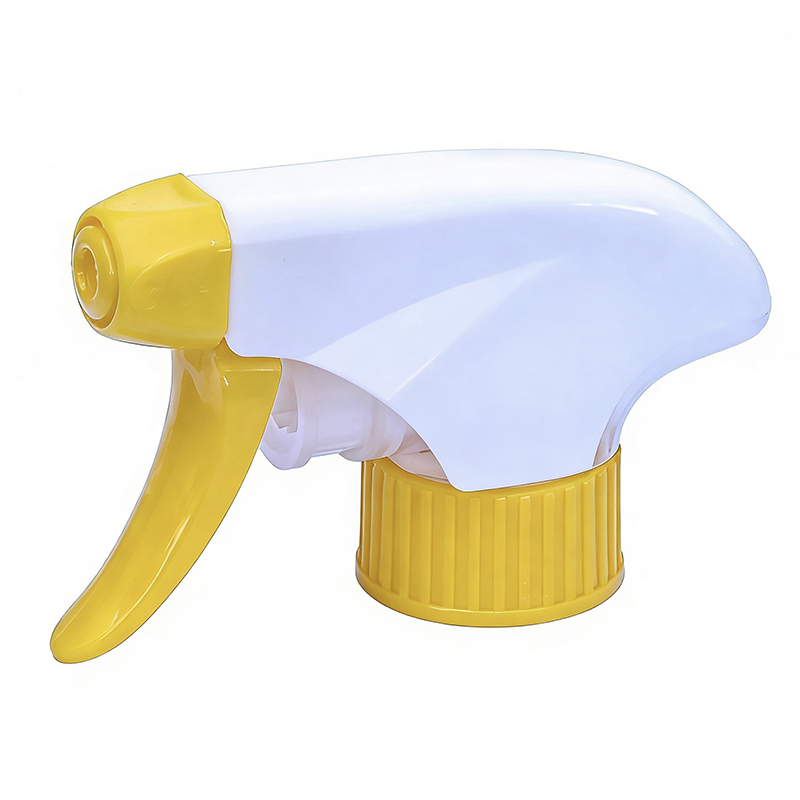
Plastic trigger sprayer platform used across auto care, pet supplies and janitorial packaging projects.
The reader this guide is written for is not browsing. It is a packaging buyer, brand owner, product engineer or importer who has already decided that a trigger sprayer is the right closure, and who now has to lock a specification that survives filling, shipping, shelf life and the end user's hand. That narrows the useful questions to four: which spray function, which material construction, which thread, and which validation steps before the purchase order is signed.
MILA Plastic Industry — the trading name of Zhejiang Mila Plastic Industry Co.,Ltd., a trigger sprayer manufacturer based in Quzhou, Zhejiang, China — produces plastic trigger sprayers alongside perfume pumps, lotion pumps and foam pumps, and exports 70%–80% of its output to South America, Western Europe, Eastern Europe, East Asia, Southeast Asia, the Middle East, Africa and Oceania. Its products are used in cosmetics, food, pharmaceuticals, household cleaning and gardening, and its trigger sprayer range is specified for household cleaning, commercial cleaning and janitorial service, auto care and car detailing, pet supplies, and chemical and daily-use chemical applications.
Why a General-Purpose Trigger Sprayer Specification Fails Across Scenarios
Most trigger sprayer complaints trace back to three failure modes that are decided long before the filling line: liquid leakage, chemical incompatibility between the sprayer and the filled liquid, and thread mismatch between the closure and the bottle. Each of them is triggered by the same root causes — improper matching with the bottle, using the sprayer with a strongly corrosive liquid without a pre-test, and ordering the wrong thread specification.
The mitigation is procedural rather than cosmetic. Confirm the bottle thread size, 28/400 or 28/410, before ordering. Run a chemical compatibility test with the actual liquid. Complete sample pre-testing before mass production. A sprayer that clears all three steps for a glass cleaner is not automatically correct for a wheel acid or a concentrated degreaser, even when both products use the same bottle and the same filling line.
The reason is that the end-use scenario changes which variable dominates. In auto care, the spray pattern and the resistance of internal parts to aggressive chemistry decide whether the product feels professional. In pet supplies, the formula itself varies more widely between brands than in almost any other cleaning category. In janitorial service, the trigger is pulled thousands of times per unit and the closure has to stay leak-proof under repeated use. In chemical and daily-use chemical packaging, compatibility testing is not a nice-to-have step but the first gate of the project.
That is why an application guide is more useful than a specification sheet alone. The specification tells you what a trigger sprayer is; the application tells you which configuration belongs in which product.
Industry Background: A Mature Closure Category Under New Pressure
The global trigger sprayer market was valued at USD 491.8 million in 2025 and is projected to grow at a compound annual growth rate of 4.7% from 2026 to 2034, according to Fortune Business Insights. Wider published estimates that place the category in the billions of dollars generally count the complete filled bottle assembly rather than the sprayer closure itself, which is why the two figures should not be compared directly when sizing a project.
On the specification side, 28/410 is identified by industry reference material published by Houweling Group as the most commonly used opening for trigger sprayers, with 28/400 as the other standard in wide commercial use. For trade and customs documentation, plastic sprayer closures fall under HS Code 392350, 'Stoppers, lids, caps and other closures, of plastics'.
The regulatory direction of travel points toward recyclability. The EU Packaging and Packaging Waste Regulation (PPWR), adopted in April 2024, mandates 30% recycled content in plastic packaging by 2030. For trigger sprayer buyers this turns material choice into a compliance decision as well as a performance decision, and it explains the growing interest in all-plastic PP constructions that do not introduce a metal spring into the packaging waste stream.
Supply side, the category is served by manufacturers with very different production depths. Zhejiang Mila Plastic Industry operates a factory of more than 30,000 square meters in Quzhou with 300–400 employees, 60 injection molding machines, 20 automatic production lines, 4 machining centers, 6 CNC engraving machines, 8 semi-high-speed lathes, 20 wire-cutting machines and 12 precision mold machines. Annual output exceeds 600 million pieces, with a monthly production capacity of 10,000,000 pieces and a stated annual sales range of USD 50M–53M. That production depth matters to buyers because it determines whether tooling, sampling and scale-up happen under one roof or across three suppliers.
Feature-to-Scenario Mapping: Four Decisions That Define the Sprayer
1. Spray function: fine mist or rich foam
The first decision is the output pattern, and the two options behave differently in use. A mist-type trigger sprayer outputs a fine fog that spreads evenly across a surface, which suits glass, hard surfaces, light-duty cleaners and quick-detail sprays. A foam-type trigger sprayer outputs a rich, thick foam that clings to the surface where it lands, which suits degreasers, toilet and bathroom cleaners, tyre and wheel products and any formula where dwell time does more work than mechanical agitation.
In the MILA range, ML-101G2 and ML-102B2 are mist-spray trigger sprayers, while ML-101G1 and ML-102B1 are foam-spray trigger sprayers. The same split continues across the plastic PP series: ML-201B2 and ML-103C1 are mist types, while ML-201B1, ML-202D1, ML-203H1 and ML-204Z1 are foam types. Choosing the wrong one is one of the most common reasons a technically compliant sprayer still generates consumer complaints, because the end user judges the product by what comes out of the nozzle, not by the drawing.
2. Chemical resistance and all-plastic construction
The second decision is the internal construction. MILA trigger sprayers are available in a full plastic version and in a non-full-plastic version. The full plastic version adopts an all-plastic structure without a metal spring, specifically to avoid the risk of rusting when the sprayer is used with corrosive liquids. The non-full-plastic version uses accessories made of other materials. For buyers, this is the single most consequential choice when the formula is aggressive.
The all-plastic direction is protected by utility model patent ZL202321149508.9, granted by the China National Intellectual Property Administration on 28 November 2023 with expiry on 15 May 2033, covering the all-plastic trigger sprayer. The wider patent portfolio also includes a lockable trigger sprayer (ZL202321149516.3), an adjustable-angle trigger sprayer (ZL202321038643.6), a locking-function trigger sprayer (ZL202321038645.5) and a nozzle protection structure (ZL202321349188.1). For an application engineer, the adjustable-angle and locking-function patents are directly relevant to janitorial and auto care use, where the bottle is often held at an angle or stored in a van.
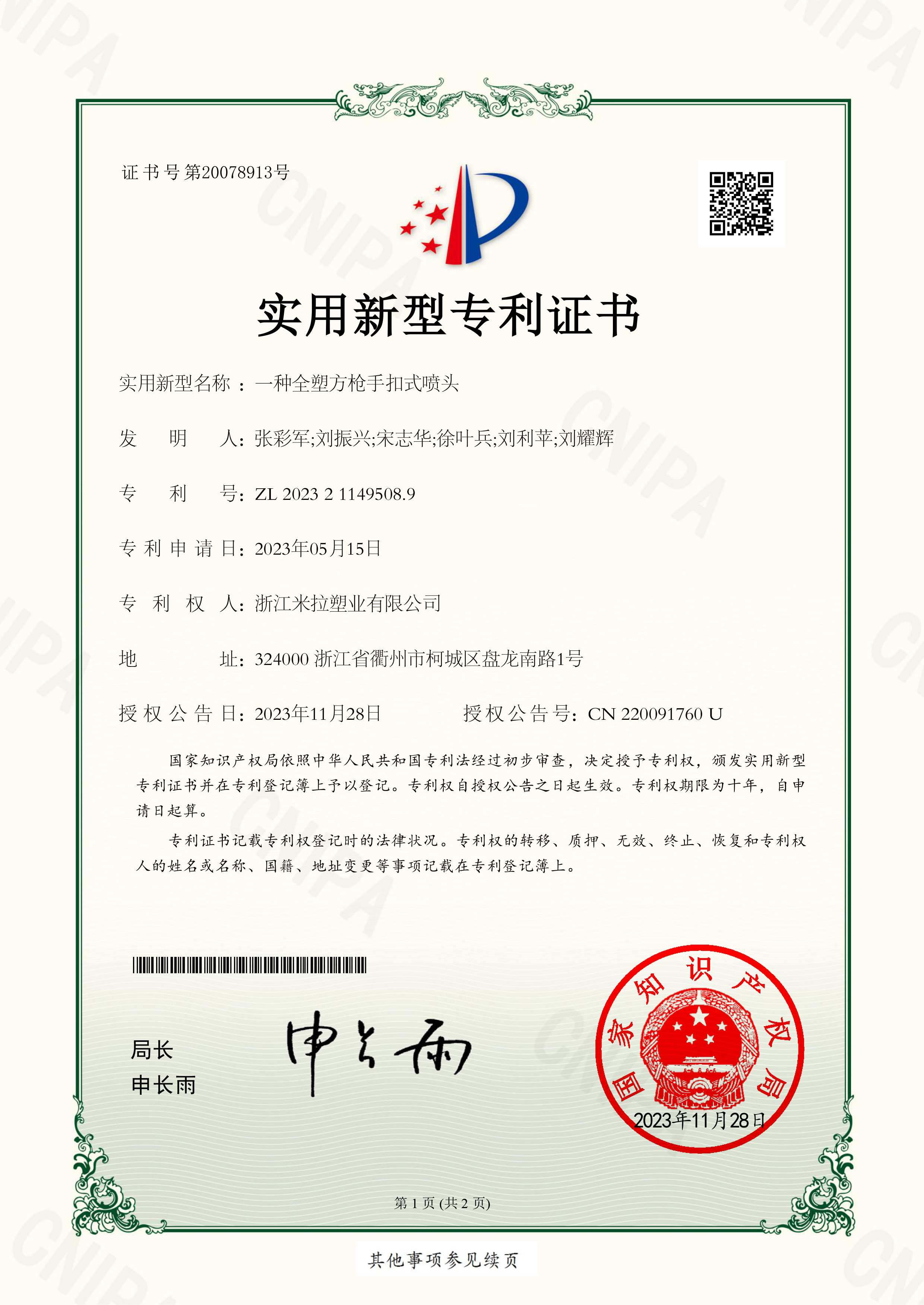
Utility model patent ZL202321149508.9 covers the all-plastic trigger sprayer structure.
Patent coverage is not a marketing claim about performance, but it does tell a buyer something practical: the anti-leak sealing structure and internal geometry of the patented trigger sprayer were developed as a defined design rather than assembled from generic parts. The manufacturer describes the patented trigger sprayer as using an improved anti-leak sealing structure, with the recommendation that projects needing leak-proof and stable long-term performance select the patented version, while projects with lower requirements can use the conventional trigger sprayer.
3. PP body and the recycling question
The third decision is the body material. MILA trigger sprayers are produced in PP, and the all-plastic versions are described as all-PP in construction. PP matters for two reasons. Functionally, it is the material that carries the chemical resistance of the closure against common household detergents, cleaning agents and car care fluids. Commercially, a mono-material PP sprayer is the version that fits the direction set by the EU PPWR, which requires 30% recycled content in plastic packaging by 2030.
A recyclable plastic trigger sprayer does not automatically satisfy a recycled-content obligation, but it removes one of the obstacles: a closure built from a single polymer family is easier to place into a recycling stream than one that combines plastic with a metal spring. Buyers working toward a 2030 packaging target should therefore treat all-plastic PP construction as the default specification and reserve mixed-material constructions for applications where they are genuinely required.
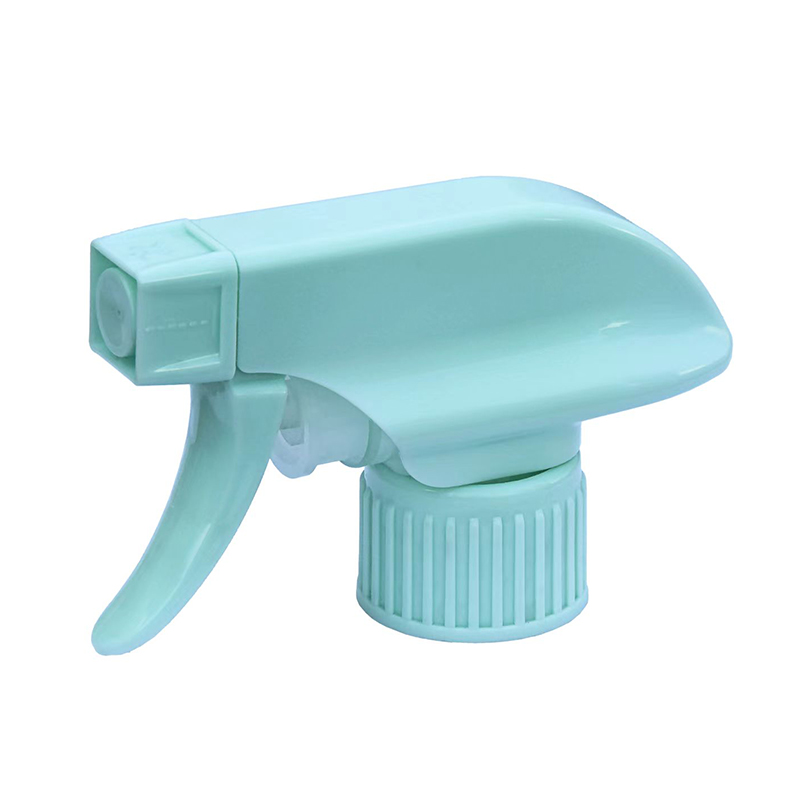
ML-101G2: all-plastic single cover mist trigger sprayer, 28/400 and 28/410.
4. Thread fit: 28/400 and 28/410
The fourth decision is the thread, and it is the one that most often causes problems after the order is placed. MILA trigger sprayers are supplied in 28/400 and 28/410 thread sizes, which cover the two dominant bottle-neck standards in the category. Every model in the range — ML-101G1, ML-101G2, ML-102B1, ML-102B2, ML-103C1, ML-201B1, ML-201B2, ML-202D1, ML-203H1 and ML-204Z1 — is offered with both threads.
The practical rule is simple: the thread size on the purchase order must be confirmed against the actual bottle neck, not against a previous project or a supplier catalogue. Because 28/410 is the most commonly used opening for trigger sprayers, buyers sometimes assume it is universal. It is not, and a mismatch produces exactly the leakage and fit problems described earlier. Confirming the thread before ordering is the cheapest risk control available in the entire project.
Step-by-Step: Adapting a Trigger Sprayer to a New Project
- Define the liquid and its aggressiveness. Name the actual formula, not the category. A glass cleaner, a kitchen degreaser and a wheel acid are three different compatibility problems. For highly corrosive fluids, plan a chemical pre-test rather than relying on general detergent compatibility.
- Choose the spray function. Select a fine mist trigger sprayer when even coverage matters, such as glass, window and quick-detail sprays. Select a foaming trigger sprayer when the formula needs cling and dwell time, such as degreasers and bathroom cleaners.
- Confirm the bottle neck thread. Verify whether the bottle is 28/400 or 28/410 and record it on the specification. Do not assume the two are interchangeable in production.
- Decide the material construction. Choose an all-plastic trigger sprayer when the formula is corrosive or when a recycling or recycled-content target applies. Choose the non-full-plastic version only when the application genuinely allows it.
- Validate with samples and a chemical pre-test. Sample testing can be conducted before bulk orders. The most useful test uses the real liquid in the real bottle under real storage conditions, because that is where chemical incompatibility and thread leakage actually appear.
- Lock commercial terms and scale. The minimum order quantity for wholesale trigger sprayer orders is 50,000 pieces, with delivery terms of FOB or CIF, acceptance criteria based on pre-shipment test, and payment terms of 30/70. Production is supported by 100% testing and a stated lead time of 7 days, against a monthly capacity of 10,000,000 pieces.
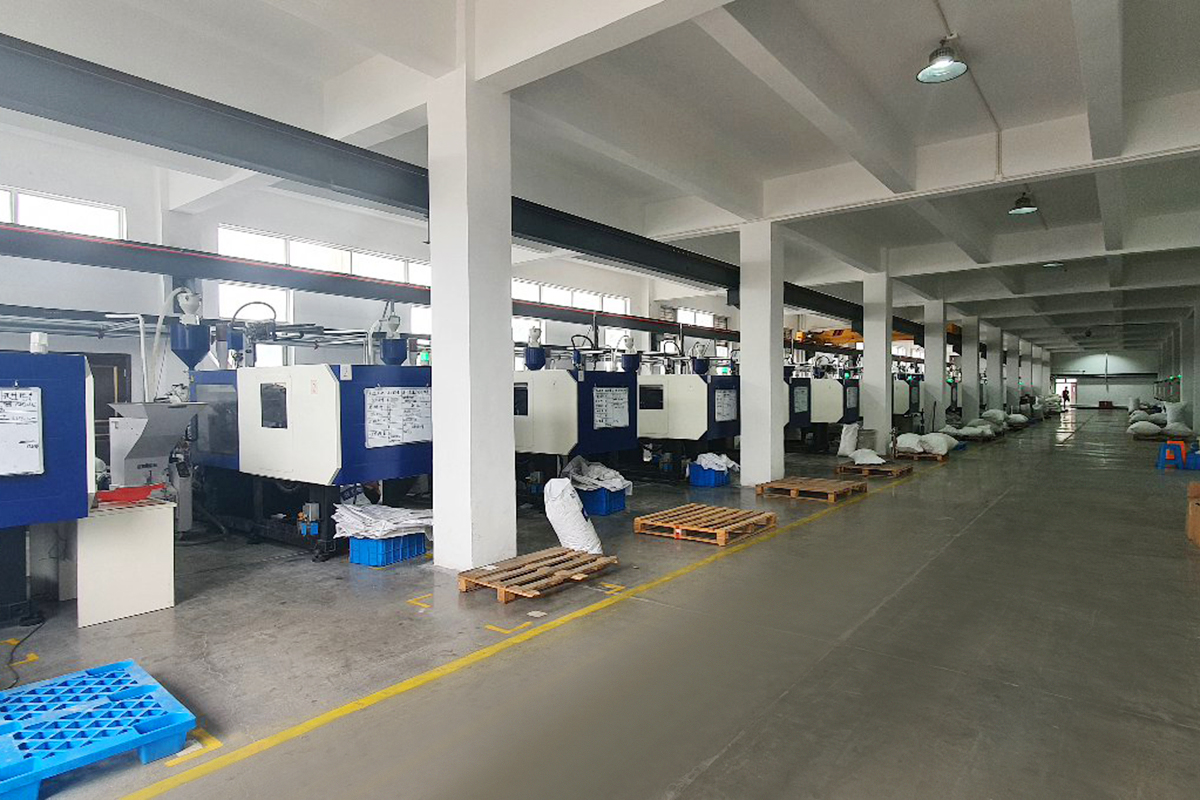
In-house injection molding gives direct control over PP trigger sprayer production and repeat orders.
Use Cases: Matching Sprayers to Five End-Use Scenarios
Auto care and car detailing
Auto care packaging splits along the same mist-versus-foam line as the products themselves. Glass and window cleaners, interior sprays and quick detailers are mist applications: the user wants an even, fine fog with no streaking, so a fine mist trigger sprayer such as ML-101G2 or ML-102B2 is the natural fit. Wheel cleaners, tyre dressings and heavy degreasers are foam applications, where a rich thick foam holds the chemistry on a vertical or angled surface long enough to work, making a foaming trigger sprayer such as ML-101G1 or ML-102B1 the better match.
Auto care chemistry is also where material construction earns its place. Because these formulas are among the more aggressive products in a consumer's cupboard, the all-plastic construction without a metal spring is the specification that removes the rust risk associated with corrosive liquids. For bottles that are used at an angle, such as under a wheel arch, the adjustable-angle trigger sprayer patent (ZL202321038643.6) reflects a design direction aimed at exactly that handling pattern.
Pet supplies
The pet supplies industry is listed among the applicable industries for the MILA trigger sprayer range, and the category calls for unusually careful specification. Pet shampoos, coat conditioners, grooming sprays and kennel disinfectants vary more between brands than household cleaners do in viscosity, fragrance load and pH, which means a sprayer validated on one customer's formula tells you very little about the next. The reliable approach is to fix the spray function by the desired user experience — foam for shampoo and coat products, mist for light grooming and deodorising sprays — and then run a chemical compatibility test with the actual liquid before committing to mass production.
Because pet products are often stored and used in bathrooms and utility areas, thread confirmation is equally important here. A 28/410 trigger sprayer on a 28/400 bottle, or the reverse, will not be rescued by a better formula.
Household cleaning
Household cleaning is the volume application, and the sprayer ranges listed by MILA cover the three core products directly: household kitchen degreaser, bathroom and toilet cleaner, and glass and window cleaner. Degreasers and toilet cleaners are foam applications where cling matters; glass and window cleaners are mist applications where an even, fine fog matters. Both groups are served by the all-plastic single cover and double cover ranges.
For a brand owner, the household cleaning scenario is also where the commercial terms become decisive. At a minimum order quantity of 50,000 pieces and a monthly capacity of 10,000,000 pieces, a household cleaning line can be scaled without changing the closure supplier, which is one of the practical advantages of a mono-material, standard-thread platform.
Commercial cleaning and janitorial service
Janitorial use is the harshest durability test in the category because the same unit is triggered far more often than in a household setting, often by different operators, and stored in vehicles. Commercial cleaning and janitorial service is listed as an applicable industry for the full MILA trigger sprayer range, and the specifications that matter most here are leak performance and thread reliability rather than the spray pattern alone.
There is field evidence for that requirement. A customer case involving a trading company and finished-goods packaging manufacturer in Egypt covered a shipment of 5,000,000 pieces of trigger sprayers for finished-product packaging, with a stated service life of 2–5 years on a reusable basis. The reported result was stable product quality, satisfied customer feedback and repeated continuous orders, with reliable quality and stable supply capacity cited as the highlights. For a janitorial distributor, that combination of repeat-order stability and a defined reuse window is more meaningful than any single performance figure.
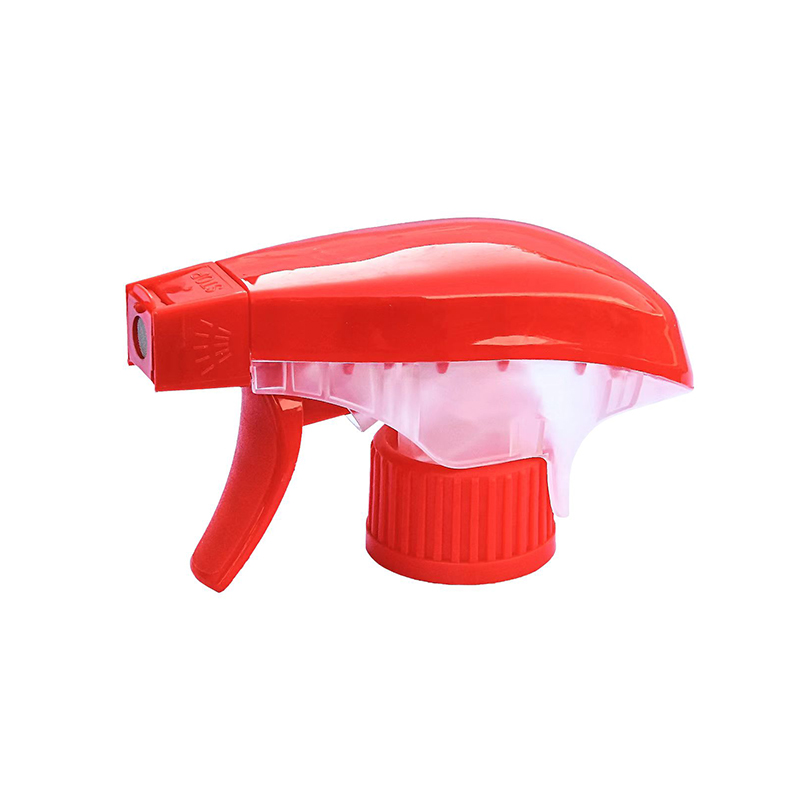
ML-203H1: foam trigger sprayer suited to janitorial and heavy-duty cleaning products.
Chemical and daily-use chemical packaging
Chemical and daily-use chemical products sit at the compatibility end of the spectrum. Trigger sprayers in the MILA range are described as suitable for household detergents, cleaning agents and car care fluids, with the explicit recommendation that highly corrosive fluids undergo chemical pre-testing. That recommendation is not a limitation of the product so much as an acknowledgement that the sprayed liquid, not the sprayer, is usually the unknown variable.
For this scenario, the sequence is: choose an all-plastic trigger sprayer to eliminate the metal spring from the compatibility equation, confirm the thread, then test with the actual chemical. Where a project involves both a mist and a foam product, the same 28/400 or 28/410 platform can carry both variants, which simplifies bottle sourcing and reduces the number of closure SKUs a factory has to manage.
Comparison: Which Trigger Sprayer Configuration Fits Which Scenario
The table below maps each end-use scenario to the spray function and model family that fit it, based on the spray type, material and applicable industries listed for each model in the MILA range. It is a specification prompt rather than a substitute for sample testing.
| End-use scenario | Spray function | Model family to check | Why this configuration |
|---|---|---|---|
| Auto care — glass, window, interior and quick-detail sprays | Fine mist | ML-101G2, ML-102B2 (all-plastic) | Mist type outputs fine fog for even coverage; all-plastic structure removes rust risk from aggressive car care liquids |
| Auto care — wheel cleaners, tyre dressings, heavy degreasers | Foam | ML-101G1, ML-102B1 (all-plastic) | Foam type outputs rich thick foam that clings to the surface |
| Pet supplies — shampoo and coat products | Foam | ML-203H1, ML-101G1 | Pet supplies industry is a listed applicable industry; foam supports formulas requiring cling |
| Pet supplies — grooming and deodorising sprays | Fine mist | ML-101G2, ML-201B2 | Mist output for light, even application; chemical pre-test with the actual formula recommended |
| Household cleaning — kitchen degreaser, bathroom and toilet cleaner | Foam | ML-101G1, ML-102B1, ML-202D1 | Listed applications include household kitchen degreaser and bathroom & toilet cleaner |
| Household cleaning — glass and window cleaner | Fine mist | ML-101G2, ML-102B2, ML-103C1 | Listed application includes glass & window cleaner; mist type supports streak-free coverage |
| Commercial cleaning and janitorial service | Foam or mist depending on the task | ML-201B1, ML-202D1 (foam); ML-201B2 (mist) | Janitorial service is a listed applicable industry; repeated-use durability makes thread fit and leak performance the priority |
| Chemical and daily-use chemical packaging | Fine mist or foam, after pre-test | ML-102B2, ML-102B1 (all-plastic) | All-plastic construction avoids rust risk from corrosive liquids; pre-test required for highly corrosive fluids |
Reference Table: MILA Trigger Sprayer Models at a Glance
| Model | Type | Material | Spray type | Outer cap | Thread size |
|---|---|---|---|---|---|
| ML-101G1 | All-plastic trigger sprayer | All-plastic | Foam spray | Single cover | 28/400, 28/410 |
| ML-101G2 | All-plastic trigger sprayer | All-plastic | Mist spray | Single cover | 28/400, 28/410 |
| ML-102B1 | All-plastic trigger sprayer | All-plastic | Foam spray | Double cover | 28/400, 28/410 |
| ML-102B2 | All-plastic trigger sprayer | All-plastic | Mist spray | Double cover | 28/400, 28/410 |
| ML-103C1 | Plastic trigger sprayer | Plastic PP | Mist spray | — | 28/400, 28/410 |
| ML-201B1 | Plastic trigger sprayer | Plastic PP | Foam spray | Single cover | 28/400, 28/410 |
| ML-201B2 | Plastic trigger sprayer | Plastic PP | Mist spray | Single cover | 28/400, 28/410 |
| ML-202D1 | Plastic trigger sprayer | Plastic PP | Foam spray | Single cover | 28/400, 28/410 |
| ML-203H1 | Plastic trigger sprayer | PP | Foam spray | Dolphin head | 28/400, 28/410 |
| ML-204Z1 | Plastic trigger sprayer | Plastic PP | Foam spray | Leopard head | 28/400, 28/410 |
All ten models share the same 28/400 and 28/410 thread options and the same listed applications: household kitchen degreaser, bathroom and toilet cleaner, glass and window cleaner, and car care and auto detailing.
Frequently Asked Questions
What certifications and standards apply to trigger sprayer packaging?
Trigger sprayers follow general plastic packaging material requirements. There is no mandatory industry certification required for this product category. The compliance points that actually matter are plastic material safety, leak-proof performance, thread size compatibility with 28/400 and 28/410 bottle necks, and chemical compatibility with common household detergents. On the manufacturing side, Zhejiang Mila Plastic Industry holds ISO 9001:2015 and ISO 14001:2015 certifications together with SGS compliance, and holds utility model patents granted by the China National Intellectual Property Administration covering the all-plastic trigger sprayer (ZL202321149508.9), the lockable trigger sprayer (ZL202321149516.3), the adjustable-angle trigger sprayer (ZL202321038643.6), the locking-function trigger sprayer (ZL202321038645.5) and a nozzle protection structure (ZL202321349188.1).
Can trigger sprayers be customized with color, logo and caliber for an OEM project?
Yes. MILA Plastic Industry provides both OEM and ODM production services. OEM production is offered for private-label and custom-branded trigger sprayer orders, and ODM design and production services are available for trigger sprayer projects. Customization options include color, logo and caliber, so a brand owner can align the closure with an existing bottle and label system. Because customization is defined before tooling and sampling, the practical starting point is a written specification covering spray function, thread size, material construction and the customization items required.
What are the purchasing terms and minimum order quantity?
The minimum order quantity for wholesale trigger sprayer orders is 50,000 pieces. Delivery terms are FOB or CIF, acceptance criteria are based on pre-shipment test, and payment terms are 30/70. These terms apply alongside a monthly production capacity of 10,000,000 pieces, which means a project can move from an initial trial order to a repeat volume order without changing the underlying specification or supplier.
Can samples be provided for testing before a bulk order?
Yes. Sample testing can be conducted before bulk orders. For accuracy, samples should be tested with the actual liquid that will be filled, not with water or a generic detergent, because chemical incompatibility and thread leakage only show up under real conditions. For highly corrosive fluids, a chemical pre-test is recommended as a standard step rather than an exception.
What is the production lead time and how is quality controlled?
The stated production lead time is 7 days, supported by a monthly capacity of 10,000,000 pieces and 100% testing across production. If a large number of products in a batch have non-human quality problems, the manufacturer supports returns or exchanges. For a first order, the recommended sequence is sample validation, then chemical pre-test where relevant, then pre-shipment acceptance testing, followed by scale-up. To start a project or request a quotation, contact MILA Plastic Industry at triggersprayer.com with the target application, bottle thread size, spray function and estimated annual volume.
Conclusion: Specify by Scenario, Not by Catalogue Page
Trigger sprayer selection fails when it is treated as a single-variable purchase. The scenario decides the spray function, the formula decides the material construction, the bottle decides the thread, and the project timelines decide the validation steps. Auto care leans on mist for glass and foam for heavy cleaning chemistry; pet supplies demands chemical pre-testing because formulas vary so widely; household cleaning and janitorial service depend on the same thread and leak discipline at far higher usage frequency; and chemical and daily-use chemical packaging makes the all-plastic, metal-spring-free construction the starting point rather than an upgrade.
Working through those four checks — spray type, chemical resistance, PP body, and 28/400 or 28/410 thread fit — before the purchase order is placed removes the majority of the risk from a trigger sprayer project. MILA Plastic Industry supports that process with OEM and ODM production, customization of color, logo and caliber, a minimum order quantity of 50,000 pieces, a monthly capacity of 10,000,000 pieces and a stated lead time of 7 days.
Next Step: Validate Your Trigger Sprayer Specification
Send the target application, bottle thread size, spray function and estimated volume, and request samples for chemical pre-testing before you commit to a bulk order. Wholesale, OEM and custom trigger sprayer projects are quoted against the same 28/400 and 28/410 platform.
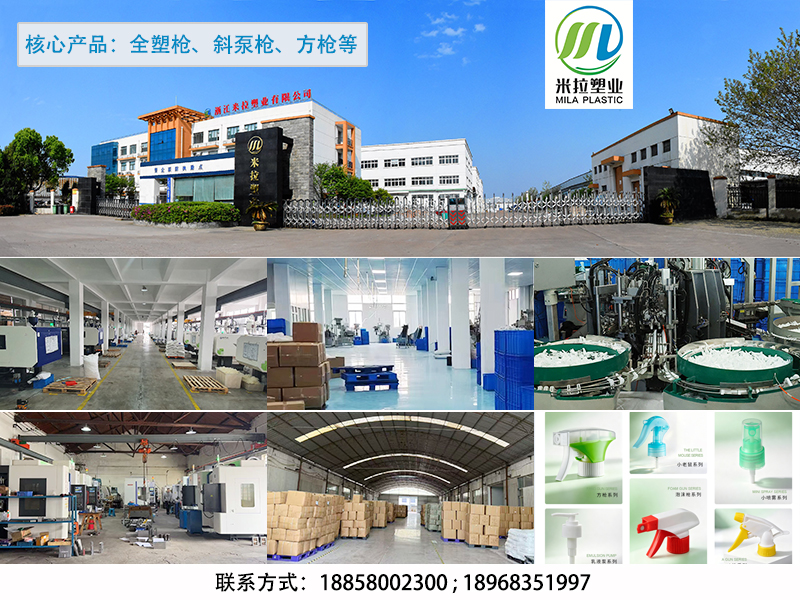
Contact MILA Plastic Industry for trigger sprayer samples, quotations and OEM project discussion.
Have Questions or Need More Details?
Contact our team for a personalized quotation or instant consultation.
Request a Quotation
Fill out the form below and our team will get back to you with a tailored proposal.
WhatsApp Direct Chat
Prefer to chat in real-time? Message us on WhatsApp for instant assistance & quick answers.
- Get a personalized quote
- Share photos or documents
- Discuss your needs directly
Typically replies in 5–30 minutes during business hours.