Antibacterial Functional Yarn: Waterproof vs. Washable by End Use
Choosing between waterproof antibacterial yarn (YX-FUNC-001) and machine washable antibacterial yarn (YX-WASH-001) is not a contest over which yarn is stronger. It is a question of which failure your programme cannot tolerate: water reaching the substrate, or the antibacterial function and surface quality thinning out across the laundry cycles your customer will actually run. YX-FUNC-001 is built around water-repellent protection. YX-WASH-001 is built around repeated machine-wash durability. Both are produced on one customization platform, so the decision usually rests on end use and on what you can verify — not on a universal ranking of the two finishes.
What each antibacterial yarn is optimised for
Waterproof antibacterial yarn YX-FUNC-001 treats water-repellent protection as the primary performance priority, with the antibacterial function carried alongside it. The yarn is intended for constructions where the article meets rain, spray, spills or wet handling, and where losing that protection is the visible failure the end user will notice first.
Machine washable antibacterial yarn YX-WASH-001 reverses that emphasis. Here the antibacterial function is the attribute that has to hold through repeated machine laundering, and water repellency is not the design purpose. This yarn is aimed at articles that go into a drum as routine care rather than as an occasional exception.
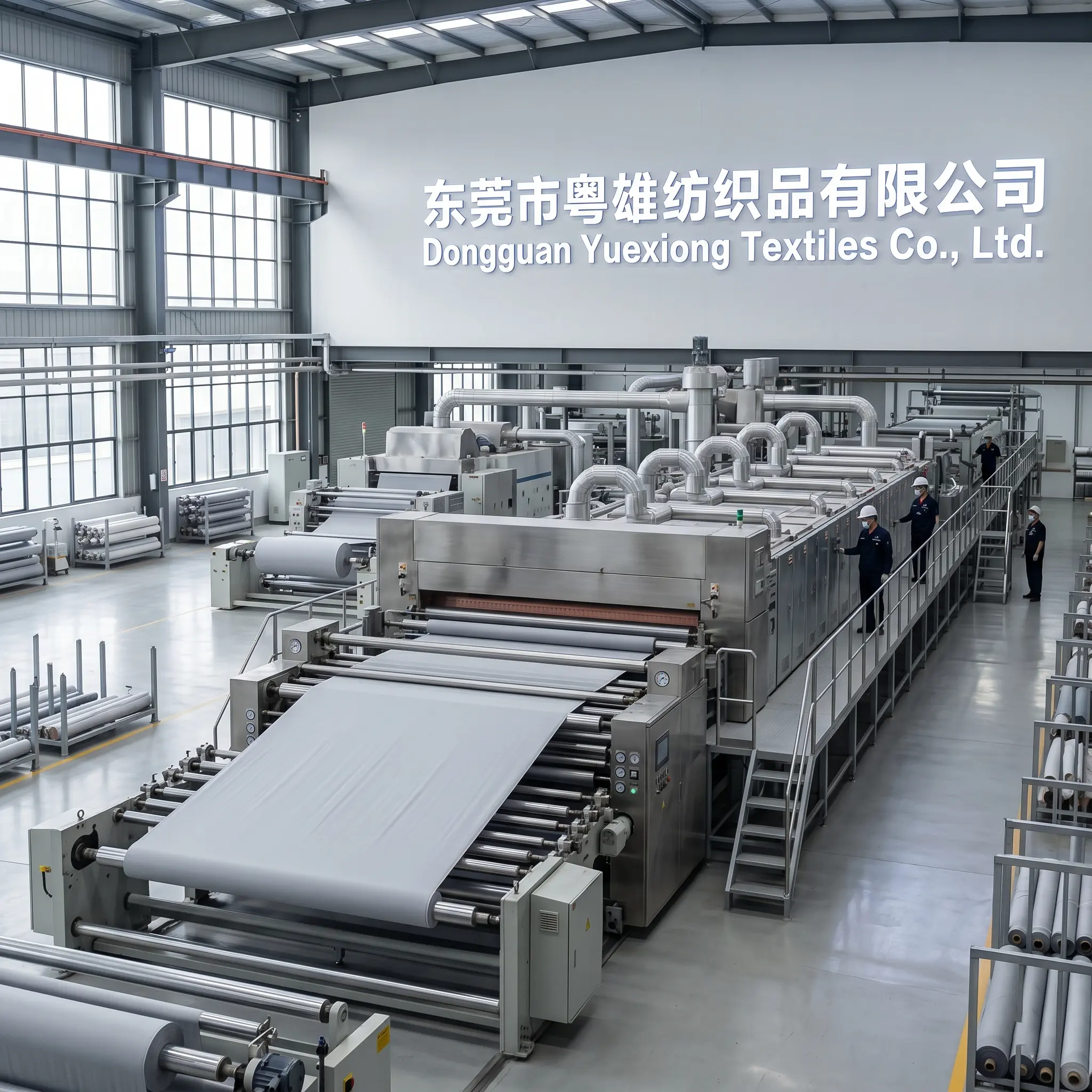
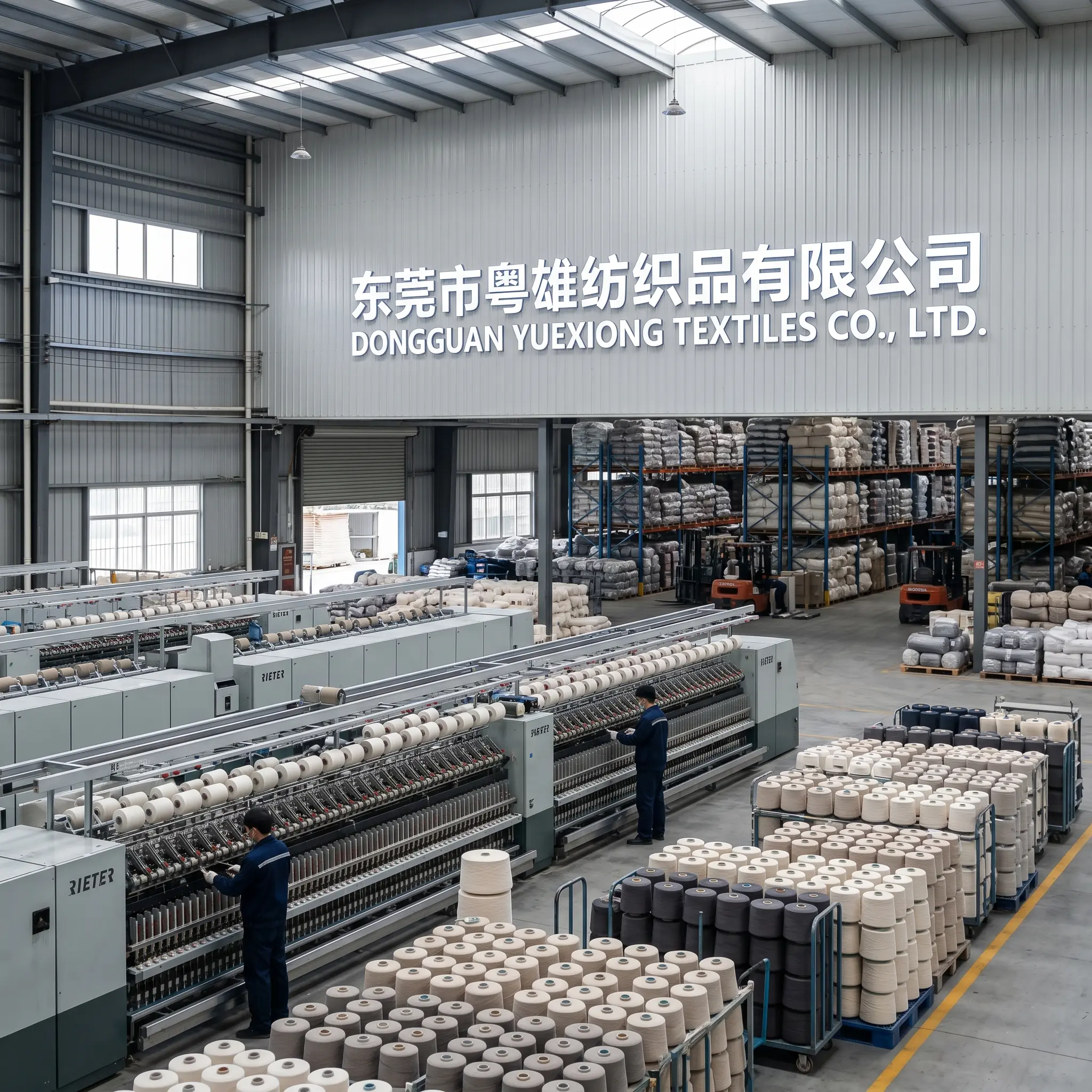
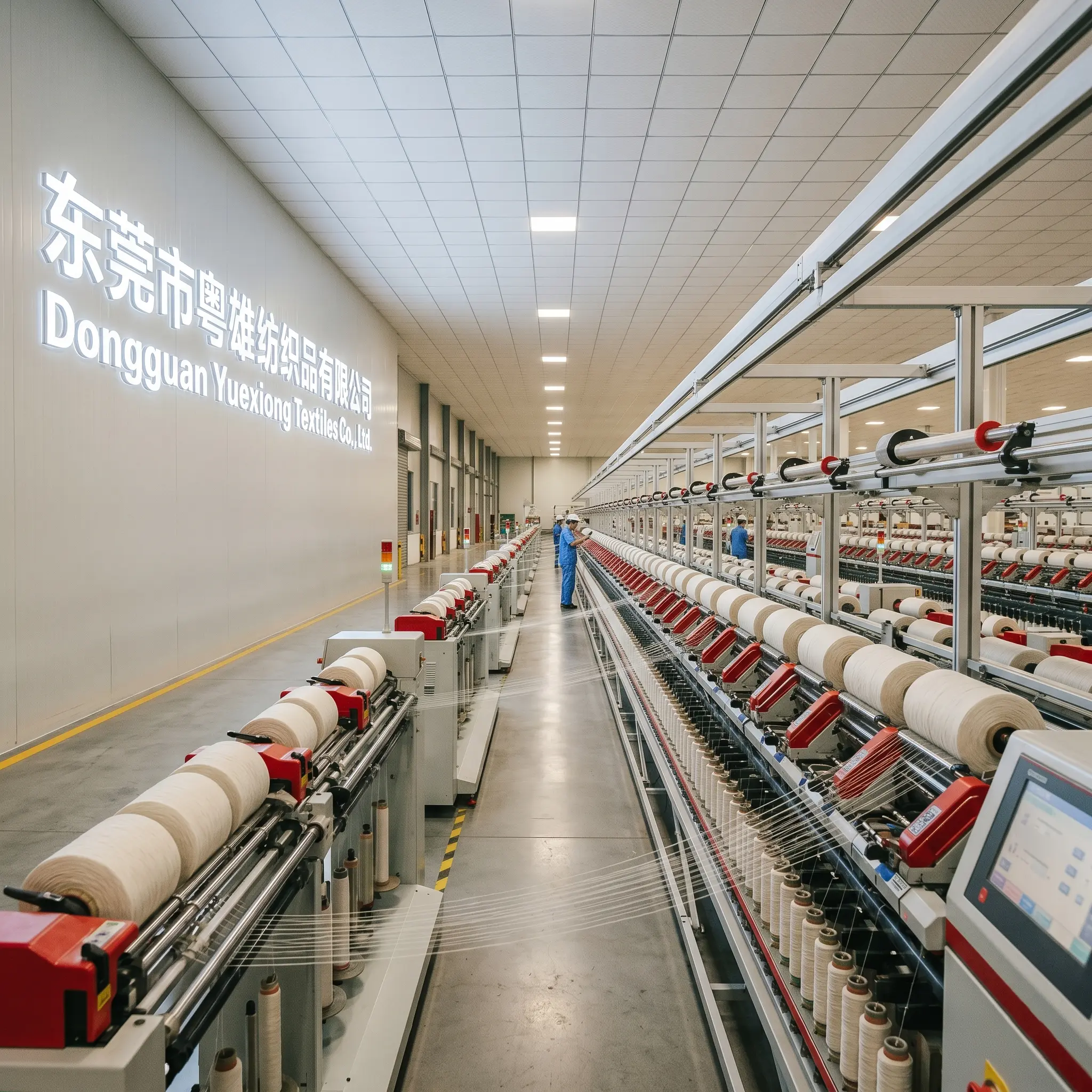
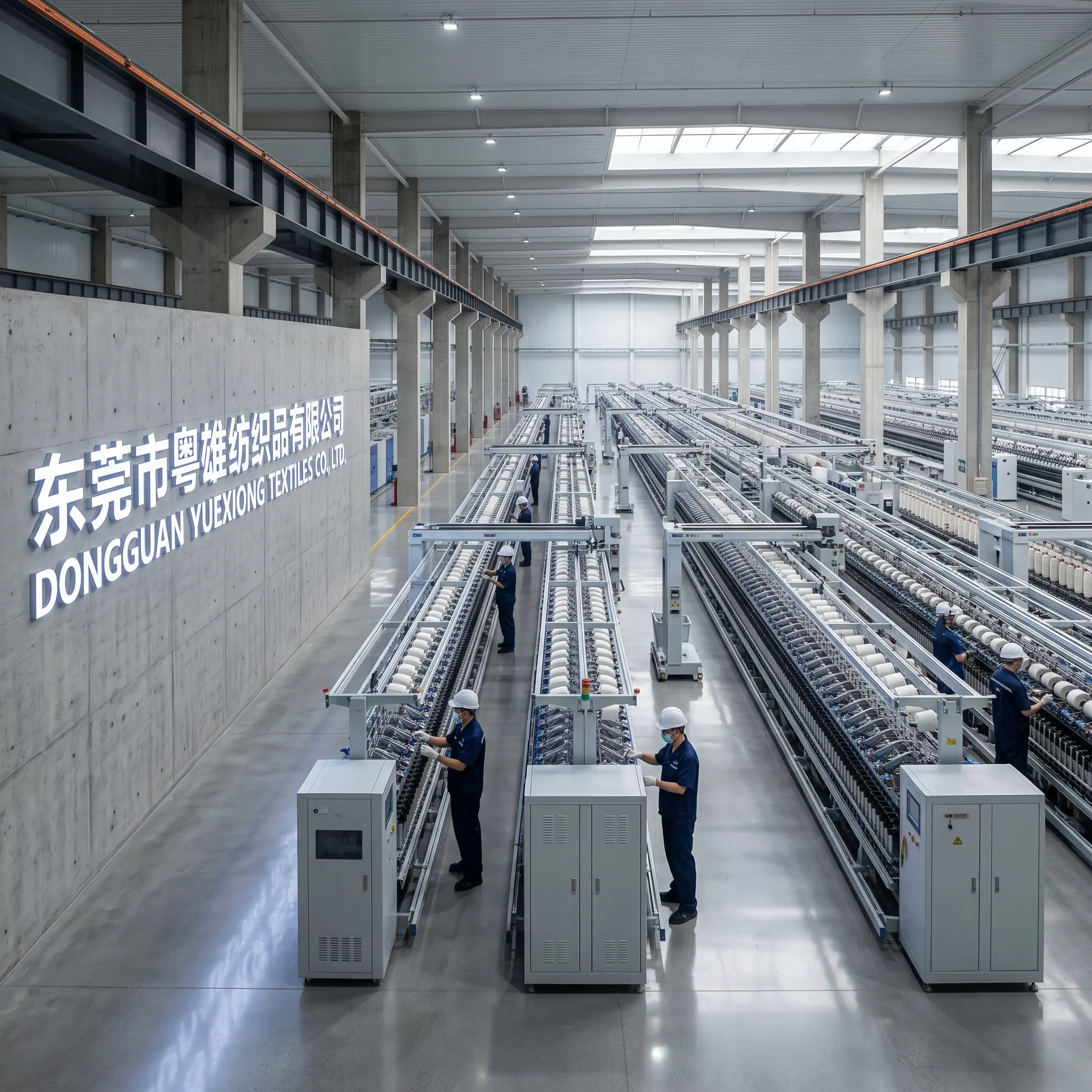
Both are supplied by MONALISHAMAGIC — the brand of Dongguan Yuexiong Textile Co., Ltd., a functional yarn manufacturer founded in 2016 that operates a 2,000 sqm facility with 50 employees, a 20-engineer development team and an annual output of 1,000 tons, with roughly 70% of sales exported. The portfolio ranges from cashmere and organic cotton to GRS-certified recycled nylon, and includes thermochromic, photochromic, conductive heating and metal gel materials; products are certified to GRS, BCI and OEKO-TEX. Colour is developed through the mill's waterless dyeing process.
What neither product is matters just as much. Neither yarn code certifies a finished fabric. A repellent or antibacterial function introduced at yarn level expresses itself through a fabric that also depends on construction, density, dyeing, finishing and garment assembly. The claim you print should therefore be written at the level at which it was tested — yarn, fabric or garment — and the tested level should be stated in the specification, not assumed from the product name.
The decision order most buyers get wrong
Most sourcing teams compare finish names first, then price, then count. That order produces comparisons that cannot be resolved. A more reliable sequence runs from the consumer backwards to the purchase order:
- Care regime first. Decide how the article will be washed and how many cycles the claim must survive, because that single answer already separates the two finishes.
- Claim level second. Fix whether the promise is made on the yarn, the fabric or the garment, and who tests it.
- Finish third. Only now does YX-FUNC-001 or YX-WASH-001 become a decision rather than a preference.
- Composition and count fourth. Base fibre and yarn count within the 0.5/1 NM to 200/2 NM range determine whether the chosen finish is feasible on your construction.
- Test plan and quotation last. These are outputs of the four decisions above, not inputs to them.
For scale, Fortune Business Insights projects the global textile yarn market at USD 121.99 billion in 2026, rising from USD 117.1 billion in 2025 and reaching USD 170.32 billion by 2034. That figure covers natural, synthetic and blended yarns as a whole rather than functional yarn specifically, so it indicates the size of the category your order sits inside; it says nothing about how large the antibacterial segment is, and it should not be quoted as though it did.
Four performance priorities that separate the two finishes
1. Water-repellent protection
With YX-FUNC-001, the first question is what the protection has to resist and where the claim will be made. Light rain on an outer shell, a spilled drink on a table linen, and a wet handling environment are three different requirements, and a single word such as "waterproof" does not distinguish them. Write the requirement in operational language — which liquid, which exposure, which duration, which surface — and require the test to be run on the same construction your customer receives.
A practical trap sits here: repellency assessed on loose yarn rarely survives translation to a dense woven shell or an open knit. Ask the mill to confirm which sample stage your acceptance criterion refers to, and keep the swatch that passed so that repeat orders are measured against the same reference.
2. Repeated machine-wash durability
With YX-WASH-001, the decisive number is not a single wash but the cycle count your care label implies. The specification should state the number of machine-wash cycles, the wash temperature and the drying route the claim covers, because a durability figure without those conditions cannot be compared with a competitor's figure or reproduced in a later order.
Two attributes should be tracked across the cycle sequence, not just one. The antibacterial function is the headline, but appearance — colour retention and surface integrity — is what the consumer judges first. The mill's quality control for functional yarns covers colour fastness and washability precisely because the two fail together in the customer's hands, and the acceptance criteria for both should be agreed before bulk.
3. Hand feel and wearable comfort
Hand feel is the criterion most often settled last and most expensive to correct. In practice both functions are delivered at or near the fibre surface, so the finish route — not only the base fibre — influences how the yarn feels, drapes and behaves next to skin. The reliable method is a blind comparison: knit or weave the same construction from both candidate yarns at the same count and gauge, then judge surface, drape and skin contact without knowing which sample is which.
Do this at sample stage, not after bulk. A programme that buys on price and discovers a comfort problem in the finished garment has already paid for the yarn, the sampling and the lost season.
4. Base-fibre compatibility
Multi-material customization is supported across the two products, but "supported" is a starting point rather than an answer. Compatibility is specific to the base fibre, the yarn count, the colour route and the downstream process you intend to run. Cotton, linen, wool, cashmere, mulberry silk, polyester and recycled nylon each behave differently in spinning and finishing, and a finish confirmed on one base should not be assumed on another.
Put the exact composition and count on the RFQ and ask for written confirmation that the finish is supported on that base before sampling. If the article will be sold in China, add fibre-content labelling to the timeline: GB/T 29862-2026, the updated national standard for textile fibre content identification, replaces GB/T 29862-2013 and takes effect on 1 August 2027, so labels and test documentation prepared now should be planned to align with it.
Waterproof vs. machine washable antibacterial yarn: side-by-side
| Decision dimension | YX-FUNC-001 waterproof antibacterial | YX-WASH-001 machine washable antibacterial |
|---|---|---|
| Primary performance priority | Water-repellent protection, with antibacterial function alongside | Repeated machine-wash durability, with antibacterial function alongside |
| Service environment it fits | Articles exposed to rain, spray, spills or wet handling | Articles laundered on a machine cycle as part of normal care |
| Failure mode to control | Loss of repellency and wet-out through the construction | Gradual loss of function and appearance across wash cycles |
| Care instruction you would print | Limited laundering or surface cleaning, with reproofing considered | Machine wash at the cycle count and temperature named in the test plan |
| Hand-feel check | Judge drape and surface on your own construction before bulk | Judge drape and surface on your own construction before bulk |
| Base fibre | Confirm finish support for the specified fibre and count in writing | Confirm finish support for the specified fibre and count in writing |
| Shared customization | Count 0.5/1 NM to 200/2 NM, composition, colour, application process | Count 0.5/1 NM to 200/2 NM, composition, colour, application process |
| Testing and certification routes | SGS, GTTC, OEKO-TEX, GRS, OCS or third-party testing | SGS, GTTC, OEKO-TEX, GRS, OCS or third-party testing |
| Typical fit | Outerwear, outdoor accessories, home textiles with wet use | Sportswear, knitwear, uniforms, bedding and towelling |
| What it is not | A guarantee of finished-fabric performance | A guarantee of finished-fabric performance |
What stays the same: customization levers behind both finishes
The commercial value of comparing these two products is that most of the specification does not change when you switch between them. Yarn count, material composition, colour and application process are specified on the same platform across the 0.5/1 NM to 200/2 NM range, which means a switch can be evaluated on one variable rather than a full redevelopment.
Yarn count is the lever that most directly affects feasibility. Fine counts support lightweight knits and smooth surfaces; coarser counts suit heavier structures and thicker hands. Because the range spans both, the count conversation is really a construction conversation — state the gauge, the fabric weight target and the end article, and let the count follow.
Colour is the second lever that quietly changes timelines. Custom colour development is a separate step from the functional finish, and the two interact: colour fastness has to be assessed together with wash behaviour, not in isolation. Where a programme needs both a colour match and a durability claim, put both acceptance criteria in one test plan so the result reflects the product as sold.
Matching the finish to the end use
End use resolves most of the ambiguity, provided the decision is framed as a care-regime question rather than a product-preference question. The four categories below cover the common cases; each one names the priority, the reason, and the check that keeps the decision honest.
Outerwear
Outerwear leans to YX-FUNC-001, because the customer's first test is weather and the first complaint is wet-through. The check is claim level: a repellent yarn supports a fabric-level claim, but the finished shell's behaviour also depends on construction and on any additional finishing applied at the fabric stage. Write the claim where it was tested, and confirm that the care instruction you print does not promise a durability the repellent route cannot deliver across the garment's expected life.
Sportswear and activewear
Sportswear leans to YX-WASH-001, because the garment is washed after almost every wear and the antibacterial function is only as good as its survival across that sequence. Here the useful discipline is to define the cycle count from the care label you intend to print, then test to it. A washable yarn whose durability was proven at a gentler regime than the label promises has not been proven for the product you are selling.
Knitwear
Knitwear usually turns on hand feel first and function second, so the decision should follow the care label rather than the marketing story. If the label will say hand wash, much of the machine-wash advantage of YX-WASH-001 goes unused and the comparison should be reopened on comfort and drape. If the label will say machine wash, the wash-durable route earns its place, and the check becomes whether the chosen count and fibre still deliver the handle the collection needs.
Home textiles
Home textiles — bedding, towelling, table linen, upholstery covers — split according to use. Articles laundered frequently favour YX-WASH-001, with colour retention tracked across the same cycle sequence as the antibacterial function. Articles that meet spills or wet handling favour YX-FUNC-001, with the caveat that repeated hot laundering is the wrong home for a repellent claim. In both branches, skin-contact schemes such as OEKO-TEX belong in the documentation pack, because household textiles are judged on safety as well as performance.
Risks both finishes share
Two environmental risks apply to functional yarns regardless of which finish is chosen: performance degradation under extreme temperatures, and colour fading or reduced wash durability after prolonged UV exposure. The control measures are established rather than experimental — UV-stabilised treatment, temperature-resistant formulation, and strict quality control of colour fastness and washability. Compliance with OEKO-TEX, GRS and BCI standards, durability testing and optimised material formulations support that control, and the mill's waterless dyeing process is part of how stability is pursued.
What this means for a buyer: ask how the finished article will be stored, transported and displayed before it reaches the consumer. A yarn that performs correctly in a wear trial can still lose colour in a sunlit retail window or a hot container, and those conditions belong in the specification conversation rather than in the complaint file.
Testing and documentation: build the test plan first
Two kinds of evidence are routinely confused, and separating them removes most arguments later. Content and chemical-safety schemes document what the yarn is made of and how it was produced — OEKO-TEX, GRS, BCI and OCS where organic content is claimed fall into this group. Performance evidence documents what the finish does under stated conditions. A content certificate is not a performance result, and a performance result does not establish content compliance.
MONALISHAMAGIC holds OEKO-TEX, GRS and BCI certification and supports testing through SGS, GTTC and other third-party laboratories, with OCS available where organic content is part of the claim. To make that useful, the test plan should name five things for every line item:
- Property — repellency, antibacterial function, colour fastness or dimensional behaviour.
- Sample stage — yarn, greige fabric, finished fabric or assembled garment.
- Method and conditions — including wash temperature and cycle count for any durability claim.
- Acceptance level — the pass/fail boundary, agreed before the test runs.
- Owner and retention — who commissions the report, in which language, and which swatch is kept as the reference standard.
Comparing quotations on equal terms
The finish route and the testing scope are separate cost lines, so a waterproof quotation built on a premium fibre cannot be set against a washable quotation built on a standard fibre. To get a comparison you can act on, request both products in the same format: base fibre, yarn count, colour, MOQ, price validity, delivery term and the testing included in the price. Prices for these products are order-specific and are not published, so the comparison has to be constructed rather than looked up.
Three habits improve the result. First, ask what is excluded — testing, colour development and special packing are the usual omissions. Second, treat certification and third-party testing as scope, not as a formality, and confirm who commissions each report. Third, ask for the same Incoterm on both lines so that freight does not decide the comparison.
Frequently asked questions
Which certifications and test reports should accompany a waterproof or washable antibacterial yarn order?
Two kinds of evidence are needed and they are not interchangeable. Content and chemical-safety schemes — OEKO-TEX, GRS, BCI, and OCS where organic content is claimed — document composition and production route. Performance evidence documents what the finish does under stated conditions. MONALISHAMAGIC holds OEKO-TEX, GRS and BCI certification and supports testing through SGS, GTTC and other third-party laboratories; the antibacterial and repellency results should be requested against your own acceptance criteria, naming the sample stage and the wash cycles covered. For the China market, fibre-content labelling is a parallel item: GB/T 29862-2026 takes effect on 1 August 2027 and replaces the 2013 version.
Can one antibacterial yarn deliver both water repellency and repeated machine-wash durability?
These are specified as two distinct products — YX-FUNC-001 for water-repellent protection and YX-WASH-001 for repeated machine-wash durability — so a combined requirement should be raised as its own specification rather than inferred from either code. If your end use needs both, put both acceptance criteria into the RFQ and ask the mill to confirm in writing whether a single construction can meet them, at which count and on which base fibre, before sampling. Do not read combined performance into the product names.
How do I compare the cost of YX-FUNC-001 and YX-WASH-001 fairly?
Quote both on the same base fibre, the same yarn count within the 0.5/1 NM to 200/2 NM range, the same colour, the same test scope and the same delivery term. Because the finish route and the testing scope are separate cost lines, a repellent quotation on premium fibre compared with a washable quotation on standard fibre measures the fibre, not the finish. Ask each quotation to state composition, count, colour, MOQ, price validity and included testing, and request the same template for both products. Prices are order-specific and unpublished, so the comparison must be built from two comparable quotations.
What should I test in a sample before committing to bulk?
Test in the order your customer will experience the product: first the claim that carries the sale — repellency for YX-FUNC-001, wash durability for YX-WASH-001 — then hand feel, then colour, then stability across the care regime you intend to print. Run both candidates through the same construction so the outcome is a comparison rather than two unrelated tests. Record sample stage, method, acceptance level and pass/fail for each item, and keep the retained swatch, because that swatch is what a repeat order will be checked against.
What drives lead time and repeat supply on these two finishes?
Lead time is not fixed by the finish name. It moves with base fibre, yarn count, colour development, the testing scope you add and the order volume, so ask for a written schedule with the quotation and confirm which steps it covers — sampling, testing and bulk spinning. For repeat supply, ask how the approved sample is recorded and whether the same test criteria carry into later orders, since a repeat is only as reliable as the reference it is measured against. To move forward, request a sample of YX-FUNC-001 or YX-WASH-001 against the specification you intend to produce.
Conclusion: decide by care regime, then by finish
Neither finish is universally better, and the comparison only becomes useful once the care regime and the claim level are fixed. Where the article must resist water and the laundry load is light, YX-FUNC-001 is the coherent choice. Where the article will be machine washed repeatedly and comfort and colour must survive with the antibacterial function, YX-WASH-001 is the coherent choice. Where the end use sits between the two, the honest answer is a written specification and a sample test rather than an assumption.
Everything else — count from 0.5/1 NM to 200/2 NM, composition, colour, application process and the testing route through SGS, GTTC, OEKO-TEX, GRS, OCS or a third-party laboratory — is shared ground. That is what makes the decision tractable: you are choosing one variable, not rebuilding a supply chain.
Next step: compare the two finishes on your own construction. Request a sample of YX-FUNC-001 or YX-WASH-001, or ask for a quotation on the base fibre and count you intend to produce, through MONALISHAMAGIC. The full product and capability overview is available in the company brochure (PDF).
Have Questions or Need More Details?
Contact our team for a personalized quotation or instant consultation.
Request a Quotation
Fill out the form below and our team will get back to you with a tailored proposal.
WhatsApp Direct Chat
Prefer to chat in real-time? Message us on WhatsApp for instant assistance & quick answers.
- Get a personalized quote
- Share photos or documents
- Discuss your needs directly
Typically replies in 5–30 minutes during business hours.