
Far-Infrared Heating Yarn vs. Reflective Yarn: Choosing the Right Warmth Mechanism
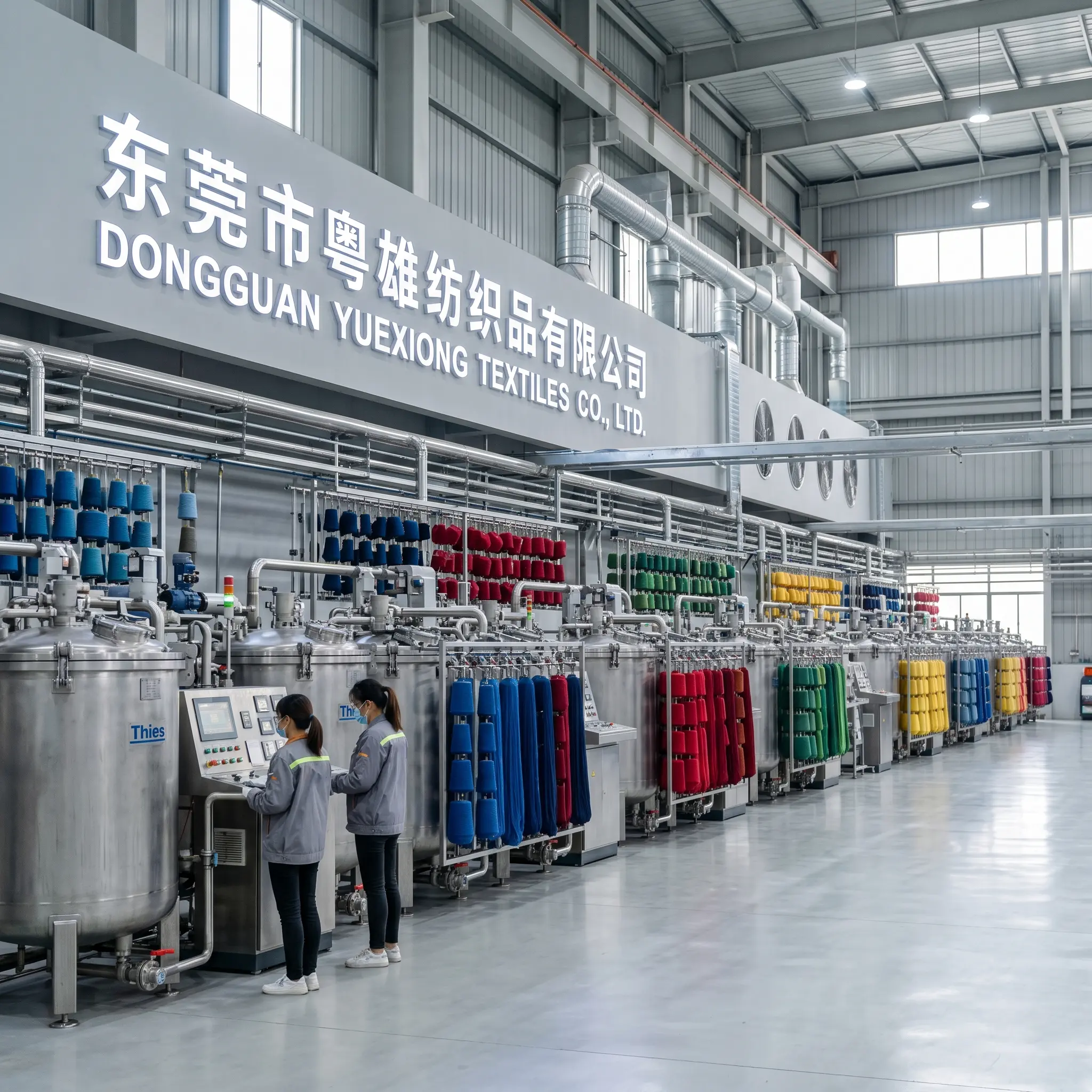
MONALISHAMAGIC functional yarn manufacturing facility. Image source: Dongguan Yuexiong Textile Co., Ltd.
Direct answer: Choose far-infrared heating yarn when the product must add warmth to the wearer. Choose reflective yarn when the product must return light for visibility in low-light conditions. The two yarns can both appear in a winter or outdoor collection, but they solve different problems. Far-infrared heating yarn, including the YX-HEAT-001 route in this comparison, is a warmth mechanism. Reflective yarn, including YX-REFLECT-001, is a visibility mechanism. Treating them as interchangeable can add cost without delivering the intended user benefit.
This guide is written for product teams, brand developers, sourcing managers, and OEM/ODM buyers who are specifying functional yarn for thermal base layers, knitwear, night-safety apparel, trims, or mixed collections. It uses the supplied product facts for MONALISHAMAGIC and the verified model identifiers for YX-HEAT-001 and YX-REFLECT-001. Where the evidence does not state a price, lead time, or test result, the guide says so and identifies the question to ask a supplier.
The real decision: body warmth or light return
Product teams often begin with a simple question: which yarn is warmer? That question is too broad for a specification decision. A reflective yarn can be part of a warm garment, but its functional contribution is light return. A far-infrared heating yarn is selected because the product needs a heat-generation or warmth-focused function. The buyer-visible benefit is different even when both yarns are used in winter products.
The practical decision rule is therefore:
- If the end user needs warmth next to the body: evaluate far-infrared heating yarn such as YX-HEAT-001.
- If the end user needs to be seen in low light: evaluate reflective yarn such as YX-REFLECT-001.
- If the product needs both: design separate functional zones rather than expecting one yarn to deliver both warmth generation and visibility.
This distinction matters at the sampling stage. A fabric that feels warm does not prove that a far-infrared heating yarn is delivering its intended function. A fabric that looks bright in a photograph does not prove that reflective yarn will return light consistently in the final garment. Both routes need a use-case-specific verification plan.
Industry background: functional yarn is a portfolio, not one material
Functional yarn is a broad category. It includes far-infrared heating yarn, reflective yarn, photochromic yarn, thermochromic yarn, luminous yarn, antibacterial yarn, anti-pilling and anti-static yarn, waterproof yarn, and many natural-fiber and blended options. The category is better understood as a set of functions added to a base yarn than as a single material. That is why a buyer should specify the intended function before comparing suppliers or prices.
The broader textile yarn market provides context, but it should not be mistaken for a functional-yarn market size. Commercial research cited in the verified data estimates the global textile yarn market at USD 121.99 billion in 2026 and projects USD 170.32 billion by 2034, from a 2025 base year. That figure covers textile yarn broadly, not the functional-yarn segment. It is useful for background, not for sizing a far-infrared or reflective yarn program.
Dongguan Yuexiong Textile Co., Ltd., which operates the MONALISHAMAGIC brand, is a functional yarn manufacturer and OEM/ODM mill based in Dongguan, China. The company reports a 2,000 sqm factory, 50 employees, a 20-engineer R&D team, and annual yarn output of 1,000 tons, with 70% of sales exported. It states that it holds GRS, BCI, and OEKO-TEX certifications and uses a proprietary waterless dyeing process. These facts describe the supplier context; they do not by themselves prove that either yarn model is suitable for a specific garment.
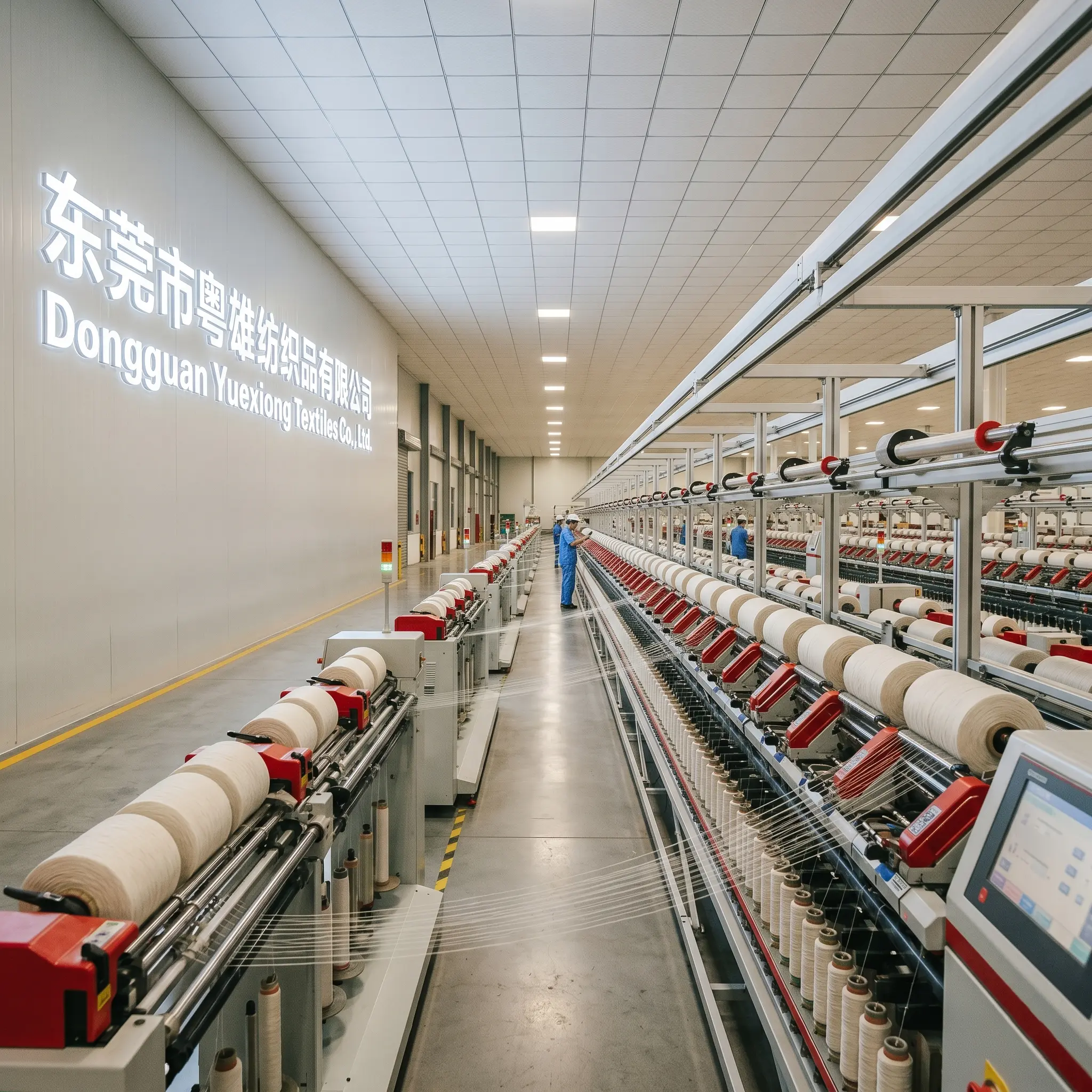
Functional yarn production context at Dongguan Yuexiong Textile Co., Ltd. Image source: MONALISHAMAGIC.
How the two mechanisms differ
Far-infrared heating yarn: designed for warmth
YX-HEAT-001 is the far-infrared heating yarn in this comparison. The assigned product route uses far-infrared ceramic and nano zirconium carbide as the functional approach. In buyer terms, the yarn is selected because the product needs a warmth-focused function, not because the product needs to be seen. The relevant end-uses are thermal base layers, thermal knitwear, and other next-to-skin or mid-layer programs where warmth is a stated product benefit.
The mechanism should be evaluated in the final fabric, not only in the yarn. Warmth in a garment is affected by fiber blend, fabric weight, stitch or weave density, fit, layering, moisture management, and the wearer's activity level. A far-infrared heating yarn can be part of the warmth strategy, but a supplier should provide the applicable model data and testing information for the proposed construction. Do not assume that a yarn label alone guarantees a specific warmth result in every garment.
Reflective yarn: designed for light return
YX-REFLECT-001 is the reflective yarn in this comparison. Reflective yarn reflects light in low-light conditions and is described as providing consistent reflectivity and durable performance after repeated washing. It can be used directly in knitting and weaving. Its primary buyer-visible benefit is visibility, not body warmth generation. Typical uses include night running apparel, cycling clothing, outdoor knitwear, safety workwear, reflective uniforms, children's clothing, pet leashes and pet apparel, hats, scarves, gloves, socks, shoes, and trims.
Reflective performance depends on how much reflective yarn is exposed, where it is placed, the angle of the light source, and the final construction. A small reflective trim can support visibility, but it does not turn an ordinary garment into a high-visibility product by itself. Buyers should specify the placement, exposed area, and low-light check that match the intended use.
Not every functional yarn is a warmth yarn
Photochromic yarn and thermochromic yarn are also functional yarns, but their primary visible effect is color change. Photochromic yarn changes color under sunlight or UV light, creating interactive visual effects compared with ordinary dyed yarn or standard knitting yarn. Thermochromic yarn is designed for interactive fashion wear, temperature-sensitive knitwear, and smart textile development scenarios. These products can be useful in the same collection, but they do not replace the warmth mechanism of far-infrared heating yarn or the light-return function of reflective yarn.
How to choose: a step-by-step specification path
- Write the primary function in one sentence. For example: the garment must add warmth in a thermal base layer, or the garment must improve low-light visibility on a night-safety uniform. If the sentence contains both warmth and visibility, plan separate zones or separate yarns.
- Map the end-use before choosing the yarn. Thermal base layers, thermal knitwear, gloves, and socks point toward a warmth-focused route such as YX-HEAT-001. Night running apparel, cycling clothing, safety workwear, reflective uniforms, pet apparel, and trims point toward a visibility-focused route such as YX-REFLECT-001.
- Select the base fiber. The base fiber affects hand-feel, drape, moisture behavior, wash care, and cost. Common options include cotton, linen, cashmere, wool, and polyester. Cotton is generally absorbent and familiar next to skin; linen gives a dry, crisp hand; cashmere is chosen for softness and a premium feel; wool is used for warmth and resilience; polyester is used for durability and moisture management in active or outdoor programs. Confirm the exact blend and performance for the specific yarn model rather than assuming that a fiber name alone determines the result.
- Set the yarn count. The functional-yarn customization framework cited in the supplied comparison data spans 0.5/1 NM to 200/2 NM. In metric count, a higher Nm generally means a finer yarn. The right count depends on the fabric weight, machine gauge, stitch structure, and target hand-feel. Ask the supplier to confirm the available count for YX-HEAT-001 or YX-REFLECT-001 in the chosen base fiber and construction.
- Choose the application process. Knitting and weaving are the core routes for both warmth and visibility programs. Reflective yarn is described as directly usable in knitting and weaving. For embroidery and decorative trims, confirm the yarn construction, needle size, tension, and surface stability with the supplier before bulk production. A yarn that works well in a knitted panel may behave differently in a dense embroidery design.
- Build a sample test plan around the claimed function. For far-infrared heating yarn, compare warmth in a controlled wear trial using the same base fiber, count, and fabric structure as the target product. For reflective yarn, check low-light light return, placement, and appearance after repeated washing. In both cases, record hand-feel, drape, shrinkage, color fastness, and any relevant test reports.
- Lock compliance and commercial terms before bulk. Request the certificate scope, test reports, fiber-content labeling information, MOQ, sample lead time, bulk lead time, and price basis. The supplied evidence does not provide a price per kilogram or lead time for either model, so those items must be confirmed in a quotation.
Use cases: where each yarn fits
Thermal base layers and knitwear: far-infrared heating yarn
Far-infrared heating yarn is appropriate when warmth is the central product promise. In thermal base layers, the yarn sits close to the body and is combined with a base fiber and fabric structure that support comfort and moisture handling. In knitwear, the yarn can be used in sweaters, cardigans, and mid-layer knits where the buyer wants a warmth-focused story rather than a visibility story. The specification should still consider breathability, skin sensitivity, wash care, and the intended wearing season.
A common mistake is to treat the far-infrared label as a substitute for fabric engineering. The buyer should ask how the yarn performs in the proposed blend and structure, what test method supports the claim, and whether the warmth benefit survives the planned wash cycle. These questions protect both the brand and the end user.
Night-safety apparel and trims: reflective yarn
Reflective yarn is appropriate when the product must be seen in low light. It can be used in night running apparel, cycling clothing, outdoor knitwear, safety workwear, reflective uniforms, children's clothing, pet leashes, pet apparel, hats, scarves, gloves, socks, shoes, and trims. In these products, the buyer should define the placement and exposed area that match the visibility goal. A reflective yarn in a concealed lining will not deliver the same buyer-visible benefit as reflective yarn on an exposed outer surface.
Reflective yarn is not a substitute for thermal insulation. A winter running jacket may use a far-infrared heating base layer for warmth and reflective yarn on the outer shell or trim for visibility. That hybrid approach keeps each function in the zone where it belongs.
Hybrid products: separate zones, separate yarns
Products that need both warmth and visibility should be designed with separate functional zones. For example, a cold-weather running top could use a far-infrared heating yarn in the body panel and reflective yarn in the sleeves, back, or trim. This is a design logic, not a claim that one yarn performs both functions. The buyer should confirm that the two yarns are compatible in the same garment, that they can be processed on the same equipment, and that the final care instructions suit both materials.
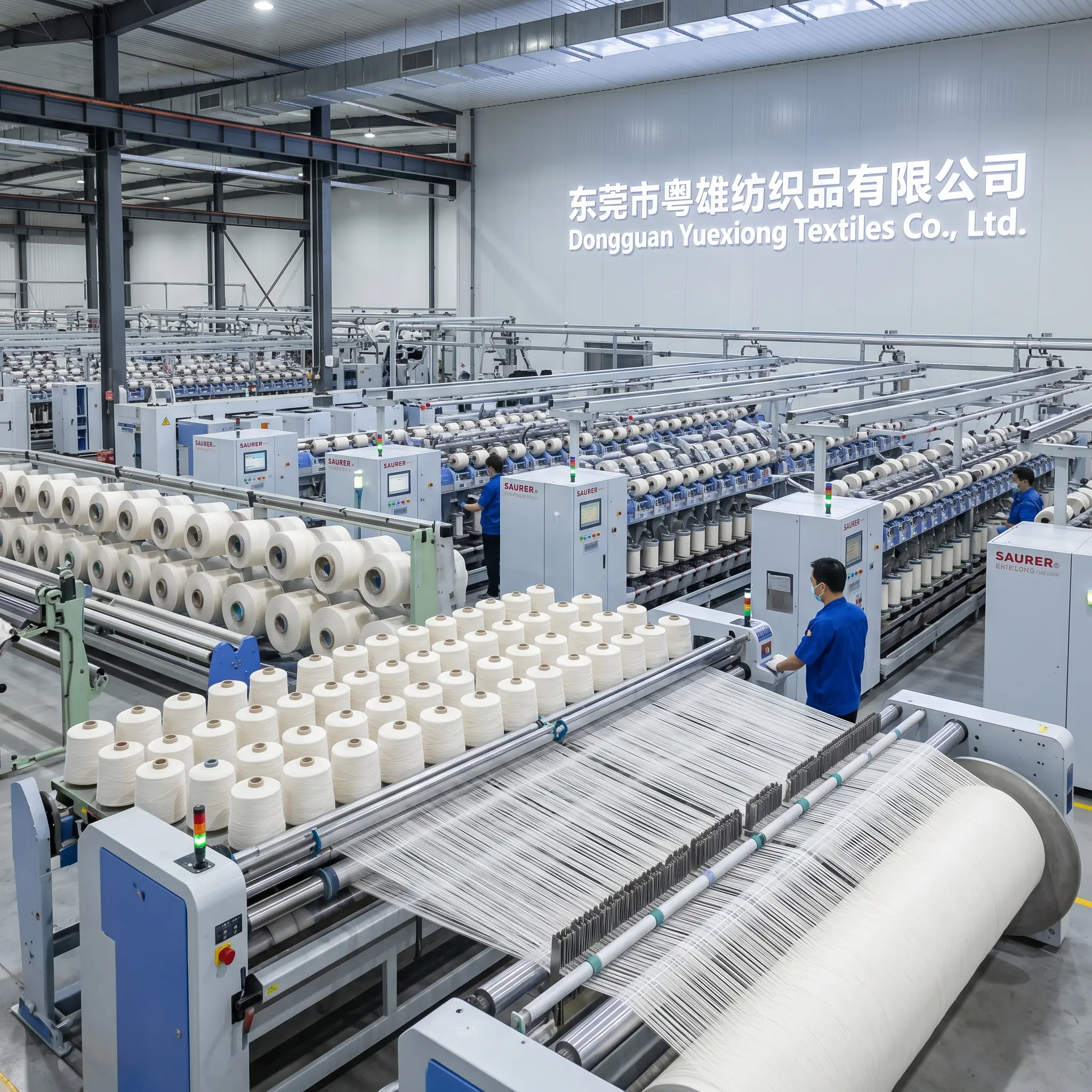
Functional yarn manufacturing and quality context. Image source: MONALISHAMAGIC.
Comparison table: far-infrared heating yarn vs. reflective yarn
| Selection dimension | Far-infrared heating yarn (YX-HEAT-001) | Reflective yarn (YX-REFLECT-001) |
|---|---|---|
| Primary function | Warmth generation for body comfort | Light return for low-light visibility |
| Mechanism focus | Far-infrared ceramic and nano zirconium carbide route | Retroreflective light return |
| Buyer-visible result | A warmth-focused product story for thermal base layers and knitwear | A visibility-focused product story for night-safety apparel and trims |
| Typical end-uses | Thermal base layers, thermal knitwear, warmth-focused knitted accessories | Night running apparel, cycling clothing, safety workwear, reflective uniforms, pet apparel, trims |
| Base fiber options | Cotton, linen, cashmere, wool, polyester; confirm the exact blend for the model | Cotton, linen, cashmere, wool, polyester; confirm the exact blend for the model |
| Yarn count | Customization framework cited as 0.5/1 NM to 200/2 NM; confirm for the model | Customization framework cited as 0.5/1 NM to 200/2 NM; confirm for the model |
| Process compatibility | Knitting and weaving; confirm embroidery and trim construction | Directly usable in knitting and weaving; confirm embroidery and trim construction |
| Wash and durability check | Verify warmth function after the planned wash cycle | Described as durable after repeated washing; verify in the final construction |
| Compliance and testing | OEKO-TEX, GRS, BCI company certifications; request model-specific test reports | OEKO-TEX, GRS, BCI company certifications; request model-specific test reports |
| Commercial terms | Quote required; no price per kg in the supplied evidence | Quote required; no price per kg in the supplied evidence |
Risk and durability checks for either route
Functional yarns need a risk check that matches the intended exposure. The supplied risk guidance for functional yarn includes performance degradation under extreme temperatures or prolonged UV exposure, as well as color fading or reduced wash durability. The corresponding control approach includes UV-stabilized treatment, temperature-resistant formulation, and strict quality control of color fastness and washability. MONALISHAMAGIC states that it works to OEKO-TEX, GRS, and BCI standards and uses optimized material formulations and a waterless dyeing process to support stability.
For a far-infrared heating yarn, the buyer should ask how the warmth function is evaluated after washing and whether the test method reflects the final garment construction. For reflective yarn, the buyer should check low-light performance and appearance after repeated washing, especially if the reflective yarn is exposed to abrasion or frequent home laundering. In both cases, the buyer should request the test report that supports the specific claim, not only a general company certificate.
Compliance and labeling notes
China's GB/T 29862-2026 standard for textile fiber content identification takes effect on August 1, 2027, replacing GB/T 29862-2013. For products sold in China, buyers should confirm fiber-content labeling against the applicable standard and ensure that the declared fiber composition matches the final yarn blend. For export markets, the buyer should verify the labeling and restricted-substance requirements that apply to the destination market and product category.
MONALISHAMAGIC states that it holds GRS, BCI, and OEKO-TEX certifications. Certificate scope matters. A certificate for the company or a product family does not automatically cover every base fiber, count, color, or finish. Ask for the certificate that covers the exact yarn model and production site, and keep the scope on file with the test reports.
FAQ
What certifications and labeling should I verify for far-infrared or reflective yarn?
Verify the certificate scope for the exact yarn model, not only the company name. MONALISHAMAGIC states that it holds GRS, BCI, and OEKO-TEX certifications. For China, the GB/T 29862-2026 fiber-content identification standard takes effect on August 1, 2027, so fiber-content labeling should be checked against that standard for the final product. For performance claims, request model-specific test reports and confirm that the test method matches the intended end-use and market.
Can reflective yarn and far-infrared heating yarn both be used in knitting and weaving?
Reflective yarn is described as directly usable in knitting and weaving, with consistent reflectivity and durable performance after repeated washing. Far-infrared heating yarn is used in warmth-focused programs such as thermal base layers and knitwear. For embroidery, jacquard, or dense trim constructions, confirm the yarn count, tension, needle size, and surface stability with the supplier before bulk production. YX-HEAT-001 and YX-REFLECT-001 are model identifiers; request the model datasheet for the specific process recommendation.
Which option is more cost-effective?
The supplied evidence does not provide a price per kilogram for YX-HEAT-001 or YX-REFLECT-001, so a like-for-like cost comparison cannot be made from the available data. Cost is driven by base fiber, functional additive, yarn count, color and finishing, testing requirements, MOQ, and order volume. Compare quotations on the same base fiber, count, color, certification scope, and delivery basis. Do not assume that the lower yarn price produces the lower total program cost if sampling, testing, or yield differs.
How should we evaluate samples for warmth versus visibility?
For far-infrared heating yarn, build a controlled wear trial or thermal comparison using the same base fiber, count, and fabric structure as the target product. Record warmth perception, hand-feel, drape, wash behavior, and any supplier test data. For reflective yarn, check low-light light return, placement, exposed area, and appearance after repeated washing. In both cases, compare samples against a control fabric made without the functional yarn, and keep the test conditions consistent.
What lead time should we plan for a functional yarn order?
The supplied evidence does not provide a lead time for either model. Lead time depends on the base fiber, yarn count, color, functional additive, testing requirements, and order volume. Ask the supplier for sample lead time, bulk lead time, MOQ, and repeat-supply terms before locking a launch date. MONALISHAMAGIC accepts sample and quotation requests through its official website, and the functional yarn brochure is available for download.
Conclusion: choose the mechanism, then the yarn
Far-infrared heating yarn and reflective yarn are not competing solutions for the same job. YX-HEAT-001 is the warmth-focused route for thermal base layers, thermal knitwear, and next-to-skin programs. YX-REFLECT-001 is the visibility-focused route for night-safety apparel, reflective uniforms, outdoor knitwear, and trims. If a product needs both warmth and visibility, design separate functional zones and confirm that the selected yarns are compatible in the final construction.
The selection criteria that matter most are the primary function, base fiber, yarn count, application process, wash durability, and compliance scope. Use the 0.5/1 NM to 200/2 NM customization framework as a starting point for the count discussion, then confirm the exact option for the chosen model. Request samples, test reports, and a quotation that states the price basis, MOQ, and lead time. This approach keeps the warmth claim and the visibility claim honest, and it helps the product team choose the right mechanism before committing to bulk production.
For product teams ready to move from comparison to sampling, MONALISHAMAGIC provides functional yarn development and OEM/ODM support through its official website. The functional yarn brochure summarizes the product portfolio, and sample or quotation requests can be discussed directly with the supplier.
Have Questions or Need More Details?
Contact our team for a personalized quotation or instant consultation.
Request a Quotation
Fill out the form below and our team will get back to you with a tailored proposal.
WhatsApp Direct Chat
Prefer to chat in real-time? Message us on WhatsApp for instant assistance & quick answers.
- Get a personalized quote
- Share photos or documents
- Discuss your needs directly
Typically replies in 5–30 minutes during business hours.