Functional Yarn Count & Customization: A Technical Guide for Product Developers
Functional Yarn Count & Customization: A Technical Guide for Product Developers
Functional yarn can be custom-spun from 0.5/1 NM to 200/2 NM, across base fibers that include cotton, linen, cashmere, wool, polyester and blends, and across colour routes from natural white through melange to brand exclusive shades. Count, composition and process are not independent choices: the count you lock in determines which machines can run the yarn, how the functional effect performs, and how the finished piece drapes. This guide explains how to specify all three together.
Why Yarn Count Is the First Decision, Not the Last
Most product development failures in functional textiles do not come from the functional chemistry. They come from a count that was chosen for appearance and could not survive the production route.
A yarn count is a statement of linear density. It sets the number of meters of yarn in one gram, and therefore sets the diameter of the yarn, the gauge of the machine that can knit it, the tension it will tolerate, and the surface texture it will produce. When you add a functional component — a photochromic pigment, a far-infrared ceramic, a reflective filament, an antibacterial finish — the count also sets how much functional material is present per square meter of fabric.
Three problems repeat in development programmes:
- Count and machine are mismatched. A very fine count specified for a coarse-gauge flat knitting machine will either break repeatedly or produce a fabric far lighter than the sample shown to the buyer.
- Count and functional load are mismatched. A functional additive distributed in a very fine yarn may read as too subtle in the finished surface, while the same additive in a coarse yarn can stiffen the hand.
- Count and colour route are mismatched. Melange and brand exclusive shades behave differently at different yarn diameters, because colour coverage per unit length changes with count.
The practical answer is to treat count, composition, colour and function as one specification package rather than four separate purchase orders.
How Yarn Count Is Expressed — and What the Customization Envelope Means
Functional yarn for apparel and technical textiles is normally specified in metric count (NM), where the number states how many meters of yarn weigh one gram. The customization envelope offered by MONALISHAMAGIC runs from 0.5/1 NM at the coarse end to 200/2 NM at the fine end.
- 0.5/1 NM describes a single yarn where two meters weigh one gram — a heavy, large-diameter yarn used for chunky knits, structured outerwear surfaces and heavy weft.
- 200/2 NM describes a two-ply yarn where two hundred meters of the folded yarn weigh one gram — a very fine, plied yarn used for lightweight, high-gauge and decorative work.
- The “/1” and “/2” suffix states the number of plies. Single-ply yarns are softer and more economical; two-ply and multi-ply yarns are stronger, more regular, and better at holding a functional additive distribution.
Because the envelope spans roughly two orders of magnitude, the count decision should always be tested against the intended process before sampling begins.
The Customization Stack: Five Levers You Can Specify
MONALISHAMAGIC operates as an OEM/ODM mill with customizable yarn composition, colour, specification and functional parameters. For a product developer, that translates into five levers that can be set independently — or, more accurately, set in a deliberate order.
1. Count and ply
Choose the linear density and ply structure that match the machine gauge and target fabric weight. This is the lever that constrains all others.
2. Base fiber and blend ratio
The base fiber determines hand, drape, warmth, moisture behaviour and the certification route. Cotton, linen, cashmere, wool, polyester and blended constructions are all available as base routes.
3. Functional system
The functional effect is added through the yarn construction. The portfolio includes photochromic and thermochromic colour-change yarns, reflective yarn, luminous yarn, machine washable antibacterial yarn, waterproof antibacterial yarn, far-infrared heating yarn, and anti-pilling/anti-static yarn, along with high-tech functional yarns developed to brief.
4. Colour route
Natural white, black, grey, beige, camel, melange, custom dyed and brand exclusive colours are the standard colour families. Colour is specified together with count, because shade depth reads differently on a fine yarn than on a coarse one.
5. Documentation package
Each combination carries its own compliance trail. Composition changes the certification route; colour changes the test report requirement; count changes the sampling plan.
Development note: the mill runs a 20-engineer R&D team and a documented monthly capacity of 1,000 tons, with a 5 KG minimum order quantity and a 7–15 day lead time. That combination is what makes single-count trials economically practical before a bulk commitment.
Step by Step: From Count Brief to Bulk Delivery
Step 1 — Define the finished fabric, not the yarn
Start with target fabric weight, gauge, hand feel and the functional performance the market claim depends on. Count is then derived backwards from those targets.
Step 2 — Select the base fiber route
Confirm whether the product needs a natural fiber story (cotton, linen, cashmere, wool), a synthetic or recycled route (polyester, recycled nylon under GRS), or a blend that balances cost and performance.
Step 3 — Fix the functional system and its position in the yarn
Decide whether the effect should sit in the core, be distributed through the blend, or appear as a surface effect. This choice interacts directly with count: the same functional load behaves differently at 0.5/1 NM and at 200/2 NM.
Step 4 — Specify colour and shade standard
Submit the shade reference together with the count. Colour matching support is provided during sampling, and a brand exclusive shade should be agreed against a physical standard rather than a screen reference.
Step 5 — Sample and reconfirm
Sample reconfirmation is the checkpoint where count, colour and functional performance are validated together. Pre-shipment inspection is the standard acceptance criterion, and inspection is provided before shipment.
Step 6 — Confirm commercial terms and logistics
Minimum order quantity is 5 KG. Delivery can be arranged by air freight, sea freight or land transport, and payment can be handled by TT, L/C, D/P, PayPal, Payoneer, Wise or Western Union. Standard lead time is 7–15 days.
Base Fiber Selection by Count Band and End Use
The table below maps the base fiber routes to the reference products in the current portfolio and to what each fiber contributes to a count brief. It is a selection aid, not a fixed count assignment — final count feasibility is confirmed at sampling.
| Base fiber | Reference product (model) | What it contributes to a count brief | Documentation route |
|---|---|---|---|
| Cotton | Cotton Yarn (YX-COTTON-001) | Soft hand, breathable surface, good support for mid to fine counts in knitwear and jersey | BCI CoC — ETK-70050-BCI-CoC-2510 |
| Linen / ramie | Linen Yarn (YX-NATURAL-001) | Dry, cool-touch surface; best suited to constructions where slight irregularity is part of the design | Supplied per order profile |
| Cashmere / wool | Wool Cashmere Yarn (YX-LUX-001) | Warmth and loft at lower fabric weights; benefited by plied constructions for regularity | RAF — ETK-00041063-RAF-2504 (RWS, RMS, RAS) |
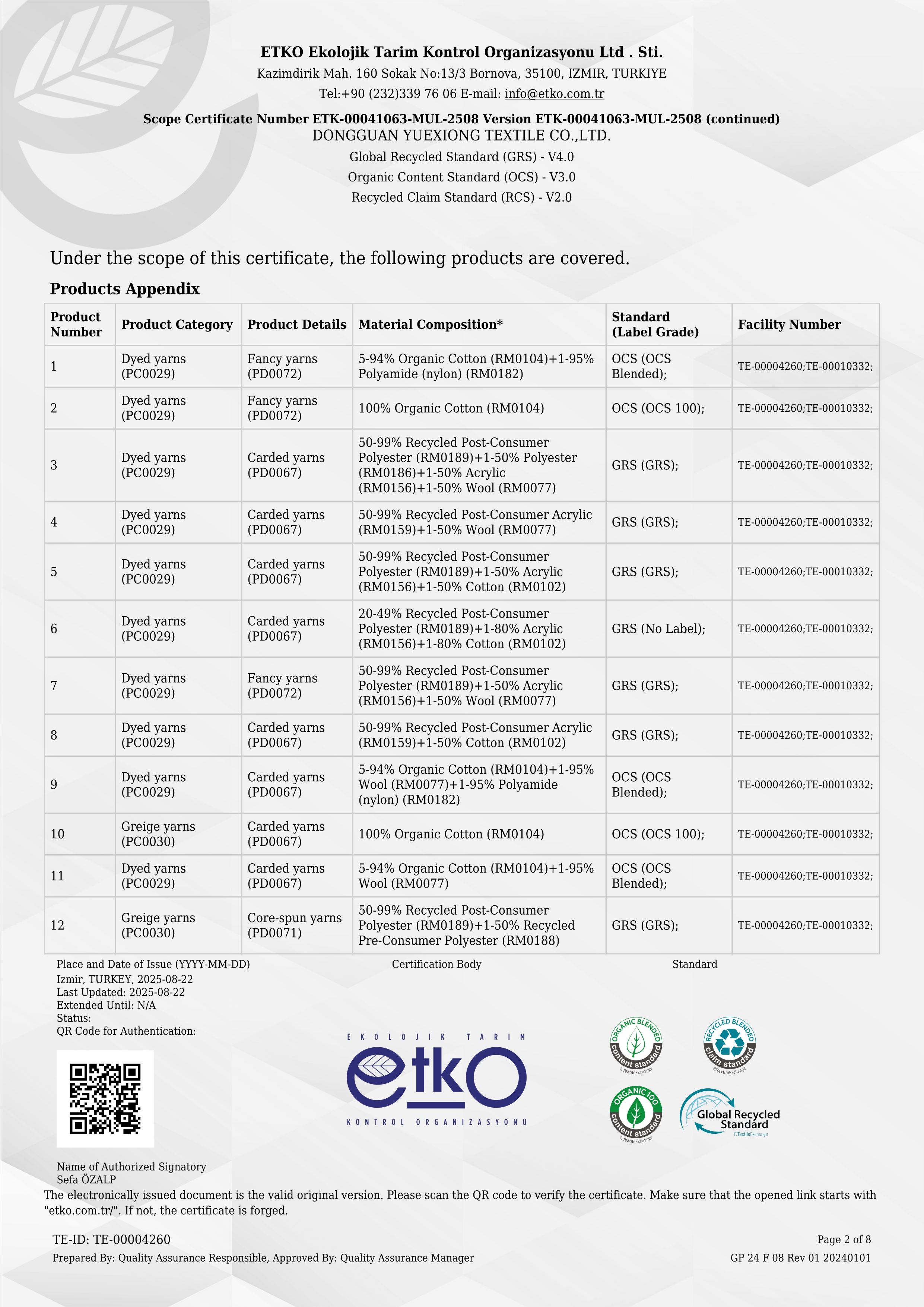
| Polyester and recycled synthetics | Functional High-tech Yarn (YX-TECH-001) | Dimensional stability and strength at fine counts; common carrier for technical effects | GRS / OCS / RCS — ETK-00041063-MUL-2508 |
| Blends | Cotton-Wool Blended Yarn (YX-BLEND-001) | Balances cost, warmth and breathability; blend ratio is customizable alongside count | GRS / OCS / RCS where recycled or organic content applies |
| Paper / washi | FSC Certified Paper Yarn (FSC-YX-ECO-001) | Lightweight, breathable, dry handle; supports an eco-story at fine counts | FSC CoC — ESTS-COC-230318 |
| Silk / acetate | Mulberry Silk Yarn (YX-SILK-001), Acetate Yarn (YX-ACETATE-001) | Lustre and drape at the fine end of the envelope; suited to fluid, decorative surfaces | Supplied per order profile |
Colour Options: From Natural White to Brand Exclusive
Colour is the second most common source of rework after count. The available routes and their development implications are set out below.
| Colour route | Typical use | Development note |
|---|---|---|
| Natural white | Undyed knitwear, garment dyeing programmes, eco-positioned ranges | Fastest route to sample; allows downstream dyeing decisions to stay open |
| Black | Core apparel, technical outerwear, base layers | Shade depth reads differently on fine and coarse counts — confirm on the actual count |
| Grey | Melange bases, layered looks, unisex ranges | Works well as a neutral anchor for functional ranges |
| Beige | Soft apparel, innerwear, knit accessories | Often paired with natural fiber bases where the fiber tone contributes |
| Camel | Premium knitwear, classic outerwear | Shade tolerance should be agreed against a physical standard |
| Melange | Heathered surfaces, casual knitwear | Created through fibre blending rather than surface dyeing — count affects the scale of the fleck |
| Custom dyed | Seasonal palettes, brand-led colour stories | Supports colour matching during sampling; the mill holds a waterless dyeing preparation patent (ZL 2023 1 1305729.5) covering colour-changing yarns |
| Brand exclusive colour | Signature shades for a specific label | Agree a retained standard plus a tolerance before bulk |
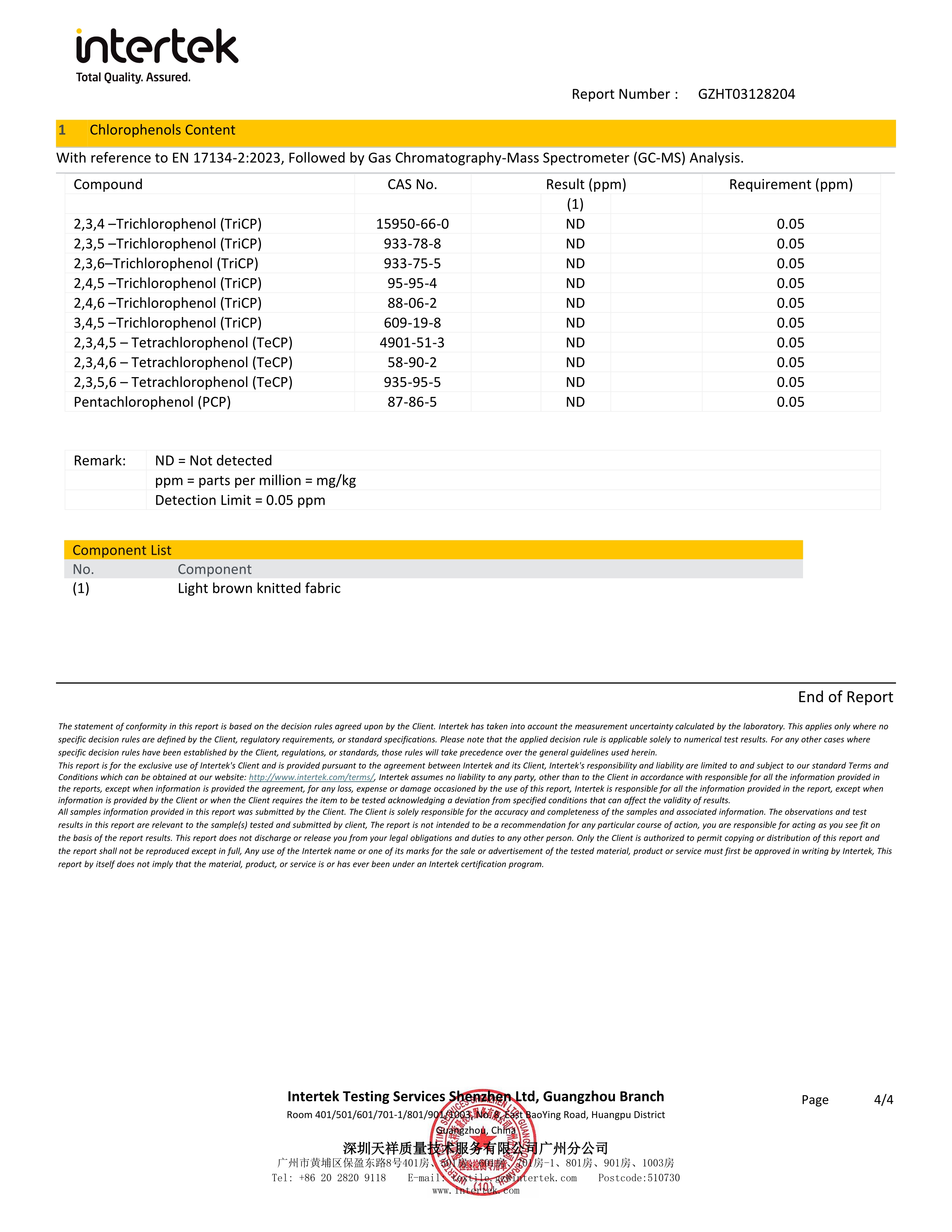
Colour claims should be backed by test evidence where the market requires it. Intertek test reports GZHT03128204 (light brown knitted fabric) and GZHT03128212 (black knitted fabric) cover children's apparel applications to EN 17134-2:2023 for the EU/US market.

Matching Count to Process: Knitting, Weaving, Embroidery, Crochet, Jacquard and Sewing
Each downstream process imposes its own tolerance window. The guidance below explains which direction of the 0.5/1 NM – 200/2 NM envelope each process tends to occupy, and why.
Knitting
Knitting is the most count-sensitive process. Coarse counts at the low end of the envelope suit chunky flat-knit surfaces and structured outerwear; fine counts at the high end suit high-gauge, lightweight jersey and fine-gauge panels. Because loop formation depends on yarn diameter relative to needle spacing, the count and the machine gauge must be specified together. Functional yarns with a heating or colour-change component should be sampled on the actual production gauge, not on a laboratory machine.
Weaving
Weaving tolerates a wider count range but is sensitive to yarn regularity. Plied constructions (the “/2” suffix) are generally preferred for warp use because they resist abrasion and tension variation. Coarser counts read as visible structure and texture; fine counts produce a smoother, denser cloth.
Embroidery
Embroidery draws on the finer part of the envelope, where the yarn must pass through a needle and form a clean stitch without fraying. Reflective and luminous yarns are frequently specified for embroidery effects, where the functional property is isolated to a motif rather than spread across the whole fabric — an efficient way to add a technical story at controlled cost.
Crochet
Crochet sits closer to the coarse end in most accessory and heavy-gauge applications, and demands a yarn with enough body to hold an open structure without collapsing. Single-ply constructions are workable here; the trade-off is lower abrasion resistance.
Jacquard
Jacquard patterning multiplies the number of yarns in play, so consistency across the batch matters more than absolute count. Where a patterned design combines a functional yarn with a ground yarn, both should come from the same production batch to keep shrinkage and hand behaviour aligned.
Sewing
Sewing and linking applications call for plied, higher-twist constructions rather than soft single-ply yarns, because the thread must resist needle heat and repeated tension. Sewing specifications are therefore usually the last to be locked, after the body yarn count is fixed.
Practical rule: fix the process first, then the gauge, then the count. Teams that start from a competitor's fabric weight and work forwards usually need two extra sampling rounds.
Two Development Cases That Show Count and Function Working Together
Thermochromic yarn in high-end lingerie
A high-end sensual lingerie brand across France, Canada, China, Germany and the United Kingdom integrated thermochromic (heat-sensitive) yarn into a product line to achieve body-temperature-responsive colour change. The development ran over two years. The critical constraints were fast colour response, a skin-safe formulation, and durable colour change after repeated washing. Colour shift in a garment of this type depends heavily on yarn count and fabric density — a thinner yarn gives a faster and more even response across the surface.
Active heating yarn for extreme cold outerwear
For an outdoor apparel brand in the United Kingdom, the mill developed active heating system yarns over a two-year R&D project for thermal clothing used in extreme cold environments. The yarn performs in −20°C conditions while maintaining high tenacity and wash durability. In this case the count had to satisfy two opposing demands: enough linear density to carry the heating performance, and enough strength and regularity to survive industrial knitting and repeated laundering.
Customization Levers Compared: What Changes Downstream and How It Is Confirmed
| Lever | What changes downstream | How it is confirmed |
|---|---|---|
| Count (0.5/1 – 200/2 NM) | Machine gauge, fabric weight, drape, surface texture | Sample reconfirmation on the production gauge |
| Ply structure (/1 vs /2) | Strength, regularity, behaviour in warp, embroidery and sewing | Physical sample plus pre-shipment inspection |
| Composition and blend ratio | Hand, warmth, moisture behaviour, certification route, cost | Chain-of-custody documents: GRS/OCS/RCS, BCI, RAF, FSC |
| Colour route | Shade consistency, fastness claims, brand exclusivity | Colour matching support during sampling; Intertek reports where required |
| Functional system | Performance of the market claim, care instructions, durability | Third-party reports such as Intertek GZHT91138285 (luminous yarn) and GZHT91138296 (UV colour-changing yarn) to Adidas A-01 Policy v20 |
| Commercial package | Order size, cash flow, delivery schedule | MOQ 5 KG, lead time 7–15 days, inspection before shipment |
Documentation for a Custom Development
A count change alone does not invalidate a certification, but a composition or process change can. The current documentation set at MONALISHAMAGIC includes:
- GRS / OCS / RCS multi-standard — ETK-00041063-MUL-2508, covering trading, warehousing and dyeing of yarns with recycled or organic content (GRS v4.0, OCS v3.0, RCS v2.0), valid to 21 August 2026.
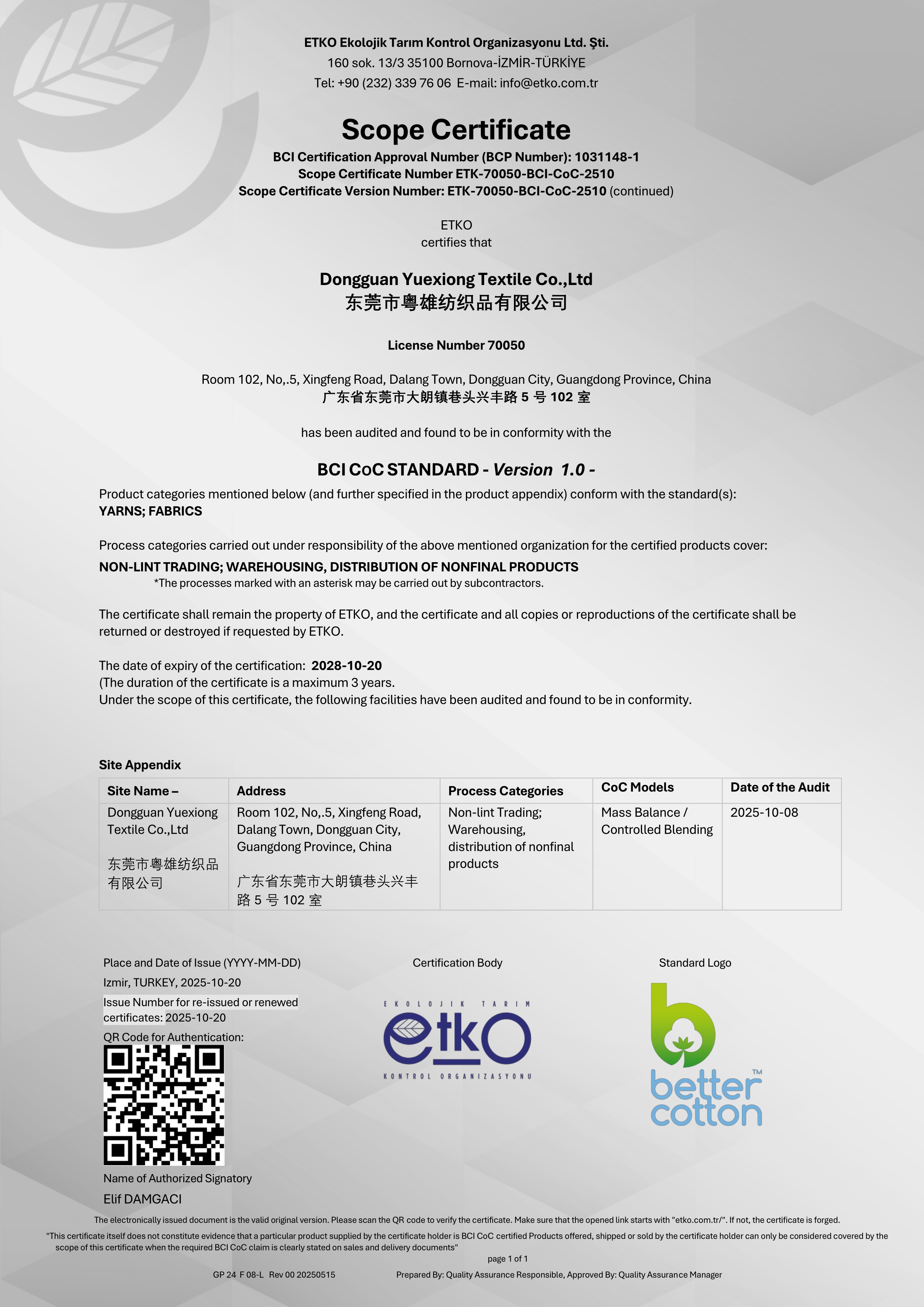
- BCI CoC — ETK-70050-BCI-CoC-2510, covering non-lint trading and warehousing of yarns and fabrics, valid to 20 October 2028.
- Responsible Animal Fiber — ETK-00041063-RAF-2504, covering Responsible Wool, Alpaca and Mohair yarns under RAS v1.0, RMS v1.2 and RWS v2.2, valid to 22 April 2026.
- FSC Chain of Custody — ESTS-COC-230318, covering rayon/synthetic fibres and paper yarn, valid to 12 September 2029.
- Intertek test reports — including GZHT03128204 and GZHT03128212 to EN 17134-2:2023 for the EU/US market, and GZHT91138285, GZHT91138296 and GZHT91138300 for luminous, UV colour-changing and temperature-changing yarns within the Adidas supply chain.
- Patents — invention patent ZL 2023 1 1305729.5 for a waterless dyeing preparation process for colour-changing yarns, plus utility model patents ZL 2022 2 1385471.5 and ZL 2022 2 1384659.8 covering dyeing yarn devices.
Frequently Asked Questions
What certification documents come with a custom functional yarn order?
The documentation follows the composition, not the count. Recycled or organic programmes are covered by the GRS/OCS/RCS multi-standard certificate ETK-00041063-MUL-2508; cotton programmes by the BCI Chain of Custody certificate ETK-70050-BCI-CoC-2510; wool, alpaca and mohair programmes by the Responsible Animal Fiber certificate ETK-00041063-RAF-2504; and paper yarn by the FSC Chain of Custody certificate ESTS-COC-230318. Product-level performance claims are supported by Intertek test reports, and the mill also holds OEKO-TEX, GRS and BCI certification. Certification and compliance documents are supplied as part of the order support package.
Can MONALISHAMAGIC spin a count outside my current supplier's range?
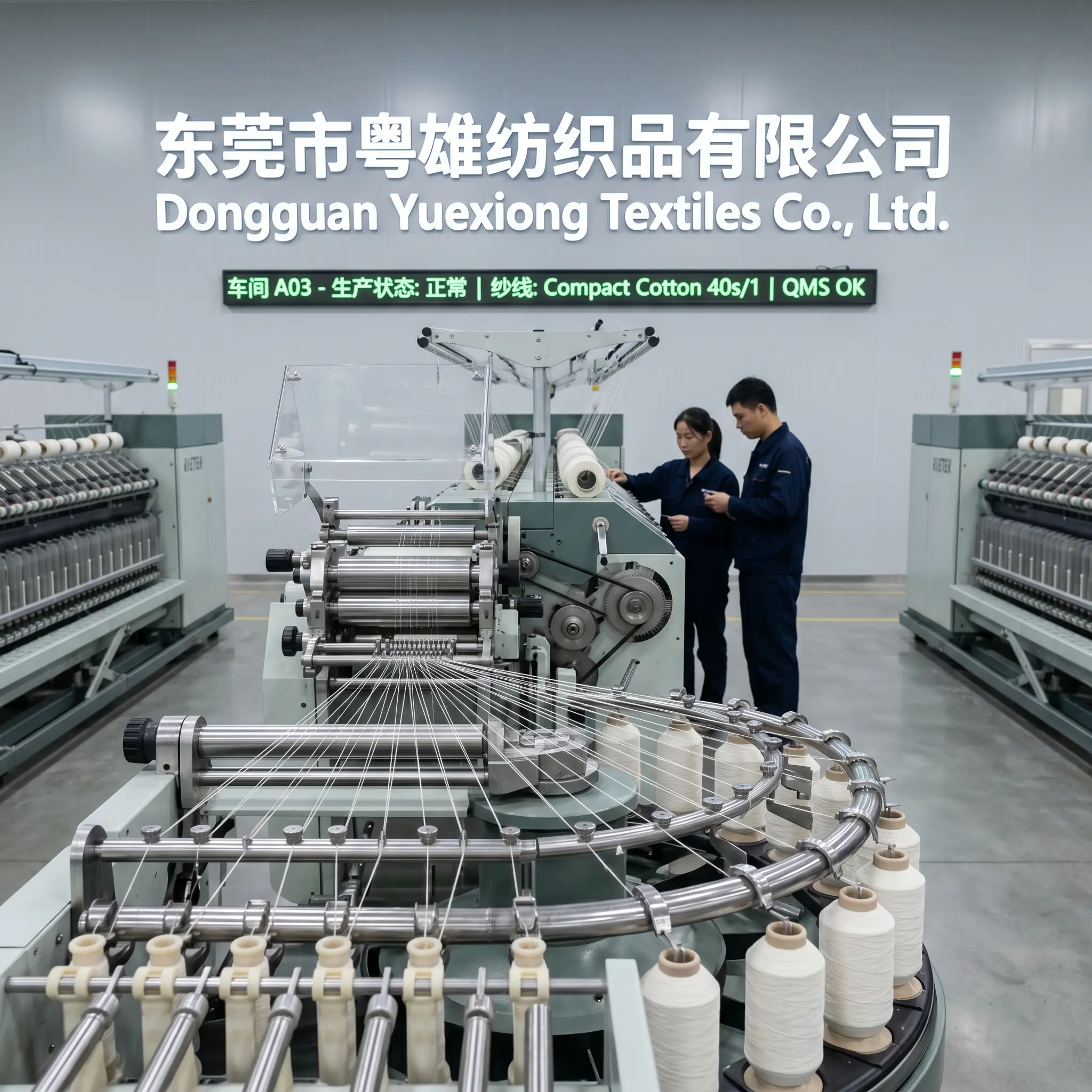
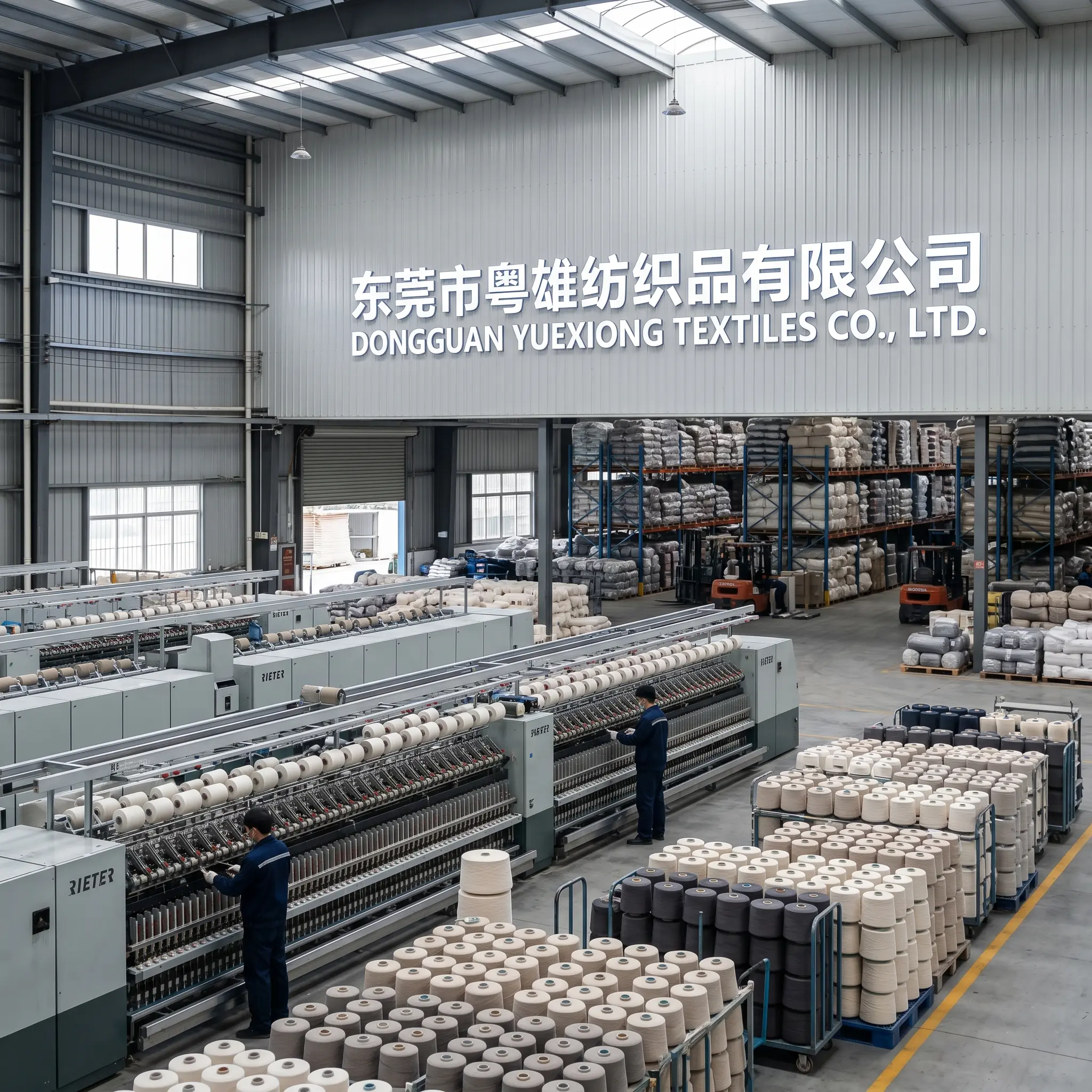
MONALISHAMAGIC is the brand of Dongguan Yuexiong Textile Co., Ltd., a vertically integrated yarn spinning mill founded in 2016 in Dalang Town, Dongguan, China, operating a 2,000 sqm factory with 50 employees and a 20-engineer R&D team. Custom spinning runs from 0.5/1 NM to 200/2 NM, with OEM/ODM customization available on yarn composition, colour, specification and functional parameters. Whether a specific count, base fiber and functional system can be combined reliably is confirmed during sampling rather than assumed from the catalogue.
What is the minimum order quantity and how is payment handled?
The minimum order quantity is 5 KG, which makes single-count trials practical before a bulk commitment. Payment terms include TT, L/C, D/P, PayPal, Payoneer, Wise and Western Union. Delivery can be arranged by air freight, sea freight or land transport, and the acceptance criterion is pre-shipment inspection.
Can I get a sample in a specific count and brand exclusive colour?
Yes. Sampling is the stage where count, colour and functional performance are validated together. Sample reconfirmation and colour matching support are part of the standard after-sales scope, covering reorder assistance, colour matching and reconfirmation. A brand exclusive shade should be agreed against a physical standard with a stated tolerance before bulk production begins.
How long does a customized count take to produce and ship?
Standard lead time is 7–15 days, supported by a documented monthly capacity of 1,000 tons and a 70% export ratio across global markets. Quality control includes inspection provided before shipment, and after-sales support covers remote technical guidance, quality complaint response, order follow-up, logistics and transport tracking, and consultation on functional yarn performance and durability. To start a count brief, download the MONALISHAMAGIC product brochure or send your target fabric weight and gauge to the contact below.
Conclusion: Specify Count, Composition and Process as One Package
The 0.5/1 NM to 200/2 NM envelope is wide enough to cover almost any commercial product development brief, but width is not the point. The value lies in being able to fix count, base fiber, colour and functional system together, then verify the combination through a documented sample and a matching certification trail.
For product developers moving from evaluation into execution, the sequence is consistent: define the finished fabric, choose the process and gauge, then select the count that fits both. Everything else — blend ratio, shade, functional load, documentation — follows from that first decision.
Request a Count Sample or Quotation
Send your target count, base fiber and colour route for a development quotation or a 5 KG trial lot.
MONALISHAMAGIC — Dongguan Yuexiong Textile Co., Ltd.
Website: www.monalishamagic.com
Email: alanli@monalishamagic.blmgeo.cloud
Contact: Alanli · +86 137-1023-8299 · WhatsApp
Address: Room 102, No.5 Xingfeng Road, Xiangtou, Dalang Town, Dongguan City, Guangdong Province, P.R.China
Brochure: Download the product catalogue (PDF)
Have Questions or Need More Details?
Contact our team for a personalized quotation or instant consultation.
Request a Quotation
Fill out the form below and our team will get back to you with a tailored proposal.
WhatsApp Direct Chat
Prefer to chat in real-time? Message us on WhatsApp for instant assistance & quick answers.
- Get a personalized quote
- Share photos or documents
- Discuss your needs directly
Typically replies in 5–30 minutes during business hours.