Functional Yarn Sourcing for Machine-Wash Antibacterial Knits
A product team approves an antibacterial knit concept, and the care label says machine wash. Months later the first bulk shipment leaves the mill, and the only question that matters is whether the yarn still performs after the twentieth home wash. That is a sourcing question, not a marketing one. It is answered by a written wash brief, a matched base fiber and count, an approved color route, and a test report that names both the method and the conditions.
This article works through that scenario with YX-WASH-001, the Machine Washable Antibacterial Yarn from Dongguan Yuexiong Textile Co., Ltd., which sells under the brand MONALISHAMAGIC. The documented position of the product is specific rather than sweeping: antibacterial finishing intended to inhibit bacterial growth and help textiles stay cleaner and fresher; a construction designed for machine-washable textile applications; antibacterial protection with soft hand feel and wearable comfort; counts customizable from 0.5/1 NM to 200/2 NM; and washing durability that the supplier describes as suitable for repeated machine washing depending on material, process and testing requirements.
One rule runs through everything below: a claim is only as strong as the configuration that was tested. Where the supplied documentation is conditional, the condition stays attached to the sentence.

A repeat-wash knit program starts with the care label, then works backwards to the yarn specification.
The scenario: an antibacterial knit with a machine-wash care label
The brief usually arrives in a familiar shape. A brand wants a knit that stays fresher between washes, feels wearable against skin, and carries a care instruction consumers already use: machine wash. The garment may be a jersey for underwear, a rib for socks, a heavier knit for a cardigan, or a jacquard panel for kidswear. In every version, three requirements pull in different directions.
- Antibacterial performance comes from an antimicrobial functional treatment applied to the yarn, and laundering is the stress test that treatment has to survive.
- Wearable hand feel is a separate design output. The supplier lists softness, twist, structure and hand feel as customization parameters alongside the antibacterial treatment, which means the two requirements are adjusted together rather than separately.
- Color and process add their own pressure: custom dyed and custom blended colors, plus knitting, weaving, embroidery, crochet and jacquard routes, each change how the yarn is handled before it ever reaches the wash.
The two common failure modes are easy to describe. One program passes the antibacterial test on a laboratory swatch but develops a dry, stiff handle in the garment. The other feels exactly right and cannot document its claim once the care label is applied. A wash brief exists to prevent both, by fixing the configuration before sampling rather than after bulk.
What “machine washable antibacterial” actually specifies
Break the phrase into two attributes that must both be documented. Antibacterial refers to the finishing route: an antimicrobial functional treatment built on washable antibacterial technology, with the stated effect of inhibiting bacterial growth and helping keep textile products cleaner and fresher. Machine washable refers to intended use: the yarn is designed for machine-washable textile applications, and durability is described as suitable for repeated machine washing depending on material, process and testing requirements.
Neither half is a performance number. Inhibiting bacterial growth is not a sterilisation claim, and “designed for machine washing” is not a cycle count. What converts the pair into a purchasing specification is a test report that names the base fiber, the count, the color and the wash regime used, plus a care label drafted to match those conditions. Without that, the buyer is holding an adjective rather than a specification.
It is also worth separating routes. YX-WASH-001 is a distinct product from waterproof antibacterial yarn in the same portfolio; the difference is a requirement decision, not a quality ranking. MONALISHAMAGIC’s wider range also covers photochromic, thermochromic, reflective, luminous and far-infrared heating yarns, each answering a different functional question.
Industry background: the care label is part of the specification
In the categories where antibacterial knits actually sell — underwear, socks, baby textile products, sportswear, uniforms and workwear, bedding and towels — the care label is the part of the specification the consumer enforces. A functional claim that does not survive the label is a claim the brand carries alone.
The application profile supplied for these programs describes the working condition as washable with high color fastness and durability, skin-friendly for direct contact, and suited to indoor and outdoor use in normal to moderate temperature environments. It also records a boundary that belongs in every brief: functional products may fail under high temperatures and prolonged sun exposure, while regular products generally do not. Care, storage and transport instructions are therefore part of the functional promise, not paperwork attached to it.
Fiber content labelling is the other moving part. China’s Standardization Administration issued GB/T 29862-2026, an updated national standard for textile fiber content identification that replaces GB/T 29862-2013 and takes effect on 1 August 2027, according to SGS’s September 2026 summary of the standard. For an antibacterial program built on a blended base — cotton with viscose, wool with cashmere, or a paper-yarn blend — the declared fiber content has to match the blend actually purchased, which is a documentation task that starts at yarn selection rather than at the label printer.
The candidate: YX-WASH-001 in specification terms
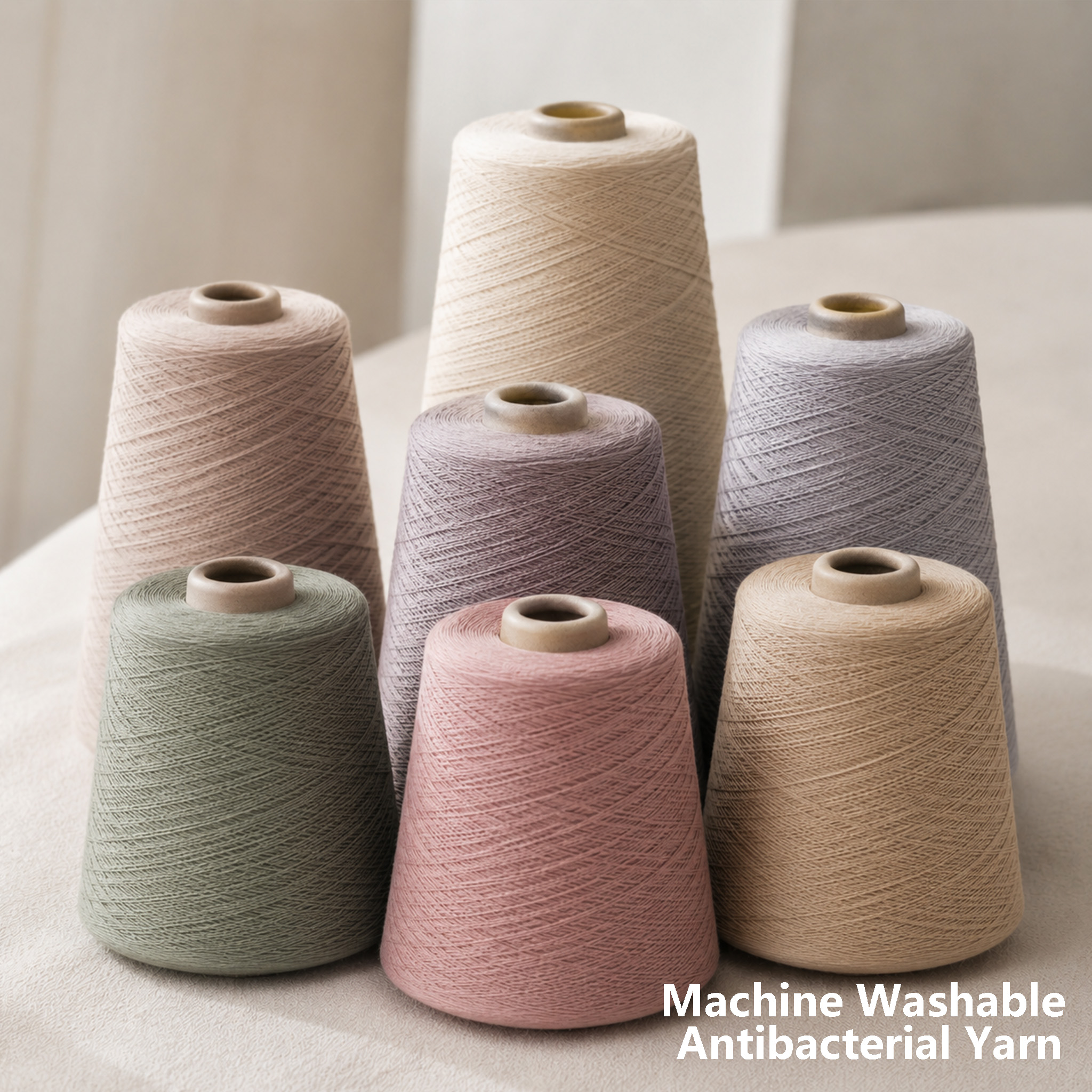
YX-WASH-001 is offered as a customizable platform: base fiber, count, color and treatment are specified per program.
YX-WASH-001 is the model designation MONALISHAMAGIC uses for its Machine Washable Antibacterial Yarn. The company behind the brand is Dongguan Yuexiong Textile Co., Ltd., a yarn manufacturer founded in 2016 and based in Dongguan, China, operating a 2,000 sqm facility with 50 employees, a 20-engineer R&D team and a stated annual output of 1,000 tons, with exports accounting for 70% of sales. The company describes itself as an OEM/ODM mill working with GRS, BCI and OEKO-TEX certification and a patented waterless dyeing process.
The documented attributes that matter for this scenario are:
- Functional route: antibacterial finishing, antimicrobial functional treatment and washable antibacterial technology.
- Stated effect: inhibits bacterial growth and helps keep textile products cleaner and fresher.
- Hand feel: antibacterial protection with soft hand feel and wearable comfort.
- Yarn count: customizable from 0.5/1 NM to 200/2 NM.
- Base options: cotton, linen, cashmere, wool, mohair, alpaca, Tencel, silk, paper yarn, raffia yarn, polyester, nylon, cotton blends, wool cashmere blends, viscose blends, acrylic blends, fancy yarn and chenille yarn.
- Colors: natural white, black, gray, beige, custom dyed colors, custom blended colors and brand color customization.
- Process routes: knitting, weaving, embroidery, crochet, jacquard, sewing, garment decoration and accessory decoration.
- Customization parameters: count, base material, antibacterial treatment, softness, twist, structure, color, hand feel and final application.
- Testing and sampling: SGS, GTTC or third-party antibacterial and wash-resistance testing; samples available for antibacterial effect testing and product development.
- Order terms: small-batch customization available; the capability record lists a 5 KG minimum order quantity, a 7–15 day lead time, 1,000 tons monthly capacity and inspection before shipment.
Read as a whole, the list describes a customizable platform rather than a single fixed yarn. That is useful in this scenario, because the wash brief will usually force at least one choice — a softer base, a finer count, a darker shade — and the documented flexibility is what allows those choices to be made without leaving the product. Buyers can review the full portfolio at MONALISHAMAGIC before locking the brief.
Step-by-step: building the wash brief before the first sample
Step 1 — Write the wash regime first
Before the yarn is chosen, write down how the garment will be washed: the cycle, temperature, detergent type and drying method the brand intends to print on the label. The supplier needs those conditions to align the antibacterial treatment and the wash-resistance testing. A brief that says “machine washable” and stops there leaves the mill guessing, and the test report later answers a question nobody actually asked.
Step 2 — Fix the base fiber against the end use
Work through the documented base list from the garment backwards. Cotton and cotton blends suit next-to-skin jersey and underwear; wool cashmere and cashmere blends point to heavier knitwear; Tencel, viscose and acrylic blends support lighter tops; paper and raffia yarns belong to summer and accessory programs. The base fiber drives hand feel and how the antibacterial finish is carried, so it should be settled before count and color are negotiated.
Step 3 — Set the count inside 0.5/1 NM to 200/2 NM
The documented range is broad, from 0.5/1 NM to 200/2 NM, and the choice is a hand-feel decision as much as a machine decision. Coarser counts build heavier, loftier knits; finer counts support lighter, smoother surfaces. Because the same product is offered across that range, the sampling request should state the count explicitly, along with the gauge or end use it has to run on, so that hand feel and wash performance are evaluated on the yarn that will actually be purchased.
Step 4 — Decide the color route and plan fastness
Natural white, black, gray and beige are documented starting points; custom dyed colors, custom blended colors and brand color customization extend the range. Color is where wash programs most often surprise teams, because a shade that passes visual approval can still shift under repeated laundering. Approve the shade on the base and count that will be produced, and put color fastness in the same test conversation as antibacterial durability.
Step 5 — Match the process route
Knitting, weaving, embroidery, crochet, jacquard, sewing and garment or accessory decoration are all listed application processes. Each changes how much mechanical working the yarn sees before washing, and embroidery and jacquard use the yarn as a surface element rather than a ground structure. State the process in the brief; it is one of the inputs that decides whether a given count is practical.
Step 6 — Agree the test method and acceptance criteria
Antibacterial and wash-resistance testing can be arranged through SGS, GTTC or another third party. The value sits in the agreement, not the logo: name the test method, the number of wash cycles the sample must be put through, the acceptance threshold, and whether testing happens on yarn, greige fabric or the finished garment. Agreeing this before sampling prevents the common outcome where a report exists but does not answer the brand’s care-label question.
Step 7 — Validate hand feel and effect on the same sample
Samples are available for antibacterial effect testing and product development. Use one sample set for both jobs: a hand-feel panel that includes people who will wear the garment, and the antibacterial test on the same configuration. Splitting the two — a soft sample for the design team and a separate treated swatch for the lab — is how programs end up with a fabric nobody has evaluated end to end.
Step 8 — Move to bulk with inspection and reorder terms
Production is stated at 1,000 tons monthly capacity with inspection before shipment and a 7–15 day lead time, and small-batch customization is available, with a 5 KG minimum order quantity recorded in the capability data. After-sales support covers quality complaints, reorder assistance, sample reconfirmation, color matching and functional yarn performance consultation, which matters for a washable product: the second order is where a durability claim meets real consumers.
Specification table: what is documented and what the buyer confirms
The table separates supplier documentation from the action each line creates for the buyer. No cell contains a performance figure that the supplied material does not state.
| Parameter | Documented for YX-WASH-001 | Buyer action |
|---|---|---|
| Antibacterial route | Antibacterial finishing, antimicrobial functional treatment, washable antibacterial technology | Agree the test method and acceptance criteria before sampling |
| Wash durability | Suitable for repeated machine washing depending on material, process and testing requirements | Test the exact base, count and color against the label regime |
| Yarn count | Customizable from 0.5/1 NM to 200/2 NM | State count plus machine gauge or end use in the sample request |
| Base fiber | Cotton, linen, cashmere, wool, mohair, alpaca, Tencel, silk, paper yarn, raffia yarn, polyester, nylon and blends | Choose against end use, then re-check hand feel after treatment |
| Color | Natural white, black, gray, beige, custom dyed, custom blended, brand colors | Approve shade on the production base and test color fastness |
| Process route | Knitting, weaving, embroidery, crochet, jacquard, sewing, decoration | Name the process and confirm count suitability at sampling |
| Testing | SGS, GTTC or third-party antibacterial and wash-resistance testing | Request a report naming method, cycles and substrate |
| Order terms | 5 KG MOQ, 7–15 day lead time, 1,000 tons monthly capacity, inspection before shipment | Plan the pilot run and agree reorder confirmation steps |
Matching the process route: knitting, weaving and embroidery
Count and process are decided together, and the documented process list is broad enough that the same yarn can appear in very different garments. The practical differences are worth stating in the brief.
- Knitting. The main route for jersey, rib and heavier knitwear. The count must suit the machine gauge, and hand feel is judged on the knitted fabric rather than on the cone.
- Weaving. Yarns from the same count range can be used in woven structures, where dimensional stability and color fastness carry more of the specification than stretch.
- Embroidery, jacquard and decoration. The yarn works as a surface element; stitch density and thread path change how much abrasion it sees, so the count should be confirmed on the actual design rather than on a swatch card.
Where this scenario repeats
The same decision path appears across programs, with one parameter usually shifting.
- Underwear and socks. Fine counts and softness priority; washing is frequent in use, so color fastness and hand feel should be specified alongside the antibacterial claim.
- Baby textile products and kidswear. Skin-friendly direct contact is the stated working condition; keep the blend simple and the documentation complete.
- Sportswear and outdoor. Repeated washing plus heat and sun exposure; the care instruction must reflect the documented temperature boundary.
- Uniforms, workwear and school uniforms. Replace the home-wash assumption with the laundering cycle the institution actually specifies in the test regime.
- Bedding, towels and home textiles. Larger volumes and fewer colorways, which supports locking one base and one count early.
- Knitwear, sweaters and accessories. Coarser counts and a visible surface, where hand feel and shade approval dominate the sampling round.
What the yarn does not promise
Boundaries are part of a usable specification, and this product has several that should reach the brand, the factory and the label review.
- No sterilisation or medical claim. The documented effect is inhibition of bacterial growth and keeping products cleaner and fresher. No efficacy percentage appears in the supplied material, so none is claimed here.
- No fixed wash-cycle count. Durability is documented as suitable for repeated machine washing depending on material, process and testing requirements; the cycle number comes from your test, not from the product name.
- Heat and light exposure. Functional products may fail under high temperatures and prolonged sun exposure, so care, storage and transport instructions belong with the claim.
- Hand feel is a design output. Softness, twist, structure and base fiber are customization parameters; change any of them and the fabric the consumer feels changes too.
- Certification scope. GRS, BCI and OEKO-TEX are stated at company and product-portfolio level; request the certificate that covers the specific yarn, color and production site instead of assuming portfolio-wide coverage.
- Color consistency. Custom dyed and brand colors are available and color matching support is listed in after-sales, but each shade still has to be approved on the production base and re-checked against the wash regime.
Verification checklist before the purchase order
- The wash regime is written down: cycle, temperature, detergent and drying.
- Base fiber and count are fixed and match the end use and machine gauge.
- The color is approved on the production base, not on a proxy substrate.
- The antibacterial test names the method, the substrate and the number of wash cycles.
- One sample set covers both hand feel and antibacterial performance.
- The draft care label matches the conditions that were actually tested.
- Certification documents are checked for scope: product, color and site.
- Reorder terms are agreed, including sample reconfirmation and color matching.
FAQ
What documentation should we request for a machine washable antibacterial yarn?
Ask for four items: an antibacterial and wash-resistance test report naming the laboratory and method, a specification sheet listing base fiber and count, a color approval record for the shade you buy, and the certification documents relevant to the yarn and site. For YX-WASH-001, testing can be arranged through SGS, GTTC or another third party as part of the program, and the report should describe the same base, count and color you intend to order.
Can YX-WASH-001 be used in knits that are machine washed repeatedly?
It is designed for machine-washable textile applications, and the documented durability statement is suitable for repeated machine washing depending on material, process and testing requirements. In practice that means the knit program must confirm three things: the base fiber and count in the brief, the treatment route matched to them, and a wash-resistance test run against the care label your brand will print. The claim becomes yours once it is tested on your configuration.
What shapes the commercial scope of a first order?
Quotations are program-specific, because base fiber, count, color route and testing scope each change what is being quoted. The documented commercial frame is a 5 KG minimum order quantity with small-batch customization available, a 7–15 day lead time and 1,000 tons monthly capacity, with inspection provided before shipment. Share the intended order size, count and color early so the pilot run can be planned against those parameters rather than adjusted afterwards.
How do we validate hand feel and antibacterial performance before bulk?
Order samples for antibacterial effect testing and product development, then evaluate both properties on the same configuration. Run the hand-feel panel on knitted or woven fabric made from the sampled count, and send a swatch from that same lot for the wash-resistance and antibacterial test. Approve only after the tested article and the article you felt are the same base, count and color.
What lead time and repeat-supply support should we plan for?
The documented lead time is 7–15 days, with 1,000 tons monthly capacity and annual output stated at 1,000 tons. After-sales support covers quality complaints, reorder assistance, sample reconfirmation, color matching, logistics tracking and certification document supply, plus consultation on functional yarn performance and durability. For a washable antibacterial program, ask for the sample reconfirmation step in writing before the second order. The full product and capability overview is available in the company’s brochure download.
Conclusion: specify the wash, then the yarn
When a functional yarn has to survive machine washing, the care label becomes the specification and the yarn becomes one variable inside it. YX-WASH-001 gives a product team a documented starting point for that work: antibacterial finishing intended to inhibit bacterial growth and keep textiles cleaner and fresher, soft hand feel with wearable comfort, a count range from 0.5/1 NM to 200/2 NM, base fiber and color options broad enough to fit most knit programs, and knitting, weaving and embroidery routes that can be matched to the garment.
What the product does not do is remove the buyer’s job. Wash durability depends on material, process and testing requirements; antibacterial claims need a tested configuration; heat and prolonged sun exposure remain a boundary; and certification scope belongs in the file. A brief that fixes the wash regime, the base, the count, the color and the test method turns those conditions into a plan instead of a surprise. That is the difference between a washable claim and a washable program.
Next step. Review the specification range, capability data and testing support in the MONALISHAMAGIC brochure, then send your wash brief — base fiber, count, color, process route and care label draft — for a sample discussion.
Brochure download: MONALISHAMAGIC product brochure (PDF)
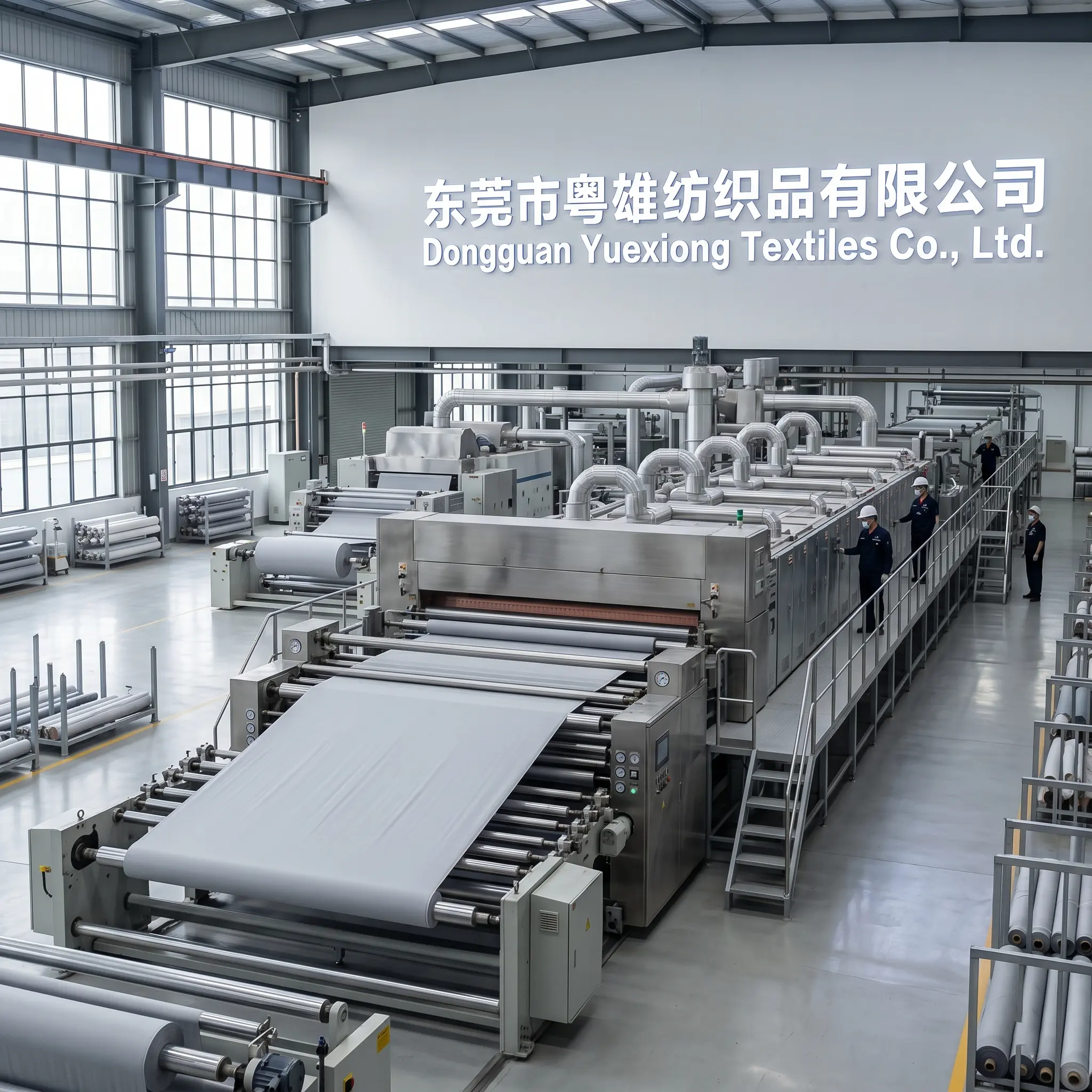
Dongguan Yuexiong Textile Co., Ltd. (MONALISHAMAGIC): 2,000 sqm facility, 50 employees, 20-engineer R&D team, stated annual output of 1,000 tons.
Have Questions or Need More Details?
Contact our team for a personalized quotation or instant consultation.
Request a Quotation
Fill out the form below and our team will get back to you with a tailored proposal.
WhatsApp Direct Chat
Prefer to chat in real-time? Message us on WhatsApp for instant assistance & quick answers.
- Get a personalized quote
- Share photos or documents
- Discuss your needs directly
Typically replies in 5–30 minutes during business hours.