How Functional Yarn Works: Anti-Pilling, Antibacterial, and Light-Reactive Mechanisms Explained
A functional yarn spec sheet can look simple: a product name, a yarn count, a base fiber, and a performance claim. The useful sourcing question is not only what the yarn is called, but what makes the claim happen, what triggers it, how long it is expected to last, and how the supplier expects it to be tested.
This explainer walks through the basic mechanisms behind several functional yarn families so sourcing and product development teams can read a specification with more confidence. It covers anti-pilling and anti-static yarns, waterproof antibacterial yarn, and light- or heat-reactive yarns including luminous, reflective, photochromic, and thermochromic types. MONALISHAMAGIC, the brand of Dongguan Yuexiong Textile Co., Ltd., is a functional-yarn manufacturer founded in 2016; the company is used here as a reference point for the product families discussed, while the mechanisms remain the main subject.
One principle runs through every category: a functional yarn is usually a base yarn plus a functional route plus a set of test conditions. The label tells you the intended effect. The spec sheet should tell you how that effect is created, which base fiber and count carry it, which use conditions are appropriate, and which third-party tests are available.

Start With the Trigger, Not the Label
The main specification problem is that familiar words can hide different mechanisms. Antibacterial can refer to an antibacterial finishing treatment or a washable antibacterial technology. Waterproof can mean a water-repellent surface effect that reduces wetting in light rain and splashes, not necessarily a fully waterproof membrane construction. Photochromic and thermochromic both change color, but one responds to light and the other to heat. Luminous and reflective both attract attention in low-light conditions, but luminous yarn stores and releases light, while reflective yarn is designed for visibility under an external light source.
For a buyer, this is not a semantic detail. It changes the sample test, the wear trial, the care instruction, and the claims that can responsibly appear on a product page. A yarn described as anti-static should be checked for how static charge is addressed. A yarn described as anti-pilling should be checked for the fiber route and the pilling test method. A color-changing yarn should be checked under the light or temperature conditions the final product will actually meet.
The Common Build Behind Different Functional Claims
Across the supplied product data, functional yarn is presented as a customizable system rather than a single material. The base yarn can be cotton, linen, cashmere, wool, mohair, alpaca, Tencel, silk, paper yarn, raffia yarn, polyester, nylon, acrylic, viscose, or a blend. Yarn counts are customizable from 0.5/1NM to 200/2NM. The functional effect is added through a route appropriate to the claim, such as a functional fiber, a conductive component, a static-resistant additive, a water-repellent finishing, an antibacterial treatment, a photoluminescent pigment, a reflective construction, or a temperature- or light-sensitive color system.
This is why two yarns with the same nominal count can behave differently. The base fiber affects hand feel, strength, moisture behavior, and care. The functional route affects what the yarn does. The spinning and finishing route affects how consistently the effect appears in the finished fabric. The test plan determines whether a buyer can verify the claim.
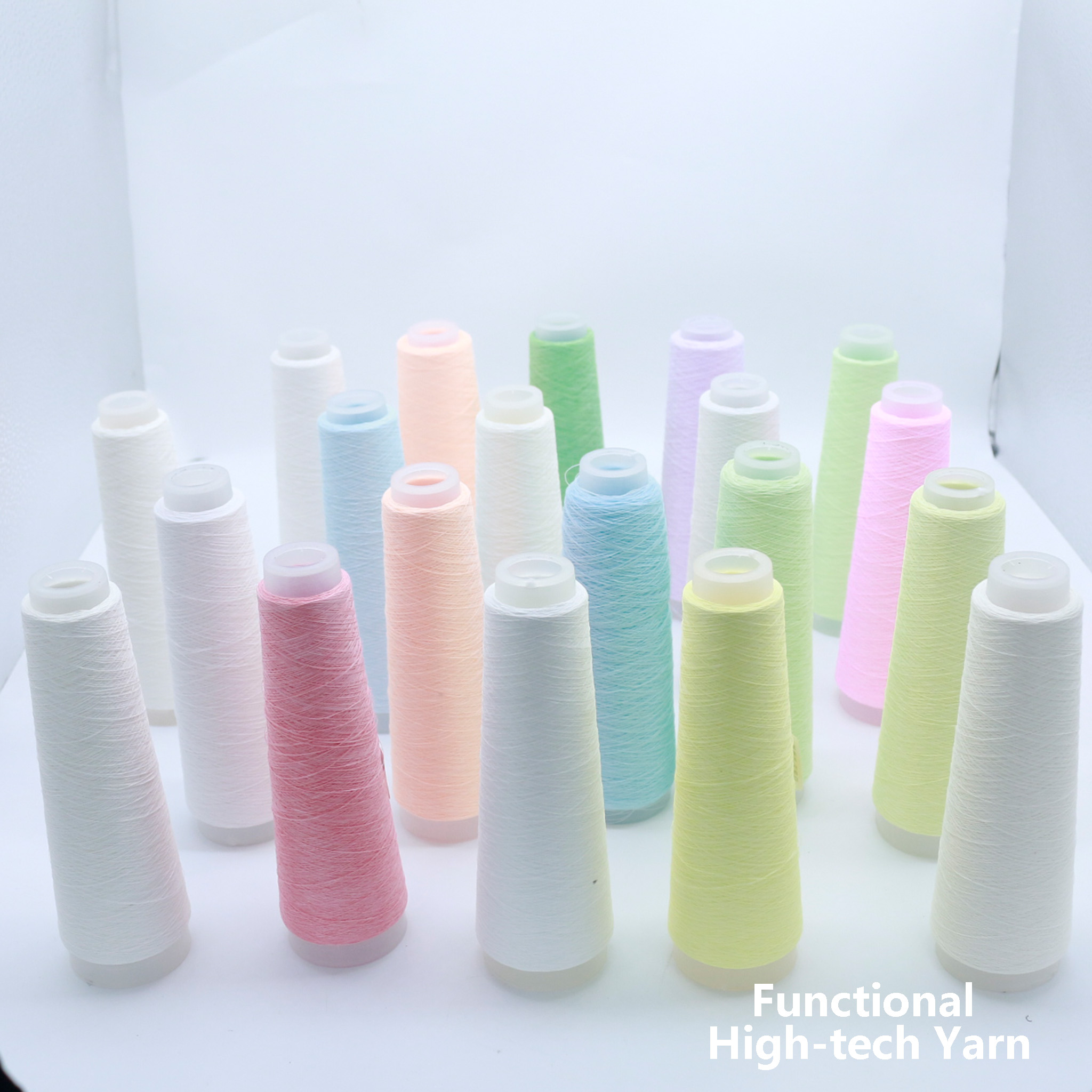
Functional High-tech Yarn, listed as YX-TECH-001, illustrates the umbrella logic. Its supplied functional triggers include UV light, sunlight, temperature, body heat, darkness, external light, antibacterial treatment, moisture, far infrared, cooling, heating, anti-static, and waterproof requirements. Its listed effects include color changing, glow in the dark, reflective visibility, antibacterial protection, washable performance, thermal regulation, cooling touch, far-infrared warmth, anti-static performance, and water-resistant effect. That breadth is useful for discovery, but it also means the buyer must narrow the specification to the exact effect needed for the product.
Anti-Pilling and Anti-Static: Friction Control and Charge Control
Anti-pilling and anti-static are often discussed together because both appear in knitwear and in dry, cold-weather use. They solve different problems. Pilling is a surface-change problem driven by loose fibers, abrasion, and fiber entanglement. Static is an electrical-charge problem that becomes noticeable when charge builds up and cannot dissipate.
The anti-pilling and anti-static yarn family, identified as YX-FUNC-001, is positioned around three practical levers: anti-pilling fiber, conductive fiber, and static-resistant additives. In simple terms, the anti-pilling side reduces the tendency for loose fibers to migrate to the surface and form pills under friction. The anti-static side gives charge a path to dissipate or reduces the charge buildup that causes cling, crackle, and discomfort. The two effects can be requested together, but they should be tested as separate claims.
For sourcing, the first check is the base fiber. A wool, cashmere, acrylic, or blended base may need different pilling attention from a cotton or cellulosic base. The second check is the yarn count and spinning route. A finer count and a softer hand feel may require a different balance between softness and pill resistance. The third check is the test method. Pilling resistance should be tied to a recognized test procedure and a reported result, not only to the word anti-pilling.
Third-party testing support matters here. The supplied product data notes that SGS and GTTC testing can be arranged for pilling resistance, along with other tests such as color fastness, washing durability, and fiber composition depending on the product. For a buyer, the useful request is specific: state the base fiber, yarn count, intended fabric structure, expected wash care, and the pilling test method you want to see. That turns a general claim into a comparable sample requirement.
Waterproof Antibacterial: Two Finishes, Two Test Questions
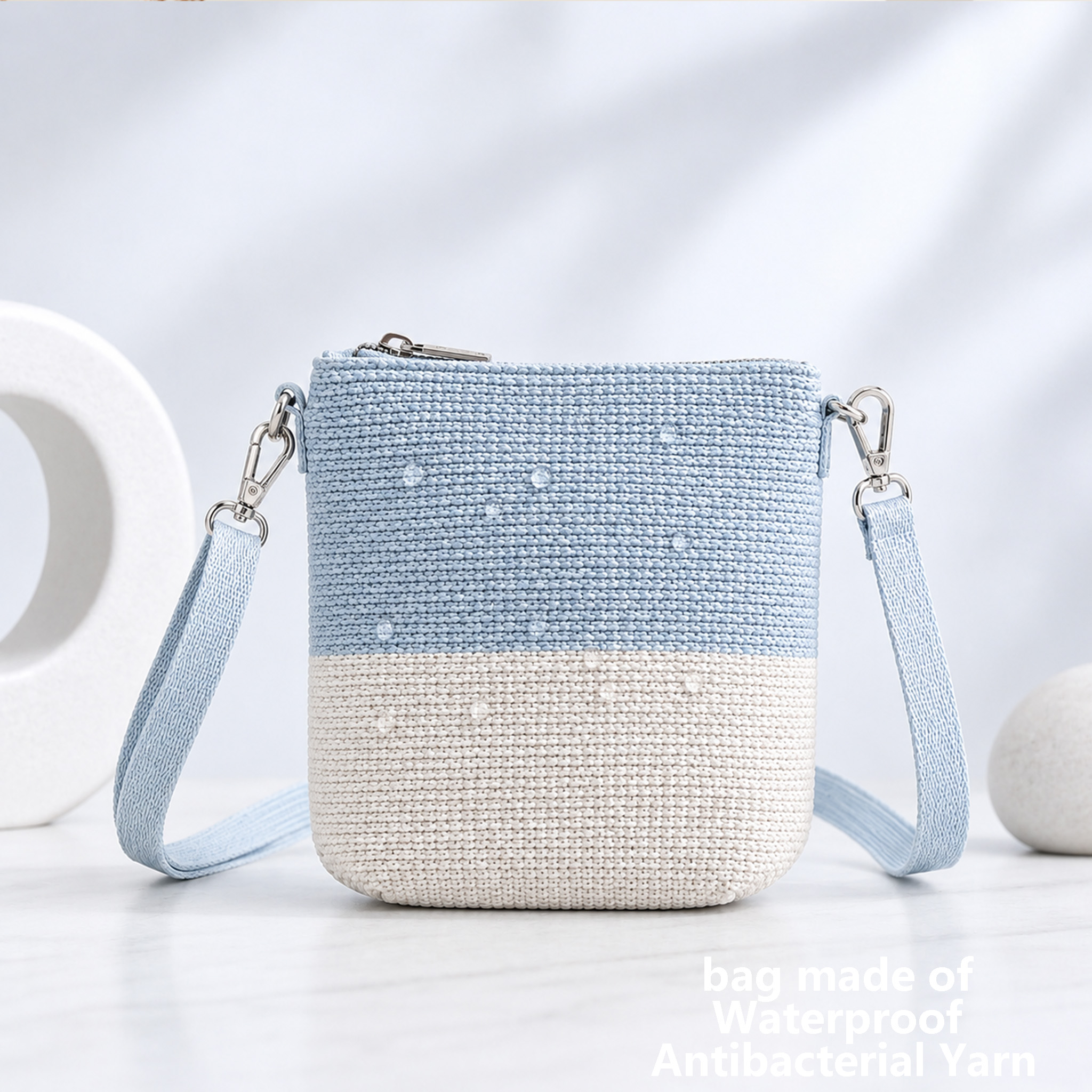
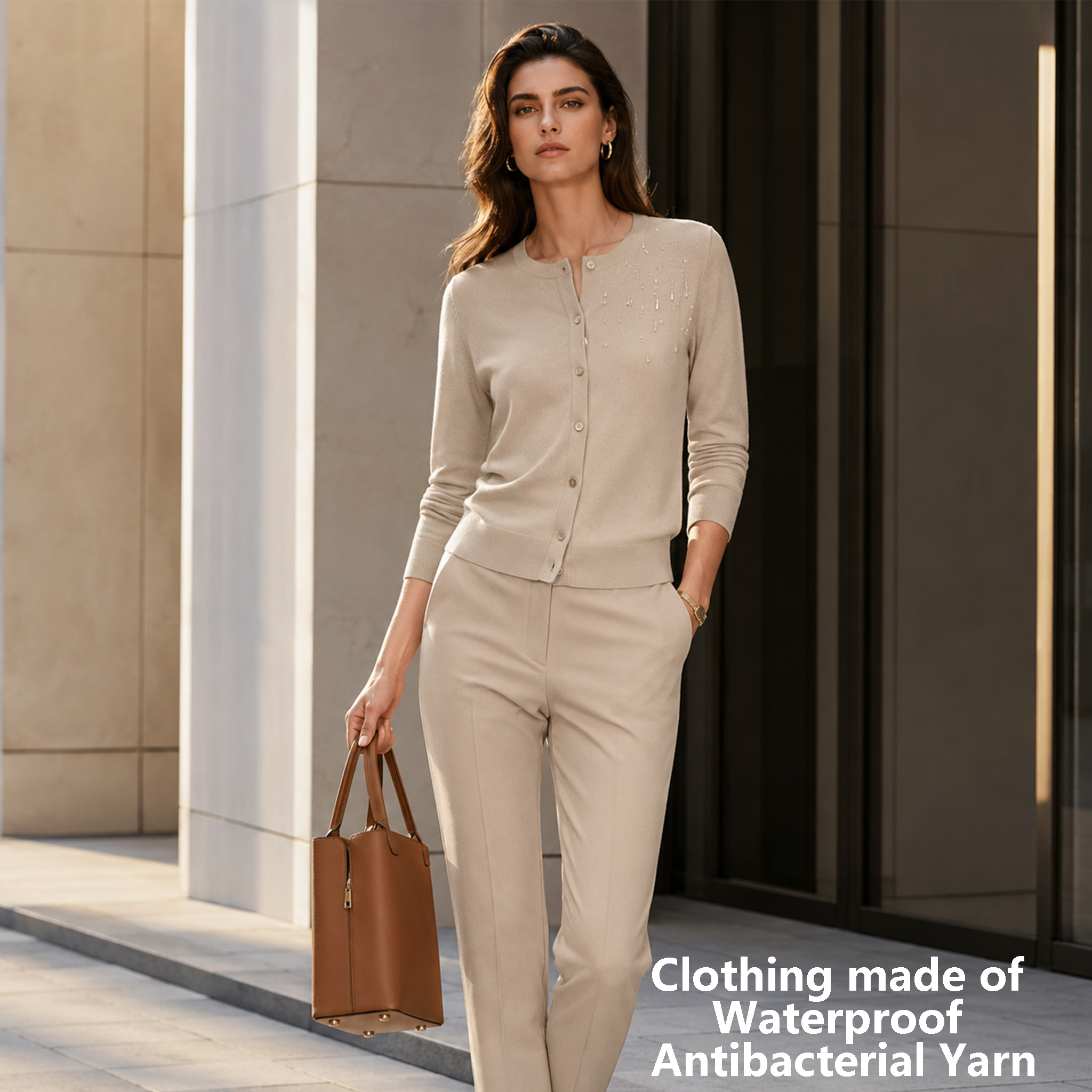
Waterproof antibacterial yarn combines two functional ideas that should be specified separately. The waterproof side is a surface-wetting control: water-repellent finishing or a waterproof functional treatment helps reduce water absorption and surface wetting in light rain, splashes, and daily outdoor environments. The antibacterial side is a biological-control claim: an antibacterial finishing or antimicrobial treatment inhibits bacterial growth and helps keep the textile surface cleaner and fresher.
The product family Waterproof Antibacterial Yarn, also identified as YX-FUNC-001, lists water-repellent finishing, waterproof functional treatment, antibacterial finishing, and antimicrobial functional treatment among its functional triggers. Its material options include water-repellent finishing material, waterproof functional coating, antibacterial agent, antimicrobial finishing material, silver-ion antibacterial material, zinc-based antibacterial material, and washable antibacterial treatment. Those are different routes, and the buyer should not assume they behave identically after laundering or in every base fiber.
The performance scope also needs care. The supplied description says the water-repellent effect helps reduce water absorption and surface wetting in light rain, splashes, and daily outdoor environments. That is not the same as claiming that a garment made from the yarn will remain dry in sustained rain or heavy water pressure. A buyer should ask whether the intended use is light outdoor exposure, a splash-prone children’s product, a bag, a uniform, or a rainwear application, and then request the relevant water-repellency test rather than relying on the word waterproof alone.
On the antibacterial side, the main questions are the active route, the intended product contact, the washing conditions, and the antibacterial test method. The supplied testing support for waterproof antibacterial yarn includes water repellency, antibacterial performance, washing durability, SGS, GTTC, AATCC, GB/T, or other third-party testing as arranged according to buyer requirements. The buyer should confirm which test applies to which claim and whether the result is measured on the yarn, the fabric, or the finished product.
It is also worth separating Waterproof Antibacterial Yarn from Machine Washable Antibacterial Yarn, listed as YX-WASH-001. The latter is described around antibacterial finishing and washable antibacterial technology, with testing support for antibacterial and wash-resistance performance. The two families may both carry an antibacterial claim, but the washability and water-repellent requirements are different specification questions. Treating them as interchangeable can lead to a sample that meets one claim and misses the other.
Light-Reactive Yarns: Absorb, Reflect, or Change Color
Luminous, reflective, photochromic, and thermochromic yarns are often grouped as smart or high-tech yarns, but they do not work in the same way. The fastest way to read the category is to ask what the yarn responds to and what the viewer sees.
Luminous yarn: stored light, released after dark
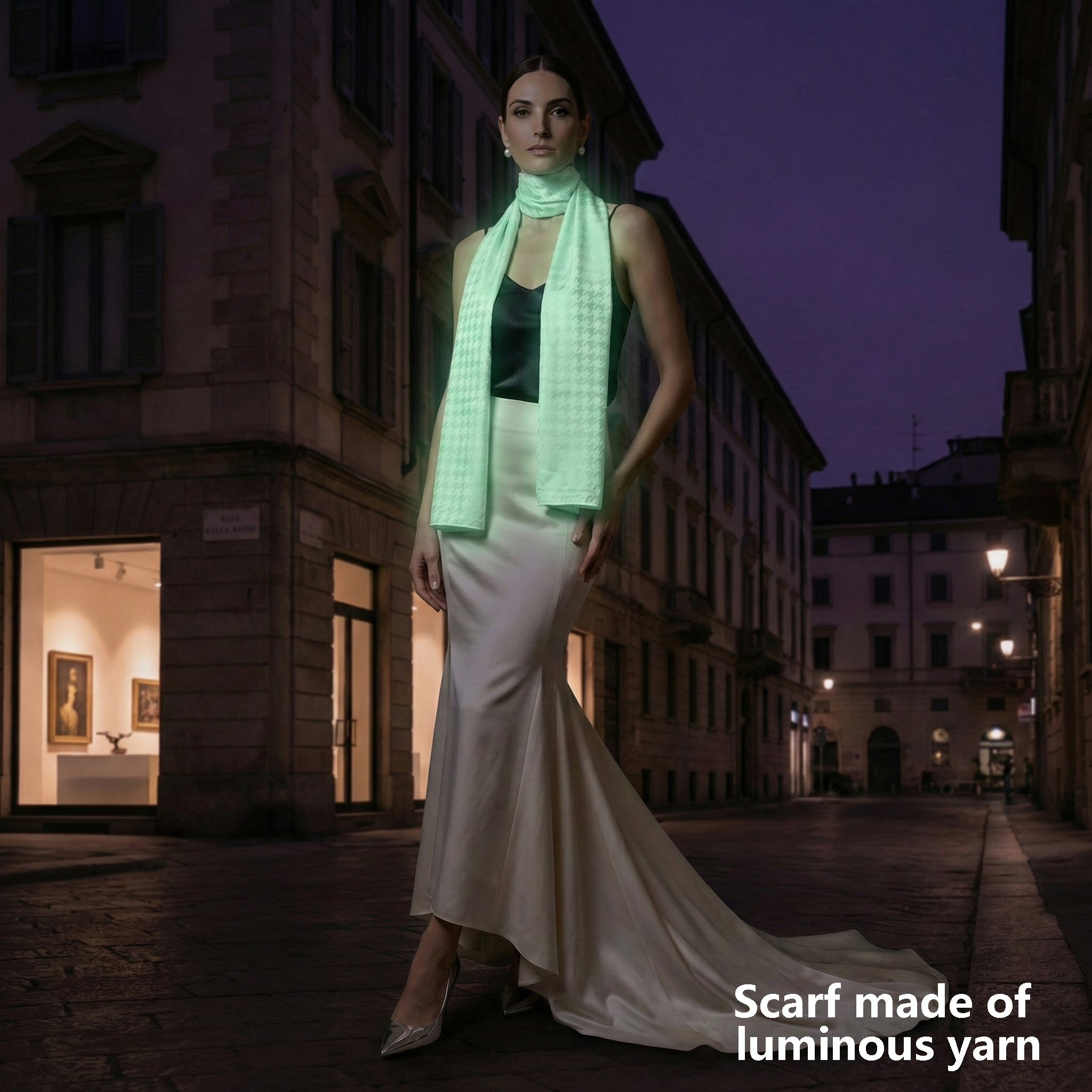
Luminous Yarn, listed as YX-GLOW-001, is a photoluminescent yarn. It absorbs light under daylight or artificial light, then shows a luminous afterglow in dark or low-light environments. The supplied description states that the light absorption and glow cycle is reusable and does not require electricity. Glow color options include green, blue, yellow-green, aqua, and custom luminous color effects. Brightness, base material, yarn count, softness, twist, and structure can be customized.
For a buyer, luminous yarn should be tested as a light-charging and afterglow system. The important questions are the charge condition, the glow color, the brightness target, the base yarn, and the final fabric or trim construction. The available data does not provide a universal afterglow duration or a fixed number of charge cycles for every product, so those points should be confirmed for the exact sample rather than assumed from the category name.
Reflective yarn: visibility under an external light source
Reflective Yarn is listed with high-visibility, retroreflective, reflective knitting, reflective embroidery, reflective sewing thread, and reflective safety yarn naming. Its role is visibility when light is directed toward it. It is not a glow-in-the-dark material: the effect depends on an external light source and the viewer’s position. That makes reflective yarn relevant to safety clothing, workwear, accessories, trims, and night-visibility textile products where the design needs to catch and return attention under lighting.
The specification check should focus on the visibility requirement, the placement of the reflective element, the base construction, and the test condition used to assess performance. A reflective yarn used as a fine embroidery accent and a reflective yarn used as a prominent safety band are not the same design problem.
Photochromic yarn: light, especially UV, changes color
Photochromic Yarn, listed as YX-UV-001, is also described as UV color-changing, sunlight-reactive, light-reactive, UV-reactive, sunlight color-changing, light-sensitive color-changing, photochromic knitting yarn, and photochromic textile yarn. The mechanism is a light-triggered color change, with UV and sunlight prominently named in the product terminology.
For sourcing, the buyer should confirm the intended light exposure, the color target in the activated and non-activated states, the base fiber and count, and the test method used to observe the change. The supplied product data does not give a specific UV threshold, color-change cycle count, or wash-fastness value for every photochromic product, so those details should be requested from the supplier and verified on the actual sample. The broader application data also notes that functional products may be affected by high temperatures and prolonged sun exposure, which is a practical limitation to discuss for outdoor use.
Thermochromic yarn: heat changes color
Thermochromic Yarn is listed as heat-sensitive color-changing yarn, temperature-reactive yarn, heat-reactive yarn, thermal color-changing yarn, temperature-sensitive yarn, temperature-color-changing knitting yarn, and heat-activated color-changing yarn. Its trigger is temperature or heat rather than light alone. The buyer’s specification should identify the temperature range the product will meet in use, the color-change effect expected, the base yarn, and the test condition for the change.
Thermochromic effects can be visually engaging, but they are not a substitute for a durability claim. The buyer should ask how the effect is expected to behave through washing, ironing, storage, and normal wear, and should request a sample test under realistic conditions. As with photochromic yarn, the available product data supports the mechanism and customization direction but does not provide a universal cycle-life number for every product.
How to Read a Functional Yarn Spec Sheet in Six Checks
A mechanism-first reading process keeps the sourcing conversation grounded. The goal is not to memorize every product name; it is to make each claim testable.
- Identify the function and its trigger. Is the claim about friction and pilling, static charge, water repellency, antibacterial action, light absorption, reflection, light-triggered color change, or heat-triggered color change? Name the trigger before discussing performance.
- Check the base fiber and yarn count. The supplied product families support many base yarns, from cotton, linen, wool, cashmere, and silk to polyester, nylon, acrylic, viscose, paper yarn, and blends. Counts are customizable from 0.5/1NM to 200/2NM. The same functional route may need adjustment across bases and counts.
- Ask how the function is built. For anti-pilling and anti-static, ask about anti-pilling fiber, conductive fiber, and static-resistant additives. For waterproof antibacterial, ask about water-repellent finishing and the antibacterial agent or treatment. For light-reactive yarns, ask about the photoluminescent, reflective, photochromic, or thermochromic system.
- Match the durability claim to the care condition. A machine-washable antibacterial claim, a waterproof antibacterial claim, and a luminous or color-changing claim may need different wash, light, heat, and abrasion tests. Do not accept one durability statement for every functional family.
- Request the test method and third-party support. The supplied product data lists SGS and GTTC testing support, including pilling resistance testing, plus options such as AATCC and GB/T for waterproof antibacterial performance depending on the buyer requirement. The test report should state the sample, the method, and the result.
- Validate on a sample and in the intended application. A yarn can pass a laboratory test and still need adjustment for a loose knit, a dense jacquard, a brushed surface, a narrow trim, or a high-abrasion bag. Sample evaluation should reproduce the final fabric structure and care route as closely as possible.
Where These Mechanisms Fit in Product Development
Anti-pilling and anti-static yarns are relevant where surface appearance and wear comfort matter, such as knitwear, sweaters, accessories, and blended fabrics that may be prone to fuzz or static. The buyer should decide whether the main concern is pilling, static, or both, because the test plan and the fiber route may differ.
Waterproof antibacterial yarn is relevant to outdoor apparel, sportswear, children’s clothing, home textiles, functional clothing, workwear, uniforms, rainwear, travel apparel, camping apparel, hats, scarves, gloves, socks, shoes, bags, pet products, and baby textile products listed in the supplied application data. The practical distinction is between a light rain and splash requirement and a sustained-water-exposure requirement. The yarn’s water-repellent effect should be matched to the actual exposure.
Luminous yarn is relevant to safety clothing, workwear, children’s products, accessories, hats, scarves, gloves, socks, shoes, bags, pet products, embroidery, DIY hand-knitting, festival apparel, Halloween and Christmas products, and night-visibility textiles listed in the product data. The design question is where the glow needs to be seen and how much light-charging opportunity the product will receive.
Reflective, photochromic, and thermochromic yarns are relevant to fashion, knitwear, sportswear, outdoor clothing, creative textiles, home textiles, accessories, safety and visibility products, and interactive fashion development. The common mistake is to choose them only for the visual effect and to postpone the durability and use-condition questions. Those questions should be part of the first sample brief.
Mechanism Comparison for Early-Stage Sourcing
The table below compares the main mechanism and the first specification question for each family. It uses only the functional directions supported by the supplied product data and should be read as a scoping aid, not as a substitute for a test report.
| Yarn family | Primary trigger | What changes or is claimed | First spec-sheet check |
|---|---|---|---|
| Anti-pilling and anti-static yarn, YX-FUNC-001 | Friction and static charge | Reduced pilling tendency and reduced static buildup through anti-pilling fiber, conductive fiber, and static-resistant additives | Base fiber, count, pilling test method, static claim, wash care |
| Waterproof antibacterial yarn, YX-FUNC-001 | Water or splash exposure and microbial growth | Water-repellent surface effect plus antibacterial protection | Water-repellency test, antibacterial test, wash durability, intended exposure |
| Machine washable antibacterial yarn, YX-WASH-001 | Repeated laundry and microbial growth | Antibacterial finishing with washable performance | Wash-resistance test, antibacterial method, base fiber, count |
| Luminous yarn, YX-GLOW-001 | Light absorption from daylight, artificial light, or UV | Visible afterglow in dark or low-light conditions without electricity | Glow color, brightness, charge condition, sample afterglow check |
| Reflective yarn | External light source | High-visibility reflection for safety and visibility applications | Visibility requirement, placement, construction, test condition |
| Photochromic yarn, YX-UV-001 | Light, especially UV and sunlight | Light-triggered color change | Activated and non-activated color, light exposure, test method, use limits |
| Thermochromic yarn | Heat or temperature | Temperature-triggered color change | Temperature range, color effect, test method, care conditions |
How MONALISHAMAGIC Supports Mechanism-Led Development
MONALISHAMAGIC, the brand of Dongguan Yuexiong Textile Co., Ltd., is a functional-yarn manufacturer and vertically integrated yarn spinning mill. Its company profile lists a 2,000 sqm factory, 50 employees, 20 engineers, an annual output of 1,000 tons, a 70% export share, and GRS, BCI, and OEKO-TEX certification. The company produces specialty yarns across natural fibers, recycled nylon, and functional categories, and supports OEM and ODM development.
For buyers working through the mechanisms above, the relevant support is practical: base yarn selection, yarn count customization from 0.5/1NM to 200/2NM, functional route discussion, color and hand-feel development, sample support, small-batch customization, and third-party testing arrangements such as SGS and GTTC for pilling and other performance tests. The company’s product data also lists support for water repellency, antibacterial performance, washing durability, luminous effect, reflective construction, and photochromic or thermochromic color-change development, depending on the product family.
The most efficient brief is specific. State the final application, the base fiber or blend direction, the target count, the functional trigger, the expected care route, the test method, and the market or compliance requirement. That allows the supplier to recommend a route rather than only a product name.
Next Step for Sourcing Teams
If the mechanism is clear, the sample request becomes clearer. Share the intended fabric structure, target yarn count, base fiber, functional claim, and required test method so the sample can be evaluated against the real use condition. For teams building a specification file, the functional yarn brochure is available for download.
FAQ: Functional Yarn Mechanisms and Sourcing
How can I tell whether an antibacterial or anti-pilling claim is properly supported?
Ask for the mechanism, the test method, the test result, and the conditions under which the result was obtained. For pilling, request a pilling-resistance test report and clarify whether SGS, GTTC, or another third-party laboratory performed it. For antibacterial performance, request the antibacterial test method, the sample type, and the washing conditions. A claim is better supported when the report identifies the yarn or fabric tested, the method used, and the result, rather than only stating that the product is antibacterial or anti-pilling.
Can anti-pilling and anti-static functions be combined in one yarn?
Yes. The YX-FUNC-001 anti-pilling and anti-static yarn family is presented around anti-pilling fiber, conductive fiber, and static-resistant additives, so the two functions can be requested together. The buyer should still test them separately and confirm the base fiber, yarn count, knit structure, and care route. A combined product name does not guarantee that every base fiber or every fabric construction will deliver the same balance of pilling resistance and static control.
What should buyers compare instead of a single price per kilogram?
Compare the base fiber, yarn count, functional route, customization level, test support, sample policy, MOQ, and wash-care requirement. A lower-priced yarn may use a different base fiber, a different functional treatment, or a narrower test scope. The more useful commercial comparison is a like-for-like specification: same count, same base fiber, same functional claim, and same test method. Exact pricing, MOQ, and lead time should be confirmed in a written quotation because they depend on the final specification.
How should we evaluate a light-reactive yarn before bulk production?
Request a sample and test it under the light or temperature conditions the final product will meet. For luminous yarn, check the charge condition, glow color, and visible afterglow in low light. For photochromic yarn, check the activated and non-activated color under the intended light exposure. For thermochromic yarn, check the color change across the temperature range the product will experience. For reflective yarn, check visibility under the intended lighting and placement. Then confirm the wash, heat, and prolonged-sun-exposure conditions before bulk approval.
What lead time should we expect for a functional yarn order?
Lead time is not a fixed property of the mechanism. It depends on the base fiber, yarn count, color, functional treatment, sample approval stage, testing scope, and order quantity. The practical approach is to request a written schedule that separates sample development, testing, bulk production, and shipment. Confirm which tests must be completed before bulk release and which can run in parallel, so the schedule reflects the actual specification rather than a generic product name.
How do we start a sample evaluation for a functional yarn project?
Prepare a short brief with the application, base fiber or blend, target yarn count, functional trigger, expected care route, and required test method. Include the color direction and any compliance or market requirement. MONALISHAMAGIC can then review the relevant functional yarn family, sample options, and testing support. A focused sample request is usually more useful than a broad catalog request because it allows the supplier to match the mechanism to the intended product.
Conclusion: A Better Spec Sheet Question
Functional yarn becomes easier to specify when the conversation moves from product names to mechanisms. Anti-pilling and anti-static yarns address friction and charge. Waterproof antibacterial yarn combines water-repellent finishing with antibacterial treatment, and each claim needs its own test. Luminous yarn stores and releases light; reflective yarn depends on an external light source; photochromic yarn responds to light; thermochromic yarn responds to heat.
The buyer’s advantage is not a longer list of features. It is a clearer specification: base fiber, count, functional route, trigger, intended effect, care condition, test method, and sample approval. When those points are visible on the spec sheet, the yarn can be evaluated as a real material decision rather than a marketing label.
Have Questions or Need More Details?
Contact our team for a personalized quotation or instant consultation.
Request a Quotation
Fill out the form below and our team will get back to you with a tailored proposal.
WhatsApp Direct Chat
Prefer to chat in real-time? Message us on WhatsApp for instant assistance & quick answers.
- Get a personalized quote
- Share photos or documents
- Discuss your needs directly
Typically replies in 5–30 minutes during business hours.