Machine-Washable Antibacterial Yarn vs Water-Repellent: Buyer Comparison
Machine-Washable Antibacterial Yarn vs Water-Repellent Antibacterial Yarn: Buyer Comparison
The right antibacterial yarn route is decided by garment use, not by the word “antibacterial” alone. Machine-washable antibacterial yarn is usually the stronger starting point for next-to-skin knitwear, repeated-wash fashion apparel and soft sportswear programs. Water-repellent antibacterial yarn is usually the stronger starting point for outdoor clothing, outer layers and sportswear that must face weather exposure. Many programs need a split decision: one route for the base fabric and another for the outer shell. This comparison sets out the buyer checks that separate a workable choice from an expensive rework.
This guide compares two route names used in the brief: YX-WASH-001 for the machine-washable antibacterial route and YX-FUNC-001 for the water-repellent antibacterial route. The model names identify the two buying directions in this article. They are not a substitute for the current product datasheet, care label, sample test or certification scope. A buyer should treat every performance claim as order-specific until the supplier confirms the exact composition, count, finish, test method and bulk specification.
The short answer: choose by dominant exposure and care routine
Start with the garment’s dominant exposure. If the fabric sits next to the skin, passes through frequent home laundering, and is judged by softness and drape, the machine-washable antibacterial route is normally the more direct fit. If the fabric is an outer layer exposed to rain, drizzle, snow or road spray, the water-repellent antibacterial route is normally the more direct fit. If the garment must do both, do not force one yarn to carry two unrelated promises without test evidence; consider a layered construction or a clearly tested dual-function specification.
Decision rule for product teams
- Choose the machine-washable route first when repeated laundering, next-to-skin comfort and knit softness are the main purchase criteria.
- Choose the water-repellent route first when the garment’s visible value depends on weather protection, surface water beading or outdoor use.
- Compare both routes when the same style family includes a base layer and an outer layer, or when a buyer asks for one fabric to support both comfort and weather resistance.
- Reject any route that cannot show the claimed performance after the stated care procedure, at the stated test scope, for the actual yarn count and blend.
What each route is—and what it is not
Machine-washable antibacterial yarn
This route combines an antibacterial function with the expectation that the finished garment can be washed by the consumer under a defined care routine. The buyer’s real question is not whether the yarn is called machine washable, but whether the antibacterial claim, colour, shrinkage and surface appearance remain acceptable after the number of washes stated in the program. A machine-washable label without after-wash test data is only a starting claim. It is not proof of durable antibacterial performance, and it does not make the garment waterproof or water-repellent.
Water-repellent antibacterial yarn
This route combines an antibacterial function with resistance to surface wetting. It is useful when the fabric must shed light rain or resist quick absorption during outdoor use. It is not automatically waterproof: water repellency and waterproofness are different claims and require different evidence. It is also not automatically breathable, soft or suitable for next-to-skin wear. A water-repellent surface can change hand feel and moisture management, so the buyer should validate comfort with a wear trial rather than infer it from the yarn description.
Model-name caution: YX-WASH-001 and YX-FUNC-001 should be treated as route labels until the supplier issues the current datasheet. Confirm fibre composition, yarn count, colour, finish, antibacterial test scope, water-repellency test scope and recommended care before approving a bulk order.
Hand feel and comfort: the trade-off buyers notice first
Comfort is where a technically acceptable yarn can still fail commercially. Machine-washable antibacterial yarns are often evaluated for knitwear and next-to-skin apparel because the product team can focus on softness, drape and wash durability without adding a weather-protection surface. That does not mean every machine-washable antibacterial yarn feels soft. The base fibre, yarn count, twist, finishing and antibacterial add-on all affect hand feel. A softness claim should be checked on the final knitted or woven fabric, not only on the yarn cone.
Water-repellent antibacterial yarns carry a different comfort question. A repellent surface can influence how the fabric feels in the hand, how it manages moisture and how it performs in humid or sweaty use. The effect may be acceptable or even desirable in an outer layer, but it can be a poor match for a base layer or a close-fitting knit. The practical check is a blind wear trial that compares the two route samples in the same garment construction, colour and weight. Ask wearers to assess stiffness, cling, warmth, moisture feel and noise after movement. Do not rely on a verbal “soft” claim from a sales sheet.
For fashion apparel and knitwear, the machine-washable route usually gives the product team a simpler comfort story. For outdoor clothing, the water-repellent route usually gives a clearer functional story. For sportswear, the answer depends on the layer: next-to-skin sportswear often favours the machine-washable route, while an outer training shell may favour the water-repellent route. A single style that tries to serve both layers should be tested as a system, not as a slogan.
Laundering expectations: where claims are won or lost
Laundering is the most common gap between a sample and a bulk program. For machine-washable antibacterial yarn, the buyer should define the wash procedure before sampling: water temperature, detergent type, wash duration, drying method and the number of cycles that represent the product’s expected life. Then request results for antibacterial performance, colour fastness, shrinkage, pilling and appearance after those cycles. The care label must match the tested procedure. A yarn that passes a single wash is not evidence of repeated-wash performance.
For water-repellent antibacterial yarn, the same discipline applies to the repellent surface. Ask how the repellency behaves after washing, abrasion and normal use. Confirm whether the buyer is expected to re-proof the garment, and reflect that in the care label. A water-repellent claim that disappears after the first home wash may still be technically true at the point of sale, but it creates a return and reputation risk for the brand.
Functional yarns can also face performance degradation under extreme temperatures or prolonged UV exposure, as well as colour fading or reduced wash durability. Supplied risk-control practice includes UV-stabilized treatment, temperature-resistant formulation and quality control of colour fastness and washability. These controls are relevant to both routes because the buyer is not only purchasing an initial effect; the buyer is purchasing a claim that must survive the supply chain, the wash cycle and the consumer’s care routine.
Performance testing and documents to request
Antibacterial and water-repellent claims should be supported by test reports that state the test scope, the sample identity and the condition of the sample. A certificate alone is not a performance report. A test report alone is not a certification. Buyers should map each document to the exact claim they intend to publish, then check that the report covers the same yarn route, count, blend, colour and finish as the bulk order.
| Document or evidence | What it can support | What it does not prove by itself |
|---|---|---|
| Antibacterial test report | The tested sample, method, organisms, contact time and result under the stated conditions. | It does not prove the same result for a different count, blend, colour or finish, or after an untested number of washes. |
| Water-repellency test report | The tested surface behaviour under the stated method and sample condition. | It does not prove waterproofness, breathability, comfort or durability after an untested care routine. |
| OEKO-TEX certification | Certification status within the certified scope and valid certificate details. | It does not by itself prove antibacterial efficacy or water repellency. |
| GRS or OCS certification | Recycled-content or organic-content claims within the certified scope, where applicable. | It does not prove functional performance, hand feel or care durability. |
| SGS or GTTC laboratory report | Third-party testing against the method and sample stated in the report. | It does not make the supplier’s wider product range compliant; scope and sample identity must be checked. |
According to the supplied company facts, MONALISHAMAGIC (Dongguan Yuexiong Textile Co., Ltd.) holds GRS, BCI and OEKO-TEX certification. Buyers who require SGS or GTTC test reports, or an OCS claim, should specify the exact claim and confirm the certificate or report scope for the order. A certification held at company level does not automatically attach to every yarn model or every colour. The buyer should request the valid certificate, the product scope and the date, then check that the named product and market are covered.
Testing support should be planned before the sample is ordered. A useful request lists the claim, the test method the buyer will accept, the number of wash cycles, the sample size and the colourways to be tested. If the buyer has a target market with a specific compliance file, the supplier should confirm which documents can be supplied and which must be arranged by the buyer’s laboratory. This prevents a late-stage discovery that the bulk order can be produced but not substantiated for the intended market.
End-use fit: fashion apparel, knitwear, outdoor clothing and sportswear
Application fit is the fastest way to narrow the choice. The table below compares the two routes by common buyer need. It is a decision aid, not a universal performance ranking. Each row still depends on the final construction, count, blend, finish and test evidence.
| End use | Machine-washable antibacterial route | Water-repellent antibacterial route | Buyer check |
|---|---|---|---|
| Fashion apparel | Often the simpler fit for soft, repeated-wash pieces and next-to-skin styling. | Better suited to outerwear styling or garments where surface water resistance is part of the design. | Confirm hand feel, colour fastness and care label on the final fabric. |
| Knitwear | Usually the stronger starting route when softness, drape and repeated laundering dominate. | Use when the knitwear is an outer layer and the repellent surface does not compromise comfort. | Run a wear trial; a repellent surface can change hand feel and moisture feel. |
| Outdoor clothing | Useful for base layers, linings and next-to-skin components that need frequent washing. | Useful for outer shells and exposed panels that must shed light rain or surface water. | Do not treat water repellency as waterproofness; test the exact claim. |
| Sportswear | Suited to next-to-skin tops, leggings, base layers and repeated-wash training pieces. | Suited to outer training layers or exposed panels where weather resistance matters. | Test moisture feel, odour management expectations and after-wash performance. |
For fashion apparel and knitwear, the machine-washable route tends to reduce the number of comfort questions the product team must answer. The trade-off is that the buyer must prove the antibacterial and care claims after repeated washing. For outdoor clothing, the water-repellent route tends to reduce the number of weather-exposure questions, but it raises care and comfort questions. For sportswear, the right answer often depends on whether the yarn is used in a base layer or an outer layer. A buyer who asks one yarn to satisfy both layers should expect a more demanding test plan and a narrower set of proven constructions.
Cost and value: compare the total cost of the claim
Yarn price per kilogram is only one part of the decision. The machine-washable route can carry costs for wash-durable antibacterial performance, colour fastness testing, repeated-wash validation and care-label development. The water-repellent route can carry costs for surface treatment, compatibility with colour and finishing, repellency testing, abrasion checks and care instructions. A dual-function route can carry both sets of costs, plus the risk that one performance compromises the other.
The better commercial comparison is total cost of the approved claim: yarn cost, sample and test cost, rework risk, certification scope, expected return rate and the cost of a failed claim. A lower-priced yarn that cannot support the label is not a lower-cost choice. A higher-priced yarn that removes a test or rework loop may be the better value, but that conclusion needs the buyer’s own cost model. No responsible supplier should quote a performance outcome as a guarantee without a defined test and care condition.
Specification and sampling plan for YX-WASH-001 and YX-FUNC-001
A buyer can reduce risk by turning the route comparison into a written sampling plan. The plan should be short enough to execute and specific enough to compare. The following sequence works for both YX-WASH-001 and YX-FUNC-001.
- Define the garment layer and care routine. State whether the yarn is for a base layer, outer layer or trim; state the expected wash temperature, detergent, drying method and number of washes.
- Write the claim in test language. Replace “antibacterial” or “water-repellent” with the exact claim, test method, sample condition and acceptance criterion the buyer will use.
- Request the current datasheet. Confirm fibre composition, yarn count, colour, finish, recommended knitting or weaving conditions and the model identity.
- Confirm the count and blend range. The supplied functional-yarn customization range includes 0.5/1 NM to 200/2 NM, with multi-material customization supported. Confirm the exact count and blend available for the chosen antibacterial model before building the sample plan.
- Order matched samples. Use the same fabric structure, colour and finishing route for both candidates; otherwise the comparison is confounded.
- Test before wear trial. Complete the antibacterial and water-repellency tests, plus colour fastness, shrinkage and appearance checks, before asking a wear panel to judge comfort.
- Run a wear trial. Compare hand feel, cling, moisture feel, warmth and visual appearance in the intended end use.
- Pilot the bulk specification. Confirm that the pilot lot matches the approved sample and that the care label, test report and certificate references are aligned.
The count range is a customization input, not a promise that every count is available in every antibacterial route. The buyer should ask for the specific count, blend and minimum order for YX-WASH-001 or YX-FUNC-001, then verify the sample against the agreed specification. This is especially important when the same style family uses different colours or finishes, because functional performance can vary by construction and dyeing route.
Supplier capability check: what MONALISHAMAGIC can document
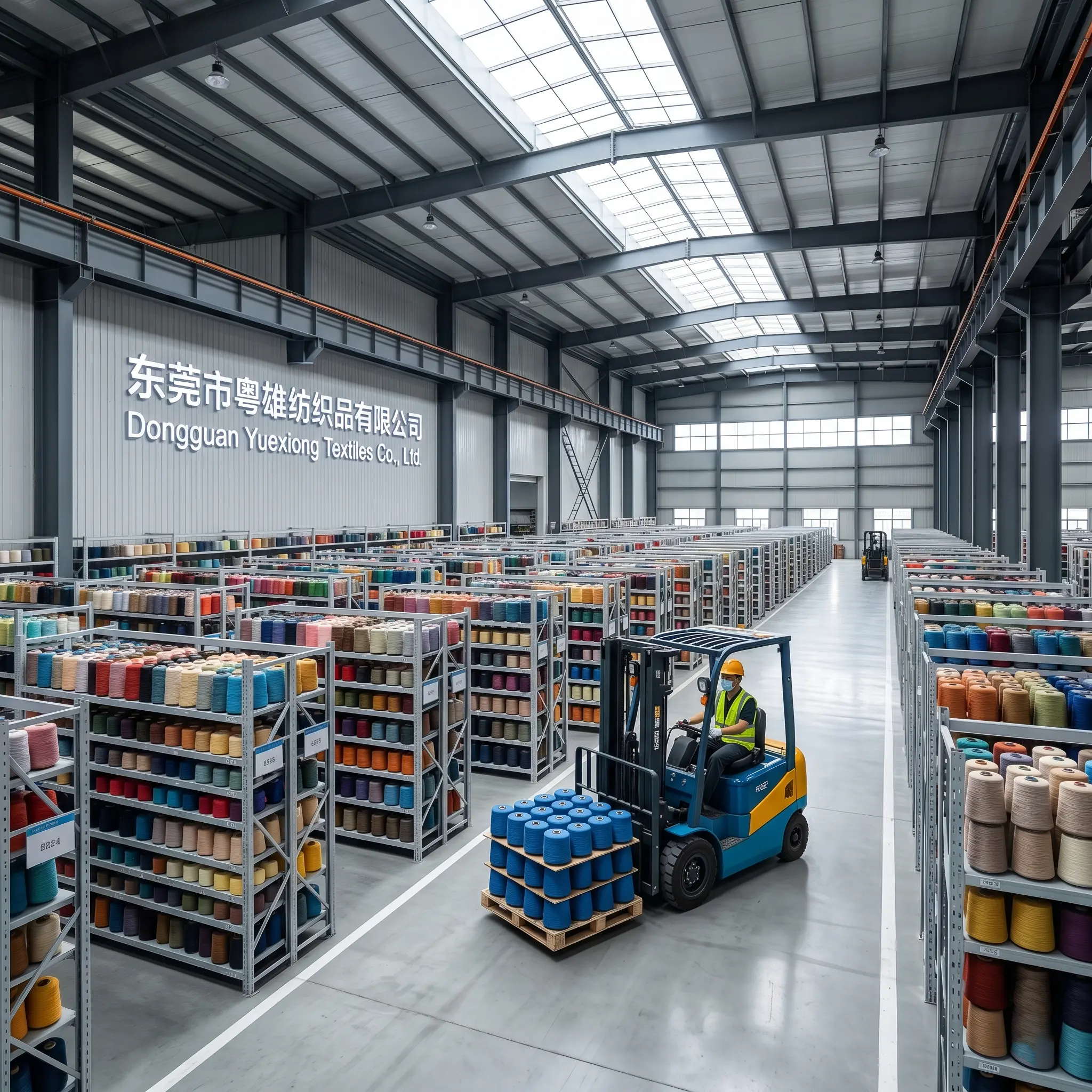
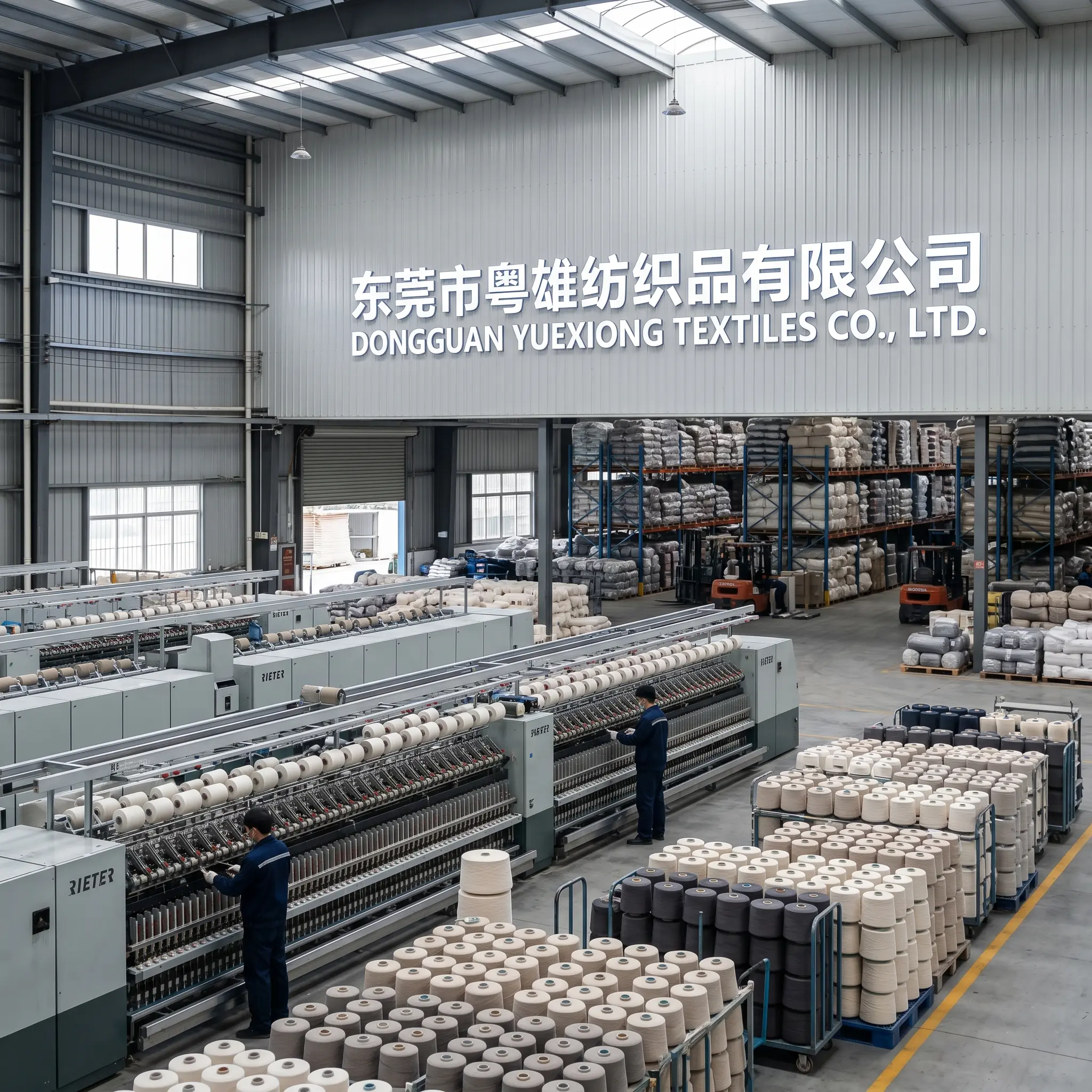
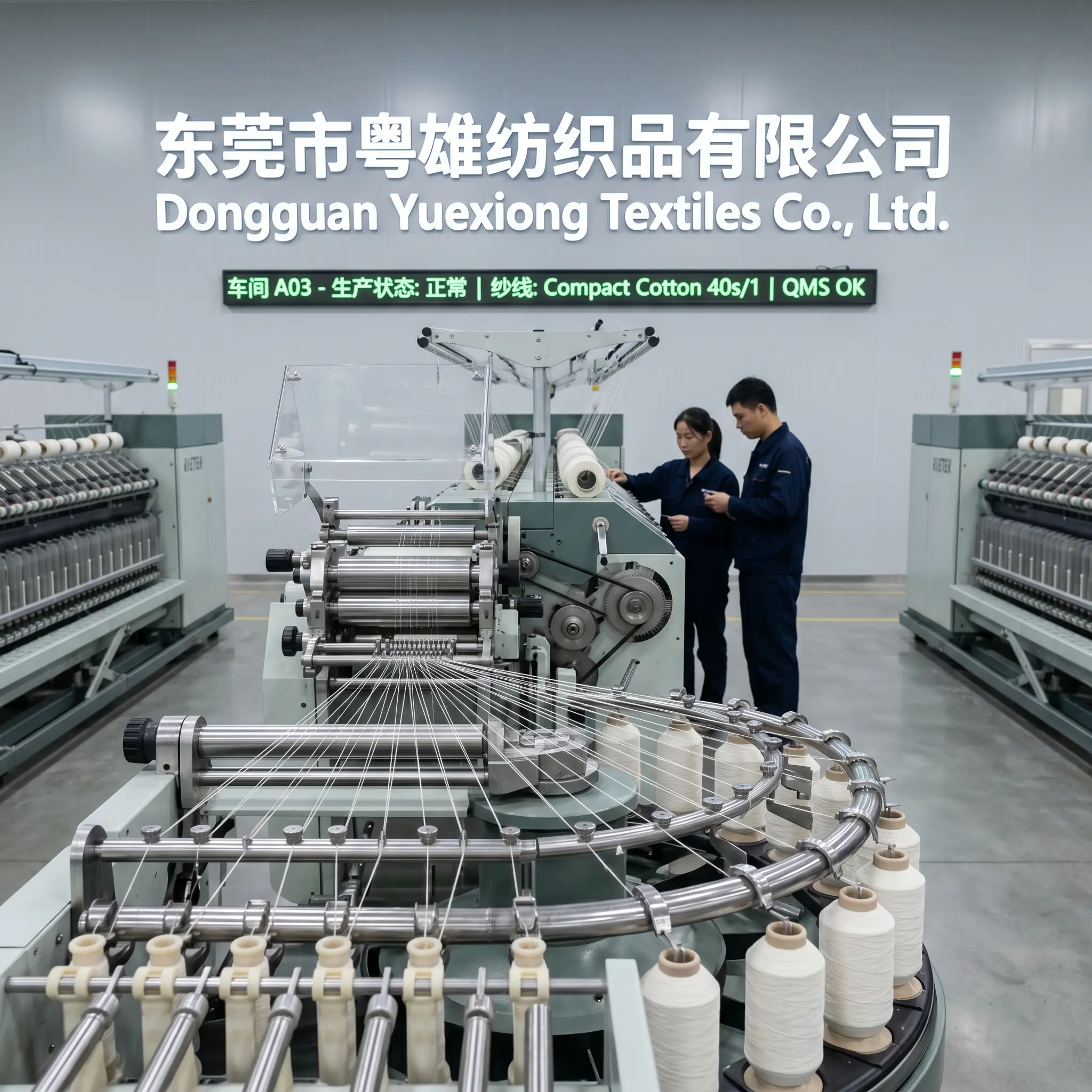
MONALISHAMAGIC is the brand of Dongguan Yuexiong Textile Co., Ltd., a textile manufacturer and vertically integrated yarn spinning mill. The supplied company profile states that the company was founded in 2016, operates a 2,000 sqm factory with 50 employees and 20 engineers, and has an annual output of 1,000 tons. It also states that 70% of sales are exported and that the company serves global markets as an OEM/ODM factory. These facts are useful for a buyer checking whether the supplier can support a development program, not as proof of any specific yarn’s performance.
The same profile describes a proprietary patented waterless dyeing technology and certifications including GRS, BCI and OEKO-TEX. For a decision-stage buyer, the relevant next step is to ask which of these capabilities apply to the exact antibacterial route under review. Company-level capability is a screening signal. Product-level evidence is the approval signal. The buyer should ask for the current product datasheet, the relevant test report, the certificate scope and the commercial terms for the chosen model. The approved company website is MONALISHAMAGIC.
Frequently asked questions
Which route is better for knitwear: machine-washable or water-repellent antibacterial yarn?
For most knitwear programs, the machine-washable antibacterial route is the more direct starting point because knitwear is often judged by softness, drape and repeated laundering. Water-repellent antibacterial yarn can be used in knitwear when the garment is an outer layer and the buyer has confirmed that the repellent surface does not harm comfort. The decision should be made on a matched sample, not on the route name alone.
Can water-repellent antibacterial yarn be machine washed?
It can be machine washable only if the supplier has tested and specified that care routine for the exact product. Water repellency and machine washability are separate claims. Ask for after-wash repellency results, the recommended detergent and drying method, and the care label wording. Do not assume that an antibacterial yarn labelled water-repellent will keep its repellency after repeated home washing without evidence.
Does machine-washable antibacterial yarn stay antibacterial after repeated washing?
That must be proven for the exact yarn, fabric construction and wash procedure. Request an antibacterial test report that states the number of wash cycles, the test method, the organisms tested and the result after washing. A report on an unwashed sample does not establish repeated-wash performance. The care label should match the tested condition.
What testing documents should a buyer request for either route?
Request the product datasheet, the antibacterial test report, the relevant water-repellency report for YX-FUNC-001, colour fastness and wash-durability reports, and the certificate scope for any OEKO-TEX, GRS, OCS, BCI or other claim. Where the buyer requires SGS or GTTC reports, confirm the laboratory, method, sample identity and date. A certificate and a test report answer different questions and should not be substituted for each other.
Can yarn count and blend be customized?
The supplied functional-yarn customization range includes 0.5/1 NM to 200/2 NM, with multi-material customization supported. Availability must be confirmed for the specific antibacterial model, colour and order quantity. The buyer should approve a sample at the intended count and blend before bulk production, because changing count or blend can change hand feel, test response and care performance.
How should a buyer compare cost between the two routes?
Compare the total cost of the approved claim, not only the yarn price. Include sampling, testing, certification scope, care-label development, pilot runs, expected rework and the risk of a failed claim. A route that needs fewer test loops or fewer care restrictions may offer better value even at a higher yarn price. This comparison should use the buyer’s own volumes, markets and quality requirements.
How do I start a sample evaluation?
Define the end use, care routine and test claim first, then request a matched sample of YX-WASH-001 and YX-FUNC-001 at the intended count and blend. Ask for the current datasheet, test reports and certificate scope with the sample. MONALISHAMAGIC’s product brochure can be downloaded here: functional yarn brochure. Use the sample and documents to decide which route fits the garment, then confirm bulk terms and care labelling before production.
Conclusion: decide by the claim the garment must keep
The choice between machine-washable antibacterial yarn and water-repellent antibacterial yarn is not a contest for a universal winner. It is a choice about which claim the garment must keep after use. Machine-washable antibacterial yarn is usually the better starting point for soft knitwear, next-to-skin fashion apparel and repeated-wash sportswear. Water-repellent antibacterial yarn is usually the better starting point for outdoor clothing, outer layers and exposed sportswear panels. When both functions are required, the buyer should test the combined route or use a layered construction rather than assume that one yarn carries both claims well.
The final decision should rest on four checks: a matched sample, a defined care routine, a test report that covers the exact claim, and a supplier who can connect the model name to the certificate and bulk specification. The route label, including YX-WASH-001 or YX-FUNC-001, is only the beginning of that check. The approved evidence is what makes the choice defensible.
Next step for buyers: build a two-sample evaluation with the intended count, blend, colour and wash routine, then compare the test reports and wear-trial results before selecting the bulk route. Product documentation and samples can be requested through MONALISHAMAGIC.
Have Questions or Need More Details?
Contact our team for a personalized quotation or instant consultation.
Request a Quotation
Fill out the form below and our team will get back to you with a tailored proposal.
WhatsApp Direct Chat
Prefer to chat in real-time? Message us on WhatsApp for instant assistance & quick answers.
- Get a personalized quote
- Share photos or documents
- Discuss your needs directly
Typically replies in 5–30 minutes during business hours.