Water-Repellent Antibacterial Yarn: A Technical Guide to Finishing, Count, and Testing
Water-repellent antibacterial yarn is a specification problem before it is a material claim. For outdoor, sportswear, and fashion apparel teams, the useful question is not whether a yarn can be called water-repellent or antibacterial, but which finish, base fiber, count, test method, and acceptance limit will survive the intended fabric construction and wash program. MONALISHAMAGIC positions its YX-FUNC-001 water-repellent antibacterial yarn within that specification conversation: a functional yarn platform with a water-repellent finishing route, an antibacterial agent, and customizable count, composition, softness, twist, structure, color, and hand feel. This guide explains how to turn those options into a testable purchase specification rather than a generic waterproof claim.
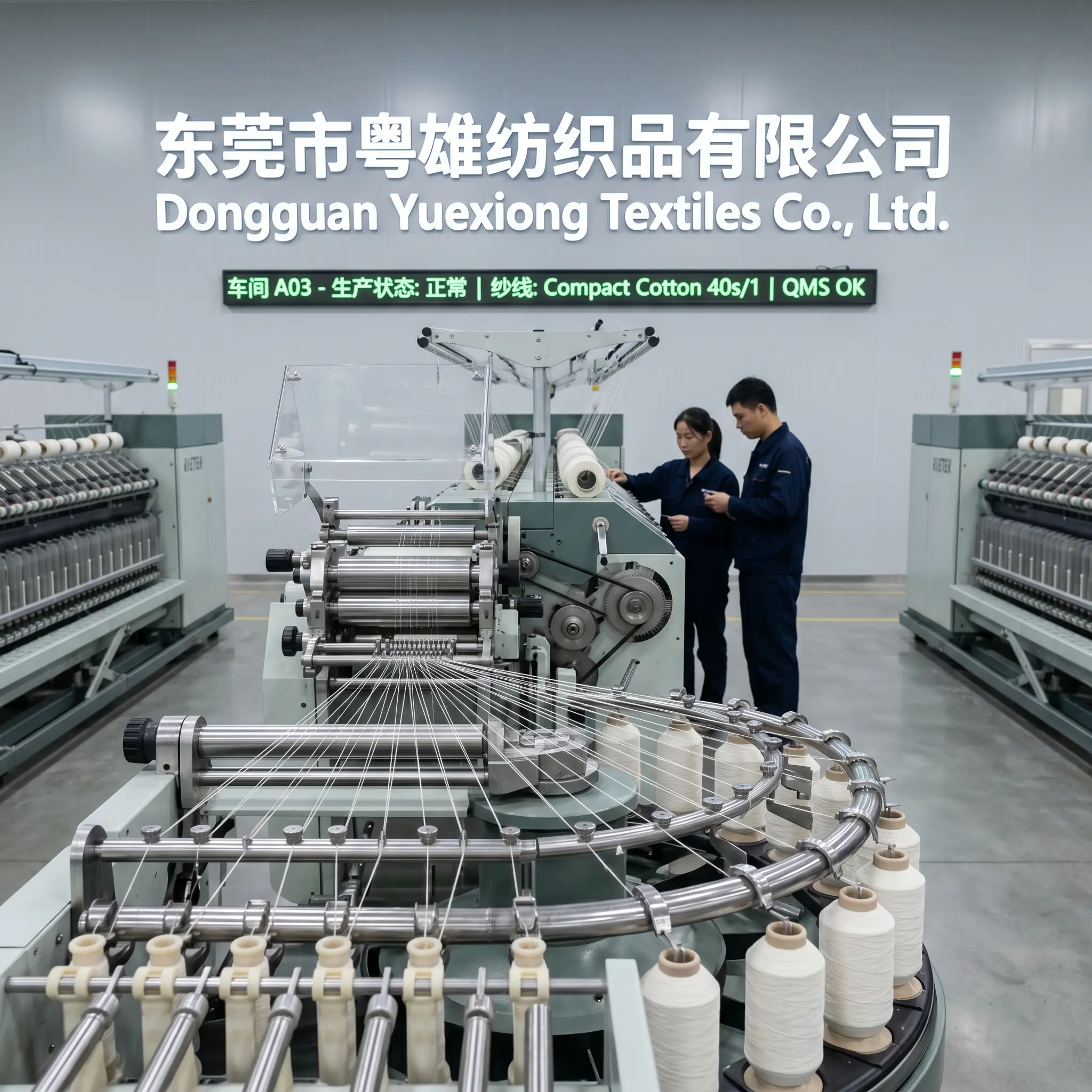
MONALISHAMAGIC is the brand of Dongguan Yuexiong Textile Co., Ltd., a textile manufacturer and vertically integrated yarn spinning mill founded in 2016. The company operates a 2,000 sqm factory with 50 employees, a 20-engineer R&D team, and annual output of 1,000 tons; it reports a 70% export ratio and global markets. Its portfolio includes functional yarns as well as natural and recycled fibers, and it supplies OEM/ODM programs. Those facts describe the supplier and its execution model; they do not replace a product-specific test report for the ordered yarn or fabric.
Why Water-Repellent Antibacterial Yarn Is a Specification Problem
A buyer who asks for 'waterproof antibacterial yarn' is asking for an outcome, not a specification. Water-repellent usually describes resistance to wetting or penetration under a defined test. Waterproof usually implies a barrier performance level. The two terms are not interchangeable, and a fabric can be water-repellent without being waterproof. Antibacterial describes an effect against specified organisms under a specified method; it does not mean that every fabric made from the yarn is sterile, medical-grade, or permanently protected. Unless the method, specimen, wash cycles, and pass/fail limit are written down, two suppliers can both be truthful and still deliver incompatible materials.
The commercial risk is not only a failed lab test. A vague claim can pass a sample review and then fail after knitting, dyeing, finishing, garment assembly, or repeated laundering. It can also create a mismatch between the marketing claim and the evidence file. For an evaluation-to-execution buyer, the practical task is to define the performance scope before the first bulk order, then attach each scope item to a sample, a test, and an acceptance record.
This is why the product name should not be the whole brief. 'Water-repellent antibacterial yarn' identifies a category. A purchase specification identifies the exact composition, count, twist, structure, color, hand feel, finish, antibacterial target, test method, and evidence required for release. The rest of this guide uses YX-FUNC-001 to show how those levers connect.
Industry Background: Functional Yarn Is a Portfolio Language
Functional yarn has moved from a narrow technical category into a broad portfolio language. A supplier may offer photochromic, thermochromic, reflective, luminous, far-infrared heating, anti-pilling and anti-static, machine-washable antibacterial, and water-repellent antibacterial yarns, alongside natural fibers such as cotton, linen, mulberry silk, acetate, denim, yak down, and paper yarn. That breadth is useful, but it makes naming discipline more important. A water-repellent antibacterial yarn is not a substitute for a waterproof membrane, and an antibacterial yarn is not automatically a medical or sterile product.
The buyer's end use should control the claim. An outdoor shell, a sportswear base layer, and a fashion knit may all use a functional yarn, but they do not value the same performance evidence. Outdoor programs usually need a defined water-repellent finish and a wash protocol. Sportswear programs often need a defined antibacterial target and a skin-contact hand feel. Fashion programs may prioritize color, softness, drape, and hand feel, with water repellency and antibacterial performance as secondary or seasonal features. The supplier can customize the yarn, but the buyer must define what 'pass' means for the garment.
What YX-FUNC-001 Adds to the Specification Conversation
YX-FUNC-001 is the model reference for the water-repellent antibacterial yarn discussed in this guide. The supplied product positioning covers a water-repellent finishing route and an antibacterial agent, with customization across material composition, yarn count, softness, twist, structure, color, and hand feel. The count range is 0.5/1 NM to 200/2 NM. That range is a development window, not a promise that every count will suit every fabric. Fine counts may be considered for lighter, smoother fabrics; coarser counts for heavier or more textured constructions. The correct count is the one that passes the agreed fabric trial.
Because composition, softness, twist, structure, color, and hand feel are variables, the buyer should not treat 'water-repellent antibacterial' as a complete product name. A specification should record the fiber blend, count, twist direction and level where applicable, yarn structure, color target, hand-feel reference, finish, antibacterial target, and test plan. MONALISHAMAGIC offers OEM/ODM production and states a 5 KG MOQ, 7-15 day lead time, 1,000 ton monthly capacity, and pre-shipment inspection. Those are execution facts, not performance results; they tell the buyer how a program can be run, not whether a given fabric will pass a given test.
Key distinction: YX-FUNC-001 is a customizable functional yarn platform. The buyer must still specify the finish target, antibacterial target, test method, and acceptance limit for the actual fabric. A yarn specification without those items is incomplete.
Finishing: What the Buyer Must Define Before Sampling
The water-repellent finish should be specified as a performance target, not as a word on a label. The buyer should state whether the finish is intended for the face yarn, the liner, or both; whether the claim must survive a defined number of wash cycles; and which test method and pass/fail threshold will be used. The same logic applies to the antibacterial agent. The buyer should identify the intended effect, the test method, the specimen preparation, and the acceptance level. If the buyer cannot state those items, the supplier can produce a sample but cannot guarantee that the sample will satisfy the intended claim.
Finishing also interacts with hand feel and color. A finish that supports water repellency may change surface feel, drape, or shade perception. An antibacterial agent may affect processing or test response depending on the base fiber and construction. These are reasons to sample the actual yarn and fabric rather than approve a generic description. The buyer should keep a reference sample for hand feel and color, and keep the test report tied to the same construction. If the finish or agent changes, the test evidence should be reviewed again.
Count and Construction: Using the 0.5/1 NM to 200/2 NM Range
YX-FUNC-001 can be customized from 0.5/1 NM to 200/2 NM. The count should be selected from the fabric target, not from the widest available range. A fine count can support a lighter, smoother fabric; a coarser count can support a heavier or more textured fabric. The buyer should also define twist, structure, softness, and hand feel, because count alone does not determine the final fabric character. The same nominal count can behave differently when twist, fiber blend, or yarn structure changes.
For sample development, the buyer should knit or weave a trial fabric and evaluate the combination of count, composition, finish, and antibacterial treatment. The trial should include the intended fabric weight, density, and finishing route. If the trial passes, the approved sample becomes the reference for bulk. If the trial fails, the buyer should change one variable at a time—composition, count, twist, finish, or test method—rather than approve a vague alternative. This is the practical meaning of a customizable range: it is a structured development space, not a menu of guaranteed outcomes.
Step-by-Step: Building a YX-FUNC-001 Purchase Specification
- Define the end use and claim boundary. State whether the product is an outdoor shell, sportswear layer, or fashion knit. Decide whether the claim is water-repellent, antibacterial, or both, and write the intended claim in customer language before selecting the yarn.
- Select the base fiber and composition. Confirm the fiber blend and any recycled or organic content claim. If a GRS, OCS, RCS, BCI, or OEKO-TEX claim is intended, match the certificate scope to the exact fiber and process.
- Fix the count and yarn structure. Choose a starting count within 0.5/1 NM to 200/2 NM and define twist, structure, softness, and hand feel. Treat the first count as a trial value until the fabric sample is approved.
- Define the water-repellent finish target. Agree the test method, specimen, wash protocol, and pass/fail limit. Do not accept 'waterproof' as a result unless a method and limit are stated.
- Define the antibacterial target. Agree the intended effect, test method, specimen, and acceptance level. Keep the claim limited to the tested construction and conditions.
- Set color and hand-feel references. Provide a color target and a physical hand-feel reference. Record softness, twist, structure, and surface expectations so the sample review is repeatable.
- Agree the test matrix and document set. Decide whether testing uses SGS, GTTC, OEKO-TEX, GRS, OCS, or another third-party route. Require the report or certificate number, scope, standard version, issue date, expiry date, and specimen identification.
- Sample, test, and freeze the specification. Use the 5 KG MOQ for a small-batch trial, test the fabric, approve the hand feel and color, then freeze the approved specification for bulk and reorder.
Use Cases: Outdoor, Sportswear, and Fashion Apparel
Outdoor apparel teams usually need the yarn to support a fabric that resists light rain or snow exposure, but the shell design, coating, membrane, seam sealing, and garment construction also affect the result. The yarn specification should state whether the water-repellent finish is intended for the face yarn, liner, or both, and which wash cycle the claim must survive. Sportswear teams usually place more weight on skin-contact comfort, hand feel, color, and repeated-laundry performance; antibacterial testing should be tied to the fabric and the intended use. Fashion apparel teams may prioritize color, softness, drape, and hand feel, with water repellency and antibacterial performance as secondary or seasonal features. In all three cases, the acceptance criteria should be written before sampling.
| Application focus | What to decide first | Evidence to agree |
|---|---|---|
| Outdoor apparel | Water-repellent finish target, base fiber, count, wash durability | Test method, specimen, wash cycles, pass/fail limit |
| Sportswear | Antibacterial target, softness, twist, color, wash durability | Fabric test report, wash protocol, hand-feel reference |
| Fashion apparel | Color, hand feel, structure, softness | Sample approval, color matching record, test scope |
Testing Routes: SGS, GTTC, OEKO-TEX, GRS, OCS, and Third-Party Programs
Testing routes are often confused with certifications. A test report records a result for a specimen under a method. A certification confirms a management or product conformity scope. SGS, GTTC, OEKO-TEX, GRS, OCS, and other third-party programs answer different questions. SGS and GTTC are commonly used testing routes; OEKO-TEX is a certification route for harmful-substance limits; GRS, OCS, and RCS relate to recycled and organic content claims; BCI relates to cotton sourcing. The buyer should ask for the current certificate or report, the certificate number, the scope, the standard or version, the issue and expiry dates, and the exact product or fabric covered. A certificate for one yarn or fabric does not automatically cover another shade, count, or finish.
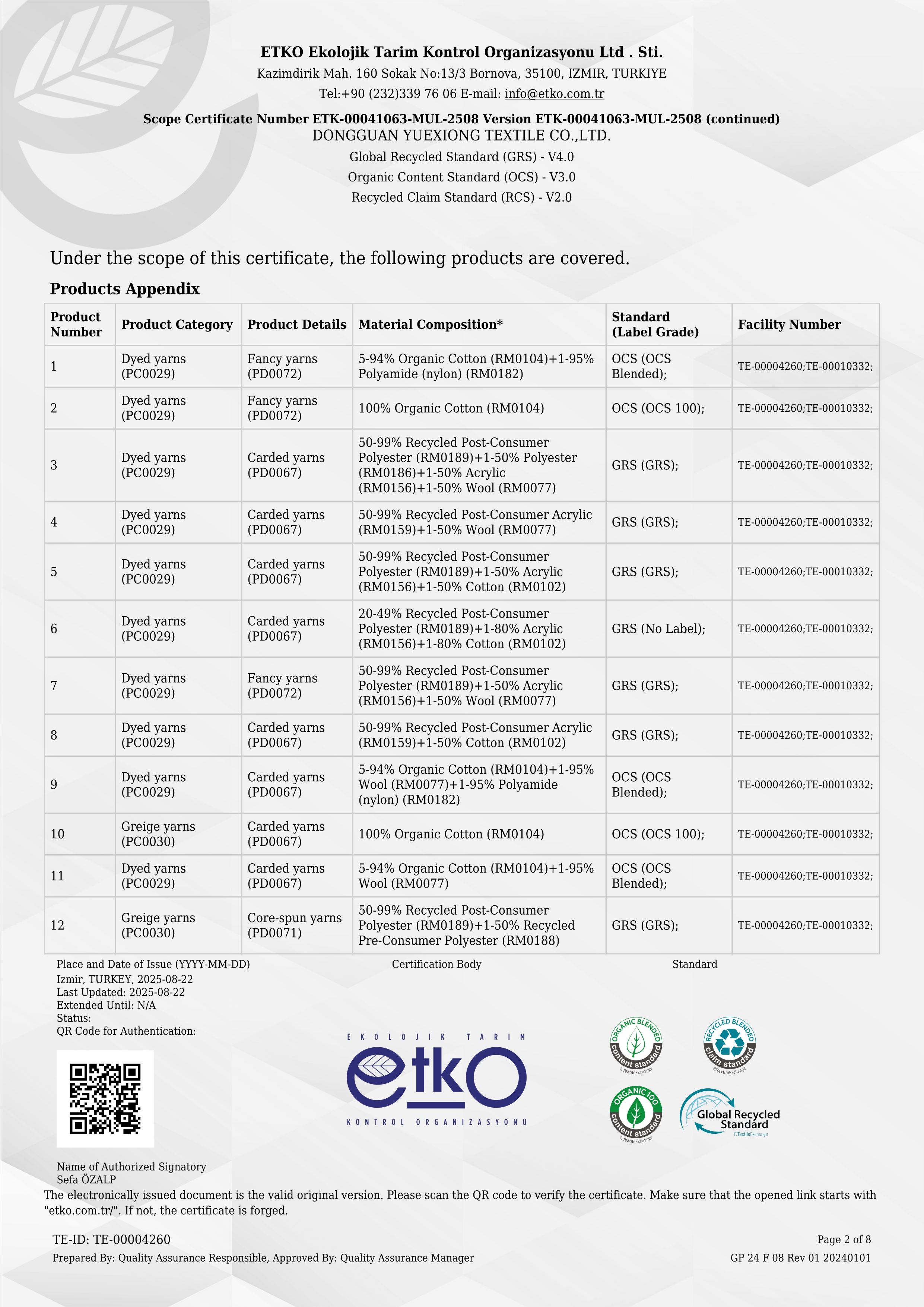
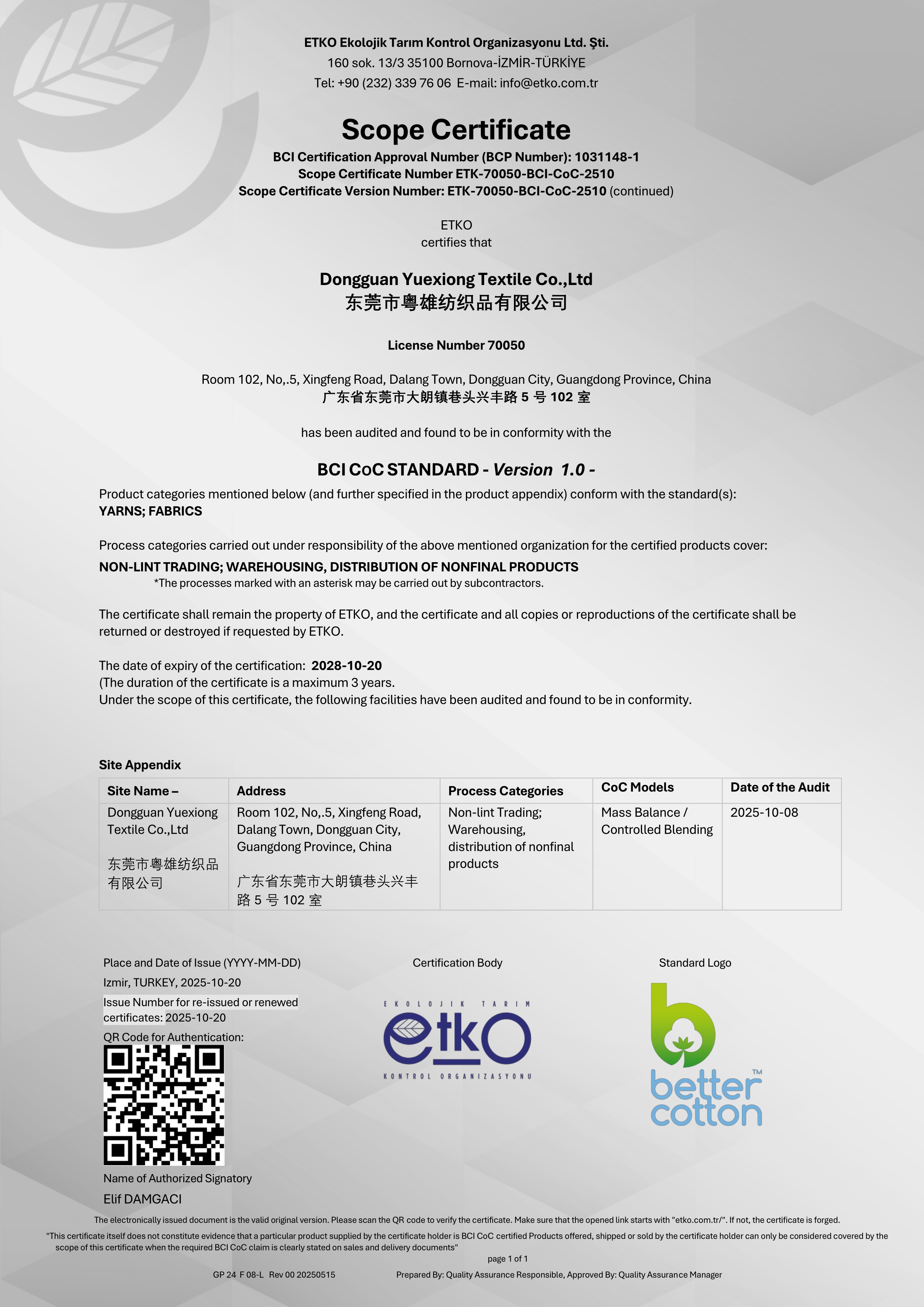
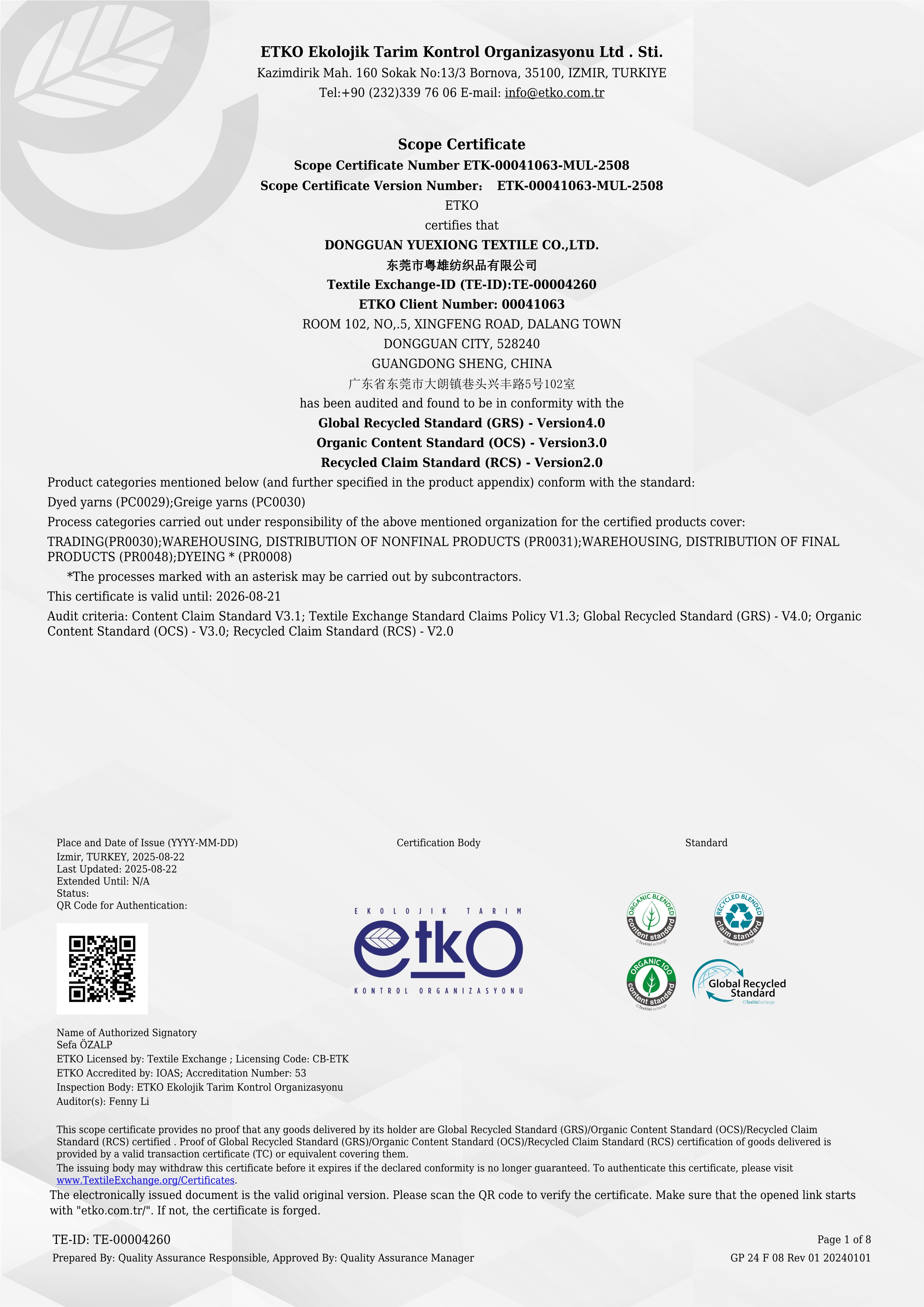
MONALISHAMAGIC's supplied certification file includes a GRS/OCS/RCS multi-standard certificate (ETK-00041063-MUL-2508) issued by ETKO for trading, warehousing, and dyeing of yarns with recycled or organic content, under GRS v4.0, OCS v3.0, and RCS v2.0, issued 22 August 2025 and valid to 21 August 2026. It also includes a BCI certificate (ETK-70050-BCI-CoC-2510) for non-lint trading and warehousing of yarns and fabrics under BCI CoC Standard v1.0, issued 20 October 2025 and valid to 20 October 2028. These certificates support the compliance conversation for relevant fiber programs; they do not by themselves prove water repellency or antibacterial performance for YX-FUNC-001. The buyer must match the certificate scope to the ordered yarn and keep the certificate current at the time of purchase.
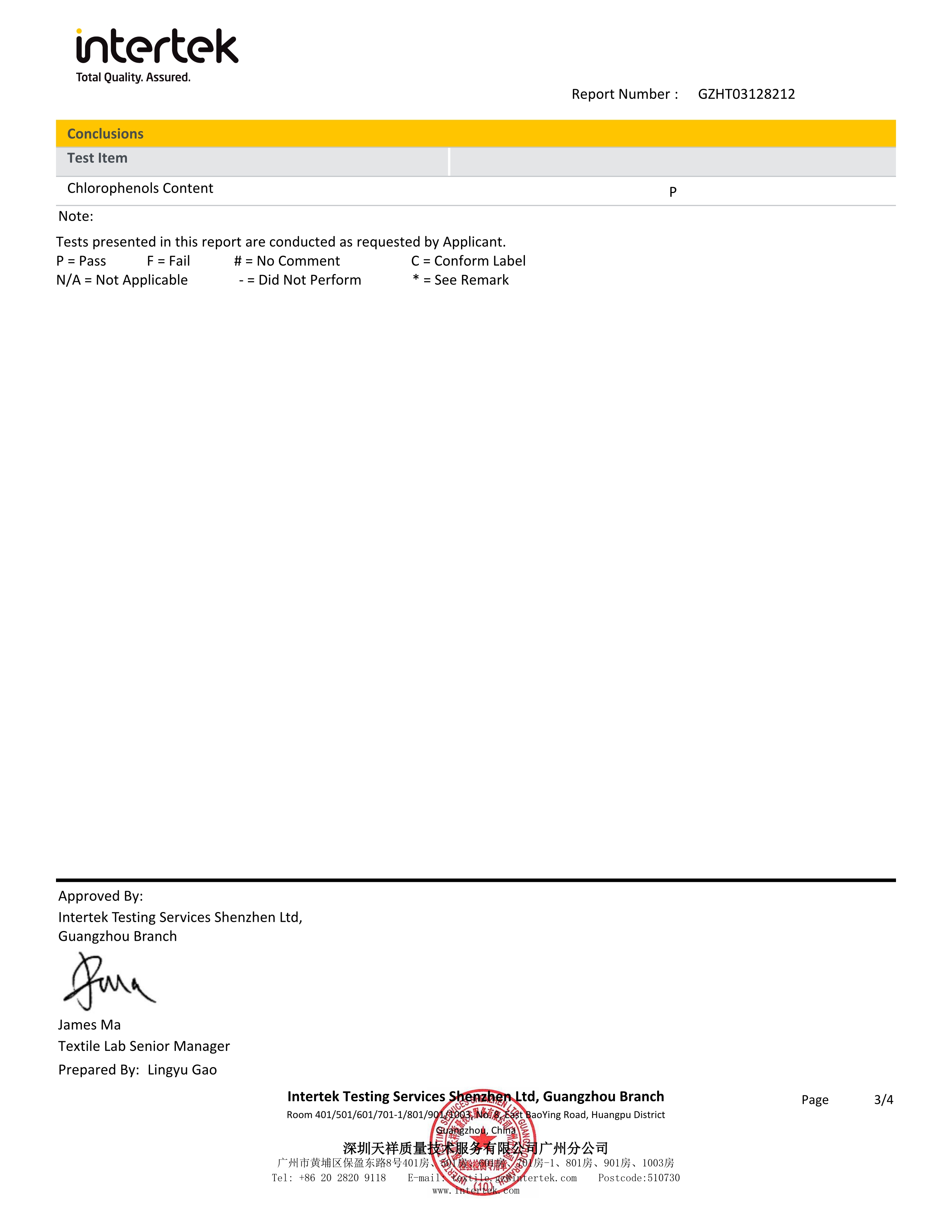
The supplied test-report examples include Intertek reports GZHT03128204 and GZHT03128212, issued 16 April 2026, for light brown and black knitted fabric for children's apparel under EN 17134-2:2023. Those reports are useful as examples of how a third-party test report is structured, but they are not a water-repellency result for YX-FUNC-001 and they cover different fabric specimens. For a new program, the buyer should commission or request a report for the actual yarn or fabric construction, color, finish, and wash condition. If the buyer's market requires SGS, GTTC, OEKO-TEX, GRS, OCS, or another third-party route, that requirement should be written into the sampling plan before bulk.
Acceptance Criteria: What a Test Report Must Show
A test report should show the product identification, specimen preparation, test method and standard version, conditioning, number of wash cycles if applicable, result, acceptance limit, lab name and accreditation, and date. For water repellency, agree whether the claim is a spray rating, penetration resistance, or another method; do not accept 'waterproof' as a result without a method and limit. For antibacterial performance, agree the organisms, method, specimen, and pass/fail level. Keep the report and the bulk lot traceable. If the buyer cannot state the acceptance limit, the supplier cannot know what to produce.
Acceptance criteria should also identify the unit of evidence. A yarn-level report does not automatically predict fabric performance after knitting, dyeing, and finishing. A fabric-level report is stronger for a garment claim, but it must still match the actual fabric construction and color. A report for a different color, count, or finish is not interchangeable with the ordered product. The buyer should keep the approved sample, the test report, and the bulk inspection record together in the compliance file.
Comparison Table: Specification Levers and Evidence
| Specification lever | What to write | Why it matters | Evidence to request |
|---|---|---|---|
| Base fiber and composition | Exact blend and any recycled or organic content claim | Affects hand feel, strength, moisture behavior, and certification eligibility | Fiber declaration and certificate scope |
| Yarn count | Selected count within 0.5/1 NM to 200/2 NM | Affects fabric weight, texture, cover, and processability | Count record and approved sample |
| Water-repellent finish | Finish target, test method, wash protocol, pass/fail limit | Defines the claim and its durability boundary | Test report with method and result |
| Antibacterial agent | Target effect, test method, specimen, acceptance level | Prevents vague 'antibacterial' claims | Lab report and wash protocol |
| Softness and hand feel | Reference sample or agreed hand-feel description | Affects consumer acceptance and knitting behavior | Approved sample and hand-feel record |
| Twist and structure | Twist level or direction and yarn structure | Affects strength, surface, and knitting behavior | Specification sheet and sample |
| Color | Color target and colorfastness requirement | Affects shade approval and wash performance | Color matching record and test report |
| Certification | GRS, OCS, BCI, OEKO-TEX, or other scope | Supports a market claim only within the certified scope | Certificate number, expiry date, and scope |
Small-Batch Sampling and Bulk Execution
Sampling is the execution bridge. A 5 KG MOQ supports small-batch trials, but the buyer should define what the sample must prove: knitability, hand feel, color, finish pick-up, test performance, and wash behavior. The supplier's 7-15 day lead time is a production planning input, not a guarantee that third-party testing will finish in the same window. Build the timeline around sample approval, test lab turnaround, and bulk confirmation. Pre-shipment inspection is stated in the capability file; the buyer should still agree the inspection standard, sampling plan, and document set.
After approval, freeze the specification: composition, count, twist, structure, color, finish, antibacterial target, test method, acceptance limit, and packing. Reorder should reference the frozen specification and the approved sample. MONALISHAMAGIC states remote support, after-sales consultation, product usage guidance, quality complaint response, reorder assistance, sample reconfirmation, color matching support, logistics tracking, and certification and compliance document supply. Those support points are useful for execution, but they do not replace the buyer's own acceptance criteria.
Limitations and Claim Boundaries
- Water-repellent is not the same as waterproof. A water-repellent yarn or fabric may resist wetting under a defined test without providing a waterproof barrier.
- Antibacterial is not the same as sterile or medical-grade. The claim must be limited to the tested organisms, method, specimen, and conditions.
- Yarn-level performance does not automatically predict fabric performance after knitting, dyeing, finishing, and garment assembly.
- Finish durability depends on the wash and care conditions. The buyer should state the wash protocol that the claim must survive.
- Certification scope matters. A GRS, OCS, RCS, BCI, OEKO-TEX, or other certificate applies only within its stated scope and validity period.
- This guide does not state a hydrostatic head, spray rating, or wash-cycle pass count for YX-FUNC-001. Those values must come from the agreed test report for the ordered construction.
FAQ
What should be included in the acceptance criteria for water-repellent antibacterial yarn?
Acceptance criteria should state the end use, base fiber and composition, yarn count, water-repellent finish target, antibacterial target, test method, specimen preparation, wash protocol, pass/fail limit, laboratory, and certificate or report scope. For YX-FUNC-001, the buyer should also record softness, twist, structure, color, and hand feel. A generic 'waterproof' statement is not an acceptance criterion because it does not define a test method or a limit.
What can be customized on YX-FUNC-001?
YX-FUNC-001 can be customized on material composition, yarn count, softness, twist, structure, color, and hand feel, together with the water-repellent finishing route and antibacterial agent. The count range is 0.5/1 NM to 200/2 NM. The buyer should confirm the exact option set against the approved sample and the agreed test plan, because not every combination will suit every fabric or end use.
What is the MOQ and lead time for YX-FUNC-001?
MONALISHAMAGIC states a 5 KG MOQ and a 7-15 day lead time for functional yarn production. The stated monthly capacity is 1,000 tons. Quality control includes inspection before shipment. Payment terms include TT, L/C, D/P, PayPal, Payoneer, Wise, and Western Union; delivery terms include air freight, sea freight, and land transport. Confirm whether the quoted lead time includes third-party testing, because lab turnaround is separate from yarn production.
How does small-batch sampling work for fabric development?
Small-batch sampling starts with a 5 KG MOQ trial. The buyer should define the sample objectives: knitability, hand feel, color, finish performance, antibacterial test target, and wash behavior. The supplier produces the sample, the buyer tests the fabric, and both sides review the result against the acceptance criteria. If the sample passes, the buyer approves the reference sample and freezes the specification for bulk. Sampling is not a substitute for bulk inspection or final test-report review.
How should a buyer plan bulk supply and reorder?
A buyer should freeze the approved specification, keep the reference sample, track certificate expiry dates, and plan production around the stated 7-15 day lead time and 1,000 ton monthly capacity. Pre-shipment inspection, reorder assistance, sample reconfirmation, and color matching support are available. The buyer should also confirm the current test-report and certificate scope before each bulk release. To review a sample or the current compliance file for YX-FUNC-001, contact MONALISHAMAGIC through the company website or download the company brochure below.
Conclusion
Water-repellent antibacterial yarn becomes manageable when the buyer writes the performance scope before the purchase order. For YX-FUNC-001, the controllable levers are composition, count from 0.5/1 NM to 200/2 NM, softness, twist, structure, color, hand feel, water-repellent finishing, and antibacterial agent. The evidence levers are the test method, specimen, wash protocol, acceptance limit, and current certificate scope. MONALISHAMAGIC's OEM/ODM model, 5 KG MOQ, 7-15 day lead time, 1,000 ton monthly capacity, and certification file give the buyer a practical route from sample to bulk, provided the claim is defined in testable terms.
Have Questions or Need More Details?
Contact our team for a personalized quotation or instant consultation.
Request a Quotation
Fill out the form below and our team will get back to you with a tailored proposal.
WhatsApp Direct Chat
Prefer to chat in real-time? Message us on WhatsApp for instant assistance & quick answers.
- Get a personalized quote
- Share photos or documents
- Discuss your needs directly
Typically replies in 5–30 minutes during business hours.