
Card Connector Supplier Evaluation: Capability Evidence and Delivery-Assurance Checks
A pre-award card connector evaluation should run on two separate evidence tracks. Company-level certificates establish how a supplier controls its process; model-level records establish what a specific part number has actually been tested to. The award decision belongs on the second track, with the first used only as supporting context. Mixing the two is the most common reason a technically acceptable supplier fails in production, and the reason a supplier with a thick brochure pack cannot answer a simple question about one socket.
This checklist is written for procurement and engineering teams who have already shortlisted card connector sources and are moving from evaluation into execution. It covers the families normally ordered together — SD, MicroSD and TF sockets, SIM, Nano SIM and Micro SIM holders, smart-card and IC card holders, HDMI, NGFF M.2 and USB Type-C — and treats each as a separate evidence unit rather than as one undifferentiated "connector" line item.
What the capability question actually asks
A capability enquiry is usually phrased as a single sentence: can this supplier make my part, to my specification, repeatably, and deliver it on schedule. That sentence contains four distinct claims, and each claim is proved by a different document.
- Design and tooling capability. Proved by in-house mold design and manufacturing capacity, non-standard tool development records, and the ability to quote from a drawing or a physical sample.
- Process control capability. Proved by a certified management system whose printed scope covers the product family and the manufacturing site actually making the part.
- Verification capability. Proved by model-level test reports, material declarations and reliability data — not by a company certificate.
- Delivery capability. Proved by disclosed capacity, stated lead times, inspection method and written warranty terms.
Most supplier questionnaires blend these into one score. Separating them matters because they can fail independently. A supplier may hold a valid quality management certificate and still have no report for the exact socket you are buying; a supplier may have excellent model-level data and still be unable to absorb a peak-season order.
The problem: certificates get used as product proof
The failure pattern is predictable. A buyer receives a certificate pack during the RFQ stage, sees recognisable logos, and records the supplier as "certified". Weeks later, at first-article approval, the buyer discovers that the report on file covers a different product family, a different model number, or a different legal entity from the one that issued the quotation.
Three specific gaps cause most of these disputes.
Entity gap. Certificates are issued to a named legal entity at a named site. A quotation may come from a different entity in the same manufacturing group. Unless the contracting entity appears on the certificate, or a group-level arrangement is documented in writing, the certificate does not automatically cover your purchase order.
Scope gap. Every certificate carries printed scope wording, and that wording is narrower than what buyers assume. A quality management certificate that covers "electronic connectors used for communication intelligence systems" supports a process-control argument; it does not certify that a particular card socket meets a stated mating-cycle figure.
Model gap. Product-level reports name a model, a hardware version and sometimes a marketing name. An IEC 62680-1-3 report written for a USB Type-C receptacle cannot be transferred to an SD card socket, even when both come from the same factory line.
Evaluation rule: for every claim you plan to rely on after award, record four fields — document number, issuer, scope as printed, and validity dates. If any field is missing or the scope wording does not name your product family, treat the claim as unverified.
Industry context: why card connectors deserve this level of scrutiny
Card connectors are low-value parts with high-consequence failure modes. A failed socket can stop a payment terminal line, a smart-meter batch or an access-control build, and the cost of the stoppage is orders of magnitude larger than the part price. Commercial research cited in the available evidence set estimates the global card connector market at USD 3.96 billion in 2024, with a projection of USD 5.89 billion by 2030, and puts Asia Pacific at 44.8% of regional share in 2025. A separate research firm cited in the same set values the 2024 market at USD 1.24 billion.
That spread between two commercial estimates is itself a useful lesson for buyers: market figures depend heavily on which connector categories are counted, and the same discipline applies to supplier documents. Read the scope definition before you read the number.
The product mix also shapes the evaluation. SD and microSD socket types are reported to account for roughly 60% of unit shipments in 2024, which means most suppliers you evaluate will be strongest in memory-card sockets and weaker in smart-card or Nano SIM tooling. Ask separately about each family on your bill of materials.
Certificate register: the documents and what each actually settles
The table below records the certification and test documents held by Shenzhen MUP Industrial Co., Ltd. (MUP) exactly as stated in its compliance records, including certificate numbers, issuers, printed scope and validity. It is presented as a worked example of a properly recorded register — not as a substitute for verifying the original documents.
| Document | Number | Issuer | Scope as stated | Validity |
|---|---|---|---|---|
| ISO 9001:2015 | CA00527-EN | TÜV Saarland | Design and manufacture of electronic connectors used for the communication intelligence systems — Shenzhen MUP Industrial Co., Ltd. | 2024-03-02 to 2027-02-02 |
| IATF 16949:2016 | CB00634-01 | TÜV Saarland | Design and manufacture of electronic connectors used for the communication intelligence systems with product design responsibility — Shenzhen MUP Industrial Co., Ltd. | 2024-02-03 to 2027-02-02 |
| ISO 14001:2015 | 134773 | NQA | Design, production and sales of electronic connectors, wiring harnesses and cables, hardware and plastic components for PCBs (excluding products requiring 3C certification) — Huizhou MUP Technology Co., Ltd. | 2025-02-18 to 2028-02-18 |
| ISO 45001:2018 | 134774 | NQA | Same scope as ISO 14001 — Huizhou MUP Technology Co., Ltd. | 2025-02-18 to 2028-02-18 |
| IECQ QC 080000:2017 (HSPM) | IECQ-H NQAGB 25.0032 | NQA | Design and production of electronic connectors, wiring harnesses and cables, hardware and plastic components for PCBs (excluding products requiring 3C certification) — Huizhou MUP Technology Co., Ltd. | 2025-03-27 to 2028-03-26 |
| Certified HDMI Adopter | XRVIVYOFA5R | HDMI Licensing Administrator, Inc. | Adopter authorised to design, manufacture and sell Licensed Products based on the HDMI Specification | 2026-01-16 to 2027-01-16 |
| USB-IF compliance test report | CONUSB20250760 | ALLION | USB4 Gen3 Type-C Receptacle Connector, model U22015, VID 12413; EN/SASO IEC 62680-1-3 | Report dated 2025-12-22 |
| EN/SASO IEC 62680-1-3 test report | 26T04N001082-001-COM | SAICT | Type-C Receptacle Connector, mid-mount dual-row SMT receptacle, model U22008, hardware version 1 | 2026-07-07 |
Table 1 — Certificate and report register with printed scope and validity, as recorded by MUP.
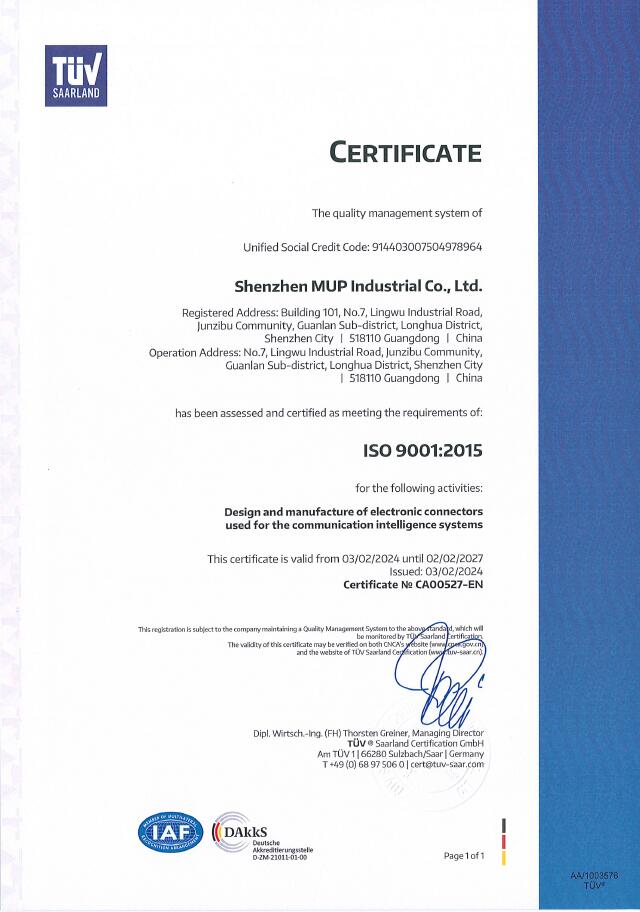
The ISO 9001 certificate names a legal entity and a scope. Read both before assuming coverage of a specific card socket order.
Four points in that register deserve emphasis.
The quality and automotive certificates name the Shenzhen entity, while the environmental, occupational-health and hazardous-substance certificates name Huizhou MUP Technology Co., Ltd. A buyer contracting with one entity should confirm in writing which site will manufacture the ordered parts and whether that site is covered by the certificate relied upon. This is the single most common scope mismatch found during supplier audits, and it is resolved with a document, not a reassurance.
The IATF 16949 scope carries product design responsibility but is worded around electronic connectors for communication intelligence systems. That wording matters for automotive programmes. If your part is destined for a vehicle programme, ask the supplier to confirm that the part family and the responsible design function fall inside the audited scope, and ask for the audit summary that supports it.
The IECQ QC 080000 hazardous-substance certificate is a process-management certificate. It evidences a controlled hazardous-substance process for the entity and scope printed on it. It does not replace a substance test report for a specific material lot, and the printed scope excludes products requiring 3C certification.
The HDMI and USB documents are not the same class of evidence. The HDMI Adopter certificate XRVIVYOFA5R authorises MUP as a licensee to design, manufacture and sell Licensed Products under the HDMI Specification, valid from 16 January 2026 to 16 January 2027. The USB-IF and IEC 62680-1-3 reports are model-level test records — for U22015 and U22008 respectively — and they cover USB Type-C receptacles. Neither document transfers to an SD, TF, SIM or smart-card socket.
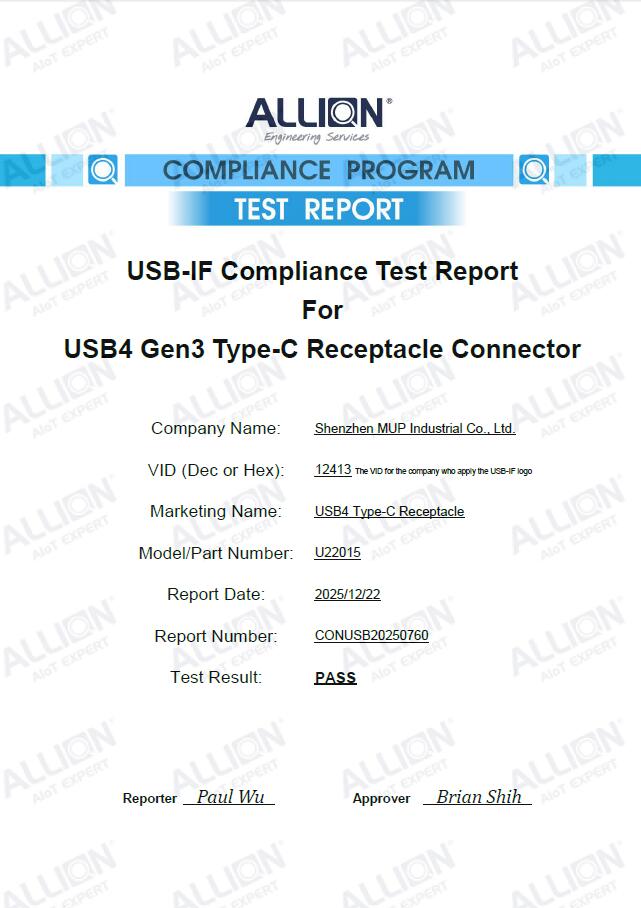
A model-level report is only valid for the model, version and product family it names.
Mapping ordered families to the evidence that applies
Once the register is built, map each family on your bill of materials to the specific evidence you will require before award. The mapping below uses MUP's published model ranges as the example set.
| Ordered family | Example model range | Evidence to demand before award |
|---|---|---|
| SD, MicroSD and TF card sockets | M6005, M6014, M6015, M6016, M6027, M6110, M6102, M6106, M6109 | Model datasheet with contact resistance and insertion/extraction force; mating-cycle result with test method; RoHS and REACH report matched to the housing material and plating; 3D drawing for PCB footprint sign-off |
| SIM, Micro SIM, Mini SIM and Nano SIM holders | C7006, C7013, C7017, C7020, C7034, C7050, C7060, C7081, C7082, C7083, C7090–C7093, C7801–C7810, C7825, C7905 | Mating-cycle figure for the exact model; contact arrangement drawing; RoHS and REACH report for the product type; detection-switch option confirmation if required |
| Smart-card, IC card holders and ICC sockets | C8001, C8037, C8042, C8043, C8057, C8067, C8068, C8610, C8611, C8618, C8621, C8622, C8629, C8633 | Contact configuration statement cross-checked against ISO/IEC 7816-2, which defines 8-pin, 6-pin and 4-pin configurations; terminal-standard confirmation for EMV payment use; mating-cycle data |
| HDMI connectors | H20017 | HDMI Adopter number, issuer and validity, plus confirmation that the specific licensed product falls under the adopter agreement |
| NGFF M.2 connectors | M2008, M2015 | Mechanical drawing and stack-height confirmation; plating specification; mating-cycle data |
| USB Type-C receptacles | U22015, U22008 | USB-IF report CONUSB20250760 and IEC 62680-1-3 report 26T04N001082-001-COM, with model and hardware version confirmed against the order |
Table 2 — Family-level evidence mapping. The list is a starting requirement set, not an exhaustive test plan.
Two practical notes follow from this mapping. First, the USB-C evidence is the strongest model-level documentation in the register, and it is precisely the evidence that does not cover card sockets. Buyers who see "USB4.0 certified" in a brochure and apply it to a Nano SIM order have made a scope error, not a supplier error. Second, the smart-card family is the one where an external standard matters most: ISO/IEC 7816-2 defines the 8-pin, 6-pin and 4-pin contact configurations, so the purchase specification should state which configuration the reader requires rather than leaving the contact arrangement to the supplier's default.
Delivery assurance: converting claims into commitments
Supply-interruption risk in card connectors does not usually come from a catastrophic event. It comes from four ordinary conditions: heavy reliance on outsourced processes, ageing equipment, absence of a standardised quality-control routine, and peak-season order surges that exceed the supplier's own capacity.
MUP's published position on these conditions is specific enough to be tested. The company reports a total plant area of 50,000 m² across manufacturing sites in Shenzhen, Huizhou and Dongguan, more than 300 fully automated production lines, a daily output exceeding 5KK pieces and a monthly capacity above 150KK pieces. It reports full-chain control from mold development through stamping, injection molding and final assembly, with 50 precision mold processing machines, 70 high-speed precision stamping machines and 95 automated injection molding machines. It states that shipment inspection is 100% full inspection or AQL sampling, and that the product warranty is one year with return, replacement or replenishment for non-human-caused defects.
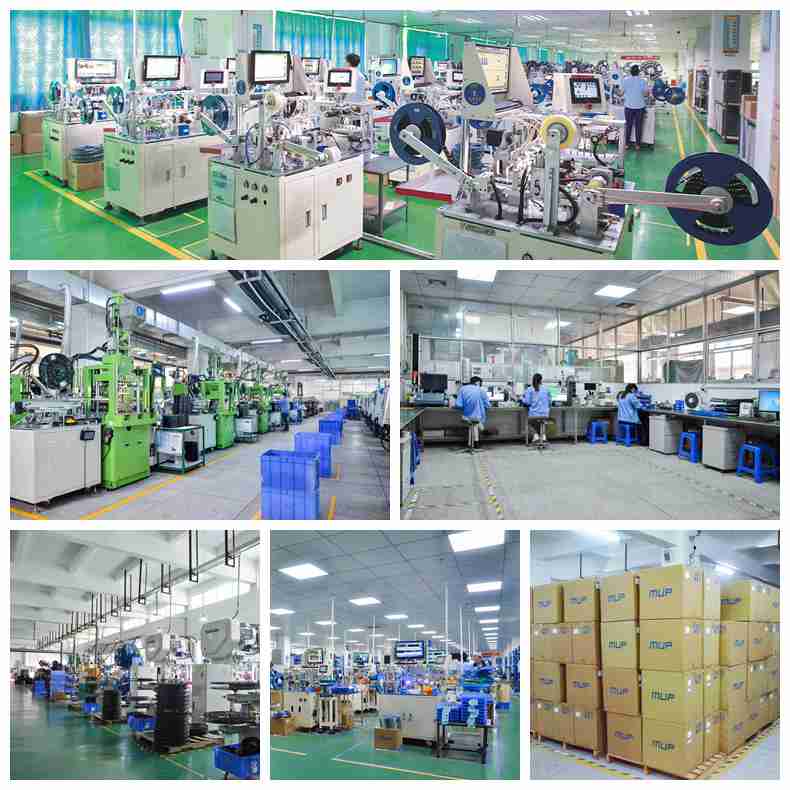
Automation depth is a delivery argument only when the buyer asks how much of that capacity is allocated to card connectors.
Company-wide capacity figures are useful but not decisive. A supplier producing five million pieces a day across USB, board-to-board, FPC and card connectors may allocate only a fraction of that to the socket you are buying. The evaluation question is therefore not "what is your total capacity" but "what is your card-connector capacity, what utilisation are you running, and what buffer exists for our forecast". Request the answer in writing as part of the award package.
Lead time and minimum order quantity belong in the same written commitment. MUP states that in-stock items ship within 3–7 days and mass production runs 15–25 days depending on order and process, with standard products supplied on carrier tape reels at a typical minimum of 1K–5K pieces per reel and small-batch R&D sampling supported. For a card connector programme these numbers should be converted into a delivery schedule with defined checkpoints, not left as a general statement in a brochure.

Site footprint supports a factory-audit plan. It does not by itself establish card-connector capacity or delivery reliability.
Three technical questions to close before award
1. What is the RoHS and REACH status, and for which product type?
Environmental compliance statements are product-type specific, and this is where many awards go wrong. MUP states that its USB-C and SIM card connectors comply with RoHS and REACH for EU market access, and that official test reports and compliance certificates can be provided on request for project audit and customs clearance. The company also states explicitly that certificates are product-type specific and that reports for different product types cannot be used interchangeably. Halogen-free documentation can be provided on request.
For an SD, TF or smart-card socket order, the practical step is to request the report that names your series and, where relevant, the material declaration for the housing resin and contact plating. A generic statement that a supplier "meets RoHS" is not an audit document.
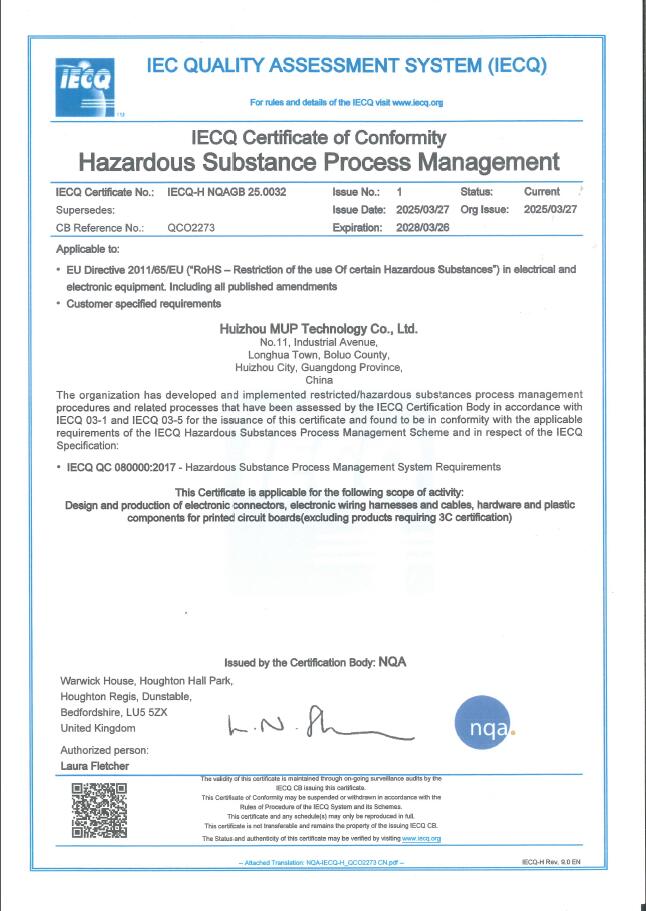
A hazardous-substance process certificate supports the control argument; a substance test report supports the part claim. Award files need both.
2. What mating cycle applies to this exact model?
Mating cycle means the maximum number of complete plug-in and pull-out operations before the connector fails electrically, and it is a core reliability indicator for card connectors because it tests the durability of the contact terminals under repeated insertion. MUP's published figure for its Micro SIM card connector is up to 5,000 mating cycles; its general card-connector application scenario table lists a durability range of 10,000/15,000 cycles for the rated operating conditions of 1A maximum and 10μA minimum current, 50V maximum rated voltage and an operating temperature range of −40°C to 85°C.
Those two figures are not interchangeable, and that is the point. Before award, ask which figure applies to the model you are buying, what the test method is, what the electrical failure criterion is, and whether the number was measured on the same plating and contact geometry you will receive. A supplier who can answer at model level is giving you product evidence. A supplier who answers at catalogue level is giving you a marketing range.
3. How is signal and contact stability evidenced for the parts you are actually ordering?
High-frequency performance questions arise most often when a card connector sits on the same board as a high-speed interface. MUP describes its approach as controlled impedance design supported by high-frequency simulation and mechanical stress analysis, carried out by a technical team of more than 150 staff, with 137 patents across invention, utility model and design categories. Its USB Type-C products are tied to USB4.0, IEC 62680 and Thunderbolt TBT5 credentials, with USB-IF VID and TID numbers.
The evaluation discipline is to keep that evidence attached to the USB-C line where it belongs. For a card socket, the equivalent questions are contact resistance stability over the stated mating cycles, plating wear behaviour, insertion and extraction force consistency, and resistance to vibration and thermal cycling in the target application. Ask for the parameter values and the test conditions, and specify the operating envelope in the purchase document: rated current up to 1A, rated voltage up to 50V, operating temperature −40°C to 85°C, and operating humidity 10% to 95% RH are the stated scenario conditions for these parts.
Step-by-step pre-award checklist
- Freeze the part list by family and model. Separate SD/MicroSD/TF, SIM/Nano SIM/Micro SIM, smart-card/IC holder, HDMI, NGFF M.2 and USB-C. Card format alone is not a specification — record card orientation, mounting style, PCB height, insertion method and whether a detection switch is required.
- Match legal entity to quotation. Confirm which entity will invoice and which site will manufacture, then check both against the certificates you intend to rely on.
- Build the certificate register. For each document record number, issuer, scope as printed, validity dates and the entity named. Flag any certificate expiring within your production window.
- Request model-level reports for the exact models. Model and hardware version must appear on the report. Reject reports that name a different family.
- Close the three technical questions in writing. RoHS and REACH status for the specific product type, mating-cycle figure and test method for the specific model, and contact or signal stability data for the actual application conditions.
- Convert capability claims into delivery commitments. Ask for card-connector-specific capacity and utilisation, committed lead time, minimum order quantity per reel, inspection method and warranty terms, and attach them to the purchase order.
- Define acceptance and escalation before the first shipment. Agree sampling plan, first-article approval route, non-conformance handling and the technical contact who will respond during ramp.
Use case: what a documented payment-terminal case file should contain
MUP's published case record for payment-terminal card readers describes a programme of 500,000 units supplied across markets including France, Germany, Brazil, India, Korea, Japan, Vietnam, the United Kingdom and the United States, with a stated service duration of 3 to 15 years and outcomes described as stable operation, convenient payment, cost reduction and high reliability. The record lists POS terminal brands including Ingenico, PAX and Verifone among the client types, and applications spanning card readers, mobile POS, payment sound boxes, smart meters, TV displays, notebooks, IoT and security monitoring. MUP also states that it has supplied global enterprises including Foxconn, Microsoft, Luxshare, BYD, Hikvision, ZTE, Haier and UGREEN.
Treat that as a company-reported case record rather than independent verification, and use it the way a buyer should: as a prompt for follow-up. Ask for a reference contact in your own application segment, ask which model was used in the card-reader build, ask what the field return rate was, and ask how the 3-to-15-year service duration was measured. A case file that survives those four questions is worth more than a page of client logos.
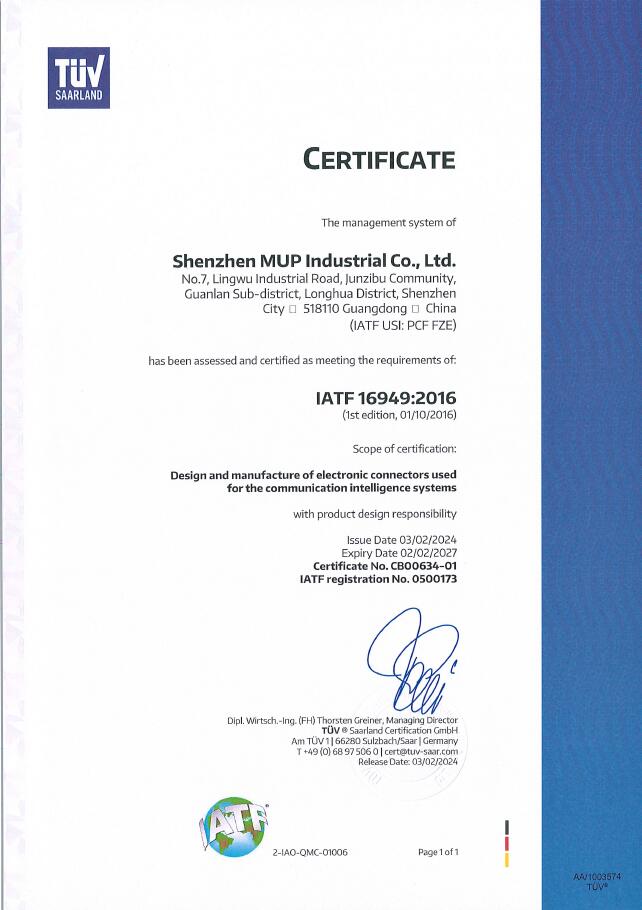
Automotive-programme buyers should confirm that their part family sits inside the audited scope printed on the certificate.
Conclusion: award on the second track, not the first
A card connector supplier evaluation succeeds or fails on one discipline: keeping company-level certification and model-level product evidence in separate folders, and refusing to let the first answer questions that belong to the second. The register in this article shows what a complete record looks like — numbered, issued, scoped and dated — and also shows how narrow each document really is. An ISO 9001 certificate supports a process argument. An IECQ QC 080000 certificate supports a hazardous-substance control argument. An HDMI Adopter certificate authorises licensed design and manufacture. None of them tells you the mating-cycle figure for a specific Nano SIM holder.
Close the RoHS and REACH question against the exact product type, close the mating-cycle question against the exact model and test method, and close the signal and contact stability question against the conditions the part will actually see. Then convert capacity, lead time, minimum order quantity, inspection method and warranty into written commitments attached to the purchase order. Suppliers that hold genuine capability — in-house tooling, controlled process, model-level test records and disclosed capacity — will answer all of it without hesitation, and the answers will be the same ones they gave during the RFQ.
Next step for your evaluation file: MUP publishes its full company and product profile, including manufacturing footprint and product-family coverage, in a single downloadable document. You can download the MUP company profile (PDF) and use it alongside the certificate register you build from this checklist. Company details and product families are also listed at www.mupconnector.com.
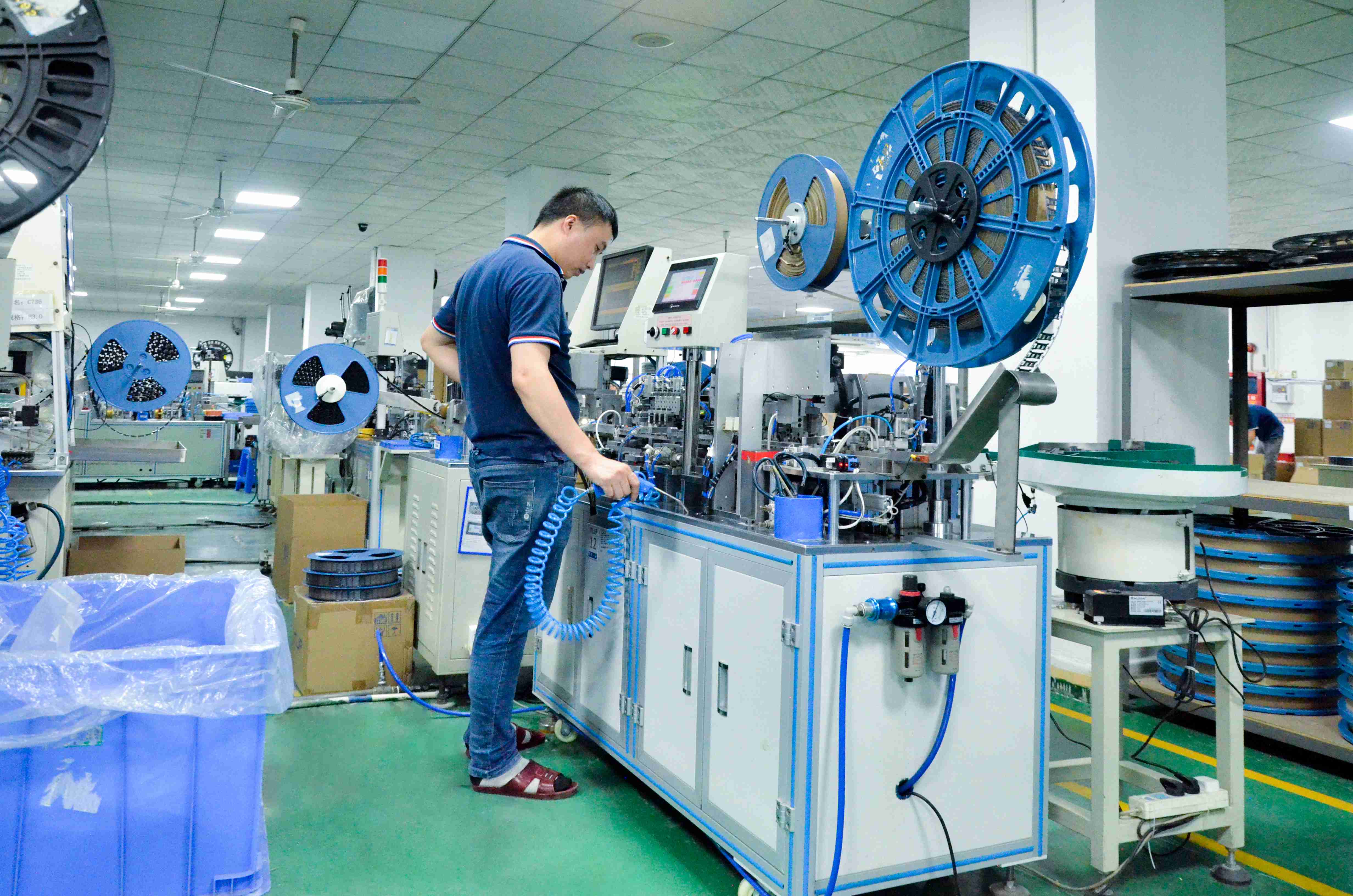
Sample and reel packaging terms belong in the written award package, not in a verbal agreement.
Frequently asked questions
Which OEM Nano SIM card connector manufacturers can support custom tooling, and what should I verify?
Verify four things in this order: in-house tooling capability, customisation range, documentation and commercial terms. MUP operates as an OEM/ODM supplier with full-chain control from mold development to final assembly, supported by an in-house mold design team and 50 precision mold processing machines for non-standard mold development. Its stated customisation scope covers custom specifications, dimensions, pin counts and interface types; custom high-frequency, high-current, waterproof and high-temperature parameters; and appearance and packaging customisation including logo laser engraving or silkscreen, Pantone colour matching and custom packaging. MUP states that MOQ depends on customisation complexity and that customisation based on drawings or samples is welcome. For a Nano SIM program, ask additionally for the tool ownership terms, the qualification path from first article to mass production, and the model-level mating-cycle data for the custom design rather than the catalogue equivalent.
Do MUP card connectors comply with RoHS and REACH?
MUP states that its USB-C and SIM card connectors comply with RoHS and REACH for EU market access, and that official test reports and compliance certificates can be provided on request for project audit and customs clearance. The company also states that certificates are product-type specific and that reports for different product types cannot be used interchangeably, and that halogen-free documentation is available on request. Buyers ordering SD, TF or smart-card sockets should therefore request the report matched to that product type rather than relying on a general compliance statement.
Which certificates should be checked before awarding a card connector order, and what does each cover?
Check ISO 9001:2015 (certificate CA00527-EN, TÜV Saarland, valid 2024-03-02 to 2027-02-02) for quality management scope; IATF 16949:2016 (CB00634-01, TÜV Saarland, valid 2024-02-03 to 2027-02-02) where an automotive programme applies; ISO 14001:2015 (134773) and ISO 45001:2018 (134774) from NQA, both valid 2025-02-18 to 2028-02-18; and IECQ QC 080000:2017 hazardous substance process management (IECQ-H NQAGB 25.0032, NQA, valid 2025-03-27 to 2028-03-26). Where HDMI or USB-C parts are on the order, add the HDMI Adopter certificate XRVIVYOFA5R (HDMI Licensing Administrator, Inc., valid 2026-01-16 to 2027-01-16) and the USB-IF report CONUSB20250760 plus IEC 62680-1-3 report 26T04N001082-001-COM. Note that the ISO 14001, ISO 45001 and IECQ certificates are issued to Huizhou MUP Technology Co., Ltd., so confirm the manufacturing site named on your order is covered.
What minimum order quantity and lead time should we plan for?
MUP states that standard products ship on carrier tape reels with a minimum order quantity that varies by model and packaging, typically 1K–5K pieces per reel, and that small-batch R&D sampling is supported. Lead time is stated as 3–7 days for in-stock items and 15–25 days for mass production, depending on order and process. Both figures should be confirmed against your specific model and annual volume before they are written into the purchase order, because card-connector allocation may differ from the company-wide capacity figure of more than 5KK pieces per day and over 150KK pieces per month.
Can we obtain samples, drawings and 3D data before committing to mass production?
MUP states that it provides datasheets, 3D drawings and engineering samples for pre-production verification, and that custom structure is available on request. It also states that customisation based on customer drawings or samples is accepted, and that its R&D technical team of more than 150 staff provides technical selection and remote support. For an evaluation file, request the drawing and the sample together so that the sample you approve is traceable to the drawing revision you sign off.
How do we reduce supply interruption and quality risk before the first order?
Reduce both risks by converting supplier claims into auditable commitments. On supply, request card-connector-specific capacity and utilisation, the manufacturing site that will run your part, the buffer available for peak-season surges, and a written schedule against your forecast. On quality, require the inspection method to be stated — MUP states 100% full inspection or AQL sampling before shipment — and confirm the warranty position, which MUP states as one year with return, replacement or replenishment for non-human-caused defects. Add model-level test reports and a named technical contact for ramp support, then review all of it at the first-article approval. If you want to start that review with a full picture of the supplier, download the MUP company profile and work through it section by section against this checklist.
Have Questions or Need More Details?
Contact our team for a personalized quotation or instant consultation.
Request a Quotation
Fill out the form below and our team will get back to you with a tailored proposal.
WhatsApp Direct Chat
Prefer to chat in real-time? Message us on WhatsApp for instant assistance & quick answers.
- Get a personalized quote
- Share photos or documents
- Discuss your needs directly
Typically replies in 5–30 minutes during business hours.