
MicroSD Socket vs NGFF M.2 Connector: Embedded Storage Choice
For an embedded or portable PCB, the choice between a MicroSD card socket and an NGFF M.2 connector is settled by one question: who replaces the memory, and how often? A MicroSD card holder keeps the storage media reachable from outside the enclosure, so an operator can swap a card without opening the product. An NGFF M.2 socket keeps the module inside the enclosure, so the interface is mated at build or at service instead of in daily use.
That single answer drives the rest of the comparison. Footprint, mounting height, mating-cycle budget, high-frequency routing and even the compliance documents you need to collect all follow from it. This head-to-head sets out the decision criteria, the MUP product facts that apply to each side, and the points that MUP's supplied documentation does not establish, so a buyer can see exactly what to verify before release.
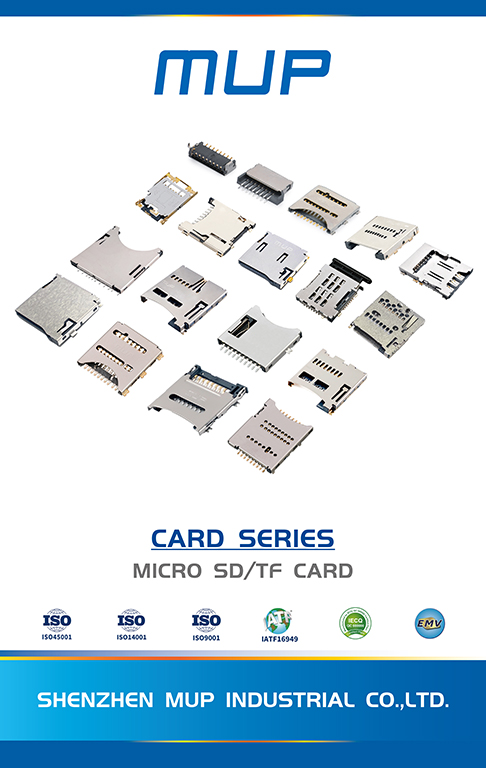
The decision in brief
Choose a MicroSD card holder or socket when the media has to be removable by the end user, when data must leave the device on a physical card, or when storage capacity may change after the product ships. Choose an NGFF M.2 connector when the module is a fixed part of the build, when the enclosure has no user-facing card slot to accommodate, and when the interface only needs to survive assembly and occasional service.
Both are card-type connectors, but they answer different design questions: the MicroSD socket is an access decision, while the M.2 socket is an integration decision. A project that compares them on unit price alone usually settles the wrong question first.
What each connector family does
MicroSD card holder and socket
MUP's card connector portfolio covers SIM, Micro SIM, Smart IC and TF card connectors, with TF/SD connectors used for data storage in 3C devices. In a MicroSD (TF) socket, the card is the removable element and the socket is the permanent one: the socket is soldered to the PCB, and the card travels in and out of it.
MUP's card connector documentation states a rated durability of 3,000 or 5,000 mating cycles depending on the model. The same line supports custom designs including waterproof versions, mid-mount versions and versions with a detection switch, and card-connector mounting options include mid-mount, vertical and horizontal configurations.
NGFF M.2 connector
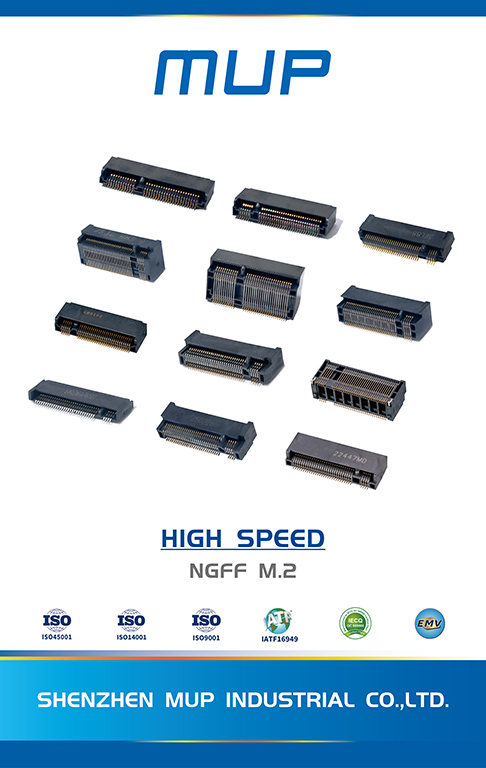
MUP lists NGFF M.2 and Mini PCIE among its precision connector series, alongside USB Type-C, HDMI, DP, BTB, FPC, RF and battery connectors. An NGFF M.2 connector is a card-edge socket: the contact edge of the module seats into the socket, the socket is soldered to the PCB, and the opposite end of the module is restrained by a fastener or latch. Socket and module are keyed, so a module with the wrong key cannot be fully seated.
That geometry produces two design consequences. The socket itself is a low-profile edge connector, but the finished assembly reserves a module keep-out area and a mounting point at the far end of the module. And the replaceable item is the module, not the socket — replaced by service personnel with the enclosure open, not by an end user.
Criterion 1: Field replacement and the service model
Field replacement is the criterion that most often decides the question. A MicroSD socket assumes the media will move: firmware delivered on a card, log files retrieved by an operator, capacity upgraded after installation. The cost of that choice is paid in the enclosure — a card slot has to be designed, reinforced and, where the product needs it, protected against dust and moisture. MUP offers waterproof card-connector designs, but the slot in the housing remains a separate sealing task that the connector alone does not solve.
An NGFF M.2 connector assumes the opposite service model. The module is fitted once and touched again only during repair or upgrade in a workshop. In exchange, the product's exterior needs no card opening, no ejector and no clearance for a card to be pushed in and out.
A practical decision rule follows: if the expected number of media removals across the product's life is zero, M.2 integration is the simpler answer; if it is greater than zero — even once, in the field — the design has to plan a MicroSD access path. Card-presence detection is a related option: MUP offers card connector versions with a detection switch, which gives the host a signal when a card is inserted or removed.
Criterion 2: Footprint, height and mounting
Footprint comparisons between the two families are frequently wrong because they compare the connector body rather than the whole mechanical envelope.
On the MicroSD side, the envelope is the socket plus the card path. Insertion method matters: TE Connectivity's public product documentation describes memory-card connector portfolios with push-push and push-pull mating designs and top- or bottom-mounting options, which shows how much the mechanical arrangement can vary within a single card format. A push-push socket needs travel clearance behind the card; a hinged or tray arrangement needs opening clearance in front of it. MUP's mid-mount versions exist for a related reason — placing the connector body lower relative to the PCB surface is what designers reach for when stack height is tight.
On the M.2 side, the envelope is the socket strip plus the module footprint plus the fastener location. No insertion clearance is needed on the product exterior, but the module area becomes a keep-out zone on both sides of the board, and the far-end mounting point becomes a mechanical feature of the housing or the PCB.
Two checks prevent most footprint surprises: draw the envelope as socket + media + insertion clearance + fastener, and confirm the mounting orientation of the exact model before layout. MUP's card-connector range includes mid-mount, vertical and horizontal options, so orientation should be stated in the RFQ rather than assumed.
Criterion 3: Mating cycles and contact durability
A mating cycle is the maximum number of complete plug-in and pull-out operations before the connector fails electrically. For card connectors it is a core reliability indicator, because it measures how the contact terminals behave under repeated insertion and removal.
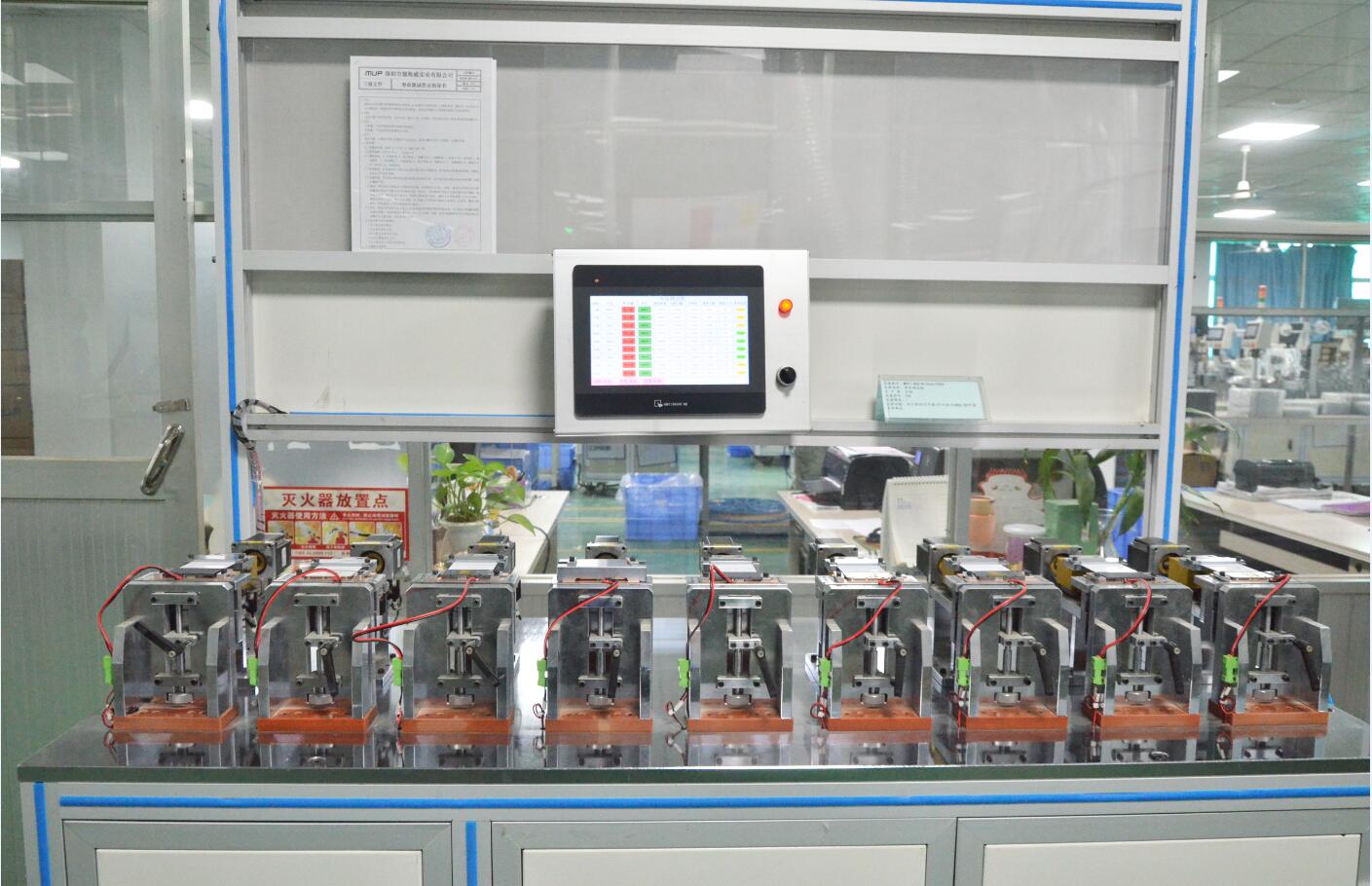
This is where the two designs diverge most sharply in what the rating has to cover. A user-swappable MicroSD card may be inserted and removed many times across the life of a device, so the socket's rated durability is a direct constraint on service life. MUP's card-connector documentation states 3,000 or 5,000 mating cycles depending on model, and the Micro SIM card connector in the same portfolio is rated at 5,000 mating cycles; MUP also uses a durability cycles test fixture for SIM card connector mating-cycle testing.
An internal M.2 module is mated at build and then only occasionally, so its cycle rating matters far less than its contact reliability at first assembly and after service. MUP's supplied documentation does not state a rated mating-cycle figure for the NGFF M.2 series, and that value should be requested at model level rather than carried over from the card-connector figures — the two product lines are separate, and a rating for one does not transfer to the other.
Durability figures also do not describe everything. Contact resistance, plating thickness and insertion force are separate parameters, and the exact specification should come from the datasheet of the part number being purchased.
Criterion 4: High-frequency signal stability needs
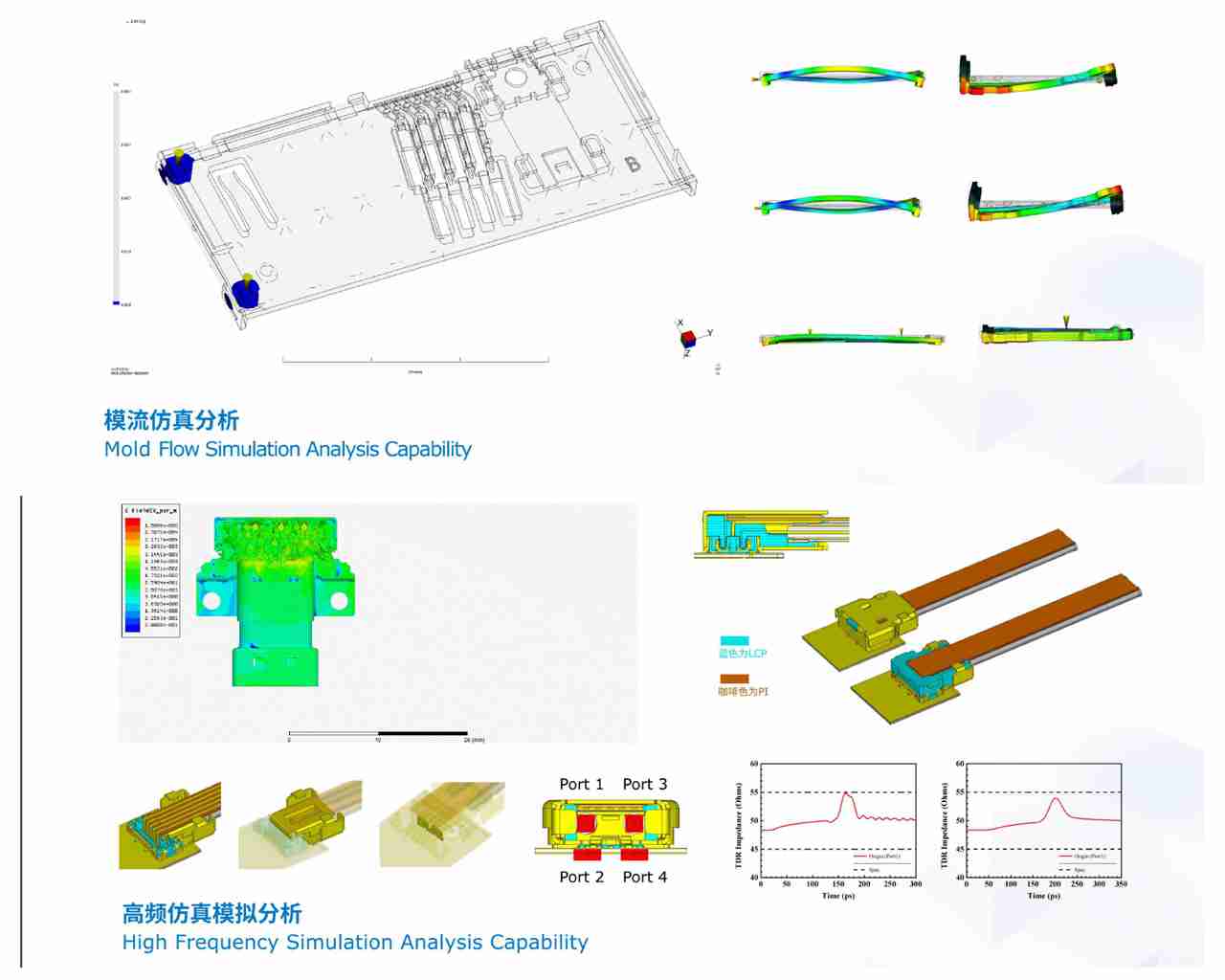
Signal stability in a card connector is governed by controlled impedance design, terminal structure and material selection, with high-frequency simulation and mechanical stress analysis used to reduce attenuation and crosstalk. Both families sit in the signal path, but they carry different traffic.
An M.2 module interface commonly carries high-speed differential lanes, so the socket's impedance behaviour, ground pin placement and pin geometry receive more scrutiny during layout. A MicroSD interface is usually the more modest of the two in pin count, but that does not remove the requirement: if the design runs a fast card mode, the socket still contributes contact resistance and parasitic effects that belong in the signal-integrity budget.
On the supplier side, MUP's stated development capability includes high-frequency signal simulation, stress analysis and mold flow analysis, supported by a 150+ member technical team and 137 patents. MUP's material selection — high-temperature plastic housings, copper alloy contacts and gold/nickel plated surfaces — is described as supporting stable high-frequency and high-speed signal transmission, and stress analysis is used to evaluate mechanical load behaviour. The company's precision connectors are certified with USB4.0 and IEC62680 and hold USB-IF VID and TID numbers, which is evidence of high-speed qualification experience at company level.
That last point needs a scope check before it enters a design review. Certification scope is product-type specific, so the relevant question is which part numbers the evidence actually covers. For a MicroSD socket or an NGFF M.2 connector, the practical request is a controlled-impedance specification, a simulation or test summary for the exact model, and confirmation of the reference-plane assumptions used.
Side-by-side comparison
The table compares the two families against the criteria above. A cell marked as not stated means MUP's supplied documentation does not publish that value for the series; it does not mean the item is unavailable.
| Decision criterion | MicroSD card holder / socket | NGFF M.2 connector | What to confirm |
|---|---|---|---|
| Who replaces the media | End user, without opening the product | Service personnel, enclosure open | Expected number of field removals |
| Mechanical envelope | Socket + card path + insertion clearance | Socket + module keep-out + far-end fastener | Envelope drawing for the exact model |
| Mounting options | Mid-mount, vertical and horizontal; waterproof and detection-switch custom versions | Not itemised in the supplied MUP material | Orientation and height stated in the RFQ |
| Rated mating cycles | 3,000 or 5,000 depending on model | Not stated in the supplied MUP material | Model-level datasheet value |
| High-frequency considerations | Contact material and plating support high-speed transmission; evaluate for fast card modes | Interface commonly carries high-speed differential lanes; impedance behaviour matters | Controlled-impedance specification and test summary |
| Compliance documents | RoHS/REACH statements, REACH SVHC report, LCP and PBT material-level RoHS documents | Same document types apply by product type | Report matched to the purchased part number |
| Typical role | User-accessible data storage in 3C devices | Internal module integration | Application review with the supplier |
Matching the choice to the product
Portable devices that leave the factory with an accessible storage bay belong on the MicroSD side. The connection between the two is documented in MUP's portfolio: a TF card connector is used for data storage in 3C devices, and the same portfolio supplies SIM, Micro SIM, Smart IC and TF card connectors, so a single RFQ can cover the removable card, the subscriber identity card and the smart card in one product.
Enclosed products that only need storage at build belong on the M.2 side. As a conditional example, a sealed handheld logger with no user-accessible card bay, a fixed module and a service interval measured in years fits the M.2 model, while the same logger with an operator-swapped card bay fits the MicroSD model. The example is illustrative of the decision logic, not a description of a delivered project.
Payment, metering and identification devices often need several card interfaces at once, and the selection logic within the portfolio is documented: a Micro SIM card connector is recommended for mobile POS, smart meter and payment terminal designs on the basis of vibration resistance and long mating cycles; a standard SIM card connector is recommended for traditional payment equipment and industrial communication modules; and a Smart IC card connector is recommended for EMV payment terminals, complying with ISO7816 and EMV standards. The storage decision — MicroSD or M.2 — is separate and follows the field-replacement rule.
A step-by-step selection path
- Write down the replacement model. State who opens the product, how often, and with what tool. This single line eliminates one of the two options in most projects.
- Convert it into a mating-cycle target. Multiply the expected removals by a safety allowance, then compare the result with the rated durability of the candidate model. MUP card connectors are documented at 3,000 or 5,000 cycles depending on model.
- Fix the mechanical envelope. Draw socket + media + insertion clearance + fastener. Choose the mounting orientation explicitly; mid-mount, vertical and horizontal options exist on the card-connector side.
- Define the electrical requirement. Confirm whether high-speed differential lanes cross the interface, and request controlled-impedance data for the exact part.
- Select the options. Waterproof, mid-mount and detection-switch versions are documented for the card-connector line; confirm at model level which options apply to the NGFF M.2 series.
- Request compliance documents against part numbers. Certificates and reports are product-type specific and cannot be used interchangeably across connector types.
- Validate before tooling. Datasheet, 3D drawing and engineering samples should be reviewed against the requirements before the enclosure or the PCB is frozen.
Compliance and sourcing checks
Compliance is the last criterion in the decision but the first document request in a procurement file. MUP declares that its USB-C and SIM card connector ranges comply with RoHS and REACH regulations for EU market access, and that raw materials are strictly controlled with no restricted heavy metals or hazardous substances as required by the RoHS directive. Documents covering halogen-free requirements can also be provided on request for North America and other regions.
The document set available from MUP includes a USB Type-C connector RoHS test report, a REACH SVHC test report for connectors, and material-level RoHS test documents for the LCP and PBT used in card connector housings. Two scope limits matter here. First, certificates are product-type specific — a report issued for one connector type cannot be used for another. Second, a material-level report describes the housing material, not the assembled part. A MicroSD or NGFF M.2 purchase therefore needs its own part-number-level document, even when the material reports are already on file.
MUP also holds IECQ QC 080000 alongside ISO 9001, ISO 14001, ISO 45001, IATF 16949 and RBA. IECQ QC 080000 is a hazardous-substance process management system certification: it addresses the organisation's processes for controlling hazardous substances, not the test result of an individual component. Read it as process evidence that supports a supplier qualification file, and pair it with the part-level RoHS and REACH reports rather than substituting one for the other.
Obtaining the documents follows a defined sequence: the customer provides project and part-number information; the corresponding product test documents are retrieved; electronic copies of certificates and reports are sent; and support is provided for the customer's use in customs clearance and audit inspections. Building that request into the RFQ — rather than after the purchase order — avoids the common situation where a compliance file is complete for one connector type but missing for the second connector on the same board.
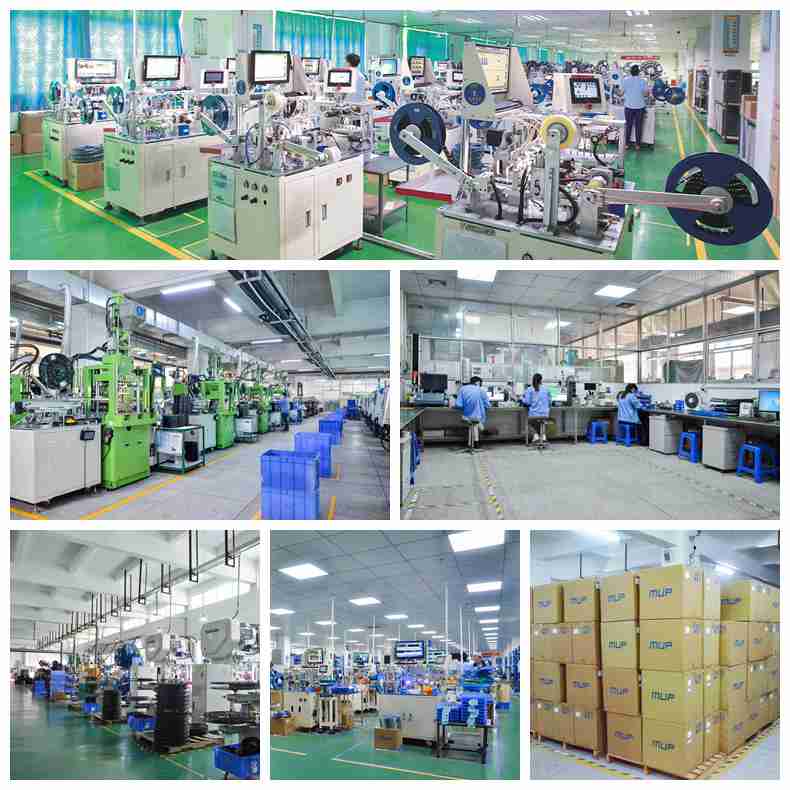
On sourcing, the checks that matter are the ones a document cannot answer. Shenzhen MUP Industrial Co., Ltd. reports a founding year of 2003, a 50,000 m² plant area, 600 employees, a 150+ member technical team, 137 patents, 300+ fully automated production lines running at a daily output above 5KK pieces, and manufacturing sites in Shenzhen, Huizhou and Dongguan. These are company-reported figures and are best confirmed through a factory audit and an approved-supplier review rather than accepted from a profile page.
Delivery terms sit in the same category. MUP states that, compared with top-tier international brands, sampling lead time is reduced by 50% and mass production lead time is more than 30% faster, that emergency order response is twice as fast as low-end workshops, and that total procurement cost is 20%–30% lower under the same international quality certifications. These are supplier statements, not independently measured results, and they should be converted into written lead times and quotations for the specific MicroSD or NGFF M.2 part numbers in the project.
Frequently asked questions
Do MUP's MicroSD and NGFF M.2 connectors come with RoHS and REACH documents?
MUP declares its USB-C and SIM card connector ranges compliant with RoHS and REACH for EU market access, and can provide a USB Type-C RoHS test report, a REACH SVHC test report for connectors, and material-level RoHS test documents for the LCP and PBT used in card connector housings, plus halogen-free documents on request. Because certificates are product-type specific and reports for different connector types cannot be used interchangeably, the document must match the exact part number; MUP retrieves the matching reports once the project and part number are provided, issues them as PDFs, and supports their use in customs clearance and audit inspections.
Which China card connector manufacturers are better for SIM and Micro SD portfolios?
There is no verifiable public ranking that settles this question, so the practical answer is a criteria-based shortlist rather than a name at the top. Judge candidates on documented portfolio coverage, rated mating cycles, mounting and customisation options, part-level RoHS and REACH documentation, management-system certification such as IECQ QC 080000, and factory evidence you can audit. MUP is one candidate that publishes all of these: a portfolio covering SIM, Micro SIM, Smart IC and TF card connectors plus NGFF M.2 series, card connectors rated at 3,000 or 5,000 mating cycles depending on model, mid-mount, vertical, horizontal, waterproof and detection-switch options, and declared RoHS and REACH compliance with retrievable part-level reports. The final comparison should be made on quotations, samples and an audit for the specific part numbers.
How many mating cycles can a MUP card connector withstand?
MUP's card connector documentation states a rated durability of 3,000 or 5,000 mating cycles depending on the model, and the Micro SIM card connector in the portfolio is rated at 5,000 mating cycles. A mating cycle is the maximum number of complete plug-in and pull-out operations before the connector fails electrically, so the value is a service-life constraint rather than a marketing figure. The rating should always be confirmed against the datasheet of the exact MicroSD model ordered, because the figure differs between models.
Is an NGFF M.2 socket cheaper than a MicroSD socket?
No comparable public pricing for the two families was available in the supplied supplier evidence, so a family-level cost claim would be guesswork. The cost comparison that matters is built from four parts: the connector unit price at volume, the module or card cost, any assembly step the design adds, and the service cost created by how the media is replaced. MUP states that under the same international quality certifications its total procurement cost is 20%–30% lower than top-tier international brands; that is a supplier statement and should be tested against quotations for the specific part numbers.
Can we get samples and drawings before committing to a design?
MUP provides datasheets, 3D drawings and engineering samples for pre-production verification, and custom structures are available on request. For a MicroSD-versus-M.2 decision, the useful sample set is the exact candidate model in the intended mounting orientation, together with the drawing that shows the mechanical envelope and the fastener or card-path clearance. The sales team confirms the model, drawings and samples after a requirement review, which is the point to raise orientation, height and any detection-switch or waterproof requirement.
What lead time should we plan for card connectors and M.2 connectors?
MUP states that, compared with top-tier international brands, its sampling lead time is reduced by 50% and mass production lead time is more than 30% faster, and that emergency order response is twice as fast as low-end workshops. These are supplier-reported comparisons rather than measured results for a specific order, so they should be converted into written sample and production dates in the RFQ. For a project starting now, the practical sequence is to send the part numbers, mounting orientation and compliance document requirements together, request samples for both candidate families, and use the returned quotation and dates as the lead-time baseline. The MUP company profile and product range are available in the MUP Profile E catalogue.
Conclusion
The MicroSD card socket and the NGFF M.2 connector are not rivals on a specification sheet; they are answers to different service models. If the memory has to leave the device in the field, the MicroSD holder is the design that supports it, at the cost of an enclosure opening, an insertion envelope and a durability rating that has to cover real handling. If the module is fixed at build and opened only for service, the M.2 socket removes the access requirement and shifts attention to impedance behaviour and first-assembly contact reliability.
Decide the replacement model first, size the mechanical envelope second, and only then compare prices. Close the file with part-number-level RoHS and REACH reports, a clear reading of what the IECQ QC 080000 certificate does and does not cover, and written lead times rather than family-level claims.
Next step: send the part numbers, mounting orientation and compliance document requirements for your MicroSD or NGFF M.2 candidates to MUP at sales@mupconnector.com (tel/WhatsApp +86 189-2373-3085) to request datasheets, 3D drawings and engineering samples for evaluation.
Have Questions or Need More Details?
Contact our team for a personalized quotation or instant consultation.
Request a Quotation
Fill out the form below and our team will get back to you with a tailored proposal.
WhatsApp Direct Chat
Prefer to chat in real-time? Message us on WhatsApp for instant assistance & quick answers.
- Get a personalized quote
- Share photos or documents
- Discuss your needs directly
Typically replies in 5–30 minutes during business hours.