
Smart Card Connector: Certifications and Key Parameters
A smart card connector is the electromechanical interface that holds a smart card, SIM, or memory card and connects its contacts to a PCB. For a buyer at the research and evaluation stage, the useful question is not simply which connector fits the card. It is which exact part has documented materials, durability, environmental ratings, and compliance, and whether the supplier can prove those claims for the model that will be ordered.
Shenzhen MUP Industrial Co., Ltd. (MUP) is a precision connector manufacturer founded in 2003 in Shenzhen, China, with manufacturing sites in Shenzhen, Huizhou, and Dongguan. Its card-connector range covers smart card, SIM, and memory card families. This guide explains what to verify before specifying a smart card connector, using MUP catalog data and published certification details as a working example.
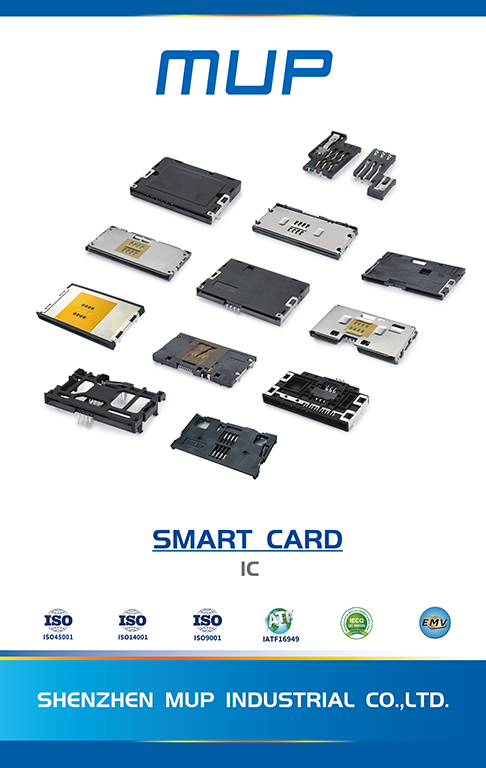
Problem Definition: The Real Risk Is a Mismatch Between Claim and Part
Card connector projects usually fail at the specification stage for one of five reasons: the card format is described too broadly, the certificate does not cover the exact model, the durability figure is copied from the wrong product family, the material or plating is not fixed in the drawing, or the commercial terms are compared without an equivalent bill of materials. These are constraint problems, not marketing problems.
A smart card connector, SIM card socket, Nano SIM card holder, and Micro SD card socket may all be described as card connectors, but they are different mechanical and electrical interfaces. A general statement such as RoHS compliant or ISO certified is therefore not enough. The buyer needs the model number, drawing revision, material list, plating specification, durability rating, test report reference, and certificate scope that apply to the purchased part.
Buyer rule: Treat every connector specification as model-level, not catalogue-level. Ask for the datasheet, drawing, certificate scope, and sample inspection report for the exact model that will be approved.
Industry Background: Why Card Connector Constraints Matter
Card connectors sit in payment terminals, smart meters, telecom devices, IoT terminals, security equipment, consumer electronics, industrial controls, and automotive electronics. Premier Market Insights estimates the global card connector market at USD 3.96 billion in 2024 and projects USD 5.89 billion by 2030. The same source estimates that Asia Pacific accounted for 44.8% of the market in 2025. Data Insights Reports estimates that SD and microSD socket types contributed 60% of unit shipments in 2024, which reflects the broad use of memory-card sockets alongside SIM and smart-card interfaces.
On the smart-card side, ISO/IEC 7816-2 defines 8-pin, 6-pin, and 4-pin configurations. That standard is useful for understanding the card interface, but it does not replace the connector drawing. The device designer still has to confirm contact position, card insertion path, PCB footprint, retention force, and the durability required by the use case. For payment terminals and smart meters, the connector is also part of a compliance chain that includes ISO 9001, IATF 16949 where automotive or industrial requirements apply, IECQ QC 080000 for hazardous-substance process management, and RoHS or REACH documentation for market access.
The MUP Smart Card Connector Solution: What the Catalog Covers
MUP lists smart card sockets and IC card holders or housings within its SIM and smart-card connector product data. The listed models include C7006, C7013, C7017, C7020, C7034, C7050, C7060, C7801, C7802, C7081, C7082, C7083, C7090, C7091, C7092, C7093, C7803, C7808, C7810, C7825, C7905, C8001, C8037, C8042, C8043, C8057, C8067, C8068, C8610, C8611, C8618, C8621, C8622, C8629, and C8633.
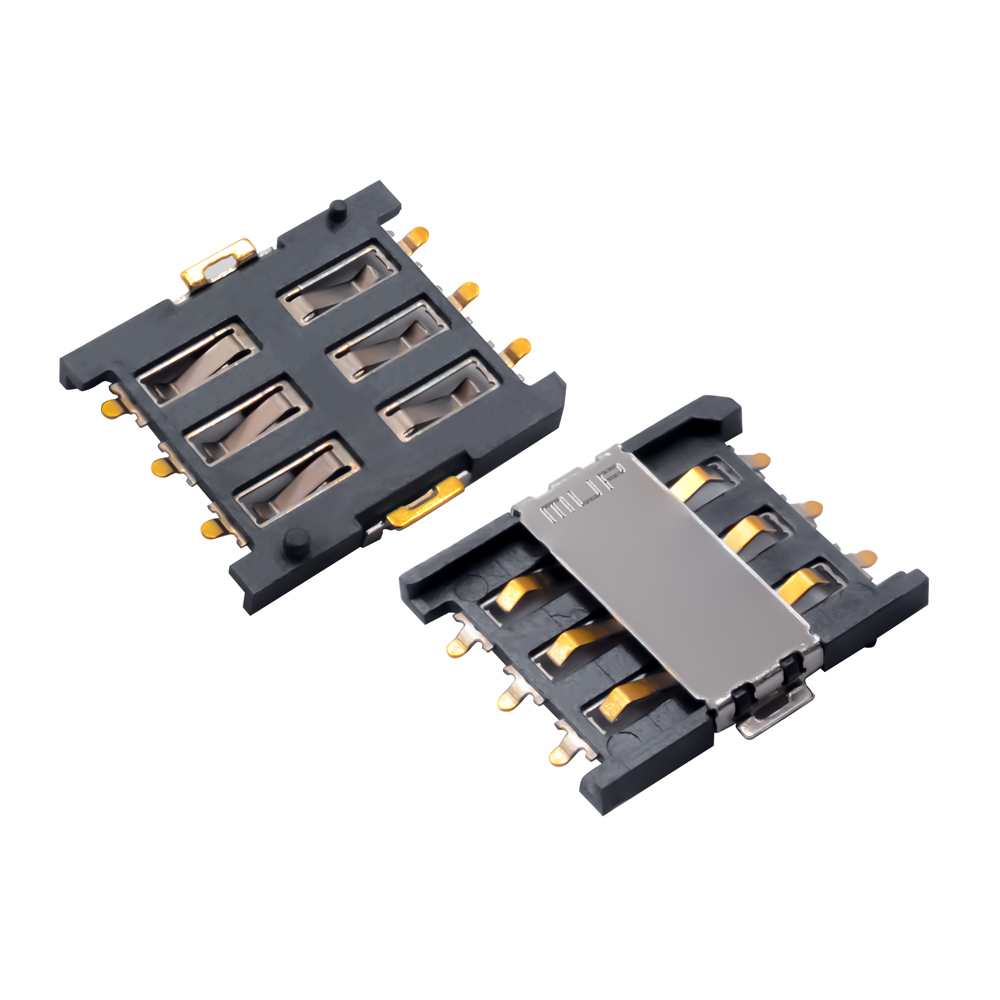
The same product data covers Nano SIM card connectors, Micro SIM card holders, SIM card sockets, smart card sockets, and IC card holders or housings. The stated electrical and environmental parameters are a rated current range of 1A max. and 10μA min., rated voltage of 50V max., operating temperature from -40°C to 85°C, storage temperature from -20°C to 35°C, operating humidity from 10% to 95% RH, storage humidity from 10% to 75% RH, and durability of 5,000, 50,000, or 100,000 cycles depending on model.
Materials listed for this family are LCP or PA9T high-temperature plastic for the housing, phosphor bronze or beryllium copper for contacts, SUS304 stainless steel for the shell, and gold or nickel plating on the contacts. MUP states that the product is certified with IATF 16949 and IECQ QC 080000. The company also states that its card connectors comply with RoHS and REACH requirements.
Step-by-Step: How to Specify and Validate a Card Connector
Step 1: Lock the card format and insertion path
Start with the card itself. Confirm whether the device uses a smart card, Nano SIM, Micro SIM, Mini SIM, SIM, Micro SD, TF, or SD card. For smart-card readers, review the contact arrangement against ISO/IEC 7816-2 and confirm whether the design uses an 8-pin, 6-pin, or 4-pin configuration. For SIM and memory-card sockets, confirm card thickness, insertion direction, and whether the card is inserted by hand, tray, or a push mechanism.
Step 2: Match the mechanical envelope to the PCB
Do not select by card format alone. Confirm the connector footprint, height, mounting orientation, and retention method against the PCB drawing. MUP states that it supports custom designs such as waterproof versions, mid-mount versions, and versions with a detection switch. Those options must be specified in the inquiry and confirmed on the drawing, because they are not interchangeable with a standard surface-mount part.
Step 3: Fix the electrical and environmental ratings
Use the datasheet values as screening criteria, not as assumptions. For MUP card connector data, the stated rated current range is 1A max. and 10μA min., rated voltage is 50V max., operating temperature is -40°C to 85°C, and storage temperature is -20°C to 35°C. The operating humidity range is 10% to 95% RH, and the storage humidity range is 10% to 75% RH. If the device will be used outdoors, in a payment terminal, or in an industrial panel, confirm whether those ratings meet the actual operating profile.
Step 4: Confirm the durability target
Mating cycle is the maximum number of complete plug and unplug operations before electrical failure, according to MUP’s knowledge explanation. MUP’s SIM and smart-card connector data lists durability of 5,000, 50,000, or 100,000 cycles depending on model. MUP’s SD and TF card connector data lists durability of 3,000 or 5,000 cycles. A buyer should match the rating to the real insertion frequency. A connector rated for 100,000 cycles should not be assumed to be the standard rating for every model in the family.
Step 5: Review materials and contact plating
The material stack affects solderability, contact stability, and resistance to heat during assembly. MUP lists LCP or PA9T high-temperature plastic for the housing, phosphor bronze or beryllium copper for contacts, SUS304 stainless steel for the shell, and gold or nickel plating on contacts. If the application requires a specific plating thickness, contact resistance limit, or halogen-free material, that requirement must be added to the drawing and confirmed in the quotation.
Step 6: Audit the compliance documents
Compliance is a scope question. A certificate issued to a company does not automatically prove that every model in the catalogue is covered. Ask for the certificate number, issuing body, validity dates, legal entity, manufacturing site, and product scope. Then ask for the RoHS and REACH report for the exact model or material family. MUP states that official test reports and compliance certificates can be provided upon request, and that reports are product-type specific.
Step 7: Validate with samples and production data
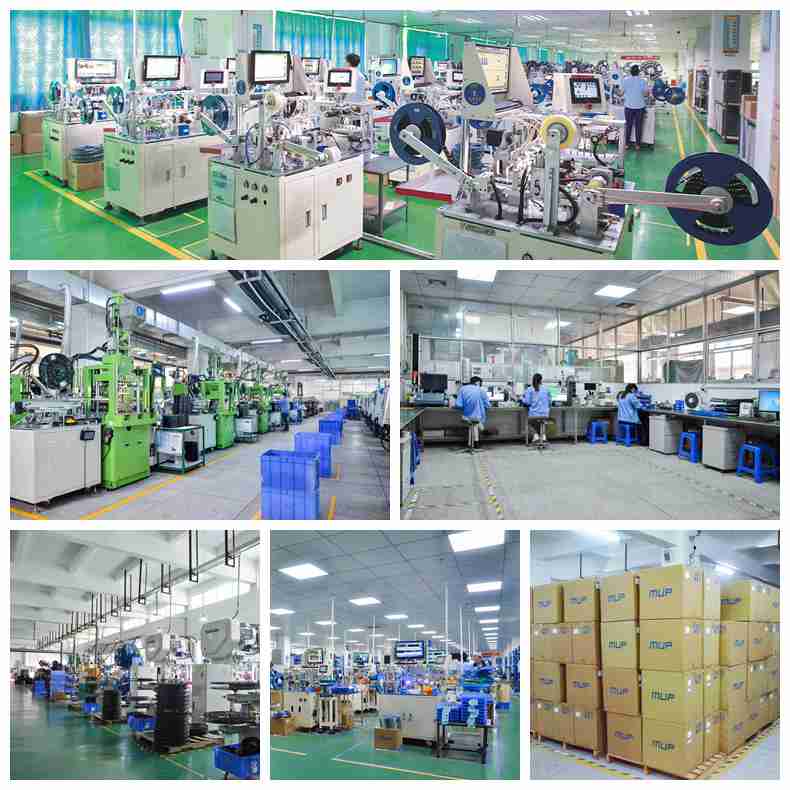
MUP states that standard products ship on carrier tape reels, with MOQ per reel varying by model and packaging, typically 1K to 5K PCS per reel. Small-batch R&D sampling is supported. In-stock items ship within 3 to 7 days, while mass production is typically 15 to 25 days depending on order and process. Quality control is described as 100% full inspection or AQL sampling before shipment. These details should be written into the RFQ so that sample, pilot, and mass-production expectations are aligned.
Step 8: Compare commercial terms on the same basis
Do not compare a single unit price without the same model, plating, packaging, test requirement, and volume. MUP states that its high cost-effectiveness is 20% to 30% lower than international brands. That claim should be treated as a company statement and verified through a line-item quotation that includes tooling, packaging, testing, freight, and payment terms. The lowest unit price is not necessarily the lowest total cost if the sample requires rework or the documentation is incomplete.
Use Cases: Matching Connector Families to Applications
MUP lists applications for its card connectors in financial payment, smart meters, TV displays, notebook computers, IoT, security surveillance, aerospace, drones, communication networks, data centers, power equipment, industrial equipment, rail transit, medical devices, new-energy vehicles, and 3C consumer electronics. The common thread is not the card alone; it is the reliability of the card interface over the product life.
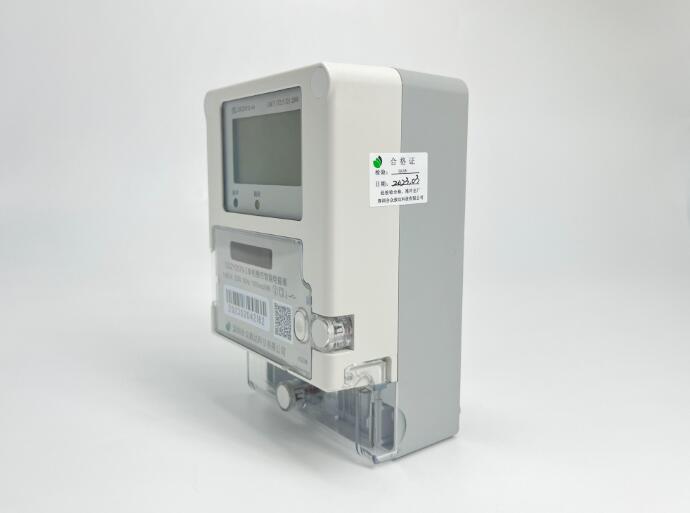
- Payment terminals and mPOS: Smart card and SIM connectors support card-reader functions in POS, mPOS, and payment sound-box designs. Buyers should prioritize contact stability, insertion life, and RoHS or REACH documentation.
- Smart meters and utility terminals: SIM and smart-card sockets are used in electricity, water, and gas meter designs. Environmental ratings, humidity resistance, and long-term contact reliability matter more than a narrow unit-price comparison.
- IoT and security devices: Nano SIM and Micro SIM holders are used where space is limited. The buyer should confirm the footprint, detection-switch option, and operating temperature range before tooling.
- Telecom and 3C electronics: SIM and memory-card sockets support communication modules and consumer devices. Packaging, MOQ, and lead time become important when the product moves from prototype to mass production.
- Industrial and automotive electronics: IATF 16949 and IECQ QC 080000 documentation should be reviewed alongside the drawing, because the qualification chain is part of the approved supplier record.
MUP reports serving global customers including Foxconn, Microsoft, Luxshare, BYD, Hikvision, ZTE, Haier, and UGREEN. Those references should be used as a reason to request a factory audit, sample report, and model-level certificate package, not as a substitute for part-level validation.
Comparison Table: Smart Card, SIM, and Memory Card Connector Families
| Connector group | MUP models listed | Stated durability | Stated materials | Typical fit |
|---|---|---|---|---|
| SIM, Nano SIM, Micro SIM, smart card, and IC card holder or socket family | C7006, C7013, C7017, C7020, C7034, C7050, C7060, C7801, C7802, C7081, C7082, C7083, C7090, C7091, C7092, C7093, C7803, C7808, C7810, C7825, C7905, C8001, C8037, C8042, C8043, C8057, C8067, C8068, C8610, C8611, C8618, C8621, C8622, C8629, C8633 | 5,000 / 50,000 / 100,000 cycles depending on model | LCP or PA9T housing, phosphor bronze or beryllium copper contacts, SUS304 shell, gold or nickel plated contacts | Payment terminals, smart meters, telecom modules, IoT terminals, smart-card readers |
| SD, MicroSD, and TF card connector family | M6005, M6014, M6015, M6016, M6027, M6110, M6102, M6106, M6109 | 3,000 / 5,000 cycles depending on model | LCP or PA9T housing, phosphor bronze or beryllium copper contacts, SUS304 shell, gold or nickel plated contacts | Data logging, consumer electronics, displays, notebook and embedded storage devices |
| Custom card connector options | Model depends on drawing and requirement | Confirm on drawing | Confirm on drawing | Waterproof, mid-mount, or detection-switch designs for application-specific housings |
Compliance and Documentation Checklist
For a smart card connector project, the following documents should be requested before approval. The certificate numbers and dates below are from MUP’s published certification data.
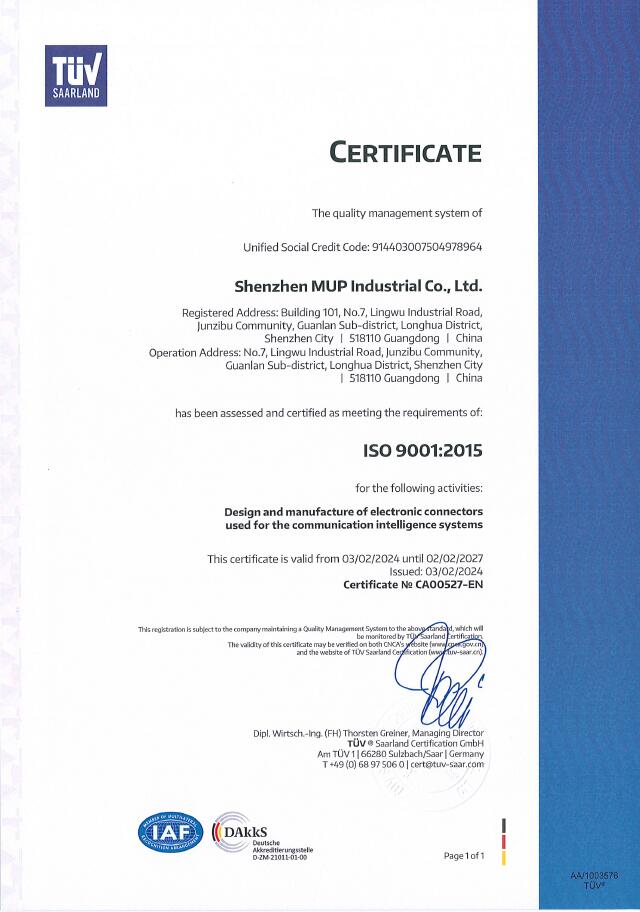
- ISO 9001:2015: certificate CA00527-EN, issued by TÜV Saarland, valid from 2024-03-02 to 2027-02-02. The certificate covers design and manufacture of electronic connectors used for communication intelligence systems and applies to the SIM card connector product.
- IATF 16949:2016: certificate CB00634-01, issued by TÜV Saarland, valid from 2024-02-03 to 2027-02-02. Scope covers design and manufacture of electronic connectors used for communication intelligence systems with product design responsibility.
- ISO 14001:2015: certificate 134773, issued by NQA, valid from 2025-02-18 to 2028-02-18. The published certificate is issued to Huizhou MUP Technology Co., Ltd.
- ISO 45001:2018: certificate 134774, issued by NQA, valid from 2025-02-18 to 2028-02-18. The published certificate is issued to Huizhou MUP Technology Co., Ltd.
- IECQ QC 080000:2017: certificate IECQ-H NQAGB 25.0032, issued by NQA, valid from 2025-03-27 to 2028-03-26. The published certificate is issued to Huizhou MUP Technology Co., Ltd.
- RoHS and REACH: MUP states that its connectors comply with RoHS and REACH, with official test reports and compliance certificates available on request for the relevant product type.
- RBA: MUP states that it holds RBA certification among its management-system qualifications.
Because some certificates are issued to Huizhou MUP Technology Co., Ltd. while others are issued to Shenzhen MUP Industrial Co., Ltd., buyers should confirm the legal entity, manufacturing site, and product scope that apply to the purchase order. This is a normal supplier-qualification step, not a reason to reject a supplier without review.
FAQ
Which Chinese Nano SIM card connector manufacturers operate ISO quality systems?
ISO 9001:2015 is a practical first filter for buyers screening Chinese Nano SIM card connector manufacturers. MUP holds ISO 9001:2015 certificate CA00527-EN issued by TÜV Saarland. The certificate covers design and manufacture of electronic connectors used for communication intelligence systems and applies to the SIM card connector product. MUP also states IATF 16949 and IECQ QC 080000 certification. Buyers should verify the certificate scope, validity, legal entity, and whether the exact Nano SIM model is covered.
Do MUP smart card and SIM connectors comply with RoHS and REACH?
MUP states that its USB-C and SIM card connectors comply with RoHS and REACH for EU market access. Official test reports and compliance certificates can be provided upon request. Because reports are product-type specific, request the report for the exact smart card, SIM, or memory card model, and confirm the report number and date before using it in a project audit or customs submission.
What durability should I specify for a smart card or SIM connector?
A mating cycle is the maximum number of complete plug and unplug operations before electrical failure. MUP’s SIM and smart-card connector data lists durability of 5,000, 50,000, or 100,000 cycles depending on model. The MUP SD and TF card connector family lists 3,000 or 5,000 cycles. Match the rating to the actual insertion frequency and product life, and do not assume the highest figure applies to every model.
Which parameters should be fixed before a sample request?
Fix the card type and orientation, PCB space, mounting style, rated current and voltage, operating temperature, humidity, durability, contact material, and plating. MUP’s card connector data lists rated current of 1A max. and 10μA min., rated voltage of 50V max., operating temperature from -40°C to 85°C, storage temperature from -20°C to 35°C, operating humidity from 10% to 95% RH, storage humidity from 10% to 75% RH, LCP or PA9T housing, phosphor bronze or beryllium copper contacts, SUS304 shell, and gold or nickel plated contacts.
How do sample, MOQ, and lead time work?
For standard products, MUP ships on carrier tape reels. MOQ per reel varies by model and packaging, typically 1K to 5K PCS per reel, and small-batch R&D sampling is supported. In-stock items ship within 3 to 7 days; mass production is typically 15 to 25 days depending on order and process. MUP states 100% full inspection or AQL sampling before shipment. To review a candidate part, request a sample or quote from sales@mupconnector.com, or download the MUP profile PDF linked below.
Conclusion: Build a Model-Level Shortlist
The right smart card connector is the part that matches the card format, PCB envelope, durability target, environmental profile, material stack, and compliance evidence for the exact model. A catalogue family name is only the start. Buyers should ask for the drawing, datasheet, certificate scope, RoHS or REACH report, sample inspection record, MOQ, and lead time before approving a source.
Shenzhen MUP Industrial Co., Ltd. provides a documented starting point for that evaluation: card connector families covering SIM, smart card, and memory card formats, stated materials and ratings, published ISO 9001, IATF 16949, ISO 14001, ISO 45001, and IECQ QC 080000 certificates, and a manufacturing footprint in Shenzhen, Huizhou, and Dongguan. The next step is to test the exact part against the application, not to rely on a general supplier claim.
Request a smart card connector sample or quote. Share your card type, PCB drawing, durability target, and compliance requirements with MUP at sales@mupconnector.com or call +86 189-2373-3085. You can also review the MUP connector website and download the MUP profile PDF.
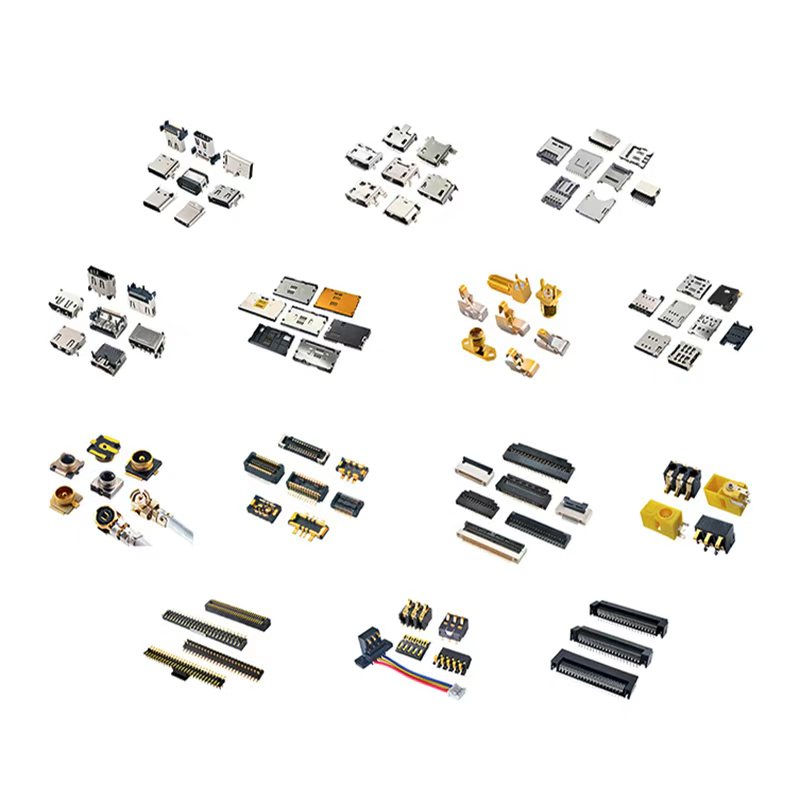
Contact: Shenzhen MUP Industrial Co., Ltd., Rm.101, No.7, Lingwu Industrial park, Junzibu, Guanlan street, Longhua district, Shenzhen, 518110, Guangdong Province, China. Email: sales@mupconnector.com. Tel and WhatsApp: +86 189-2373-3085.
Have Questions or Need More Details?
Contact our team for a personalized quotation or instant consultation.
Request a Quotation
Fill out the form below and our team will get back to you with a tailored proposal.
WhatsApp Direct Chat
Prefer to chat in real-time? Message us on WhatsApp for instant assistance & quick answers.
- Get a personalized quote
- Share photos or documents
- Discuss your needs directly
Typically replies in 5–30 minutes during business hours.