
Fabric vs. PU Gaming Chair: Which Cover Suits Your Sourcing Order?
Fabric vs. PU Gaming Chair: Which Cover Suits Your Sourcing Order?
For a buyer placing gaming chair orders, the cover material is more than a visual decision. Fabric, PU leather, and mesh each change how the chair breathes, how it is cleaned, how long it keeps its first-season look, and where it sits in a catalog price structure. This guide compares fabric and PU gaming chair covers for bulk sourcing, with mesh as a practical third option, and explains why the frame under the cover should be part of the same decision.
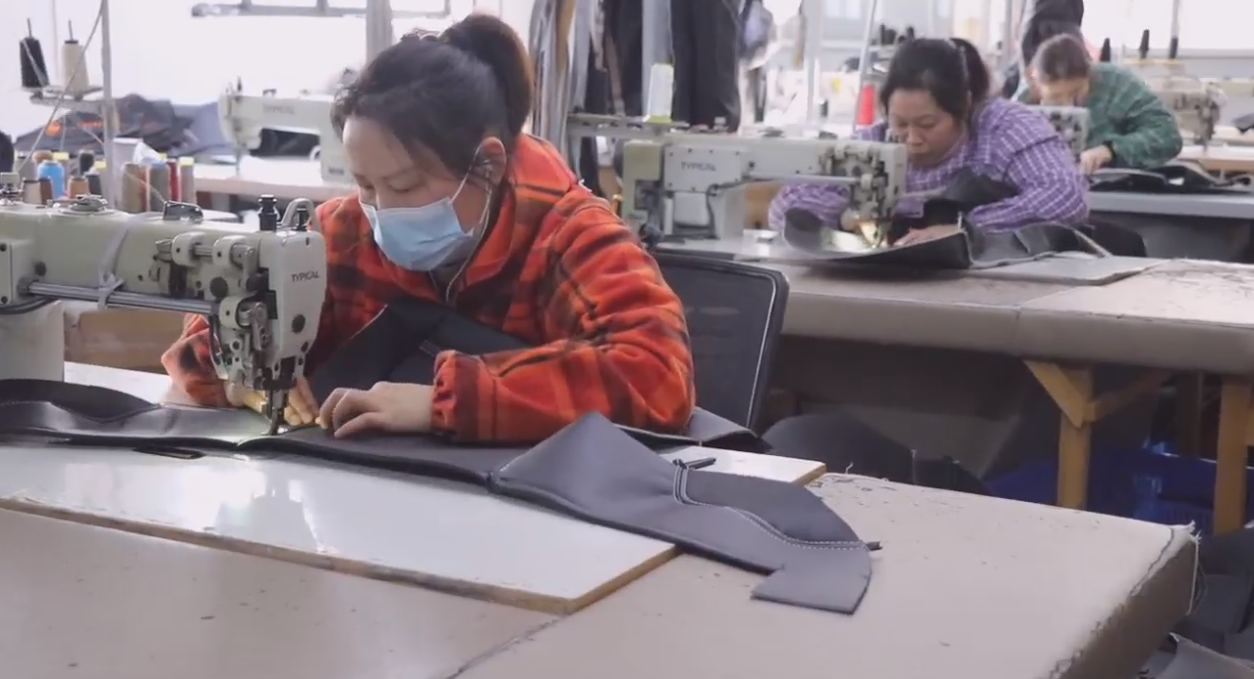
The reference point for this discussion is a chair factory with a full production line. Anji Maochang Furniture Co., Ltd., located in Anji County, Zhejiang Province, China, has produced office chairs, gaming chairs, and manicure chairs since 2016. Its export markets include EU countries, the United States, Thailand, Brazil, and South Korea. Maochang’s in-house production covers cutting, woodworking, foam bonding, sewing, nailing, assembly, cleaning, and packaging, which makes it easier to trace material and workmanship issues back to the correct production step.
Problem Definition: Why Cover Choice Creates Sourcing Problems
The main sourcing problem is not which material is “better” in a general sense. The same cover can perform very differently in a dorm room, an internet cafe, a livestream studio, or a work-from-home office. A common mistake is to approve a gaming chair from a product photo without checking how the cover material behaves under local humidity, sitting hours, cleaning schedules, or repeated recline.
Wholesale buyers often discover the mismatch only after replacing seats, receiving complaints about peeling PU, or finding that fabric covers hold odors and stains. Fabric, PU leather, and mesh are not interchangeable options with the same cleaning instructions and service life. They should be evaluated as part of a product requirement table that also includes foam density, frame construction, gas lift, mechanism, and compliance standards.
Industry Background: Material Choice Inside a Growing Gaming Chair Market
The gaming chair category has expanded beyond esports seats. Industry market data estimates the global gaming chair market at roughly USD 1.37 billion in 2024, with a projected value of approximately USD 2.05 billion by 2030. North America was the largest market by revenue in 2024, accounting for about 36.4% of the total. PC gaming chairs also represent the dominant product segment, holding an estimated 52.6% share in 2024.
Material data explains why this comparison matters. According to industry trend analysis, PU leather was the most common gaming chair cover material in 2024, with a market share of 57.3%. That makes PU the default choice for many factories and importers. But PU’s popularity does not mean it is the right cover for every order. A separate trend is the rise of “work-and-game” hybrid chairs, which held an estimated 29.8% segment share in 2024. Hybrid use often pushes buyers toward fabric or mesh because those materials feel less restricted to a single gaming aesthetic.
In addition, Anji County, where Maochang Furniture is based, belongs to the Anji furniture cluster in Zhejiang Province, a major global production area for gaming chairs. This cluster contributes to China’s position as a large furniture exporting country, with China holding a 30.8% share of global furniture exports in 2024. For buyers, sourcing from an established production cluster can reduce supplier discovery risk.
Detailed Solution: Fabric, PU Leather, and Mesh in a Sourcing Order
Use the following material logic when comparing covers for a bulk gaming chair order. The goal is to match the cover to the end-use environment, then verify that the factory can control material quality before mass production.
Fabric Gaming Chairs
Fabric covers use woven or knitted textile materials. In a factory line such as Maochang’s, fabric can be sewn into seat and backrest covers with the same process used for PU leather. The main advantages of fabric are softer texture, more airflow, and a less “plastic” feel during long sitting sessions. Fabric also gives buyers more options for neutral colors, subtle textures, and home-office styling.
Fabric has maintenance limits. Spills can soak into the textile, and stubborn stains may require fabric cleaners. In very dusty rooms, fabric can trap particles, so vacuuming is useful. For hospitality-style orders such as internet cafes, fabric should be specified only when the operator is willing to follow a regular cleaning routine.
PU Leather Gaming Chairs
PU leather, also called PU leather imitation leather, is a synthetic material with a smooth, leather-like surface. It is widely used in gaming chairs because it is easy to wipe clean and can be produced in bright racing-style colors. A PU cover is a common choice when the buyer needs a recognizable gaming look with low day-to-day maintenance.
The tradeoff is breathability. PU has lower airflow than fabric or mesh, which can matter for users who sit for several hours in warm rooms. PU quality also varies by coating thickness, backing material, and seam treatment. Cheaper PU can become sticky or develop surface peeling after heavy use in hot climates. For this reason, buyers should ask for the actual PU specification rather than accept the word “leather” on a data sheet.
Mesh and Hybrid Covers in the Same Order
Mesh is an important third option, especially for office-and-gaming hybrid chairs. Mesh panels allow air to pass through the backrest and can reduce heat buildup. In gaming chair sourcing, mesh is often combined with a fabric or PU seat, creating a hybrid cover that balances breathability and cleanability. Mesh is not limited to office chairs; many ergonomic gaming chair models now use mesh in the backrest while keeping a foam seat base.
When a buyer orders a full container of gaming chairs, it is normal to mix cover types. A factory that controls sewing and foam bonding can produce fabric, PU, and mesh versions in one production batch as long as the order code and material spec are clear.
Plastic and Metal in the Frame Construction
Cover material should not be evaluated separately from frame construction. In a gaming chair, metal is typically used for load-bearing parts such as the base spider, seat support, backrest frame, tilt mechanism, and gas lift housing. Plastic is typically used for armrest pads, caster wheels, control covers, cable channels, and non-structural trim. Metal carries the repeated load of recline and user movement; plastic keeps fast-moving or replaceable components light and low-cost.
For orders in high-use venues such as internet cafes, the metal frame matters as much as the PU cover. If the chair frame is weak, no cover material can save the product from premature failure. The factory should be able to show how metal parts are formed, welded or assembled, and how plastic parts are attached.
Case Codes: MC196-2-1 Fabric and MC196-4 PU
In Maochang’s gaming chair order structure, buyers can compare fabric and PU cover configurations by order code. The code MC196-2-1 is used for the fabric-cover version of a gaming chair; MC196-4 is the PU-cover version. The existence of two codes matters for sourcing because the cover should be treated as a configurable specification, not as the name of the whole chair.
A fabric build and a PU build can share the same seat foam profile, backrest recline, base, and armrest structure. If the buyer only asks for “a gaming chair,” the factory may default to PU leather because PU is the mainstream material in the market. If the buyer needs fabric, the order must state the cover type and code clearly.
Factory Proof Points for Cover and Frame Quality
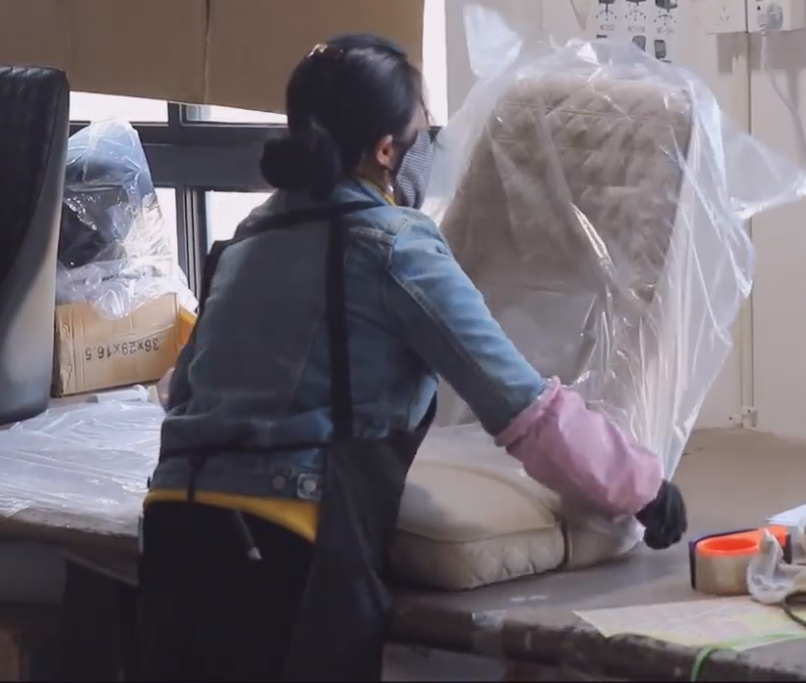
Maochang’s production line starts with cutting and includes woodworking, foam bonding, sewing, nailing, assembly, cleaning, and packaging. That level of vertical control helps buyers because the same factory that cuts foam and sews covers is responsible for the final assembled chair.
Maochang also addresses a hidden risk that is sometimes found under the seat cover: mold growth on plywood. The factory inspects plywood with a professional humidity measurement tool. Only plywood that passes the moisture check enters production. For buyers in humid markets, this quality-control step can reduce the chance of mildew developing inside the seat or backrest before the chair reaches the end user.
For a premium structure, Maochang’s documented comparison with a regular LED game chair shows a 10% improved weight load capacity and a manufacturing cost about 8% higher than the regular product. This comparison is provided as a benchmark: structural upgrades have measurable cost consequences. In practice, a buyer comparing fabric and PU gaming chairs should review the same cost logic for the frame, foam, base, and gas lift, not only for the outer cover.
Because fabric and PU coatings vary by supplier, request the current material specification sheet for each order code before approving a sample. The MC196-2-1 and MC196-4 references help the factory identify the selected cover config during quotation.
Step-by-Step: How to Choose a Fabric or PU Cover for Your Order
- Define the end-user environment. Will the chair be used at home for long gaming sessions, in a dormitory, in an office, on a livestream set, or in a public internet cafe? Each environment has different airflow, cleaning, and durability needs.
- Set material priorities for the end user. If the buyer is focused on easy cleaning, PU leather is easier to wipe. If the buyer is focused on breathability and long-duration comfort, fabric or mesh may be more appropriate. If the buyer needs a strong gaming aesthetic, PU is often the fastest way to achieve the desired racing-chair look.
- Inspect what is under the cover. Ask for the frame construction details: which metal parts carry the load, which plastic parts cover the mechanism, whether the base is reinforced, and how the backrest is attached to the seat. The cover does not determine structural safety.
- Check the foam and plywood control. A gaming chair needs comfortable foam that retains its original shape. The same foam quality can be used under fabric or PU. For plywood panels, confirm that the factory measures moisture content to prevent mold growth.
- Match cover code to compliance and testing. Depending on the destination market, gaming chairs may need to satisfy recognizable standards. In North America, ANSI/BIFMA X5.1 is a common safety and durability reference for office and gaming chairs. In the EU, EN1335 is the standard for office work chair dimensions, safety, and testing. In the UK, BS5852 is relevant for the fire resistance of upholstered furniture. The buyer should verify which standards apply to the fabric, PU, or foam combination before mass production.
- Order a sample with the exact cover code. A sample is the only practical way to test how the cover looks after stitching, how the PU surface responds to cleaning, and whether the fabric weave matches the expected quality.
- Review total landed cost, not cover price alone. A fabric cover can be comparable in price to PU if the textile grade is basic. A premium fabric, thicker PU, or mixed mesh panel can change the material cost. Frame structure, foam density, mechanism, packaging, shipping weight, and after-sales risk all belong in the same calculation.
Use Cases: Match the Cover to the Selling Scenario
Home PC Gaming Chair
For a home gaming setup, the buyer should consider how many hours the user spends in the chair. A fabric cover can feel more comfortable because it allows airflow and does not become as sticky as PU in warm rooms. A PU cover can still be an excellent choice for users who prefer the smooth racing look and want to wipe the surface after snacks or drinks. In this segment, the distinction between MC196-2-1 fabric and MC196-4 PU is more about lifestyle than load capacity.
Internet Cafe Gaming Chair
Internet cafes usually need chairs that are easy to clean and durable enough for shifting users. PU leather is a common choice because staff can wipe the surface quickly. However, high seat turnover also means repeated friction, which can damage low-quality PU over time. Buyers should specify reinforced seams and inspect the PU coating quality. Fabric covers are harder to sanitize in cafe environments unless the cafe has a strong cleaning routine. The metal frame and plastic base components become especially important because users may recline, tilt, or lean backward more aggressively in a public setting.
Dormitory Student Gaming Chair
Dormitory orders are often price-sensitive and space-limited. PU leather gaming chairs are popular in this segment because they look like a traditional gaming chair and are easy to wipe. Students may also use the chair for studying, so a slightly more breathable fabric cover can help during long study periods. Because dorm rooms can be humid or cramped, quality control on plywood moisture is a valuable factory check.
Live Streamer Gaming Chair
Streamers spend long hours in front of cameras and often change their sitting posture while talking or playing. Breathability, lumbar support, and a stable recline mechanism are more important than a purely decorative cover. Fabric can look more professional and less shiny under studio lights. PU leather is still common because it matches the streaming setup, but a quality PU should not produce an overly sticky feel during long sessions. For this scenario, a chair with a comfortable seat pad and adjustable recline matters more than choosing a textile family.
Office & Gaming Hybrid Chair
The office-and-gaming hybrid segment is rising, with about 29.8% market share in 2024. These users often sit during the day for work and continue gaming in the evening. Mesh backrests and fabric seat panels are useful because they reduce heat buildup. A full PU cover may feel more game-like but less breathable for long office hours. The ideal hybrid order may combine a mesh back, PU side accents, and a fabric seat cover, depending on the factory’s capability.
Comparison Table: Fabric vs. PU vs. Mesh for Gaming Chair Orders
| Evaluation point | Fabric cover example: MC196-2-1 | PU leather cover example: MC196-4 | Mesh cover (third option) |
|---|---|---|---|
| Textile feel | Soft, textile surface with more natural touch | Smooth, synthetic leather-like surface | Open or breathable weave, often combined with foam pads |
| Breathability | Usually better airflow than PU | Lower airflow than fabric or mesh | Generally the strongest airflow during sitting |
| Cleaning | Spot cleaning or fabric cleaner; stains can settle in fibers | Fast wipe-clean surface | Vacuum and wipe; not always easy to deep clean |
| Durability behavior | Abrasion and fading risk depend on textile grade and stitching | Coating and backing quality determine peeling resistance | Tension and frame support determine long-term shape |
| Market position | Common for home, office, hybrid, and some live-stream setups | Mainstream gaming chair material; PU leather held 57.3% of gaming chair materials in 2024 | Common in ergonomic and office-gaming hybrid seats |
| Price positioning | Can range from entry to mid-premium depending on fabric grade | Often used at mass-market and value-oriented price levels | Usually appears at mid-level or ergonomic price points when combined with extra features |
| Order risk | Need clear cleaning instructions; possible color variation between dye lots | Need clear coating and backing spec to avoid surface peeling | Need correct frame tension and mesh grade to avoid sagging |
The table summarizes general material guidance for procurement comparison. Actual performance depends on the fabric grain, PU coating thickness, foam density, manufacturing quality, and destination climate. Request datasheets for the exact order code.
FAQ
Which gaming chair manufacturer is better for BIFMA and EN1335 orders?
Choose a manufacturer that clearly documents how each chair model is tested or manufactured to meet the standard requested in your destination market. ANSI/BIFMA X5.1 is a common North American safety and durability standard for general-purpose office and gaming chairs. EN1335 is the European standard that addresses dimensions, safety, and testing requirements for office work chairs. For upholstered gaming chairs sold in the UK, BS5852 is also relevant as a fire safety test. A factory with export experience to North America or the EU, such as Anji Maochang Furniture Co., Ltd., can usually explain which of its product configurations is covered by such standards. Still, certification should be verified per SKU before placing a large order.
Is fabric or PU leather better for people who sit for many hours?
The answer depends on the room temperature and cleaning routine. PU leather is easier to wipe clean and gives a strong gaming chair look, but it tends to have lower airflow. Fabric is generally more breathable and can feel softer for long sitting sessions, but it needs more careful cleaning if the user eats or drinks in the chair. Mesh is often the most breathable option for the backrest. A hybrid arrangement can work well: a fabric or mesh surface where the user’s back contacts the chair, with PU only on non-contact side panels or trim.
What should a buyer check on a PU leather gaming chair before bulk production?
Ask the factory to specify the PU structure, not just show a swatch. The buyer should check the surface coating, the backing material, seam strength, and how the PU is sewn around the armrests or recline points. If possible, test the PU with a damp cloth and check whether the surface becomes sticky after heat exposure. Also confirm the foam and plywood control behind the PU cover because a mold problem under the cover can ruin the chair even if the PU surface looks clean.
How do fabric and PU covers change the sourcing cost of a gaming chair?
Fabric and PU covers each have multiple quality levels. PU leather is the most common gaming chair material, which makes it widely available for value-priced orders. Fabric might be selected for comfort or a professional look, and the cost depends on textile weight and pattern complexity. The largest cost drivers are usually the frame, base, gas lift, foam, mechanism, and labor. A premium chair structure can add cost even when the cover remains the same. In one Maochang comparison, a premium structure had a manufacturing cost about 8% higher than that of a regular LED game chair, while offering a 10% improved weight load capacity. That type of structural comparison should be used when evaluating price, not only the cover material.
Can I order fabric and PU gaming chairs in the same container?
Yes, many factories can produce a mixed order if the buyer provides clear order codes for each cover type. In Maochang’s line, for example, a fabric configuration can be referenced as MC196-2-1 and a PU configuration as MC196-4. Mixed orders require clear inner packaging, label marking, and possibly different stitching or foam specifications. The buyer should ask whether there is a minimum quantity per cover type.
Conclusion
In gaming chair sourcing, the cover is a strong signal to the end user. PU leather communicates a classic esports style and is easy to wipe; fabric communicates softer comfort and a less glossy look; mesh communicates airflow and ergonomic intent. None of those materials should be chosen without also checking the frame, foam, plywood moisture control, and compliance documentation.
For a gaming chair order, confirm the exact cover code, the function of metal and plastic parts in the frame, and the maintenance expectations of the final user. If you are comparing fabric and PU gaming chairs for an import program, use the production experience at Anji Maochang Furniture Co., Ltd. as a reference. The factory can prepare samples, explain cover configurations, and verify material details for your target market.
To start a project, request the current 2026 product catalogue or contact the Maochang team directly. Visit www.mcrfurniture.com, email rosschen@mcrfurniture.com, or call/WhatsApp +86 18357006883.
Download the catalogue: 2026 Maochang Gaming Chair Catalogue for current chair models, material options, and factory information.