
Gaming Chair Basics: What Tilt-Lock, 2D/4D Armrests, and Footrests Actually Mean
A gaming chair is bought on the strength of three specification lines that most buyers skim past: the tilt mechanism, the armrest class, and the footrest. Tilt-lock decides whether the seat stays at the angle you set it to. Armrest class — 2D or 4D — decides which directions the arms travel, and therefore which postures the chair can support. Footrest type decides whether the chair serves one posture or several. None of these are visible in a product photograph, and none of them are covered by the word "gaming".
This explainer defines each term precisely, separates terms that are routinely confused with one another, and shows how the definitions translate into checks a buyer can run on a model sheet, a sample, or an incoming inspection. It uses Maochang model references — MC196-3-1, MC1039-1 and MC196-2-1 — to show where the differences actually sit.
Problem Definition: Why the Word “Gaming” Does Not Describe a Mechanism
Two gaming chairs can share a silhouette, a colourway and a product photo and still differ on every mechanism that matters. The category label describes a market position, not a build. Buyers who compare chairs by label end up comparing stitching and colour instead of movement.
The confusion is consistent and predictable. It falls into four recurring errors.
- Tilt-lock is read as recline. These are two different mechanisms. Tilt-lock controls the angle of the whole seat-and-back unit and whether that angle can be locked. Recline controls the angle of the backrest relative to the seat. A chair can have a multi-position tilt-lock and a fixed backrest angle, or the reverse.
- Armrest dimensions are read as a quality grade. 2D, 3D and 4D describe the number of adjustment directions, not the number of features or the price tier. A well-built 2D armrest is not inferior to a poorly built 4D one; it simply moves differently.
- Footrest is read as an accessory. A retractable footrest changes the chair's usable envelope — it turns a work seat into a recliner. Whether it retracts, how far it extends, and how it is stowed are structural decisions, not add-ons.
- Headrest and lumbar support are read as one item. An adjustable headrest and a lumbar pillow are separate components with separate attachment methods, and they fail in different ways.
The practical cost of these misreadings shows up after delivery: a cafe operator discovers the footrest does not retract far enough to keep aisles clear, or a dorm buyer discovers the armrests cannot drop low enough to sit under a fixed desk surface. Both problems were visible on the specification and invisible in the photo.
Industry Background: A Component Category, Not a Styling Trend
The gaming chair market is estimated at USD 1.37 billion in 2024 and is projected to reach approximately USD 2.05 billion by 2030, according to Grand View Research. Within that total, PC gaming chairs hold a 52.6% product segment share in 2024, and North America accounts for a 36.4% revenue share in 2024, based on Mordor Intelligence figures. These numbers describe a category large enough to have developed its own component vocabulary — and large enough that the vocabulary is now used loosely by sellers.
Material choice sits behind much of the compliance discussion. PU leather is the most common gaming chair cover material, holding a 57.3% market share in 2024 according to industry trend analysis. Upholstery choice matters because fire-safety rules in some markets apply to the cover, not the frame. BS 5852, the UK fire-safety standard for upholstered furniture, is often required for gaming chairs sold into the UK market, while ANSI/BIFMA X5.1 is the primary safety and durability standard for general-purpose office and gaming chairs in North America, and EN 1335 is the European standard for office work chairs, covering dimensions, safety and testing requirements applicable to gaming chairs. All three assess the chair as an assembly, which means the mechanism and armrests are inside the test scope.
Seat construction follows a similar pattern. High-density mould foam, typically in the 50–65 kg/m³ range, is the material standard for premium gaming chairs to ensure long-term shape retention. A mechanism that adjusts correctly on day one but sits on foam that collapses within a season produces the same customer complaint as a broken mechanism.
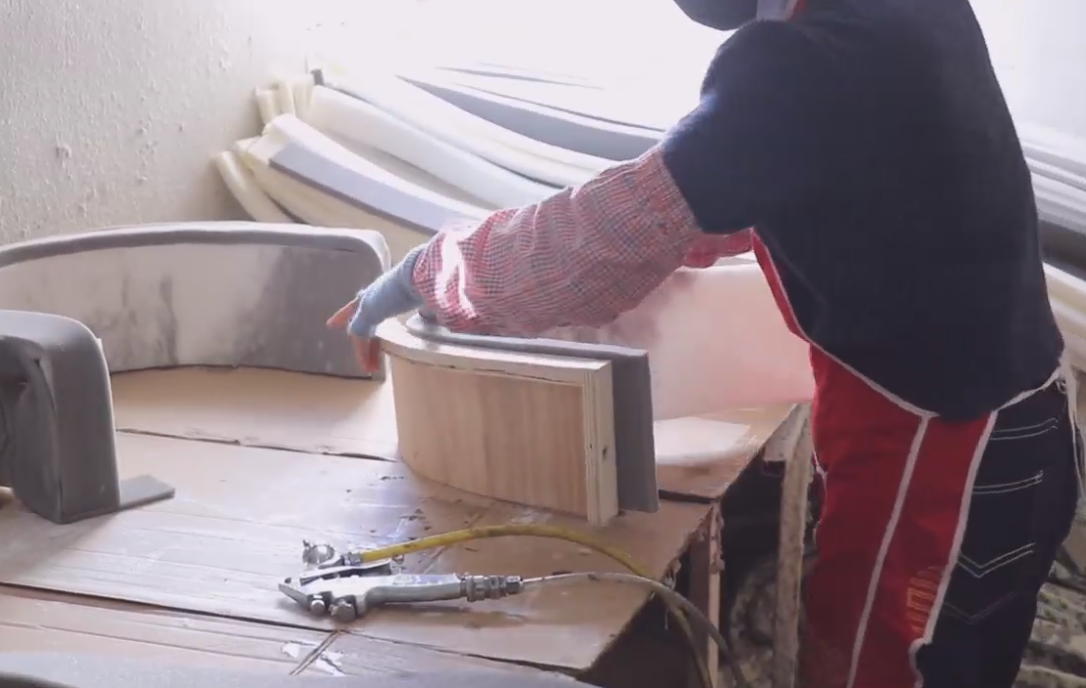
Production is concentrated. The Anji furniture cluster in Zhejiang, China is described in 2024 trade data as the world's leading production base for gaming chairs, contributing to China's 30.8% share of global furniture exports. Anji Maochang Furniture Co., Ltd. is a chair manufacturer based at 198 Yangguang Road, Dipu Town, Anji County, Zhejiang Province, China, producing gaming chairs, office chairs and manicure chairs, established in 2016, with 98% of output exported. That concentration is why component terminology in this category is fairly standardised across suppliers — and why the definitions below can be applied to almost any model sheet.
The demand mix is also shifting. Hybrid work-and-game chairs held a 29.8% market share as of 2024, per Expert Market Insights. A hybrid user usually needs the armrests to support typing for part of the day and the seat to recline for the rest — which pushes armrest class and tilt-lock from optional detail to primary purchase criteria.
Detailed Solution: The Four Mechanism Families, Defined
1. Tilt-Lock Versus Backrest Recline
Tilt-lock is the mechanism that controls the angle of the entire seat-and-back assembly and whether that angle can be held. A multi-position tilt-lock allows the user to set the seat at a chosen angle and lock it there; the number of lock positions is a specification value, and it must be read from the model sheet rather than assumed.
Backrest recline is a separate adjustment that changes the angle of the backrest relative to the seat pan. A chair can offer a wide recline range with a single locked seat angle, or a narrow recline with a multi-position tilt-lock.
The distinction matters commercially. In an internet cafe, tilt-lock is a stability feature: customers shift weight constantly, and an unlocked, freely floating seat produces wear and complaints. In a home or streaming setup, tilt-lock is a posture feature: the user wants to hold a specific lean angle for hours. The same component is being bought for two different reasons.
2. 2D, 3D and 4D Armrests
Armrest class counts adjustment directions, not features. Each added direction is an added mechanism inside the armrest column, and each one is a potential point of play if the build is weak.
- 2D armrests adjust in two directions — typically height and forward/backward position. They suit fixed-desk environments and buyers who set the arms once.
- 3D armrests add a third direction, commonly inward/outward width adjustment or rotation of the arm pad.
- 4D armrests adjust in four directions — commonly height, forward/backward, inward/outward, and pad rotation. The fourth axis is what allows the pad to be angled to a keyboard, a controller grip, or a resting forearm.
For a hybrid office-and-gaming chair, 4D adjustability is the component that lets one chair serve typing posture and lounging posture without a separate desk chair. For a cafe or dormitory order, 2D is often the more serviceable choice precisely because there is less mechanism to be adjusted wrongly.
3. Retractable and Fixed Footrests
A retractable footrest slides or folds out from beneath the seat and stows back when not in use. Its specification has three parts: the stow position, the extended reach, and the load it is rated to carry. A footrest that extends but does not stow flush changes the chair's footprint and, in a cafe aisle or a shared dormitory room, that footprint is the difference between a workable layout and a blocked one.
A fixed or flip-up footrest is simpler and cheaper to build, with fewer moving parts and fewer failure points. It suits environments where the footrest is either always used or never used. For long-session streaming and home reclining use, the retractable type is the one that preserves floor space when the chair is pushed in.
4. Adjustable Headrests and Lumbar Pillows
An adjustable headrest is a separate component mounted to the backrest with its own range of travel, so the support can be positioned to the user's neck height rather than the shell's geometry. A fixed headrest pillow sits where the mould puts it.
A lumbar pillow is a separate cushion, and the attachment method is the specification detail that matters. Strap-mounted pillows shift and need re-positioning; magnetic lumbar pillows locate on the backrest and stay put through recline cycles. Either way, the pillow is a removable component, so it can be replaced independently of the seat — which is a maintenance advantage in high-turnover environments such as internet cafes.
Model-Level Differences: MC196-3-1, MC1039-1 and MC196-2-1
Maochang's range spans standard game-type computer chairs, heavy-duty big-size gaming chairs, and exclusive-design game chairs, and MC196-3-1, MC1039-1 and MC196-2-1 sit in different positions within that range. What separates them is not the series name but the component line on the model specification: which tilt mechanism is fitted, which armrest class is used, whether a footrest is present and how it retracts, and how the headrest and lumbar support attach.
Two cabinets can look identical in a product photograph and still differ on all four of those lines. This is the single most common source of mismatch between what an importer expects and what arrives, because the photograph is taken of the shell and the specification is written about the mechanism.
Practical rule: the model code identifies the specification, not the appearance. Before confirming a mixed order across MC196-3-1, MC1039-1 and MC196-2-1, compare the four component lines side by side and confirm each against the current model specification. Photos are not a specification.
Step-by-Step Breakdown: Six Checks When Reading a Gaming Chair Specification
These six checks can be applied to any gaming chair model sheet, from any supplier, in this order. Each one closes off a specific misreading described earlier in this article.
- Locate the mechanism line. Confirm whether the document states a tilt-lock position count, a recline range, or both. A sheet that says only "reclining function" has not described the mechanism.
- Count the armrest directions explicitly. The specification should name the four axes for a 4D armrest (height, forward/backward, inward/outward, rotation), not just state "4D" or "adjustable armrest".
- Define the footrest behaviour. Confirm stow position, extended reach and whether the footrest is retractable or fixed. For cafe and dormitory orders, the stow position is the deciding value.
- Separate headrest from lumbar support. Record whether the headrest is adjustable on its own travel and how the lumbar pillow attaches.
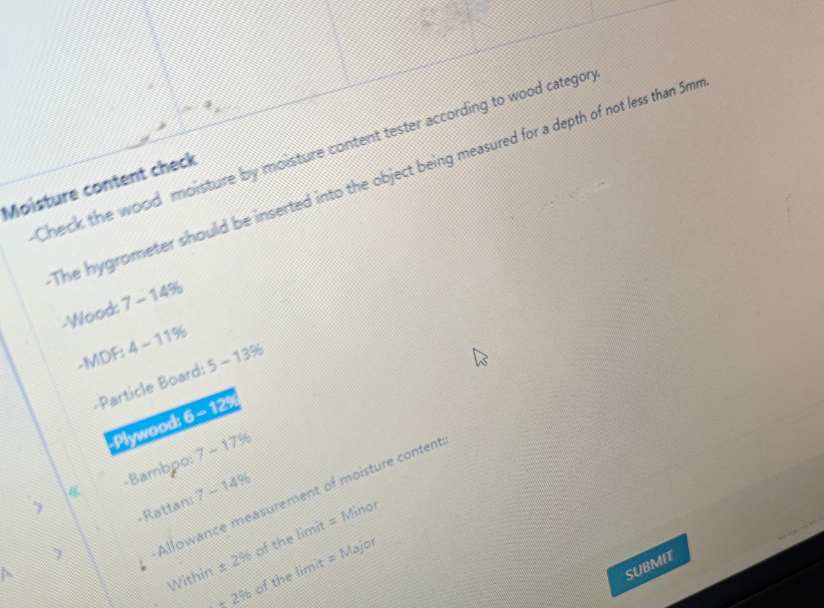
- Read the seat construction and frame specification. High-density mould foam in the 50–65 kg/m³ range is the material standard for premium seats. Maochang inspects plywood with professional tools and uses only qualified material in production, which is a humidity-control measure — plywood that fails the moisture check does not reach the production line.
- Close with compliance and acceptance criteria. Confirm which standard applies to the destination market — ANSI/BIFMA X5.1 for North America, EN 1335 for the EU, BS 5852 for UK upholstery fire safety — and confirm that pre-shipment test is the stated acceptance criterion on the order.
Use Cases: Matching Mechanism Priority to the Setup
Different buying environments load the same four components very differently. The priority order below reflects what tends to fail first in each setting, not what is most impressive on a specification.
- Home PC Gaming Chair. Armrest class and lumbar support carry the weight, because the user is often in the chair for work as well as play. 4D adjustable armrests allow the pad to be angled between typing and controller use; a magnetic lumbar pillow stays located through recline cycles.
- Internet Cafe Gaming Chair. Tilt-lock stability and cleanable, replaceable components matter most. A locked seat angle survives constant weight shifting, and a removable lumbar pillow can be replaced without scrapping the chair.
- Dormitory Student Gaming Chair. Armrest height range and footprint dominate, because the chair usually has to fit under a fixed desk and into a small room. A retractable footrest only earns its place if it stows flush.
- Live Streamer Gaming Chair. Long-session posture support plus a footrest for off-camera reclining. Adjustable headrest travel matters here because the user is not changing position often.
- Office & Gaming Hybrid Chair. 4D armrests and a multi-position tilt-lock are the two components that allow one chair to serve both desks. This is the segment behind the 29.8% hybrid share noted earlier.
- Heavy Duty Big Size Gaming Chair. Frame, base and mechanism rating take priority over adjustment count. A 4D armrest is only an upgrade if the armrest column and its mounting are built for the load.
Comparison Table: Reading the Four Component Families
The table below restates the definitions as verification points. It is a reading aid for specification documents, not a ranking of models.
| Component | What the term describes | What changes with the upgrade | What to verify on the sheet |
|---|---|---|---|
| Tilt-lock | Angle of the whole seat-and-back unit and whether it can be held | Number of lockable positions and stability under weight shift | Position count stated explicitly; separate from recline range |
| Backrest recline | Angle of backrest relative to seat pan | Recline range and whether it is independent of tilt-lock | Recline range value; independence from the tilt mechanism |
| 2D armrest | Two adjustment directions | Fewer moving parts; set-and-forget use | Which two axes; height range |
| 4D armrest | Four adjustment directions | Pad angle and width adjust to keyboard or controller posture | All four axes named; armrest column build |
| Retractable footrest | Footrest stows under the seat | Preserves floor space and aisle clearance when stowed | Stow position, extended reach, rated load |
| Fixed / flip-up footrest | Footrest without a sliding stow | Simpler build, fewer failure points | Whether the footrest is always deployed |
| Adjustable headrest | Head support with its own travel | Positions to neck height instead of shell geometry | Travel range; mounting method |
| Lumbar pillow | Separate cushion on the backrest | Replaceable; attachment method affects how often it shifts | Strap or magnetic attachment; replaceability |
| Seat foam | Cushioning layer under the cover | Shape retention over long sessions | High-density mould foam, 50–65 kg/m³ range |
Frequently Asked Questions
Which standards apply to tilt-lock and armrest assemblies in North America, the EU and the UK?
ANSI/BIFMA X5.1 is the primary safety and durability standard for general-purpose office and gaming chairs in North America. EN 1335 is the European standard for office work chairs, covering dimensions, safety and testing requirements that apply to gaming chairs. BS 5852 is the UK fire-safety standard for upholstered furniture and is often required for gaming chairs sold into the UK market. All three assess the chair as an assembly, so the tilt mechanism, armrests and base fall inside the test scope rather than being tested in isolation. Buyers should confirm which standard applies to the destination market before ordering, because the requirement differs by region.
Can the mechanism, armrest class and footrest be specified per model?
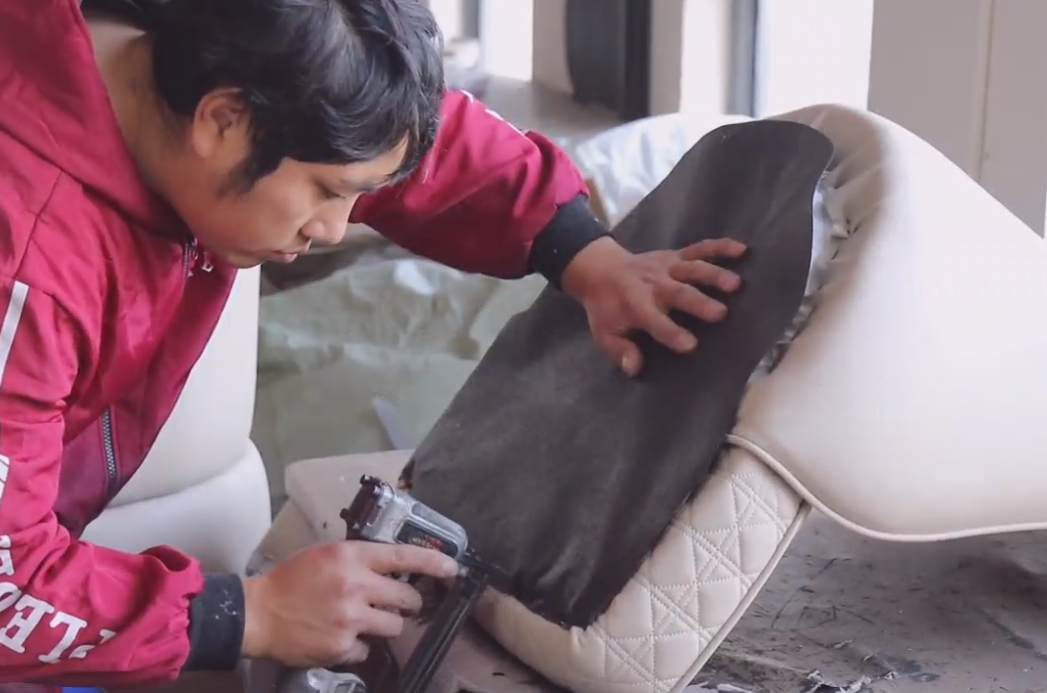
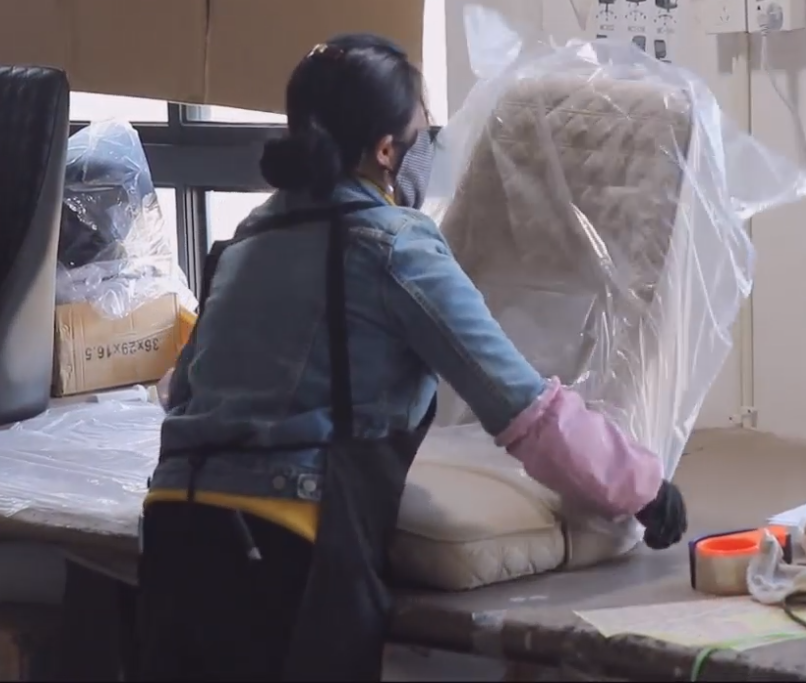
Yes. These are component decisions recorded on the model specification, and they are set at model level rather than being added at the end of production. Anji Maochang Furniture operates a complete production line covering cutting, woodworking, foam bonding, sewing, nailing, assembly, cleaning and packaging, with three engineers supporting product development, so configuration is carried through the process rather than fitted afterwards. Because two models can share a shell and differ on the mechanism line, the specification document — not the product photograph — is the controlling reference for what will be delivered.
What are the minimum order and payment terms, and how do they interact with component choice?
Maochang's stated purchasing terms are a minimum order quantity of 50 units, delivery terms FOB Shanghai or Ningbo, and payment of 30% deposit in advance with the balance against a copy of the bill of lading. Pre-shipment test is the acceptance criterion. Because component configuration is fixed at model level, the practical implication is that a mixed order should be assembled from models whose specifications you have already compared line by line, rather than by requesting changes to a single model after the order is placed.
How should a buyer verify a tilt-lock or armrest before committing to a bulk order?
Verification starts on paper and finishes on the sample. On paper, confirm that the model sheet names the tilt-lock position count, the four armrest axes for a 4D armrest, and the footrest stow position — a sheet that says only "adjustable" has not specified anything. On the sample, lock the seat at each position and confirm it holds under body weight, run the armrest through its full travel in every direction and check for play, and deploy and stow the footrest fully. The stated acceptance criterion for a Maochang order is pre-shipment test, so these checks are also the point at which a mismatch is caught before dispatch.
How does long-term supply work with a factory that exports most of its output?
Approximately 98% of Anji Maochang Furniture's products are exported, to markets including the EU, USA, Thailand, Brazil and South Korea, so export documentation and destination-market requirements are part of normal order handling rather than an exception. For repeat programmes, the practical advantage is continuity of specification: the model code stays the reference point across orders, and the plywood humidity inspection — carried out with professional tools, with only qualified material entering production — applies to every batch rather than to a first order only. Buyers planning a repeatable line can request the current catalogue and a model-by-model specification comparison as the first step.
Conclusion
Tilt-lock, armrest class and footrest type are not decoration. They are the three components that determine how a gaming chair is actually used, and each one has a precise meaning that a specification sheet either states or omits. Tilt-lock holds an angle; recline changes the backrest relative to the seat; 2D and 4D count adjustment directions rather than quality; a retractable footrest is defined by how it stows, not by the fact that it exists.
The commercial conclusion follows from that. Comparing gaming chairs by label, colour or product photograph compares nothing that survives daily use. Comparing them by the four component lines — mechanism, armrest, footrest, headrest and lumbar support — produces a shortlist that can be verified at sample stage and again at pre-shipment test. Models such as MC196-3-1, MC1039-1 and MC196-2-1 differ on exactly those lines, and the specification, not the series name, is where the difference is recorded.
Next Step: Compare the Component Lines Before You Order
Anji Maochang Furniture Co., Ltd. publishes a full product catalogue covering gaming chairs, office chairs and manicure chairs, with model-level specifications for mechanism, armrest, footrest and seat construction.
Download the 2026 catalogue: 2026 Maochang catalogue (PDF)
Website: www.mcrfurniture.com
Contact: Ross Chen — rosschen@mcrfurniture.com — +86 18357006883
Address: 198 Yangguang Road, Dipu Town, Anji County, Zhejiang Province, China
Have Questions or Need More Details?
Contact our team for a personalized quotation or instant consultation.
Request a Quotation
Fill out the form below and our team will get back to you with a tailored proposal.
WhatsApp Direct Chat
Prefer to chat in real-time? Message us on WhatsApp for instant assistance & quick answers.
- Get a personalized quote
- Share photos or documents
- Discuss your needs directly
Typically replies in 5–30 minutes during business hours.