
Gaming Chair vs. Office Chair: A Side-by-Side Feature Comparison
Gaming Chair vs. Office Chair: A Side-by-Side Feature Comparison for Buyers
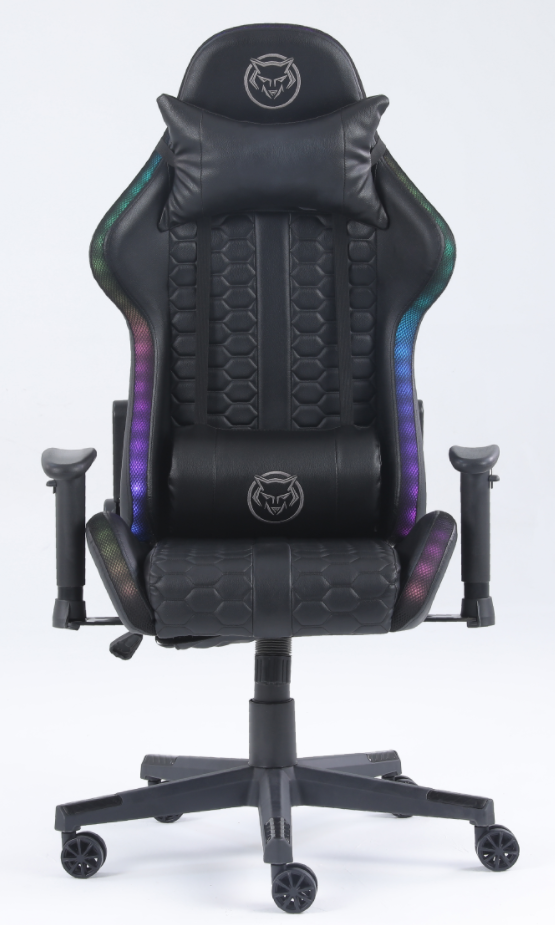
A gaming chair and an office chair share the same basic anatomy: gas lift, star base, foam-filled seat, upholstered back, armrests. That is why the difference between them is almost never visible in a product photo. It shows up in the specification sheet — how tall the back is, which cover materials are combined, how the arms are built, how far the backrest is allowed to travel, and how many units fit into a container.
This comparison is written for buyers who are choosing between the two categories for a specific end market, not for shoppers comparing two products on a shelf. It works model by model through Maochang Furniture's own published data — the MC196-2-1 exclusive game chair and the MC196-3-1 game type computer chair — with the MC196 office chair as the office-side reference point, so that every difference described here can be checked against a real specification rather than a category assumption.
Anji Maochang furniture Co.,Ltd. is a chair manufacturer based in Anji County, Zhejiang Province, China. Established in 2016, the company produces gaming chairs, office chairs and manicure chairs, exports 98% of its output, and ships to markets including the EU, USA, Thailand, Brazil and South Korea (www.mcrfurniture.com).
Problem Definition: The Category Question Is Really a Specification Question
Buyers normally frame the decision as "gaming chair or office chair?" The more useful framing is: which of the two builds survives the way the chair will actually be used, and which one fits the compliance and freight profile of the destination market?
Three mismatches cause most of the trouble, and none of them is solved by choosing a category name.
- Usage mismatch. A deep-backed, reclining gaming build placed in a task-work environment may be rejected by the client because the geometry does not suit desk work. A light task chair placed on an internet cafe floor can be the wrong durability class for long, continuous occupancy. The chair fails the room, not the other way round.
- Compliance mismatch. Destination markets apply different reference standards. ANSI/BIFMA X5.1 is the primary safety and durability standard for general-purpose office and gaming chairs in North America. EN 1335 is the European standard for office work chairs, covering dimensions, safety and testing requirements that are also applied to gaming chairs in the EU. BS 5852 is the UK fire-safety standard for upholstered furniture, often required for gaming chairs sold in the UK market (BIFMA; European Committee for Standardization; British Standards Institution). A gaming build and an office build can be aimed at the same country and still be documented against different test references.
- Commercial mismatch. Different back heights, carton sizes and loading quantities change landed cost per unit even when the ex-works price looks similar on a quotation sheet.
Because those three risks live in three different documents — the spec sheet, the test report and the packing list — the comparison has to be done line by line. The rest of this guide is that line-by-line comparison.
Industry Background: How Global Demand Splits Between Gaming and Office Seating
The two categories are not equally sized and they are not moving in the same direction. The global gaming chair market was estimated at USD 1.37 billion in 2024 and is projected to reach approximately USD 2.05 billion by 2030 (Gaming Chair Market Report / Grand View Research). Within that market, North America accounted for a 36.4% revenue share in 2024, while PC gaming chairs held a 52.6% product-segment share (Market Research Insights; Gaming Chair Market Report).
Two structural details matter to buyers who are planning a range rather than a single order:
- Material concentration. PU leather held a 57.3% share of gaming chair materials in 2024 (Industry Trends Analysis). That concentration explains why so many gaming builds — including Maochang's MC196-3-1, which combines fabric, PVC and PU in one construction — rely on coated materials rather than fabric alone, whatever the marketing name of the cover.
- The hybrid trend. The adoption of hybrid "work-and-game" chairs reached a 29.8% segment share in 2024 (Expert Market Insights). This is the segment where a gaming-versus-office comparison stops being academic, because the same buyer is asking one chair to satisfy both a gaming expectation and an office expectation.
On the supply side, the Anji furniture cluster in Zhejiang, China, is described as the world's leading production base for gaming chairs, contributing to China's 30.8% share of global furniture exports (Statista / OEC Trade Data). Maochang operates inside that cluster: a 3,000 m² factory, 25 employees, an annual output of 75,000 units and a 3-engineer R&D team covering gaming chairs, office chairs and manicure chairs.
The practical reading for a buyer is straightforward. Gaming seating is large and still expanding; office seating is mature and standards-driven; and the hybrid segment is the part of the market where the two product types are being asked to converge on one specification.
Detailed Solution: The Six Specification Areas That Separate the Two Categories
Six areas decide whether a build behaves like a gaming chair or an office chair once it reaches the end user. Each is compared below using Maochang's published model data, and each flags where a buyer must confirm rather than assume.
1. Frame, base and mechanism
Every Maochang model in the current published list names metal in its material composition — MC196-2-1: fabric, metal, plastic, foam; MC196-3-1: fabric, PVC, PU, metal, plastic, foam; MC196 office chair: fabric, metal, foam, plastic. The frame is the shared foundation, so it is rarely a point of difference between categories.
The real divergence is in the mechanism and base grade, and in how explicitly they are documented. MC1039, a new-design big-size gaming chair in the range, is published with a Class 3 gas lift, a 370 mm big-size star base, a frog-type multifunctional mechanism and a height-adjustable armrest. That level of mechanism detail is the exception rather than the rule across the catalogue: the published sheets for MC196-2-1 and MC196-3-1 give dimensions, materials, carton size and loading quantity, but not mechanism grade or armrest type.
Buyer implication: if a tender, a marketplace listing or a distributor agreement requires a specific gas-lift class or a specific mechanism function, that requirement has to be confirmed against the SKU in writing before the purchase order is issued. It cannot be inferred from the category name.
2. Upholstery and foam
Cover materials differ by SKU more than by category. MC196-3-1 combines fabric, PVC and PU in a single construction; MC196-2-1 and the MC196 office chair both use fabric; the MC196-4 game chair with spider element uses PU; MC1039-1 heavy duty big size gaming chair uses PU. A buyer comparing "gaming versus office" will therefore find more variation inside the gaming range than between the two categories at the material line.
Foam is the specification most often missing from public sheets, and it drives the biggest difference in how a chair feels after a year of use. One furniture material guide places high-density mold foam for premium gaming chairs in the 50–65 kg/m³ range (Furniture Material Guide). The published Maochang sheets do not state foam density per model, so buyers specifying long-occupancy environments should treat foam grade and density as a quotation-level question rather than a brochure-level assumption.
3. Backrest geometry, tilt range and the footrest question
This is the feature area buyers search for most often — "reclining gaming chair with footrest" — and it is also the area where public specification sheets are least complete. Neither the MC196-2-1 sheet nor the MC196-3-1 sheet states a recline range or the presence of a retractable footrest; both list dimensions, carton size and loading quantity instead.
That gap is useful information rather than a defect in this comparison. Backrest tilt range and footrest mechanisms change the bill of materials materially, which is why a supplier will quote them per SKU rather than per category. In the wider market, deep recline angles and retractable footrests are concentrated in gaming and lounge-oriented builds, while office task chairs more often use a synchronized tilt with a shallower back angle — but the specific angle, the stop positions and the footrest extension must be quoted for the exact model.
Buyer implication: when a listing, an app page or a retail floor plan depends on "reclining with footrest", write that requirement into the RFQ and ask the factory to confirm the mechanism, the recline stop positions and the footrest extension length per model. Comparing two chairs on the assumption that both recline equally is one of the most common sourcing errors in this category.
4. Armrest configuration
Armrests are another highly variable component, and one of the few features a retail customer can test in ten seconds. Maochang's published data confirms a height-adjustable armrest on MC1039. For MC196-2-1 and MC196-3-1, armrest type is not published, so the factory has to confirm whether the SKU ships with fixed, height-adjustable or multi-directional arms before that function is advertised anywhere.
Buyer implication: armrest function is easy to over-promise in a product listing and expensive to correct after the container has shipped. Confirm it per SKU in the proforma invoice, not from the render.
5. Dimensions and the fit envelope
Published product sizes show how much difference the model makes to the fit envelope. MC196-2-1 measures W70 × D70 × H118–128 cm; MC196-3-1 measures W66.5 × D69 × H106–114 cm; the MC196 office chair measures W67 × D70 × H124–132 cm. The gaming and hybrid models are not automatically the bigger option — MC196-3-1 is shorter overall than the office chair in the same numbering family. That is exactly why model-level comparison beats category-level assumption when a buyer is matching chairs to desks, rooms and site plans.
6. Material risk that outlives the cover
Plywood is the hidden component in both categories, and it is where a genuine long-life risk sits: a frame that absorbs moisture can develop mould regardless of how the cover is rated. Maochang's documented control measure is a humidity inspection — plywood is checked with professional tools, and only qualified material is released into production.
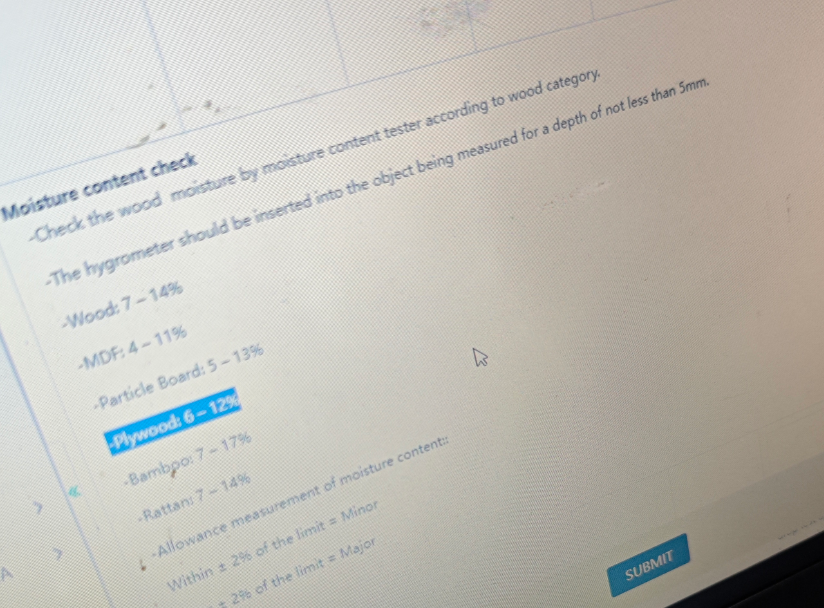
For an internet cafe, a campus order or any project where chairs stay in service for years, this control is a more meaningful comparison point between two suppliers than any surface feature.
Step-by-Step Breakdown: A Pre-Order Comparison Workflow
- Define the environment, not the category. Write down where the chairs will actually be used — home gaming desk, internet cafe floor, dormitory room, office workstation, streaming studio. Maochang's published applicable-industry data does this per model: MC196-3-1 is listed for home, office and internet cafe; MC196-2-1 for home and office; MC196 office chair for home, office and live streaming; MC1039-1 for gaming, home, live streaming and internet cafe.
- Fix the dimensional envelope. Lock total height, seat width and depth against the desk and the room. Use published sizes: MC196-3-1 at W66.5 × D69 × H106–114 cm; MC196-2-1 at W70 × D70 × H118–128 cm; MC196 at W67 × D70 × H124–132 cm.
- Confirm the mechanism package in writing. Gas-lift class, base diameter, tilt mechanism type, recline range, footrest, armrest type. Only MC1039's published sheet gives this level of detail, so treat the rest as RFQ items.
- Match the material composition to the use. PVC and PU combinations suit environments where wiping down matters; fabric-dominant builds suit interiors where appearance matters more. MC196-3-1's fabric + PVC + PU mix and MC196-2-1's fabric + foam build are two different answers to the same question.
- Map the compliance reference to the destination market. EN 1335 for the EU, ANSI/BIFMA X5.1 for North America, BS 5852 for the UK. Request the test evidence that names the exact shipping model and the exact market.
- Compare freight density, not just unit price. Published loading quantities in Maochang's list run from 227 pcs (MC1040 gaming sofa) to 465 pcs (MC196 office chair), including 410 pcs for MC196-2-1, 441 pcs for MC196-3-1, 447 pcs for MC196-4, 260 pcs for MC1039-1, and 334 pcs and 462 pcs for MC1034 and MC196-1 respectively, both of which are stated per 1x40HQ. Because not every sheet names the container, confirm the container type before comparing loads.
- Validate the sample, then lock the terms. Maochang's standard commercial frame is a 50-unit minimum order quantity, FOB Shanghai or Ningbo, pre-shipment test acceptance, and 30% deposit with the balance against a copy of the bill of lading.
The checklist below converts the six specification areas into the questions a buyer should put to any factory — not only to Maochang — before comparing a gaming build against an office build.
| Item to confirm | What Maochang's published data states | What the buyer must confirm before ordering |
|---|---|---|
| Gas-lift class and base diameter | MC1039: Class 3 gas lift, 370 mm big-size star base. Other sheets do not state a class. | Required class and base size for each shipping model |
| Mechanism type | MC1039: frog-type multifunctional mechanism | Tilt mechanism type and lock positions per SKU |
| Armrest function | MC1039: height-adjustable armrest | Fixed, height-adjustable or multi-directional arms per SKU |
| Recline range and footrest | Not stated for MC196-2-1, MC196-3-1 or MC196 | Maximum back angle and whether a retractable footrest is included |
| Foam type and density | Not stated per model | Foam grade and density for long-occupancy environments |
| Plywood humidity control | Humidity inspection with professional tools; only qualified material released to production | Whether the control applies to the specific order and how it is recorded |
| Test evidence | Pre-shipment test is the standard acceptance basis | Which standard (EN 1335, ANSI/BIFMA X5.1, BS 5852) is documented for the shipping model |
| Loading quantity | 227–465 pcs depending on model; container type stated for some models only | The container type used to produce the quoted loading figure |
Use Cases: Matching the Chair Type to the End Market
Home PC gaming
Home gaming is the strongest argument for the gaming build: the user expects a tall back, a deep seat and a recline that supports long sessions. Maochang's published list places the MC196-2-1, MC196-3-1, MC1034, MC196-4 and MC1039-1 in the home environment, with MC196-3-1 spanning home and office use. For a home-market listing, the decisive points are recline and cover material, both of which must be quoted per SKU.
Internet cafe
An internet cafe is the hardest environment for any chair, because occupancy is continuous and turnover is public. Only two models in the published Maochang list name internet cafe as an applicable industry: MC196-3-1 and MC1039-1. That is a concrete, checkable filter — a buyer sourcing for a cafe project can start from those two models rather than from the full range, then compare carton size (75 × 57 × 37 cm for MC196-3-1) and loading quantity (441 pcs for MC196-3-1; 260 pcs for MC1039-1).
Office work and hybrid work-and-game
The hybrid segment is where the office chair side of the comparison becomes relevant. Maochang's MC196 is described as a hot-sale game-type office chair, listed for home, office and live streaming, with a fabric, metal, foam and plastic construction — an example of a product that sits deliberately between the two categories. With hybrid work-and-game chairs holding a 29.8% segment share in 2024 (Expert Market Insights), buyers targeting home-office and dual-use markets should expect to compare this type of bridge model against a pure gaming build.
Dormitory and student rooms
Dormitory supply is typically limited by room size rather than by feature count, so total height becomes the first filter. At W66.5 × D69 × H106–114 cm, MC196-3-1 is the shorter published option among the models discussed here, against W70 × D70 × H118–128 cm for MC196-2-1 and W67 × D70 × H124–132 cm for MC196. Where space is the constraint, that difference in height and depth decides the shortlist more than any gaming feature.
Live streaming and content studios
Streaming setups prioritise appearance on camera plus sitting comfort across long broadcasts. Maochang's published applicable-industry data names live streaming for MC196, MC196-1 (LED gaming chair), MC1034, MC196-4 and MC1039-1. Maochang's own structural comparison of a premium gaming structure against a standard LED gaming chair records approximately 8% higher manufacturing cost for the premium structure, an approximately 10% improvement in weight-load capacity, a low failure rate in service, and an ergonomic structure that reduces physical fatigue during long sitting sessions.
Comparison Table: MC196-2-1 vs. MC196-3-1 vs. MC196
The table below compares one gaming model, one hybrid game-type computer chair and one office-side model from the same manufacturer, using only published Maochang specification data. It is the fastest way to see where the two categories actually diverge.
| Specification (as published) | MC196-2-1 — exclusive game chair | MC196-3-1 — game type computer chair | MC196 — office chair |
|---|---|---|---|
| Product size | W70 × D70 × H118–128 cm | W66.5 × D69 × H106–114 cm | W67 × D70 × H124–132 cm |
| Carton size | 75 × 65 × 34 cm | 75 × 57 × 37 cm | 76 × 32 × 61 cm |
| Published loading quantity | 410 pcs | 441 pcs | 465 pcs |
| Packing | 1 pc / 1 carton | 1 pc / 1 carton | 1 pc / 1 carton |
| Material composition | Fabric, metal, plastic, foam | Fabric, PVC, PU, metal, plastic, foam | Fabric, metal, foam, plastic |
| Applicable industry (published) | Home, office | Home, office, internet cafe | Home, office, live streaming |
| Positioning note | Listed as an exclusive game chair | Listed as a game type computer chair | Listed as a hot-sale game-type office chair |
Three conclusions can be drawn from the table without leaving the published data. First, the office chair in this family is not the smaller product — MC196 is taller and loads more units per published figure than either gaming model shown. Second, the hybrid model MC196-3-1 is the only one of the three that names internet cafe as an applicable industry, which makes it the natural starting point for cafe and heavy-use projects. Third, the material line is where MC196-3-1 and MC196-2-1 diverge most: the six-material mix on MC196-3-1 against the four-material mix on MC196-2-1.
How to read the comparison. A gaming chair and an office chair are not two points on a quality scale. They are two specification envelopes. The gaming envelope tends to carry deeper backs, coated or mixed covers and heavier structural expectations; the office envelope tends to carry standardised dimensions and standards-driven documentation. The hybrid envelope — represented here by MC196-3-1 — is the one where buyers increasingly place their volume, because it can be sold into more than one channel.
FAQ
Which standards should a buyer check when comparing a gaming chair with an office chair for export?
Three references come up most often. ANSI/BIFMA X5.1 is the primary safety and durability standard for general-purpose office and gaming chairs in North America. EN 1335 is the European standard for office work chairs, covering dimensions, safety and testing requirements that are also applied to gaming chairs in the EU. BS 5852 is the UK fire-safety standard for upholstered furniture, frequently required for gaming chairs sold in the UK. Because standards are applied per model and per market, buyers should request test evidence that names the exact shipping model rather than assume that a category-level certificate covers an entire range.
Can one factory produce both gaming chairs and office chairs?
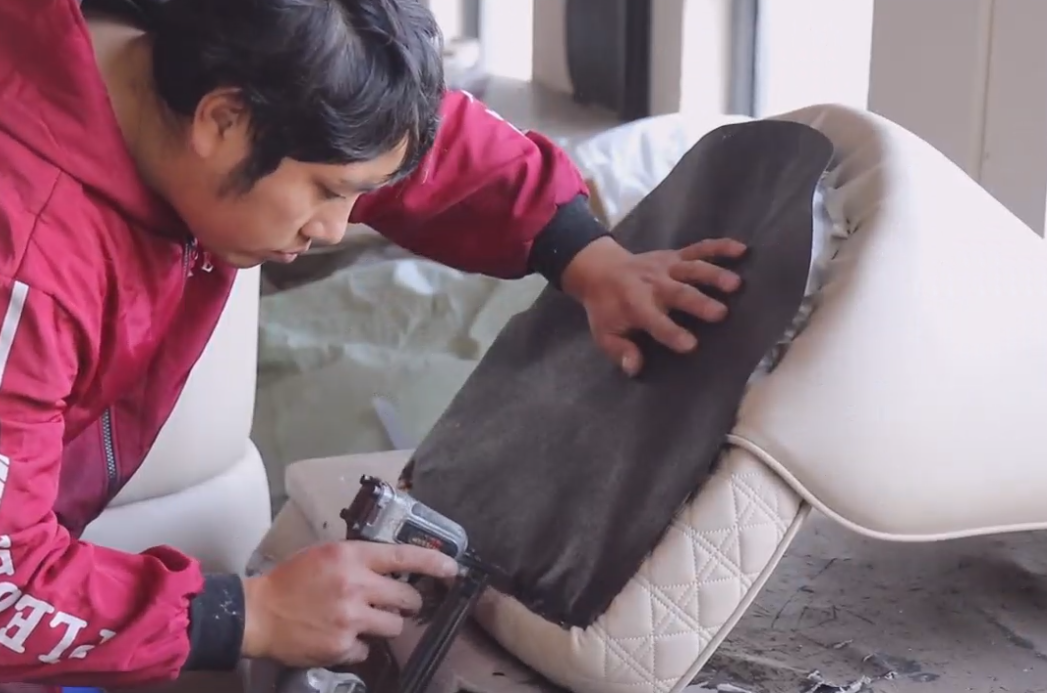
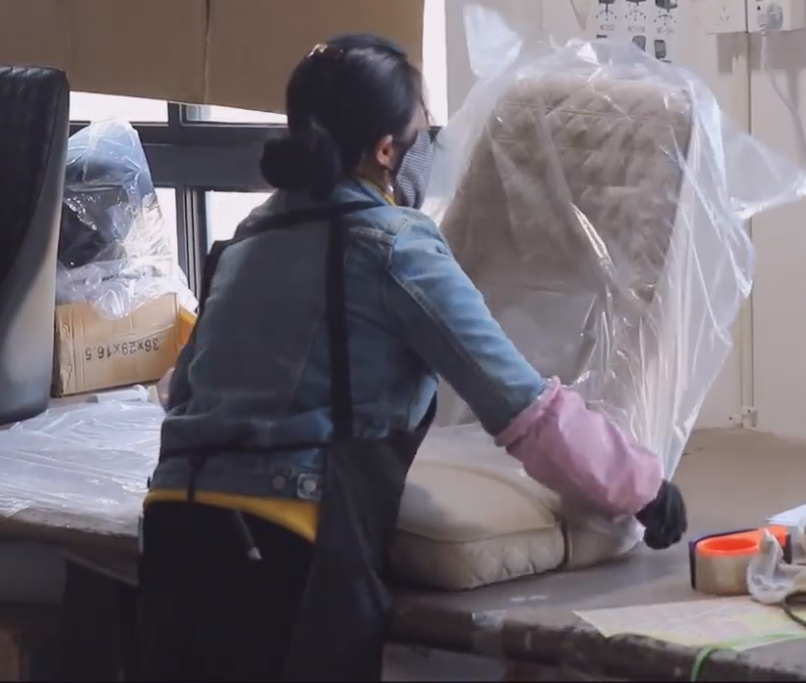
Yes, and in the Anji cluster it is normal practice. Maochang Furniture's product line covers gaming chairs, office chairs and manicure chairs, produced through a single flow that runs cutting, woodworking, foam bonding, sewing, nailing, assembly, cleaning and packaging. The catalogue shows why the categories overlap: the MC196 office chair is described as a hot-sale game-type office chair, and MC196-3-1 is described as a game type computer chair listed for home, office and internet cafe use. A buyer can therefore compare both categories against one production base instead of splitting an order across two suppliers.
What drives the price difference between a gaming build and an office build?
Structure, rather than upholstery, is usually the main driver. Maochang's own structural comparison records approximately 8% higher manufacturing cost for a premium gaming structure against a standard LED gaming chair structure, delivering an approximately 10% improvement in weight-load capacity with a low failure rate in service. Foam density, mechanism grade, armrest function and the presence of a footrest all change the bill of materials on top of that. On the commercial side, the minimum order quantity starts at 50 units and orders are priced FOB Shanghai or Ningbo.
How should a buyer validate a chair sample before placing a bulk order?
Validate the sample against the specification you intend to advertise, not against the website photograph. Practical checks include the actual recline range and footrest operation, armrest function, gas-lift class, cover material mix and the plywood inside the frame. Maochang's documented control measure is a humidity inspection of plywood using professional tools, with only qualified material released into production, and the standard acceptance basis for orders is a pre-shipment test.
What order terms apply, and how do they affect a long-term supply programme?
Maochang's standard terms are a 50-unit minimum order quantity, FOB Shanghai or Ningbo delivery, pre-shipment test acceptance, and payment of 30% deposit in advance with the balance against a copy of the bill of lading. For a repeat programme, the terms matter less than repeatability: because 98% of Maochang's output is exported to markets including the EU, USA, Thailand, Brazil and South Korea, a buyer can evaluate the model range, carton data and loading quantities in the downloadable 2026 catalogue, then request a quotation or a sample for the specific models under consideration at rosschen@mcrfurniture.com.
Conclusion: Choose the Build First, Then the Model
The gaming chair versus office chair decision resolves faster when it is treated as two separate choices. The first choice is the specification envelope: how deep the back should be, which cover materials the end market will accept, how much recline and which armrest function the user actually needs, and which standard the destination country will ask for. The second choice is the model that fits that envelope, at a carton size and loading quantity that keeps the landed cost workable.
Maochang's published range supports both choices with concrete data rather than category claims: MC196-2-1 and MC196-3-1 for the gaming and hybrid sides, MC196 for the office side, MC1039 and MC1039-1 where a big-size or heavy-duty build is required, and MC196-1 and MC196-4 where LED or design-led elements matter. Combining that with a documented plywood humidity control, a 50-unit minimum order quantity and FOB Shanghai or Ningbo terms gives buyers a comparison they can act on.
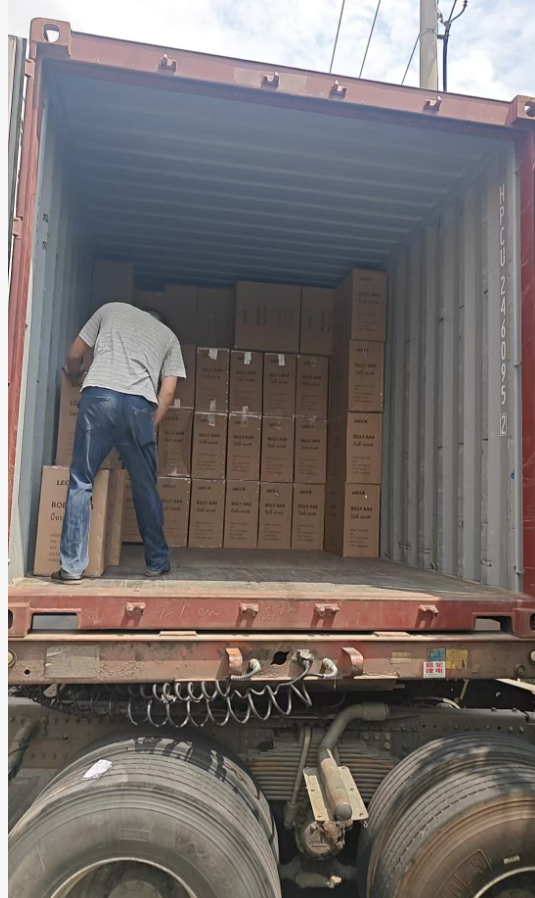
Next Step: Sample, Quote or Catalogue
Send the destination country, the end-use environment (home, internet cafe, office, streaming) and the target quantity. Maochang will confirm the mechanism, armrest, recline and foam specification for the exact model, then return a quotation with the published carton size and loading quantity.
Minimum order quantity: 50 units. Delivery: FOB Shanghai or Ningbo. Payment: 30% deposit in advance, balance against a copy of the bill of lading. Acceptance: pre-shipment test.
Download the 2026 product catalogue (PDF): 2026 Maochang catalogue
Contact: Ross Chen, Anji Maochang furniture Co.,Ltd., 198 Yangguang Road, Dipu town, Anji County, Zhejiang Province, China — rosschen@mcrfurniture.com | WhatsApp +86 18357006883 | www.mcrfurniture.com