
MC1039-1 vs MC1034: Heavy-Duty vs Racing Gaming Chair for Your Line
MC1039-1 and MC1034 are two different answers to the same brief. MC1039-1 is a heavy-duty big size gaming chair built around load capacity and multi-axis adjustment. MC1034 is a racing type game chair built around a 180-degree reclining mechanism, a height-adjustable pillow and a foldable footrest. For a buyer planning a line, the question is not which chair is better — it is which chair belongs in which slot, and whether the line should carry both.
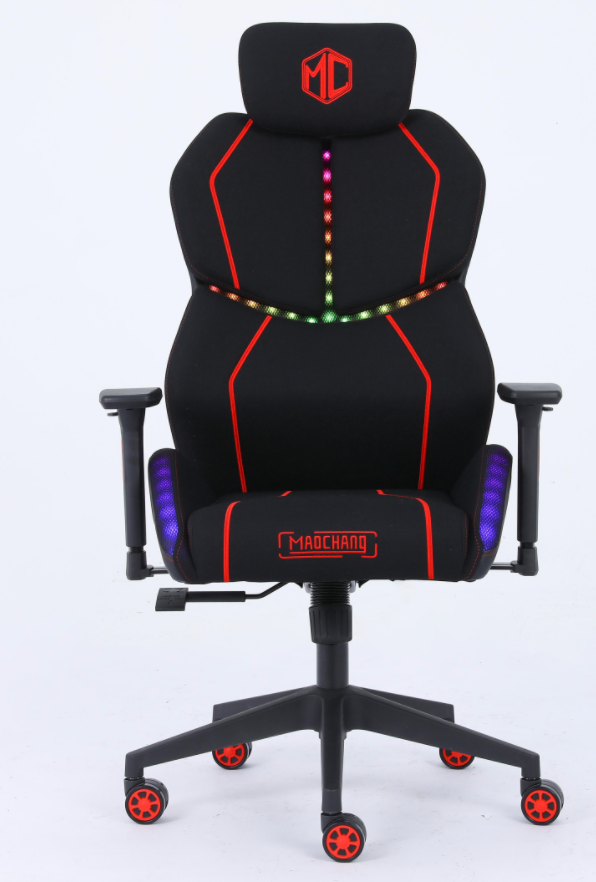
Short answer. Place the MC1039-1 in the heavy-duty, long-session and shared-PC slots — big-and-tall home users, internet cafes, dormitories — where the frog-type adjustable multifunctional mechanism, the 4D armrests and the bigger seating platform do the work. Place the MC1034 in the racing-inspired, recline-first slots — home PC gaming, live streaming, office-and-gaming hybrid desks — where the 180-degree reclining mechanism, the height-adjustable pillow and the foldable footrest are the visible selling points. Carrying both only makes sense when the two models are sold against different user profiles rather than against each other on price.
Problem Definition: A Line Decision, Not a Single Order
Both models are gaming chairs, both use PU, metal and plastic construction, and both are quoted into the same buyer conversations. That overlap is exactly where line planning goes wrong.
When a heavy-duty platform and a racing platform are listed side by side without a clear user split, three things follow. The sales team defaults to price, because the catalogue gives no other reason to choose. The warehouse carries two SKUs that look interchangeable to a distributor's customer. And the wrong chair reaches the wrong end user — a heavier user gets guided to the racing silhouette because it photographs well, while the model actually specified for that profile sits lower in the list.
The MC1039-1 versus MC1034 decision therefore rests on four variables, and none of them is colour:
- User profile: whether the seating brief is standard or heavy-duty big size.
- Use cycle: how long a session runs, and how much of it is spent reclined.
- Adjustment granularity: mechanism type and armrest axes.
- Logistics: carton size, loading quantity and container mix per model.
Industry Background: Why the Split Matters Commercially
The gaming chair category is large enough that a two-model line can still be positioned precisely. The global gaming chair market is estimated at USD 1.37 billion in 2024 and projected to reach approximately USD 2.05 billion by 2030 (Grand View Research). North America accounted for a 36.4% revenue share in 2024 (Mordor Intelligence), and PC gaming chairs held a 52.6% product segment share in the same year — the segment both MC1039-1 and MC1034 compete in.
Material choice is similarly concentrated: PU leather holds a 57.3% share of gaming chair materials, which is why both models are specified in PU rather than fabric. The hybrid 'work-and-game' segment held a 29.8% share as of 2024 — read that number as evidence that one chair now has to serve a working day and an evening session, which pushes recline range and armrest adjustment up the buyer's priority list.
On the supply side, the Anji furniture cluster in Zhejiang, China is the world's leading production base for gaming chairs and contributes to China's 30.8% share of global furniture exports (Statista / OEC trade data). Anji Maochang furniture Co.,Ltd. — a chair manufacturer established in 2016 in Anji County, Zhejiang Province, producing game chairs, office chairs and manicure chairs — sits inside that cluster, with a 3,000 m² factory, 25 employees, an annual output of 75,000 units, 3 engineers, and 98% of output exported to markets including the EU, USA, Thailand, Brazil and South Korea.
Compliance is the other background factor. ANSI/BIFMA X5.1 is the primary safety and durability standard for general-purpose office and gaming chairs in North America. EN 1335 is the European standard for office work chairs covering dimensions, safety and testing, and it is applied to gaming chairs sold into the EU. BS 5852 is the UK fire-safety standard for upholstered furniture, often required for UK-bound chairs. None of these are marketing badges; each one defines a test scope that has to match the model you actually order.
Detailed Solution: What Each Platform Is Built to Do
MC1039-1 — the heavy-duty big size platform
MC1039-1 is specified for users the standard racing chair does not serve well: heavier users, long-session users, and shared environments where many different people use the same chair in a single day.
- Frog-type adjustable multifunctional mechanism. The mechanism is a multifunction adjustable unit rather than a single-function tilt block, so the chair's adjustment functions are handled from one mechanism instead of being spread across separate controls.
- 4D armrests. Four adjustment axes instead of height only, so the arm pad can be positioned by arm length and shoulder width rather than by seat height alone. In a shared PC room this is the difference between a chair that fits most users and one that fits only the average user.
- Big size seating platform. A wider, deeper seating platform built around the heavier user profile, which is the core reason the model exists as a separate SKU from the racing range.
- Ergonomic structure for long sitting. The platform is designed to reduce physical fatigue across extended sessions — the same design logic Maochang applies across its ergonomic gaming chair range, which is built around 4D adjustable armrests and high-density mold foam.
MC1034 — the racing platform
MC1034 is specified around recline and posture variety, which is what the high back racing silhouette sells in home, streaming and hybrid office setups.
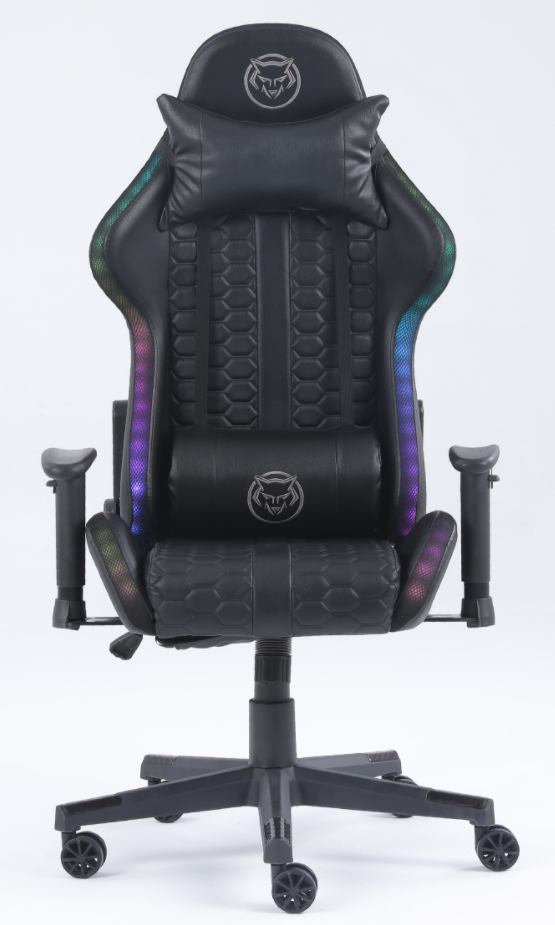
- 180-degree reclining mechanism. A full-flat recline turns the chair into a rest position rather than only a working position — relevant for streaming breaks, console play, and hybrid users who alternate between desk work and reclined viewing.
- Height-adjustable pillow. The pillow adjusts vertically so neck support lands at the right height for different statures, instead of forcing the user to accept a fixed lumbar-to-head geometry.
- Adjustable armrests. Armrest adjustment is present but narrower in scope than the 4D arrangement on MC1039-1 — sufficient for a single home user who sets the chair once and leaves it.
- Foldable footrest. The footrest extends the recline position into a lounge posture and folds away when the user returns to the desk.
What both models share: PU, metal and plastic construction
Both chairs sit on the same material family — PU upholstery, metal structure and plastic components — so the purchasing difference is not raw material availability. It is the specification above the material: mechanism type, armrest axes, recline range and platform size. That is useful news for a line planner, because both models can be sourced from one production flow and one compliance package instead of two unrelated supply chains.
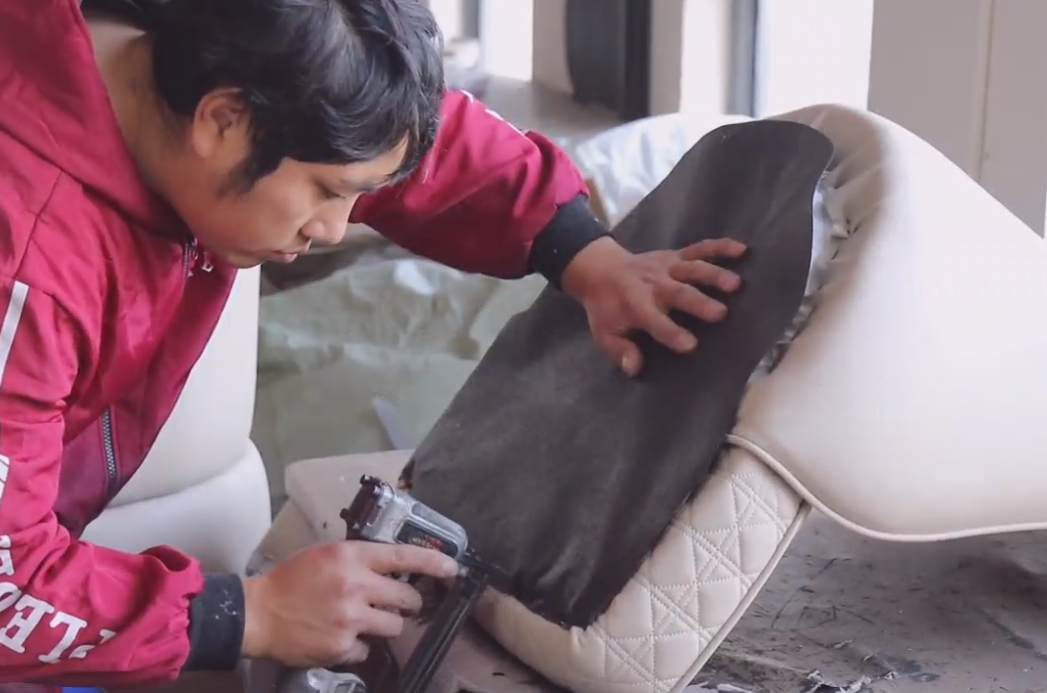
Foam is where the two chairs earn or lose their reputation in service. High-density mold foam is the industry standard for premium gaming chairs at typically 50–65 kg/m³ to ensure long-term shape retention; below that range, a shared-use chair flattens long before its frame fails.
Cost and durability logic
A heavier structure costs more, and Maochang's comparison data for its premium-structure chair program quantifies the trade-off: the premium structure carries an 8% higher manufacturing cost than a regular LED game chair, and returns a 10% improvement in weight load capacity, an ergonomic structure that reduces physical fatigue during long sitting, and low maintenance requirements driven by a low failure rate compared with similar products. The program is positioned for gaming and live streaming use.
For a line planner, that 8% versus 10% relationship is the argument to put in front of a distributor: unit cost is not the same as cost per year of service, and in a cafe or dormitory fleet the failure rate matters more than the invoice price.
Step-by-Step Breakdown: Choosing Between the Two for a Line
- Define the primary user profile. If the channel's end users include heavier users, or the chair is shared across many users, start from MC1039-1. If the channel sells to individual home, streaming or hybrid-office users, start from MC1034.
- Set the recline requirement. Decide whether the line needs a rest position. A 180-degree reclining mechanism with a foldable footrest is a retail feature that a limited-recline chair cannot match in a showroom comparison.
- Match armrest granularity to the channel. 4D armrests are a service feature in shared environments and a premium claim in retail. Adjustable armrests are adequate when one user sets the chair once.
- Confirm the mechanism function set in writing. Ask for the mechanism drawing or function list for each model before quoting, and record exactly which functions the frog-type adjustable multifunctional mechanism on MC1039-1 delivers, so the sales sheet matches the physical chair.
- Fix foam and cover specification. Specify the foam density range and the PU grade per model. Two chairs with the same silhouette but different foam density are different products in year two.
- Verify structural material condition. Plywood is a common structural material in chair backs and seat frames and is where mold risk concentrates. Maochang inspects plywood with a professional humidity-measuring tool and only releases qualified material to production — a check worth writing into the purchase order rather than assuming.
- Record dimensions and carton data per model. Seat height range, overall footprint, carton dimensions and units per carton must be taken from the current packing list, because they change with cover material and packaging configuration. Never carry forward numbers from an older quotation.
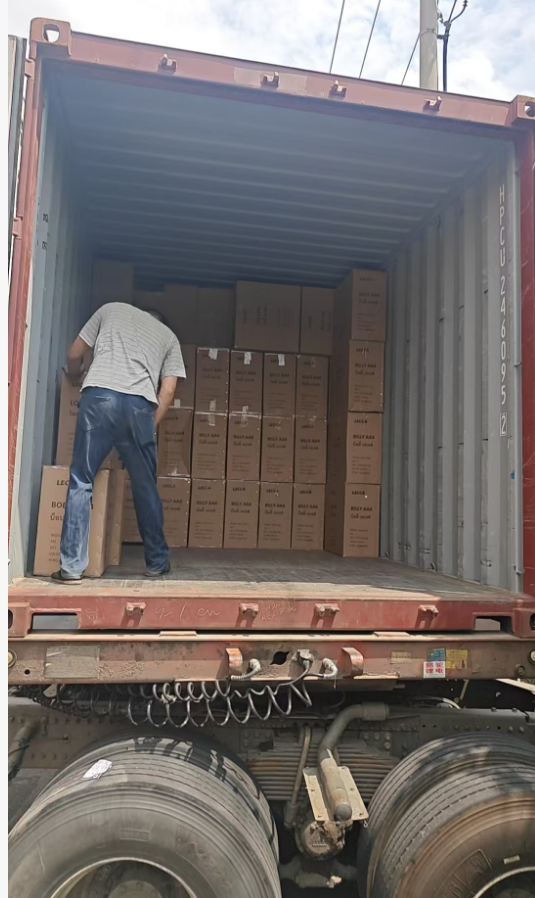
- Build the container mix. Loading quantity per model determines how a mixed container is filled. Confirm units per container for MC1039-1 and MC1034 separately, then model a 60/40 and a 40/60 split to see which mix keeps the container full without over-weighting one SKU.
- Validate by sample before the PO. Run the mechanism through its full range, test armrest play on both models, check the pillow adjustment, deploy the footrest, and inspect the foam and the plywood. A sample that passes on the mechanism but fails on packaging still costs money in transit.
Use Cases: Matching Each Model to a Buyer Brief
Heavy-duty and big-and-tall home users — MC1039-1
For a home PC gaming chair buyer above average weight, the seating platform matters more than the silhouette. MC1039-1 is the model specified for that profile, with the 4D adjustable armrests and the multifunction mechanism giving the user room to set the chair around their body rather than around the average.
Internet cafe fleets — MC1039-1
An internet cafe gaming chair is used by many people in a single day, at different heights and weights, for long sessions. The case for MC1039-1 here is structural: a big size platform, 4D armrests that reset quickly between users, and low maintenance requirements driven by a low failure rate compared with similar products. In fleet terms, maintenance downtime is the cost that erodes margin fastest.
Dormitory and student housing — MC1039-1
A dormitory student gaming chair has to survive shared use, moving between rooms and a long service life with minimal servicing. The heavy-duty platform and the plywood humidity check in production address exactly those two failure paths — structure and material condition.
Live streamer and home PC setups — MC1034
A live streamer gaming chair is bought for both comfort and on-camera presence. The 180-degree reclining mechanism, the height-adjustable pillow and the foldable footrest give the streamer posture variety across a long broadcast, and the recline-plus-footrest combination is a feature a viewer can see and ask about.
Office and gaming hybrid desks — MC1034
For an office and gaming hybrid chair buyer, the chair has to work upright during the day and recline in the evening. The adjustable armrests cover desk posture, the height-adjustable pillow covers neck support, and the 180-degree recline covers the after-hours use that justifies the purchase.
Carton, Loading and Cost Planning for the Line
Carton and loading data decide whether a two-model line is practical or expensive. Two chairs with a similar retail price can occupy very different carton volumes, and carton volume is what you actually pay for in a container.
- Ask for the packing list, not a summary. Request carton dimensions, gross weight and units per carton for both models, dated at the time of quotation.
- Model the mixed container. Confirm units per container for each model, then test at least two split ratios. A line that only loads efficiently at one ratio is fragile the moment a customer changes the order mix.
- Price the structure, not just the chair. The 8% higher manufacturing cost of a premium structure shows on the invoice; the 10% improvement in weight load capacity and the low failure rate show up later, in warranty claims and fleet maintenance. Both belong in the comparison the buyer presents upward.
- Keep the compliance package model-specific. Reports should reference the model and the mechanism you are shipping, not the factory's general capability.
MC1039-1 vs MC1034: Comparison Table
| Decision factor | MC1039-1 (heavy-duty big size) | MC1034 (racing type) |
|---|---|---|
| Chair category | Heavy-duty big size gaming chair | Racing type game chair |
| Mechanism | Frog-type adjustable multifunctional mechanism | 180-degree reclining mechanism |
| Armrests | 4D adjustable armrests (four adjustment axes) | Adjustable armrests (narrower adjustment scope) |
| Recline | Multi-function adjustable mechanism; confirm the exact recline range on the current spec sheet | 180-degree recline |
| Pillow | Confirm the pillow configuration on the current spec sheet | Height-adjustable pillow |
| Footrest | Confirm per configuration | Foldable footrest |
| Construction | PU, metal and plastic | PU, metal and plastic |
| Best-fit users | Heavier users, long-session users, shared seating | Individual home, streaming and hybrid-office users |
| Best-fit channels | Internet cafe fleets, dormitory and student housing, big-and-tall home setups | Home PC gaming, live streaming studios, office and gaming hybrid desks |
| Cost position | A premium structure carries an 8% higher manufacturing cost than a regular LED game chair and returns a 10% improvement in weight load capacity with low maintenance; apply the same cost-versus-service-life logic when comparing these two models. | |
| Carton and loading | Take carton dimensions, gross weight and units per container from the current packing list for each model; do not carry forward figures from older quotations. | |
FAQ
Which gaming chair manufacturer is better for BIFMA and EN1335 orders?
The better supplier is the one whose test reports actually cover the model and mechanism you are ordering, not the one with the most logos on the catalogue page. ANSI/BIFMA X5.1 is the primary safety and durability standard for general-purpose office and gaming chairs in North America; EN 1335 is the European standard for office work chairs covering dimensions, safety and testing, and it is commonly applied to gaming chairs sold into the EU; BS 5852 is the UK fire-safety standard for upholstered furniture and is often required for UK-bound chairs. Ask for report scope, model reference and date. Anji Maochang furniture exports 98% of its output, with main markets including the EU, USA, Thailand, Brazil and South Korea, so a market-matched report set belongs in the quotation package for either model.
Can one factory build both a heavy-duty big size chair and a racing chair?
Yes, when both sit on the same material family and the same production flow. Anji Maochang furniture produces game chairs, office chairs and manicure chairs, and runs cutting, woodworking, foam bonding, sewing, nailing, assembly, cleaning and packaging in-house, with 3 engineers, 25 employees, a 3,000 m² factory and an annual output of 75,000 units. Because MC1039-1 and MC1034 share PU, metal and plastic construction, the differences sit in mechanism, armrest and recline specification rather than in a separate supply chain.
Why does the heavy-duty platform cost more than a standard chair?
The cost difference comes from structure, not from the cover. In Maochang's comparison data, a premium structure carries an 8% higher manufacturing cost than a regular LED game chair, and returns a 10% improvement in weight load capacity, an ergonomic structure that reduces physical fatigue during long sitting, and low maintenance requirements because the failure rate is low compared with similar products. For a fleet buyer, the relevant figure is cost per year of service, not cost per unit.
What should a sample evaluation cover for these two models?
Run the mechanism through its full adjustment range and check for binding; test armrest play and confirm the four axes on the MC1039-1 versus the narrower adjustment on the MC1034; cycle the 180-degree recline and deploy the foldable footrest; adjust the pillow through its height range; inspect the foam, since high-density mold foam is typically specified at 50–65 kg/m³ for shape retention; and check plywood condition, which Maochang verifies with a professional humidity-measuring tool before material reaches production. Finish with a packaging check, because a sample that survives handling but fails in transit is not a passed sample.
What affects lead time, and how do I start an order?
Lead time depends on cover material availability, mechanism supply and packaging configuration, so it should be quoted per model and per order rather than taken from a general statement — ask for a written schedule covering MC1039-1 and MC1034 separately. To start, send your user profile, target market and expected split between the two models, and request a sample and a quotation. Contact Anji Maochang furniture at rosschen@mcrfurniture.com or WhatsApp +86 18357006883, or download the 2026 Maochang catalogue for the current model range.
Conclusion: One Line, Two Distinct Slots
MC1039-1 and MC1034 are not competitors inside your own catalogue — they are two answers to two different briefs. MC1039-1 answers the heavy-duty brief: big size platform, frog-type adjustable multifunctional mechanism, 4D armrests, built for heavier users and shared environments where the chair is reset dozens of times a day. MC1034 answers the recline brief: 180-degree reclining mechanism, height-adjustable pillow, adjustable armrests and foldable footrest, built for home PC gaming, live streaming and office-and-gaming hybrid desks.
The practical rule for line planning is simple. If the end user is shared, heavy or in a fleet, lead with MC1039-1 and sell service life. If the end user is individual and reclines, lead with MC1034 and sell posture range. Keep the two on separate product pages, separate sample sets and separate compliance documentation, and the line stops competing with itself.
Next Step: Sample, Quote, or Catalogue
Anji Maochang furniture Co.,Ltd. is a chair manufacturer in Anji County, Zhejiang Province, China, established in 2016, producing game chairs, office chairs and manicure chairs for export markets including the EU, USA, Thailand, Brazil and South Korea.
Send your user profile, target market and expected model split, and request a sample or quotation for MC1039-1 and MC1034.
Email: rosschen@mcrfurniture.com · WhatsApp: +86 18357006883 · Website: www.mcrfurniture.com · Catalogue: 2026 Maochang catalogue (PDF)
Address: 198 Yangguang Road, Dipu town, Anji County, Zhejiang Province, China. Contact: Ross Chen.

Have Questions or Need More Details?
Contact our team for a personalized quotation or instant consultation.
Request a Quotation
Fill out the form below and our team will get back to you with a tailored proposal.
WhatsApp Direct Chat
Prefer to chat in real-time? Message us on WhatsApp for instant assistance & quick answers.
- Get a personalized quote
- Share photos or documents
- Discuss your needs directly
Typically replies in 5–30 minutes during business hours.