Mechanism Deep Dive: How Tilt-Lock and Seat Depth Adjustments Work
Mechanism Deep Dive: How Tilt-Lock and Seat Depth Adjustments Work
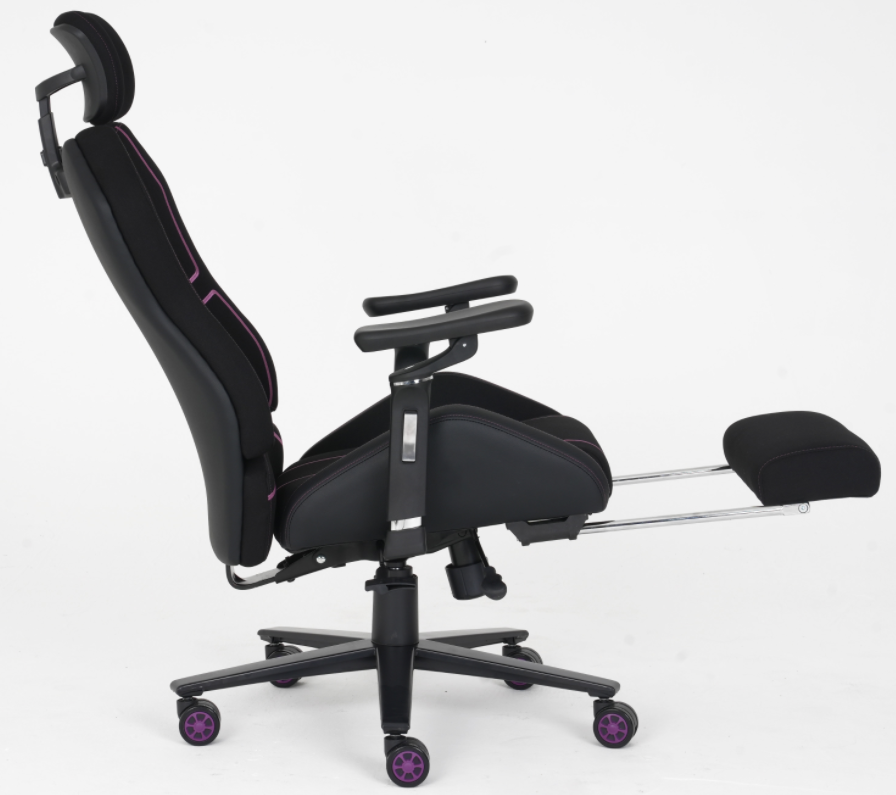
Quick answer: A 3-position tilt-lock is a mechanism that lets a gaming chair backrest recline to one of three defined angles and hold that angle under the user's weight. Forward-backward seat depth adjustment is a separate control that slides the seat cushion relative to the backrest, changing thigh support and the point where the backrest meets the lower back. Both are driven by the mechanism box mounted under the seat, which sits on a gas lift and a metal base. Model MC196-2-1 combines three locking tilt angles with forward-backward seat depth adjustment; MC196-3-1 uses a 3-position tilt-lock to switch between gaming, working and relaxing modes; MC1039 pairs a frog-type multifunctional mechanism with a Class 3 gas lift and a 370 mm starbase.
A gaming chair that lists "3-position tilt-lock", "seat depth adjustment" and "Class 3 gas lift" on a specification sheet is describing three different jobs. The tilt-lock decides which recline angles can be held. Seat depth adjustment decides where the seat cushion sits relative to the backrest. The gas lift carries the load and sets seat height. This guide explains how each mechanism works, which posture each one supports, and how the components underneath — mechanism, spring pack, starbase — determine how long the chair keeps working. Anji Maochang Furniture models MC196-2-1, MC196-3-1 and MC1039 are used as working examples because their published specifications show these mechanisms in three different configurations.
The Problem: Mechanism Names Tell Buyers Almost Nothing
Most gaming chair listings are written for shoppers who already understand what the mechanisms do. They are rarely written for the person deciding whether a chair will survive a 24/7 internet cafe floor or a ten-hour working day at home. Three failure patterns repeat in real purchasing decisions.
- Posture mismatch. A backrest that locks only in a deep recline forces a slumped position at a desk. A backrest that locks only upright cannot support rest between matches. The number of lockable positions is therefore a posture question, not a marketing detail.
- Depth mismatch. A seat that is too deep for a shorter user creates pressure behind the knee; a seat that is too shallow feels unstable. Without depth adjustment, one fixed seat geometry suits only part of the user population, which is why depth adjustment is listed as a fit feature on MC196-2-1.
- Durability mismatch. Adjustment controls are the most frequently used parts of a chair. If the mechanism, gas lift and cushion are not matched to the load and the number of hours, they degrade before the upholstery does — the chair still looks new but no longer holds a position.
Understanding what each control changes, and what it does not change, is what separates a chair that is adjusted once and forgotten from a chair that is returned, repaired or replaced.
Industry Background: Why Mechanisms Moved to the Center of the Buying Decision
The global gaming chair market was estimated at USD 1.37 billion in 2024 and is projected to reach approximately USD 2.05 billion by 2030 (Gaming Chair Market Report, 2024). North America accounts for a 36.4% revenue share, the largest regional market, and PC gaming chairs hold a 52.6% share of the product segment in the same year. PU leather remains the most common cover material with a 57.3% share in 2024.
Two structural shifts explain why mechanism design now drives the buying decision. First, hybrid work-and-game chairs are estimated at a 29.8% share of the category in 2024 — a chair that must work in an upright task posture and in a reclined gaming posture, which is precisely the range a multi-position tilt-lock and seat depth adjustment cover. Second, manufacturing concentration: the Anji furniture cluster in Zhejiang, China is the world's leading production base for gaming chairs and contributes to China's 30.8% share of global furniture exports.
Three standards come up repeatedly in sourcing conversations, and each one is a documentation question rather than a comfort question. EN 1335 is the European standard for office work chairs, covering dimensions, safety and test requirements that are also applied to gaming chairs. ANSI/BIFMA X5.1 is the primary safety and durability standard for general-purpose office and gaming chairs in North America. BS 5852 is the UK fire safety standard for upholstered furniture, often required for gaming chairs sold in the UK market.
Anji Maochang Furniture Co., Ltd. is a chair factory established in 2016 at 198 Yangguang Road, Dipu Town, Anji County, Zhejiang Province, China. The manufacturing facility covers 3,000 m², employs approximately 25 staff, and reaches an annual production capacity of 75,000 units with a 3-engineer R&D team. Its main products are gaming chairs, office chairs and manicure chairs; 98% of output is exported, with major markets in the EU, USA, Thailand, Brazil and South Korea. More background is available at www.mcrfurniture.com.
How the Three Mechanisms Actually Work
1. 3-Position Tilt-Lock: Defining Recline So It Can Be Held
On model MC196-2-1, the backrest supports three locking tilt angles and is paired with a retractable footrest. On model MC196-3-1, the 3-position tilt-lock mechanism is described as switching between gaming, working and relaxing modes. The same three-position locking logic appears on MC196-4, MC1025 and MC196-5, where the back cushion tilt angle is adjustable across a total of three positions. MC196 uses a 3-gear locking mechanism for its backrest tilt.
The function of the lock is not the recline itself — it is the ability to stop the recline. Without a lock, the backrest moves continuously with the user's centre of gravity, so a chair used at a desk drifts backward all day. With a lock, each position becomes a stable working posture:
- Most upright locked position: keyboard work, writing, camera-facing streaming posture.
- Intermediate locked position: controller gaming and long sessions where the shoulders should stay open.
- Most open locked position: rest and video viewing, typically combined with a footrest such as the retractable or foldable footrest listed on MC196-2-1, MC196-3-1, MC1025, MC1039 and MC1040.
What a tilt-lock does not do is equally important. It does not change seat depth, it does not reposition the lumbar support, and it does not increase the load the chair can carry. Those depend on the seat cushion geometry, the gas lift and the base.
2. Forward-Backward Seat Depth Adjustment: Matching the Chair to Body Length
MC196-2-1 is specified with a seat cushion that has forward-backward depth adjustment, so the cushion can move relative to the backrest to fit different body types. Practically, this single control does three things at once: it changes how much of the thigh is supported, it changes the hip angle, and it changes where the backrest's lumbar region lands on the user's lower back.
Slide the seat forward and the front edge carries more of the thigh, which reduces pressure concentration under the hips — useful for taller users and for reclined postures. Slide the seat backward and the effective seat depth shortens, so a shorter user can sit fully against the backrest without the cushion edge pressing behind the knee. The general ergonomic rule is that the front edge of the cushion should finish just behind the back of the knee, so the cushion never loads the calf.
3. Class 3 Gas Lift, Starbase and the Load Path
The gas lift is the cylinder between the mechanism box and the base: it sets seat height and allows the chair to rotate. MC196-2-1 is fitted with a Class-3 gas lift, 60 mm smooth-rolling casters and a black powder-coated metal base that is detachable to greatly reduce packaging size. MC1039 specifies a Class 3 gas lift together with a 370 mm starbase and a frog-type multifunctional mechanism; the larger base diameter spreads load across a wider footprint, and MC1039 carries a weight capacity of 150 kg. MC196-5 uses a K/D metal Starbase.
Gas lift classes are a grading of the cylinder by load and durability category, so the class number should be read together with the weight capacity and the intended duty cycle of the chair rather than in isolation. Buyers sourcing for heavy-duty or high-hour environments should confirm the lift rating that applies to the exact model being quoted.
4. Under the Mechanism: Foam and Spring Packs Decide Long-Term Shape
Durability is not only the mechanism. MC1039 uses a thickened spring pack cushion, described as offering strong elasticity and long-lasting support while avoiding sagging after long sitting, and its seat contains coiled springs and thickened padding. MC196-2-1 is built with an inner spring package in the seat cushion; MC196-4 and MC1025 use spring-loaded seat cushions that retain shape after long hours; MC1040's seat cushion contains a coiled spring. Industry guidance for premium gaming chairs places high-density mold foam at approximately 50–65 kg/m³, which is the layer that prevents a seat from collapsing down onto the mechanism box and transferring pressure to the frame.
Step-by-Step: Setting Up and Checking Tilt-Lock and Seat Depth
Sequence matters, because each setting changes the reference point for the next one. The order below applies to MC196-2-1, MC196-3-1 and MC1039, and to the wider Maochang range with the same mechanism types.
- Set seat height first. Use the gas lift so the feet rest flat on the floor and the knees sit at roughly the same level as the hips. Height is the only control that changes the load path through the gas lift.
- Set seat depth second. Slide the cushion forward or backward until the front edge finishes just behind the back of the knee, then lock it. On MC196-2-1 this is the forward-backward depth adjustment; on models without depth adjustment, this step can only be satisfied by choosing a different model or a different seat cushion specification.
- Set the tilt-lock third. Recline to the intended working angle, then engage the lock. On MC196-3-1 the three positions correspond to gaming, working and relaxing modes; on MC196-2-1 the backrest locks at three tilt angles.
- Set the armrests fourth. MC196-2-1 uses 5D adjustable armrests; MC196-3-1 uses 2D adjustable armrests that move up/down and back/forth; MC1039 and MC1039-1 use height-adjustable and 4D adjustable armrests respectively. Armrest height should support the forearm without lifting the shoulder.
- Set headrest and lumbar support last. MC196-2-1 and MC196-5 use height-adjustable headrests; MC196-3-1 includes an adjustable headrest and lumbar pillow; MC1034 uses molded foam for pillow and lumbar support.
- Run a full-cycle check. Cycle the backrest through every locked position, slide the seat to both ends of its travel, raise and lower the lift through its full range, and — on models that support it — recline fully. MC1039, MC1039-1, MC1034 and MC1040 are specified with a 180-degree reclining function.
For buyers verifying a bulk order, three checks replace the showroom test:
- Control check: confirm which controls physically exist on the model. A 3-position tilt-lock, a 180-degree reclining mechanism and a frog-type multifunctional mechanism are three different specifications, not three names for one feature.
- Load check: match the mechanism and lift to the actual user population. MC1039 and MC1040 are both specified at a 150 kg weight capacity; MC1039-1 is positioned as a heavy duty big size gaming chair suitable for heavy people.
- Packing check: the detachable base on MC196-2-1 reduces carton size to 75 × 65 × 34 cm with a loading quantity of 410 pieces, against 75 × 57 × 37 cm and 441 pieces for MC196-3-1, and 82 × 60 × 53 cm and 260 pieces for MC1039-1. Mechanism and base design therefore affect container planning, not just comfort.
Use Cases: Which Adjustment Combination Fits Which Setup
Home PC gaming
Long sessions alternate between an upright position and a footrest-supported recline. MC1025 combines a 3-position lockable tilt mechanism, 2D adjustable PU-padded armrests, a spring-loaded seat cushion and a retractable footrest. MC196-5 adds a split-back design with a K/D metal Starbase and a height-adjustable, PU-padded armrest.
Office and gaming hybrid
MC196-3-1 is positioned for home PC gaming, office work and internet cafe use in one chair, with a 3-position tilt-lock, 2D armrests that move up/down and back/forth, and an adjustable headrest and lumbar pillow; its height range is 106–114 cm. MC196 is a game-type office chair whose backrest is designed for the European market, with a raised lumbar section, a slightly recessed middle and a headrest that supports the neck; its backrest tilt locks in three positions.
Internet cafe and 24/7 seating
The internet cafe scenario is defined by indoor, long-hour continuous use with 24/7 seating matched to a gaming desk and computer, where sufficient space is a stated requirement. MC1040, a gaming sofa with 180-degree reclining, height-adjustable armrests, lockable silent casters, a coiled spring seat cushion and a 150 kg weight capacity, is listed for this setting. MC1039 is also designed for internet cafe environments, with a Class 3 gas lift, a 370 mm starbase, a height-adjustable armrest and a foldable footrest.
Dormitory and small-space setups
Where a chair shares a room with a bed and a desk, footprint matters as much as posture. MC196-3-1 measures 66.5 cm wide and 69 cm deep with a compact carton, and its height range of 106–114 cm keeps the backrest below typical desk-shelf clearances. The 3-position tilt-lock also lets the chair be folded into a rest position without needing extra floor space behind it.
Big and heavy users
MC1039 is a big size gaming chair built with a thickened spring pack cushion, a spacious seat for larger and taller users, a soft back cushion, 180-degree reclining and a 150 kg weight capacity. MC1039-1 extends the same heavy duty logic with 4D adjustable armrests, a foldable footrest and a frog-type adjustable multifunctional mechanism.
Live streaming
MC196-5, MC196-4, MC1025 and MC196-1 are all specified for live streaming use. For streamers the tilt-lock is a posture control used on camera: an upright locked position for speaking to the audience and a more open locked position for gameplay. MC196-4 adds a spring-loaded seat cushion, 2D adjustable PU-padded armrests and 60 mm large casters.
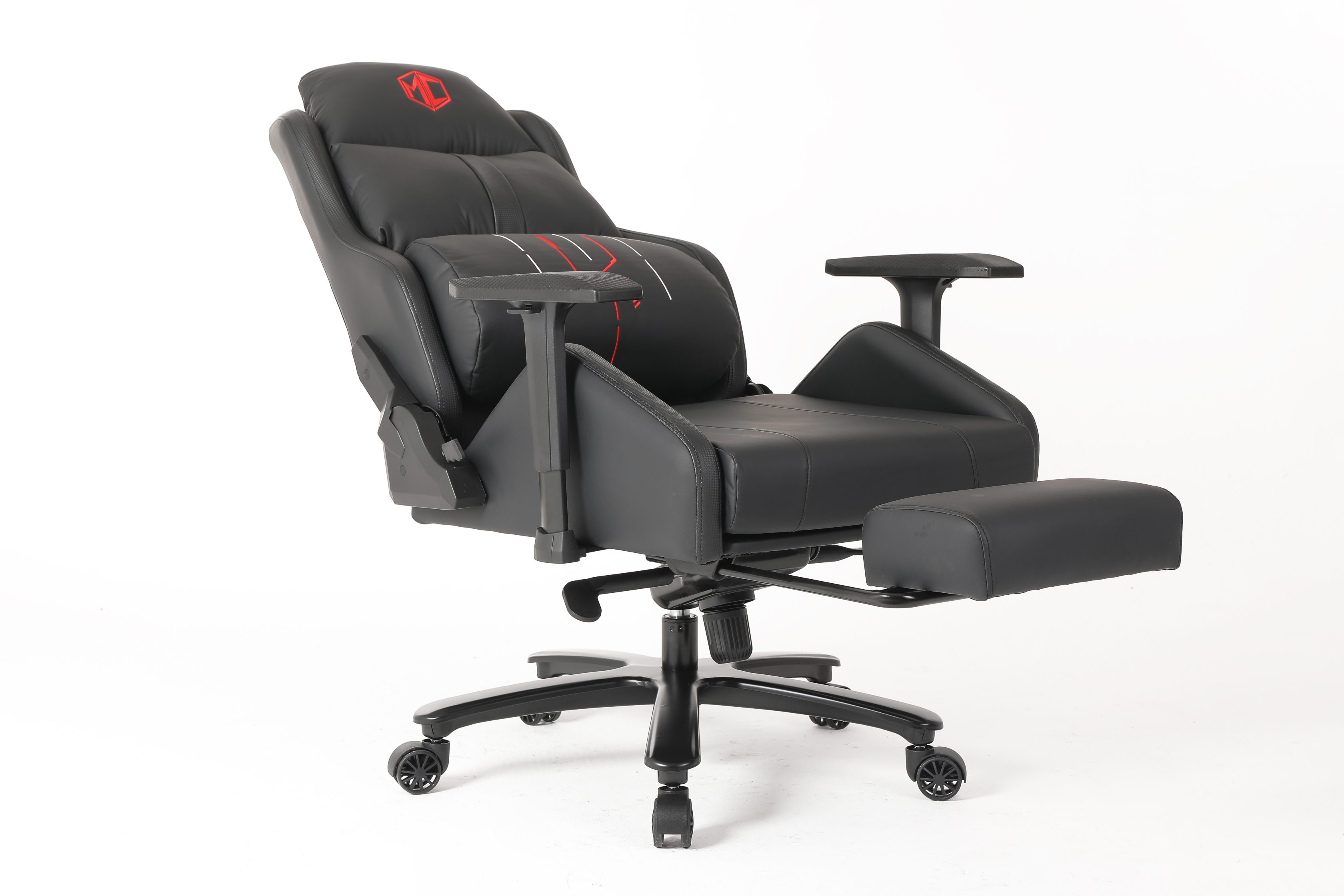
Mechanism Comparison Table: MC196-2-1 vs MC196-3-1 vs MC1039
| Specification | MC196-2-1 | MC196-3-1 | MC1039 |
|---|---|---|---|
| Category | Exclusive game chair | Game type computer chair | New design big size gaming chair |
| Backrest tilt control | 3 locking tilt angles | 3-position tilt-lock (gaming / working / relaxing) | Frog-type multifunctional mechanism with 180-degree reclining |
| Seat depth adjustment | Forward-backward depth adjustment | Not listed in the supplied specification | Not listed in the supplied specification |
| Armrests | 5D adjustable | 2D adjustable (up/down and back/forth) | Height adjustable |
| Headrest and lumbar | Height-adjustable headrest | Adjustable headrest and lumbar pillow | Soft back cushion with adjustable backrest incline |
| Gas lift and base | Class-3 gas lift; detachable black powder-coated metal base | Not listed in the supplied specification | Class 3 gas lift; 370 mm starbase |
| Footrest | Retractable | Not listed in the supplied specification | Foldable |
| Casters | 60 mm smooth-rolling | Not listed in the supplied specification | Not listed in the supplied specification |
| Overall dimensions | W70 x D70 x H118–128 cm | W66.5 x D69 x H106–114 cm | Seat width 74 cm, per the heavy duty variant MC1039-1: W74 x D80 x H126–132 cm |
| Carton size | 75 x 65 x 34 cm | 75 x 57 x 37 cm | MC1039-1 carton 82 x 60 x 53 cm |
| Loading quantity | 410 pcs | 441 pcs | 260 pcs (MC1039-1) |
| Weight capacity | Not listed in the supplied specification | Not listed in the supplied specification | 150 kg |
| Typical scenarios | Home, office | Home, office, internet cafe | Home, office, live streaming, internet cafe |
Read the table as a fit map, not a ranking. MC196-2-1 is the depth-adjustable reference; MC196-3-1 is the compact three-position hybrid; MC1039 is the heavy-load, big-base configuration. Mechanism choice should follow the user population and the number of hours the chair will be occupied.
FAQ
Do 3-position tilt-locks and seat depth mechanisms have to meet EN 1335 or ANSI/BIFMA standards?
Those are the standards buyers most often reference. EN 1335 is the European standard for office work chairs and covers dimensions, safety and test requirements applicable to gaming chairs. ANSI/BIFMA X5.1 is the primary safety and durability standard for general-purpose office and gaming chairs in North America. BS 5852 is the UK fire safety standard for upholstered furniture, often required for gaming chairs sold into the UK. These standards define what documentation a supplier should be able to produce; they do not describe how a mechanism feels in use. The published specifications for MC196-2-1, MC196-3-1 and MC1039 describe mechanisms and dimensions and do not state a certification for these models, so a buyer should request the test documentation that applies to the exact model and market before ordering.
Can one chair's tilt-lock and seat depth fit both a taller and a shorter user?
Seat depth adjustment exists precisely for that range. On MC196-2-1, the seat cushion moves forward and backward to fit different body types, and the same chair carries a height-adjustable headrest and 5D adjustable armrests. MC196-3-1 uses a 3-position tilt-lock plus 2D armrests that move up/down and back/forth and an adjustable headrest and lumbar pillow, but the supplied specification does not list seat depth adjustment. If a single chair must span very different user heights, name seat depth adjustment in the request for quotation rather than assuming it is included.
What drives the cost difference between a simple tilt-lock and a frog-type multifunctional mechanism?
The cost of a seating mechanism is driven by the number of functions it performs and by the parts it has to carry. A single tilt-lock with three locked positions is a simpler assembly than a frog-type multifunctional mechanism, and a large starbase such as the 370 mm base on MC1039 uses more material than a smaller base. Other cost drivers visible in the specifications are the gas lift class, the armrest type (5D on MC196-2-1, 2D on MC196-3-1, height-adjustable on MC1039, 4D on MC1039-1), and the seat construction — thickened spring pack, coiled springs or inner spring package versus a plain foam seat. Because these choices combine differently per order, pricing has to be quoted against a specific configuration, quantity and specification rather than against a mechanism name.
How can a buyer validate a tilt-lock and seat depth mechanism before placing a bulk order?
Validate the physical controls, not the description. Ask for a sample of the exact model, lock the backrest at each position and confirm it holds under load, slide the seat cushion to both ends of its travel and confirm it stays where it is set, raise and lower the gas lift through its full range, and recline the chair fully if the model supports 180 degrees, as MC1039 and MC1040 do. Then compare the sample against the written specification — dimensions, carton size, loading quantity and weight capacity — because those figures are what the production order will be built to.
What affects production and shipment planning for chairs with these mechanisms?
Planning follows the production sequence rather than the mechanism name. Anji Maochang Furniture operates a complete production line covering cutting, woodworking, foam bonding, sewing, nailing, assembly, cleaning and packaging, with an annual production capacity of 75,000 units and 98% of output exported to markets including the EU, USA, Thailand, Brazil and South Korea. Within that flow, mechanism and base design change container planning: MC196-2-1 uses a detachable base and ships 410 pieces per loading quantity, MC196-3-1 ships 441 pieces, and MC1039-1 ships 260 pieces. Confirming the model, the configuration and the quantity is therefore the first step in any schedule discussion. To confirm availability, request a quotation or arrange a sample of MC196-2-1, MC196-3-1 or MC1039 for your market, contact the factory directly at rosschen@mcrfurniture.com or WhatsApp +86 18357006883, and review the full range in the 2026 product catalogue.
Conclusion
Tilt-lock and seat depth adjustment answer two separate questions. The tilt-lock answers "which postures can this chair hold steadily?" — three locked positions on MC196-2-1, MC196-3-1, MC196-4, MC1025 and MC196-5, a 3-gear lock on MC196, and a frog-type multifunctional mechanism with 180-degree reclining on MC1039. Seat depth adjustment answers "does this chair fit this body?" — currently specified on MC196-2-1 through a cushion that moves forward and backward. The gas lift, starbase, spring pack and foam density then decide how long both answers stay true, which is why MC1039 combines a Class 3 gas lift, a 370 mm starbase and a thickened spring pack cushion within a 150 kg weight capacity.
For buyers, the practical conclusion is to specify mechanisms by function and by model, and to verify them on a sample before committing to a container. For users, it is to set height, then depth, then tilt-lock, in that order.
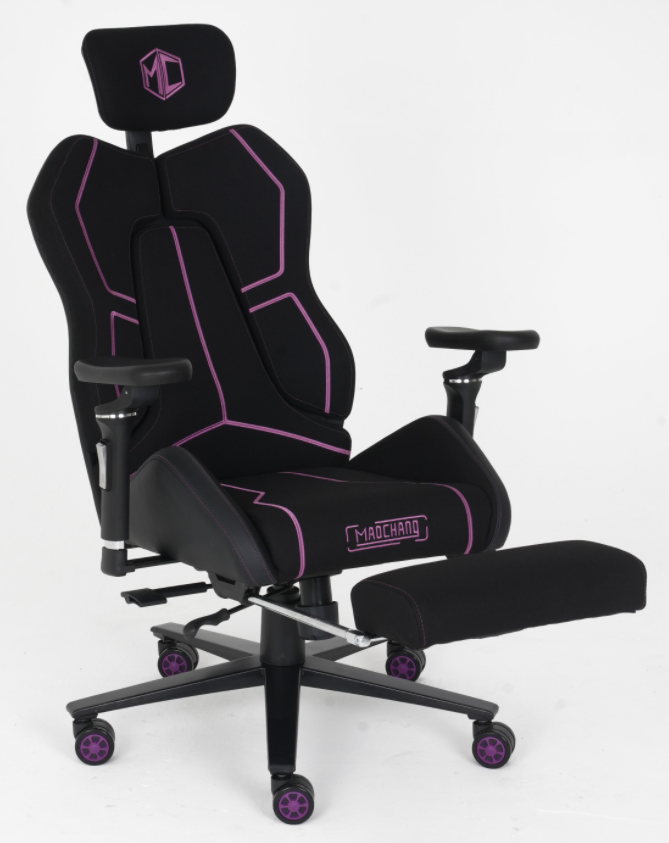
Next Step: Sample, Quotation or Catalogue
Anji Maochang Furniture Co., Ltd. manufactures gaming chairs, office chairs and manicure chairs in Anji County, Zhejiang Province, China, with a 3,000 m² facility and an annual capacity of 75,000 units. To evaluate tilt-lock and seat depth configurations for your market, request a sample or a quotation for the models referenced in this guide.
Website: www.mcrfurniture.com
Email: rosschen@mcrfurniture.com
Mobile / WhatsApp: +86 18357006883
Address: 198 Yangguang Road, Dipu Town, Anji County, Zhejiang Province, China
Download: 2026 Product Catalogue (PDF)