
Clips, Pins and Collar Supports: Shirt Packaging That Holds Shape
Open a carton of folded shirts after four weeks on the water and the fabric is usually fine. The fasteners are not. Clip legs splay, pins take a curve, and a collar support that was flat at the packing line has picked up the shape of whatever was stacked on top of it. The shirt still fits the customer; it just no longer looks like something a store can put on a table.
Short answer: deformation in transit is normally a specification problem, not a handling accident. Three components carry most of the risk in a packed shirt — the shirt clip (PS or metal, 1.2 mm section, 3.3 cm or 3.7 cm long), the metal pin (stainless steel or brass, 0.6 mm or 0.65 mm gauge, 26 × 0.6 mm), and the collar support (light blue PVC, 0.35 mm, 22.7 cm × 18.5 cm). Match those numbers to the fold, the shirt board and the carton, and the presentation survives the journey.
MingYu Garment Accessories — Wuxi Mingyu Garment Accessories Factory, founded in 2004 in Wuxi, China — manufactures the components discussed here alongside collar bands, collar stays, butterflies, shirt cardboard, tissue paper and packaging bags, and exports 85% of its output to Europe, North America, South America and Asia. The specifications quoted below are the ones its product data publishes, which makes them a practical benchmark for any buyer writing a purchase order for retail shirt presentation.
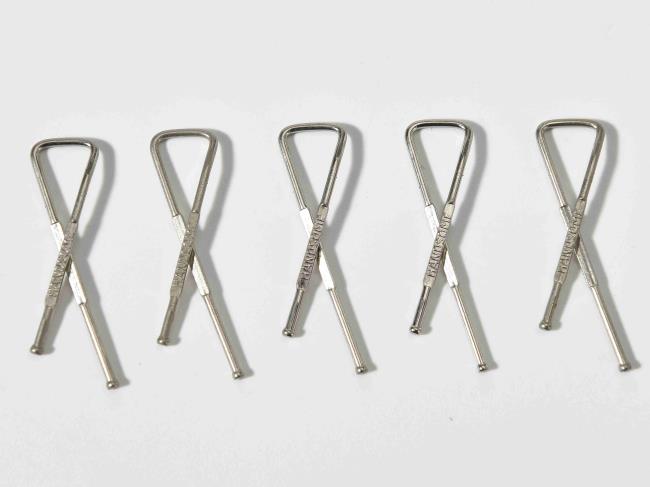
What deformation mid-shipment actually looks like
Deformation is a shape failure, and it appears differently in each component. A clip that has lost its spring opens along the fold line, so the shirt unfolds inside the poly bag and the collar drops. A metal pin bends where it passes through the board, and the collar lifts away from the cardboard that was supposed to hold it square. A collar support takes a curve across its span, and that curve is transferred directly to the collar sitting on top of it. The fabric arrives intact and the presentation does not: the collar line is soft, the fold is loose, and the shirt has to be reworked before it can be shelved.
The cost is never the accessory itself. A clip costing a fraction of a cent can consume minutes of handling at a retail distribution centre, and a creased collar on a shelf changes what a shopper is willing to pay. That imbalance is why the three specifications worth arguing about are all small numbers that are easy to leave off an order: the sheet thickness of the clip, the gauge of the pin, and the caliper of the collar support.
Why the accessory line item gets under-specified
Garment packaging is a large category and it is still growing. Dataintelo valued the global garment packaging market at USD 18.6 billion in 2025 and projected USD 31.4 billion by 2034 in its April 2026 report, with Asia Pacific holding a 41.5% revenue share in 2025. The Business Research Company put the garment interlining market — the structure behind a shirt collar — at USD 3.65 billion in 2025, in a report dated July 2026.
For a buyer, the useful reading of those figures is not market size but expectation. As more money goes into printed boards, tissue, hang tags and butterflies, the gap between a well-printed presentation and a splayed clip becomes more obvious, not less. A shirt packed with a 500 gsm board, a printed butterfly and a branded tissue sheet has already been positioned as a considered product; a bent pin at the collar undermines exactly that positioning at the moment of unpacking.
The three components that fail, and the specs that control them
Each component has a small set of published specifications. Those specifications, not the marketing description, are what should appear on the purchase order and on the incoming inspection sheet.
Shirt clips: X shape, 1.2 mm, 3.3 cm or 3.7 cm
The clip specification lists a PS or metal body, an X shape, a 1.2 mm thickness, dimensions of 3.3 cm or 3.7 cm by 0.8 cm, a silver colour, a customizable logo and a minimum order of 100,000 pieces. Deformation resistance is listed as a product characteristic alongside eco-friendly material options. Within the clip family the available styles include metal clip, plastic clip, U-shape plastic big clip, clear square plastic clip, alligator clip, plastic clip with teeth, square plastic clip and square plastic shirt back clip.
The 1.2 mm figure is the single most useful line to copy into an order. It is the section that decides how much the clip resists opening under carton compression, and it is measurable with a caliper at goods-in. The two lengths are not interchangeable: 3.3 cm suits a tighter, thinner fold, while 3.7 cm reaches across a thicker multi-layer fold typical of high-volume retail packing. Ordering one length for every shirt style is a common route to either a clip that barely grips or one that creases the fold it is meant to protect.
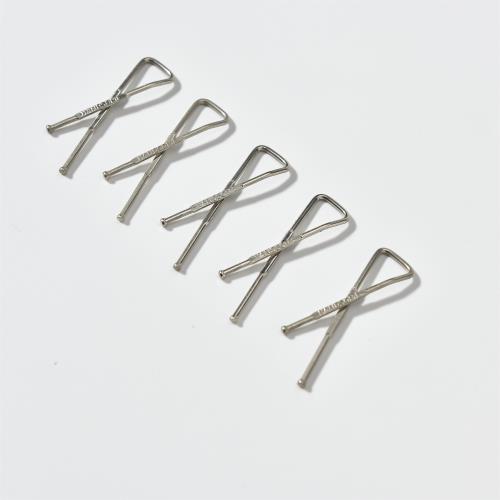
Metal pins: 0.6 mm or 0.65 mm in stainless steel or brass
The metal pin specification lists stainless steel or brass material, a common size of 26 × 0.6 mm, thickness options of 0.6 mm and 0.65 mm, a silver colour, a rectangle style, no logo option and a minimum order of 10,000 pieces. It is described as a metal pin with a red head and is listed as resistant to deformation.
Two choices matter here. The first is gauge: 0.6 mm and 0.65 mm are close enough to look identical in a photograph and different enough to matter when a pin has to pass through a 500 gsm shirt board without buckling at the entry point. The second is the rectangle style, which is the format that sits against a structured board rather than a soft fold. Because the specification lists no logo option, the pin is a functional fastener rather than a branding surface — the brand impression has to come from the board, the tag and the butterfly around it.
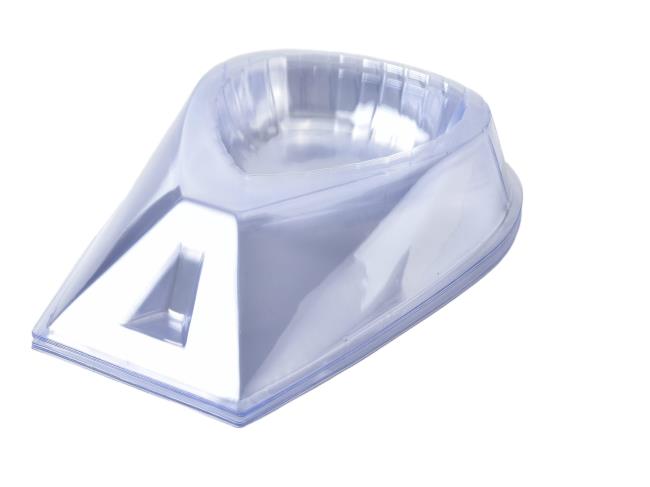
Collar supports: 0.35 mm PVC at 22.7 cm × 18.5 cm
The collar support specification lists light blue PVC material, a 22.7 cm by 18.5 cm sheet, a 0.35 mm thickness, a cuboid style, no logo option and a minimum order of 10,000 pieces, with deformation resistance and eco-friendly material options listed as characteristics. The sheet is large enough to sit across the collar and upper chest of a folded shirt, which is why its flatness matters more than its weight.
A support that has taken a curve cannot flatten a collar; it can only pass the curve on. The 0.35 mm caliper is the controlled variable, and consistency across a production run matters more than any single sheet, because a mixed carton will show mixed collar lines on the same shelf.
The supporting cast that sets the presentation envelope
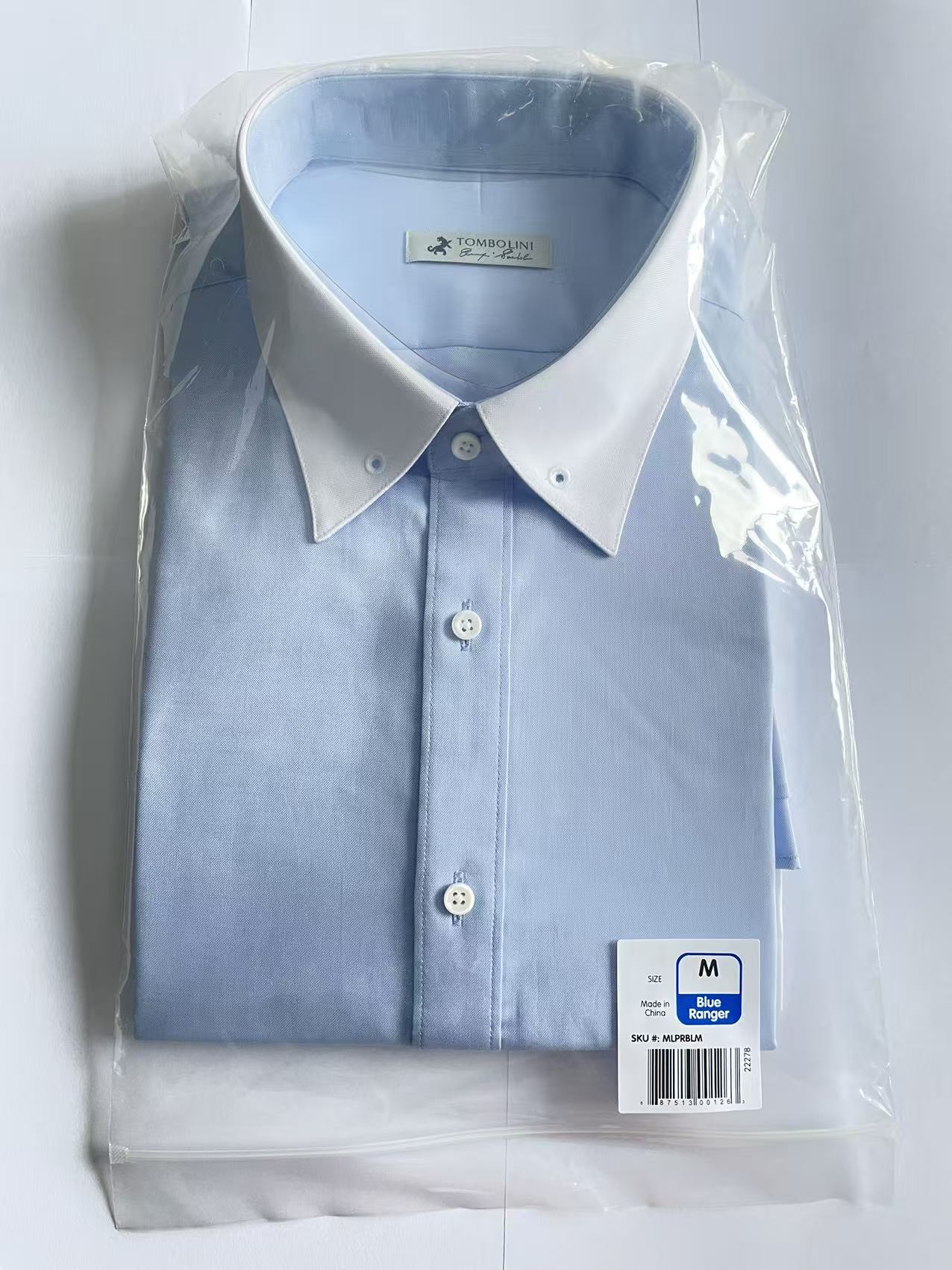
Clips, pins and supports do not work alone. Around them sit the components that decide whether a fastener has anything solid to hold: shirt cardboard in 100% natural wood pulp paper at 21 cm × 35.2 cm and 500 gsm; paper butterflies in 400 gsm single white paper at 15 cm × 3 cm; plastic butterflies in light blue fine sand PVC at 26 cm × 10.4 cm and 0.25 mm; tissue paper at 36 cm × 40 cm and 17 gsm; and apparel tags in 100% natural wood pulp paper at 4 cm × 7 cm and 500 gsm. Each of these is listed at a minimum order of 10,000 pieces, with customizable logos on the board, butterfly, tissue and tag.
The practical point is that a 500 gsm board gives a pin a firmer substrate than a lightweight sheet, and a correctly sized butterfly keeps the collar from moving before the clip is even applied. Buying a heavier clip while specifying a thin board is an incomplete fix.
Step by step: specifying a pack that arrives flat and square
The sequence below turns the specification data into an order that can be inspected. It applies to packing workshops, sorting lines, garment shipment and retail display packaging, which is the scenario range these components are produced for.
- Map the fold before opening a catalogue. Decide which shirt styles share a carton and how many layers each fold has. A single-layer retail fold and a multi-layer export fold need different clip lengths and different board rigidity. Write the fold type next to each component on the specification sheet so the sample stage has a reference.
- Put the caliper into the purchase order. State 1.2 mm for clips, 0.6 mm or 0.65 mm for pins, and 0.35 mm for collar supports. A dimension without a thickness is an incomplete specification, and it is the thickness that governs how the part behaves under load.
- Choose 3.3 cm or 3.7 cm by fold, not by price. Both clip lengths are 0.8 cm wide and 1.2 mm thick, so the only variable is reach. Use the shorter length where the fold is tight and the longer length where the fold is thick; keep a single length per shirt style so operators cannot mix them on the line.
- Decide PS or metal against the channel. The clip is offered in PS or metal, the pin in stainless steel or brass, and the support in PVC; paper-based components such as the board, paper butterfly, tissue and tag use natural wood pulp paper. Check what your destination market expects for each material fraction before the order is placed, and ask the supplier for the export certificates and audit documentation that cover the specific component, not a general company document.
- Run a carton-level trial, not a component-level trial. A clip that performs well in the hand can still fail under a stacked pallet. Pack a full production carton with the actual board, butterfly, tissue and poly bag, send it on the route you will use or reproduce the stacking load, then open it at the far end and inspect the collar line, the fold and the clip legs. This is the only check that reflects the combination you are buying.
- Fix MOQ, set basis and lead time before confirming. Component minimums are quoted in pieces — 100,000 for clips, 10,000 for pins, collar supports and paper components — while the factory's garment-accessory FAQ quotes a general minimum of 1,000 sets for program orders. Confirm which basis your order is priced on, and book the 7–20 working day lead time into the production calendar rather than after it.
Matching the accessory to the packing scenario
Different packing situations load the same components differently. The pairings below use only the published specifications, so each can be checked against an order.
- High-volume retail folding. The X-shape clip is the workhorse here: 1.2 mm PS or metal, 3.7 cm where the fold is thick, applied at the fold and back. Buy the 100,000-piece clip minimum as a single length so line operators work from one bin.
- Structured shirt board presentation. Where the shirt sits on a 21 cm × 35.2 cm, 500 gsm board for shelf or table display, the rectangle-style metal pin in 0.6 mm or 0.65 mm stainless steel or brass is the fastener that matches the format. The board provides the substrate; the pin holds the collar against it.
- Export or gift carton with a defined collar line. Combine the 0.35 mm PVC collar support with a butterfly — 400 gsm paper at 15 cm × 3 cm, or 0.25 mm PVC at 26 cm × 10.4 cm — and a 17 gsm tissue wrap at 36 cm × 40 cm. The support holds the shape, the butterfly holds the position, the tissue protects the surface.
- Brand packaging upgrade projects. Logo customization is available on clips, cardboard, butterflies, tissue and tags, while pins and collar supports are listed without a logo option. Place branding on the surfaces that accept it and keep the fastener purely functional.
- Sorting lines and mixed-SKU programs. Where several shirt styles share a line, standardise on one pin gauge and one support caliper across styles, and vary only the clip length. Fewer variables at the sorting station means fewer mix-ups in the carton.
Comparison: clips, pins and collar supports side by side
The table below reproduces the published specifications. It is the version to attach to an enquiry, because it removes the ambiguity that usually produces a mismatched sample.
| Specification | Shirt clip | Metal pin | Collar support |
|---|---|---|---|
| Material | PS or metal | Stainless steel or brass | Light blue PVC |
| Size | 3.3 cm or 3.7 cm × 0.8 cm | 26 × 0.6 mm | 22.7 cm × 18.5 cm |
| Thickness | 1.2 mm | 0.6 mm or 0.65 mm | 0.35 mm |
| Shape | X shape | Rectangle | Cuboid |
| Colour | Silver | Silver | Light blue |
| Logo | Customizable | None | None |
| MOQ | 100,000 pcs | 10,000 pcs | 10,000 pcs |
| Packing role | Holds the fold under carton compression | Holds the collar against a structured board | Keeps the collar and chest line flat |
Verification checklist before the container loads
Deformation problems are usually visible at goods-in if the check is written down. Five checks cover the gap between a sample and a shipment.
- Measure, do not eyeball. Caliper the clip at 1.2 mm, the pin at 0.6 mm or 0.65 mm, and the support at 0.35 mm on a sample pulled from production, not from the approval set.
- Confirm length consistency. Check that every clip in a bin is the same 3.3 cm or 3.7 cm length and that the bin is labelled with the shirt style it serves.
- Inspect the logo surfaces. Clips, cardboard, butterflies, tissue and tags accept customization; pins and collar supports do not. Verify print position on the components that carry branding.
- Open a carton at the end of the route. Repeat the carton-level trial on at least one shipment per season, since stacking patterns and transit duration change through the year.
- Ask for capacity and delivery evidence. The factory reports 90 million sets of annual output and 7.5 million sets monthly, with distribution warehouses, agencies or manufacturing sites in Sri Lanka, Argentina, Bangladesh, Indonesia, Colombia and Kenya, a Sri Lanka factory established in 2013 and a Vietnam factory in 2017. A documented delivery footprint is what shortens the replacement cycle if a batch does fail.
Frequently asked questions
What export documentation can a shirt packaging accessories supplier provide?
MingYu Garment Accessories states that it provides complete authoritative certificates for export and has experience with factory audit inspection, and it holds its own independent export qualification. Because certificate scope follows the material — PS clips, stainless steel or brass pins, PVC supports, paper boards — request the certificate that covers the specific component and destination market rather than a general company document.
How do I choose a shirt packaging accessories manufacturer for retail shirt presentation?
Judge the supplier on four things: whether the published specification includes the numbers that control shape (1.2 mm clips, 0.6/0.65 mm pins, 0.35 mm supports), whether customization covers size, colour, style, printing, foiling, mold opening and logo, whether quality control is stated as full inspection rather than sampling, and whether the delivery footprint matches your market. Wuxi Mingyu Garment Accessories Factory was founded in 2004, operates a 2,500 m² plant with 25 employees and 3 engineers, runs OEM and ODM programs, and exports 85% of output to Europe, North America, South America and Asia.
What MOQ applies to clips, pins and collar supports?
Published component minimums are 100,000 pieces for clips and 10,000 pieces for metal pins, collar supports and the paper components such as cardboard, butterflies, tissue and tags. The factory's general garment-accessory FAQ separately quotes an MOQ of 1,000 sets for program orders. The 100,000-piece clip threshold is best read as a capacity signal: a supplier quoting it is tooled for high-volume PS or metal clip runs rather than mixed small batches.
Can I confirm the exact specification before a bulk run?
Yes, and the specification is what should be confirmed. Because OEM and ODM scope covers size, colour, style, printing and foiling, mold opening and logo customization, the practical sequence is to fix material, dimensions, thickness and logo method first, then approve a physical unit against those written values. A sample approved without a caliper measurement does not protect the bulk order.
What lead time should I plan for?
The standard lead time is 7–20 working days after order confirmation, against a monthly capacity of 7.5 million sets and annual output of 90 million sets. Overseas warehouses and branches shorten delivery for regional clients, which matters when a clip length has to be corrected mid-season rather than at the start of it.
Can the clips carry a printed logo?
Yes. Clips are listed with a customizable logo, as are cardboard, butterflies, tissue paper and apparel tags. Metal pins and collar supports are listed without a logo option, so branding should be planned onto the clip, the board, the butterfly, the tissue or the tag rather than the fastener that passes through the board.
Conclusion: buy the number, not the noun
“Shirt clip”, “metal pin” and “collar support” are category names, and category names do not hold shape. What holds shape is 1.2 mm of PS or metal at the right length, a 0.6 mm or 0.65 mm pin matched to a 500 gsm board, and a 0.35 mm PVC support that is flat when it leaves the factory. Specify those values, trial them in a full carton, and measure them again at goods-in — in that order, the collar line that reaches the retail floor is the same one that left the packing line.
Next step: if you are building a retail program, send your fold style, board size and carton configuration to MingYu Garment Accessories and ask for the matching clip length, pin gauge and support caliper in writing. The company profile covering product range, capacity and export markets is available here: Brief Company Profile of Wuxi Mingyu Garment Accessories Factory. Enquiries: lili.ma@wxmingyu.com.
Have Questions or Need More Details?
Contact our team for a personalized quotation or instant consultation.
Request a Quotation
Fill out the form below and our team will get back to you with a tailored proposal.
WhatsApp Direct Chat
Prefer to chat in real-time? Message us on WhatsApp for instant assistance & quick answers.
- Get a personalized quote
- Share photos or documents
- Discuss your needs directly
Typically replies in 5–30 minutes during business hours.