
Shirt Packaging Supplier Evaluation: Beyond MOQ and Samples
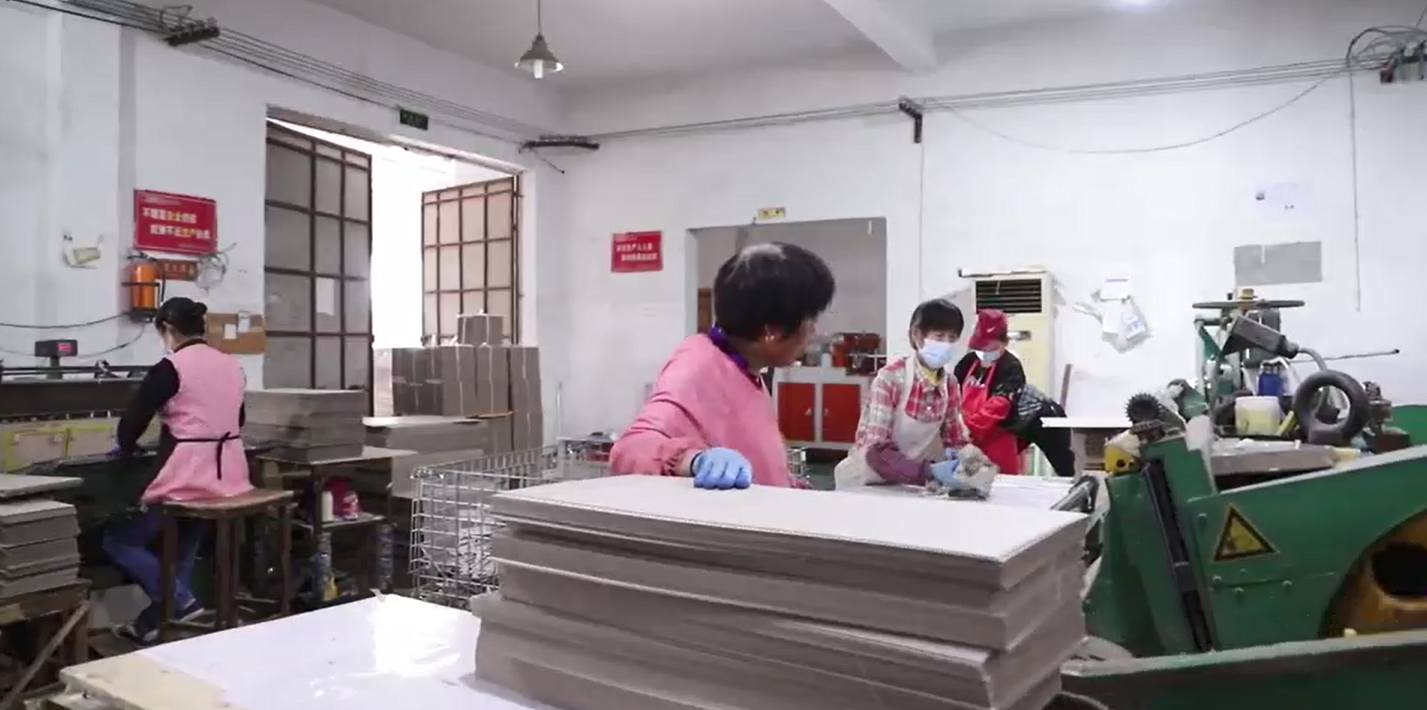
Production floor of a shirt packaging accessories factory: where MOQ claims are either supported or quietly absorbed.
Two numbers usually decide a shirt packaging accessories supplier: the minimum order quantity in the first quotation, and the quality of the sample that arrives three weeks later. Both are useful screening tools. Neither answers the question that decides a programme — will run ten match run one, on every component in the kit, carrying the logo you actually approved?
This article sets out an evaluation framework for suppliers of shirt packaging accessories: collar bands, collar stays, collar supports, paper and plastic butterflies, cardboard, tissue paper, belly bands, gift boxes, apparel tags, washing labels and packing bags. The framework relies on component-level specifications, MOQ structure and documented capability rather than on impressions. It draws on the published product data and capability statements of Wuxi Mingyu Garment Accessories Factory, a shirt packing accessories manufacturer founded in 2004 in E’hu Town, Xishan District, Wuxi, Jiangsu, China, and on third-party garment packaging market data.
A supplier that can genuinely support a retail presentation programme will usually demonstrate six things: material documentation per component, thickness control on load-bearing parts, a workable answer on logo feasibility for the exact SKUs ordered, equipment and capacity that match the order size, lead time that matches the shipping calendar, and an inspection regime that runs through production rather than only at the end.
Problem Definition: Why MOQ and Samples Are Not Enough
MOQ is a commercial filter, not a capability filter. It tells a buyer how much volume a supplier is willing to interrupt a line for. It does not tell the buyer whether the collar support will still hold its shape after a month in a container, whether the tissue paper will accept a printed logo without ghosting, or whether the hundred-thousandth clip will grip the same way as the first.
The MOQ mismatch: order level versus component level
MOQ figures are only comparable when they describe the same unit, and in this category they usually do not. Wuxi Mingyu Garment Accessories Factory quotes an order-level MOQ of 1,000 sets against a stated monthly production capacity of 7.5 million sets. At component level, however, the minimums inside the same catalogue span two orders of magnitude.
- 1,000 pieces: metal collar stays in stainless steel.
- 10,000 pieces: metal pins, paper butterflies, plastic butterflies, collar supports, PVC collar stays, PET and paper collar bands, cardboard, apparel tags, tissue paper, belly bands, gift boxes and PP packing bags.
- 100,000 pieces: clips, in PS or metal variants.
For a buyer assembling a mixed packaging kit, that spread matters more than the headline MOQ. A 20,000-piece collar band order can be paired with a 1,000-piece trial of laser-engraved metal collar stays, while clip quantities have to be planned as a bulk commitment from the first conversation. A supplier who quotes one blanket minimum for a multi-component order is usually aggregating SKUs and absorbing the difference into the unit price, which tends to surface later as a substitution risk on the lowest-value line in the kit.
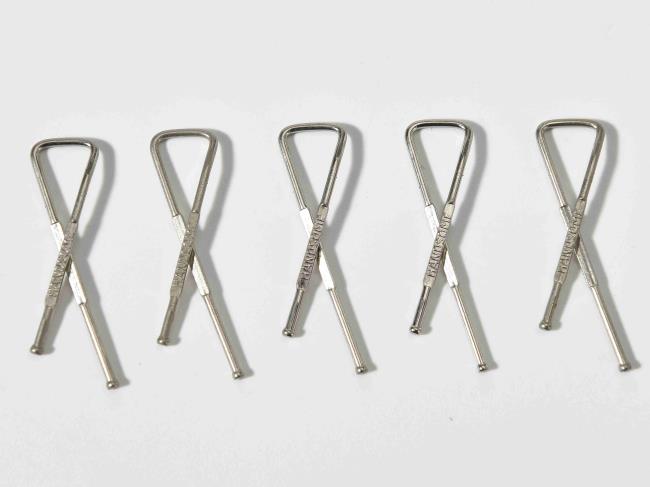
Closure components are the high-minimum end of the kit: clips are published with a 100,000-piece MOQ.
What a single approved sample does not prove
A sample proves that a supplier can produce one unit correctly under supervision and with time to spare. Production consistency is a process property, and it is verified by the inspection regime, not by a courier box. The relevant question is whether inspection runs through the whole production procedure or only at final packing. MingYu states an in-house quality-control team carrying out full-range inspections throughout each production procedure, alongside 100% testing, which is the kind of claim a buyer can actually verify during a factory audit.
Three questions that rarely make it into the first email
- Which SKUs in my kit can carry a logo, and which ones are published without a logo option at all?
- Who is responsible for tooling and mould opening when artwork changes between seasons?
- At which production stages is the order inspected, and what record reaches the buyer?
Those three questions separate suppliers that can run a programme from suppliers that can only quote it, and none of them can be answered by a sample.
Industry Background: What Is Changing in Garment Packaging Sourcing
Shirt packaging has moved from a cost line to a brand asset, and the market data reflects it. The global garment packaging market was valued at USD 18.6 billion in 2025 and is projected to reach USD 31.4 billion by 2034, according to Dataintelo’s garment packaging market research report published in 2026. Asia Pacific accounted for 41.5% of that revenue in 2025 — the region where most European and North American buyers end up sourcing.
Structurally, the packaging components sit beside a larger and slower-moving accessory market. The garment interlining market, the category that supports shirt collar structure, reached USD 3.65 billion in 2025 according to The Business Research Company’s interlining forecast report. Cognitive Market Research puts the market for buttons used on shirts and blouses at USD 8.39 billion in 2025, forecast to reach USD 11.39 billion by 2033 at a 3.9% CAGR. Commercial research comparing the two segments places garment packaging growth at roughly 6.0% CAGR against 3.9% for clothing fasteners, which is a useful signal: buyers are spending more on how a shirt arrives than on what closes it.
Functionally, the kit divides into four groups. Structure covers collar bands, collar stays, collar supports, butterflies and cardboard. Closure covers clips and metal pins. Labelling covers apparel tags and washing labels. Presentation covers tissue paper, belly bands, gift boxes and packing bags. The stated role of the category is wrinkle prevention, brand identification through printing or foiling, and transport protection, with application across packing workshops, sorting lines, garment shipment and retail display packaging.
That dual role — protection plus brand surface — is why evaluation criteria here are stricter than for a plain filler material. A component that shields a collar and also carries the brand can fail in two different ways, and only one of them is visible on a warehouse floor.
The Six-Pillar Evaluation Framework
The framework below replaces “MOQ plus sample” with six verifiable pillars. Each pillar is phrased as something a buyer can request, measure or audit before placing a bulk order.
Pillar 1 — Material compliance and eco-material documentation
Compliance is checked component by component, not supplier by supplier, because the material mix inside one shirt packaging kit is unusually wide. In MingYu’s catalogue, a plastic collar band is white PET; a plastic collar stay and a collar support are PVC; a paper collar band uses specialty tenacity paper; cardboard, apparel tags and gift boxes are built on wood pulp paper; tissue paper runs at 17 gsm; paper butterflies use 400 g single white paper; clips are PS or metal; metal pins are stainless steel or brass; packing bags are PP; washing labels are polyester or nylon taffeta.
The screening step is to request documentation mapped to each of those material families rather than a single company-level certificate. MingYu states that it provides complete authoritative certificates for export and holds experience supporting factory audit inspection. The second step is to test eco-material claims by asking which specific SKU the paper or wood-pulp substrate applies to: cardboard, apparel tags, tissue paper and paper butterflies sit on natural wood pulp or paper substrates, while PET, PVC and PP items remain in the same order under a different documentation path.
Pillar 2 — Deformation resistance and thickness control
Collar components are judged by how they behave under folding, stacking and freight compression, so thickness is a functional variable rather than a cosmetic one. Published values in the range illustrate the spread: metal collar stays at 0.8 mm in four standard lengths of 55.9, 63.5, 69.9 and 76.2 mm, all 9 mm wide; white PVC collar stays at 0.75 mm; plastic PET collar band at 0.35 mm; paper collar band at 1 mm with 15 holes at 1.4 cm spacing; collar support at 0.35 mm; plastic butterfly at 0.25 mm; clips at 1.2 mm; belly bands at 0.25 mm.
“Resistant to deformation” appears as a stated selling point across the range, and that is precisely the claim a buyer should convert into an acceptance criterion. Ask which thickness and which substrate the quotation assumes, then write both into the purchase order. A collar support ordered at 0.35 mm and delivered at a lighter gauge will pass a visual check and fail a retail presentation standard.
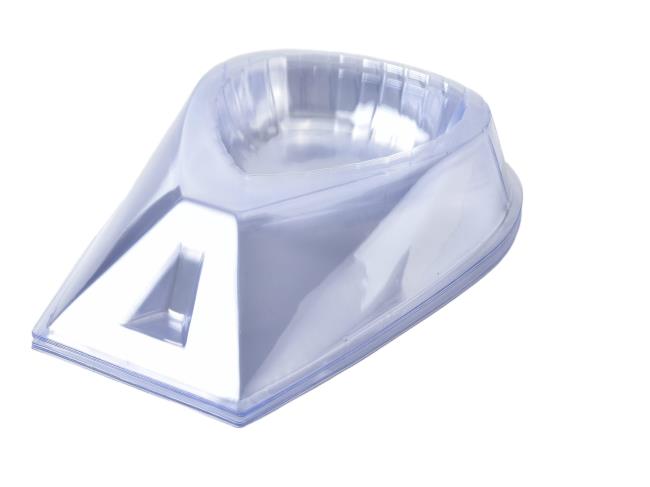
Collar support inserts carry the shape of a folded shirt collar; thickness and material grade decide how well.
Pillar 3 — Customisation responsiveness: logos, tags and washing labels
Customisation coverage is broad at the supplier level: size, colour, style, printing and foiling, mould opening and logo application by stamping or printing, with metal collar stays accepting laser-engraved logos. Apparel tags are printable 500 gsm wood pulp paper at 4 × 7 cm, and washing labels use polyester or nylon taffeta.
The responsiveness test, however, is not “can you print a logo” — it is “which SKUs in my kit can carry one”. In the published product data, several items are listed with no logo option at all: the white PET plastic collar band, the collar support, the paper collar band, the metal pin and the clear PP packing bag are all published without logo customisation, while collar stays, butterflies, belly bands, tissue paper, gift boxes and apparel tags are published as customisable.
A supplier who confirms that limitation in the first reply is giving a more useful answer than one who accepts every print request and resolves the conflict at proofing stage. Customisation requests then move through production on the standard 7–20 working day lead time after order confirmation, so artwork approval timing directly controls the ship date.
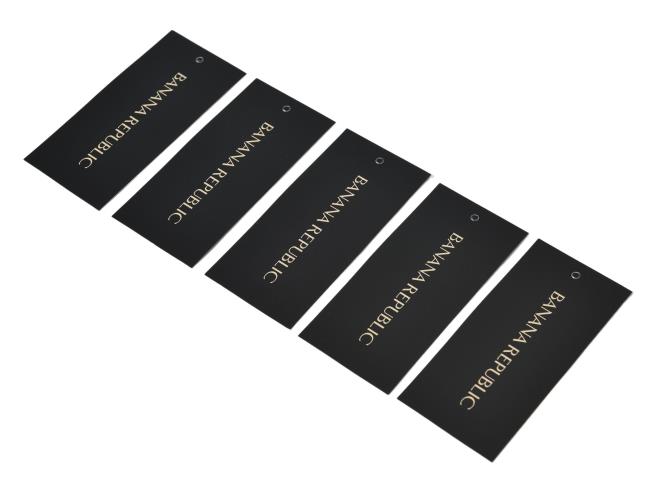
Labelling components such as apparel tags are printable; other items in the same kit are published without a logo option.
Pillar 4 — Capacity, equipment and supply continuity
Capacity claims should be read against order size and against the equipment that produces them. MingYu lists a monthly capacity of 7.5 million sets, an order-level MOQ of 1,000 sets and annual output of 90 million sets, supported by automatic creasing machines, punching machines and paper cutting machines, plus automatic edge folding and automatic cardboard and collar stay die-cutting equipment.
The supplier base behind those numbers is a 2,500 m² factory founded in 2004, with 25 employees, a three-engineer R&D team, an 85% export ratio and markets across Europe, North America, South America and Asia. Continuity is further supported by overseas manufacturing: a Sri Lanka factory established in 2013 and a Vietnam factory in 2017, plus distribution warehouses or agencies in Sri Lanka, Argentina, Bangladesh, Indonesia, Colombia and Kenya. For a buyer planning a seasonal programme, that distributed footprint is a continuity argument, not a marketing line.
Pillar 5 — Delivery reach and lead-time realism
Lead time, not price, is usually what breaks a packaging programme. The standard quoted lead time here is 7–20 working days after order confirmation, which is production time and does not include freight. Buyers should test that figure against the shipping calendar in three places: whether artwork approval fits inside the window, whether mixed-SKU orders ship complete or in partial lots, and whether regional stock can shorten the last leg. MingYu states that overseas warehouses and branches shorten lead time for regional clients, with products exported worldwide and a stated 85% export ratio.
Pillar 6 — After-sales support and long-term behaviour
The last pillar is the least glamorous and the one that decides whether a second order happens. MingYu provides customer service and technical support alongside its quality-control regime, and reports a five-year cooperation with brand owners, garment manufacturers, distributors and exporters on a project of 10,000 units of shirt packaging accessories, used for garment packaging to improve shipment protection and brand presentation, with no major mistakes recorded over that period.
When evaluating a new supplier, ask who answers when a delivered run shows print misalignment or a thickness deviation: the sales contact, or the technical team that owns the process. The answer indicates whether after-sales is a department or a forwarding address.
Step-by-Step: Running the Evaluation in Eight Steps
- Group the kit by function. Structure, closure, labelling and presentation. Thresholds and failure modes differ by group, and grouping prevents a single acceptance standard being applied to a collar stay and a packing bag.
- Normalise every MOQ to the same unit. Component minimums in one catalogue run from 1,000 pieces for metal collar stays, through 10,000 pieces for pins, butterflies, collar supports, cardboard, tags, tissue paper and boxes, to 100,000 pieces for clips, against an order-level MOQ of 1,000 sets.
- Request material documentation per component group. Separate the paper and wood-pulp items from the PET, PVC and PP items before approving any certificate.
- Write thickness and dimensional criteria into the purchase order. Use the published values as the reference baseline, and state the inspection method.
- Confirm logo feasibility SKU by SKU. Check which lines in the kit are published with a logo option before artwork is finalised.
- Validate the sample against the written specification. Measure thickness, size and print position; do not evaluate from a photograph.
- Match capacity and lead time to the shipping calendar. Plan around a 7–20 working day production window plus freight, and ask about regional stock where relevant.
- Fix the after-sales and inspection terms before the second order. Stage-by-stage inspection, 100% testing and a named technical contact belong in the agreement, not in the relationship.
Use Cases: Three Programme Types and What Changes
1. Retail shirt presentation programmes
Retail presentation is a shape problem before it is a branding problem. The collar support inserts (22.7 × 18.5 cm, light blue PVC, 0.35 mm) and cardboard (21 × 35.2 cm, 100% natural wood pulp paper, 500 gsm) hold the fold, collar bands and butterflies maintain the neckline, and tissue paper protects the surface. Weighting shifts to deformation resistance and thickness control, because a collar that collapses in the box is visible to the end customer before the shirt is ever worn.
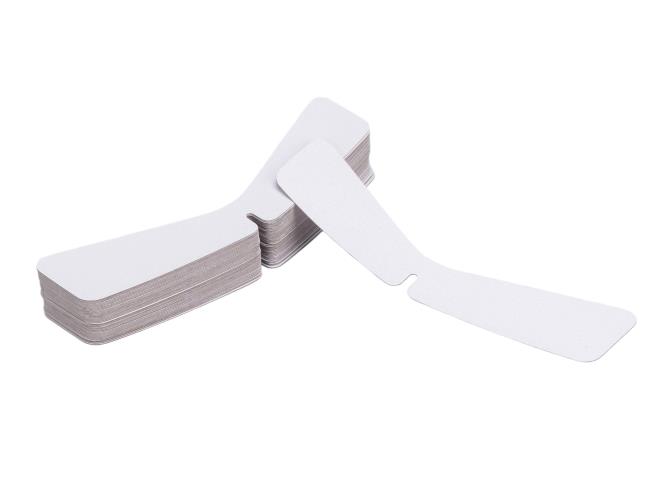
Paper butterflies hold the collar line through shipment; 400 g single white paper, 15 × 3 cm.
2. Brand packaging upgrade projects
Upgrade projects push the same kit toward printed surfaces: printed collar bands, custom apparel tags, tissue paper at 36 × 40 cm, belly bands at 58 × 10 cm and gift boxes at 22 × 35 cm built from paper cardboard wrapped with 120–150 g art paper at 2–3 mm thickness. Projects of this type are listed among the supplier’s standard project categories, alongside OEM/ODM packaging customisation, bulk order supply and brand packaging upgrade work. Here the weighting moves to customisation responsiveness and material compliance, because the printed pieces are the ones that carry the brand and attract scrutiny from retail partners.
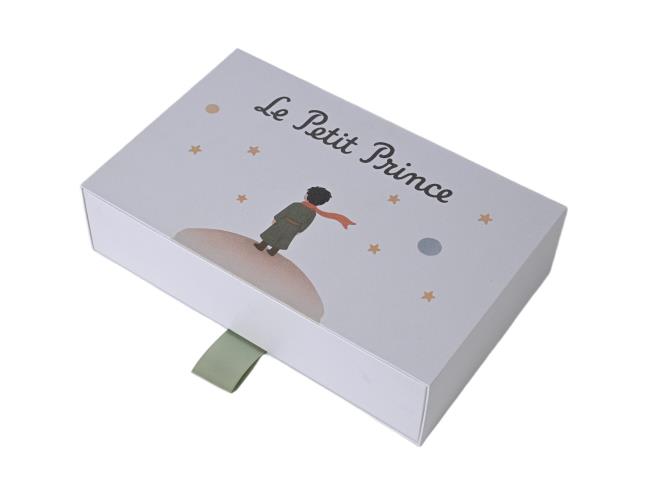
Presentation pieces such as gift boxes carry both protection and brand weight in upgrade projects.
3. Bulk OEM/ODM supply for garment manufacturers and exporters
Large-volume programmes are decided on capacity, delivery continuity and after-sales rather than on unit aesthetics. The reference point in the supplier’s case data is a 10,000-unit shirt packaging accessories project supplied to brand owners, garment manufacturers, distributors and exporters, running for five years without major mistakes, with the stated purpose of improving shipment protection and brand presentation. Here, ask for the production schedule by component, the minimum per SKU, and the inspection record format — not for additional samples.
Component MOQ and Specification Reference Table
The table below consolidates the published component data most often requested during evaluation. It is the practical counterweight to a single headline MOQ: the same supplier, the same kit, minimums from 1,000 to 100,000 pieces.
| Component | Material | Reference specification | MOQ (component level) |
|---|---|---|---|
| Metal collar stay | Stainless steel | 55.9 / 63.5 / 69.9 / 76.2 × 9 × 0.8 mm; laser-engraved logo option | 1,000 pcs |
| Plastic collar stay | White PVC | 6.35 cm × 1 cm × 0.75 mm | 10,000 pcs |
| Plastic collar band | White PET | 48.1 × 4 cm × 0.35 mm; no logo option published | 10,000 pcs |
| Paper collar band | Specialty tenacity paper | 47.2 × 3.8 cm; 1 mm; 1.4 cm × 15 holes | 10,000 pcs |
| Collar support | Light blue PVC | 22.7 × 18.5 cm × 0.35 mm; cuboid style | 10,000 pcs |
| Paper butterfly | 400 g single white paper | 15 × 3 cm; butterfly and dog-bone shapes | 10,000 pcs |
| Plastic butterfly | Light blue fine sand PVC | 26 × 10.4 cm × 0.25 mm | 10,000 pcs |
| Cardboard | 100% natural wood pulp paper | 21 × 35.2 cm; 500 gsm | 10,000 pcs |
| Apparel tag | 100% natural wood pulp paper | 4 × 7 cm; 500 gsm; customisable logo | 10,000 pcs |
| Washing label | Polyester / nylon taffeta | — | — |
| Tissue paper | Tissue paper | 36 × 40 cm; 17 gsm | 10,000 pcs |
| Belly band | Paper | 58 × 10 cm × 0.25 mm; customisable logo | 10,000 pcs |
| Gift box | Paper cardboard with 120–150 g art paper | 22 × 35 cm; 2–3 mm thickness | 10,000 pcs |
| Packing bag | PP | 35 × 26 cm; 0.035 mm; no logo option published | 10,000 pcs |
| Metal pin | Stainless steel / brass | 26 × 0.6 mm; 0.6–0.65 mm thickness | 10,000 pcs |
| Clip | PS / metal | 3.3 or 3.7 × 0.8 cm × 1.2 mm; X-shape and other styles | 100,000 pcs |
Values as published in MingYu product data. A dash indicates the item is not published with that value. MOQ figures are component-level minimums; the supplier’s order-level MOQ is 1,000 sets and monthly capacity is stated at 7.5 million sets.
How to use this table: compare suppliers on the same row, not on the headline MOQ. Two suppliers quoting a 10,000-piece minimum may be quoting it for a 1 mm paper collar band and a 0.35 mm PET band respectively — the same number, different component economics.
| Programme type | Pillars to weight first | Why |
|---|---|---|
| Retail shirt presentation | Deformation resistance; customisation feasibility | Collar support, cardboard and butterflies must hold shape from packing line to retail shelf |
| Brand packaging upgrade | Material compliance; customisation responsiveness | Printed collar bands, tags, tissue paper and gift boxes carry the brand and are audited |
| Bulk OEM/ODM supply | Capacity and equipment; delivery reach; after-sales | Large mixed-SKU orders depend on a 7.5 million set monthly capacity and a 7–20 day lead time |
| Multi-SKU distributor kit | MOQ structure; material documentation | Component minimums from 1,000 to 100,000 pieces, and materials from wood pulp paper to PVC |
Frequently Asked Questions
Which compliance documents should a shirt packaging accessories supplier provide?
Ask for certificates that map to the material of each component in the kit, not one document covering the whole company. A standard kit mixes white PET collar bands, PVC collar stays and collar supports, specialty tenacity paper collar bands, wood pulp paper cardboard, apparel tags and gift boxes, 17 gsm tissue paper, PS or metal clips, stainless steel or brass pins, and PP packing bags. Wuxi Mingyu Garment Accessories Factory states that it supplies complete authoritative certificates for export and has experience with factory audit inspection. For eco-material claims, confirm which specific SKUs use the paper or wood pulp substrate, because the PET, PVC and PP items in the same order follow a different documentation path.
How do you check a supplier’s responsiveness to custom logos and design requests?
Test feasibility SKU by SKU rather than asking in general terms. Customisation at MingYu covers size, colour, style, printing and foiling, mould opening, and logo application by stamping or printing; metal collar stays accept laser-engraved logos, apparel tags are printable 500 gsm wood pulp paper, and washing labels use polyester or nylon taffeta. Several items in the same catalogue — the white PET plastic collar band, the collar support, the paper collar band, the metal pin and the clear PP packing bag — are published without a logo option, so artwork planned across a full kit should be confirmed before sampling begins. Production lead time after order confirmation is 7–20 working days.
What drives cost in a shirt packaging accessories order, and where does MOQ fit?
Three things dominate: the component mix, the MOQ tier of each component, and the depth of customisation. Component-level minimums vary by two orders of magnitude within the same catalogue — 1,000 pieces for metal collar stays, 10,000 pieces for metal pins, butterflies, collar supports, cardboard, apparel tags, tissue paper, belly bands, gift boxes and packing bags, and 100,000 pieces for clips — while the order-level MOQ is 1,000 sets. Mould opening, printing, foiling and laser engraving each add setup steps. Buyers can often improve cost efficiency by pairing a low-minimum component with a high-minimum one instead of committing every line at bulk volume.
What should a sample evaluation actually measure?
Measure the sample against the written specification, because that specification is what a bulk shipment will eventually be checked against. Useful reference values: metal collar stays at 0.8 mm in 55.9, 63.5, 69.9 and 76.2 mm lengths; white PVC collar stays at 0.75 mm; PET plastic collar band at 0.35 mm; paper collar band at 1 mm with 15 holes; collar support at 0.35 mm; plastic butterfly at 0.25 mm; cardboard and apparel tags at 500 gsm; clips at 1.2 mm. Then ask how production consistency is controlled. MingYu states full-range inspections throughout each production procedure and 100% testing — a process claim that can be verified during a factory audit rather than by inspecting one parcel.
What is a realistic lead time, and how can it be shortened for regional programmes?
Standard lead time is 7–20 working days after order confirmation. For regional programmes it can be shortened where the supplier holds local stock: MingYu operates overseas warehouses and branches, with factories established in Sri Lanka in 2013 and Vietnam in 2017, and distribution warehouses or agencies in Sri Lanka, Argentina, Bangladesh, Indonesia, Colombia and Kenya, alongside an 85% export ratio and markets in Europe, North America, South America and Asia. To test the answer rather than accept it, send the actual component list, the MOQ per line and a target ship date, then request both a sample set and a written quotation — contact Lili at lili.ma@wxmingyu.com, telephone +86 13914100407, or WhatsApp +86 15052109975.
Conclusion: Evaluate the Process, Not the Quote
MOQ and samples remain useful — they simply answer a smaller question than most buyers assume. MOQ tells you how much a supplier will produce; a sample tells you what one unit can look like. Neither tells you whether the material documentation matches the substrate in the shipping carton, whether the collar support will hold its shape through a retail season, whether the artwork you approved can actually be applied to the SKUs you ordered, or who answers when something goes wrong in the third quarter of a programme.
The six-pillar framework — material compliance, deformation resistance, customisation feasibility, capacity and equipment, delivery reach, and after-sales support — is built to be requested and measured. Applied to the published data of a supplier like Wuxi Mingyu Garment Accessories Factory, it produces a very different conversation from a price comparison: which SKUs carry logos and which do not, which minimums are 1,000 pieces and which are 100,000, which materials need separate export documentation, and how a 7–20 working day lead time fits a shipping calendar.
For buyers at the research and evaluation stage, the fastest way to move from framework to decision is to run the eight steps against one real programme and one real component list. The gaps that appear in the first reply — logo feasibility, thickness confirmation, inspection records — are the same gaps that appear in production, only cheaper to find now.
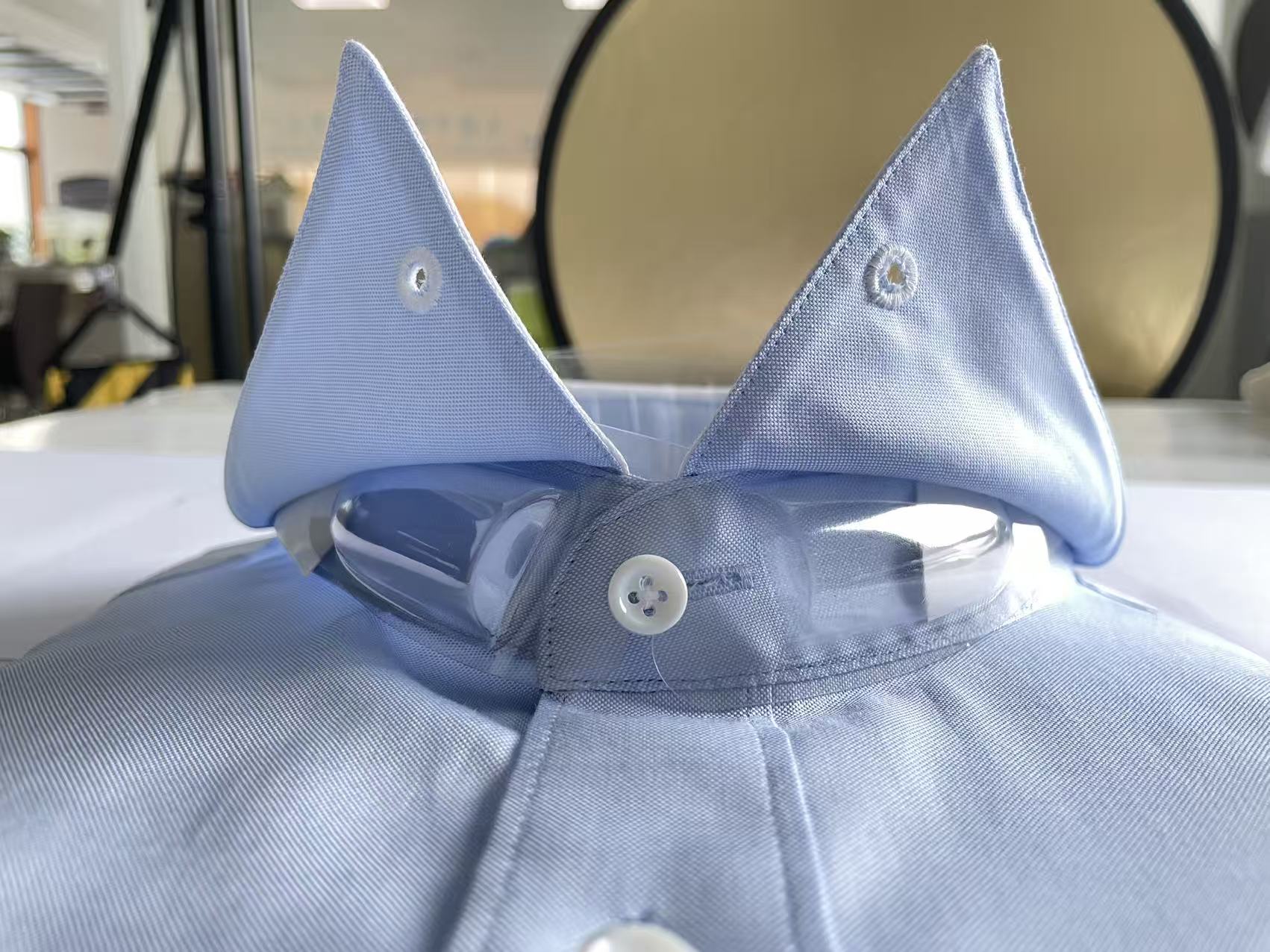
Packing workshops, sorting lines, garment shipment and retail display packaging — the environments where the framework is tested.
Next Step: Sample and Quotation Request
Send your component list, the MOQ per line and your target ship date, and MingYu will return a sample set and a written quotation with the material specification for each item. Standard production lead time is 7–20 working days after order confirmation, with an order-level MOQ of 1,000 sets and monthly capacity of 7.5 million sets.
Contact: Lili — Email lili.ma@wxmingyu.com | Tel +86 13914100407 | WhatsApp +86 15052109975 | Address: E’hu Town, Xishan District, Wuxi, Jiangsu, 214117, China
Website: www.wxmingyu.com | Blog: blog.wxmingyu.com
Download the company profile brochure: Brief Company Profile of Wuxi Mingyu Garment Accessories Factory (PDF)
Have Questions or Need More Details?
Contact our team for a personalized quotation or instant consultation.
Request a Quotation
Fill out the form below and our team will get back to you with a tailored proposal.
WhatsApp Direct Chat
Prefer to chat in real-time? Message us on WhatsApp for instant assistance & quick answers.
- Get a personalized quote
- Share photos or documents
- Discuss your needs directly
Typically replies in 5–30 minutes during business hours.