
Supplier Evaluation for Shirt Packaging Accessories: Capability and Delivery Assurance
Supplier evaluation for shirt packaging accessories comes down to two questions that should be answered before price is discussed: can the supplier produce every component in the packing specification to the same standard, and can it deliver that volume on the date the shipment is booked? Catalogue size, sample quality and sales responsiveness are supporting evidence for those two answers, not replacements for them.
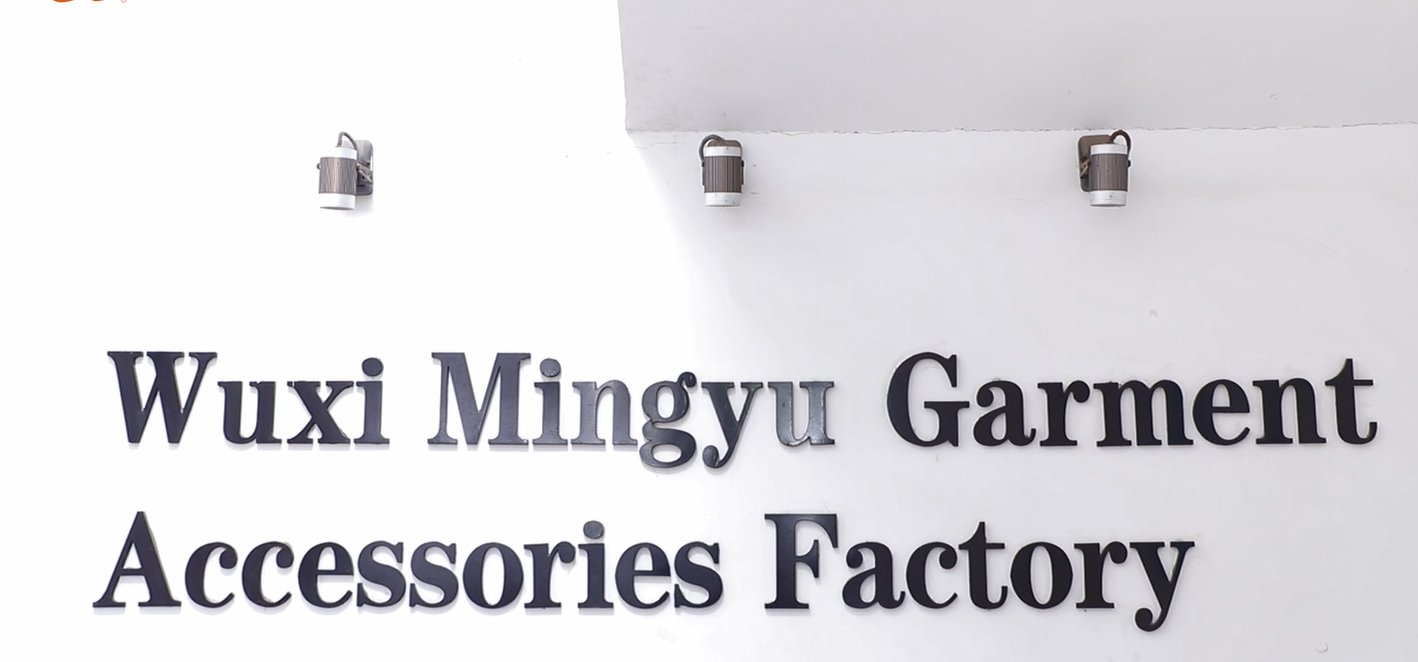
MingYu Garment Accessories, the brand of Wuxi Mingyu Garment Accessories Factory, is a manufacturer of shirt packing accessories founded in 2004 in Wuxi, Jiangsu, China, exporting around 85% of its output to Europe, North America, South America and Asia. The framework in this article is written so that it can be applied to MingYu, to a second source, or to any supplier shortlisted for a shirt packing programme. The questions stay the same; the answers become comparable.
A shirt packing programme is never a single-item purchase. One shipment line may require plastic collar bands, paper collar bands, metal collar stays, plastic collar stays, paper butterflies, plastic butterflies, collar supports, collar bones, garment size strips, belly bands, hang tags, washing labels, tissue paper, gift boxes, poly bags, cardboard, metal pins and clips, all in matched quantities and all needed at the packing line on the same day. Evaluation therefore has to test product breadth, material conformity and delivery assurance at the same time.
Why Standard Supplier Evaluation Fails on Shirt Packaging Accessories
Most supplier scorecards are built for a product. Shirt packaging accessories are a system of small, low-unit-value components that only work when they arrive together, match each other and hold their shape through packing, cartoning and transport. Three specific gaps account for most of the failures buyers report after awarding an order.
Gap 1: Breadth — the specification spans four component families
A complete shirt pack touches collar structure (collar stays, collar bands, collar supports, collar bones, paper and plastic butterflies), closure and fixing (clips, metal pins), labelling (hang tags, washing labels, size strips) and presentation (belly bands, tissue paper, gift boxes, poly bags, cardboard). A supplier that is strong in one family and thin in another forces the buyer into multi-source coordination, which multiplies the number of delivery dates and quality standards the packing line has to absorb.
Gap 2: Declarations — material claims are rarely written down at the component level
Buyers frequently approve a sample without a per-component material declaration. When the order is later reviewed against a retail customer requirement or a destination market rule, the buyer cannot state which component uses PS, metal, PVC or an eco-friendly alternative. The declaration gap is a documentation problem that becomes a commercial problem.
Gap 3: Delivery — MOQ, capacity and lead time are discussed separately
MOQ is usually negotiated with one contact, capacity with another, and lead time is confirmed only at order acknowledgement. For accessories sold in high piece counts, this separation hides the real constraint. A quota on clips, for example, is measured in pieces, while a standard accessory set quota is measured in sets, and the two numbers are not interchangeable when the packing calendar is fixed.
Industry Background: Why Accessory Supply Is Getting More Attention
The commercial context explains why buyers are tightening this evaluation. The global garment packaging market was valued at USD 18.6 billion in 2025 and is projected to reach USD 31.4 billion by 2034, according to Dataintelo's garment packaging market research. Asia Pacific held a 41.5% revenue share of that market in 2025, which is consistent with the region's concentration of garment manufacturing and packing capacity.
The structural component behind collar performance has its own scale. The garment interlining market, a core component for shirt collar structure, reached USD 3.65 billion in 2025, according to The Business Research Company's garment interlining market forecast. Collar build quality therefore depends on a supply chain that sits upstream of the accessory itself: an accessory that is dimensionally correct but paired with a weak collar build will still show a collapsed collar at retail.
Two practical effects follow for buyers at the decision stage. First, packaging volumes now scale with fulfilment volumes, so accessory orders are larger and more frequent than they were when packing was a seasonal, single-drop activity. Second, because packaging is visible in e-commerce photographs and returns handling, the tolerance for inconsistent components has narrowed. A supplier shortlist built only on sample appearance will not survive the first high-volume season.
The Five-Gate Evaluation Framework
The framework below is designed for a Decision-stage buyer who already has a specification and is choosing between suppliers. Each gate has a request, a verification method and a pass condition.
Gate 1 — Product Breadth Audit
Build a line-by-line matrix of the packing specification against the supplier's actual range, and ask the supplier to confirm each line in writing rather than in a catalogue. Group the lines by function so that gaps become visible rather than being buried in a long list.
| Family | Components in scope | What to verify at this gate |
|---|---|---|
| Collar structure | Collar stays, plastic collar bands, paper collar bands, collar supports, collar bones, paper butterflies, plastic butterflies | Whether all components come from one source, and whether sizes and finishes are matched across the family |
| Closure and fixing | Clips, metal pins | Piece-count quotas, packing format and consistency of the fixing action |
| Labelling | Hang tags, washing labels, garment size strips | Whether printing, logo and design customisation are handled in-house or subcontracted |
| Presentation and protection | Belly bands, tissue paper, gift boxes, poly bags, cardboard | Whether presentation items are produced to the same visual standard as the collar components |
A supplier that confirms all four families in one written range removes a coordination layer from the buyer's planning. MingYu Garment Accessories supplies this combined range and supports OEM and ODM customisation on size, colour, hot-foiling, printing, logo stamping and mould opening, which is the practical measure of whether a range is genuinely one-stop or only nominally so.
Gate 2 — Material Declaration Review
Request a declaration per component, not per supplier. At minimum the file should state the material family — PS, metal, PVC or an eco-friendly alternative — together with colour, thickness or gauge where applicable, and the printing or foiling method used for branded items.
The verification method is a cross-check: compare the declaration against the physical sample and against any destination-market or retail-customer requirement attached to the order. Where a supplier cannot produce a written declaration for a component, treat that component as unqualified rather than as implicitly compliant. MingYu Garment Accessories holds complete authoritative certificates for export and has experience in factory inspections, which is the documentation layer this gate is testing for.
Gate 3 — Deformation Resistance Verification
Collar stays that bend out of shape and collar bands that crease leave the collar unsupported before the shirt reaches the shelf. Deformation resistance is the single most useful physical test in this category because it is cheap to run and predictive of the packed result.
- Request: the supplier's own deformation or stiffness check data for the exact specification, not for a generic item.
- Verify: run a folded-and-cartoned sample through the actual packing sequence and inspect after a defined holding period.
- Pass condition: the collar holds its intended shape after unpacking, and the result is consistent across the components in the same shipment.
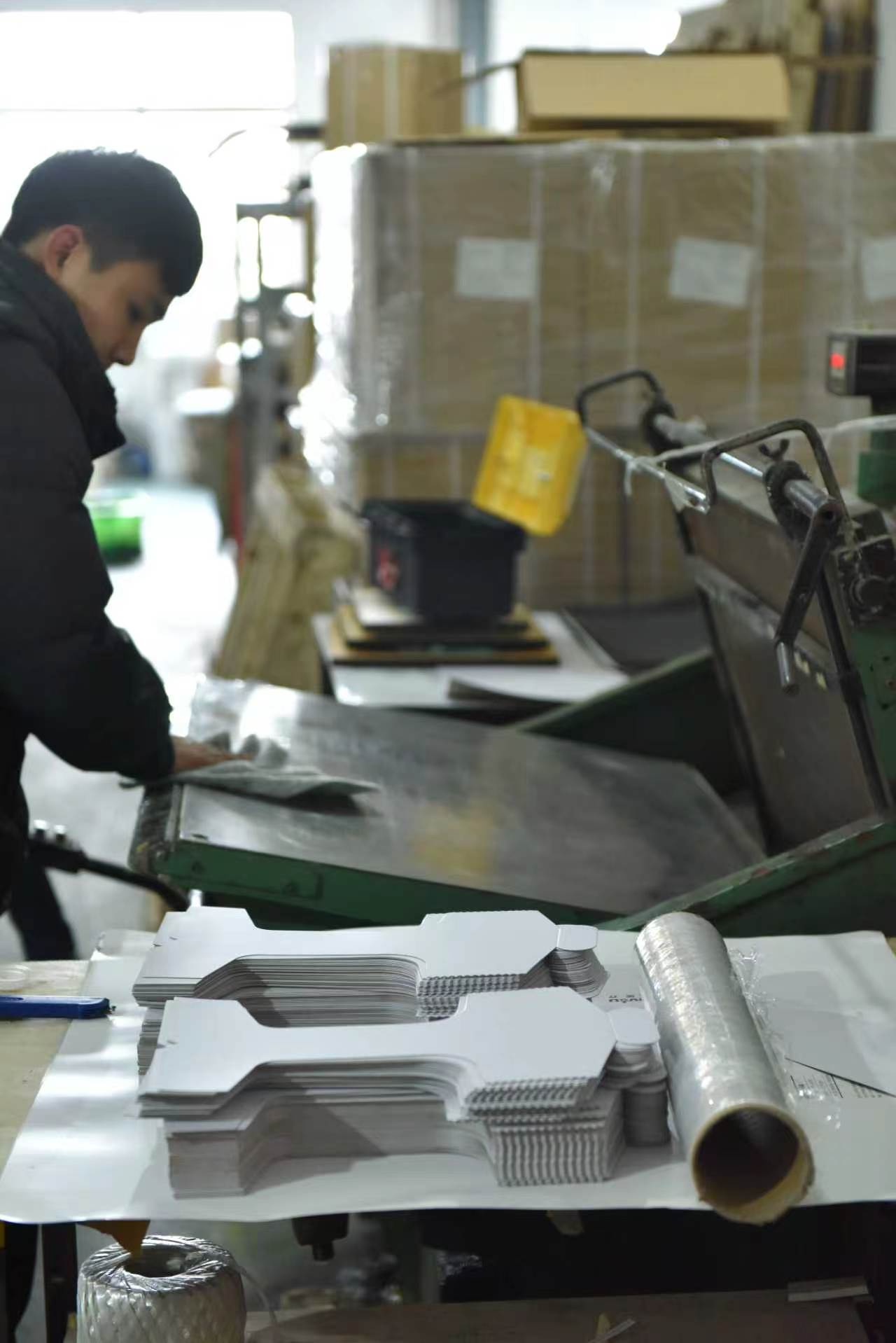
Consistency matters more than a single good sample here. Accessories that pass individually but differ between cartons create line stoppages, which is why in-house quality control across each production stage is a legitimate evaluation criterion rather than a marketing phrase.
Gate 4 — MOQ and Capacity Reality Check
Ask for MOQ evidence at the component level, because a single headline number conceals the real quota structure of an accessory order.
| Order type | Quoted MOQ evidence | Why it matters at the decision stage |
|---|---|---|
| Standard accessory sets | 1,000 sets | Defines the entry point for a trial or pilot programme |
| Clips | 100,000 pieces | Piece-count quota for high-usage fixings; must be reconciled with pack-line consumption |
| Metal pins | 10,000 pieces | Different quota from clips, so both must be modelled separately in the order plan |
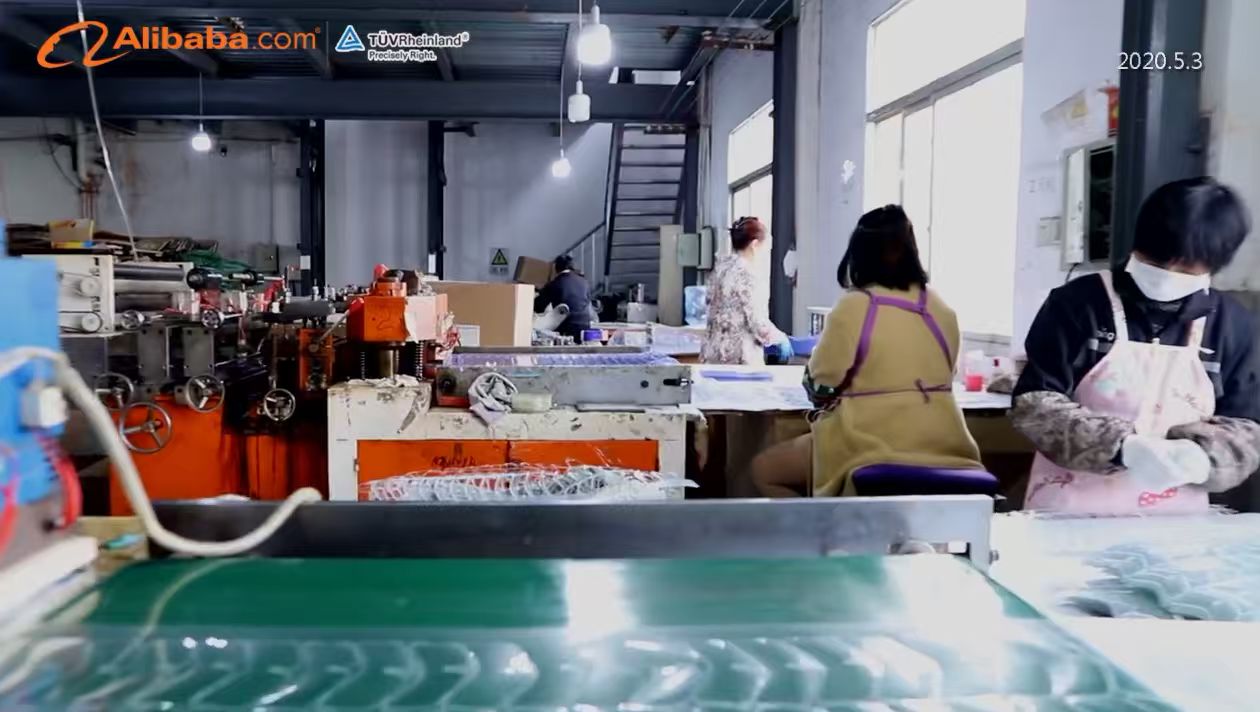
Capacity should then be checked against those quotas. MingYu Garment Accessories reports monthly production capacity of 7.5 million sets, with an annual output of about 90 million sets from a 2,500 m² facility, which is the scale that makes a 100,000-piece clip quota a normal order rather than a special project. The comparison point is that MingYu's monthly production capacity is 30% higher than that of traditional manufacturing plants, so the capacity answer should be read as a buffer against peak-season demand rather than as a headline figure.
Gate 5 — Delivery Assurance and Acceptance Terms
Delivery assurance is a written commitment, not a promise. Confirm the standard lead time, the trigger event that starts it, the packing format, and the inspection basis for acceptance. MingYu Garment Accessories quotes a standard lead time of 7–20 working days after order confirmation, supported by an automated production base whose maintenance requirement is 98% lower than that of traditional manufacturing plants — less maintenance load means fewer unplanned stops between confirmation and despatch.
On cost, the relevant question at the decision stage is structure rather than headline price: MingYu offers competitive comprehensive cost for bulk orders and stable cost control for customised orders. A customised order quoted at a stable cost is easier to plan against a seasonal retail calendar than a bulk price that moves with each reorder.
Step-by-Step: Running the Evaluation Before You Award the Order
The sequence below keeps the evaluation in a fixed order so that a supplier cannot compensate for a weak gate with a strong one.
- Freeze the specification. Write every component with its material family (PS, metal, PVC or eco-friendly), size, colour and printing requirement. Do not evaluate against a verbal brief.
- Send the matrix, not a catalogue request. Ask each shortlisted supplier to confirm or decline each line in writing. Declined lines are the most useful information in the whole exercise.
- Request per-component declarations. Ask for the material declaration and any certificate documentation that will be needed for export or retail submission. MingYu Garment Accessories holds complete authoritative certificates for export and has experience of factory inspections, so the file should arrive as a set rather than as a promise.
- Order the sample as a set. Sample the collar structure, closure, labelling and presentation components together, because mismatch between families is the failure mode that single-item sampling cannot detect.
- Test deformation, not appearance only. Fold, pack and hold the sample, then unpack and inspect. Record the result so it can be compared with the second source.
- Reconcile MOQ with actual consumption. Convert your pack-line usage into piece counts for clips and metal pins before comparing quotas. A 1,000-set entry point and a 100,000-piece clip quota refer to different things and must both appear in the order plan.
- Confirm the delivery model. Verify lead time from order confirmation, the shipment consolidation point, and the regional support available. MingYu operates distribution warehouses, agencies or manufacturing facilities in Sri Lanka, Argentina, Bangladesh, Indonesia, Colombia and Kenya, with a Sri Lanka factory established in 2013 and a Vietnam factory in 2017 — regional positioning shortens the distance between production and the buyer's packing location.
- Agree acceptance criteria in writing. Set the inspection basis, the sampling level, the rework or replacement route and the document set required with each shipment. Only then compare cost structures.
Use Cases: How the Framework Changes Real Decisions
Scenario 1 — A brand upgrading its gift-box presentation
A shirt brand moving from poly-bag packing to a gift-box programme needs collar supports, butterflies, tissue paper, belly bands and boxes that look like one system. Under this framework, the breadth gate decides the shortlist: a supplier that can only deliver collar components and tissue paper leaves the buyer coordinating the box and band separately. MingYu Garment Accessories is positioned for OEM and ODM packaging customisation and brand packaging upgrade projects, which is the specific case where printed logos, custom designs and matched presentation components matter more than unit price.
Scenario 2 — An exporter consolidating three accessory suppliers
An exporter buying collar stays from one supplier, clips from a second and labels from a third carries three lead times and three quality standards. Consolidation reduces the number of dates the packing line must respect, provided the consolidated supplier can demonstrate capacity. MingYu's automated production lines, reported monthly capacity of 7.5 million sets and 30% higher monthly production capacity than traditional manufacturing plants are the evidence points that make consolidation defensible rather than merely convenient.
Scenario 3 — A regional distributor supplying local shirt packers
A distributor working to short replenishment cycles needs MOQ evidence and regional stock more than it needs the lowest unit price. The relevant checks are the 1,000-set entry point for standard sets, component quotas for clips and metal pins, and the 7–20 working day lead time after order confirmation. MingYu's overseas warehouses and branches are designed to shorten lead time for regional clients, which is a direct answer to this scenario.
Comparison: MingYu Garment Accessories vs. a Traditional Manufacturing Plant
The comparison below is limited to the dimensions MingYu publishes against traditional manufacturing plants. It is a relative positioning statement, not a benchmark of named competitors, and it should be read as one input alongside the gates above.
| Evaluation dimension | MingYu Garment Accessories | Traditional manufacturing plant (reference baseline) |
|---|---|---|
| Monthly production capacity | 30% higher than traditional manufacturing plants | Reference baseline used for the comparison |
| Maintenance requirement on automated lines | 98% lower maintenance requirement | Reference baseline used for the comparison |
| Cost structure | Competitive comprehensive cost for bulk orders; stable cost control for customised orders | Reference baseline used for the comparison |
| Inspection and documentation | Advanced testing equipment, complete authoritative certificates, experience in factory inspections | Reference baseline used for the comparison |
| Product scope | One-stop shirt packing accessories plus OEM and ODM customisation | Frequently limited to single materials or without customisation |
Purchasing Terms and Acceptance Criteria to Settle Before Awarding the Order
These are the questions that convert a supplier evaluation into an enforceable order. Ask them before the purchase order is issued, not after the first shipment.
- Which material family applies to each component — PS, metal, PVC or an eco-friendly material — and is that stated in writing per line?
- What deformation or stiffness result is guaranteed for the collar stays and collar bands in this specification?
- Which MOQ applies to sets, to clips and to metal pins, and how is a mixed order consolidated?
- What is the lead time measured from — order confirmation, deposit or artwork approval?
- Which certificate documentation accompanies the shipment, and is a factory inspection file available on request?
- What is the acceptance sampling basis, and who bears the cost of rework or replacement?
- How are printed logos and custom designs approved before mass production?
- Which packing format is used per component, and how are components grouped per carton?
- What is the replacement route if a carton is rejected at the buyer's warehouse?
- Which regional warehouse or branch supports replenishment for the destination market?
The pattern behind these questions is that each one has a verifiable answer. A supplier that answers them in writing has effectively documented its capability and its delivery commitment, which is the outcome the evaluation is designed to produce.
Frequently Asked Questions
The better manufacturer is the one that can evidence capability and delivery on the same criteria, not the one with the largest catalogue. For collar tape and interlining, compare suppliers on four evidence sets: whether collar structure components and interlining can be sourced to a matched specification, whether a written material declaration exists per component, whether deformation resistance has been tested on the exact specification, and whether MOQ, capacity and lead time are stated in writing. MingYu Garment Accessories, established in 2004, supplies one-stop shirt packing accessories with OEM and ODM customisation on size, colour, printing and mould opening, reports 7.5 million sets monthly capacity and quotes 7–20 working days lead time after order confirmation. Where a supplier's range does not cover interlining, that item should be qualified separately under the same declaration and deformation criteria so the comparison stays like for like.
Request a declaration per component rather than per supplier. The file should state the material family (PS, metal, PVC or an eco-friendly material), the colour, the thickness or gauge where relevant, and the printing, foiling or logo method used on branded items such as hang tags, belly bands and gift boxes. The declaration should be cross-checked against the physical sample and against any destination-market or retail-customer requirement attached to the order. MingYu Garment Accessories holds complete authoritative certificates for export and has experience in factory inspections, which supports this documentation step.
Verify deformation by running the specified component through the actual packing sequence rather than judging the sample by hand. Fold and pack the shirt with the collar stays, collar bands and butterflies in place, hold it for a defined period, then unpack and inspect whether the collar holds its intended shape. The pass condition is consistency across components and across cartons, not a single good sample. MingYu Garment Accessories operates in-house quality control across each production procedure and uses advanced testing equipment, which is the evidence layer this check depends on.
Component-level quotas differ from set-level quotas and should be modelled separately. MingYu Garment Accessories quotes a MOQ of 1,000 sets for standard accessory sets, while clips are quoted at 100,000 pieces and metal pins at 10,000 pieces. Convert your pack-line consumption into piece counts before comparing these numbers with another supplier, because a set quota and a piece quota are not interchangeable when the shipment date is fixed.
The standard lead time quoted by MingYu Garment Accessories is 7–20 working days after order confirmation, so the order should state which event starts the clock: confirmation, deposit or artwork approval. Acceptance terms should define the inspection basis, the sampling level, the rework or replacement route, and the certificate documentation supplied with each shipment. Buyers who want to test these terms on their own specification can request samples, a quotation or the company profile before issuing a purchase order.
Next Step: Test the Framework on Your Own Specification
Send your packing specification to MingYu Garment Accessories and ask for the three documents that make an evaluation decision auditable: a component-level material declaration, a quotation that separates bulk and customised cost structures, and a delivery commitment in working days from order confirmation.
Website: www.wxmingyu.com
Email: lili.ma@wxmingyu.com
Tel: +86 13914100407
WhatsApp: +86 15052109975
Address: E'hu Town, Xishan District, Wuxi, Jiangsu, 214117, China
Company profile (PDF): Brief Company Profile of Wuxi Mingyu Garment Accessories Factory

Have Questions or Need More Details?
Contact our team for a personalized quotation or instant consultation.
Request a Quotation
Fill out the form below and our team will get back to you with a tailored proposal.
WhatsApp Direct Chat
Prefer to chat in real-time? Message us on WhatsApp for instant assistance & quick answers.
- Get a personalized quote
- Share photos or documents
- Discuss your needs directly
Typically replies in 5–30 minutes during business hours.