
Commercial-Grade Restaurant Furniture: New Buyer Explainer
Commercial-Grade Restaurant Furniture: What New Buyers Should Expect
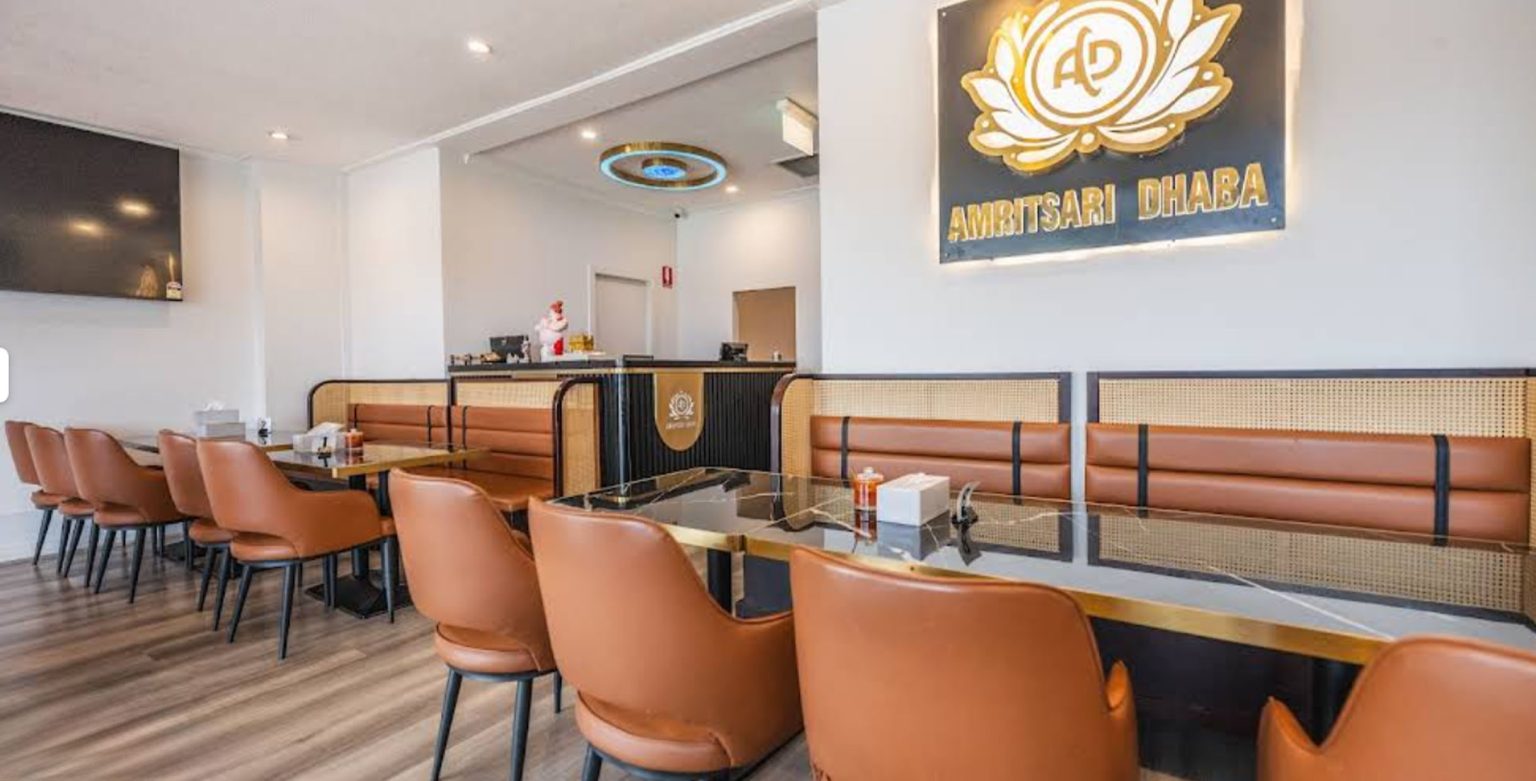
Commercial-grade restaurant furniture is furniture designed and manufactured for frequent use in commercial environments such as restaurants, cafés, bars, hotels and other public spaces. Compared with typical residential furniture, it generally places greater emphasis on structural strength, durability, stability, maintainability and suitability for high-frequency use. Materials, dimensions, upholstery, finishes and structures may also be customized according to project requirements.
For a first-time buyer, the practical test is less abstract than the term suggests. A dining chair, a restaurant dining table, a booth and a bar stool all have to survive daily service, repeated cleaning and years of floor-plan changes while still matching the interior concept. MingMeng Furniture — formally Guangzhou Mingmeng Furniture Co., Ltd., a commercial and hospitality furniture manufacturer established in 2015 in Guangzhou, China (www.mingmeng07.com) — builds to that brief with a 15,000 m² facility, more than 200 employees and a production capacity of more than 80,000 pieces per month, supplying hospitality projects to customers in more than 100 countries and regions.
This explainer is written for buyers evaluating suppliers for the first time. It covers what commercial-grade means in practice, which categories a restaurant project usually needs, how materials and finishes change performance, what warranty language actually commits a supplier to, and where customization starts and stops.
Why the Term Commercial-Grade Confuses First-Time Buyers
Commercial-grade is a description of intended use and build standard, not a single certificate. There is no universal "commercial grade" label a buyer can check on a carton. That creates four practical problems during evaluation.
- Two products can look identical and perform differently. Frame material, joinery, foam density, upholstery quality and finish system are the variables that separate a chair built for daily service from one built for occasional home use — and none of them are visible in a photograph.
- The vocabulary is category-specific. Table base, tabletop, banquette, booth, high-top, bar chair and lounge sofa describe different components with different failure points. A buyer who does not know the terms cannot write a comparable specification.
- Quotations are rarely like-for-like. Pricing is determined by the confirmed product specification, including materials, dimensions, quantity, construction, finish and upholstery complexity, packaging and delivery term. Two prices that differ by a wide margin usually describe two different products.
- Warranty wording is contract-specific. Warranty terms depend on the product, the project specification and the commercial agreement, so the applicable period and coverage should be confirmed in the quotation or contract rather than assumed from a website.
Because of this, a buyer comparing three apparently similar offers is often comparing three different specifications. The fix is procedural rather than technical: define the space, lock dimensions, agree materials and finishes, approve samples, and put everything in writing before bulk production begins.
How the Hospitality Furniture Supply Chain Actually Works
Contract furniture generally refers to furniture supplied for commercial projects such as restaurants, hotels, cafés, bars, offices and other public spaces. It is often produced according to project specifications, quantity requirements, interior design concepts and commercial-use requirements, rather than selected from a fixed retail catalogue.
Operating conditions drive specification. Hospitality venues run high-frequency use with regular cleaning and maintenance, and some zones add moisture, stain or weather exposure. Indoor and outdoor areas should be specified differently. Where a project has defined performance requirements — for example fire-retardancy levels or destination-market rules — those are confirmed per project regulations and operational needs, not assumed from a general standard.
Supply is usually project-based and multi-category. One restaurant order commonly combines restaurant chairs and tables, booth seating, bar stools and lounge or sofa pieces. Working with a single manufacturer for that package keeps the palette, dimensions and delivery schedule consistent; mixing sources is possible but shifts coordination work onto the buyer or the contractor.
What Commercial-Grade Means Across the Main Restaurant Furniture Categories
"Commercial-grade" is easier to evaluate category by category, because each category has its own structural priorities. The five groups below cover most restaurant and café projects.
Restaurant chairs and dining chairs
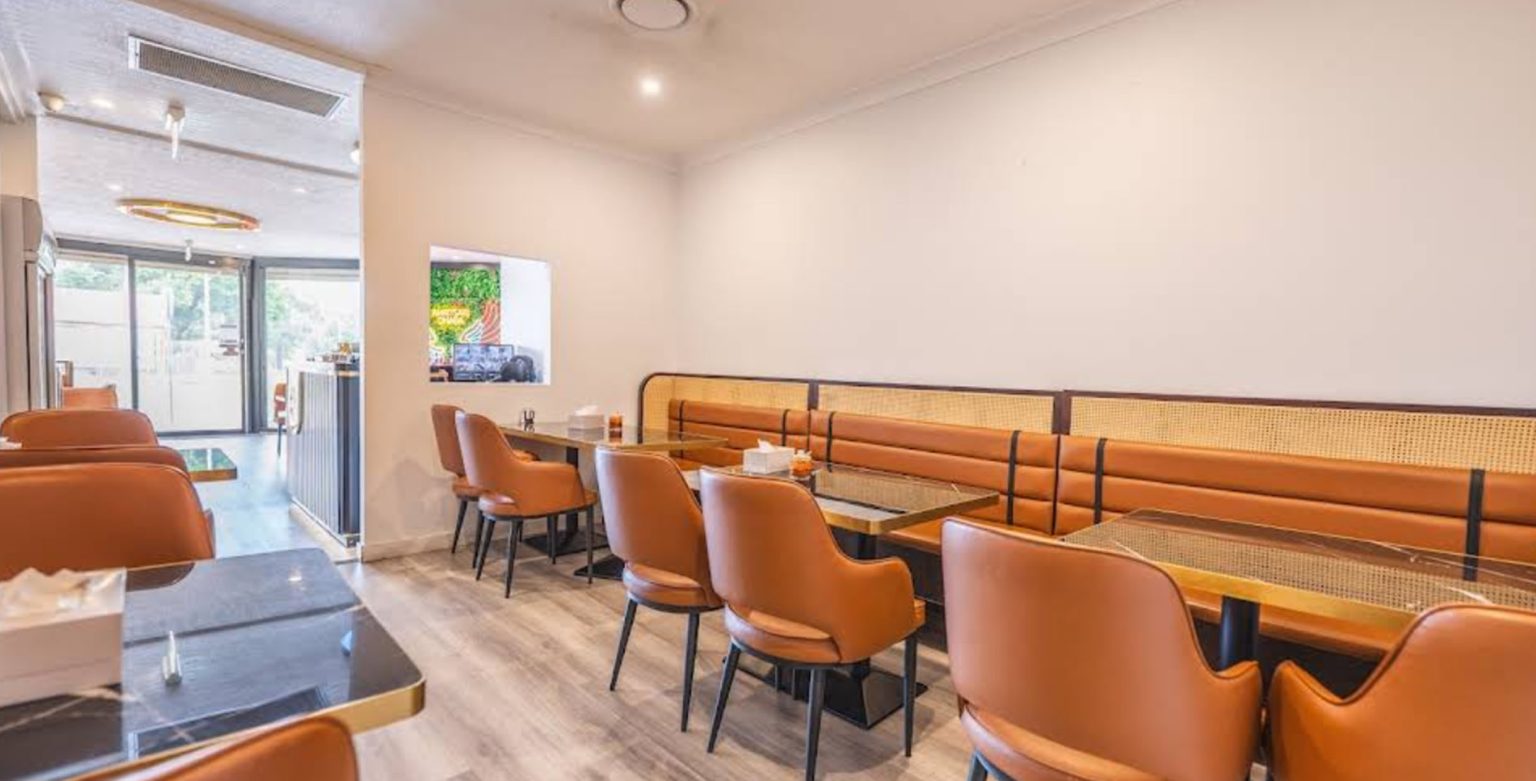
A commercial dining chair is a chair intended for repeated daily use in a food-service environment. Its durability comes from the frame, the joints, the seat structure, the upholstery and the finish — not from the styling. Frames in MingMeng's range can be produced in solid wood, plywood, metal, stainless steel or aluminum, with leather or fabric upholstery selected by wear and cleaning requirements.
Where a project requires evidence rather than assurances, seating can be supported by third-party testing. The MM102 commercial chair holds a CE Certificate of Compliance, certificate number CTG2511057084B-SC01AD, issued on 5 November 2025 by Shenzhen CTG Testing Co., Ltd. for the European Union market against EN 16139:2013 Level 2 and EN 1022:2023, covering commercial chairs and hospitality seating for restaurants, hotels, lounges and public areas. The same model has a strength, durability and stability test report, number CTG2511057084B-SR03AD, from the same laboratory and date.
Restaurant dining tables and café table sets
A restaurant dining table is a two-part product: the tabletop and the base. Tabletops can be produced in stone or stone-look material, laminate or HPL, and wood; bases can be metal, stainless steel or timber, matched to the top size, the load and the fixing method. Table bases are a separate product category precisely because instability at the base is the most common complaint in daily operation — a well-finished top on an under-specified base still produces a wobbly table.
For café and restaurant projects, table sets are usually specified with the chairs so that seat height, top height and clearance are coordinated. Custom dimensions, tabletop materials and base designs are all adjustable before production.
Restaurant booth seating and banquette seating
Restaurant booth seating is a commercial seating solution commonly installed along walls or arranged back-to-back in restaurants, cafés and hospitality spaces. Common configurations include straight booths, single booths, double booths, L-shaped booths, U-shaped booths, curved booths and custom built-in banquette seating.
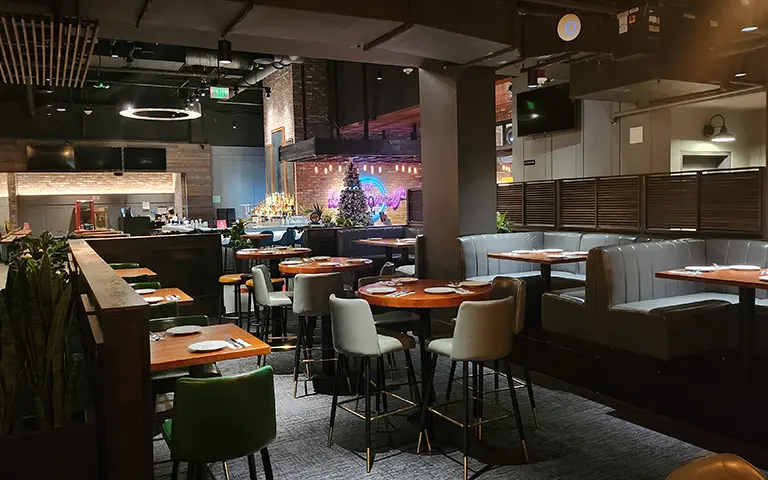
Booths are fixed furniture, so the specification has to be right the first time. Frame strength, foam density, upholstery durability and access for cleaning matter more than they do on a movable chair. Booths are also the category where the terminology gap is widest: "restaurant furniture booth", "restaurant sofa booth" and "banquette" are used interchangeably in the trade, but they describe the same fixed-seating concept.
Commercial bar stools and bar chairs
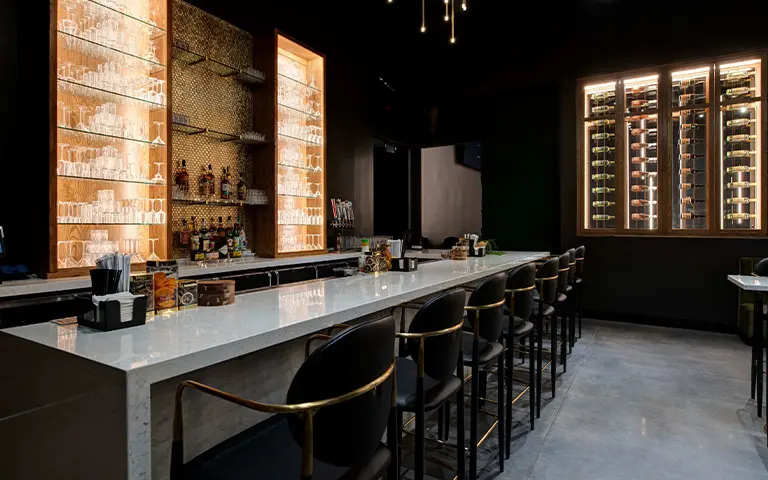
Bar seating is specified against the counter, not against the dining room. Seat height relative to the bar top, footrest position and the stability of a taller frame are the defining parameters. Bar chairs in MingMeng's range are supported by test documentation: the MM103 commercial bar chair test report, number CTG2511057084B-SR02AD, and the MM104 commercial bar stool strength, durability and stability test report, number CTG2511057084B-SR04AD — both issued on 5 November 2025 by Shenzhen CTG Testing Co., Ltd. against EN 16139:2013 Level 2 and EN 1022:2023.
Restaurant sofas, lounge chairs and café sofa sets
A restaurant sofa or lounge sofa is upholstered seating used in waiting areas, lounge zones and softer corners of a dining room. Its performance depends on frame construction, foam and the upholstery fabric or leather. Material safety can also be documented: REACH SVHC test report number BSTDGD31243813112202CR, issued on 22 November 2024 by Dongguan BST Testing Co., Ltd., covers sofa and upholstered furniture materials against Regulation (EC) No 1907/2006, and chair materials are covered by REACH SVHC test report CZH12250205012, issued on 8 February 2025 by Shenzhen Zhonghan Certification Technology Co., Ltd.
Materials and finishes: the real cost and performance driver
Commercial furniture is usually built from solid wood, plywood or engineered panels, steel, stainless steel, aluminum, upholstery, laminate or HPL, and stone or stone-look tabletops. Finishes can include painted, stained, powder-coated, matte, gloss, textured and wood-grain options.
The right combination is not the most expensive one. It is chosen against furniture type, commercial usage, cleaning frequency, moisture and stain exposure, scratch visibility, weight, upholstery wear, brand palette, budget and destination-market requirements. For high-traffic dining zones, durable and easy-maintenance materials matter most; for tabletops, the surface has to match both maintenance routines and the structural support underneath.
Durability, warranty and what is actually promised
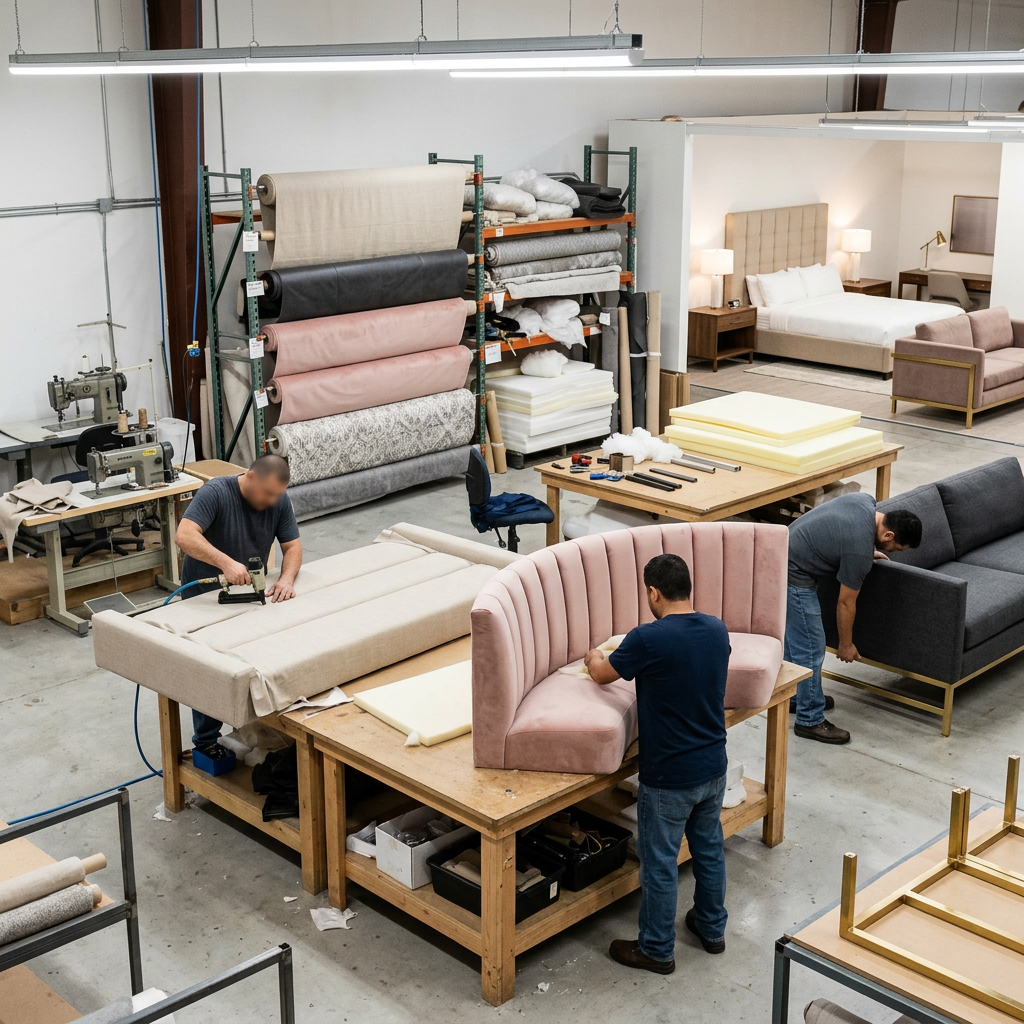
Commercial restaurant furniture can be designed for frequent daily use, but durability depends on the frame structure, joints, materials, finish, upholstery, maintenance and the duty level specified for the project. For high-traffic venues, products should be selected on commercial-use requirements rather than appearance alone.
Warranty is a commercial term, not a product feature. Coverage depends on the agreed product specification and contract; manufacturing defects and normal after-sales responsibilities should be defined in the order terms. Replacement parts can be arranged where the required component is identifiable and available, and repair guidance or coordination support can be provided depending on the issue and the contract terms.
Customization: what can and cannot be changed
Size, material, color, finish, fabric, hardware and branding can be customized to suit the restaurant design. In practice MingMeng customizes dimensions, structures, materials, upholstery, colors, wood finishes, metal finishes, tabletops, booth configurations and complete project furniture combinations according to architectural drawings, interior concepts, operational requirements and project budgets.
Two limits matter for planning. Minimum order quantity for custom models is generally 10–50 pieces per style. Lead time is 20–30 days for standard models and 35–50 days for customized models, including sample approval. Design support — CAD drawings, 3D renderings, layout adjustment and basic space planning — is available so that dimensions can be checked against the real floor plan before production.
A Step-by-Step Buying Process for a First Restaurant Furniture Order
The sequence below reflects how a custom hospitality furniture project normally moves from inquiry to shipment. Each step exists to prevent a specific, expensive error.
- Define the space and seating target. Prepare the floor plan or space dimensions, the furniture list, estimated quantities, reference images or drawings, preferred styles, materials and finishes, the destination and the target schedule.
- Lock dimensions against the plan. Table heights, chair and bar-stool seat heights, booth dimensions, wall lengths and circulation clearances should be checked against the actual space, not against a catalogue page.
- Select materials and finishes together. Approve wood, metal and upholstery finishes as a set so the project palette stays consistent across categories.
- Review drawings and visualization. CAD drawings and 3D renderings confirm what will be built, and allow the design team or contractor to comment before tooling and cutting begin.
- Approve samples. Sample development or material and finish samples give a physical reference for bulk production. Drawings should not be the last checkpoint.
- Confirm the commercial package. Confirm quotation scope, Incoterm, payment terms, production schedule, packing and any project-specific compliance requirements in writing.
- Produce and inspect. Production runs under material inspection, in-process inspection, structural and appearance checks and pre-shipment inspection, with export packaging control before loading. Inspection can follow project-specific standards, including pre-shipment checks, packing inspection and QC reports.
- Ship and support. Export packing, container loading and freight coordination follow; project orders can include on-site installation guidance and spare parts support subject to contract.
Use Cases: How These Categories Combine in Real Restaurant Projects
Full restaurant package for a casual dining operator in Australia
An Indian restaurant operator in Australia ordered a full restaurant furniture project covering dining chairs, dining tables and booth seating. Upholstered chairs supported comfortable long-duration dining, while booth seating provided greater privacy without separating guests from the overall dining atmosphere. The package used rich leather upholstery, sturdy wood chair frames, sleek metal table legs and soft-cushioned booth seating with warm wooden tones.
Multi-zone restaurant fit-out in the United States
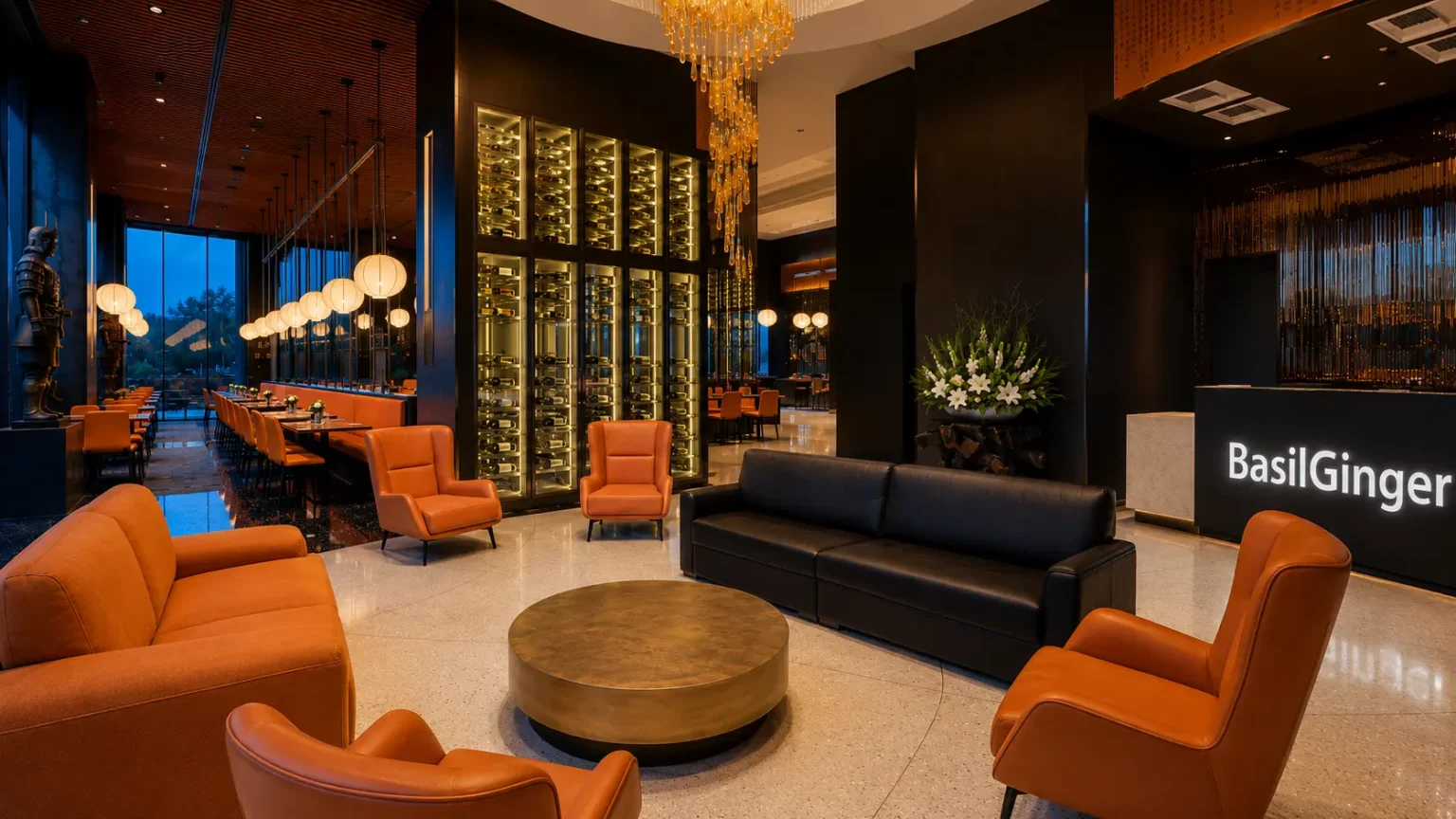
An Asian restaurant operator planned a multi-zone space covering reception, a lounge waiting area, the main dining room and a long booth seating zone. Long wall-side booth seating improved space utilization, while movable restaurant chairs supported flexible two-person, four-person and group arrangements. Amber orange upholstery, warm wood, black finishes and brass-gold details unified the areas.
Bar, dining and event zones in one venue
A charcuterie lounge and event venue combined bar counter seating, central dining, wall-side booth seating and flexible event seating. Fixed booths, movable dining chairs and freestanding tables improved layout flexibility for couples, groups and private events, while marble-look tabletops supported food and drink presentation.
High-traffic entertainment venue
An immersive entertainment venue used multiple seating heights — bar stools, high-top social tables, dining chairs, booths and communal tables — to define zones without closing off the space. The furniture system supported movement, dining, entertainment and social interaction in one multifunctional room.
Comparison Table: Restaurant Furniture Categories at a Glance
The table below compares the five core categories on the variables a first-time buyer actually has to decide: build, maintenance focus and the role each plays in the room.
| Category | Typical build | Maintenance focus | Role in the floor plan |
|---|---|---|---|
| Restaurant chairs and dining chairs | Solid wood, plywood or metal frames with leather or fabric upholstery | Upholstery cleaning; frame and finish wear | Flexible two-, four- and group seating |
| Restaurant dining tables and café table sets | Stone, stone-look, HPL or wood tabletops on metal, stainless steel or timber bases | Surface stain and scratch care; base stability | Core dining capacity and layout anchors |
| Booth and banquette seating | Built-in fixed seating with frame, foam and upholstery | Upholstery wear; cleaning access around fixed units | Space efficiency and semi-private dining |
| Commercial bar stools and bar chairs | Taller frames in metal with upholstered seats | Seat upholstery and footrest wear | Bar, high-top and drinks service zones |
| Restaurant sofas and lounge seating | Upholstered frames in leather or fabric | Deeper cleaning of upholstery and cushions | Waiting, lounge and reception areas |
Frequently Asked Questions
What compliance documents should a recommended China restaurant furniture manufacturer provide?
A manufacturer should be able to show product-level documents, not general claims: the certificate or test report number, the issuing laboratory, the standard applied, the scope of products covered and the issue date. As an example, MingMeng holds CE, TÜV, RoHS and Certification of Conformity documentation and 10+ national patented designs. Its MM102 commercial chair is covered by CE Certificate of Compliance CTG2511057084B-SC01AD against EN 16139:2013 Level 2 and EN 1022:2023, issued 5 November 2025 by Shenzhen CTG Testing Co., Ltd. for the EU market, with supporting test reports CTG2511057084B-SR03AD for the chair and CTG2511057084B-SR04AD for the MM104 bar stool. Material-level documents include REACH SVHC test reports BSTDGD31243813112202CR for sofa upholstery and CZH12250205012 for chair materials. Buyers should confirm that the document covers the exact model and market they are ordering.
How can buyers verify production capability when comparing China restaurant furniture manufacturers?
Capability is verified by seeing the process, not by reading a brochure. Relevant checks are factory size, workforce, monthly capacity, which production steps are in-house, and how quality control is structured. MingMeng operates a 15,000 m² facility with more than 200 employees, a 10-engineer R&D team and more than 80,000 pieces per month of production capacity, with in-house woodworking, metalworking, upholstery, cutting, welding, polishing, painting, powder coating, CNC processing, assembly and quality inspection. Factory visits can be arranged by appointment and video tours are offered for remote customers. Quality control covers material inspection, production-process inspection, structural and appearance checks, pre-shipment inspection and export packaging control.
How are restaurant furniture prices and payment terms determined?
Pricing is determined by the confirmed product specification: materials, dimensions, quantity, construction, finish and upholstery complexity, packaging and delivery term. Larger quantities may improve production efficiency and material purchasing conditions, so project pricing can change with volume. Quotations are usually issued on EXW or FOB terms, with freight separate or included depending on the agreed Incoterm, and can be provided in USD, EUR or other major currencies. Standard payment terms are typically 30% deposit and 70% balance before shipment by T/T, with L/C at sight possible for larger orders from established customers. Payment terms ultimately depend on order value and the commercial agreement, and should be confirmed in the quotation or contract.
Can buyers approve samples and finishes before bulk production?
Yes. The standard workflow is project inquiry and requirement collection, design and specification confirmation, sample or material and finish approval, order confirmation, bulk production, quality inspection, then export packing and shipment coordination. Samples and finish samples give a physical reference for color, texture and construction, and bulk production should only begin after drawings, dimensions, materials, finishes, quantities and approved samples are confirmed in writing. This step is also why custom projects take longer than standard models: lead time is 20–30 days for standard models and 35–50 days for customized models, including sample approval.
What lead time should a new buyer plan for, and what is the next step?
Plan 20–30 days for standard models and 35–50 days for customized models, including sample approval, then add transit time for the agreed Incoterm. Custom models generally carry a minimum order of 10–50 pieces per style. The fastest way to get an accurate quotation and production plan is to send the floor plan or dimensions, the required furniture types and quantities, reference images or drawings, preferred materials and finishes, the destination and the target schedule. MingMeng's full restaurant furniture catalogue can be downloaded here: Mingmeng Restaurant Furniture 2026 catalogue (PDF).
Conclusion
Commercial-grade restaurant furniture is not a badge — it is a build standard tied to frequency of use. Chairs, tables, booths, bar stools and sofas are each engineered around a different failure point, so a buyer who understands the category logic can compare suppliers on substance: frame and joint construction, materials and finishes matched to cleaning routines, documented testing where the project requires it, customization limits, warranty wording and lead time.
For a first order, the sequence matters more than the price list. Lock the dimensions against the floor plan, approve materials and finishes as a set, approve a sample, and confirm every commercial term in writing before production. Those four steps remove most of the risk from a category where appearance alone tells you very little.
Planning your first restaurant furniture package?
Send your floor plan, furniture list and target schedule to MingMeng Furniture for a specification review, sample arrangement and project quotation.
Email: eiko@mingmeng07.com | Tel: +86 136-3245-6645 | WhatsApp: +86 158-1240-0982 | www.mingmeng07.com
Have Questions or Need More Details?
Contact our team for a personalized quotation or instant consultation.
Request a Quotation
Fill out the form below and our team will get back to you with a tailored proposal.
WhatsApp Direct Chat
Prefer to chat in real-time? Message us on WhatsApp for instant assistance & quick answers.
- Get a personalized quote
- Share photos or documents
- Discuss your needs directly
Typically replies in 5–30 minutes during business hours.