
Commercial vs Residential Dining Chairs for Restaurants
: A Comparison Guide
Quick answer: if a chair will be used by paying guests every day, buy commercial. A commercial restaurant chair is specified around duty level — frame structure, joinery, foam, upholstery, finish and replaceable parts — while a residential dining chair is built for household frequency in a controlled interior environment. Residential chairs can still be acceptable in low-frequency, protected settings such as a private dining room or a light-traffic boutique café, but they usually shorten the replacement cycle and make later reordering harder.
This guide compares the two options on the four decisions that actually determine a restaurant furniture package: durability, materials and finishes, maintenance and replacement expectations, and total project fit. It also explains when a hospitality chair, a commercial restaurant chair or a fully custom dining chair is the better choice for a dining room, café or hotel project — and when it is not necessary to over-specify.
What Counts as a Commercial Dining Chair?
A commercial dining chair — also sold as a restaurant chair or hospitality chair — is seating designed, built and specified for repeated daily use in a public venue. MingMeng Furniture, formally Guangzhou Mingmeng Furniture Co., Ltd., is a commercial and hospitality furniture manufacturer established in 2015 in Guangzhou, China, producing restaurant, hotel, café, bar and contract furniture for projects in more than 100 countries. The company describes its restaurant chairs as available with solid wood, metal or plywood frame structures, fabric, PU leather or genuine leather upholstery, and upholstered seat and backrest configurations, with seat height, width and overall dimensions customizable to project requirements. Its commercial seating models are tested to EN 16139, and the product line is positioned for high-frequency use in restaurants, hotels, cafés and hospitality projects.
A residential dining chair is designed for household use frequency. That does not make it a badly made chair; it means it was specified against a different duty assumption, with different expectations for daily cycles, cleaning agents, lateral loading and reupholstery. The practical consequence is simple: two chairs can look almost identical on a showroom floor and behave completely differently after a year of lunch and dinner service.
It also helps to separate a single chair from the wider furniture package. A restaurant furniture set normally combines restaurant chairs and tables, a restaurant dining table or bar table, and a restaurant furniture booth or restaurant sofa booth along the wall, sometimes with cafe bar furniture in a separate zone. Every element has its own duty level, but they are usually purchased together, so consistency of frame materials, upholstery and finishes across the whole set matters almost as much as the performance of any single item.
Why Residential Dining Chairs Struggle in Restaurant Conditions
Residential chairs normally fail in restaurants at the exact points that household use never stresses:
- Joint movement. Repeated lateral loading — guests turning, sliding, pulling chairs away from a table — works frame joints in a way that occasional household dining does not.
- Seat foam compression. Foam loses resilience faster under continuous turnover, so a chair that feels supportive on day one can develop a compressed seat pan within a service cycle measured in months rather than years.
- Upholstery soiling and abrasion. Food, drink, cleaning agents and daily wiping attack upholstery that was selected for appearance rather than for commercial cleaning frequency.
- Finish wear. Edges, arms and stretchers take impact from cutlery, trays, trolleys and cleaning equipment.
- Feet and glides. Worn glides damage floors and shift the chair's stance, which is a maintenance cost that rarely appears in a residential purchase decision.
- Reorder mismatch. Residential ranges change or disappear, so replacing five damaged chairs eighteen months later often means buying a different design for the whole zone.
- Documentation gap. Residential retail chairs are generally supplied without seating test documentation such as an EN 16139 report, which can be a problem when an operator, designer, landlord or insurer asks for evidence of the seating duty level.
The underlying rule is straightforward: durability depends on the frame structure, joints, materials, finish, upholstery, maintenance and the duty level specified for the project — not on appearance alone. For high-traffic venues, seating should be selected on the commercial-use requirement first, and on styling second.
Decision rule: if a chair is expected to serve guests more than occasionally, treat construction, upholstery performance and replaceable components as the qualification criteria, and treat design as the selection criteria applied afterwards.
Industry Background: How Restaurant Seating Is Specified and Sourced
Restaurant furniture is a project purchase, not a retail purchase. Seating is normally specified zone by zone against a floor plan: fixed booth seating and custom banquette seating along walls, movable chairs and dining tables in the centre of the room, bar stools at counter height, and outdoor-rated furniture on terraces. Because a single project can include a restaurant booth set, a cafe table and chairs package, lounge seating and bar furniture, buyers increasingly work with manufacturers that can coordinate the full scope instead of assembling it from separate suppliers.
Market context is worth handling carefully. Published commercial research estimates for the global restaurant furniture market diverge sharply: reported 2025 values range from roughly USD 0.88 billion to about USD 6.62 billion, while another publisher projects USD 638.8 million in 2026 rising to USD 929.57 million by 2035, and the compound growth rates quoted across those reports also differ. The estimates are not directly comparable, because publishers use different market definitions, base years and coverage. That is a useful reminder in itself: category-level market figures should not be used to justify a chair specification, and no single number should be treated as an industry fact.
What is consistent across projects is the sourcing logic. Buyers moving from evaluation to execution usually need factory-direct production, documented compliance for the destination market, a defined minimum order quantity, a realistic lead time, and a supplier able to hold the same finish and upholstery standard across repeat orders. That is why OEM and ODM capability, in-house prototyping and quality-control records matter more at this stage than catalogue size.
Five Criteria That Decide the Commercial vs Residential Question
1. Frame structure and joinery
Commercial seating is normally offered with solid wood, metal or plywood frame structures, and sometimes a combination — a solid wood or plywood frame with a reinforced metal base or leg assembly. The specification decision should follow the zone: high-turnover dining rooms and bar areas usually need the most stable frame and the strongest joinery, while a low-traffic private room can be specified with more visual emphasis and slightly less structural reserve. Frame type, joinery and stability are the first things to confirm in writing, because they determine how the chair behaves under continuous turnover.
2. Materials and finishes
Material choice is where commercial projects separate from residential ones. Available commercial options can include solid wood, plywood and engineered panels, steel, stainless steel and aluminum, commercial-grade fabrics, PU leather and genuine leather, laminate and HPL, and stone or stone-look surfaces for tables. Finishes can be customized in matte, gloss, textured, wood-grain and custom colours, and metal components can be powder-coated, brushed, polished or plated. Two practical rules apply: use durable, easy-maintenance materials in high-traffic zones, and approve wood, metal and upholstery finish samples together so the project palette stays consistent across a restaurant chairs and tables package.
3. Upholstery and foam
For upholstered chairs and booth seating, the selection should follow wear and cleaning requirements rather than colour swatches alone. Upholstery options include fabric, PU leather and genuine leather, and booth construction typically combines a plywood or solid wood frame with high-density foam and custom comfort requirements. Where a project has a defined safety requirement, fire-retardant foam and fabrics are available against standards such as CA117, BS5852 and EN1021 — and the applicable requirement should always be confirmed against the actual destination market and project regulation.
4. Cleaning, maintenance and replaceable parts
Maintenance is a design decision, not an afterthought. Stain-resistant and cleanable surfaces, sealed wood finishes, powder-coated metal and wipe-down upholstery reduce labour cost and extend service life. Equally important is whether components can be replaced later: where a component is identifiable and available, replacement parts can be arranged, and repair guidance or spare-parts support can be included in project orders subject to contract. A chair that can be repaired is usually cheaper over its life than a chair that must be replaced as a unit.
5. Project fit and reorder consistency
The final criterion is rarely about one chair. It is about whether the chair still fits the project in two years. Commercial manufacturing allows dimensions, materials, upholstery, colours, finishes, structures and complete furniture combinations to be held to an approved specification, which supports phased openings, damaged-unit replacement and chain roll-outs. Residential seating rarely supports that level of continuity.
Comparison Table:
| Comparison criterion | Commercial restaurant chair | Residential dining chair |
|---|---|---|
| Intended use frequency | Designed for high-frequency use in restaurants, hotels, cafés and hospitality projects. | Designed for household use frequency in a controlled interior environment. |
| Frame structure | Solid wood, metal or plywood frame options; stability and structural strength treated as specification requirements. | Generally a household frame and joinery assumption; structural reserve is not specified for public-venue turnover. |
| Upholstery and foam | Fabric, PU leather or genuine leather with upholstered seat and backrest; high-density foam on booth and banquette construction. | Upholstery selected primarily for appearance and household comfort; cleaning frequency is not a design driver. |
| Finish durability | Custom finishes including matte, gloss, textured, wood-grain and powder-coated metal options, selected for cleaning and impact exposure. | Finishes are not normally specified for daily cleaning agents or commercial impact. |
| Testing and documentation | Commercial seating tested to EN 16139, with test reports and compliance documents available according to model and destination market. | Retail chairs are typically supplied without seating test documentation. |
| Maintenance and replacement | Replaceable components, spare-parts support and repair guidance can be arranged where parts are identifiable and available. | Replacement usually means buying a new retail unit; discontinued lines may not be reorderable. |
| Customization | Dimensions, materials, upholstery, colour, stitching, finish, logo and structural design customization available. | Limited to standard retail sizes and finishes. |
| Project fit | Supports phased openings, chain roll-outs and multi-zone packages that coordinate chairs, dining tables, booths and bar furniture. | Suited to single, low-frequency, protected spaces. |
| Typical best fit | Restaurants, cafés, hotels, bars, canteens, banquet halls and commercial dining spaces. | Private dining rooms, showrooms, offices and residences with light use. |
What a Commercial Chair Specification Should Contain
Before comparing quotations, make sure each supplier is quoting the same specification. The table below shows the elements that should be locked in writing for a commercial restaurant chair.
| Specification element | Typical commercial options |
|---|---|
| Frame structure | Solid wood frame, metal frame or plywood structure options |
| Upholstery | Fabric, PU leather or genuine leather |
| Seat design | Upholstered seat and backrest with customized comfort requirements |
| Dimensions | Seat height, width and overall dimensions customized according to project needs |
| Customization | Colour, material, stitching, finish, logo and structural design |
| Testing standard | Commercial seating products tested according to EN 16139 requirements |
| Application | Designed for high-frequency use in restaurants, hotels, cafés and hospitality projects |
When a Commercial Restaurant Chair Is the Better Choice
Commercial seating is the default answer for any space with regular guests. It is clearly the better choice when:
- The venue operates daily or near-daily service with continuous turnover.
- Chairs will be cleaned frequently with commercial cleaning agents.
- The project needs documented test or compliance evidence for seating.
- Seating must stay visually consistent across a large floor area or multiple locations.
- Chairs will be moved, re-arranged or combined with a restaurant booth set and different table sizes.
- The room includes a terrace or semi-outdoor zone where materials must match the exposure conditions.
- The operator intends to replace damaged units over time rather than re-furnish the whole zone.
In these situations, the question shifts from "commercial or residential" to "which commercial duty level," and the specification becomes a matter of matching frame, upholstery and finish to the zone rather than choosing the most expensive chair in the catalogue.
When a Residential Chair Might Still Be Acceptable
There are narrow cases where residential seating can be used without creating an operational problem:
- A private dining room or event space used only occasionally.
- A boutique café with very light traffic and a protected interior.
- A showroom, sales suite or office reception where use is intermittent.
- Decorative accent seating that is not the primary guest seat.
Even then, three conditions should be accepted in advance: the chairs will probably be replaced sooner, spares may not be available, and the seating will not come with commercial test documentation. If the operator cannot accept those conditions, the project belongs in the commercial category — and often in the custom category described below.
When a Custom Dining Chair Is Worth the Extra Step
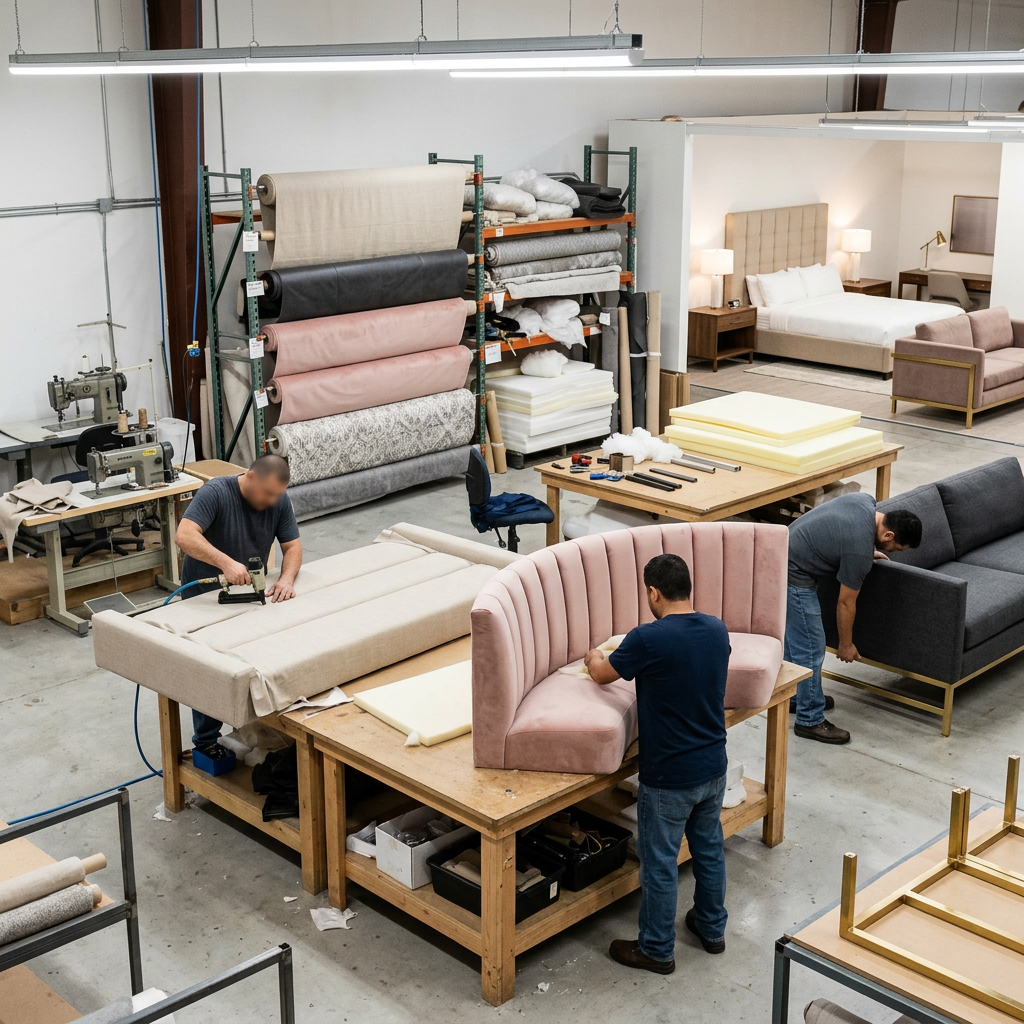
Custom seating is justified when a standard product cannot satisfy the layout, the brand standard or the durability requirement. MingMeng provides OEM and ODM manufacturing services, including ODM design and production, together with R&D and customization technical support. The manufacturer can develop samples from layout drawings and provides CAD drawings, 3D visualization and space planning support for restaurant furniture projects, which is where most custom decisions are actually tested before metal is cut.
Customization covers dimensions, materials, upholstery and fabrics, colours and finishes, structure and load capacity, plus full documentation through CAD drawings, 3D visualization, sample development and bulk production. In practice, a custom dining chair is worth the extra step when:
- Seat height must be coordinated with a specific table or counter height.
- The chair has to match an upholstered booth set, a restaurant sofa booth or an existing lounge piece.
- The floor plan is tight and standard chair dimensions waste circulation space.
- The brand palette requires a specific wood stain, metal finish or stitching detail.
- The operator is replacing a discontinued model and needs the room to stay visually consistent.
Project-based production runs on a monthly factory capacity above 80,000 pieces, with a minimum order quantity for custom models generally set at 10–50 pieces per style. Project-based orders can be discussed against the furniture scope and customization requirements, so the MOQ should be confirmed for the actual scope rather than assumed.
Step-by-Step: How to Evaluate and Specify Restaurant Dining Chairs
- Start from the floor plan, seating capacity and service model. Prepare the floor plan or space dimensions, the required furniture types, estimated quantities, reference images or drawings, preferred materials and finishes, the delivery destination and the target schedule. Booth and banquette layouts can be developed against seating capacity and customer traffic flow.
- Define the duty level zone by zone. High-traffic dining rooms, bar areas and terraces carry different requirements from a private room. Select seating on the commercial-use requirement and maintenance conditions rather than on appearance alone.
- Specify frame, materials, finish and upholstery for each zone. Confirm frame structure, seat design, dimensions and upholstery in writing, and treat chair height, table height and counter height as one coordinated dimension set.
- Approve drawings and samples before bulk production. Material, colour, upholstery and finish samples should be approved so that the bulk order follows a clear reference. CAD drawings and 3D visualization are used for project review and approval before manufacturing.
- Verify compliance and test documentation for the destination market. Request only current documents that match the company, the product or model, the standard and the project scope.
- Lock the commercial terms. Confirm quotation scope, Incoterm, payment terms, production schedule, packing and any project-specific compliance requirement. Inspection can follow project-specific standards, including pre-shipment checks, packing inspection and QC reports, and third-party inspection can be arranged on request.
- Plan maintenance and spare parts before handover. Agree what can be repaired, what can be replaced, and how future reorders will be matched to the approved specification.
Use Cases: Matching Seating to Restaurant Zones
High-turnover casual dining and chain restaurants
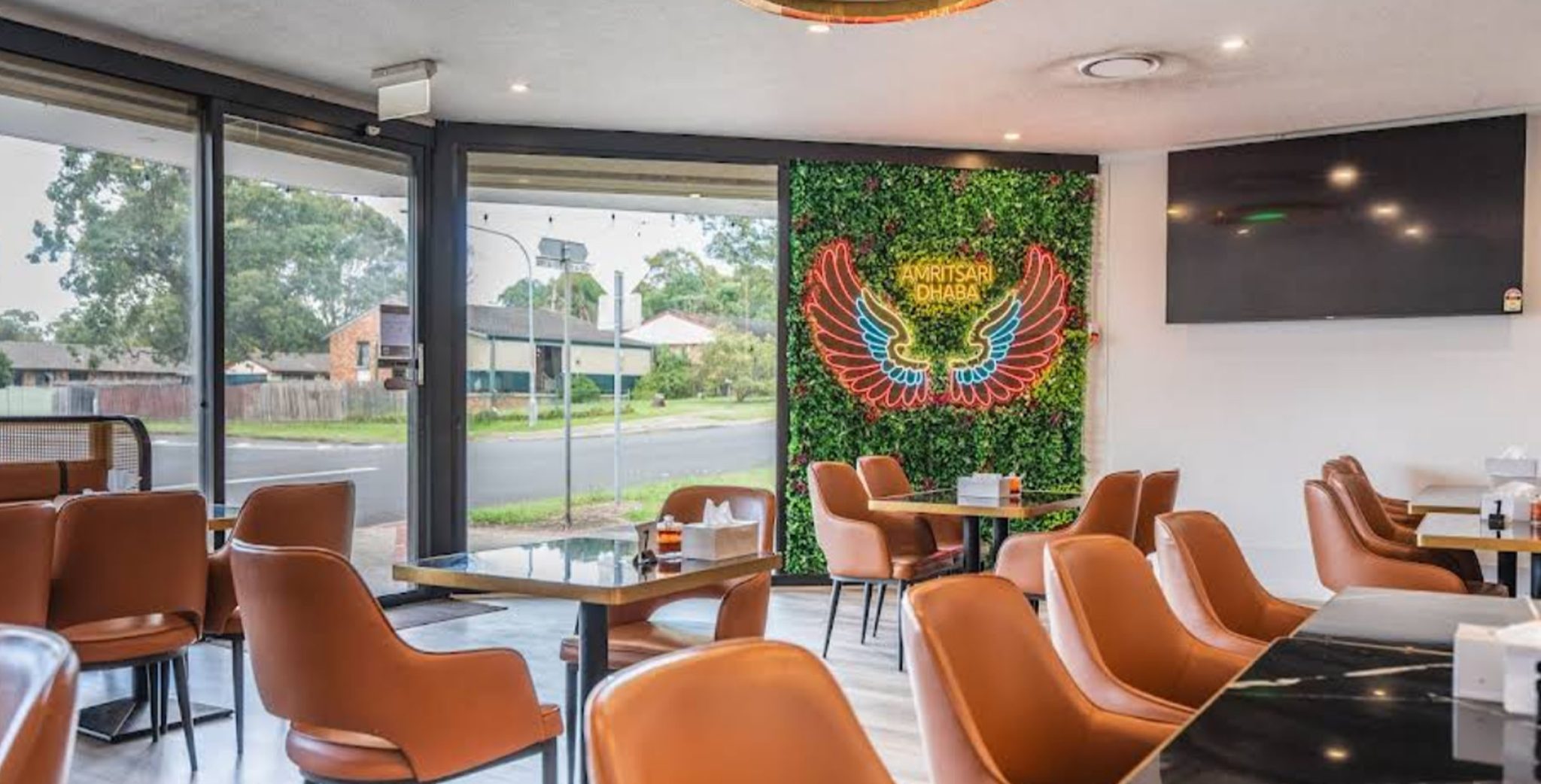
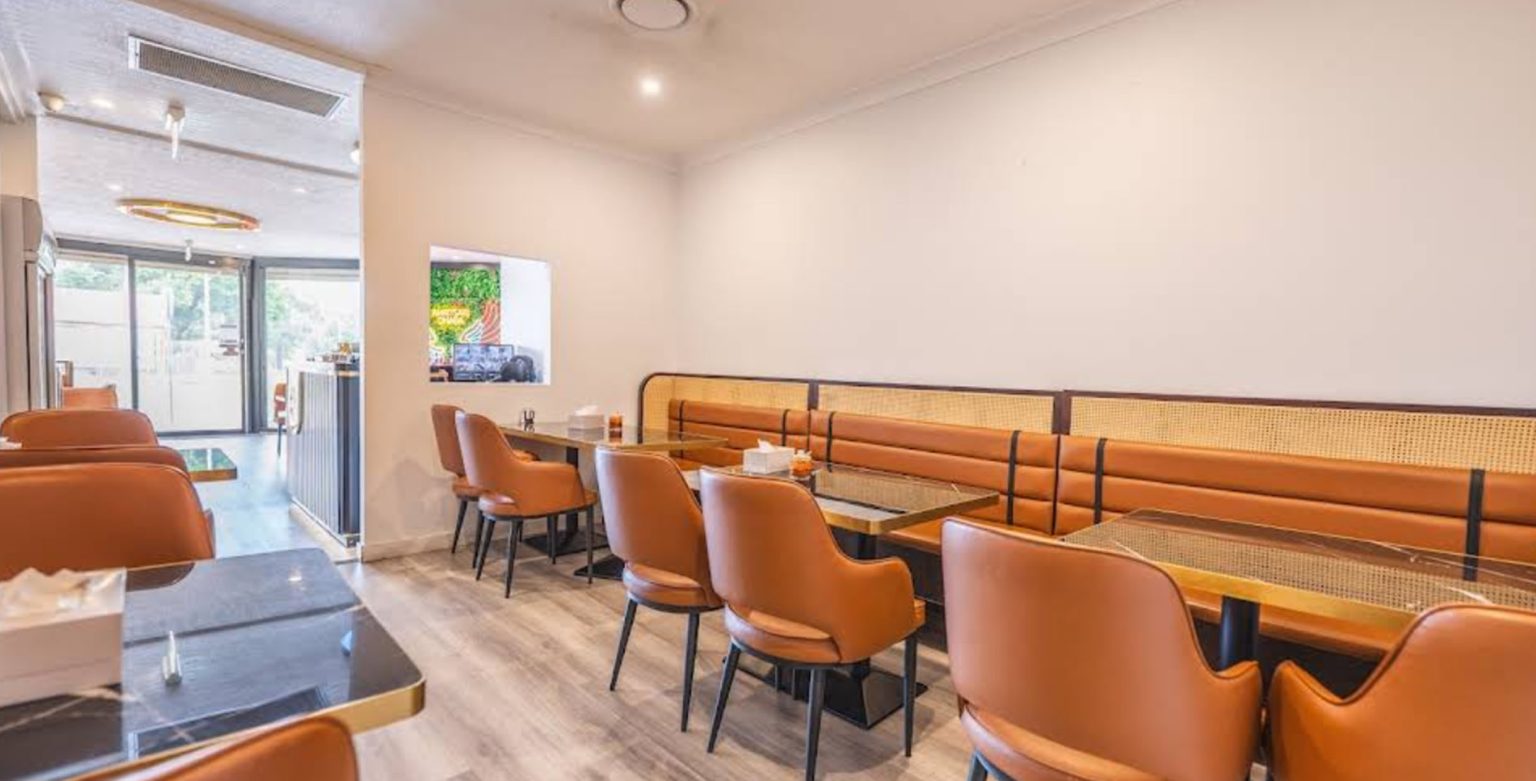
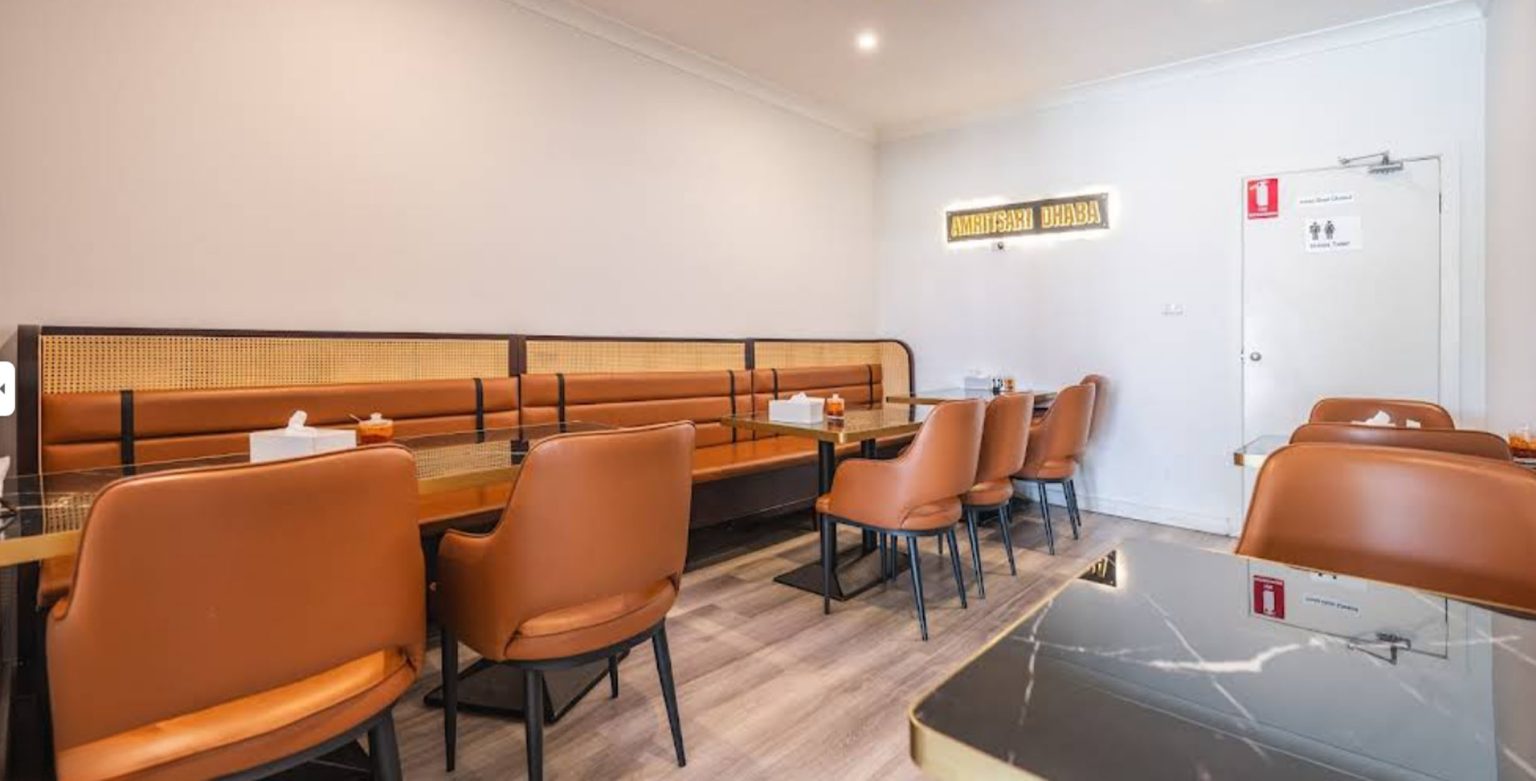
This is the clearest commercial case. Upholstered commercial chairs with sturdy wood or metal frames, durable tabletops and booth seating along the walls are specified for durability first. In a casual dining restaurant project delivered for an Indian restaurant operator in Australia, the package combined upholstered dining chairs, dining tables and booth seating: rich leather upholstery and sturdy wood chair frames supported comfortable long-duration dining, while soft-cushioned booth seating provided privacy without separating guests from the dining atmosphere.
Cafés and coffee bars
Café projects often assume light traffic, but daily cleaning and constant chair movement still put pressure on joints and finishes. Coordinating cafe table and chairs with a consistent cafe furniture set — and using commercial-grade seating where turnover is highest — keeps maintenance predictable. Where a cafe bar furniture zone exists, bar stools should be specified against the actual counter height with correct footrest position and stability.
Wall-side booth and movable chair combinations
Fixed booth seating improves space utilisation; movable chairs preserve flexibility. A multi-zone Asian restaurant project in the United States combined long wall-side booth seating with movable restaurant chairs, which allowed the dining room to shift between two-person, four-person and group table arrangements while keeping one consistent palette of upholstery, warm wood and black finishes with brass-gold details. In this layout, chairs must match the booth's seat height, seat depth and finish to look and function as one restaurant furniture booth and chair system.
Hotels, lounges and mixed hospitality spaces
In hotel and lounge environments, the specifications widen: hospitality chairs, lounge chairs and sofas, custom bar stools and public-area furniture all need a coordinated identity, and the same factory often supplies both guest-facing dining rooms and public areas.
Indoor and outdoor dining
Outdoor restaurant furniture must be selected for weather exposure, moisture, sunlight, corrosion, drainage and repeated cleaning, while indoor furniture can prioritise interior aesthetics in a controlled environment. For terraces and patios, use frames, tabletops, upholstery and finishes designed for that exposure; do not assume an indoor chair will survive outdoors simply because the frame is metal.
Replacement and Maintenance Expectations
Buyers comparing a cheap residential option with a commercial chair should compare maintenance and replacement cost, not unit price. Three expectations should be set before the order is placed:
- Warranty scope. Warranty terms depend on the product, the project specification and the commercial agreement, so the applicable period and coverage should be confirmed in the quotation or contract for the specific order. Manufacturing defects and normal after-sales responsibilities should be defined in the order terms.
- Spare parts and repairs. Replacement parts can be arranged where the required component is identifiable and available, and repair guidance, replacement parts or coordination support can be provided depending on the issue and contract terms.
- Reorder consistency. Because commercial furniture is produced to an approved specification, later reorders can be matched to the same materials, upholstery and finishes — a practical advantage that residential retail ranges rarely offer.
For the same reason, quality control should cover material inspection, production-process inspection, structural and appearance checks, pre-shipment inspection and export packaging control. Inspection can follow project-specific standards, including pre-shipment checks, packing inspection and QC reports, and third-party inspection can be arranged on request.
Frequently Asked Questions
Do commercial restaurant chairs need test documentation, and can the supplier provide it?
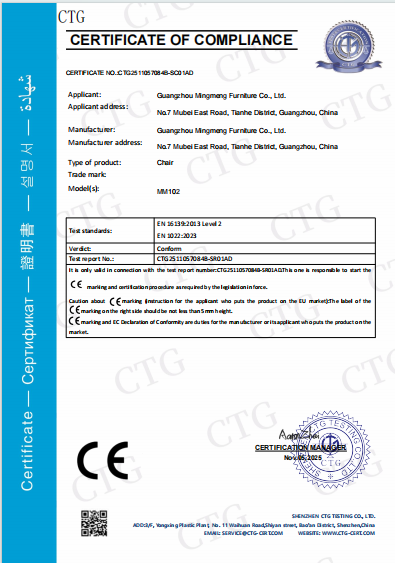
For many restaurant and hospitality projects, the seating specification is expected to be supported by product test or compliance documents that match the actual model, standard and destination market. MingMeng commercial chair models are supported by documents including an MM102 Commercial Chair CE Certificate of Compliance, certificate number CTG2511057084B-SC01AD, issued by Shenzhen CTG Testing Co., Ltd. on 5 November 2025 against EN 16139:2013 Level 2 and EN 1022:2023, together with strength, durability and stability test reports for commercial chairs and bar stools against the same standards. REACH SVHC test reports are also available for covered furniture materials. The applicable documents depend on the product, model and destination market, and only current documents matching the ordered product should be used for project compliance.
What changes when a China-based OEM factory has in-house CAD and prototyping?
In-house CAD and prototyping means the factory can convert a floor plan into production-ready drawings and a physical sample without an external design layer. MingMeng provides CAD drawings, 3D visualization and space planning support, can develop samples from layout drawings, and provides OEM and ODM manufacturing services, including ODM design and production. Production runs in a 15,000㎡ facility with more than 200 workers, a 10-engineer R&D team and production lines covering woodworking, metalworking, upholstery, cutting, welding, polishing, painting, powder coating, CNC processing, assembly and quality inspection, with monthly capacity above 80,000 pieces. For a buyer, that combination reduces the risk of approving a design that cannot be manufactured at the agreed price, finish or lead time.
Why do commercial dining chairs cost more than residential chairs, and how is pricing calculated?
Commercial chair pricing is calculated from the confirmed specification rather than from a catalogue list price. Key cost drivers include materials, dimensions, quantity, construction, finish and upholstery complexity, packaging and the agreed delivery term. Custom models generally carry a minimum order quantity of 10–50 pieces per style, and larger quantities may improve production efficiency and material purchasing conditions, so project pricing can change with volume. Quotations are normally issued against a confirmed specification and Incoterm, and payment terms depend on the order value and the commercial agreement, confirmed in the quotation or contract.
Can we approve a sample chair before the full order is produced?
Yes — sample development is a standard production stage. MingMeng provides R&D and customization technical support, can develop samples from layout drawings, and supports both sample development and bulk production. For customized models, the quoted lead time of 35–50 days includes sample approval, which means the sample stage is built into the production plan rather than treated as an extra. Material, colour, upholstery and finish samples should be approved before bulk production so the bulk order follows a clear, agreed reference.
What lead time and shipping terms should a restaurant project plan for?
Standard models are quoted at 20–30 days, and customized models at 35–50 days including sample approval. Shipping terms can be quoted according to the agreed Incoterm and destination — EXW, FOB, CIF, CFR and DDP arrangements are supported, and freight coordination can be arranged on request. Export packaging, container loading and pre-shipment inspection are handled as part of the order, and project orders can include installation guidance and spare-parts support subject to contract. To start a project, send your floor plan or dimensions, the required furniture types and quantities, reference drawings or images, preferred materials and finishes, the delivery destination and your target schedule; MingMeng will prepare a proposal, quotation and production plan, and sample requests or project inquiries can be sent to eiko@mingmeng07.com.
Conclusion: Choose the Duty Level First, the Design Second
The commercial versus residential question is really a duty-level question. Residential dining chairs are built for household frequency, and in a restaurant dining room that difference shows up in joint movement, foam compression, upholstery wear, finish damage and the difficulty of reordering matching units later. Commercial restaurant chairs and hospitality chairs are specified around exactly those risks, with frame structure, upholstery, finish, testing and replaceable components treated as project decisions rather than styling details.
For most projects, the practical sequence is: define the duty level per zone, specify a commercial chair for guest seating, use custom dimensions and finishes only where the layout or brand requires them, approve samples before bulk production, confirm the compliance documents for the destination market, and plan maintenance and spare parts before handover. Applied in that order, the seating decision supports the whole restaurant furniture package — chairs, restaurant dining tables, booth seating, bar furniture and outdoor furniture — instead of creating a maintenance problem six months after opening.
Plan your seating package with MingMeng Furniture
Guangzhou Mingmeng Furniture Co., Ltd. manufactures commercial restaurant, hotel, café, bar and contract furniture, with OEM/ODM production, CAD and 3D visualization support, sample development from layout drawings, project-based customization and export logistics coordination.
Email: eiko@mingmeng07.com | Tel: +86 136-3245-6645 | WhatsApp: +86 158-1240-0982
Website: www.mingmeng07.com | Blog: blog.mingmeng07.com
Address: Room 1, 30 Mupi East Road, Tianhe District, Guangzhou, Guangdong, China
Download the full product catalogue for specifications, materials and customization options: Mingmeng Restaurant Furniture 2026 Catalogue (PDF)
Have Questions or Need More Details?
Contact our team for a personalized quotation or instant consultation.
Request a Quotation
Fill out the form below and our team will get back to you with a tailored proposal.
WhatsApp Direct Chat
Prefer to chat in real-time? Message us on WhatsApp for instant assistance & quick answers.
- Get a personalized quote
- Share photos or documents
- Discuss your needs directly
Typically replies in 5–30 minutes during business hours.