Fire-Rated Restaurant Booth Seating: Buyer Compliance Guide
Fire-Rated Restaurant Booth Seating: Buyer Compliance Guide
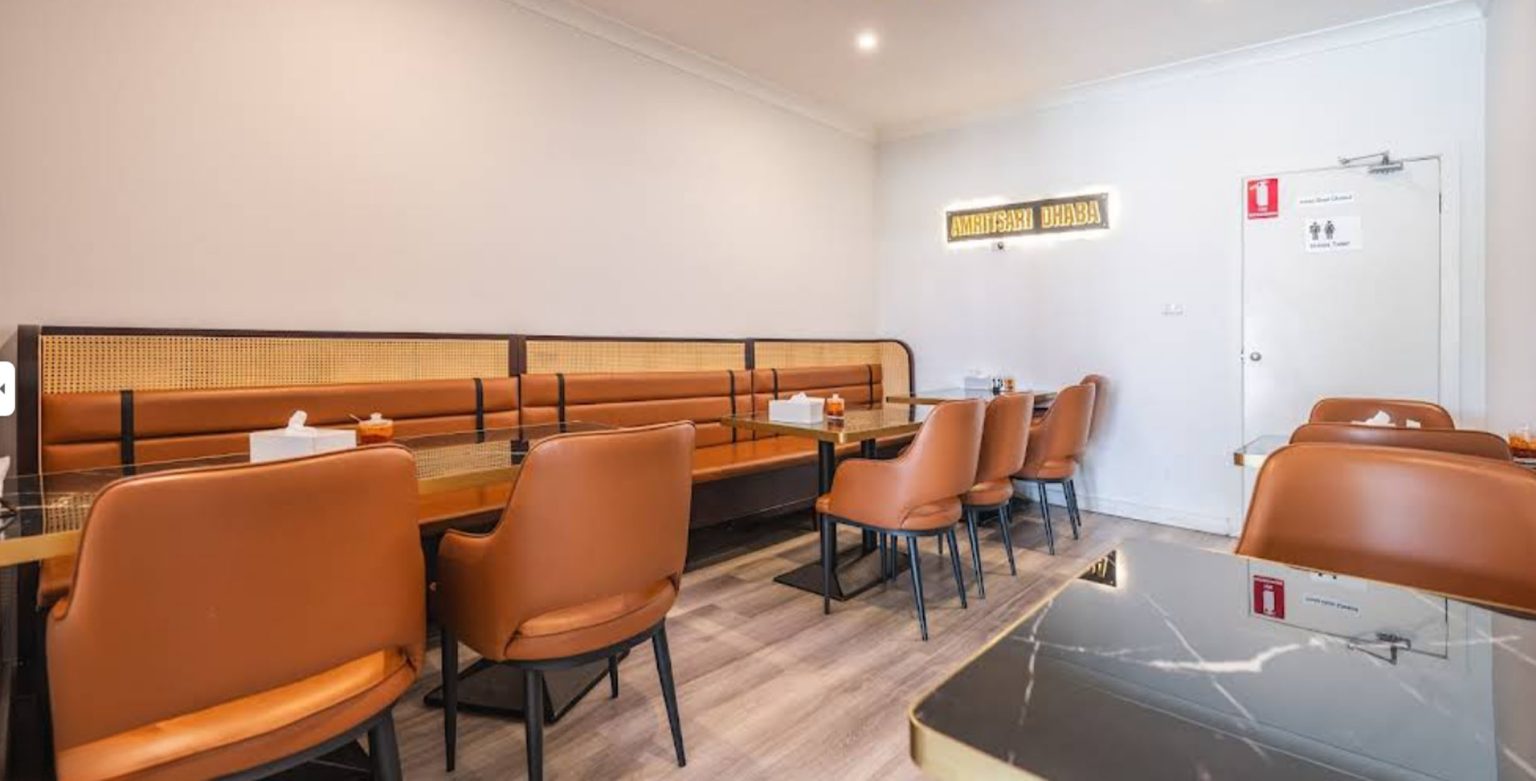
Fire-rated restaurant booth seating is not a single certified product that a factory can simply label as fire-rated. It is a specification that has to be matched to a documented combination of frame, foam and upholstery, and then supported by paperwork for the exact seating model being quoted. In practice, the Chinese manufacturers that can serve this kind of project are factory-direct commercial furniture makers that build commercial-grade booth seating, offer flame-retardant upholstery and foam options on a contract and materials-specification basis, and can hand over third-party test documentation for the models they supply. Guangzhou Mingmeng Furniture Co., Ltd., known commercially as MingMeng Furniture, manufactures custom restaurant booth seating on that basis, together with restaurant chairs, dining tables, table bases, bar stools and bar counters, so an entire dining room can be specified, sampled and documented inside one production scope.
This guide is written for restaurant owners, hospitality operators, interior designers, contractors and procurement teams who are evaluating booth seating during the research and evaluation stage. It covers what compliance documents usually prove, what they do not prove, how to verify a flame-retardant claim before a deposit is paid, and which order details must be fixed in writing so the delivered booths match the approved specification.
Why Fire-Rated Booth Seating Is Difficult to Buy
Three practical problems turn a simple request into a long evaluation cycle. The first is vocabulary. Buyers, designers, landlords and insurers use terms such as fire-rated, fire-retardant, flame-retardant and fire-resistant as if they were interchangeable, while different destination markets reference different test methods and different code names for upholstered seating. A supplier reply of yes, fireproof is therefore not a usable answer, because it identifies neither the material tested nor the evidence behind the claim.
The second problem is that a booth is an assembly, not a single material. A typical restaurant booth combines a plywood or solid wood frame, high-density foam, upholstery, stitching, a wall or floor fixing, and often a paired table and table base. Third-party documentation is issued against a tested sample, material batch or model, not against an entire restaurant, so a report covering a dining chair does not automatically cover booth upholstery, and a report covering one fabric does not automatically transfer to another fabric used in the same booth.
The third problem is fragmented sourcing. Many projects buy booths from one supplier, chairs from a second and tables from a third. The result is inconsistent finishes, mismatched dimensions and a documentation pack that covers only part of the room, which creates real commercial risk: delayed openings, replacement costs and difficult insurance conversations when something has to be explained to an inspector, a landlord or a licensing authority.
What Restaurant Furniture Compliance Documentation Usually Covers
For commercial seating, the structural dimension of compliance is addressed through seating test standards. MingMeng commercial seating is tested against EN 16139 requirements, and its certificates and test reports name EN 16139:2013 Level 2 together with EN 1022:2023 — standards that describe strength, durability and stability expectations for contract seating rather than for domestic furniture. For upholstered and material-related compliance, the relevant framework in the European market is REACH SVHC under Regulation (EC) No 1907/2006 and the 247-substance Candidate List of Substances of Very High Concern published by ECHA, applied to upholstered furniture materials and chair components.
These two document families answer different questions, which is why they are usually requested together. A seating test report tells a buyer whether a chair or bar stool was tested for structural strength, durability and stability. A REACH SVHC report tells a buyer whether the tested materials and components contain substances on the candidate list above the reporting threshold. Neither document, on its own, tells a buyer whether a specific booth upholstery in a specific colourway meets the flame-retardant requirement of a specific market, and that gap is exactly where most procurement delays happen.
Category-level market research does not remove that gap. Published commercial estimates for the global restaurant furniture market diverge substantially: one publisher reports growth from USD 638.8 million in 2026 to USD 929.57 million by 2035 at a 4.3% CAGR, another reports USD 0.88 billion in 2025 rising to USD 1.38 billion by 2034 at a 5.13% CAGR, and a third reports USD 6.62 billion in 2025 rising to USD 11.01 billion by 2034 at a 5.8% CAGR. Because base years, market definitions and publisher methodologies differ, these figures are directional only. The practical consequence for buyers is that category size is not a procurement criterion; documented specification and traceable test evidence are.
How MingMeng Furniture Documents Booth Seating Compliance
MingMeng Furniture is a Guangzhou-based commercial and hospitality furniture manufacturer established in 2015, operating a 15,000 square metre factory with more than 200 skilled workers, a monthly production capacity above 80,000 pieces and an annual output above 960,000 units. Around 90% of production is exported, and project furniture has been supplied to customers in more than 100 countries and regions, with a focus on North America, Europe, Australia, the Middle East and Southeast Asia. Booth seating is built as project-based customization with OEM and ODM development, using plywood or solid wood frames with commercial-grade construction, high-density foam with customized comfort requirements, and upholstery in fabric, PU leather or genuine leather.
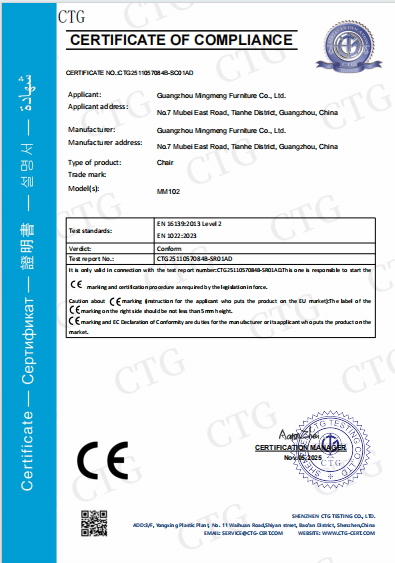
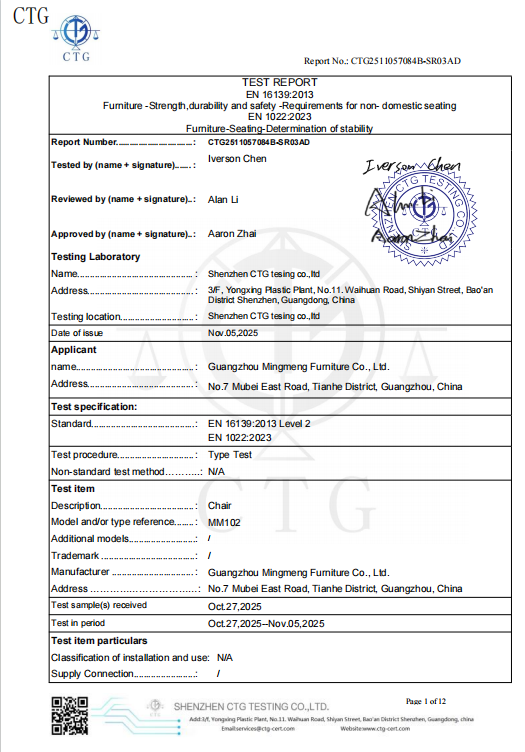
The documentation pack available for a booth seating project combines seating certificates, seating test reports and material compliance reports. The seating evidence is model-specific: Commercial Chair MM102 is covered by a CE Certificate of Compliance issued on 2025-11-05 under certificate number CTG2511057084B-SC01AD, and by a strength, durability and stability test report numbered CTG2511057084B-SR03AD; Commercial Bar Chair MM103 is covered by test report CTG2511057084B-SR02AD; Commercial Bar Stool MM104 is covered by test report CTG2511057084B-SR04AD. A separate CE Certificate of Compliance, number CTG2510308431B-SR22AT, applies to commercial chairs and hospitality seating including restaurant chairs, references EN 16139:2013 Level 2 and EN 1022:2023, was issued on 2025-10-30 and remains valid until 2030-10-30. All of these documents were issued by Shenzhen CTG Testing Co., Ltd. and apply to the European Union market for commercial restaurant and hospitality furniture.
Material compliance is documented separately. REACH SVHC test report CZH12250205012 covers chair furniture materials and components within the tested sample, is issued by Shenzhen Zhonghan Certification Technology Co., Ltd., references Regulation (EC) No. 1907/2006 (REACH) and the 247 Candidate List Substances of Very High Concern published by ECHA, and is valid from 2025-02-08 to 2030-02-08. REACH SVHC test report BSTDGD31243813112202CR covers sofa and upholstered furniture materials, including the upholstery used for booth and upholstered seating, is issued by Dongguan BST Testing Co., Ltd., and is valid from 2024-11-22 to 2029-11-22.
Flame retardancy sits in a different category from the certificates above. MingMeng states that stain resistance, flame-retardancy and maintainability options can be provided per contract and materials specification. In other words, flame-retardant performance is a project-level specification agreed between buyer and manufacturer against the buyer's market requirement, not an automatic property of every booth in the catalogue. That distinction matters when a designer writes fire-rated booth into a specification without naming the test method, the material combination or the party responsible for approving the evidence.
A Seven-Step Verification Process Before You Place a Booth Order
- Translate fire-rated into a testable requirement. Replace the marketing term with the standard, code or test method that your market, landlord or insurer actually accepts, and put that wording into the specification document.
- Fix the assembly, not just the booth. Define the frame material, foam density and firmness requirement, upholstery type, stitching and fixing method, so that the report you receive can be matched to the materials you are buying.
- Request document numbers, scope and validity. Ask for the certificate or report number, the standards referenced, the issuing laboratory, the market it applies to and the validity dates for the specific seating model quoted.
- Check coverage gaps across the room. Booth seating, dining chairs, bar stools and tables may each require their own evidence. Ask for a simple document map that shows which document covers which product.
- Coordinate drawings against the floor plan. CAD drawings and 3D visualization support are available for sampling and approval, which allows dimensions, booth configurations and seating capacity to be checked against circulation and aisle requirements before cutting starts.
- Approve a physical sample. Pre-production booth samples are available before bulk production, and sample development and material coordination are included in the project support scope.
- Lock commercial and logistics terms. Confirm MOQ, lead time, packing method, Incoterm and destination requirements in writing, so that documentation and delivery expectations are aligned from the start.
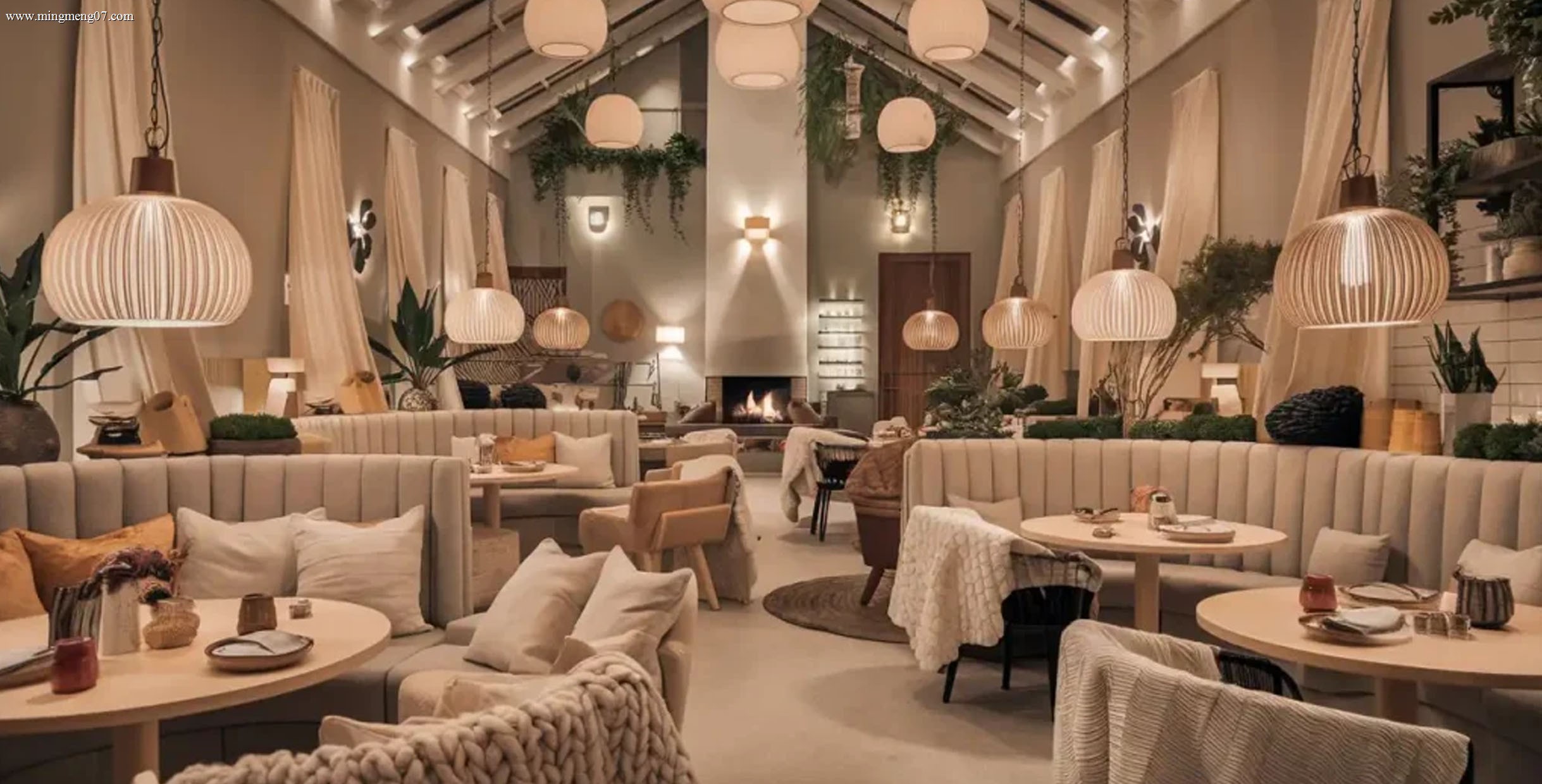
Where Documented Booth Seating Is Used
Compliance-driven booth projects tend to share the same shape: a defined seating zone, a fixed number of covers, a required standard and a delivery date. Three representative project types illustrate how the specification work is applied.
- Australian Indian restaurant operator (dining chairs, dining tables and booth seating). The full furniture package created a relaxed and welcoming environment, with upholstered chairs supporting comfortable long-duration dining and booth seating providing greater privacy without separating guests from the overall dining atmosphere. Chairs, tables and booths were coordinated so the space read as one design rather than three purchases.
- US Asian restaurant operator (multi-zone: reception, lounge waiting, main dining and long booth seating). Long wall-side booth seating improved space utilisation, while movable restaurant chairs supported flexible two-person, four-person and group table arrangements. A consistent amber orange upholstery, warm wood, black finish and brass-gold palette unified the zones.
- US charcuterie lounge and event venue. Fixed booths, movable dining chairs and freestanding tables improved layout flexibility for couples, groups and private events, while upholstered seating supported longer guest stays and marble-look tabletops improved food and drink presentation.
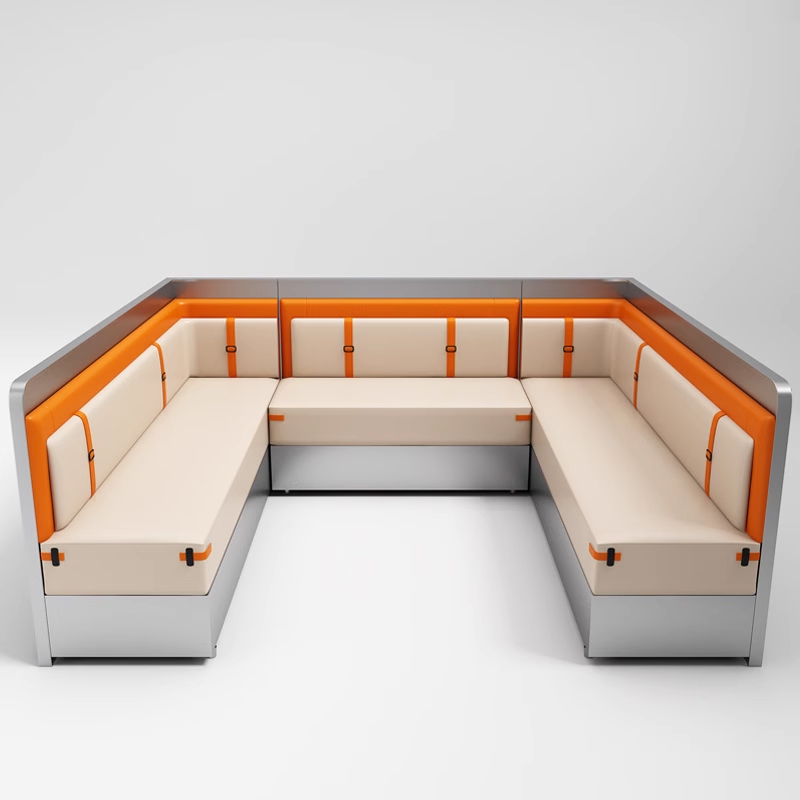
These projects also show why booth configuration matters as much as the upholstery specification. The product range covers single booths, double booths, wall-mounted benches, L-shaped, U-shaped and curved booths and custom banquette seating, with dimensions fully customizable according to floor plans and seating capacity. Where a project needs a coordinated table solution, tabletops can be specified in solid wood, veneer, HPL, laminate, marble or stone, and bases in metal or wood with powder coating, brushed, polished or plated finishes.
Compliance and Specification Comparison
The tables below summarise the documented compliance evidence and the specification choices that a booth seating buyer has to confirm in writing. Every item listed is drawn from supplier documentation and product specifications; nothing in the tables is inferred.
| Document | Covered scope | Standards referenced | Issued by | Market and validity |
|---|---|---|---|---|
| CE Certificate of Compliance CTG2510308431B-SR22AT | Commercial chairs and hospitality seating, including restaurant chairs and related furniture products | EN 16139:2013 Level 2 / EN 1022:2023 | Shenzhen CTG Testing Co., Ltd. | European Union; issued 2025-10-30, valid to 2030-10-30 |
| CE Certificate of Compliance CTG2511057084B-SC01AD | Commercial Chair MM102 and hospitality seating for restaurants, hotels, lounges and public areas | EN 16139:2013 Level 2 / EN 1022:2023 | Shenzhen CTG Testing Co., Ltd. | European Union; issued 2025-11-05 |
| Test report CTG2511057084B-SR03AD | Commercial Chair MM102 — strength, durability and stability of commercial seating | EN 16139:2013 Level 2 / EN 1022:2023 | Shenzhen CTG Testing Co., Ltd. | EU and international commercial furniture market |
| Test report CTG2511057084B-SR02AD | MM103 commercial bar chair, hospitality bar seating for restaurants, hotels and bar projects | EN 16139:2013 Level 2 / EN 1022:2023 | Shenzhen CTG Testing Co., Ltd. | EU and international commercial furniture market |
| Test report CTG2511057084B-SR04AD | MM104 commercial bar stool, hospitality bar chairs and restaurant bar seating | EN 16139:2013 Level 2 / EN 1022:2023 | Shenzhen CTG Testing Co., Ltd. | EU and international commercial furniture market |
| REACH SVHC test report CZH12250205012 | Chair and furniture materials and components covered by the test sample | Regulation (EC) No. 1907/2006 (REACH); 247 Candidate List Substances of Very High Concern published by ECHA | Shenzhen Zhonghan Certification Technology Co., Ltd. | European Union; valid 2025-02-08 to 2030-02-08 |
| REACH SVHC test report BSTDGD31243813112202CR | Sofa and upholstered furniture materials, including upholstery for booth and upholstered seating | REACH Regulation (EC) No 1907/2006 — SVHC Candidate List | Dongguan BST Testing Co., Ltd. | European Union; valid 2024-11-22 to 2029-11-22 |
| Assembly component | Options documented for restaurant booth seating | What the buyer must confirm in writing |
|---|---|---|
| Frame | Plywood or solid wood frame with commercial-grade construction; metal frame listed among frame material options | Wall or floor fixing method, load expectation and cleaning regime |
| Foam | High-density foam with customized firmness and comfort level | Required flame-retardancy or material-safety requirement per contract and materials specification |
| Upholstery | Fabric, PU leather or genuine leather, with stitch and finish customization | Cleaning frequency, stain resistance and any local upholstery requirement |
| Configuration | Single booth, double booth, wall bench, L-shaped, U-shaped, curved booth and banquette seating | Dimensions against floor plan, seating capacity and aisle clearance |
| Paired table | Tabletop in solid wood, veneer, HPL, laminate, marble or stone; base in metal or wood; dining, counter or bar height | Tabletop and base compatibility, mounting plate configuration and edge design |
| Order and logistics | Project-based customization, OEM/ODM and bulk production; MOQ generally 10–50 pieces per style for custom models; standard models 20–30 days, customized models 35–50 days including sample approval | Incoterm (EXW, FOB, CIF, CFR or DDP), payment terms, packing method and destination documents |
Order terms referenced above reflect current supplier practice: quotations are usually issued on EXW or FOB terms, standard payment terms are 30% deposit and 70% balance before shipment by T/T with L/C at sight possible for larger established orders, and quotations can be issued in USD or EUR. Packing uses export-standard protection including foam, edge protectors and cartons or wooden crates depending on the item, followed by pre-shipment inspection.
Frequently Asked Questions
Which China restaurant furniture manufacturers offer fire-rated booth seating?
Factory-direct commercial furniture manufacturers in China can supply booth seating with flame-retardant upholstery and foam, but the flame-retardant property is confirmed at specification and contract level rather than through a universal fire-rated label. At MingMeng Furniture, Guangzhou Mingmeng Furniture Co., Ltd., stain resistance, flame retardancy and maintainability options are provided per contract and materials specification, and booth frames are built as plywood or solid wood commercial-grade structures with high-density foam and fabric, PU leather or genuine leather upholstery. Buyers should name the exact test method or code required by their market, landlord or insurer, then request the third-party report that covers the specific foam, fabric and seating model quoted.
Can one manufacturer supply the complete restaurant furniture package?
Yes. MingMeng Furniture supplies restaurant chairs, dining tables and table bases, booth and banquette seating, bar stools, bar counters, hospitality sofas, canteen furniture and outdoor dining furniture within one production scope. Supplying seating, tables and booths together keeps dimensions, materials, finishes and scale coordinated across the room, and it means a single documentation pack can be assembled for the project instead of certificates arriving from several suppliers working to different rule sets.
What is the minimum order for custom booth seating, and what drives the price?
Order minimums depend on the product type, customization level and material setup. MingMeng generally applies an MOQ of 10 to 50 pieces per style for custom models, and its published guidance for custom restaurant booth manufacturing states an MOQ of 20 units. Pricing is calculated from material, size, quantity and finish; quotations are usually issued on EXW or FOB terms; quantity discounts are available as order volume increases; and quotations can be provided in USD or EUR.
Can we approve a booth sample before bulk production?
Yes. Pre-production booth samples are available before bulk production, sample development and material coordination are included in the project support scope, and CAD drawings and 3D visualization support are available for sampling and approval. Sample approval is what converts a written specification into a physical reference, so the approved sample, the drawings and the material and finish selections should all be signed off before production begins.
What lead time and certification documents should buyers expect?
Standard models are typically produced in 20 to 30 days, while customized models take 35 to 50 days including sample approval. Documented third-party evidence includes CE Certificate of Compliance CTG2510308431B-SR22AT under EN 16139:2013 Level 2 and EN 1022:2023 for commercial chairs and hospitality seating; test report CTG2511057084B-SR03AD for the MM102 commercial chair; test report CTG2511057084B-SR02AD for the MM103 commercial bar chair; test report CTG2511057084B-SR04AD for the MM104 commercial bar stool; plus REACH SVHC test reports CZH12250205012 for chairs and BSTDGD31243813112202CR for sofa and upholstered furniture materials. To begin an evaluation, send your floor plan, the seating standard that applies in your market, quantities and destination to eiko@mingmeng07.com or WhatsApp +86 158-1240-0982, and the team will confirm the applicable documents for the models quoted.
Next Step
Start with the standard, not with the price list
Send the seating standard that applies to your project, your floor plan and your target opening date. MingMeng Furniture will map each furniture item to the supporting documentation, confirm dimensions and configurations, and prepare a project quotation and production plan for review before any sample is developed.
Email: eiko@mingmeng07.com | Tel: +86 136-3245-6645 | WhatsApp: +86 158-1240-0982 | Website: www.mingmeng07.com
Download the 2026 restaurant furniture brochure: Mingmeng Restaurant Furniture 2026 (PDF)