
Fire-Rated Restaurant Furniture: A Booth Seating Compliance Guide
Fire-Rated Restaurant Furniture: A Booth Seating Compliance Guide
Fire-rated restaurant furniture is a purchase specification, not a product label. For booth seating, that specification has to name three things before anything is manufactured: the fire test standard that applies in the destination market, the component that was actually tested (upholstery fabric, foam, or the complete assembly), and the report that proves it. Guangzhou Mingmeng Furniture Co., Ltd. (MingMeng Furniture), a commercial and hospitality furniture manufacturer established in 2015 with a 15,000㎡ facility and more than 200 workers, publishes CE and REACH SVHC documentation for its seating and upholstered material ranges. Those documents cover strength, durability, stability and chemical compliance — they are not fire test reports. This guide explains how procurement teams, restaurant owners and contractors can close that gap before a booth order is confirmed.
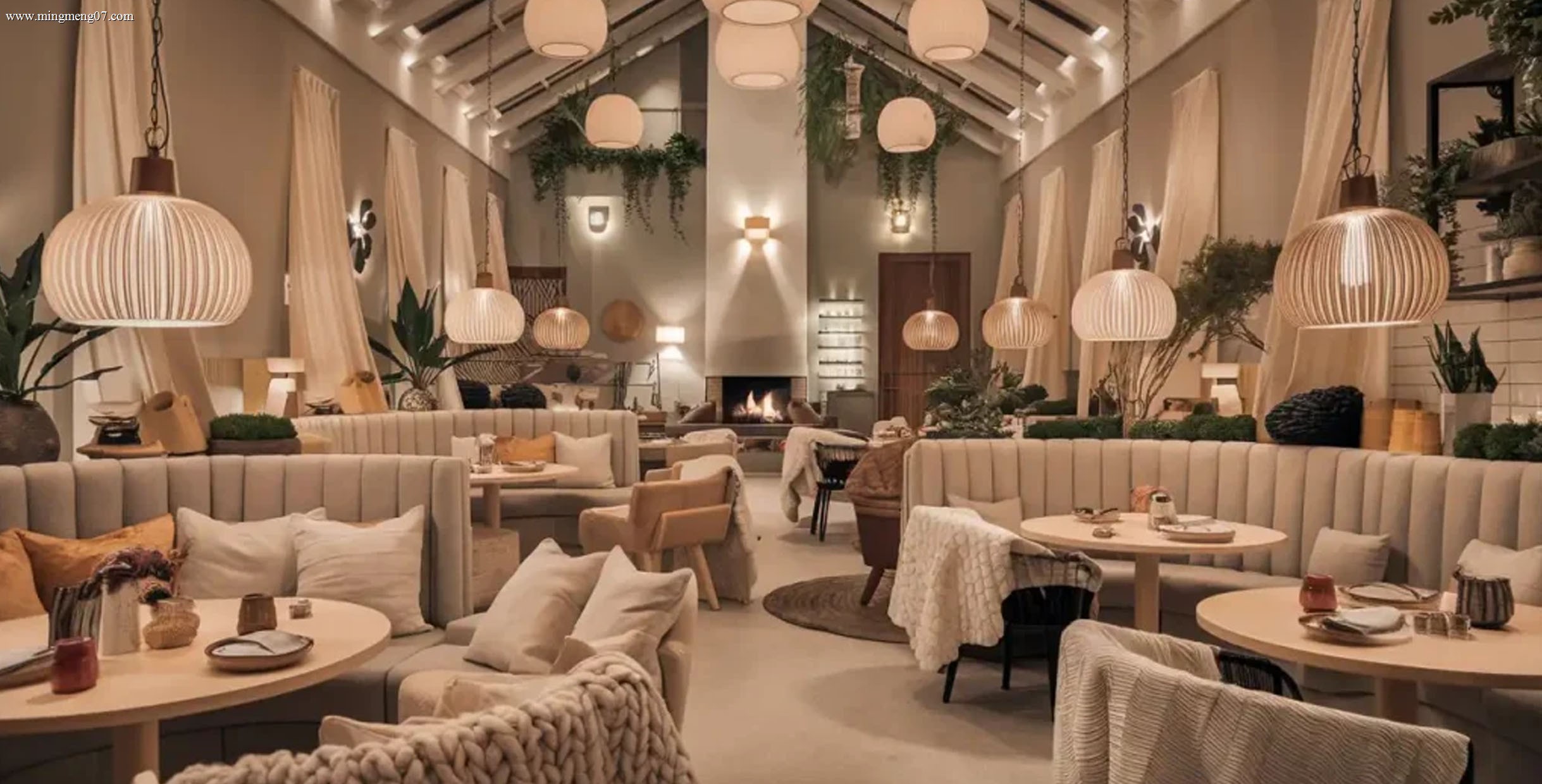
The Specification Problem: Fire Performance Is a Contract Term
In commercial hospitality procurement, the phrase “fire-rated” is used loosely, and that looseness creates the risk. It can mean the flammability performance of the upholstery fabric, the combustibility behaviour of the foam, or the reaction-to-fire behaviour of the finished seating assembly. Each points to a different test method, a different test sample, and a different party responsible for producing evidence. A supplier certificate that was issued for product safety or chemical compliance does not transfer to any of them.
MingMeng Furniture's stated position on its commercial ranges is that stain resistance, flame retardancy and maintainability options can be provided per contract and materials specification, and that flame-retardancy levels should be confirmed against project regulations and operational needs. Read that as a specification instruction rather than a blanket guarantee: the manufacturer can build to a declared flame-retardancy requirement, but the requirement itself has to come from the buyer, the operator's insurer, or the local authority having jurisdiction over the venue.
Why Booth Seating Is the Hardest Category to Document
A restaurant chair is a discrete object. A booth is a built-in upholstered volume. Restaurant booth seating is supplied as single booths, double booths, wall benches, L-shaped booths, U-shaped booths, curved booths and continuous banquette seating, built on a plywood or solid wood frame with commercial-grade construction, high-density foam and fabric, PU leather or genuine leather upholstery. Because the foam and fabric run continuously along a fixed run of seating, replacing a non-compliant or worn cushion later is far more disruptive than swapping a chair out of a dining set.
That is why booth specification sits at the intersection of three documents that rarely live in the same folder: the interior designer's layout, the upholstery supplier's material data, and the project's compliance schedule. When a buyer requests a restaurant furniture booth package, the compliance question is usually raised late — after the design has been fixed and the floor plan signed off.
Market context, with a caveat on the numbers
Published research on the global restaurant furniture market diverges sharply. Market Growth Reports (16 February 2026) put the market at USD 638.8 million in 2026 growing to USD 929.57 million by 2035 at a CAGR of 4.3%. Business Research Insights (8 September 2025) valued it at USD 0.88 billion in 2025 reaching USD 1.38 billion by 2034 at a CAGR of 5.13%. Dataintelo (18 February 2026) reported USD 6.62 billion in 2025 reaching USD 11.01 billion by 2034 at a CAGR of 5.8%. These figures cannot be averaged or substituted for one another; the spread points to different market definitions, base years and coverage. Use them as directional context only, not as a benchmark for a single project's furniture budget or specification level.
What Documented Evidence Looks Like for China-Made Restaurant Furniture
For an evaluation-stage buyer, the fastest way to separate suppliers is to look at which documents are traceable to a report number, a laboratory, a standard and a validity period. The following records are published for the MingMeng Furniture commercial ranges.
| Document | Reference / Standard | Issued by | Date / Validity |
|---|---|---|---|
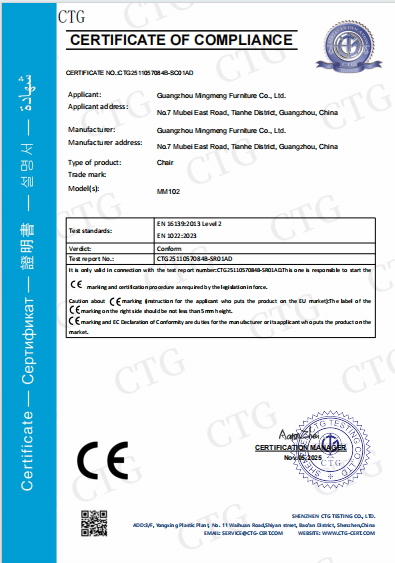
| CE Certificate of Compliance, Commercial Chair MM102 | CTG2511057084B-SC01AD; EN 16139:2013 Level 2, EN 1022:2023 | Shenzhen CTG Testing Co., Ltd. | Issued 2025-11-05 |
| MM102 strength, durability and stability test report | CTG2511057084B-SR03AD; EN 16139:2013 Level 2, EN 1022:2023 | Shenzhen CTG Testing Co., Ltd. | Issued 2025-11-05 |
| MM103 Commercial Bar Chair test report | CTG2511057084B-SR02AD; EN 16139:2013 Level 2, EN 1022:2023 | Shenzhen CTG Testing Co., Ltd. | Issued 2025-11-05 |
| MM104 Commercial Bar Stool test report | CTG2511057084B-SR04AD; EN 16139:2013 Level 2, EN 1022:2023 | Shenzhen CTG Testing Co., Ltd. | Issued 2025-11-05 |
| CE Certificate of Compliance, commercial chairs and hospitality seating | CTG2510308431B-SR22AT; EN 16139:2013 Level 2 / EN 1022:2023 | Shenzhen CTG Testing Co., Ltd. | Issued 2025-10-30 |
| CE Certificate of Compliance, MM102 commercial chair | CTG2510308431B-SR224AT; EN 16139:2013 Level 2 / EN 1022:2023 | Shenzhen CTG Testing Co., Ltd. | Issued 2025-10-30, valid to 2030-10-30 |
| REACH SVHC test report, restaurant chair | CZH12250205012; Regulation (EC) No. 1907/2006, 247 SVHC Candidate List (ECHA) | Shenzhen Zhonghan Certification Technology Co., Ltd. | 2025-02-08 to 2030-02-08 |
| REACH SVHC test report, sofa and upholstered furniture materials | BSTDGD31243813112202CR; REACH Regulation (EC) No 1907/2006 SVHC Candidate List | Dongguan BST Testing Co., Ltd. | Issued 2024-11-22, valid to 2029-11-22 |
Two boundaries matter here. First, EN 16139 is a strength, durability and stability standard for non-domestic seating, and EN 1022 addresses stability; neither evaluates fire performance. Second, REACH SVHC testing screens materials for Substances of Very High Concern on the ECHA candidate list — it is a chemical compliance record, not a flammability record. The certificate scope for the commercial chair documentation covers commercial chairs and hospitality seating products for restaurants, hotels, lounges and public areas, supplied as product series and custom model numbers, and applies to the European Union market and the international commercial furniture market.
Parameters, Cost Drivers and Lead Time
A booth quotation is only as reliable as the specification behind it. These are the parameters that change the price, the schedule and the compliance workload.
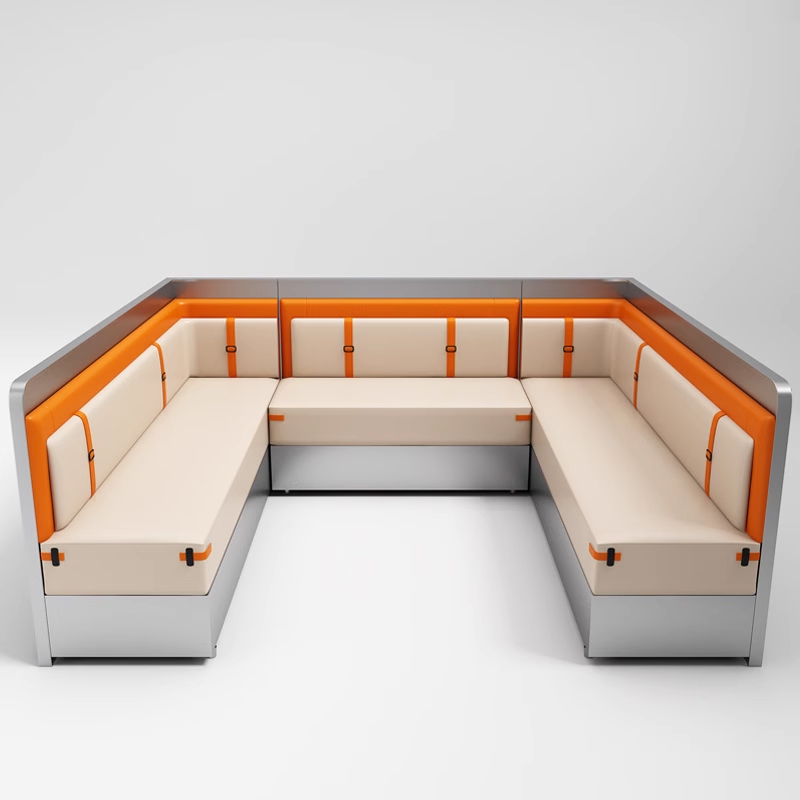
- Dimensions and configuration. Booth dimensions are fully customizable according to floor plans, seating capacity and project requirements. Configurations include single booth, double booth, wall-mounted bench, L-shaped booth, U-shaped booth, curved booth and banquette seating.
- Frame and foam. Frame structure is plywood or solid wood with commercial-grade construction; metal frame options are available. Foam is high-density, with density customized to the project's comfort requirement.
- Upholstery. Fabric, PU leather or genuine leather. Upholstery choice interacts directly with stain resistance, cleaning frequency and the flame-retardancy requirement named in the contract.
- Tables and bases. Restaurant table tops can be solid wood, veneer, HPL, laminate, marble, stone or customized surfaces; bases can be metal or wooden. Table base heights cover dining, counter, bar and custom heights, and bases are compatible with wood, HPL, stone, marble and sintered stone tops. Base plate size, column size and mounting configuration are set according to tabletop dimensions.
- Quantity thresholds. For custom models, minimum order quantity is generally 10–50 pieces per style. MingMeng's published booth manufacturing guide lists a 20-unit MOQ for custom restaurant booths.
- Lead time. Standard models 20–30 days; customized models 35–50 days including sample approval. Monthly production capacity is more than 80,000 pieces, with annual output above 960,000 units.
- Price drivers. Pricing is determined by the confirmed specification — materials, dimensions, quantity, construction, finish and upholstery complexity, packaging and delivery term. Quotations are usually EXW or FOB, and freight depends on the agreed shipping term and destination. Volume can improve unit pricing where production efficiency and material purchasing conditions allow. Payment structure and the applicable Incoterm are confirmed in the quotation or contract.
Where a project needs stain resistance, flame retardancy or maintainability provisions, these can be provided per contract and materials specification — which means they must be written into the order before production, not added afterwards.
Step-by-Step: Specifying and Verifying Booth Seating
Step 1 — Assemble the requirement pack. Send the floor plan or space dimensions, required furniture types and quantities, drawings or reference images, preferred materials and finishes, destination and target schedule. Drawings help but are not mandatory; photos and written descriptions can also be used as a starting point.
Step 2 — Name the fire standard before sampling. State the test standard required by the destination market, whether the tested item is the fabric, the foam or the finished assembly, and who is responsible for supplying the report. This single step prevents the most expensive type of rework in a fixed seating run.
Step 3 — Confirm the layout in CAD and 3D. CAD layout and 3D visualization support are available. Booth layout planning takes seating capacity and customer traffic flow into account, and table base dimensions are coordinated with tabletop sizes and seating layouts.
Step 4 — Approve sample and materials as one reference. Pre-production booth samples are available before bulk production. Material, color, upholstery and finish samples should be approved together so that bulk production follows a single, unambiguous reference.
Step 5 — Fix commercial and compliance terms in writing. Confirm quotation scope, Incoterm, payment terms, production schedule, packing, and any project-specific compliance requirements including the flame-retardancy provision.
Step 6 — Manufacture under staged quality control. The quality-control system covers material inspection, production-process inspection, structural and appearance checks, pre-shipment inspection and export packaging control. Inspection can follow project-specific standards, and QC reports are available on request.
Step 7 — Pack, consolidate and ship. Export packing uses foam, edge protectors and cartons or wooden crates depending on the item. Consolidated procurement, container loading and freight coordination support multi-category orders, and spare parts support can be arranged where the component is identifiable and available, subject to contract.
Where Booth Seating Performs in Real Projects
Four reference projects show how booth seating behaves when it is specified as part of a complete restaurant furniture set rather than as a stand-alone purchase.
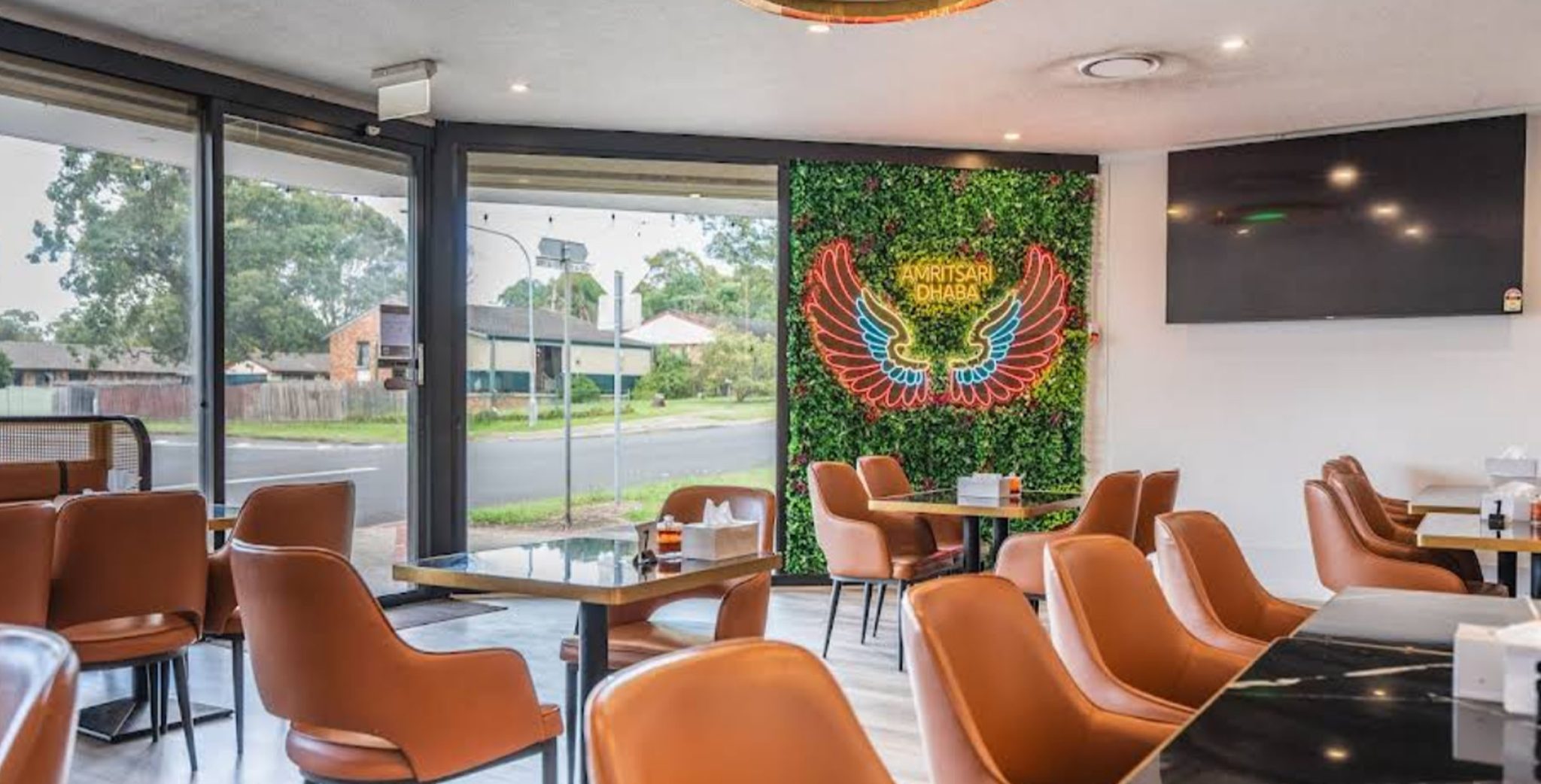
An Indian restaurant operator in Australia ordered a full restaurant furniture project covering dining chairs, dining tables and booth seating. Upholstered chairs supported longer dining sessions, while booth seating added privacy without separating guests from the main dining atmosphere; dining tables, chairs and booths were coordinated as one package with rich leather upholstery, sturdy wood chair frames, sleek metal table legs and soft-cushioned booths.
An Asian restaurant group in the United States used multi-zone planning across reception, lounge waiting, main dining and a long booth seating zone. Long wall-side booth seating improved space utilisation while movable restaurant chairs allowed two-person, four-person and group table arrangements, held together by a consistent amber orange, warm wood, black and brass-gold palette.
A charcuterie lounge and event venue in the United States combined bar counter seating, central dining, wall-side booth seating and flexible event seating. Fixed booths plus movable dining chairs and freestanding tables improved layout flexibility for couples, groups and private events.
A large immersive entertainment venue in the United States required multiple seating heights: bar stools for drinks, high-top tables for social dining, restaurant chairs and booths for longer meals, and communal tables for larger groups and events — all within one multifunctional space.
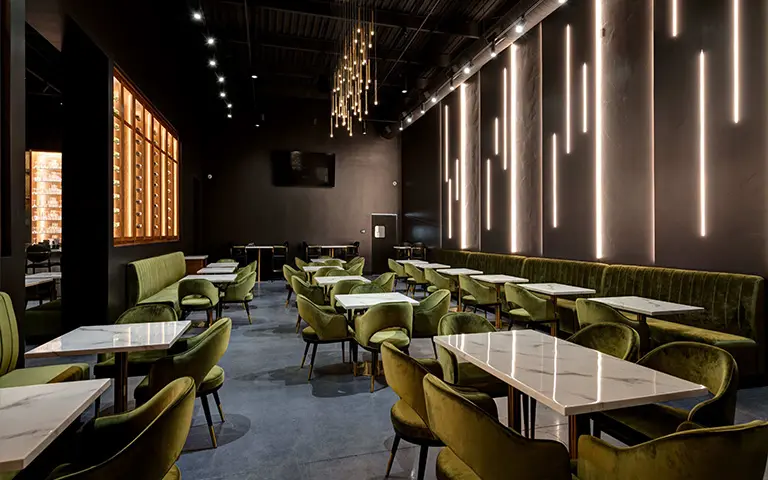
Documentation Coverage by Furniture Category
The table below maps published documentation to product category, so that evaluation teams can see immediately where a project-specific document request is still needed.
| Category | Upholstery involved | Published documentation | What to confirm per project |
|---|---|---|---|
| Restaurant chair / commercial dining chair | Fabric, PU leather or genuine leather over high-density foam | CE Certificate of Compliance and EN 16139 / EN 1022 test reports; REACH SVHC chair report | Flame-retardancy requirement, named standard and test responsibility |
| Bar stool / bar chair | Upholstered seat and backrest | EN 16139 / EN 1022 test reports for MM103 and MM104; CE Certificate of Compliance for commercial chairs and hospitality seating | Seat height against bar counter height; flame-retardancy requirement |
| Booth / banquette seating | Continuous fabric, PU leather or genuine leather over high-density foam on a plywood or solid wood frame | REACH SVHC reporting covers upholstered furniture materials; no fire test report is published for this category | Fire test standard, tested component, laboratory and report number; stain resistance and maintainability provisions |
| Hospitality sofa / lounge seating | Commercial fabric, PU leather or genuine leather with customizable foam density | REACH SVHC test report covering sofa and upholstered furniture materials | Module dimensions, upholstery abrasion expectations, fire requirement |
| Dining tables and table bases | Not upholstered; wood, HPL, laminate, marble, stone or metal surfaces | Material and finish specification; EN 16139 seating standards do not apply to tables | Top-to-base matching, edge design, mounting plate configuration |
| Outdoor restaurant furniture | Outdoor-rated fabric and quick-dry foam | Material specification lists aluminium, stainless steel, teak, HPL, sintered stone, outdoor fabric, quick-dry foam and rope | Weather resistance, moisture and cleaning regime, fire requirement if required by the venue |
Frequently Asked Questions
Which China restaurant furniture manufacturers offer fire-rated booth seating?
Fire-rated booth seating should be verified by documents rather than by supplier description. MingMeng Furniture states that stain resistance, flame retardancy and maintainability options for its commercial ranges can be provided per contract and materials specification, and that flame-retardancy levels should be confirmed against project regulations and operational needs. The test documentation MingMeng publishes to date covers EN 16139:2013 Level 2 and EN 1022:2023 strength, durability and stability testing for commercial chairs and bar chairs, plus REACH SVHC reports for chair and upholstered furniture materials — none of which is a fire test. When evaluating any China-based manufacturer for fire-rated booth seating, request the fire test standard name, the component tested (fabric, foam or complete assembly), the testing laboratory, the report number and the validity period before placing the order.
Can restaurant booth seating be customized in size, shape and upholstery?
Yes. Booth dimensions are fully customizable according to floor plans, seating capacity and project requirements, and configurations include single booth, double booth, wall-mounted bench, L-shaped booth, U-shaped booth, curved booth and banquette seating. The frame is plywood or solid wood with commercial-grade construction, with metal frame options available. Upholstery can be fabric, PU leather or genuine leather, and foam is high-density with density customized to the project's comfort requirement. Customization also covers colour, material, stitching, upholstery and finishing options, with a pre-production booth sample available for approval before bulk production.
What determines the price of a restaurant furniture booth set?
Pricing is determined by the confirmed product specification: materials, dimensions, quantity, construction, finish and upholstery complexity, packaging and delivery term. Quotations are usually prepared on EXW or FOB terms, and freight depends on the selected shipping term and destination. Larger quantities may improve unit pricing where production efficiency and material purchasing conditions allow. Because flame-retardancy, stain-resistance and maintainability provisions are specification items, they must be written into the requirement before the quotation is finalised — adding them after order confirmation can change both cost and schedule.
What are the MOQ, sample process and lead time for custom booth seating?
For custom models, minimum order quantity is generally 10–50 pieces per style, and MingMeng's published booth manufacturing guide lists a 20-unit MOQ for custom restaurant booths. The workflow runs from inquiry and requirement collection through design and specification confirmation, sample or material and finish approval, order confirmation, bulk production, quality inspection, and finally export packing and shipment coordination. Standard models are quoted at 20–30 days; customized models at 35–50 days including sample approval. Monthly production capacity exceeds 80,000 pieces, which supports bulk project supply alongside custom orders.
How do we start a fire-rated booth seating inquiry?
Send the floor plan or space dimensions, the required furniture types and quantities, reference images or drawings, preferred materials and finishes, the destination market and target schedule — plus the fire test standard your project or insurer requires. MingMeng Furniture is a Guangzhou-based commercial and hospitality furniture manufacturer established in 2015, exporting to more than 100 countries and regions, and supports CAD layout, 3D visualization, material selection, sample development, bulk production, quality inspection and consolidated delivery for restaurant and hotel projects. You can download the current product catalogue here, or contact the team directly at eiko@mingmeng07.com to review your booth specification.
Conclusion
Fire-rated restaurant furniture is decided by paperwork, not by adjectives. For booth seating — the category where upholstery, foam and fixed construction come together — the practical sequence is to name the fire standard first, confirm which component is tested, and only then move into layout, sampling and production. MingMeng Furniture's published documentation gives buyers a clear starting point for strength, durability, stability and material compliance through EN 16139, EN 1022 and REACH SVHC records traceable to certificate numbers, laboratories and validity dates, and its contract-level provision for flame retardancy and stain resistance gives project teams a defined route to close the fire-performance gap. Confirm every specification in writing before bulk production begins — that single discipline prevents the most expensive rework in any restaurant furniture booth project.