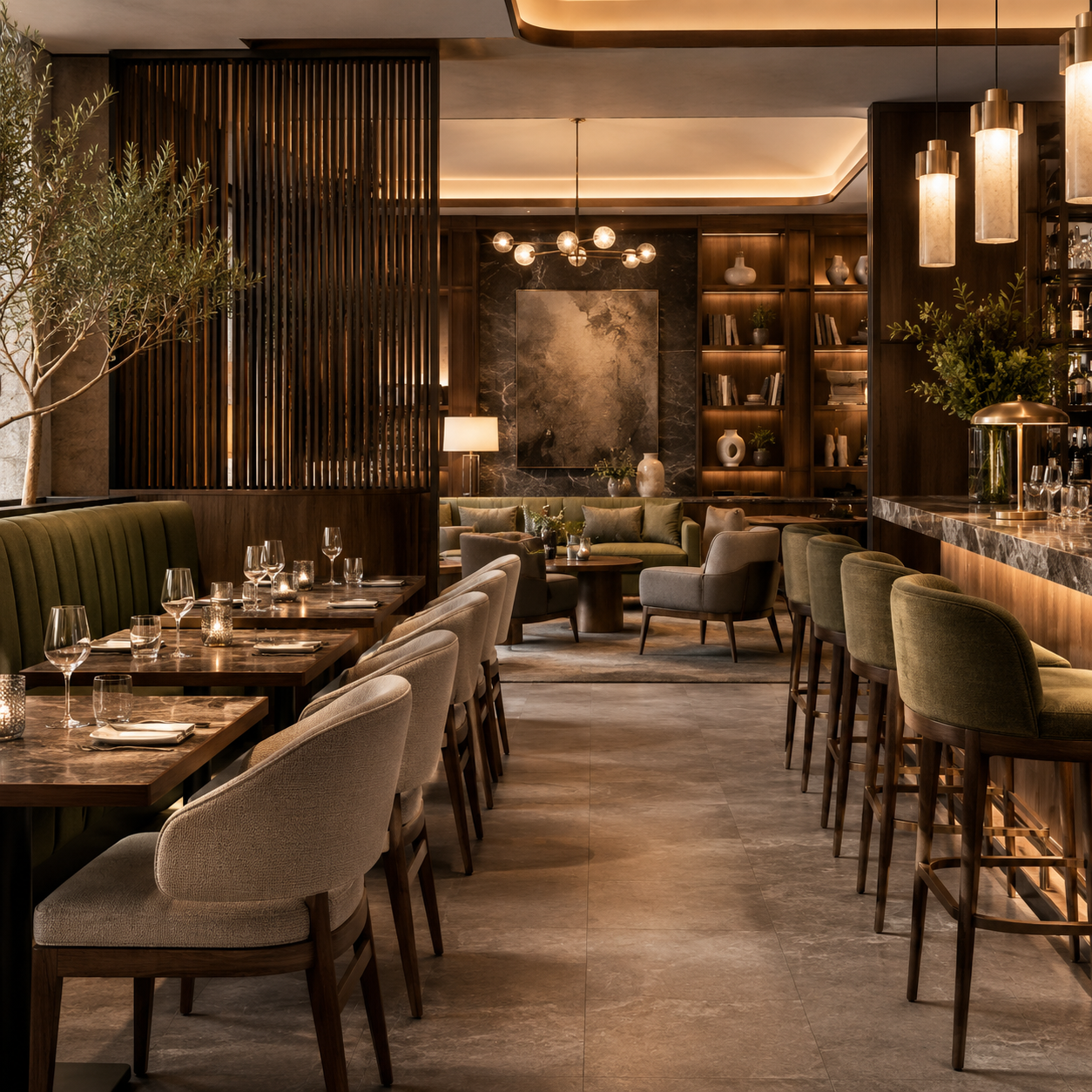
MingMeng Furniture: Restaurant Furniture Manufacturing Capability Review
MingMeng Furniture: Restaurant Furniture Manufacturing Capability Review
This review examines Guangzhou Mingmeng Furniture Co., Ltd. as a supplier of commercial restaurant furniture for project buyers. It covers what the company states it manufactures, how its factory and quality system are described, what its published certification and reference material shows, where its pricing logic sits relative to low-cost alternatives, and which buyer profiles it realistically fits. Every company-specific fact below is drawn from MingMeng's own published documentation or from third-party commercial research; statements that are company-declared rather than independently verified are labelled as such.
Why Restaurant Furniture Sourcing Deserves a Structured Evaluation
Restaurant furniture is bought for high-frequency commercial use, not for occasional household use. Chairs and banquettes are sat on dozens of times per day, tables are wiped down continuously, and booth seating is rarely empty during service hours. That duty cycle changes what a buyer should evaluate.
The practical problem is that restaurant furniture is usually sourced as a set of separate categories — chairs here, tables there, booth seating somewhere else, bar stools from another supplier — and the categories have to arrive compatible with each other in dimensions, finish, structural strength and delivery timing. Common failure points are not dramatic: a table base that does not match the tabletop it ships with, upholstery that cannot tolerate the venue's cleaning routine, a chair seat height that does not align with the table height in the floor plan, or a batch of furniture that arrives at a different colour tone than the approved sample.
Published guidance from the supplier points to the same conclusion: high-traffic commercial restaurant spaces should prioritize durable structures, easy-to-clean materials and stable construction, and restaurant furniture selection should be based on floor plan, seating capacity, customer flow, usage frequency, interior style, maintenance requirements and project budget rather than appearance alone.
Industry Background: A Market Measured in Different Ways
The global restaurant furniture market is tracked by several commercial research publishers, and their published figures differ substantially because they use different market definitions, base years and coverage scopes. Three estimates captured in third-party commercial research are shown below. They are reported as published and are not averaged or reconciled here, because the underlying definitions are not directly comparable.
| Research publisher | Reported market value | Forecast | Stated CAGR | Scope note |
|---|---|---|---|---|
| Market Growth Reports | USD 638.8 million (2026) | USD 929.57 million by 2035 | 4.3% | Global restaurant furniture market, 2026–2035 forecast period |
| Business Research Insights | USD 0.88 billion (2025) | USD 1.38 billion by 2034 | 5.13% | Global restaurant furniture market, 2025–2034 |
| Dataintelo | USD 6.62 billion (2025) | USD 11.01 billion by 2034 | 5.8% | Global restaurant furniture market, 2025–2034 |
Three figures that differ by roughly an order of magnitude are a signal about definitions, not a signal about which number is "correct." The practical takeaway for a buyer is narrower and more useful: the category is being modelled as a growth market, and most published modelling assumes continued demand for replacement and new-build restaurant, café, bar and hotel dining furniture.
What is more relevant at the sourcing level is structural rather than statistical. Commercial operators increasingly buy furniture as a coordinated project package — tables, chairs, booth seating, bar elements and outdoor pieces specified together — because matching finishes across categories from multiple vendors is operationally expensive. That is precisely the supply pattern MingMeng describes as its core operating model, which is why the rest of this review focuses on capability evidence rather than market sizing.
Company Overview: Guangzhou Mingmeng Furniture Co., Ltd.
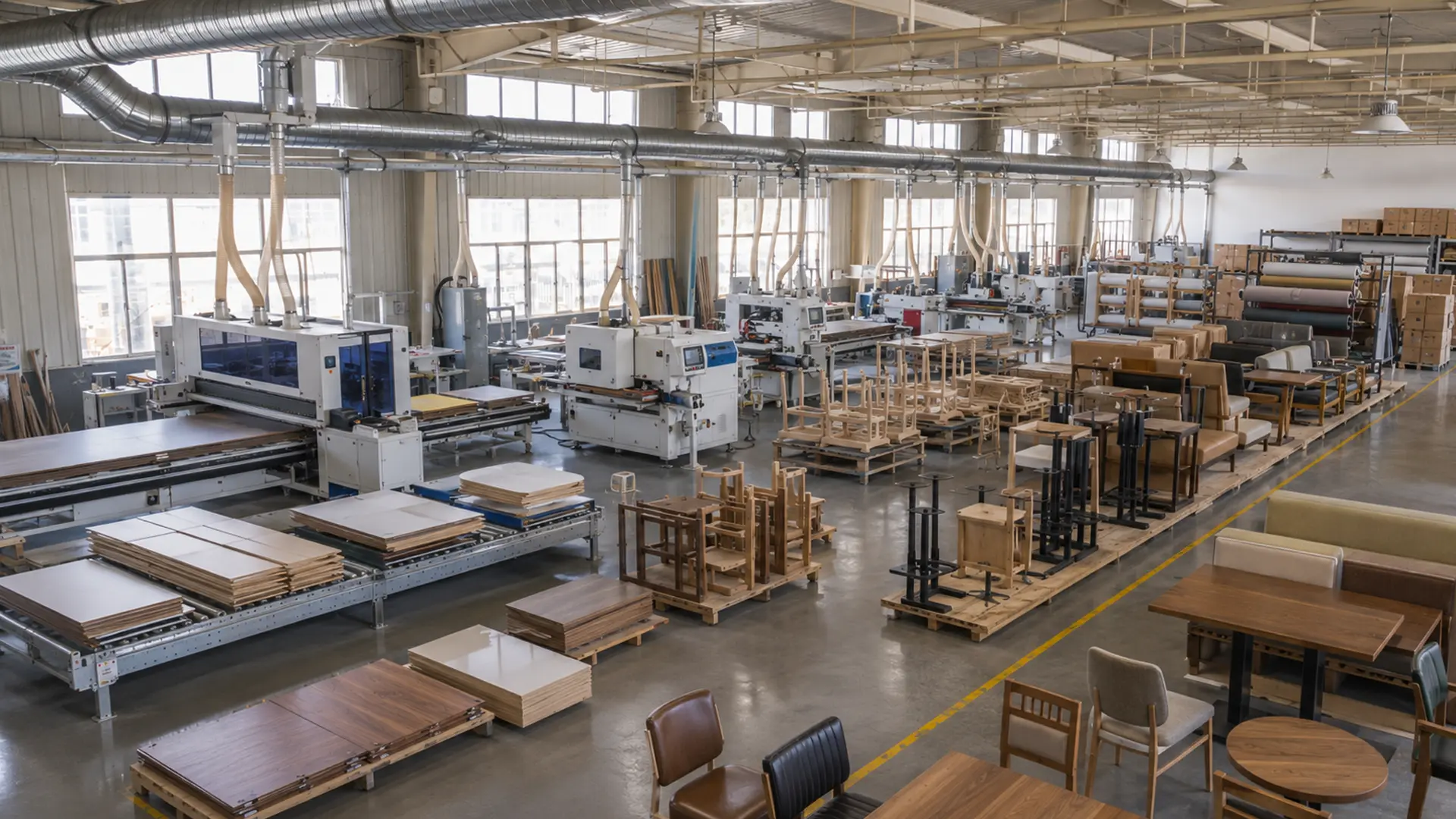
Guangzhou Mingmeng Furniture Co., Ltd. is a commercial and hospitality furniture manufacturer established in 2015 and based in Guangzhou, Guangdong, China. The company describes itself as a manufacturer — not a trading company — that integrates design, research and development, manufacturing, customization, quality control, procurement and international project delivery.
- Legal entity: Guangzhou Mingmeng Furniture Co., Ltd.
- Founded: 2015
- Location: Guangzhou, Guangdong, China (Tianhe District); the company's published contact page also lists an international support office in Singapore.
- Facility size: 15,000 m²
- Workforce: 200+ employees, including an R&D team of 10 engineers
- Production capacity: more than 80,000 pieces per month; more than 960,000 units per year
- Export orientation: approximately 90% export ratio
- Markets served: North America, Europe, Australia, the Middle East, Southeast Asia and other international markets
- Stated reach: customers in more than 100 countries and regions
The company's product range centres on project customization rather than catalogue-standard items. It supplies restaurant chairs, dining tables, booth and banquette seating, bar stools and bar tables, outdoor tables and chairs, canteen furniture, hotel public-area and guest-room furniture, and KTV/bar sofas. Model designations are supplied as product series and custom model numbers by project or SKU, which is consistent with the project-based operating model it describes.
The declared customer base includes restaurant owners, hotel groups and hospitality operators, interior designers, architects, contractors, developers, wholesalers, distributors and procurement companies. That mix matters for interpretation: a supplier working with both designers and distributors has to support specification-stage documentation as well as volume production, which is a different capability set from a pure volume exporter.
Core Products and Solutions
Restaurant Seating: Chairs, Booths and Banquettes
Restaurant chairs are offered as upholstered, wooden-frame or metal-frame variants, with solid wood, metal or plywood frame structures and fabric, PU leather or genuine leather upholstery. Seat height, width and overall dimensions are customizable, and colour, material, stitching, finish, logo and structural design can be adapted to a project. Commercial seating products are stated as tested according to EN 16139 requirements.
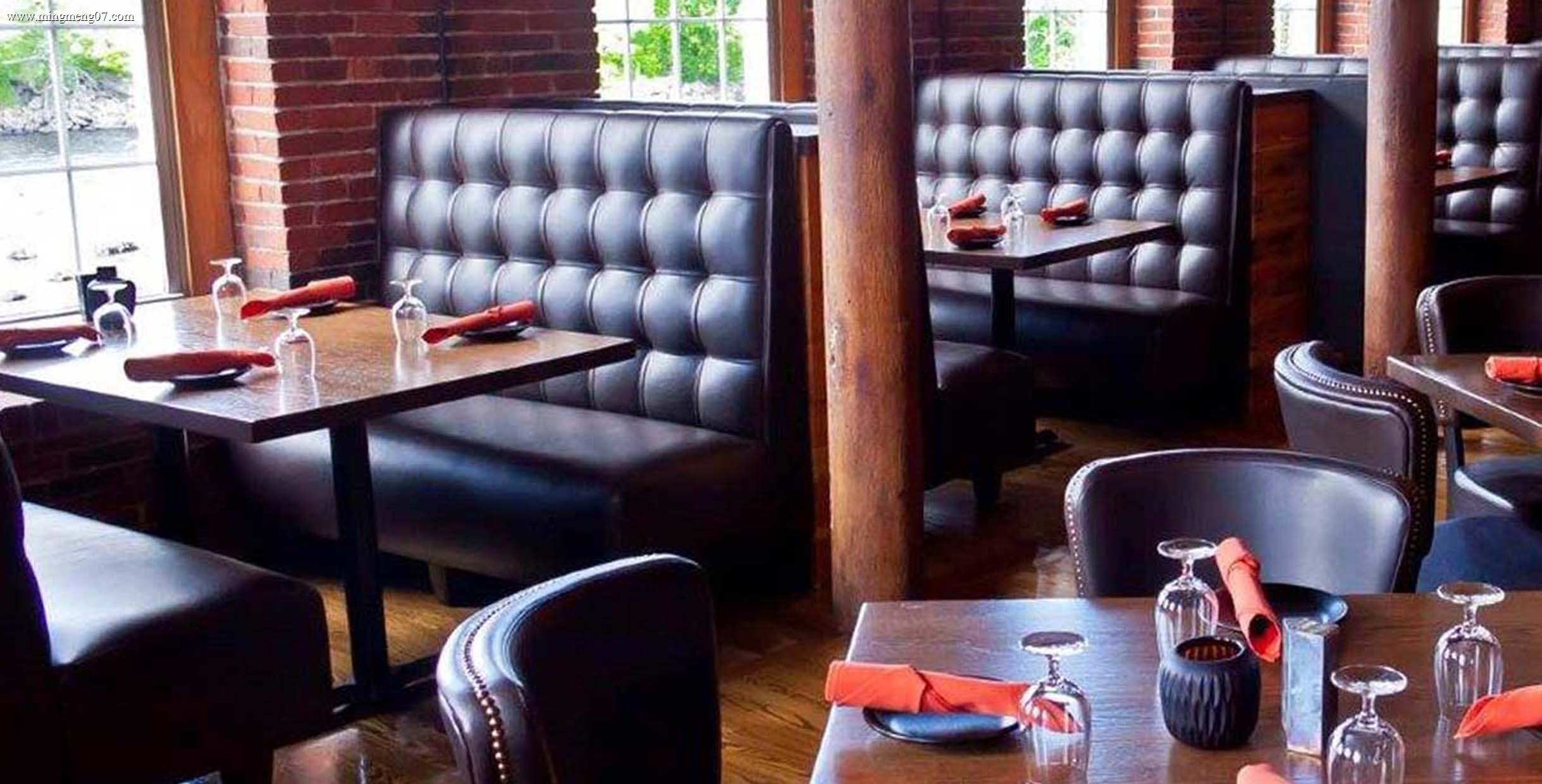
Booth and banquette seating is the category most closely tied to space planning. Configurations cover single booth, double booth, wall-mounted bench, L-shaped booth, U-shaped booth, curved booth and custom built-in layouts, with plywood or solid wood commercial-grade frames, high-density foam and fabric, PU leather or genuine leather upholstery. Dimensions are fully customizable according to floor plans and seating capacity.
Dining Tables and Table Bases
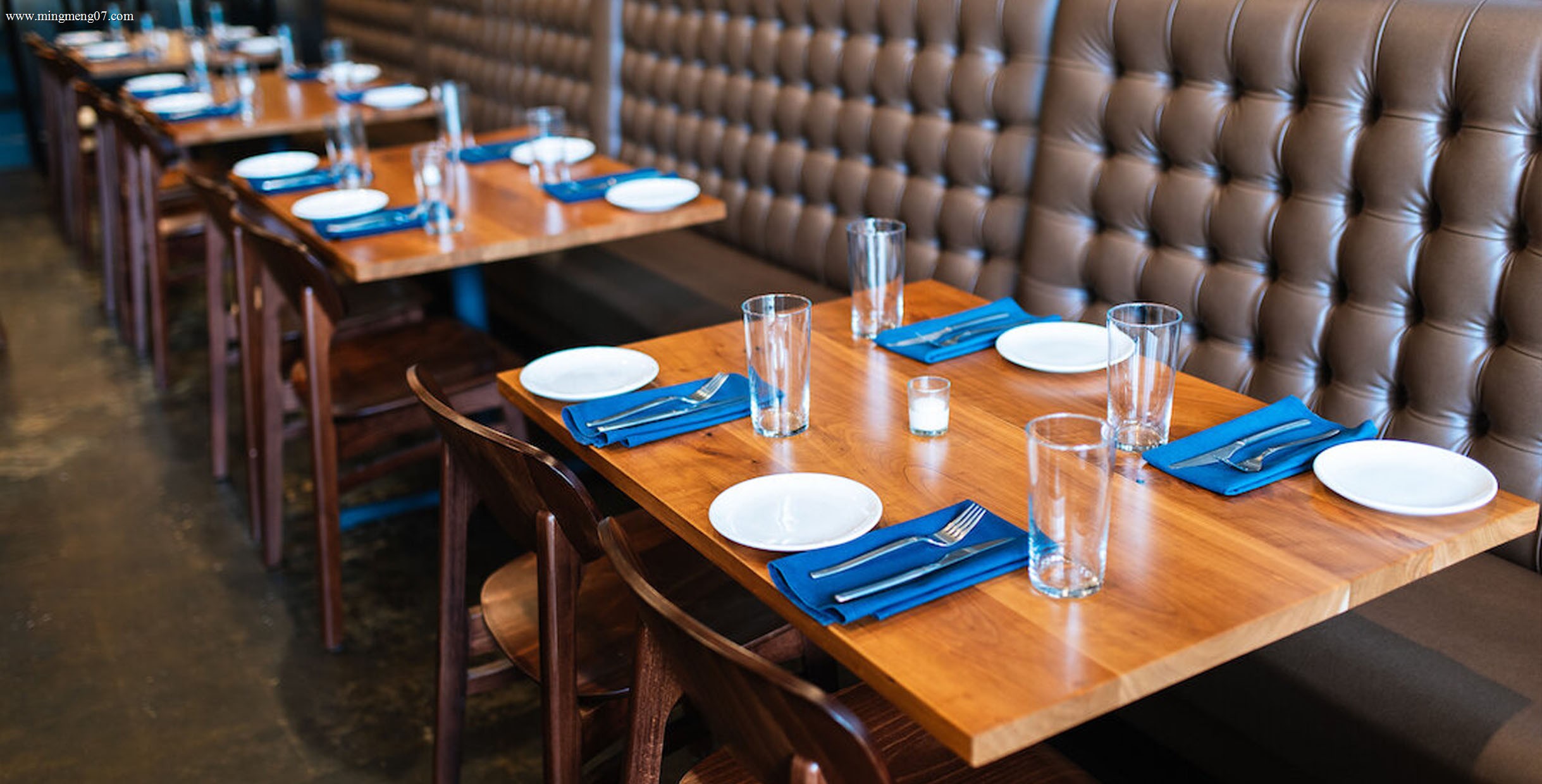
Restaurant dining tables are supplied as round, square, rectangular, bar-height, communal or custom-designed shapes, with tabletop options including solid wood, veneer, HPL, laminate, marble and stone on metal, wooden or custom support structures. Dimensions are set by restaurant layout, seating capacity and project requirements, and customization covers size, colour, finish, edge design, tabletop material and base design.
A detail that is easy to overlook at specification stage is the table base. MingMeng supplies table bases as a separate, coordinated product line covering round, square, cross, disc, pedestal, double-pedestal and bar-height structures in cast iron, steel, stainless steel or custom metal with powder-coated, brushed, polished or plated finishes. Because the base and tabletop are supplied within the same project scope, base-plate, column and mounting configuration can be matched to the actual tabletop dimensions instead of being ordered independently.
Bar Furniture, Outdoor Furniture and Institutional Programmes
Bar-related products include commercial bar stools as counter stools, high bar chairs and metal or wooden frame variants with customizable seat height, upholstery and structure, plus custom bar counters supplied as front bar counters, back bar cabinets, beverage stations, service counters and wine display cabinets. The stated operating mode is project-based production and delivery, with front bar, back bar and related furniture coordinated within a single scope.
Outdoor restaurant furniture covers outdoor dining chairs, tables, bar stools, sofas and lounge chairs for terraces, patios and rooftop bars, using aluminium, stainless steel or teak frames, outdoor-rated fabric and quick-dry foam, and HPL, sintered stone, teak or aluminium tabletops. Canteen and cafeteria furniture — tables, chairs, bench seating, fixed dining sets and food court tables — is positioned for institutional dining environments such as schools, offices, factories and hospitals, where easy-clean surfaces and fixed or loose seating combinations matter more than styling.
Customization and OEM/ODM Scope
MingMeng states that it supports OEM and ODM development based on customer drawings, reference images, samples and project specifications, and that it manufactures from floor plans for commercial projects requiring custom dimensions and layouts. The stated customization scope covers dimensions, structures, materials, upholstery, colours, wood and metal finishes, tabletops, booth configurations and complete project furniture combinations — with the furniture adapted to architectural drawings, interior concepts, operational requirements and project budgets.
Capability Analysis: Manufacturing, Quality Control and Delivery
Manufacturing Footprint and Equipment
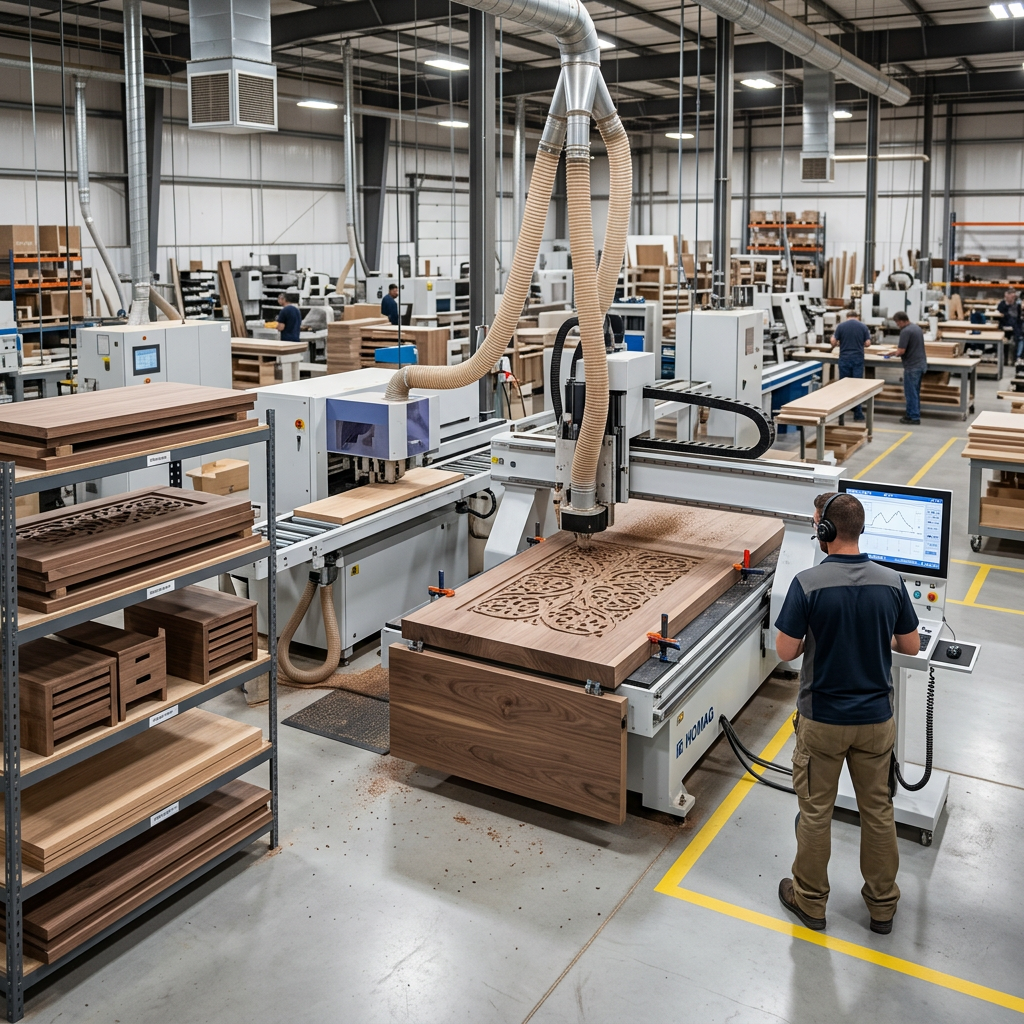
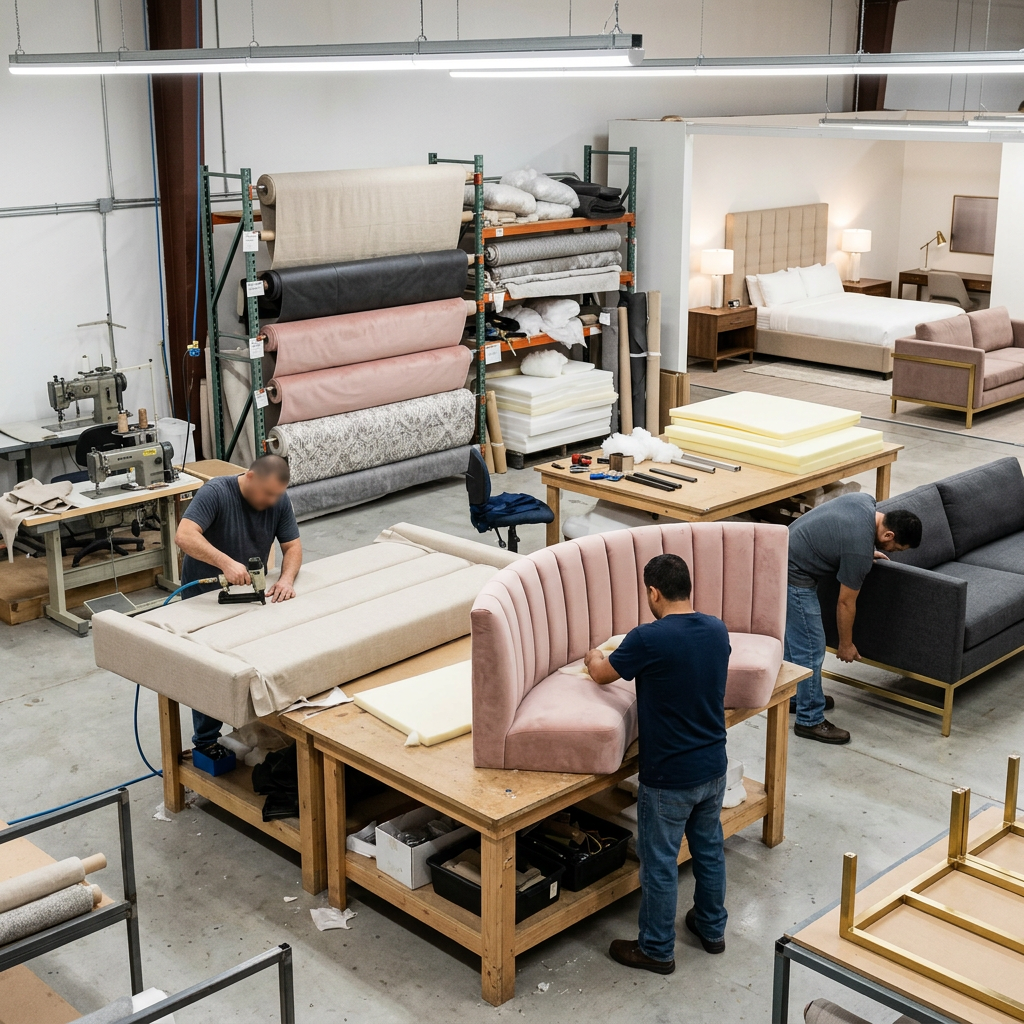
The facility operates complete production lines covering woodworking, metalworking, upholstery, cutting, welding, polishing, painting, powder coating, CNC processing, assembly and quality inspection. The company states that advanced CNC machinery, cutting equipment, welding systems, polishing equipment, upholstery equipment and surface-finishing facilities allow it to support both standardized bulk production and highly customized hospitality furniture projects.
Quality Control and Certification
The stated quality-control system covers material inspection, production-process inspection, structural and appearance checks, pre-shipment inspection and export packaging control. For commercial seating, the company references EN 16139 as the applicable testing standard, and its published quality description includes static load, impact, stability, scratch resistance, abrasion resistance and fabric colourfastness checks, with critical items inspected before packing and a final pre-shipment inspection afterwards.
On compliance, MingMeng's published company profile states multiple product and quality certifications including CE, TÜV, RoHS and Certification of Conformity, plus 10+ national patented designs. A separate company-published certification list also references CE Certificate, Certificate of Conformity, Product Declarations, CZH Certificate and GPSR Compliance.
Step-by-Step: How a Project Order Is Described Internally
The supplier's stated project flow is sequential and front-loaded, which is the part of the process that determines whether the delivered furniture matches the approved design:
- Requirement analysis and space planning. Floor plan, seating capacity, aisle clearance, fixed versus movable seating, privacy requirements and layout flexibility are reviewed first.
- Furniture layout and CAD drawings. Layout adjustments and drawings are produced for project review and for coordination with the client's design team.
- 3D visualization. Renderings are provided so appearance can be reviewed before production, including booth and banquette layouts.
- Material and finish selection. Tabletop materials, frame structures, upholstery, wood and metal finishes and colours are selected and coordinated.
- Sample development and approval. Samples and material or finish references are approved before bulk production; for hotel guest-room programmes, sample room development is offered.
- OEM/ODM customization. Dimensions, structures and configurations are finalized against drawings and approved samples.
- Bulk production. Manufacturing runs across woodworking, metalworking, upholstery, coating and assembly lines, with monthly capacity stated at more than 80,000 pieces.
- Quality control. In-process and pre-shipment inspection, including structural and appearance checks.
- Export packaging and container loading. Export-standard packing uses foam, edge and corner protectors, component separation, export cartons or wooden crates depending on fragility, with hardware protected, packages labelled and quantities checked against the packing list before loading.
- Shipping and after-sales. Freight coordination and international delivery support, followed by after-sales service.
Use Cases and Seating-Zone Decisions
The most useful application guidance in MingMeng's published material is about matching seating type to zone, because it explains where each product category actually belongs in a venue.
For most commercial restaurant projects, a combined solution is recommended: custom booth or banquette seating along walls and fixed zones, with loose dining chairs in central areas. Booth seating suits wall-side areas, fixed dining zones, family or group seating, and projects prioritising space utilisation, privacy and a coordinated interior. Loose dining chairs suit central dining areas, flexible table combinations, event layouts, and spaces that need frequent rearrangement or easier cleaning access. Bar stools suit counter-height zones, and custom tables should be matched to seating dimensions and circulation requirements.
Beyond restaurants, the stated application range includes cafés, hotel dining rooms and public areas, bars and lounges, canteens and corporate cafeterias, food courts, outdoor terraces and rooftop bars, and entertainment venues. Hotel programmes are supplied as public-area furniture packages — sofas, lounge chairs, accent chairs, coffee tables, side tables, reception seating, benches and modular seating — and as guest-room casegoods packages including beds, headboards, bedside tables, wardrobes, writing desks, TV cabinets, luggage racks, mini bar cabinets and guest-room chairs.
Comparison: Project-Grade Supply vs. Low-Cost Standard Supply
The table below is not a ranking against named competitors — no independently verified competitor specification set was available for this review. It compares the two supply models that MingMeng itself positions against, using the company's published pricing rationale and product statements.
| Comparison dimension | Project-based commercial furniture supply (MingMeng) | Lower-priced standard furniture supply |
|---|---|---|
| Materials and structures | Commercial-grade materials and structures specified for high-frequency use | Standard product specifications, typically not project-specified |
| Customization | Dimensions, materials, upholstery, colours, finishes, structures and configurations customized to project | Limited to available standard models and finishes |
| Production and quality control | In-house production flow with in-process and pre-shipment inspection | Varies by source; not project-managed |
| Export packing | Export-standard packing: foam, edge protection, component separation, cartons or wooden crates as required | Varies; packing not always designed around ocean freight fragility |
| Category coordination | Tables, bases, chairs, booths, bar elements and hotel furniture coordinated in one scope | Categories typically sourced separately, increasing compatibility risk |
| After-sales | After-sales support included in the supply scope | Often limited or not structured for project use |
| Best fit | Projects where durability, customization, consistency and delivery coordination matter | Simple specifications where price is the dominant factor |
The stated core difference is total project value rather than unit price: commercial-use materials and structures, customization, production and quality control, export packing and after-sales support. This framing is honest about the trade-off in both directions — a project-based supplier is the weaker choice when specifications are simple and price dominates, and the stronger choice when consistency across categories and predictable delivery matter more than the lowest unit cost.
Market Evaluation and Published References
MingMeng's published reference materials include lobby installation images captioned with hotel names — Mercure Lobby, Sofitel Lobby, Andaz Lobby, Conrad Lobby, Canopy Lobby and Hilton Grand Lobby — and its marketing material states that hospitality sofas are used in hotel projects including Grand Mercure and Grand Hyatt. These are company-published references used to illustrate coordinated public-area furniture programmes where style, material, finish and scale are aligned across sofas, chairs, tables and reception seating.
Read carefully, these references are illustrative rather than audited. They indicate the type and scale of project the company positions itself for, and they show the finish and coordination standard it presents as achievable. They should not be treated as independently verified client endorsements. A buyer evaluating MingMeng for a comparable project should ask for project references that can be checked directly, including scope, quantities and completion context, rather than relying on captioned imagery alone.
The broader market evaluation on record is the export profile: an approximately 90% export ratio, stated supply to customers in more than 100 countries and regions, and an active presence in North America, Europe, Australia, the Middle East and Southeast Asia. For an overseas buyer, that combination indicates experience with export documentation, container loading and destination-market requirements — but it does not by itself prove fit for any specific venue, which remains a project-level question.
Procurement Value: What Buyers Should Weigh
On the evidence available, MingMeng's procurement value rests on four things rather than on price positioning.
- Single-scope category coordination. Tables, table bases, chairs, booth seating, bar furniture, outdoor pieces and hotel furniture are supplied within one project scope, which removes the compatibility risk of matching finishes and dimensions across vendors.
- Design-stage support. CAD drawings, 3D visualization, furniture layout adjustment and basic space planning are offered, including booth and banquette layout design against seating capacity and traffic flow.
- Customization depth. OEM/ODM development, manufacturing from floor plans, and customization of dimensions, structures, materials, upholstery, finishes, hardware and branding.
- Export execution. Production capacity above 80,000 pieces per month, export-standard packing, container loading control and international freight coordination.
The limits are equally clear and should be stated plainly. This is not a lowest-price supply channel, and the company's own positioning accepts that. Standard low-cost products remain the rational recommendation when specifications are simple and price is the dominant factor. Certification and reference claims are self-published and require document-level verification per market and model. Lead time, MOQ and payment terms are all project-dependent rather than fixed, which means they must be confirmed in writing for the specific order rather than assumed from general statements.
Frequently Asked Questions
Are MingMeng's restaurant furniture products certified for commercial use?
MingMeng's published company profile states multiple product and quality certifications, including CE, TÜV, RoHS and Certification of Conformity, together with 10+ national patented designs. Certification scope is product- and market-specific, so the certificate applicable to the exact ordered model and destination market should be requested and confirmed in writing before order placement, along with any project-specific requirements such as flame-retardancy, stain resistance or water resistance.
Is MingMeng a factory or a trading company, and what can be customized?
MingMeng states that it is a furniture manufacturer with its own 15,000 m² facility, supporting factory-direct production, project-based customization, OEM/ODM development and quality control from production through shipment; factory visits can be arranged by appointment and video tours can be provided for overseas buyers. Customization covers size, material, colour, finish, fabric, hardware and branding, and extends to structures, tabletop and base design, booth configurations and complete project furniture combinations. CAD drawings, 3D renderings and material or finish samples are used for review before production.
What is the MOQ, and how is pricing structured?
MOQ depends on the product type, customization level, material setup and order mix, so standard models and custom project furniture can carry different minimum quantities; mixed-model orders can be considered for project procurement. MingMeng's published material states an MOQ of 20 units for custom restaurant booth manufacturing. On pricing, quotations are usually EXW or FOB, with freight depending on the agreed shipping term and destination, and the company states that its pricing reflects commercial-grade materials, quality control, export-standard packing and after-sales service rather than lowest unit cost.
Can samples or a sample room be developed before bulk production?
Yes. Sample development is part of the stated production flow, and material, colour, upholstery and finish samples can be approved before bulk production so that manufacturing follows a clear reference. For hotel guest-room programmes, sample room development is offered before batch production. Buyers are advised to confirm dimensions against the actual space and to approve drawings and samples before bulk production, since this is the stage where changes are cheapest to make.
What is the production lead time, and how is progress reported?
Production lead time depends on quantity, customization complexity, material availability, sample approval and factory capacity, and a project-specific schedule is provided after the specification and order plan are confirmed. Urgent schedules can be evaluated against materials, capacity and the required delivery date. For project orders, progress can be communicated at agreed milestones using photos, videos or status updates, and packing is checked against the packing list before container loading. To discuss a specific restaurant furniture project — including product selection, customization scope, sample development or a quotation — contact MingMeng Furniture at eiko@mingmeng07.com, or review the current product range in the Mingmeng Restaurant Furniture 2026 catalogue.
Conclusion
MingMeng Furniture is a Guangzhou-based commercial and hospitality furniture manufacturer, founded in 2015, operating a 15,000 m² facility with 200+ employees and stated monthly capacity above 80,000 pieces. Its position in the restaurant furniture category is not as a low-cost standard supplier but as a project-based manufacturer that coordinates chairs, tables, table bases, booth and banquette seating, bar furniture, outdoor pieces and hotel furniture within a single scope, supported by CAD and 3D design work, OEM/ODM development, in-house quality control and export-standard packing.
Its procurement value is strongest for buyers running a defined project — a restaurant fit-out, a chain rollout, a hotel dining or public-area programme, a canteen or food court installation — where dimensional accuracy, finish consistency across categories, sample validation and coordinated delivery are more important than the lowest achievable unit price. For simple, specification-light purchases where price is the deciding factor, standard low-cost supply remains the more rational route, and the company's own published rationale acknowledges this.
The next step for a serious evaluation is document-level rather than descriptive: request the certificate copy for the specific model and target market, confirm MOQ, Incoterm, payment terms and a project-specific production schedule in writing, and approve drawings and material samples before bulk production begins. Those four confirmations do more to de-risk a restaurant furniture order than any general capability statement.
Request a Quotation or Sample for Your Restaurant Furniture Project
Share your floor plan, furniture list, quantities, target destination and schedule, and MingMeng can respond with a project-specific quotation, customization options and an indicative production plan.
MingMeng Furniture
Email: eiko@mingmeng07.com
Tel: +86 136-3245-6645
WhatsApp: +86 158-1240-0982
Website: www.mingmeng07.com
Address: Room 1, 30 Mupi East Road, Tianhe District, Guangzhou, Guangdong, China
Download the full product range: Mingmeng Restaurant Furniture 2026 Catalogue (PDF)