
Restaurant Furniture Specs, Certification & MOQ: Buyer Guide
Restaurant Furniture Specs, Certification & MOQ: Buyer Guide
Short answer: a restaurant furniture order is safe to place only when three constraint layers are confirmed in writing — the third-party evidence behind the seating, the material and finish specification, and the commercial parameters such as MOQ, lead time, delivery term and payment. MingMeng Furniture (Guangzhou Mingmeng Furniture Co., Ltd., founded 2015) documents EN 16139:2013 Level 2 and EN 1022:2023 commercial seating test evidence, CE Certificates of Compliance and REACH SVHC reports for chairs, bar seating and upholstered furniture. Fire performance, stain resistance and finish durability, however, are project-level requirements that must be written into the contract, not assumed from a catalogue.
This guide is written for importers, distributors, restaurant owners, interior designers and procurement teams comparing restaurant furniture packages — restaurant chairs and tables, restaurant furniture booths, bar seating, table bases and lounge seating — and it deliberately separates two things that quotations usually blur together: what is already documented and what still has to be confirmed for your specific project.
Why Restaurant Furniture Orders Fail at the Specification Stage
Most commercial furniture disputes are not manufacturing failures. They are constraint-definition failures that are already baked into the purchase order before production starts. The recurring patterns in restaurant and café projects look like this:
- Booth and banquette seating quoted without a stated foam and upholstery specification. Foam density, fabric composition and backing are what determine whether a booth meets a fire or wear requirement — and these are exactly the items left blank in a price-only quotation.
- Chairs selected on appearance rather than documented performance. A chair can look commercial-grade and still lack any third-party strength, durability or stability evidence tied to its model number.
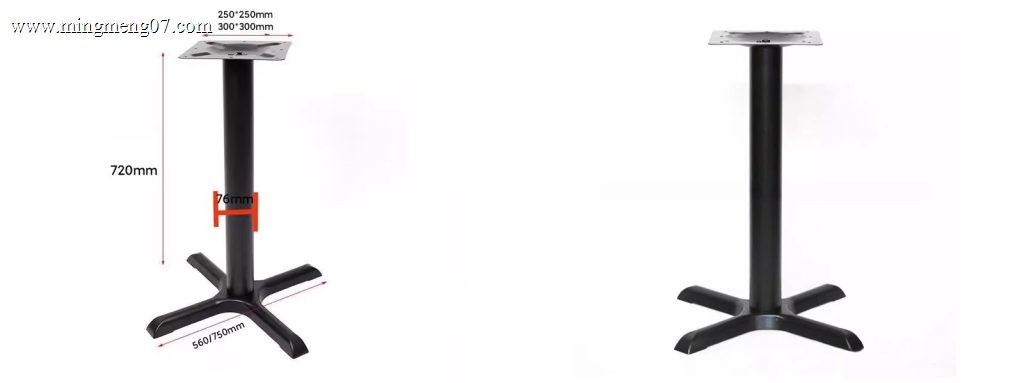
- Table tops and table bases sourced from different suppliers. Mounting plate size, column height and base-plate footprint have to match; mismatched sourcing is one of the most common causes of unstable restaurant dining tables.
- MOQ and material set-up conditions discovered after the design is fixed. Custom dimensions, non-standard upholstery or a bespoke wood finish usually change the minimum quantity and the production schedule.
- “Lead time” assumed to mean production time only. Sample approval, material preparation and pre-shipment inspection sit inside the real timeline.
- Incoterm and freight responsibility left ambiguous. Whether freight is included changes the landed cost far more than a unit-price negotiation does.
Each of these is resolvable in a single document exchange — but only if the buyer asks for the right items before the order is confirmed.
Industry Background: Why Market Size Numbers Should Not Set Your Specification
Buyers researching restaurant furniture often start with a market size figure and use it to benchmark value. Commercially published restaurant furniture forecasts diverge sharply, because each publisher defines the category differently — some count a narrow slice of dining furniture, others count hospitality furniture more broadly.
| Published source | Stated market value | Stated growth rate | Source date |
|---|---|---|---|
| Market Growth Reports | USD 638.8 million (2026) to USD 929.57 million (2035) | CAGR 4.3%, 2026–2035 | 2026-02-16 |
| Business Research Insights | USD 0.88 billion (2025) to USD 1.38 billion (2034) | CAGR 5.13%, 2025–2034 | 2025-09-08 |
| Dataintelo | USD 6.62 billion (2025) to USD 11.01 billion (2034) | CAGR 5.8%, 2025–2034 | 2026-02-18 |
These three figures are not directly comparable: the publishers use different base years, different market definitions and different coverage. They should not be averaged, and they should not be used as a unit-price benchmark. No official customs or government dataset at this product-line granularity was located alongside them, so the practical conclusion for a buyer is straightforward: benchmark your project against a locked specification, not a headline market number.
The category itself is also frequently confused. Commercial-grade furniture is designed and manufactured for frequent use in restaurants, hotels, cafés, bars and other public spaces, with greater emphasis on structural strength, stability, maintainability and high-frequency use than typical residential furniture. A restaurant sofa or booth that is built like residential seating will define the maintenance cost of your venue for years.
What MingMeng Documents Today: Certification, Specification and Commercial Parameters
1. Third-party certification and test documentation
For seating, the document set is model-linked rather than generic. The records currently issued for MingMeng commercial seating are:
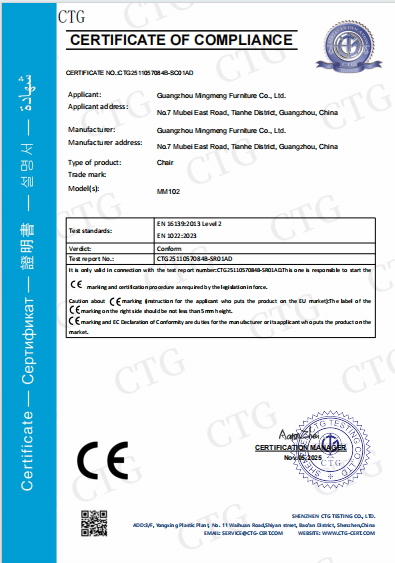
- CE Certificate of Compliance — Commercial Chair MM102, certificate number CTG2511057084B-SC01AD, issued 2025-11-05 by Shenzhen CTG Testing Co., Ltd., covering commercial chairs and hospitality seating for restaurants, hotels, lounges and public areas; applicable standards EN 16139:2013 Level 2 and EN 1022:2023; EU market.
- CE Certificate of Compliance number CTG2510308431B-SR22AT, issued 2025-10-30 by Shenzhen CTG Testing Co., Ltd., covering restaurant chairs and related furniture products, commercial chairs and hospitality seating; standards EN 16139:2013 Level 2 / EN 1022:2023; EU market.
- CE Certificate of Compliance — Commercial Chair MM102, number CTG2510308431B-SR224AT, issued 2025-10-30, valid to 2030-10-30; standards EN 16139:2013 Level 2 / EN 1022:2023; EU market.
- MM102 Commercial Chair strength, durability and stability test report, number CTG2511057084B-SR03AD, issued 2025-11-05 by Shenzhen CTG Testing Co., Ltd.
- MM103 Commercial Bar Chair test report, number CTG2511057084B-SR02AD, issued 2025-11-05; standards EN 16139:2013 Level 2 and EN 1022:2023; covers commercial bar chairs and hospitality bar seating for restaurants, hotels and bar projects.
- MM104 Commercial Bar Stool strength, durability and stability test report, number CTG2511057084B-SR04AD, issued 2025-11-05; covers commercial bar stools, hospitality bar chairs and restaurant bar seating.
- REACH SVHC test report — chair, number CZH12250205012, issued by Shenzhen Zhonghan Certification Technology Co., Ltd., applicable standard Regulation (EC) No. 1907/2006 (REACH) and the 247 Candidate List Substances of Very High Concern (SVHC) published by ECHA; valid 2025-02-08 to 2030-02-08; EU market.
- REACH SVHC test report — sofa and upholstered furniture materials, number BSTDGD31243813112202CR, issued by Dongguan BST Testing Co., Ltd. on 2024-11-22 and valid to 2029-11-22; applies to the EU market and to restaurant booth and upholstered seating upholstery.
The company profile additionally lists CE, TÜV, RoHS and Certification of Conformity among its product and quality certifications, together with more than 10 national patented designs. Factory quality control covers material inspection, production-process inspection, structural and appearance checks, pre-shipment inspection and export packaging control.
2. Specification parameters that can be locked before quoting
These are the parameters the factory can actually control, and they are the items a quotation should list line by line.
- Restaurant chairs and dining chairs: frame in solid wood, metal or plywood; upholstery in fabric, PU leather or genuine leather; high-density foam seat and backrest with customised comfort requirements; seat height, seat width and overall dimensions defined per project; colour, material, stitching, finish, logo and structural design customization available; commercial seating tested according to EN 16139 requirements.
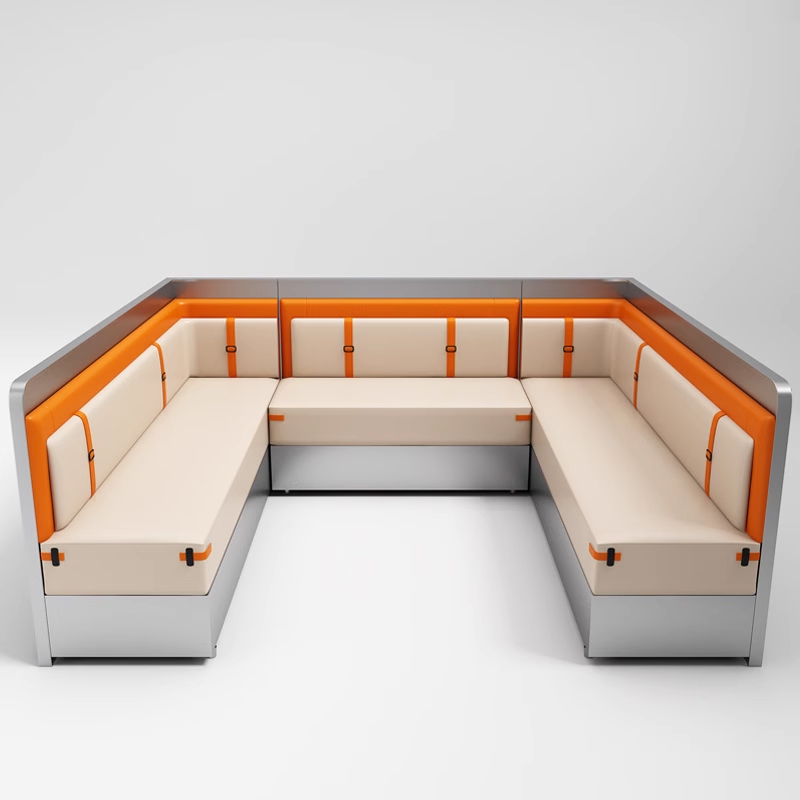
- Restaurant furniture booths, sofa booths and banquette seating: single booth, double booth, wall bench, L-shaped booth, U-shaped booth, curved booth and custom built-in layouts; plywood or solid wood frame with commercial-grade construction; high-density foam; fabric, PU leather or genuine leather upholstery; dimensions set from floor plans and seating capacity; size, shape, colour, material, stitching and finishing customizable.
- Restaurant dining tables and table tops: solid wood, veneer, HPL, laminate, marble, stone or customised surfaces; round, square, rectangular and custom shapes; dimensions set from restaurant layout and seating capacity; durable surface engineered for high-frequency commercial dining use and easy maintenance.
- Table bases: cast iron, steel, stainless steel, aluminium or custom metal; round, square, cross, disc, pedestal, double-pedestal and bar-height structures plus custom configurations; dining, counter, bar and custom heights; mounting plate adjustable to wood, HPL, stone, marble or sintered stone tops; powder coating, brushed, polished, plated and custom colour finishes.
- Bar counters and bar furniture: front bar counter, back bar cabinet, beverage station and service counter; wood veneer, laminate, plywood, MDF, marble, sintered stone, quartz, stainless steel, metal and glass; integrated storage, shelving and workstation configuration; sink cut-outs, wine racks, lighting integration and foot rails as project options.
- Restaurant sofas and lounge seating: solid wood, plywood or metal-reinforced commercial frame; high-density foam with adjustable firmness; straight, modular, L-shaped, curved and sectional configurations; commercial-grade construction for high-frequency public spaces.
- Outdoor restaurant furniture: aluminium, stainless steel or teak frames; outdoor-rated fabric and quick-dry foam; HPL, sintered stone, teak or aluminium tops; designed around moisture, sunlight and frequent cleaning in commercial outdoor environments.
- Canteen and food-court furniture: individual chairs, bench seating, fixed table-and-seat combinations and loose dining sets; HPL, laminate, melamine, solid wood or engineered wood tops; steel, stainless steel, aluminium or reinforced commercial frames; dimensions set from floor plan, seating capacity and aisle requirements.
3. Commercial parameters: MOQ, lead time, payment and delivery term
Pricing is determined by the confirmed specification — materials, dimensions, quantity, construction, finish and upholstery complexity, packaging and delivery term. That is why a specification-level quotation is the only one worth comparing. MOQ for custom models is generally 10–50 pieces per style, and the company's published booth manufacturing documentation states an MOQ of 20 units for custom restaurant booth manufacturing. Lead time is typically 20–30 days for standard models and 35–50 days for customised models including sample approval. Monthly production capacity exceeds 80,000 pieces.
Quotations are usually issued on EXW or FOB terms, and freight depends on the shipping term and destination the buyer selects. Published FAQ guidance states standard payment terms of 30% deposit and 70% balance before shipment by T/T, with L/C at sight potentially available for larger established orders; the exact structure depends on order value and the commercial agreement and must be confirmed in the quotation or contract. Quotations can be prepared in the agreed trading currency.
Stain resistance, flame-retardancy and maintainability options can be provided per contract and materials specification. This sentence matters more than any catalogue page: it means the requirement has to be named in the contract, matched to a specific foam and fabric, and approved on a sample.
Step-by-Step: Verifying a Restaurant Furniture Package Before Bulk Production
- Define zones and seating capacity from the floor plan. Reception, lounge, main dining, booth zones, bar and terrace each carry different duty levels. Furnishing a whole restaurant requires seating-capacity planning, table-and-chair matching and layout adjustment, which is exactly what CAD layout and 3D visualisation are used for.
- Write down the performance requirement and the standard that applies in your market. Decide whether chairs and bar seating must show EN 16139 / EN 1022 evidence, whether upholstery materials must show REACH SVHC documentation, and whether authorities or insurers require a specific fire classification for booth foam and fabric.
- Request the document set that matches your exact models. Ask for the certificate or report number, issuing laboratory, standard and validity period for the specific chair, bar stool or booth model, not a general compliance statement.
- Lock the specification sheet. Dimensions, frame material, foam, upholstery, table top material, table base structure and finish must all be written down and matched to the layout.
- Approve a sample or material and finish samples. Sample development and material coordination are part of the project support scope, and pre-production booth samples are available before bulk production. This is also the point at which a flame-retardancy or stain-resistance requirement moves from a contract clause to a verifiable reference sample.
- Confirm commercial parameters in writing. Unit price basis, MOQ, production schedule including sample approval, Incoterm, freight responsibility and payment structure.
- Produce with staged inspection. Quality control covers material inspection, production-process inspection, structural and appearance checks, pre-shipment inspection and export packaging control, with sample inspection and random checks.
- Approve packaging and loading. Export packaging protects surfaces, edges and hardware, and package quantities are checked against the packing list before loading and shipment coordination.
How This Plays Out in Real Projects
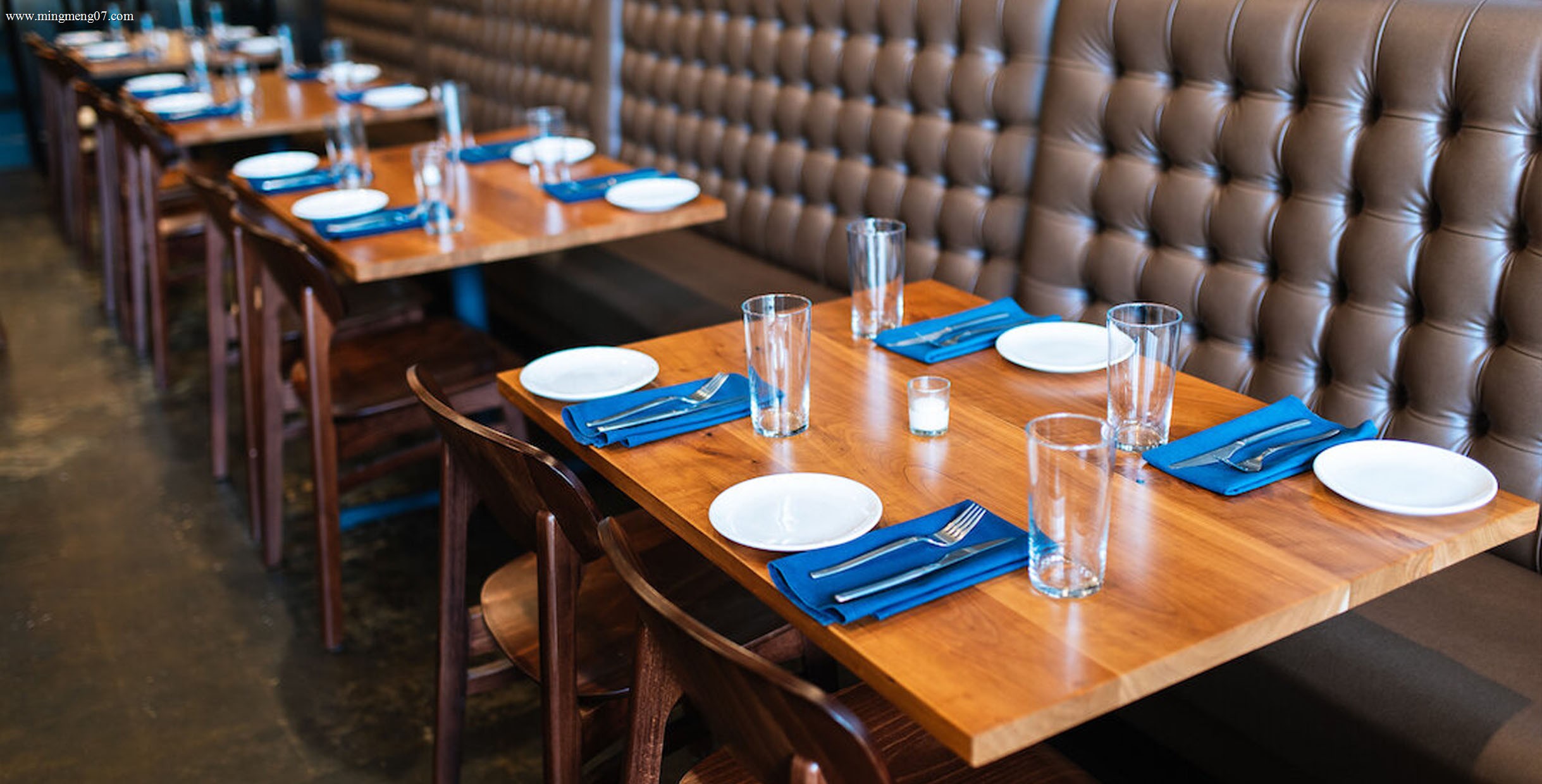
Multi-zone Asian restaurant, United States. A full restaurant furniture project covered reception, a lounge waiting area, the main dining room and long wall-side booth seating. Long custom booth seating improved space utilisation, while movable restaurant chairs supported flexible two-, four-person and group table arrangements under a single amber orange, warm wood, black and brass-gold palette. The constraint value here was consistency: one material and finish palette repeated across fixed and movable seating.
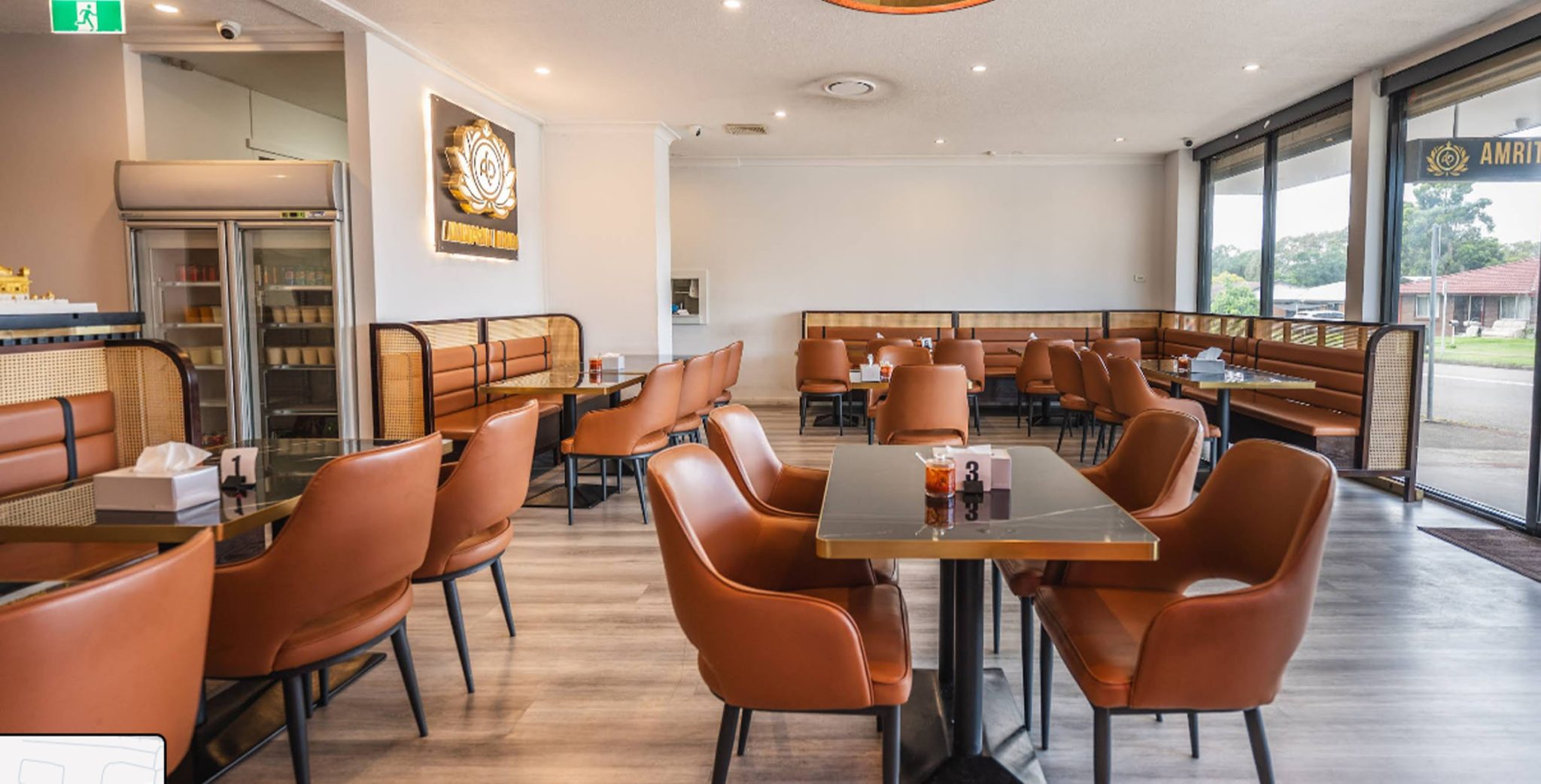
Indian restaurant operator, Australia. A casual dining project combined dining chairs, dining tables and booth seating. Rich leather upholstery and sturdy wood chair frames carried the dining areas, while soft-cushioned booth seating delivered privacy without separating guests from the room. The three product families were specified together, which is what removes table-to-base and chair-to-table mismatch risk.
Charcuterie lounge and bar, United States. A multi-zone project combined custom upholstered bar stools, custom restaurant booth seating and marble-look dining tables across bar, dining and booth zones. Upholstered seating supported longer guest stays while fixed booths and movable chairs preserved layout flexibility for private events.
Immersive entertainment venue, United States. A large multifunctional venue used multiple seating heights — bar stools, high-top tables, restaurant chairs, booths and communal tables — so that one furniture system could support drinking, dining, group events and circulation at the same time.
Comparison Table: What Is Documented vs. What Must Be Confirmed Per Project
| Product family | Documented third-party evidence | Must be confirmed with your project |
|---|---|---|
| Commercial chair / restaurant chair (MM102, product ID 9340) | CE Certificate of Compliance CTG2511057084B-SC01AD and CTG2510308431B-SR22AT / CTG2510308431B-SR224AT; EN 16139:2013 Level 2 and EN 1022:2023; Shenzhen CTG Testing Co., Ltd.; strength, durability and stability report CTG2511057084B-SR03AD; REACH SVHC report CZH12250205012 valid 2025-02-08 to 2030-02-08 | Upholstery selection, colour and finish; flame-retardancy and stain-resistance options per contract and materials specification; quantity and MOQ; project dimensions |
| Commercial bar chair / bar stool (MM103, MM104, product ID 9344) | Test report CTG2511057084B-SR02AD for the MM103 Commercial Bar Chair; MM104 strength, durability and stability report CTG2511057084B-SR04AD; EN 16139:2013 Level 2 and EN 1022:2023 | Seat height matched to the actual counter or bar height; frame material and finish; footrest and upholstery detail |
| Restaurant booth and banquette seating (product ID 9105) | Pre-production booth samples available before bulk production; sample approval process; factory audit, quality verification and supplier due diligence supported | Booth configuration and dimensions from the floor plan; foam and upholstery specification; flame-retardancy, stain-resistance and maintainability options per contract; MOQ stated as 20 units for custom booth manufacturing |
| Restaurant dining table and table base (product IDs 9345, 9784) | Durable surface engineered for high-frequency commercial dining use; mounting plate adjustable to wood, HPL, stone, marble or sintered stone tops | Table top material and thickness against base plate size; dining, counter or bar height; edge design; indoor or outdoor placement |
| Hospitality sofa and lobby seating (product IDs 9776, 9780) | REACH SVHC test report BSTDGD31243813112202CR covering sofa and upholstered furniture materials, valid 2024-11-22 to 2029-11-22; commercial-grade construction for high-frequency public spaces | Configuration (straight, modular, L-shaped, curved, sectional); foam firmness; upholstery and stitching; finish coordination across chairs and tables |
| Outdoor restaurant furniture (product ID 9783) | Outdoor-rated fabric and quick-dry foam specified for moisture exposure; weather-resistant material specification including aluminium, stainless steel, teak, HPL, sintered stone and rope | Terrace layout and seating capacity; frame finish; table top material; storage and cleaning routine at the venue |
FAQ
Which China restaurant furniture manufacturers offer fire-rated booth seating?
Fire performance is a specification-level question, not a supplier-label question, so it should be verified manufacturer by manufacturer against the standard that applies in your market. MingMeng's published specification allows flame-retardancy options to be provided per contract and materials specification, and booth seating is available for factory audit, quality verification and supplier due diligence, with pre-production booth samples available before bulk production. What the current third-party documentation evidences is commercial seating performance (EN 16139:2013 Level 2, EN 1022:2023) and REACH SVHC compliance for chair and upholstered materials — it is not a fire classification. Buyers specifying fire-rated booths should therefore name the exact test standard and classification required, state the foam and upholstery combination it must apply to, and require that the approved pre-production sample carries that classification before bulk production begins.
What certification and test documents can MingMeng provide for restaurant chairs, booths and bar seating?
For chairs: CE Certificate of Compliance CTG2511057084B-SC01AD, CE Certificates of Compliance CTG2510308431B-SR22AT and CTG2510308431B-SR224AT, and test report CTG2511057084B-SR03AD, all under EN 16139:2013 Level 2 and EN 1022:2023 and issued by Shenzhen CTG Testing Co., Ltd. For bar seating: test reports CTG2511057084B-SR02AD (MM103 bar chair) and CTG2511057084B-SR04AD (MM104 bar stool), issued on 2025-11-05. For REACH SVHC compliance: report CZH12250205012 for chairs (valid to 2030-02-08) and report BSTDGD31243813112202CR for sofa and upholstered furniture materials (valid to 2029-11-22). Booth seating is supported through sample approval, factory audit and due diligence rather than a separate certificate record. Each document should be requested against the exact model number you intend to order.
How are restaurant furniture prices, MOQ and payment terms determined?
Pricing is calculated from the confirmed specification: materials, dimensions, quantity, construction, finish and upholstery complexity, packaging and delivery term. MOQ for custom models is generally 10–50 pieces per style, and custom restaurant booth manufacturing is documented at an MOQ of 20 units. Quotations are usually issued on EXW or FOB terms, so freight depends on the shipping term and destination you choose. Published guidance states standard payment terms of 30% deposit and 70% balance before shipment by T/T, with L/C at sight potentially available for larger established orders; the applicable deposit and balance structure is confirmed in the quotation or contract. Standard-model lead time is 20–30 days, and customised models run 35–50 days including sample approval.
Can we approve a booth or chair sample before bulk production?
Yes. Sample development and material coordination are included in the project support scope, and pre-production booth samples are available before bulk production. The working sequence is CAD layout and 3D visualisation, then material and finish selection, then sample or sample-material approval, then bulk production. Approval is the correct point to verify upholstery colour and hand-feel, foam comfort, frame construction and stitching. Factory audit and quality verification can also be arranged for buyers running supplier due diligence, and factory visits can be arranged by appointment with video tours available for overseas customers.
What lead time should we plan for a full restaurant furniture package?
Plan for 20–30 days on standard models and 35–50 days on customised models including sample approval, with monthly production capacity above 80,000 pieces supporting bulk project volumes. Add time for the approval stage itself, for consolidated procurement of supporting décor items if your package includes them, and for ocean transit. Send your floor plan, required furniture types and quantities, drawings or reference images, preferred materials and finishes, destination and target opening date, and the team will return a proposal, quotation and production plan against your actual schedule. You can reach MingMeng at eiko@mingmeng07.com or start a WhatsApp conversation to begin that review.
Conclusion: Lock the Constraint, Then Place the Order
Restaurant furniture procurement in the Research and Evaluation stage is really a documentation exercise. Confirm the evidence behind the seating, lock the material and finish specification including any flame-retardancy or stain-resistance requirement, and settle MOQ, lead time, Incoterm and payment structure in writing. When those three layers are complete, price comparison becomes meaningful — and installation, maintenance and compliance questions are already answered.
MingMeng Furniture supports restaurant, café, hotel, bar, outdoor, canteen and custom hospitality furniture projects with project-based customization, CAD layout, 3D visualisation, sample development, OEM/ODM production, quality inspection, export packaging and international delivery coordination, serving markets including North America, Europe, Australia, the Middle East and Southeast Asia.
Next Step
Download the MingMeng restaurant furniture catalogue for 2026 specifications: Mingmeng Restaurant Furniture 2026 New (PDF).
For a specification-level quotation, sample request or documentation pack, contact MingMeng Furniture — Email: eiko@mingmeng07.com · Tel: +86 136-3245-6645 · WhatsApp: +86 158-1240-0982 · www.mingmeng07.com · Room 1, 30 Mupi East Road, Tianhe District, Guangzhou, Guangdong, China.