
Restaurant Furniture Supplier Evaluation: Capability Verification and Delivery Assurance
Evaluating a restaurant furniture supplier is not a catalogue exercise. The buyer must confirm who actually manufactures the furniture, whether the supplier can deliver a complete package of restaurant chairs, dining tables, booths, bar counters, stools, sofas and hotel furniture, and whether delivery, packing, warranty and repeat supply are controlled. MingMeng Furniture is a Guangzhou-based commercial restaurant and hospitality furniture manufacturer established in 2015; it supplies B2B projects with restaurant chairs, dining tables, booth and banquette seating, bar stools, bar counters, hospitality sofas, hotel guest room and lobby furniture, outdoor dining furniture, canteen furniture and table bases. Its website is www.mingmeng07.com.
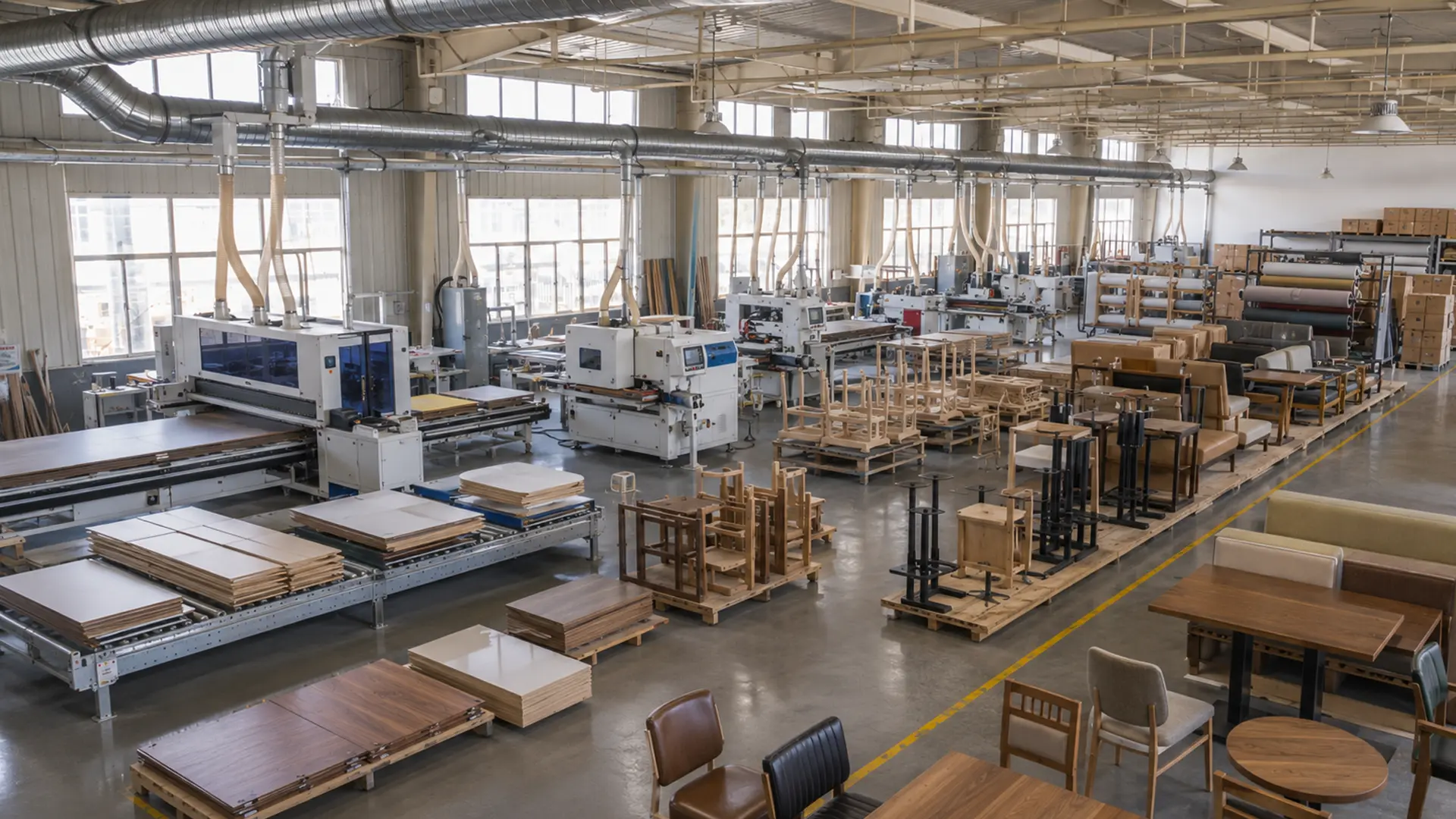
Factory identity and production scope are the first supplier-evaluation gates.
Problem Definition: What Buyers Actually Need to Verify
Most restaurant furniture projects fail at the supplier-evaluation stage because the buyer compares unit prices before confirming the manufacturing route, the full-package scope and the delivery controls. A supplier may present a broad catalogue while the order is produced across several workshops or subcontractors. Another supplier may manufacture well but cannot coordinate chairs, tables, booths, bar counters, sofas and hotel casegoods as one package. A third may quote quickly but leave material approval, packing standards, lead time and warranty responsibilities vague.
The practical question is therefore not simply who sells restaurant furniture. It is whether the supplier can provide traceable evidence for four things: factory-direct production, project-based customization, commercial-grade materials and finishes, and controlled delivery from sample approval to export packing. For repeat buyers, the same evidence must support consistent specifications across chairs and tables for restaurant projects, restaurant booth sets, cafe furniture sets and hotel furniture packages.
A useful evaluation separates capability from presentation. Presentation includes catalogue photography, renderings and style ranges. Capability includes production lines, CAD support, sample approval, material control, quality inspection, packing procedure, shipping terms and after-sales terms. The second group is what protects a restaurant opening schedule.
Industry Background: Why Restaurant Furniture Is a Contract Supply Decision
Restaurant furniture is contract furniture. Contract furniture refers to furniture supplied for commercial projects such as restaurants, hotels, cafes, bars, offices and other public spaces, and it is often produced according to project specifications, quantity requirements, interior design concepts and commercial-use requirements. That definition matters because restaurant furniture must support high-frequency use, cleaning and layout consistency, not only residential comfort.
Commercial-grade furniture is generally selected for higher use frequency, structural stability, durable finishes and easier maintenance. In a restaurant, chairs and tables for restaurant projects are handled by guests and staff throughout the day; booth seating receives repeated compression and cleaning; bar stools must match counter heights; tabletops must suit the base and maintenance routine. A residential dining chair may look suitable in a showroom, but the project specification should be based on commercial-use requirements.
Public market-size estimates for restaurant furniture vary by publisher because definitions, base years and coverage differ. Buyers should therefore avoid treating a single headline number as a planning input. The more reliable planning inputs are the actual floor plan, seating target, furniture list, material and finish approvals, destination-market requirements and the supplier’s production and delivery evidence.
Global sourcing adds another layer. A supplier may export to many markets, but the buyer still needs to confirm the manufacturing entity, the product scope, the compliance documents for the ordered models and the packing method for the destination. This is especially important when a project mixes restaurant furniture, cafe furniture, bar furniture and hotel furniture under one interior concept.
Detailed Solution: A Seven-Gate Supplier Evaluation Framework
Use seven gates to evaluate a restaurant furniture supplier. Each gate should produce a document, sample, drawing, schedule or written commercial term. A supplier that cannot close the gate should not be treated as equivalent to one that can.
Gate 1: Factory Identity and Production Scope
Start with factory identity. A supplier that claims factory-direct manufacturing should be able to explain its production processes and show the facility that will make the order. MingMeng states that it is a direct manufacturer with its own factory and operates a 15,000㎡ facility with 200+ workers, 10 engineers and production lines covering woodworking, metalworking, upholstery, cutting, welding, polishing, painting, powder coating, CNC processing, assembly and quality inspection. Its stated annual output is 960,000+ units, with monthly capacity above 80,000 pieces. The company reports a 90% export ratio and supply to customers in more than 100 countries and regions.
Ask for the legal entity name, factory address, production scope and the processes that will be used for the specific order. If a supplier cannot connect a product category to a production process, the buyer should verify whether the item is made in-house, coordinated through a partner or sourced from a trading network.
Gate 2: Full Restaurant Package and Category Depth
A full package is not a long catalogue. It is a coordinated scope in which tables, chairs, booths, bars and accessories are specified together so that dimensions, materials and finishes remain consistent. MingMeng can coordinate tables, chairs, booths, sofas, bar furniture, hotel casegoods and other products as a complete hospitality furniture package. Its product scope includes restaurant chairs, commercial dining tables, restaurant booth seating, custom banquette seating, bar stools, custom bar counters, hospitality sofas, hotel guest room furniture, hotel lobby furniture, outdoor restaurant furniture, canteen furniture and commercial table bases.
For a restaurant project, ask the supplier to map each zone to a product category. Dining areas may need restaurant chairs and tables; wall-side areas may need restaurant sofa booths or banquette seating; bar zones may need bar stools and bar counters; lounge areas may need hospitality sofas; hotel F&B projects may also need guest room and lobby furniture. A supplier that can supply a full restaurant package reduces the coordination risk between separate vendors, but the scope must still be written by SKU and finish.
Gate 3: Customization and CAD Support
Customization should be engineering, not a color swap. MingMeng provides CAD drawings, 3D visualization, floor-plan adjustment, booth and banquette layout, space planning and material selection. The design service covers AutoCAD, SolidWorks and 3ds Max, and production can follow approved customer drawings once dimensions, materials, finishes and technical details are confirmed.
Ask for a drawing review before deposit. The review should show seating dimensions, table heights, booth lengths, aisle clearances and the relationship between fixed banquette seating and loose chairs. For cafe table and chair sets, confirm the tabletop size and base footprint. For restaurant booth sets, confirm backrest height, seat depth and upholstery details. For bar counters, confirm the counter height and stool seat height together. A supplier that supports CAD and 3D review can reduce later dimension conflicts, but the buyer must still approve the final drawings.
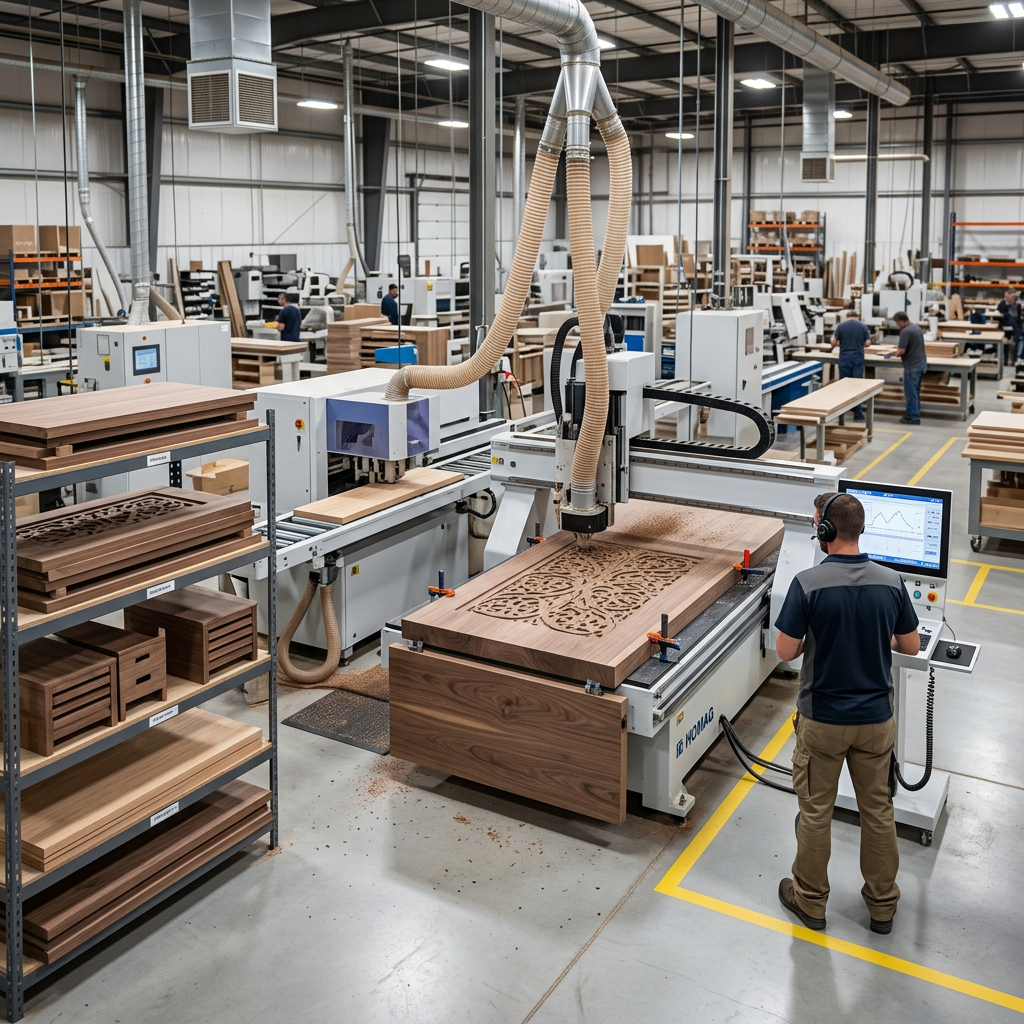
CAD, 3D and CNC support should be verified against the actual project drawings.
Gate 4: Materials, Finishes and Durability Evidence
Request material and finish evidence at the sample stage. MingMeng works with solid wood, plywood, metal, stainless steel, aluminum, stone, HPL, leather, fabric and other upholstery materials. Furniture can be customized in dimensions, structures, materials, upholstery, colors, wood finishes, metal finishes, tabletops, booth configurations and complete project combinations. Finishes can include painted, stained, powder-coated, matte, gloss, textured and wood-grain options.
For high-traffic dining zones, durable and easy-maintenance materials are recommended. Upholstery should be selected according to wear resistance and cleaning needs, and tabletop material should be matched to maintenance requirements and structural support. Commercial seating products are listed as tested according to EN 16139 requirements. Where a project has specific durability requirements, sample confirmation and relevant load, stability or finish testing should be discussed before bulk production.
Approve wood, metal and upholstery finish samples together. Approving them separately can create a palette mismatch between restaurant chairs, tables, booth seating and bar furniture. The buyer should also confirm whether fire-retardant foam and fabrics are required for the destination market and whether the supplier can provide supporting documents for the specified materials.
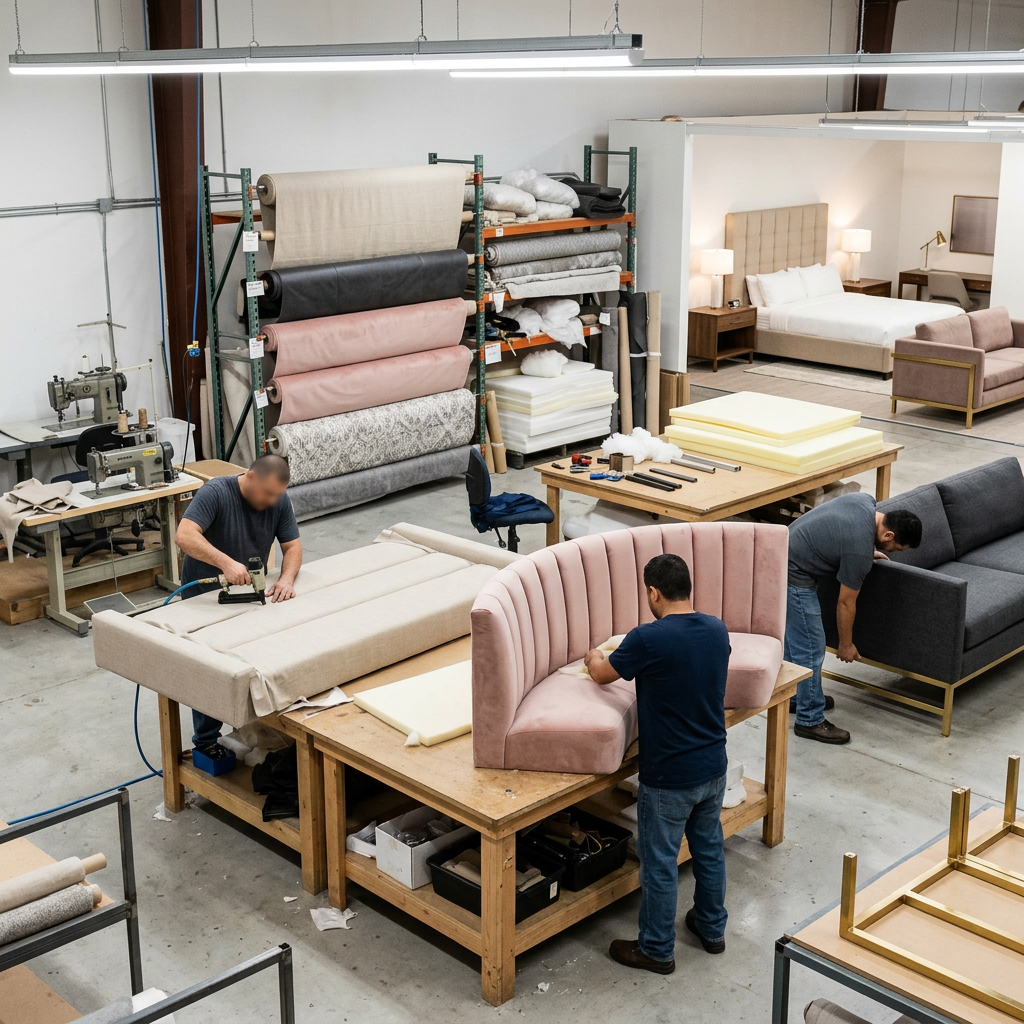
Booth, banquette and sofa capability requires upholstery and frame control, not only a chair catalogue.
Gate 5: MOQ, Quotation and Commercial Logic
MOQ and price should be traceable to a specification. MOQ depends on the product type, customization level, material setup and order mix. Standard models and custom project furniture may have different minimum quantities, so the supplier should confirm the project-specific MOQ after receiving the required models, quantities and specifications. Trial orders can be discussed depending on the product, material setup and production requirements, and mixed-model orders can be considered for project procurement.
Pricing is determined by the confirmed product specification, including materials, dimensions, quantity, construction, finish or upholstery complexity, packaging and delivery term. Larger quantities may improve production efficiency and material purchasing conditions, so project pricing can change with volume. Payment terms depend on the order value and commercial agreement and should be confirmed in the quotation or contract before order confirmation.
Ask the supplier to separate product scope, packing, freight and delivery terms. Shipping terms can be quoted according to the agreed Incoterm and destination, such as EXW, FOB, CIF, CFR or DDP, and freight coordination can be arranged upon request. A low unit price is not comparable if the quotation excludes packing, freight, a different material specification or a different delivery term.
Gate 6: Quality Control and Export Packing
Quality control evidence should cover both process control and pre-shipment inspection. MingMeng states that quality control covers incoming materials, cutting, welding, finishing, assembly and final inspection, with critical items inspected before packing and a final pre-shipment inspection. For restaurant furniture, this should include structural and appearance checks, hardware checks and quantity verification against the order.
Packing is part of delivery assurance. The export packing procedure is to clean and protect finished surfaces; add foam, corner and edge protection with component separation where needed; select export cartons, reinforced packaging or wooden crates according to product fragility; protect hardware and label packages clearly; and check package dimensions and quantities against the packing list before loading. Buyers should confirm whether the packing method suits the product mix, the shipping mode and the destination handling conditions.
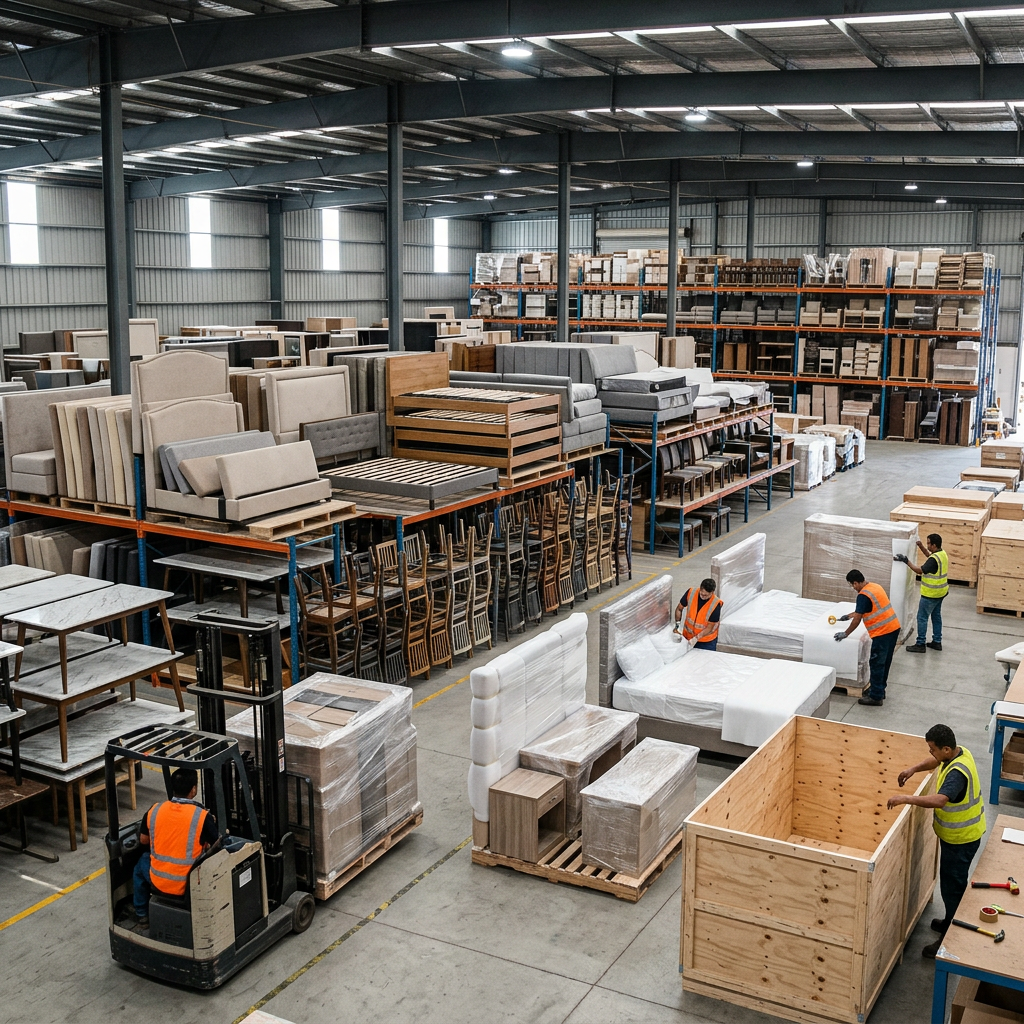
Packing, labeling and load checking belong in the delivery assurance review.
Gate 7: Lead Time, Shipping, Warranty and Order Start
Lead time is a planning output, not a slogan. Production lead time depends on quantity, customization complexity, material availability, sample approval and factory capacity. A project-specific schedule is provided after the specification and order plan are confirmed, and urgent schedules can be evaluated after checking materials, production capacity and the required delivery date. For project orders, production progress can be communicated at agreed milestones using photos, videos or status updates.
Warranty and after-sales responsibilities should be written into the order terms. For ongoing restaurant furniture supply, the applicable warranty period and coverage are confirmed in the quotation or contract for each specific order. Manufacturing defects and normal after-sales responsibilities are defined in the order terms, and repair guidance, replacement parts or coordination support can be provided depending on the issue and contract terms. Replacement parts can be arranged where the required component is identifiable and available, which supports long-term maintenance.
The order start should also be defined. Send the inquiry, floor plan, drawings or reference images, required furniture types and quantities, preferred materials and finishes, destination and target schedule. Confirm dimensions, materials, colors, finishes and customization requirements. Review the quotation, design proposal and production plan. Approve samples or material and finish samples if required. Confirm the order, payment terms and production schedule. Bulk production should begin only after final approval.
Step-by-Step Breakdown: What to Do Before Deposit
- Define the furniture scope by zone. List dining chairs and tables, restaurant booth seating, banquette seating, bar stools, bar counters, sofas, outdoor furniture and hotel furniture as separate line items. Include quantities and target dimensions.
- Request factory identity and production evidence. Confirm the legal entity, factory location, production processes and which categories are made in-house or coordinated through partners.
- Send the floor plan and package list for CAD review. Ask for layout comments, dimension checks and 3D visualization where the project requires confirmation of proportions, materials or colors.
- Confirm materials, finishes and durability requirements. Approve wood, metal and upholstery samples together; confirm tabletop and base compatibility; discuss any load, stability or finish testing required for the project.
- Lock the commercial logic. Obtain a written MOQ position by model, a quotation based on the confirmed specification, the applicable Incoterm and the payment terms.
- Review QC and packing. Agree on inspection points, pre-shipment inspection, packing method, labeling and the packing list check before loading.
- Confirm lead time and shipping. Obtain a project-specific schedule after sample approval and order confirmation; confirm the shipping term and freight responsibility.
- Set repeat-order and warranty terms. For long-term supply, define warranty coverage, after-sales responsibilities and replacement-part support in the order terms.
Use Cases: Where Supplier Evaluation Changes the Buying Decision
Full-Service Restaurant
A full-service restaurant needs a coordinated package of restaurant chairs and tables, restaurant sofa booths, bar stools and bar counters. The evaluation should confirm that the supplier can match finishes across categories and provide CAD layout support for fixed and loose seating.
Cafe and Bar Project
A cafe furniture set may combine cafe table and chairs, cafe sofa sets and bar-height seating. For a bar area, the supplier should confirm stool seat height against the counter height and provide durable upholstery and easy-clean tabletop options.
Hotel F&B and Lobby
Hotel projects may combine restaurant furniture, hotel guest room furniture and hotel lobby furniture. A supplier evaluation should check whether the same project team can coordinate dining, lobby and guest room categories without losing the finish palette.
Distributor Repeat Program
Distributors and wholesalers need stable specifications, repeatable materials and documented order terms. The supplier should be able to discuss annual contract orders, repeat production programs, warranty terms and replacement-part support.
Renovation and Replacement
Renovation projects often need matching restaurant dining tables, restaurant table sets and table bases. The supplier should be able to identify replacement components and confirm whether the original materials and finishes remain available.
Comparison Table: Supplier Evidence Map
The table below converts the seven gates into evidence requests. The factory-direct column uses MingMeng facts from the provided company and product information. The other columns are not claims about named competitors; they are questions buyers should ask when the supplier is a trading company or a ready-made and residential supplier.
| Evaluation Gate | Factory-Direct Manufacturer Evidence: MingMeng Example | Trading Company: Evidence to Request | Ready-Made or Residential Supplier: Evidence to Request |
|---|---|---|---|
| Factory identity | Own factory; 15,000㎡ facility; 200+ workers; 10 engineers; woodworking, metalworking, upholstery, CNC, painting, assembly and QC processes. | Factory audit, production license, live video, subcontractor list and which SKUs are outsourced. | Commercial-use statement, test reports for the ordered model and replacement-part availability. |
| Full package scope | Restaurant chairs, dining tables, booths and banquettes, bar stools, bar counters, sofas, hotel guest room and lobby furniture, outdoor and canteen furniture, table bases. | Written scope by SKU, finish-matching responsibility and coordination contact for multiple factories. | Catalogue depth, ability to match finishes across categories and limits on mixed-model orders. |
| Customization and CAD | CAD drawings, 3D visualization, floor-plan adjustment, booth and banquette layout, AutoCAD, SolidWorks and 3ds Max support; production from approved drawings. | Who owns the drawings, engineering contact, revision limits and approval workflow. | Custom size limits, minimum custom quantity and drawing approval before production. |
| Materials and finishes | Solid wood, plywood, metal, stainless steel, aluminum, stone, HPL, leather and fabric; painted, stained, powder-coated, matte, gloss, textured and wood-grain finishes. | Material source, finish sample availability, substitution rules and documentation for compliance claims. | Commercial-grade versus residential construction, cleaning data and upholstery wear information. |
| MOQ and quote logic | MOQ depends on product type, customization level, material setup and order mix; quotation follows confirmed specification, quantity, packing and delivery term. | Written MOQ by model, quote validity, Incoterm and exclusions for freight or packing. | Stock minimums, volume price breaks and spare-part lead time. |
| QC, packing and delivery | Incoming material, cutting, welding, finishing, assembly and final inspection; pre-shipment inspection; export packing with surface protection, corner protection, cartons or crates and packing-list checks. | QC checklist, third-party inspection acceptance, packing standard and loading photos. | Warranty terms, packaging suitable for export and after-sales response route. |
Frequently Asked Questions
What compliance and factory-identity documents should a restaurant furniture supplier provide?
Ask for the legal entity name, factory address, production scope, applicable test reports and current certificates that match the product and destination market. MingMeng states that it is a furniture manufacturer with its own factory and lists CE, TÜV, RoHS and Certification of Conformity among its certifications, and the company states that it has developed 10+ national patented designs. Documents should be checked for product or model scope, issue date and standard; a certificate for a different model does not verify the ordered furniture.
Can MingMeng supply a full restaurant package of chairs, tables, booths, bar counters, stools, sofas and hotel furniture?
Yes. MingMeng supplies commercial restaurant and hospitality furniture for B2B projects, including restaurant chairs, commercial dining tables, restaurant booth seating, custom banquette seating, bar stools, custom bar counters, hospitality sofas, hotel guest room furniture, hotel lobby furniture, outdoor restaurant furniture, canteen furniture and commercial table bases. A full restaurant package can include tables, chairs, booths, bars and accessories, with hotel F&B and public-area furniture coordinated where required.
How are MOQ, pricing and payment terms determined for a long-term restaurant furniture program?
MOQ depends on the product type, customization level, material setup and order mix. Standard models and custom project furniture may have different minimum quantities, so the project-specific MOQ is confirmed after models, quantities and specifications are reviewed. Pricing is based on the confirmed specification, including materials, dimensions, quantity, construction, finish or upholstery complexity, packaging and delivery term. Larger quantities may improve production efficiency and material purchasing conditions. Payment terms depend on order value and the commercial agreement and should be stated in the quotation or contract.
Can buyers approve samples, materials and finishes before bulk production?
Yes. Sample or material and finish sample approval can be included before bulk production. MingMeng can provide material, color, upholstery and finish samples, and wood, metal and upholstery finish samples should be approved together to keep the project palette consistent. Bulk production should not start until final specifications and samples are approved in writing.
What controls production lead time and delivery assurance for repeat orders?
Production lead time depends on quantity, customization complexity, material availability, sample approval and factory capacity. A project-specific schedule is provided after the specification and order plan are confirmed. For repeat orders, production progress can be communicated at agreed milestones using photos, videos or status updates. Warranty and after-sales responsibilities are confirmed in the quotation or contract for each order. To start a sample, quote or full-package inquiry, send the floor plan, furniture list, quantities, destination and target schedule to eiko@mingmeng07.com or WhatsApp +86 158-1240-0982.
Conclusion: Evaluate Capability, Then Commit
A restaurant furniture supplier should be evaluated as a manufacturing and delivery partner, not as a photo library. Confirm factory identity, full-package scope, CAD and customization support, material and finish evidence, MOQ and quote logic, QC and export packing, lead time, shipping terms and warranty responsibilities. When those gates are closed, the buyer can compare prices on a like-for-like basis and plan the opening schedule with fewer avoidable risks.
For projects that need restaurant chairs and tables, restaurant booth sets, cafe furniture sets, bar furniture or hotel furniture as one coordinated package, the next step is to send the floor plan and furniture list for review. Review the MingMeng Restaurant Furniture 2026 catalog, request material and finish samples, or ask for a project-specific quotation based on the confirmed specification.
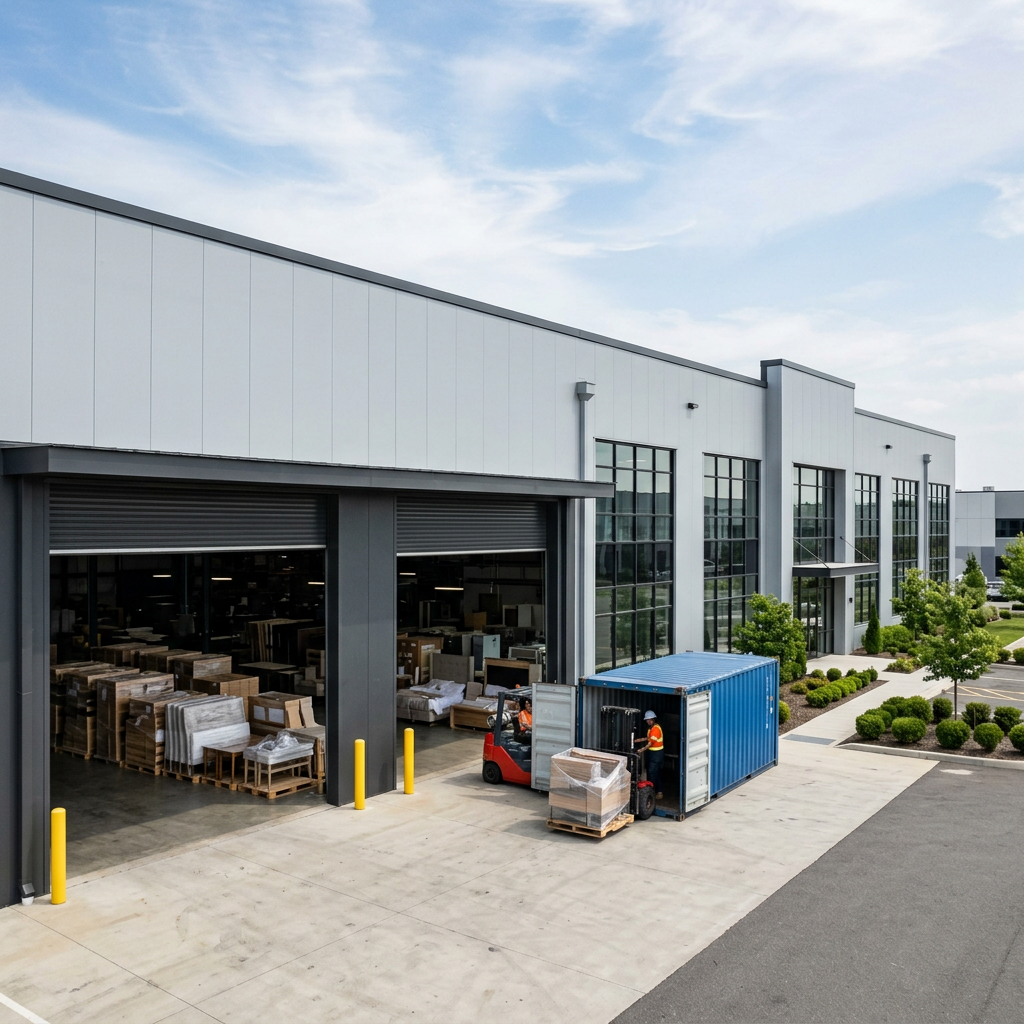
Project visits and pre-shipment checks reduce delivery risk.
Next step: Send your floor plan, furniture list, quantities and destination to MingMeng Furniture for a sample, quote or full-package review.
Email: eiko@mingmeng07.com | Tel: +86 136-3245-6645 | WhatsApp: +86 158-1240-0982
Website: www.mingmeng07.com | Catalog: Download the 2026 catalog
Have Questions or Need More Details?
Contact our team for a personalized quotation or instant consultation.
Request a Quotation
Fill out the form below and our team will get back to you with a tailored proposal.
WhatsApp Direct Chat
Prefer to chat in real-time? Message us on WhatsApp for instant assistance & quick answers.
- Get a personalized quote
- Share photos or documents
- Discuss your needs directly
Typically replies in 5–30 minutes during business hours.