
600mm vs. 750mm Convex Mirrors: Which Diameter Wins?
Two outdoor polycarbonate convex mirrors from the same series rarely differ in much. In the Mnsd YD-OC range, the 600 mm YD-OC60 and the 750 mm YD-OC75 share the same impact-resistant polycarbonate lens, the same vacuum aluminum coating, the same high-impact ABS backing, the same heavy-duty galvanized steel bracket and the same IP65 and Level 10 wind-load ratings. What separates them is sight distance: the YD-OC60 is rated for a 15–18 m visual range, the YD-OC75 for 20–25 m.
That number, rather than the diameter printed on a catalogue page, decides which mirror actually removes a blind corner and which one only appears to.
Short answer: specify the 600 mm YD-OC60 when the people who need the reflection — drivers, forklift operators, pedestrians — will read the mirror from about 15–18 m or closer: warehouse aisle intersections, parking garage corners, short loading dock aprons and community junctions. Specify the 750 mm YD-OC75 when the mirror must be read from 20–25 m, or when approach speed and vehicle size push that reading distance outward: bus station exits, logistics park junctions, site gates on perimeter roads and roadway ramps.
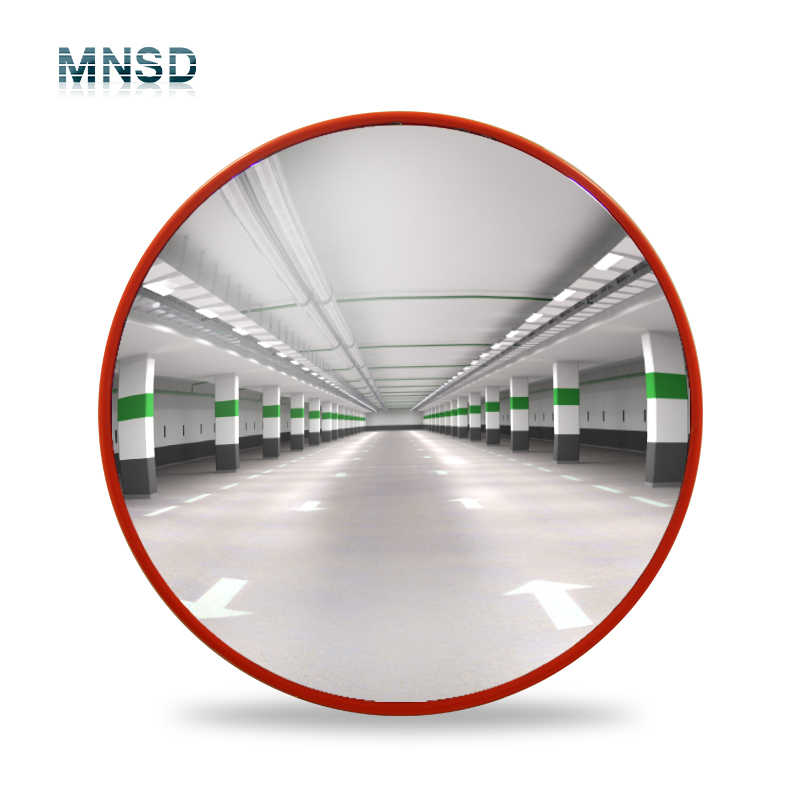
Outdoor polycarbonate convex mirrors in the YD-OC series: the diameter, not the materials, decides which corner a unit solves.
This guide compares the two diameters on the facts that are actually published — lens material, coating, curvature, view angle, weatherproofing, wind resistance, mounting and rated visual range — and then works through the site conditions that decide the order.
Why Diameter Decides Whether a Blind Corner Is Actually Solved
A convex mirror works by compressing a wide field of view onto a small reflective surface. Because the YD-OC60 and the YD-OC75 use the same curvature radius band of R2200–R3000 and the same 130°+ wide-angle vision, the width of the scene they present is broadly comparable. Diameter changes something different: how much usable detail survives that compression when the reflection is read from a distance.
Two failure modes follow, and they cost money in opposite directions.
- Undersized mirror on a long approach. A 600 mm unit placed where drivers first see it at 24 m still shows movement, but the image is small enough that a pedestrian, a cyclist and a shadow between stacked pallets become hard to tell apart. Once that happens the mirror stops being a decision aid and drivers stop checking it.
- Oversized mirror on a short approach. A 750 mm unit at a warehouse corner read from a few metres adds no usable information that a 600 mm mirror would not already deliver, while adding material per unit and a larger reflective surface exposed to wind and impacts.
Diameter is therefore not a quality signal. The real question is a measurement question: what is the distance between the point where someone must decide — brake, slow down, sound a horn, step back — and the point where the mirror can be mounted? Everything else in this comparison follows from that measurement, weighted by traffic speed and vehicle type.
Where 600 mm and 750 mm Mirrors Sit in the Current Safety Market
Blind spot mirrors are a mature but expanding category. Dataintelo's convex mirror market report values the global market at USD 1.04 billion in 2025 and forecasts USD 1.73 billion by 2034, a 5.8% CAGR, with Asia Pacific holding a 42.5% revenue share in 2025. The growth is not driven by new optics; it is driven by more warehouses, more logistics parks, more mixed-traffic yards and tighter incident reporting.
Material choice has shifted in parallel. A polycarbonate lens carries a 15–35% cost premium over an equivalent acrylic mirror, and buyers accept that premium because the PC lens is impact resistant and self-recovering in exactly the positions where mirrors sit at vehicle height on busy sites. Both models in this comparison belong to that polycarbonate tier: impact-resistant PC lens, vacuum aluminum coating, UV-stabilized PC and ABS with Grade 8 UV resistance and an estimated 3–5 year lifespan, IP65 weatherproofing and an operating range of -30°C to +80°C.
Buying behavior has changed too. Importers, distributors, contractors and property managers increasingly purchase against a written requirement rather than a photo. Where reflective rim tape is specified, standards such as AS/NZS 1906.1:2017 define requirements for retroreflective materials and devices, and project owners in some markets will ask for documentation that matches their local rule set. In practice, diameter is the last item discussed in a meeting and the first item that causes a re-order.
Supply for this category has concentrated around a relatively small number of specialist factories. Mnsd is the brand of Tiantai Yuanda Traffic Device Co., Ltd, a road safety equipment manufacturer based in Tiantai, Zhejiang, China, founded in 2007. The company operates a 40,000 m² facility with approximately 300 staff and 15 engineers, and produces convex mirrors alongside warning posts, rising bollards, speed humps and traffic lights. Export accounts for about 50% of sales, with major markets in Asia, Europe and the USA. For buyers, the figures that matter most are capacity and timing: 30,000 convex mirror units per month and a standard lead time of 15–20 days for a 20 ft container.
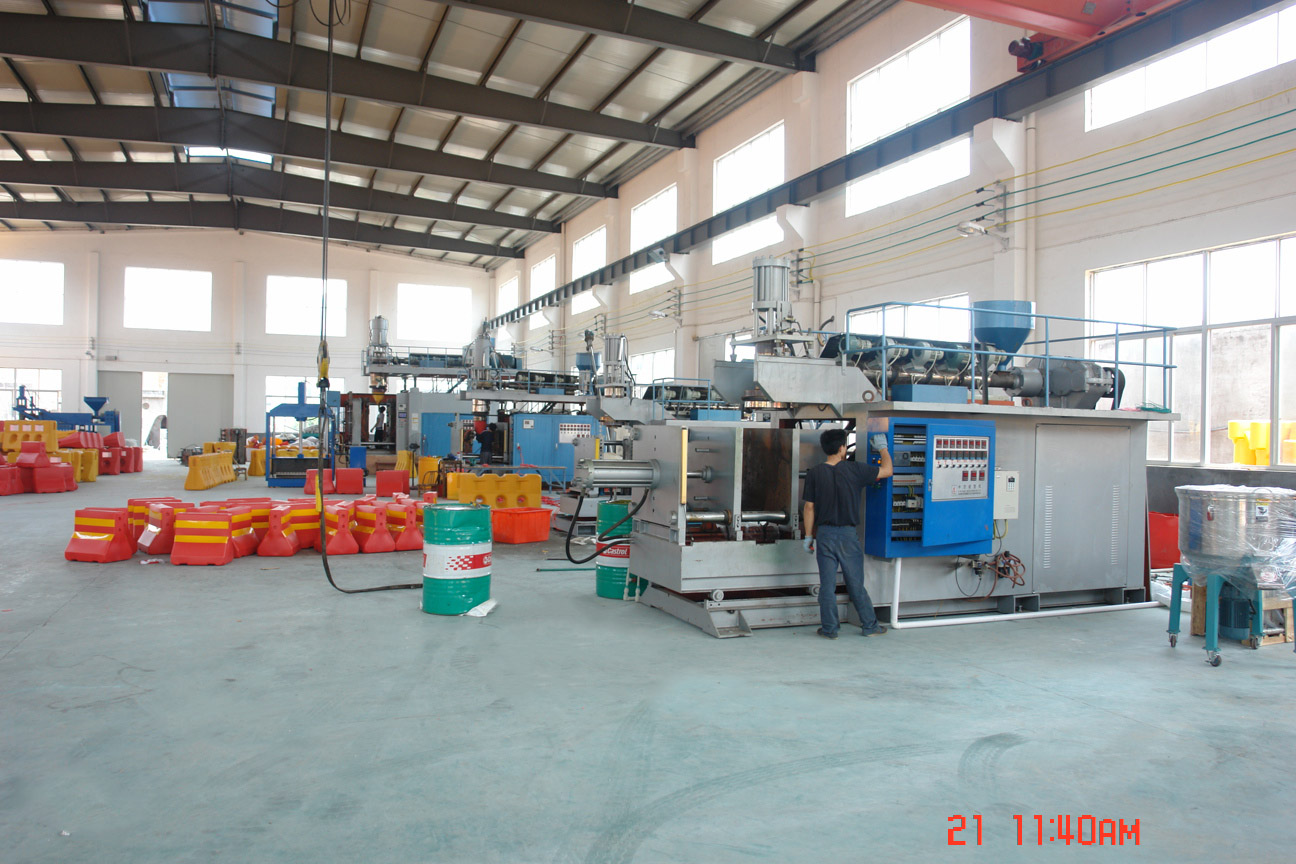
Plastic product line at the Mnsd manufacturing facility in Tiantai, Zhejiang.
What the YD-OC60 and YD-OC75 Share — and the Two Numbers That Separate Them
Comparing the two models is faster than it looks, because almost the entire specification is common to both. Following are the shared facts from the published product data.
- Lens and optics: impact-resistant polycarbonate, vacuum aluminum coating, lens thickness 0.6–1 mm (customizable), curvature radius R2200–R3000, 130°+ wide-angle vision.
- Body and mounting: high-impact ABS backing in bright orange for high visibility, 2.0 mm back plate wall thickness, heavy-duty galvanized steel mounting bracket, wall or pole mounting, fits 60 mm or 75 mm poles.
- Weather performance: IP65 weatherproof rating for outdoor use, operating temperature -30°C to +80°C, UV-stabilized PC and ABS with Grade 8 UV resistance and an estimated 3–5 year lifespan.
- Load and impact: Level 10 wind load resistant, vandal-resistant with self-recovery, optional anti-scratch hard coating, optional engineering-grade reflective tape on the rim.
- Applications: road traffic, residential quarters, parking garages, factories and warehouses, logistics parks, shopping malls, supermarkets, schools, hospitals, gas stations, construction sites, office parks, ports and docks, bus stations, industrial zones, community intersections, rural roads and highway ramps.
The only real difference: 600 mm with a 15–18 m range versus 750 mm with a 20–25 m range
The YD-OC60 measures ⌀600 mm and is rated for a 15–18 m visual range. The YD-OC75 measures ⌀750 mm and is rated for 20–25 m. Everything else in the data sheet is identical: same coating, same backing, same bracket, same pole fit, same wind resistance.
That is what makes the choice clean. A buyer is not trading durability against reach; the buyer is buying reach at a fixed durability level. Because both lenses sit in the same curvature band and both are rated at 130°+ wide-angle vision — the series scope lists a 180° coverage angle — the field each mirror shows is comparable. The 750 mm lens simply presents a larger image at the far end of the sight line, which is the entire point of the extra 150 mm.
Wind, weather and mounting are not the tiebreaker
Both models carry a Level 10 wind load resistance rating, IP65 weatherproofing for outdoor use and an operating range of -30°C to +80°C. Both use a bright orange high-impact ABS backing and a heavy-duty galvanized steel bracket for wall or pole mounting on 60 mm or 75 mm poles. An elevated or exposed installation still needs its fixing method and substrate checked, but no one should choose the 750 mm over the 600 mm because of wind.
Options that apply equally to both diameters
Engineering-grade reflective tape on the rim is optional, an anti-scratch hard coating is optional, and lens thickness can be customized within the 0.6–1 mm band. Because these options change unit cost, they should be fixed before the two diameters are compared commercially — otherwise the comparison is between two different products rather than two sizes.
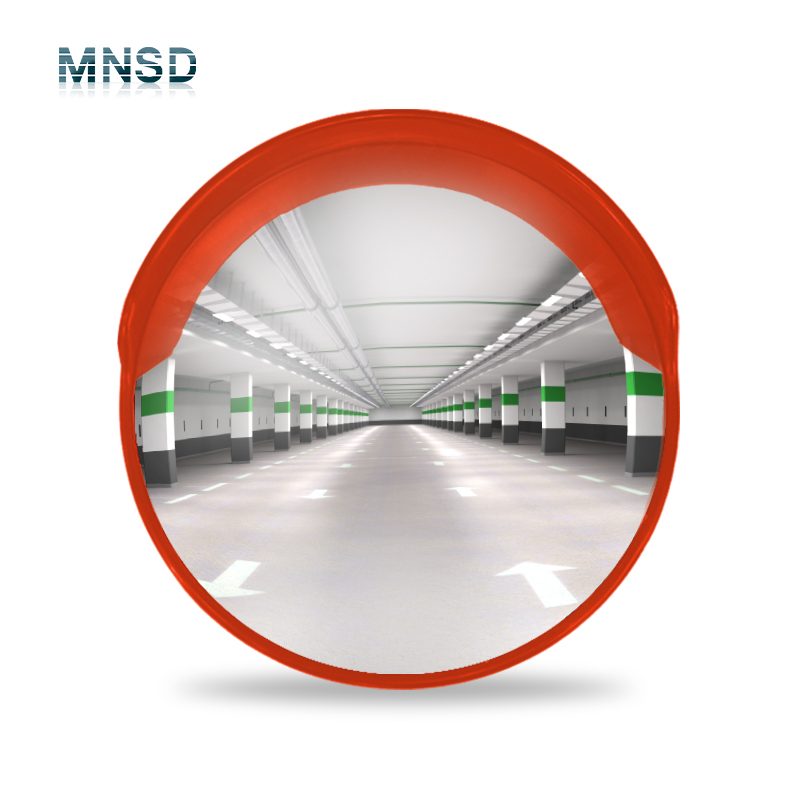
YD-OC series outdoor PC convex mirror: impact-resistant polycarbonate lens, vacuum aluminum coating and bright orange ABS backing.
Step-by-Step: Choosing Between YD-OC60 and YD-OC75
Step 1 — Measure the sight distance, not the site
Stand at the point where a driver or operator must make a decision and measure the walking distance along the approach path to the intended mirror position. Not the straight line across the corner, which flatters the site, but the path the eye actually travels. Record the figure in metres.
Step 2 — Compare it with the rated visual range
Up to roughly 15–18 m, the YD-OC60 matches the requirement. From 20–25 m, the YD-OC75 is the correct specification. Where a measurement lands around 18–20 m, take the larger unit: the rated range is a working range, and site conditions rarely improve on the drawing.
Step 3 — Weight the measurement by traffic speed and vehicle mix
Distance tells you what an eye can resolve; speed tells you how much warning that eye needs. A forklift at walking pace and a bus leaving a terminal bay can share the same measured sight distance and still need different mirrors, because the bus driver must recognize and react earlier. Fast approach speeds, heavy vehicles and mixed pedestrian traffic all push the decision toward the 750 mm YD-OC75.
Step 4 — Confirm the mounting structure
Both models mount on walls or poles, and both brackets fit 60 mm or 75 mm poles. Check pole diameter, wall substrate and fixing height before ordering, because the mirror only works if the reflected view lands at the eye height of the people who use it.
Step 5 — Check the exposure of the position
A sheltered interior corner and an open yard gate load the hardware differently. Both models are IP65 rated, Level 10 wind load resistant and operate from -30°C to +80°C, so exposure is a question of fixing method and access for cleaning rather than a reason to drop to a smaller diameter.
Step 6 — Verify the installed view before adding a second mirror
After installation, walk or drive the approach and confirm that the target area — the far side of the corner, the doorway, the crossing — is visible from the decision point. If it is not, adjust the mounting height or position first. Two mirrors on one corner usually mean the first one was placed badly.
Use Cases: From Narrow Warehouse Aisles to Bus Station Exits
Warehouse and factory aisle intersections — YD-OC60
Inside a building, sight lines are short, traffic is slow and the mirror is read from a few metres away. The 600 mm YD-OC60 with its 15–18 m visual range covers the intersection without dominating the aisle, and its IP65 housing and ABS backing cope with dust, washdown splash and temperature swings within the -30°C to +80°C range.
Loading docks and yard aprons — YD-OC60 or YD-OC75
A short dock corner read at close range normally points to the 600 mm model. Where the apron is long, where trailers approach from the far end of the yard, or where a pedestrian route crosses a vehicle route at distance, the 750 mm YD-OC75 reduces the moment in which a driver sees movement but not what is moving.
Parking garages and property-management corners — YD-OC60
Ramp exits, column corners and community junctions are close-range applications with slow traffic. The 600 mm mirror fits the scale, and the bright orange high-impact ABS backing makes the device itself visible to drivers who are watching the lane rather than the wall.
Bus stations and terminal exits — YD-OC75
Terminal exits, depot gateways and platform approaches combine longer sight lines with large vehicles and unpredictable pedestrian movement. This is where the YD-OC75's 20–25 m rated range earns its place: the extra diameter keeps a recognizable image at the distance where a bus driver must decide whether to pull out.
Logistics parks, industrial zones and site gates — YD-OC75
Where a perimeter road meets a yard entrance, or two internal roads cross inside a logistics park, drivers may approach at road speed and read the mirror from 20 m or more. The 750 mm unit is the better default there, and its Level 10 wind resistance and galvanized steel bracket suit an exposed gate position.
Roadway junctions, ramps and rural intersections — YD-OC75
Public-road applications with faster approach speeds and longer sight distances sit at the far end of what these two models can do. The YD-OC75 covers 20–25 m; where the required range is longer still, the same series continues to the YD-OC100 at 30–35 m and the YD-OC120 at 35–45 m, using the same lens material, coating and bracket system.
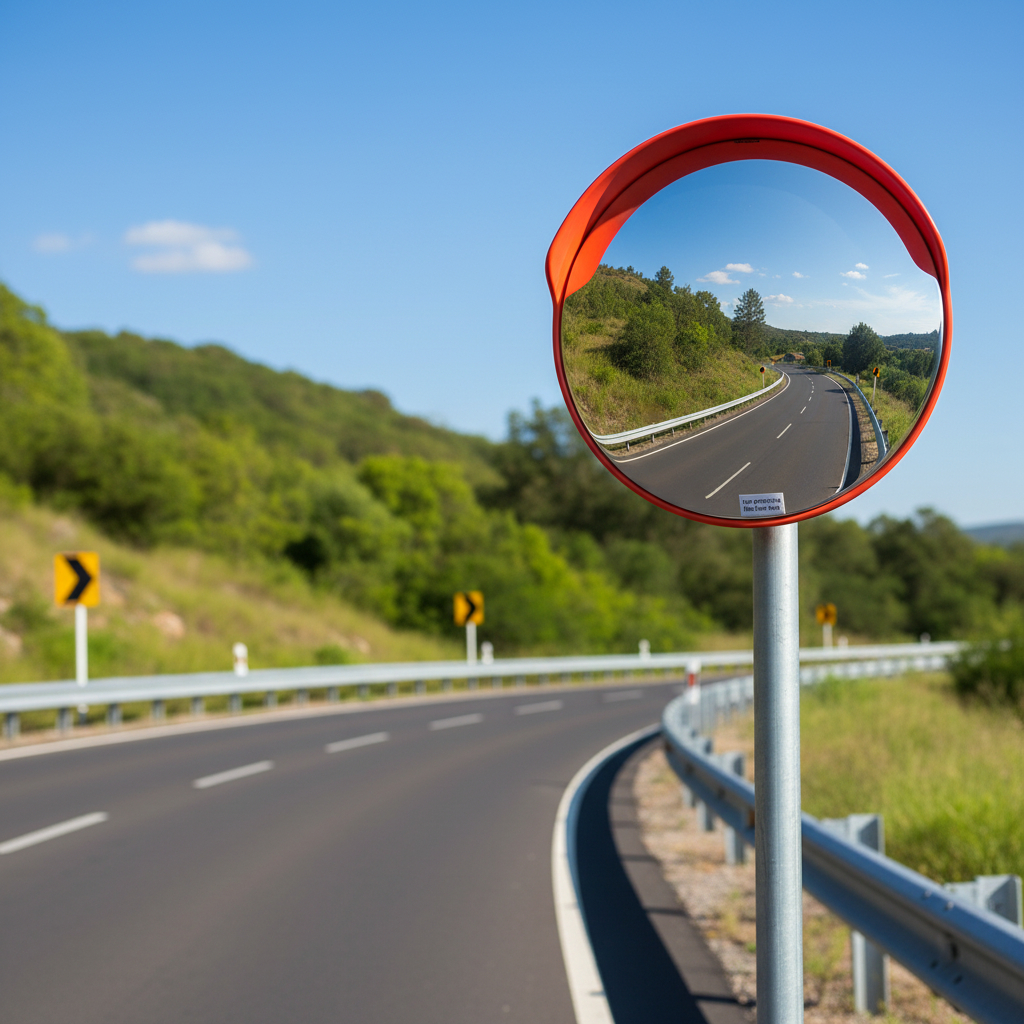
A convex mirror at an outdoor junction: the reflection has to remain readable from the driver's decision point, not just from the mirror's own position.
YD-OC60 vs. YD-OC75: Side-by-Side Specification Table
| Specification | YD-OC60 | YD-OC75 |
|---|---|---|
| Lens diameter | ⌀600 mm | ⌀750 mm |
| Rated visual range | 15–18 m | 20–25 m |
| View angle | 130°+ wide-angle vision (series scope lists 180° coverage) | 130°+ wide-angle vision (series scope lists 180° coverage) |
| Curvature radius | R2200 – R3000 | R2200 – R3000 |
| Lens material | Impact-resistant polycarbonate (PC) | Impact-resistant polycarbonate (PC) |
| Surface treatment | Vacuum aluminum coating | Vacuum aluminum coating |
| Lens thickness | 0.6–1 mm (customizable) | 0.6–1 mm (customizable) |
| Backing | High-impact ABS, bright orange | High-impact ABS, bright orange |
| Back plate wall thickness | 2.0 mm | 2.0 mm |
| Mounting bracket | Heavy-duty galvanized steel | Heavy-duty galvanized steel |
| Mounting | Wall or pole | Wall or pole |
| Pole fit | 60 mm / 75 mm | 60 mm / 75 mm |
| Weatherproof rating | IP65 (outdoor use) | IP65 (outdoor use) |
| Operating temperature | -30°C to +80°C | -30°C to +80°C |
| UV resistance | Grade 8, estimated 3–5 year lifespan | Grade 8, estimated 3–5 year lifespan |
| Wind resistance | Level 10 wind load resistant | Level 10 wind load resistant |
| Impact / surface options | Vandal-resistant, self-recovery; optional anti-scratch hard coating | Vandal-resistant, self-recovery; optional anti-scratch hard coating |
| Rim tape | Optional engineering-grade reflective tape | Optional engineering-grade reflective tape |
| Best-fit reading distance | Up to 15–18 m | 20–25 m |
Selection table by site condition
| Site condition | Recommended model | Reason |
|---|---|---|
| Warehouse or factory aisle intersection (indoor) | YD-OC60 | Short indoor sight lines fall inside the 15–18 m rated range |
| Parking garage ramp exit or column corner | YD-OC60 | Close-range reading with slow traffic |
| Loading dock with a short apron | YD-OC60 | Mirror is read from within 15–18 m |
| Residential or community junction | YD-OC60 | Low speed and short sight distance |
| Bus station, terminal exit or depot gateway | YD-OC75 | 20–25 m range with large vehicles and pedestrians |
| Logistics park or industrial zone junction | YD-OC75 | Long sight line and mixed vehicle types |
| Site gate on a perimeter road | YD-OC75 | Road-speed approach, exposed position |
| Roadway junction, ramp or rural intersection | YD-OC75 | Longest rated range of this pair; step up to YD-OC100 (30–35 m) or YD-OC120 (35–45 m) where the sight line is longer |
Frequently Asked Questions
1. Do the YD-OC60 and YD-OC75 meet traffic safety standards?
The published specification covers the facts a compliance review usually asks for: impact-resistant polycarbonate lens, vacuum aluminum coating, IP65 weatherproofing, an operating range of -30°C to +80°C, Grade 8 UV resistance and Level 10 wind load resistance. Retroreflective rim tape is an option rather than a standard fitting; where rim tape is specified, standards such as AS/NZS 1906.1:2017 define requirements for retroreflective materials and devices. Mirror requirements vary by market and by project, so the applicable local standard and the documentation the project owner will accept should be confirmed before the order is placed.
2. Do both mirrors give the same viewing angle?
Yes. Both models are rated for 130°+ wide-angle vision with a curvature radius of R2200–R3000, and the series scope lists a 180° coverage angle; lens material, coating and the 0.6–1 mm lens thickness range are also identical. The measurable difference is the rated visual range: 15–18 m for the 600 mm YD-OC60 and 20–25 m for the 750 mm YD-OC75. A larger lens does not widen the field — it holds more recognizable detail at the far end of the sight line.
3. Is the 750 mm model more expensive than the 600 mm model?
The 750 mm unit requires a larger lens and a larger ABS backing per piece, so material content per unit is higher. Final pricing also depends on lens thickness within the 0.6–1 mm band, whether the anti-scratch hard coating or engineering-grade reflective rim tape is added, the bracket configuration and the order quantity. To compare the two diameters fairly, request a quotation for both models with an identical option set and identical delivery terms.
4. Can I get samples of both diameters to test on site?
Samples of both models can be requested so the 600 mm and 750 mm units can be checked against the real corner, mounting height and sight line before a full order is placed. Include the measured sight distance, the pole diameter (60 mm or 75 mm) and the mounting method in the request — those three details determine which model is worth sampling for a given position.
5. What is the production lead time for a mixed order?
Mnsd maintains a convex mirror production capacity of 30,000 units per month, and the standard lead time is 15–20 days for a 20 ft container. Mixed orders combining YD-OC60 and YD-OC75 come from the same polycarbonate mirror production at a 40,000 m² facility with approximately 300 staff. Confirm the split between diameters and the option set at quotation stage, since rim tape and coating options are applied per unit. To start, email info@mnsdtraffic.com, call or message +86 18458137305 on WhatsApp, or download the product catalogue for the full model range.
Compare Both Diameters on Your Own Site
Send us the measured sight distance, the mounting method and the pole diameter, and we will confirm whether the 600 mm YD-OC60 or the 750 mm YD-OC75 fits the position — and quote both with the same option set so the comparison is like for like. Samples, quotations and the full catalogue are available on request.
Email: info@mnsdtraffic.com | Tel / WhatsApp: +86 18458137305 | Website: www.mnsdtraffic.com
Download the catalogue: Mnsd product catalogue (PDF)
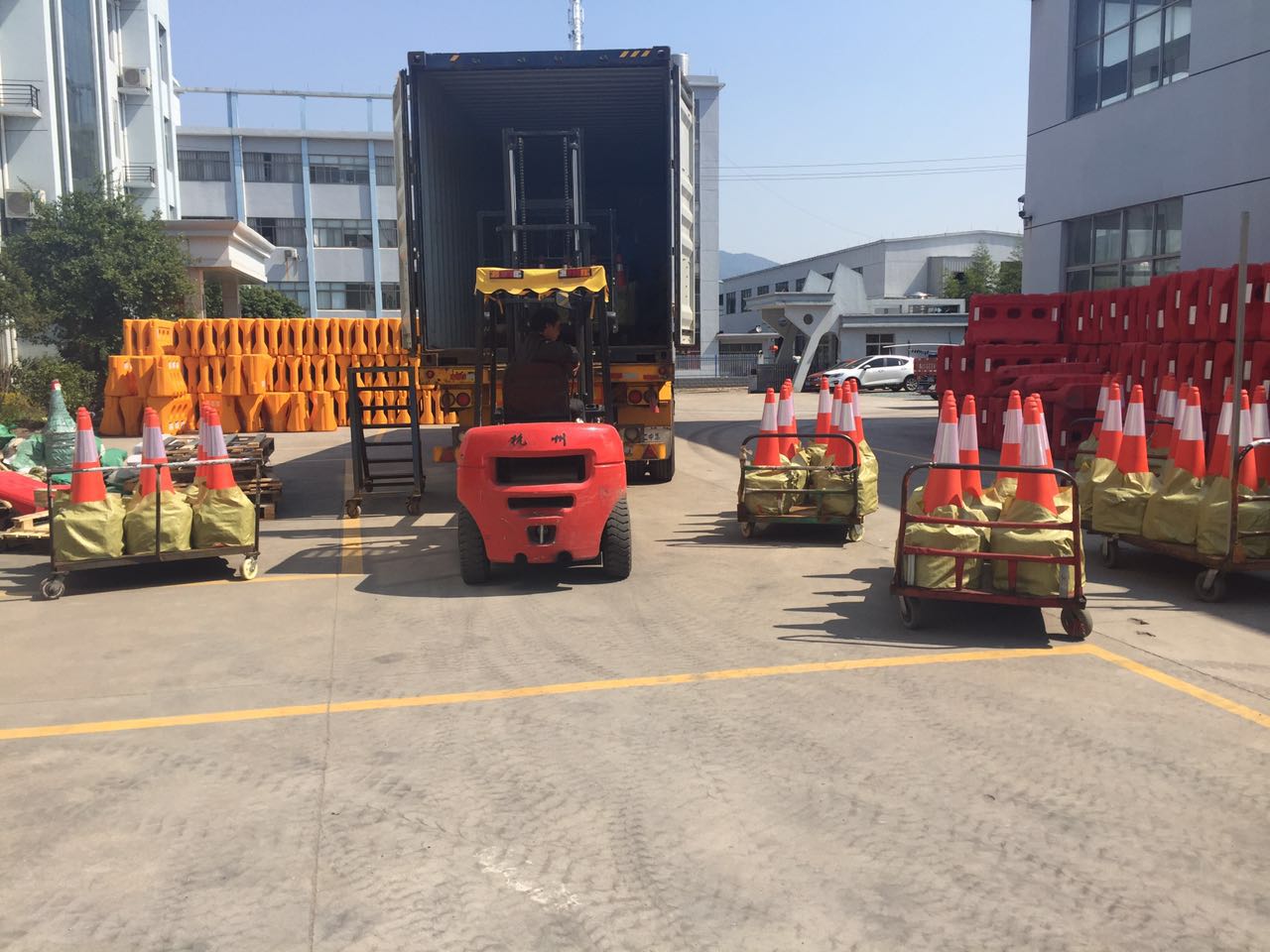
Loading photos: standard lead time is 15–20 days for a 20 ft container, with convex mirror capacity of 30,000 units per month.
Conclusion: Match the Diameter to the Sight Line, Then Buy the Rest of the Specification
The 600 mm YD-OC60 wins where the mirror is read close: warehouse aisle intersections, garage corners, short dock aprons and community junctions, all inside its 15–18 m rated visual range. The 750 mm YD-OC75 wins where the sight line runs 20–25 m and the approach carries buses, heavy vehicles or road-speed traffic — terminal exits, logistics park junctions and site gates.
Because the rest of the specification is identical — impact-resistant PC lens, vacuum aluminum coating, R2200–R3000 curvature, 130°+ wide-angle vision, IP65, Level 10 wind load resistance, Grade 8 UV resistance and a galvanized steel bracket for 60 mm or 75 mm poles — neither diameter forces a compromise on durability, weather protection or mounting. The decision is geometry, not quality.
Have Questions or Need More Details?
Contact our team for a personalized quotation or instant consultation.
Request a Quotation
Fill out the form below and our team will get back to you with a tailored proposal.
WhatsApp Direct Chat
Prefer to chat in real-time? Message us on WhatsApp for instant assistance & quick answers.
- Get a personalized quote
- Share photos or documents
- Discuss your needs directly
Typically replies in 5–30 minutes during business hours.