
600mm vs 750mm Convex Mirrors: Which Diameter Wins?
The 750 mm convex mirror (YD-OC75) wins when drivers must read approaching traffic from 20–25 m away. The 600 mm convex mirror (YD-OC60) wins when the corner is tight, traffic is slow, and the usable sight line is 15–18 m or shorter. Both are outdoor polycarbonate convex mirrors built on the same Mnsd optical platform: 130°+ wide-angle vision, 180° angle of view, IP65 housing, Level 10 wind resistance. The decision is therefore not about quality tiers — it is about measured distance, approach speed and available mounting space.
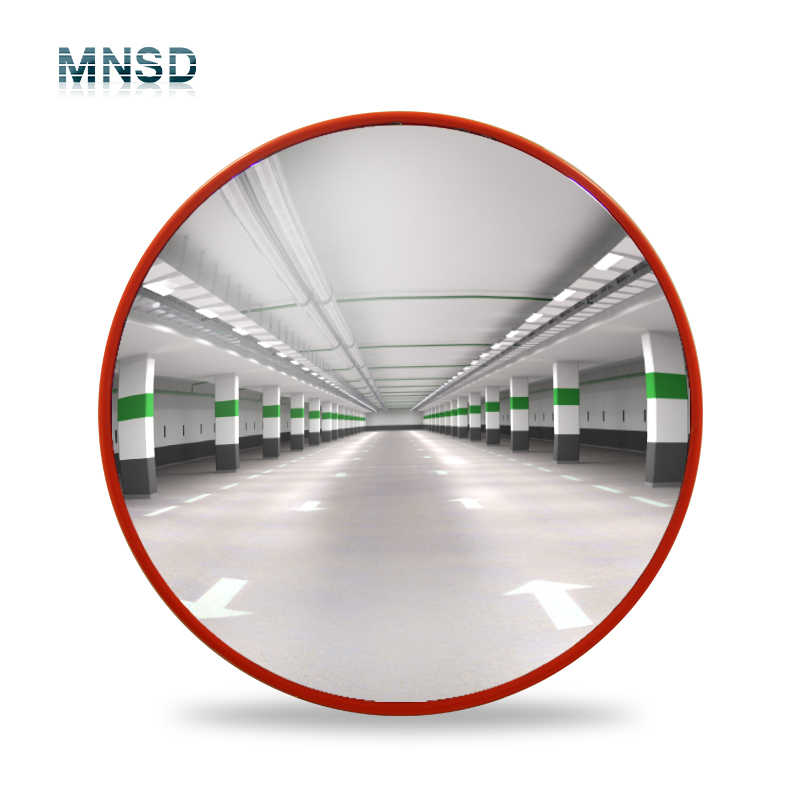
Decision rule in one line: measure the sight line before you look at the catalog. Under roughly 18 m, specify YD-OC60. Beyond that, specify YD-OC75.
Problem Definition: Diameter Is the Wrong First Question
A convex mirror is a passive safety device: no power, no sensor, no control loop. Its single job is to let a driver at one point see a vehicle or pedestrian at another point before either of them enters the conflict zone. Diameter governs one variable inside that job — how far away the reflected object remains identifiable — and it also governs how much wall or pole space the device consumes.
The most common specification error is assuming that a larger disc automatically delivers a wider angle. It does not, within the Mnsd outdoor polycarbonate range. The YD-OC60 and the YD-OC75 are both built with a curvature radius of R2200–R3000 and both deliver 130°+ wide-angle vision with a 180° angle of view. Because the angle class is shared, the 600 mm model does not give a narrower or less panoramic picture than the 750 mm model — it gives a shorter readable reach. That distinction changes how the choice should be made.
Oversizing carries its own costs. A 750 mm disc occupies noticeably more surface area than a 600 mm disc, which matters where the mirror is mounted close to passing vehicles or on a pole shared with signage. It also adds material cost, and it can push a specification beyond what the intersection actually needs. Undersizing fails the other way: if the mirror cannot carry the image far enough, the driver still commits to the junction blind and the device delivers documentation value rather than safety value.
Industry Background: Why 600 mm and 750 mm Sit in the Same Conversation
The two diameters compete because they bracket the middle of the outdoor polycarbonate category. Below them, the Mnsd YD-OC45 (⌀450 mm) covers 10–12 m — an interior door or a short yard corner. Above them, the YD-OC80 covers 22–28 m, the YD-OC100 covers 30–35 m and the YD-OC120 covers 35–45 m — long approaches, highway ramps and port areas. The 600 mm and 750 mm models are the sizes that most often sit on the boundary between "enough" and "more than enough", which is exactly why buyers keep comparing them.
Demand for this mid-range band is supported by broader category growth. Commercial market research published by Dataintelo estimates the global convex mirror market at USD 1.04 billion in 2025, rising to USD 1.73 billion by 2034 at a reported compound annual growth rate of 5.8%. The same report places Asia Pacific at a 42.5% revenue share in 2025, which is consistent with the concentration of polycarbonate mirror manufacturing in the region.
Material choice sits behind the sizing decision. Mnsd technical guidance notes that polycarbonate typically costs 15–35% more than an equivalent acrylic mirror. Both models discussed here are polycarbonate, so that premium is already priced into either option — the comparison between YD-OC60 and YD-OC75 is a sizing comparison inside one material class, not a polycarbonate-versus-acrylic argument. The shared polycarbonate lens is also the reason both models carry the same impact and vandal-resistance language: they are shatterproof polycarbonate mirrors rated as vandal-resistant and self-recovery after impact.
Detailed Solution: What the YD-OC60 and YD-OC75 Share
Understanding the shared platform is what makes the decision fast. The YD-OC60 is a Convex Mirror in the Outdoor Polycarbonate Convex Mirror category with an overall diameter of 600 mm. The YD-OC75 is a Convex Mirror in the same category with an overall diameter of 750 mm. Everything below applies to both models identically:
- Lens: impact-resistant polycarbonate (PC) with a vacuum aluminum coating on the mirror surface.
- Lens thickness: 0.6–1 mm, customizable.
- Curvature radius: R2200–R3000, producing 130°+ wide-angle vision and a 180° angle of view.
- Backing: high-impact ABS plastic, bright orange for high visibility, with a 2.0 mm back plate wall thickness.
- Mounting: designed for wall or pole mounting, with a heavy-duty galvanized steel bracket; pole mount fits 60 mm or 75 mm poles.
- Weatherproofing: IP65 rating for outdoor use, operating temperature range of -30°C to +80°C.
- UV performance: UV-stabilized PC and ABS with Grade 8 UV resistance and an estimated 3–5 year lifespan.
- Wind load: Level 10 wind load resistant.
- Impact and surface: vandal-resistant and self-recovery; anti-scratch hard coating optional.
- Visibility aids: engineering grade reflective tape optional on the rim.
- Deployment settings: road traffic, residential quarters, parking garages, factories and warehouses, logistics parks, shopping malls, supermarkets, schools, hospitals, gas stations, construction sites, office parks, ports and docks, bus stations, industrial zones, community intersections, rural roads and highway ramps.
Where the two models actually differ
There are only three material differences: disc diameter, stated visual range, and mounting footprint.
- Diameter: 600 mm versus 750 mm.
- Visual range: the YD-OC60 covers 15–18 m; the YD-OC75 covers 20–25 m.
- Footprint: the larger disc requires more clear wall or pole space and a more carefully chosen bracket position.
The reach gap is meaningful, not cosmetic. At the short end of the stated range the 750 mm model reaches roughly one-third further (20 m versus 15 m); at the long end it is close to 40% further (25 m versus 18 m). Those figures are arithmetic on the published visual-range specifications, but they describe the practical difference accurately: one model buys you a few more seconds of identification on the approach, the other does not.
Step-by-Step Breakdown: A Five-Step Sizing Decision
Step 1 — Measure the real sight line, not the plot line
Stand where the driver's eye will be when the decision is made, and measure to the furthest point at which an approaching vehicle must be recognised. If the answer is 15–18 m, the 600 mm model is inside its stated range. If it is 20–25 m, only the 750 mm model covers the full distance. If the answer exceeds 25 m, neither model is the correct answer and the specification should move up the range.
Step 2 — Score the approach speed
Faster approach speeds shorten the useful reaction window, so the mirror must deliver its image earlier in the approach. A slow-moving forklift on an internal aisle and a light vehicle on a yard road can share the same geometry but not the same requirement. Where traffic is slow and stop-start, a shorter visual range is often sufficient; where vehicles arrive at road speed, the longer-reach 750 mm model is the safer default.
Step 3 — Check the mounting geometry
Both models are designed for wall or pole mounting and both fit 60 mm or 75 mm poles with a heavy-duty galvanized steel bracket. What changes is clearance. In a narrow warehouse aisle or a wall-mounted position beside a pedestrian route, the 600 mm disc is easier to place without intruding into the traffic envelope. Where a dedicated pole is available and there is open space behind it, the 750 mm disc installs without compromise.
Step 4 — Confirm the environment envelope is identical
Because both models are IP65, rated from -30°C to +80°C, Grade 8 UV resistant with an estimated 3–5 year lifespan, and Level 10 wind load resistant, the environment rarely decides between them. Harsh UV, heavy rain, frost and wind loading do not favour one diameter over the other — they simply confirm that both belong to the outdoor polycarbonate family rather than an indoor acrylic option.
Step 5 — Finalise compliance details and quantity
Decide whether the rim needs engineering grade reflective tape for night-time conspicuity and whether the lens needs the optional anti-scratch hard coating in dusty or high-contact settings. Then confirm quantity by counting conflict points, not by counting buildings: one mirror per blind corner is the usual starting point, and wide or multi-directional junctions may require more than one unit regardless of diameter.
Use Cases: Matching Each Diameter to Real Sites
Narrow warehouse aisles and internal doorways — 600 mm
Aisle intersections inside warehouses and factories typically present short sight lines, slow-moving forklifts and limited mounting space. The YD-OC60 at 600 mm sits comfortably within a 15–18 m visual range, mounts on a wall or a 60/75 mm pole, and does not intrude on the aisle envelope. Its wide-angle panoramic view and 180° angle of view still cover the full corner, so the smaller disc does not create a coverage gap.
Loading docks and slow-yard crossings — either, decided by distance
Dock exits mix pedestrians, reversing vehicles and low speeds. If the driver's first decision point is within 18 m of the mirror position, the 600 mm model is sufficient. If the approach runs longer — a dock exit facing a yard road, for example — the 750 mm model covers the extra distance without requiring a jump to the 800 mm or 1000 mm sizes.
Parking garage ramps and deck corners — 750 mm
Ramps and deck corners combine an inclined approach with a hard blind edge, and the sight line is often longer than the physical distance suggests because the mirror is mounted high. The 20–25 m visual range of the YD-OC75 fits this geometry, and its IP65 housing and -30°C to +80°C operating range suit unheated, semi-open structures.
Bus stations, school gates and hospital entrances — 750 mm
Where large vehicles and dense pedestrian flow meet, identification needs to happen early. The 750 mm disc gives the longer reach, and the bright orange ABS backing keeps the device itself conspicuous. These locations are explicitly within the deployment scope of both models, so the selection is made on distance and traffic mix rather than on suitability.
Community intersections and rural roads — 600 mm or 750 mm
Low-speed residential corners with short sight lines are a natural fit for the 600 mm model. Rural road junctions with longer approaches and mixed vehicle speeds are better served by the 750 mm model. The same logic applies to office parks and industrial zone entrances: measure first, then choose.
Ports, industrial yards and highway ramps — 750 mm as a floor
In these settings the YD-OC75 is the minimum sensible specification, and where the sight line exceeds 25 m the specification should move to the 800 mm, 1000 mm or 1200 mm models with their longer stated ranges. Putting a 600 mm mirror on a 30 m approach is the classic undersizing failure that leaves a junction formally equipped but practically blind.
Comparison Table: YD-OC60 vs YD-OC75
| Specification | YD-OC60 | YD-OC75 |
|---|---|---|
| Mirror diameter | ⌀600 mm | ⌀750 mm |
| Visual range | 15–18 m | 20–25 m |
| View angle | 130°+ wide-angle vision | 130°+ wide-angle vision |
| Angle of view | 180° | 180° |
| Mirror material | Impact-resistant polycarbonate (PC) | Impact-resistant polycarbonate (PC) |
| Surface treatment | Vacuum aluminum coating | Vacuum aluminum coating |
| Lens thickness | 0.6–1 mm (customizable) | 0.6–1 mm (customizable) |
| Curvature radius | R2200–R3000 | R2200–R3000 |
| Back plate wall thickness | 2.0 mm | 2.0 mm |
| Backing material and colour | High-impact ABS, bright orange | High-impact ABS, bright orange |
| Mounting bracket | Heavy-duty galvanized steel | Heavy-duty galvanized steel |
| Mounting options | Wall or pole; fits 60 mm / 75 mm poles | Wall or pole; fits 60 mm / 75 mm poles |
| Weatherproof rating | IP65 for outdoor use | IP65 for outdoor use |
| Operating temperature | -30°C to +80°C | -30°C to +80°C |
| UV resistance | UV-stabilized PC & ABS, Grade 8, 3–5 year lifespan | UV-stabilized PC & ABS, Grade 8, 3–5 year lifespan |
| Wind resistance | Level 10 wind load resistant | Level 10 wind load resistant |
| Impact behaviour | Vandal-resistant and self-recovery | Vandal-resistant and self-recovery |
| Rim reflective tape | Engineering grade, optional | Engineering grade, optional |
| Surface hardness | Anti-scratch hard coating, optional | Anti-scratch hard coating, optional |
| Best-fit setting | Tight, low-speed corners; sight lines of 15–18 m; limited mounting space | Longer approaches of 20–25 m; ramps, bus stations, yard exits; open mounting space |
Reading the table: nineteen of the twenty rows match. The comparison therefore reduces to one measured input — the sight line — plus one practical input, the space available to mount the disc.
FAQ
Do the 600 mm and 750 mm models carry the same weather and impact ratings?
Yes. Both YD-OC60 and YD-OC75 are rated IP65 for outdoor use and operate from -30°C to +80°C. Both use UV-stabilized PC and ABS with Grade 8 UV resistance and an estimated 3–5 year lifespan, both carry a Level 10 wind load resistance rating, and both are described as vandal-resistant and self-recovery after impact. Engineering grade reflective tape on the rim and an anti-scratch hard coating are optional on both. Buyers who specify retroreflective components against a published standard sometimes reference AS/NZS 1906.1:2017 for retroreflective materials and devices.
Can both sizes be mounted the same way — on a wall or on a pole?
Yes. Both models are designed for wall or pole mounting with a heavy-duty galvanized steel bracket, and the pole mount fits 60 mm or 75 mm poles. Both use a 2.0 mm high-impact ABS back plate finished in bright orange for high visibility. The difference is clearance: because the 750 mm disc is larger, confirm the bracket position and the space around it on narrow walls or on poles close to moving traffic.
Is the 750 mm model worth the extra cost over the 600 mm?
Only if the site genuinely needs the reach. Per-model pricing is not fixed across markets and cost scales with diameter and material — Mnsd technical guidance notes that polycarbonate carries a 15–35% cost premium over an equivalent acrylic mirror, and both models here are polycarbonate. The practical rule is to buy the diameter that matches the measured sight line. A 750 mm mirror on a 12 m warehouse corner adds cost and footprint without adding usable information, while a 600 mm mirror on a 22 m approach leaves the driver short of decision distance.
Can we compare both diameters before committing to a full order?
Yes. Both models are produced by Tiantai Yuanda Traffic Device Co., Ltd (Mnsd), a road safety equipment manufacturer founded in 2007 and based in Tiantai, Zhejiang, China, operating a 40,000 m² facility with about 300 employees and 15 R&D engineers. Buyers can request a sample of each diameter plus a quotation covering both options by contacting info@mnsdtraffic.com, tel +86 18458137305, or WhatsApp +86 184-5813-7305.
What is the lead time, and can supply be sustained for repeat orders?
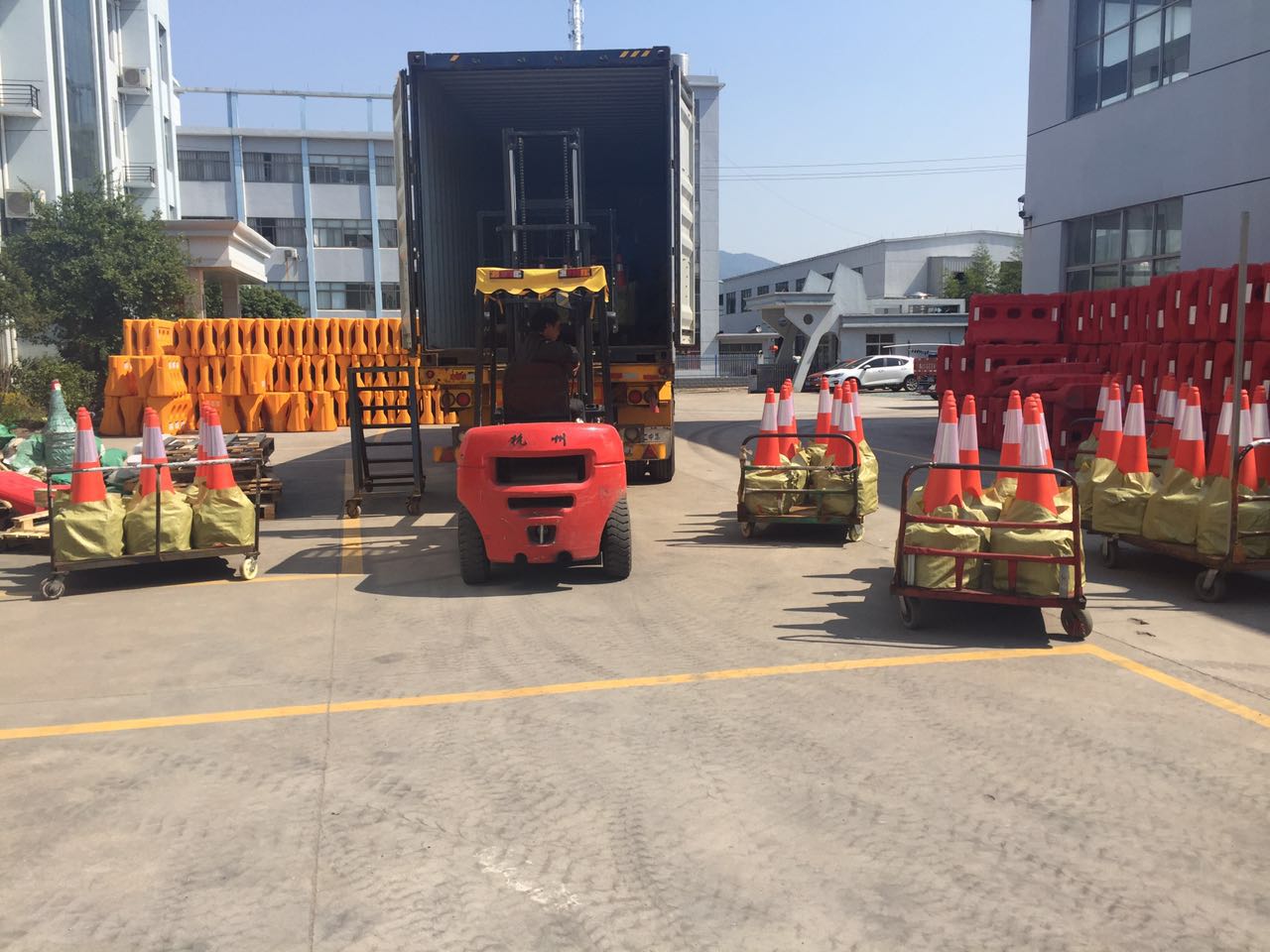
Mnsd maintains a convex mirror production capacity of 30,000 units per month, with a standard lead time of 15–20 days for a 20 ft container. Across the full product range — convex mirrors, warning posts, rising bollards, speed humps and traffic lights — annual output reaches 120,000,000 units, and exports account for about 50% of sales across Asia, Europe and the USA. To compare both diameters or place a first order, request the current catalog and a written quotation at info@mnsdtraffic.com.
Conclusion: Let the Sight Line Choose
The 600 mm versus 750 mm question has a clean answer once the two models are placed side by side. They share the same lens material, coating, curvature range, 130°+ wide-angle vision, 180° angle of view, IP65 housing, temperature envelope, UV grade, wind rating and mounting hardware. The only material differences are 150 mm of diameter, a visual range of 15–18 m versus 20–25 m, and the physical space each disc occupies.
- Choose YD-OC60 (600 mm) when the measured sight line is 15–18 m or shorter, traffic moves slowly, and mounting space is constrained — warehouse aisle intersections, internal doorways, residential corners, tight wall positions.
- Choose YD-OC75 (750 mm) when the decision point sits 20–25 m away or when approach speeds are higher — parking garage ramps, bus stations, school and hospital entrances, yard exits, industrial zone junctions.
- Choose a larger diameter when the sight line exceeds 25 m, where the 800 mm, 1000 mm and 1200 mm models extend coverage to 22–28 m, 30–35 m and 35–45 m respectively.
The failure modes are symmetrical and both avoidable: undersizing produces a mirror that is installed but ineffective, and oversizing spends money and wall space on reach the junction never uses. One tape measure, taken from the driver's decision point to the furthest point of concern, settles the comparison before price, brand or availability enter the discussion.
About the manufacturer
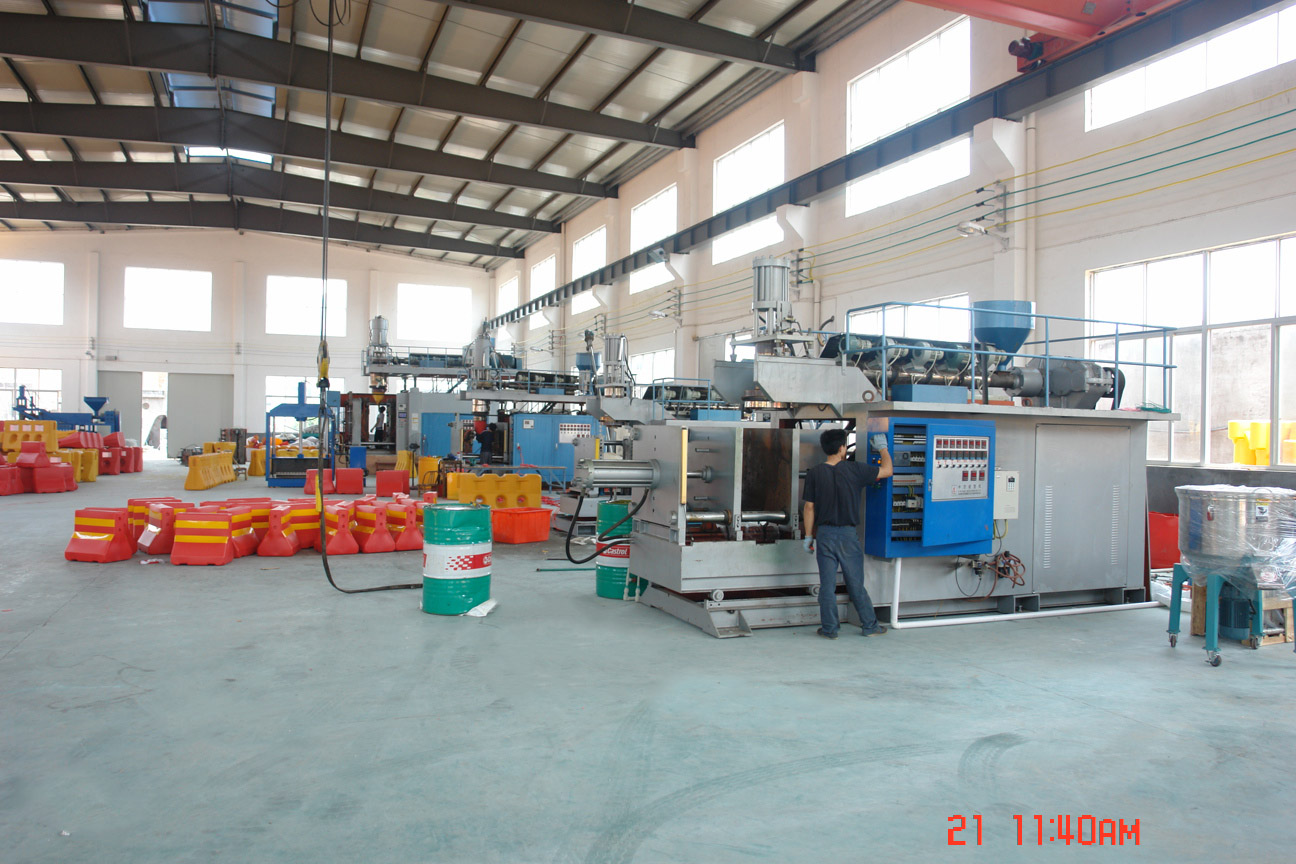
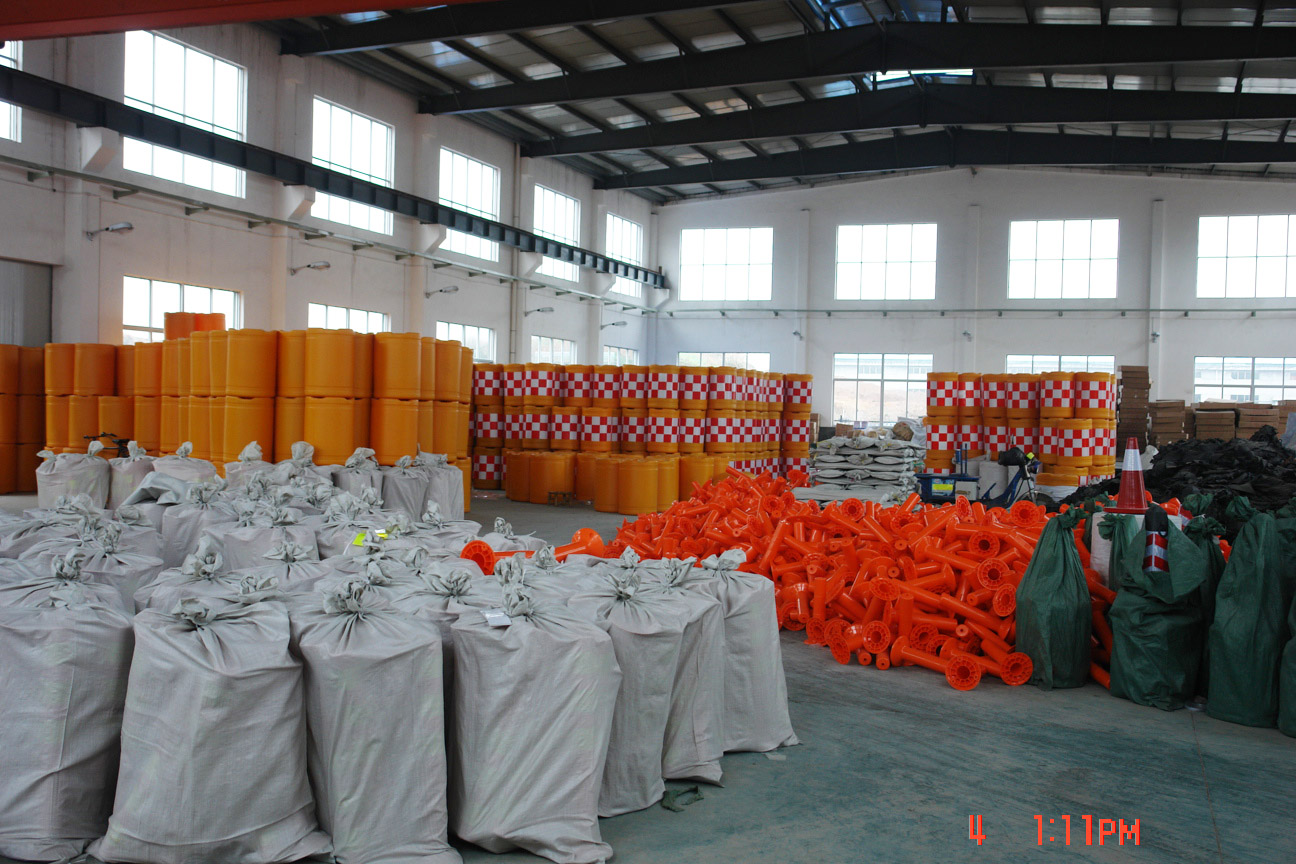
Tiantai Yuanda Traffic Device Co., Ltd (Mnsd) is a road safety equipment manufacturer founded in 2007 in Tiantai, Zhejiang, China. The company operates a 40,000 m² facility with approximately 300 employees and 15 R&D engineers, and produces convex mirrors alongside warning posts, rising bollards, speed humps and traffic lights. Its major markets are Asia, Europe and the USA, with export business accounting for about 50% of total sales. Website: www.mnsdtraffic.com.
Next step: compare both diameters against your own measurements
Send the sight-line distance and mounting position for each blind corner, and Mnsd will confirm whether the 600 mm or 750 mm model fits — or whether the site needs a larger diameter. Samples and written quotations covering both options are available.
Email: info@mnsdtraffic.com · Tel / WhatsApp: +86 18458137305 · Product catalog · Download the Mnsd brochure (PDF)
Have Questions or Need More Details?
Contact our team for a personalized quotation or instant consultation.
Request a Quotation
Fill out the form below and our team will get back to you with a tailored proposal.
WhatsApp Direct Chat
Prefer to chat in real-time? Message us on WhatsApp for instant assistance & quick answers.
- Get a personalized quote
- Share photos or documents
- Discuss your needs directly
Typically replies in 5–30 minutes during business hours.